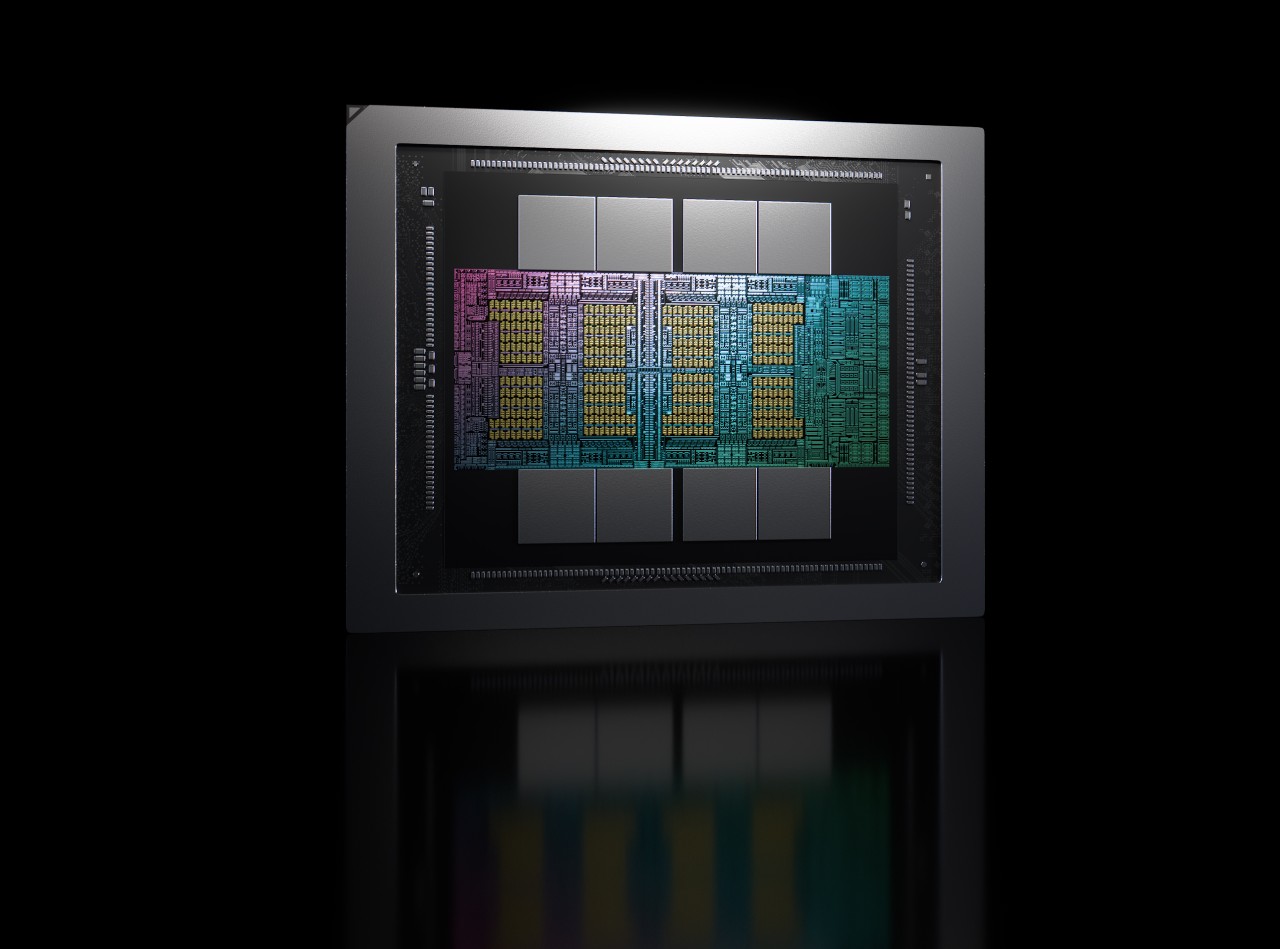
NVIDIA has unveiled the Rubin HPC (high-performance computing) GPU to speed up scientific simulations and data processing as AI agents help researchers explore more materials, molecules and engineering designs.
Expected to be available in 2028, the chip will feature more than 50,000 CUDA cores on a single GPU. It will also introduce sparse data acceleration and use seventh-generation NVLink technology to accelerate connections between GPUs.
“For agents tackling science and engineering, faster simulation means faster discovery. Rubin HPC accelerates the simulations agents use to test ideas and guide their next steps, helping scientists and engineers explore more possibilities and bring breakthroughs closer,” said Ian Buck, Vice President of Hyperscale and HPC at NVIDIA.
The new GPU targets the recurring challenge in scientific computing of moving data quickly enough to keep processing cores busy. Workloads such as climate modelling, engineering simulation, genomic analysis, and financial risk calculations repeatedly retrieve scattered values from large datasets, perform calculations and repeat the process at scale.
Rather than increasing computing capacity alone, Rubin HPC will scale data movement alongside it. Its sparse data acceleration capability keeps the GPU’s cores supplied with data so they spend less time waiting and more time calculating.
The approach accelerates common computational patterns, including sparse matrix operations, stencil computations, sorting and reductions, which underpin a range of scientific, engineering and analytics applications.
Shortening the feedback loop
AI agents can help scientists and engineers generate and investigate more candidate solutions, but simulations are still needed to test those ideas before teams commit to laboratory experiments or physical prototypes.
Faster simulations could shorten the cycle of forming a hypothesis, testing it and refining the next step.
NVIDIA plans to pair Rubin HPC with its CUDA-X libraries, which provide optimised implementations of algorithms used in simulation and analytics. Together, the hardware and software are intended to help researchers assess more possibilities and direct physical experiments toward the most promising candidates.



Leave a Reply