
 China carmaker Chery has adopted the new ZP ProAI system, powered by NVIDIA Drive AI self-driving technology, for its autonomous vehicles. The move will bring Level 3 autonomous driving to the world’s biggest auto market.
Tag: Artificial intelligence
Global IT spending to rise to US$3.7t in 2018
 Global IT spending is expected to grow to US$3.7 trillion in 2018, an increase of 4.5 percent from 2017, according to Gartner.
AI will create more jobs
One of the biggest fears amid the excitement about artificial intelligence (AI) is the loss of jobs. Many are afraid of being made redundant as AI becomes more pervasive.
Honda to accelerate smart car R&D with SenseTime
Honda has signed a long-term agreement to develop autonomous cars with SenseTime, a China artificial intelligence (AI) company. The partnership will leverage Honda’s vehicle control system with SenseTime’s AI algorithms to jointly create an autonomous driving […]
Learn robotics at Udacity
 Robotics is no longer just a hobby but serious stuff. NVIDIA’s Deep Learning Institute is now working with online learning provider Udacity to develop a programme that will immerse students in the field of robotics, giving them career-ready skills.
Qualcomm invests in China AI startup SenseTime
 China artificial intelligence (AI) startup SenseTime has signed a strategic investment agreement with Qualcomm.
NVIDIA Tesla V100 gains widespread acceptance
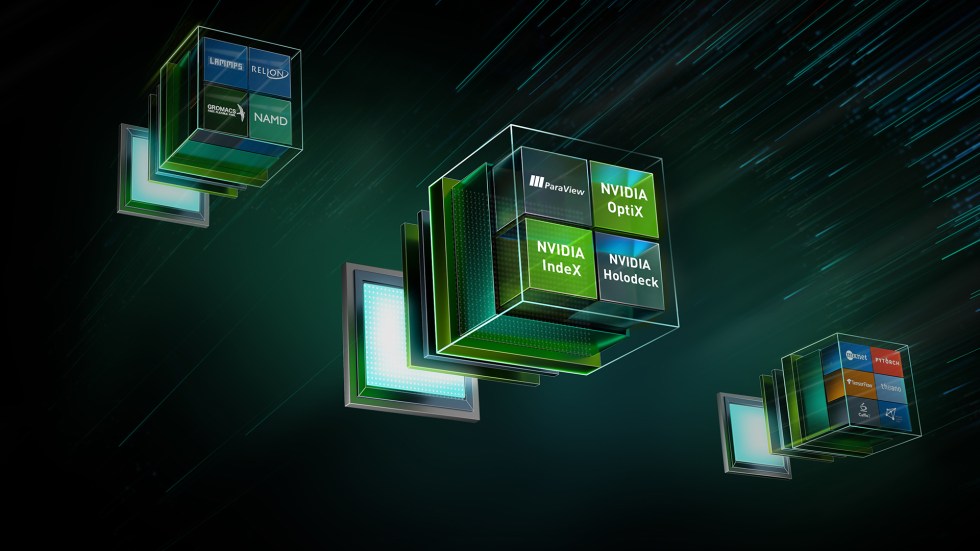
NVIDIA’s Volta architecture is leaving quite an impression. According to a NVIDIA press release issued at SC17, the Volta-based NVIDIA Tesla V100 GPU is available through every major computer maker and chosen by every major cloud to deliver artificial intelligence (AI) and high performance computing.
We are 5!
 Entelechy Asia turns five today. So much has changed since we launched in November 2012.
NVIDIA expands DLI offerings

The need for deep learning skills is increasing as more and more companies and industries hop on the bandwagon. Launch a little more than a year ago, NVIDIA’s Deep Learning Institute (DLI) has already trained tens of thousands of students, developers and data scientists.
And the company is expanding its DLI offerings with:
- New partnerships: Team up with Booz Allen Hamilton and deeplearning.ai to train thousands of students, developers and government specialists in artificial intelligence (AI).
- New University Ambassador Program: Instructors worldwide can teach students critical job skills and practical applications of AI at no cost.
- New courses: More courses are added to teach domain-specific applications of deep learning for finance, natural language processing, robotics, video analytics, and self-driving cars.
Singapore’s AI agenda gets double boost!
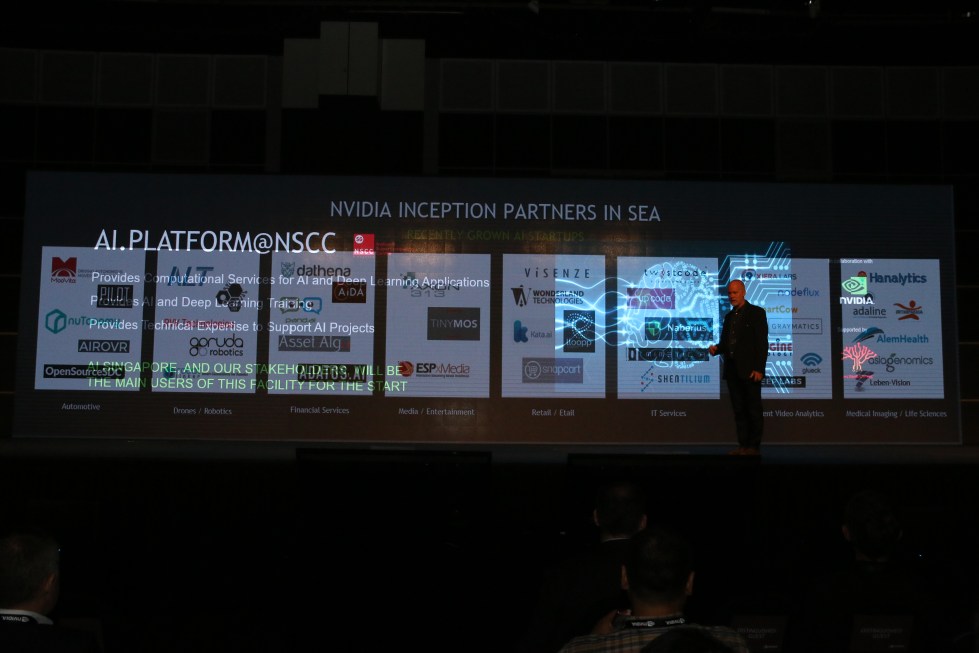
Singapore’s aim to be an artificial intelligence (AI) hub has been boosted with two initiatives — the setting up of a shared AI platform for researchers and the awarding of scholarships to develop AI talents.
At the NVIDIA AI Conference in Singapore yesterday, NVIDIA and Singapore’s National Supercomputing Centre (NSCC) agreed to establish a platform to bolster AI capabilities among its academic, research and industry stakeholders and in support of AI Singapore (AISG), a national programme set up in May to drive AI adoption, research and innovation in Singapore.
Called AI.Platform@NSCC, it will provide AI training, technical expertise and computing services to AISG, which brings together all Singapore-based research and tertiary institutions, including the National University of Singapore (NUS), Nanyang Technological University (NTU), Singapore University of Design and Technology (SUTD), Singapore Management University (SMU), as well as research institutions in the Agency for Science, Technology and Research (A*STAR).
Tantalising line-up of speakers at NVIDIA AI Conference
 More than 1,000 participants attending the NVIDIA AI Conference in Singapore next week are in for a treat as the organisers are bringing in a tantalising line-up of speakers.
The two keynote speakers are Dr David B Kirk, NVIDIA Fellow and inventor of more than 60 patents and patent applications relating to graphics design; and Dr Wanli Min, AI scientist of Alibaba Cloud, who will touch on A Revolutionary Road to Data Intelligence.
Besides these two, there are special guest-of-honour Chng Kai Fong, Managing Director of Singapore’s Economic Development Board, and a panel discussion on AI for the Future of Singapore Economy.
Robotaxis on the way
 No steering wheels, pedals or mirrors. Sounds like science fiction but the fully autonomous robotaxi is on its way with the launch of a new system that NVIDIA has codenamed Pegasus.
Pegasus extends the NVIDIA Drive PX AI computing platform to handle Level 5 driverless vehicles. NVIDIA DRIVE PX Pegasus delivers over 320 trillion operations per second — more than 10 times the performance of its predecessor, NVIDIA DRIVE PX 2, announced Jensen Huang, Founder and CEO of NVIDIA at his keynote address at GTC Europe in Munich.
Robotaxis powered by NVIDIA DRIVE PX Pegasus will have interiors that feel like a living room and arrive on demand to safely whisk passengers to their destinations, bringing mobility to everyone, including the elderly and disabled.
Changing role of CIO
The role of the CIO is changing, according to a Gartner survey of 3,160 CIO respondents in 98 countries.
The findings revealed that the CIO role is transitioning from delivery executive to business executive, from controlling cost and engineering processes, to driving revenue and exploiting data.
Ninety-five percent of CIOs expect their jobs to change or be remixed due to digitalisation. While world-class IT delivery management is a given, it will take up less and less of the CIO’s time.
Appier appoints Sean Chu as CSO
Appier has appointed Sean Chu as Chief Strategy Officer (CSO) to lead its operations in Japan and Korea. Chu will help drive the company’s growth as it moves to create new AI platforms to help […]
China’s tech giants bet on NVIDIA Volta
 China’s top technology companies are betting big on the NVIDIA Volta platform.
Alibaba Cloud, Baidu, and Tencent are incorporating NVIDIA Tesla V100 GPU accelerators into their data centres and cloud-service infrastructures to accelerate AI for a broad range of enterprise and consumer applications.
At the heart of the new Volta-based systems is the NVIDIA V100 data centre GPU. Built with 21 billion transistors, it provides a 5x improvement over the preceding NVIDIA Pascal architecture P100 GPU accelerators, while delivering the equivalent performance of 100 CPUs for deep learning. This performance surpasses by 4x the improvements that Moore’s law would have predicted over the same period of time.
Inspur, Lenovo and Huawei are using the NVIDIA HGX reference architecture to offer Volta-based accelerated systems for hyperscale data centres. Using HGX as a starter “recipe,” original equipment manufacturer and original design manufacturer partners can work with NVIDIA to more quickly design and bring to market a wide range of qualified GPU-accelerated AI systems for hyperscale data centres to meet the industry’s growing demand for AI cloud computing.
NVIDIA and Indonesia university set up first AI R&D centre in Jakarta
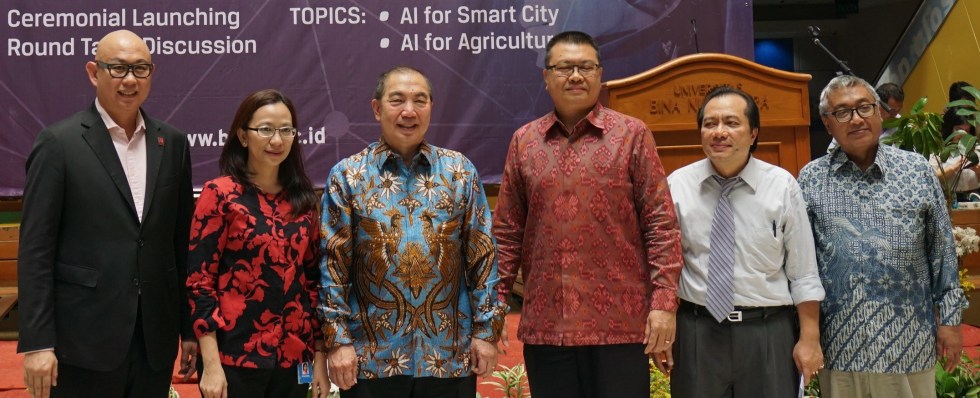
NVIDIA has teamed up with BINUS University and Kinetica to establish the first artificial intelligence (AI) research and development (R&D) centre in Indonesia.
Located at the university’s Anggrek Campus, the centre will support BINUS University’s aim to be the premier R&D hub for Al in Indonesia. Leveraging the power of NVIDIA’s GPUs, it will be a showcase of the commercial potential of GPU-accelerated deep learning applications.
“Today, we stand at the beginning of the AI computing era, ignited by a new computing model, GPU deep learning. This new model — where deep neural networks are trained to recognise patterns from massive amounts of data — has proven to be ‘unreasonably’ effective at solving some of the most complex problems in computer science. In this era, software writes itself and machines learn. Soon, hundreds of billions of devices will be infused with intelligence. AI will revolutionise every industry. NVIDIA provides the products and solutions to power this revolution,” said Raymond Teh, Vice President of APAC Sales and Marketing of NVIDIA.
China to dominate APAC robotics spending
Spurred by growing interest in artificial intelligence (AI), the Asia-Pacific (APAC) robotics market is expected to growth to US$162 billion in 2021, accounting for 70 percent of the world’s total robotics market in 2021, according to […]
AI to fuel next wave of cloud growth
 The cloud infrastructure services market is continuing to grow strongly, up 47 percent year on year in Q2 to reach US$14 billion, according to Canalys. Growth was driven by demand for primary cloud infrastructure services, such as on-demand computing and storage, across all customer segments and industries.
However, future growth is expected to be fueled by customers using the artificial intelligence (AI) platforms cloud service providers are building to develop new applications, processes, services, and user experiences.
Amazon Web Services (AWS) maintained its leadership position, growing 42 percent on an annual basis and accounting for more than 30 percent of total spend. But its growth rate was lower than those of its main rivals, Microsoft (up 97 percent growth) and Google (up 92 percent), but higher than fourth-placed IBM (up 23 percent). Overall, the top four cloud services providers represented 55 percent of the cloud infrastructure services market, which includes IaaS and PaaS.
Motorola and Neurala to work on intelligent cameras
 Motorola Solutions and Neurala will develop intelligent cameras that will enable police officers to more efficiently search for objects or persons of interest, such as missing children and suspects.
The companies will integrate Neurala’s artificial intelligence (AI) capabilities with Motorola Solutions’ software and cameras, including its Si500 body-worn camera. The integration will create intelligent cameras that can learn “at the edge” and automatically search for persons or objects of interest – significantly reducing the time and effort required to find a missing child or suspicious object in environments that are often crowded or chaotic.
“We see powerful potential for AI to improve safety and efficiency for our customers, which in turn helps create safer communities. But applying AI in a public safety setting presents unique challenges. Neurala’s ‘edge learning’ capabilities will help us explore solutions for a variety of public safety workflows such as finding a missing child or investigating an object of interest, such as a bicycle,” said Paul Steinberg, Chief Technology Officer of Motorola Solutions.
NVIDIA Tesla V100 surprise for world’s top AI researchers
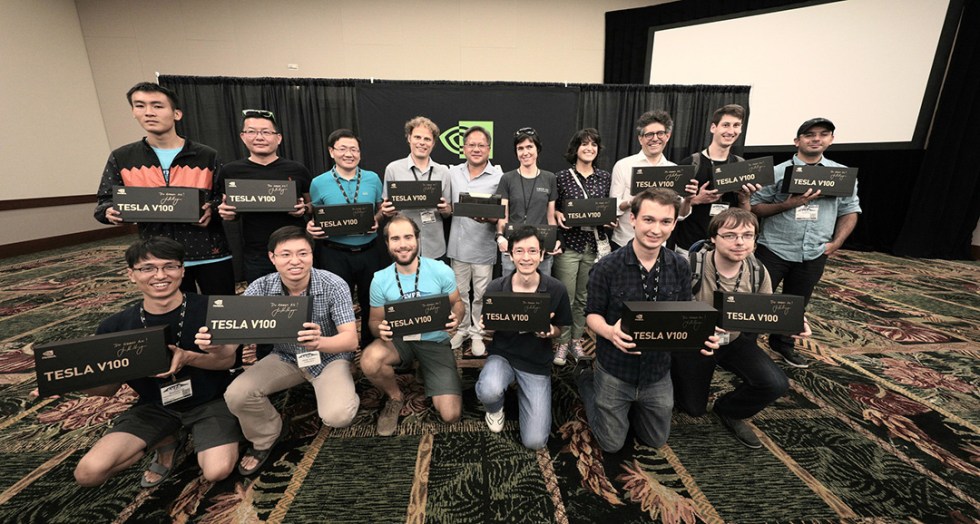
Fifteen top AI research institutions of the NVIDIA AI Labs programmes were each presented with the Volta-based NVIDIA Tesla V100 GPU accelerator.
They were participating in Computer Vision and Pattern Recognition (CVPR) conference in Honolulu.
“AI is the most powerful technology force that we have ever known. I’ve seen everything. I’ve seen the coming and going of the client-server revolution. I’ve seen the coming and going of the PC revolution. Absolutely nothing compares,” said Jensen Huang, CEO of NVIDIA.
AI takes centrestage at ICML in Sydney
 NVIDIA is bringing its wealth of artificial intelligence (AI) solutions and expertise to the International Conference on Machine Learning (ICML) in Sydney.
Held at Sydney International Convention Centre from August 6 to 11, the event is expected to attract up to 3,000 participants, primarily faculty, researchers and PhD students in machine learning, data science, data mining, AI, statistics, and related fields.
The NVIDIA booth (Level 2, The Gallery, Booth #4) will feature many firsts in Australia, such as demos on 4K style transfer, a deep neural network to extract a specific artistic style from a source painting, and then synthesises this information with the content of a separate video; self-driving auto using the Drive PX2 AI car computing platform; Deepstream SDK that simplifies development of high performance video analytics applications powered by deep learning; and NVIDIA Isaac, the AI-based software platform lets developers train virtual robots using detailed and highly realistic test scenarios.
Beat traffic jam with new Audi A8
 At the inaugural Audi Summit in Spain, Audi revealed that its flagship 2018 A8 features a multitude of high-tech wizardry powered by NVIDIA.
“The car of the future will make its occupants’ life easier with the help of artificial intelligence (AI),” declared Rupert Stadler, Chairman of the Board of Audi, as he introduced such A8 features as Audi AI Traffic Jam Pilot, Remote Park Pilot, Natural Voice Control and Swarm Intelligence.
The A8 is packed with NVIDIA powered systems, including revolutionary new user interfaces, a new infotainment system, a new virtual cockpit, and new rear seat entertainment options.
Fujitsu announces new Xeon-based servers
 Fujitsu has introduced its fully refreshed range of Xeon-based dual- and quad-socket Primergy servers and octo-socket Primequest business critical server systems.
These new servers are powerful and flexible, enabling enterprises to build secure, agile, multi-cloud data centres.
Featuring the new Intel Xeon scalable processors, the Fujitsu Server Primergy and Primequest business model server systems are designed for exceptional workload-specific performance and hardware-enhanced security. Built for trusted data service delivery, the new models represent significant leaps in I/O, memory, storage and network technologies.
NVIDIA and Baidu team up on AI
 NVIDIA and Baidu have teamed up to bring artificial intelligence (AI) technology to cloud computing, self-driving vehicles and AI home assistants.
Baidu will deploy NVIDIA HGX architecture with Tesla Volta V100 and Tesla P4 GPU accelerators for AI training and inference in its data centres. Combined with Baidu’s PaddlePaddle deep learning framework and NVIDIA’s TensorRT deep learning inference software, researchers and companies can harness state-of-the-art technology to develop products and services with real-time understanding of images, speech, text and video.
To accelerate AI development, the companies will work together to optimise Baidu’s open-source PaddlePaddle deep learning framework on NVIDIA’s Volta GPU architecture.
Volvo, Autoliv to roll out NVIDIA-based self-driving cars by 2021
 Volvo Cars and Autoliv are teaming up with NVIDIA to develop advanced systems and software for AI self-driving cars. The three companies will work together along with Zenuity — a newly-formed automotive software development joint venture equally owned by Volvo Cars and Autoliv — to develop next-generation self-driving car technologies.
Production vehicles built on the NVIDIA DRIVE PX car computing platform are planned for sale by 2021.
“Artificial intelligence (AI) is the essential tool for solving the incredibly demanding challenge of autonomous driving. We are building on our earlier collaboration with Volvo to create production vehicles that will make driving safer, lead to greener cities and reduce congestion on our roads,” said Jensen Huang, Founder and CEO of NVIDIA, at a keynote address at Automobil Elektronik Kongress.
Taiwan: Home of GeForce!
 At the keynote of NVIDIA AI Forum, NVIDIA CEO and Founder Jensen Huang called “Taiwan is the home of NVIDIA’s GeForce system”.
Video gaming is a US$100 billion industry and “GeForce PC gaming is the number one platform, nearly 200 million GeForce installed base,” declared Huang.
He announced the new NVIDIA Max-Q platform which lets gaming notebook makers produce faster, slimmer and quieter machines.
Softbank invests US$4b in NVIDIA
SoftBank Group has taken a US$4 billion stake in NVIDIA, according to Bloomberg. This dovetails nicely with SoftBank founder Masayoshi Son’s aim to become the biggest investor in technology over the next decade. NVIDIA’s stocks tripled last […]
Singapore to focus on 4 technology areas
 Singapore will be focusing on four technology areas to build the foundation for its digital transformation. These are artificial intelligence (AI) and data science, cybersecurity, immersive media, and Internet of Things and future communications infrastructure.
At the opening of Infocomm Media Business Exchange at Marina Bay Sands Singapore Convention Centre, Minister for Communications and Information Dr Yaacob Ibrahim noted that “they are exciting fields with bright prospects in their own right, and they have great potential to transform other industries and enhance people’s lives”.
Artificial Intelligence and Data Science
The nation has established AI.SG, a national programme with funding of up to S$150 million to boost Singapore’s AI capabilities.
Keeping drivers safe
With all that rage of artificial intelligence (AI) powering driverless cars, the same technology can also be used to keep drivers safe. It can acts like a guardian angel and look our for danger (watch […]
Deeper into AI
 The keynote address at Google I/O yesterday showed that Google is much more than just a search company. It is becoming more artificial intelligence (AI). Google is specifically using deep learning to help in many areas of everyday life.
Here are some as shared on Google’s blog post:
Google Assistant can help answer your questions and find information—but it can also help you get all kinds of useful things done. Today we’re adding a few more:
- Schedule new calendar appointments and create reminders. Starting today on Google Home, you can schedule appointments and soon you’ll also be able to add reminders. Since it’s the same Google Assistant across devices, you’ll be able to get a reminder at home or on the go.
- Make your home smarter. We now have 70+ smart home partners supporting the Google Assistant across Google Home and Android phones, including August locks, TP-Link, Honeywell, Logitech, and LG.
From professional skills to utilities
Robots driven by artificial intelligence (AI) are replacing workers in various labour-intensive and service sectors but doctors, lawyers and even IT professionals are at risk of being made redundant. Or at least, certain aspects of each of these practices.
According to Gartner, smart machines and robots may replace highly trained professionals in tasks within medicine, law and IT by 2022 — that’s just five years more!
“The economics of AI and machine learning will lead to many tasks performed by professionals today becoming low-cost utilities. AI’s effects on different industries will force the enterprise to adjust its business strategy. Many competitive, high-margin industries will become more like utilities as AI turns complex work into a metered service that the enterprise pays for, like electricity,” said Stephen Prentice, Vice President and Gartner Fellow.
Deep Instinct is Most Disruptive Startup
Hundreds of thousands of computers in 150 countries have been hit by the WannaCry ransomware. While users are scampering around trying to fix their computers, the top of mind question is whether this could have […]
GTC draws the big guns!
As a sign of its coming of age, the GPU Technology Conference (GTC) held annually in San Jose, California since 2009, is no longer a niche event but one that is drawing the who’s who […]
Finally, the Big Bang for AI!

Artificial intelligence (AI) is not new. In fact, it has so many false starts over the past 60 years. The term went into hibernation for a long time.
Research into AI began way back in Dartmouth College in 1956 and was constantly associated with being the next frontier in the 1980s when mainframe computers ruled and supercomputers were a ginormous investment that very few could afford.
Despite the research put in over the years, the technology never quite took off and fell flat in many instances.
NVIDIA to train 100,000 deep learning developers this year

Interest in deep learning is growing so strongly that NVIDIA expects to train 100,000 developers this year — that’s 10 times more than last year —through its Deep Learning Institute (DLI).
According to research firm IDC, 80 percent of all applications will have an artificial intelligence (AI) component by 2020.
Greg Estes, Vice President of Developer Programs at NVIDIA, noted that there is a hunger for deep learning training. He cited the example of a DLI training at India Institute of Technology (IIT) in India where people came at 7.30am to try to sign up for a fully subscribed course.
Singapore goes big on AI
Singapore is banking big on artificial intelligence to provide solutions in finance, city management and healthcare. The National Research Foundation (NRF) will be investing up to S$150 million over the next five years in AI.SG, […]
Caffe2, anyone?
 Facebook is developing new artificial intelligent (AI) systems to help manage the vast amount of information — such as text, images and videos — generated daily so people can better understand the world and communicate more effectively, even as the volume of information increases.
It has worked with NVIDIA on Caffe2, a new AI deep learning framework that allows developers and researchers to create large-scale distributed training scenarios and build machine learning applications for edge devices.
Providing AI-powered services on mobile is a complex data processing task that must happen within the blink of an eye. Increasingly, the processing of lightning-fast AI services requires GPU-accelerated computing, such as that offered by Facebook’s Big Basin servers, as well as highly optimised deep learning software that can leverage the full capability of the accelerated hardware.
NVIDIA and Microsoft to accelerate AI cloud computing
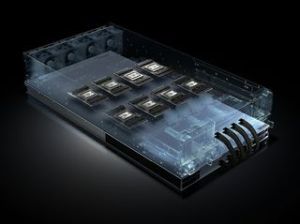 NVIDIA and Microsoft are working on a new hyperscale GPU accelerator that will provide hyperscale data centres with a fast, flexible path for artificial intelligence (AI).
The new HGX-1 hyperscale GPU accelerator is an open-source design released in conjunction with Microsoft’s Project Olympus.
HGX-1 does for cloud-based AI workloads what ATX — Advanced Technology eXtended — did for PC motherboards when it was introduced more than two decades ago. It establishes an industry standard that can be rapidly and efficiently embraced to help meet surging market demand.
New Jetson doubles performance
The newly-announced NVIDIA Jetson TX2, a credit card-sized platform that delivers artificial intelligence (AI) computing at the edge, opens the door to powerfully intelligent factory robots, commercial drones and smart cameras for AI cities. Jetson […]
RIKEN turns to NVIDIA supercomputer for deep learning research
RIKEN, Japan’s largest comprehensive research institution, will have a new supercomputer for deep learning research in April. Built by Fujitsu using 24 NVIDIA DGX-1 AI systems, the new machine will accelerate the application of artificial intelligence (AI) to […]
Youtube: 1b hours of viewing per day!
One billion hours! That’s a lot of time to spend watching video online. And did we say that it’s one billion hours per day. And for just one site. Of course, it helps that that […]
Gunning for supercomputing supremacy in Japan

Tokyo Institute of Technology plans to create Japan’s fastest AI supercomputer, which is will deliver more than twice the performance of its predecessor to slide into the world’s top 10 fastest systems.
Called Tsubame 3.0, it will use Pascal-based NVIDIA P100 GPUs that are nearly three times as efficient as their predecessors, to reach an expected 12.2 petaflops of double precision performance.
Tsubame 3.0 will excel in AI computation with more than 47 PFLOPS of AI horsepower. When operated with Tsubame 2.5, it is expected to deliver 64.3 PFLOPS, making it Japan’s highest performing AI supercomputer.
Mercedes and NVIDIA to bring AI-powered car to market
 Many cars were on display at CES last week but perhaps one of the most significant announcements is the collaboration between Mercedes-Benz and NVIDIA to bring an NVIDIA AI-powered car to market.
NVIDIA founder and CEO Jen-Hsun Huang (right) and Mercedes-Benz Vice President of Digital Vehicle and Mobility Sajjad Khan (left) talked about this new development at the Mercedes Benz Inspiration talk.
“When our teams came together there was instant chemistry, and we share a common vision about how AI can change your driving experience, and make it more enjoyable. Mercedes-Benz and NVIDIA share a common vision of the AI car. At this point it is clear AI will revolutionise the future of automobiles,,” said Huang, who pointed out that the collaboration began three years ago.

SMU uses NVIDIA DGX-1 supercomputer for food recognition project
 Singapore is renowned as a food paradise. And with so many mouth-watering dishes to pick from, sometimes even locals have difficulty identifying a specific dish.
Singapore Management University (SMU) is working on a food artificial intelligence (AI) application that is calling on a supercomputer to help with recognising the local dishes to achieve smart food consumption and healthy lifestyle.
The project, developed as part of Singapore’s Smart Nation initiative, requires the analysis of a large number of food photos.
Gearing up for the next industrial revolution

By Edward Lim
It’s been a long time coming but the next industrial evolution, dubbed the Fourth Industrial Revolution is nearly, if not already here.
Each revolution since the first led by water and steam power used to mechanise production in 1784 has been driven by technology in various forms. The Second Industrial Revolution leveraged electric power for mass production while the Third Industrial Revolution used electronics and information technology to automate production.
The next revolution builds on an increasingly digital economy and the fusion of various technologies, including the Internet, which is shaping the way people live, work, play, and relate to one another.
NVIDIA unleashes palm-sized AI computer for autonomous vehicles
 NVIDIA has unveiled a palm-sized, energy-efficient artificial intelligence (AI) computer that car makers can use to power automated and autonomous vehicles for driving and mapping.
The new single-processor configuration of the NVIDIA DRIVE PX 2 AI computing platform for AutoCruise functions — which include highway automated driving and HD mapping — consumes just 10 watts of power and enables vehicles to use deep neural networks to process data from multiple cameras and sensors. It will be deployed by China’s Baidu as the in-vehicle car computer for its self-driving cloud-to-car system.
DRIVE PX 2 enables car makers and their tier 1 suppliers to accelerate production of automated and autonomous vehicles. A car using the small form-factor DRIVE PX 2 for AutoCruise can understand in real time what is happening around it, precisely locate itself on an HD map and plan a safe path forward.
Baidu and NVIDIA team up on self-driving car
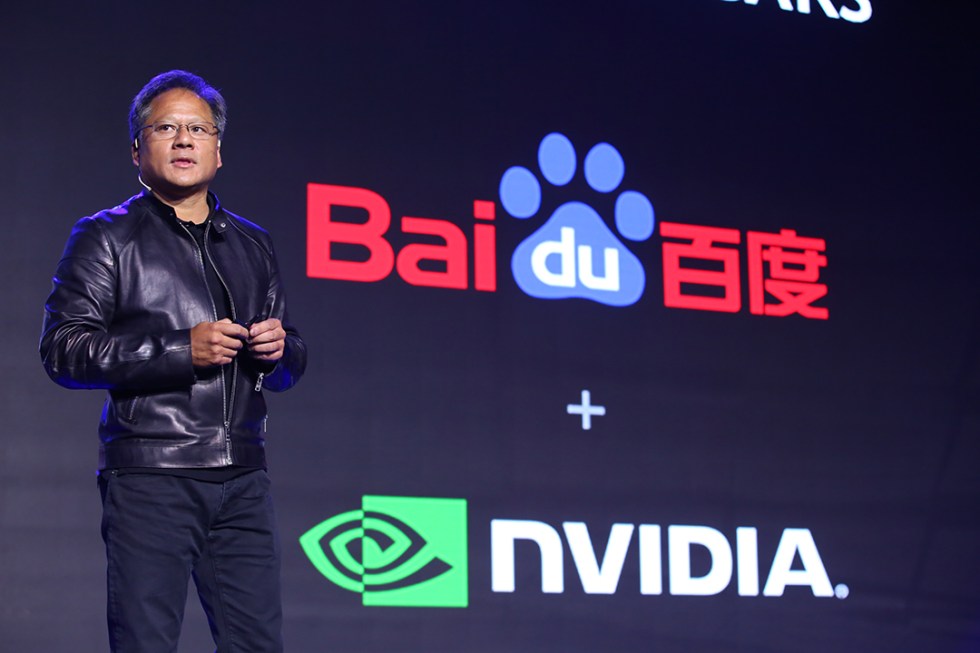
Baidu and NVIDIA are partnering to leverage artificial intelligence (AI) to create a cloud-to-car autonomous car platform for Chinese and global car makers. The partnership combines Baidu’s cloud platform and mapping technology with NVIDIA’s self-driving computing platform to develop solutions for HD maps, Level 3 autonomous vehicle control and automated parking.
Baidu CEO Robin Li and NVIDIA CEO Jen-Hsun Huang announced the collaboration at Baidu World Conference in Beijing yesterday.
“We’re going to bring together the technical capabilities and the expertise in AI and the scale of two world-class AI companies to build the self-driving car architecture from end-to-end, from top-to-bottom, from the cloud to the car,” said Huang .
NVIDIA unveils world’s first deep learning supercomputer

At his opening keynote address at GTC in San Jose, Jen-Hsun Huang, CEO of NVIDIA made a slew of announcements, including the world’s first deep learning supercomputer to meet the unlimited computing demands of artificial intelligence (AI).
As the first system designed specifically for deep learning, the NVIDIA DGX-1 comes fully integrated with hardware, deep learning software and development tools for quick, easy deployment. It is a turnkey system that contains a new generation of GPU accelerators, delivering the equivalent throughput of 250 x86 servers.
The DGX-1 deep learning system enables researchers and data scientists to easily harness the power of GPU-accelerated computing to create a new class of intelligent machines that learn, see and perceive the world as humans do. It delivers unprecedented levels of computing power to drive next-generation AI applications, allowing researchers to dramatically reduce the time to train larger, more sophisticated deep neural networks.
NVIDIA adds AI and supercomputing prowess to driverless cars
 The new NVIDIA DRIVE PX 2 is set to give driverless cars a major boost.
Touted at the world’s most powerful engine for in-vehicle artificial intelligence, it allows the automotive industry to use artificial intelligence (AI) to tackle the complexities inherent in autonomous driving. NVIDIA DRIVE PX2 utilises deep learning on NVIDIA’s advanced GPUs for 360-degree situational awareness around the car, to determine precisely where the car is and to compute a safe, comfortable trajectory.
“Drivers deal with an infinitely complex world. Modern artificial intelligence and GPU breakthroughs enable us to finally tackle the daunting challenges of self-driving cars,” said Jen-Hsun Huang, Co-founder and CEO of NVIDIA. “NVIDIA’s GPU is central to advances in deep learning and supercomputing. We are leveraging these to create the brain of future autonomous vehicles that will be continuously alert, and eventually achieve superhuman levels of situational awareness. Autonomous cars will bring increased safety, new convenient mobility services and even beautiful urban designs – providing a powerful force for a better future.”
Singtel leverages Appier’s programmatic TV platform to help advertisers reach right audience
 As the digital space becomes more cluttered and complex, advertisers are finding it increasingly difficult to determine the best way to reach their target customers.
Singtel Advertising has taken a step towards helping advertisers address this conundrum by leveraging artificial intelligence (AI) technology. It has inked an agreement with Appier to introduce the first programmatic TV solution in Singapore, enabling advertisers to more effectively reach Singapore’s substantial but fragmented TV-watching population.
With Appier’s programmatic TV platform, advertisers can now plan TV campaigns based on specific target audience profiles and purchase Singtel TV’s inventory with just a few clicks. Appier’s channel recommendation system will also incorporate insights from Singtel Advertising’s existing suite of analytics capabilities, enabling brands in Singapore to leverage automation to identify the most relevant channels.
Stanford University researchers build world’s largest artificial neural network
 NVIDIA has collaborated with a research team at Stanford University to create the world’s largest artificial neural network built to model how the human brain learns. The network is 6.5 times bigger than the previous record-setting network developed by Google in 2012.
Computer-based neural networks are capable of “learning” how to model the behaviour of the brain – including recognising objects, characters, voices, and audio in the same way that humans do.
Yet creating large-scale neural networks is extremely computationally expensive. For example, Google used approximately 1,000 CPU-based servers, or 16,000 CPU cores, to develop its neural network, which taught itself to recognise cats in a series of YouTube videos. The network included 1.7 billion parameters, the virtual representation of connections between neurons.

