
Remember the bionic eye that gave Steve Austin extraordinary vision in TV series The Six Million Dollar Man? An Australian team is now building a real-world precursor that can see, remember and interact with its environment while sipping far less power than today’s camera-plus-cloud stacks.
Led by Professor Sumeet Walia at RMIT University’s Centre for Opto-electronic Materials and Sensors (Comas), the work integrates sensing, memory and information processing on the same chip to reduce the need to shuttle data between separate sensors, memory banks and processors.
The result is a system that more closely mimics how the human eye and brain jointly process vast amounts of visual information using remarkably little energy.
Unlike a conventional camera that captures every frame and ships large volumes of data elsewhere for processing, the RMIT prototype performs much of that work where the information is collected.
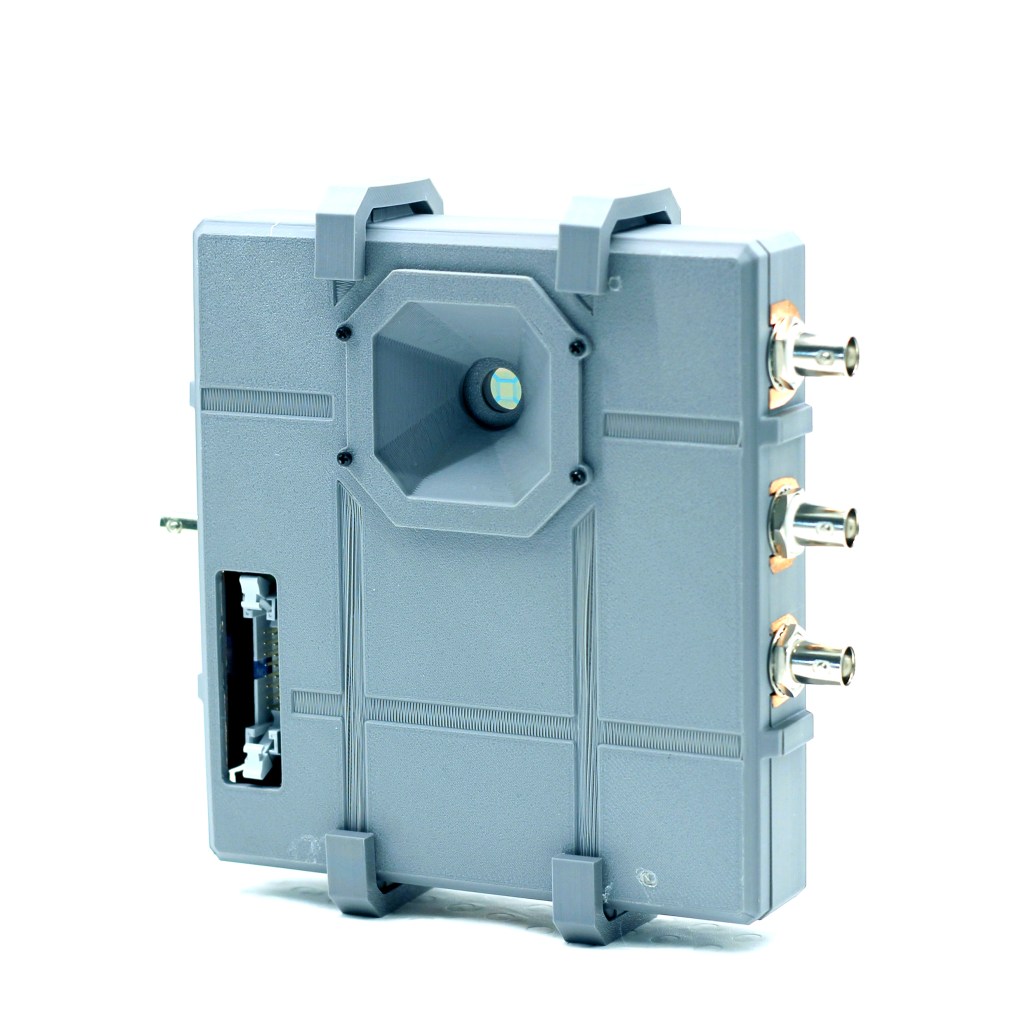
Built on advances using atom-thin molybdenum disulfide (MoS₂), the sensing, processing and storage all take place on a 2cm by 2cm chip inside a 15cm by14cm by 3cm prototype that houses the supporting electronics.
In lab tests, the system has been trained to recognise patterns such as numbers, shapes and movement to detect changes in what it sees and store that information as memory and processing it locally.
The team also tackled a critical manufacturing hurdle by developing a cleaner, water-based fabrication process that transfers atom-thin semiconductors and electrodes with significantly fewer defects than conventional methods, yielding devices with improved electrical and light-sensing performance.
RMIT has filed an international patent application for the invention under the Patent Cooperation Treaty.
While still an early-stage research demonstration, the technology could eventually underpin smart bionic eyes that do more than capture images. They can identify important scene changes, store relevant information and process visual signals rapidly at very low energy.
Beyond assistive devices, the approach may support advanced machine vision, autonomous vehicles, robotics, and intelligent sensors, while pointing to a more sustainable path for AI by reducing the data that must be moved, stored and analysed. It’s been a long time coming since The Six Million Dollar Man introduced the bionic eye concept in the 1970s.

