
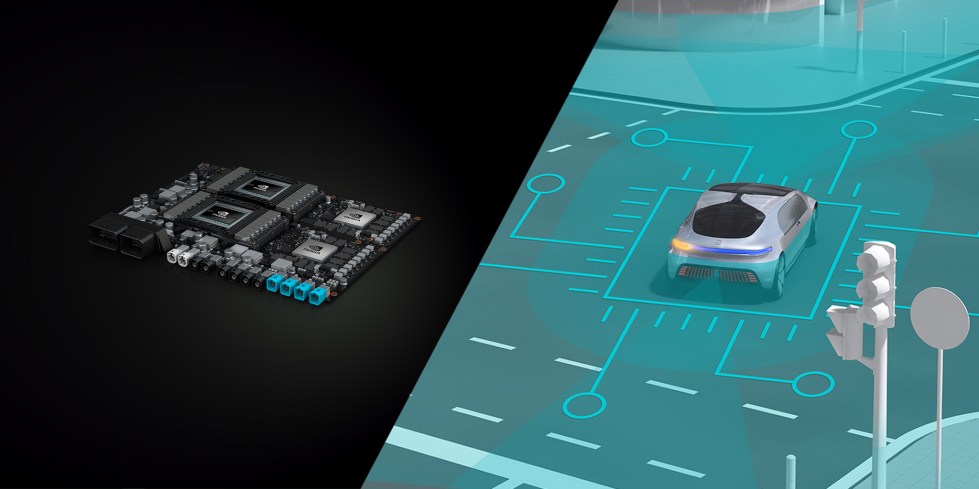
 Daimler and Bosch have chosen NVIDIA Drive Pegasus AI supercomputer to power their robotaxis, which are expected to start testing in Silicon Valley next year.
Tag: driverless cars
8m autonomous vehicles by 2025
 ABI Research expects eight million consumer vehicles shipping in 2025 will feature SAE Level 3 and 4 technologies, where drivers will still be necessary but are able to completely shift safety-critical functions to the vehicle under certain conditions, and SAE Level 5 technology, where no driver will be required at all.
ANSYS to acquire OPTIS
 Pittsburgh-based engineering simulation software maker ANSYS has agreed to acquire France-based optical simulation software provider OPTIS with the transaction expected to be completed in Q2.
Safer self-driving car tests with NVIDIA Drive Constellation
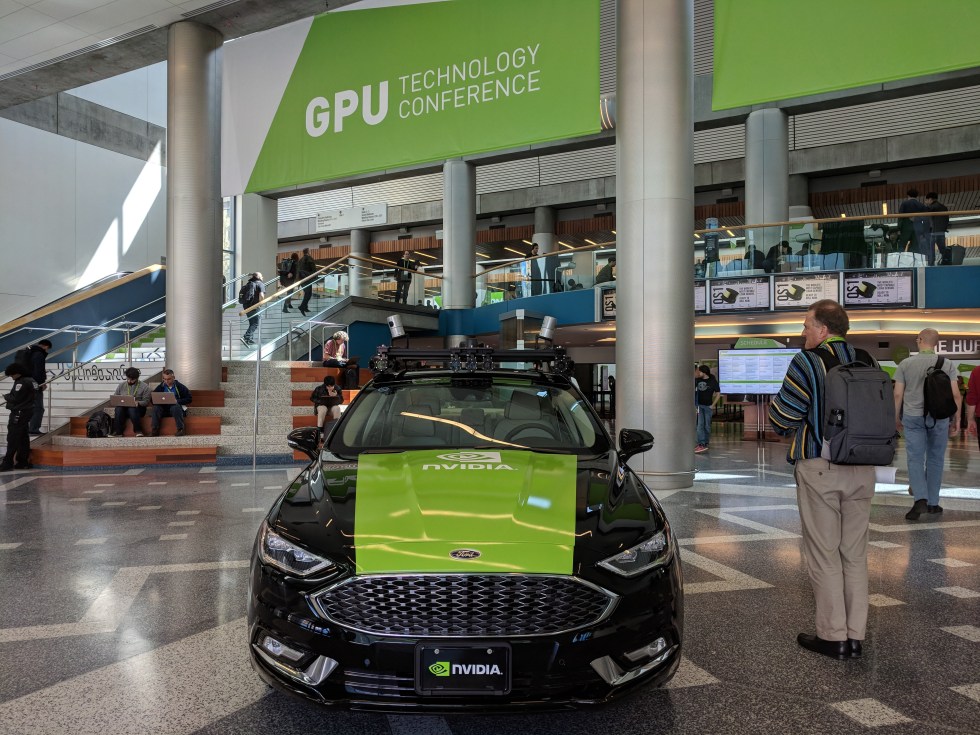 A number of self-driving cars sporting NVIDIA’s autonomous driving technologies were present at GPU Technology Conference in San Jose this week. However, none was available for a test drive — a sensible move by NVIDIA in the light of the fatal Uber self-driving car accident the week before.
Sad day for autonomous vehicles
 A 49-year-old woman has become the first pedestrian to be killed by an autonomous vehicle.
We are 5!
 Entelechy Asia turns five today. So much has changed since we launched in November 2012.
Singapore and Shanghai among top autonomous vehicle cities
 Shanghai and Singapore are among the world’s top four cities that are ready for autonomous vehicles, according to Canalys.
San Francisco is out in front while London is also among the top four. These rise to the top of a group of cities that, due to their size and populations, have some of the most complex transport networks in the world. The top four have a high need for autonomous vehicles to revolutionise their transport systems, combined with the ability to make it happen.
“Naturally, San Francisco leads the way and is the city best able to implement autonomous vehicles. The Bay Area is renowned as the world’s AV testing capital,” said Chris Jones, Chief Analyst of Canalys.
Keeping drivers safe
With all that rage of artificial intelligence (AI) powering driverless cars, the same technology can also be used to keep drivers safe. It can acts like a guardian angel and look our for danger (watch […]
Toyota cruises with NVIDIA Drive PX2

Toyota, one of the world’s largest automakers and renowned for its high standards and priority on safety, has picked NVIDIA Drive PX for its autonomous vehicles. It will use the AI car computer platform to power advanced autonomous driving systems planned for market introduction within the next few years
Engineering teams from the two companies are already developing sophisticated software that will enhance the capabilities of Toyota vehicles, enabling them to better understand the massive volume of data generated by sensors on the car, and to handle the broad spectrum of autonomous driving situations.
“Toyota has worked on autonomous driving technologies for over 20 years with the aim of reducing traffic fatalities to zero as an ultimate goal, achieving smoother traffic, and providing mobility for all. Through this collaboration, we intend to accelerate the development of autonomous driving systems that are even more safe and capable,” said Ken Koibuchi, Executive General Manager of Toyota.
NVIDIA unleashes palm-sized AI computer for autonomous vehicles
 NVIDIA has unveiled a palm-sized, energy-efficient artificial intelligence (AI) computer that car makers can use to power automated and autonomous vehicles for driving and mapping.
The new single-processor configuration of the NVIDIA DRIVE PX 2 AI computing platform for AutoCruise functions — which include highway automated driving and HD mapping — consumes just 10 watts of power and enables vehicles to use deep neural networks to process data from multiple cameras and sensors. It will be deployed by China’s Baidu as the in-vehicle car computer for its self-driving cloud-to-car system.
DRIVE PX 2 enables car makers and their tier 1 suppliers to accelerate production of automated and autonomous vehicles. A car using the small form-factor DRIVE PX 2 for AutoCruise can understand in real time what is happening around it, precisely locate itself on an HD map and plan a safe path forward.
Baidu and NVIDIA team up on self-driving car
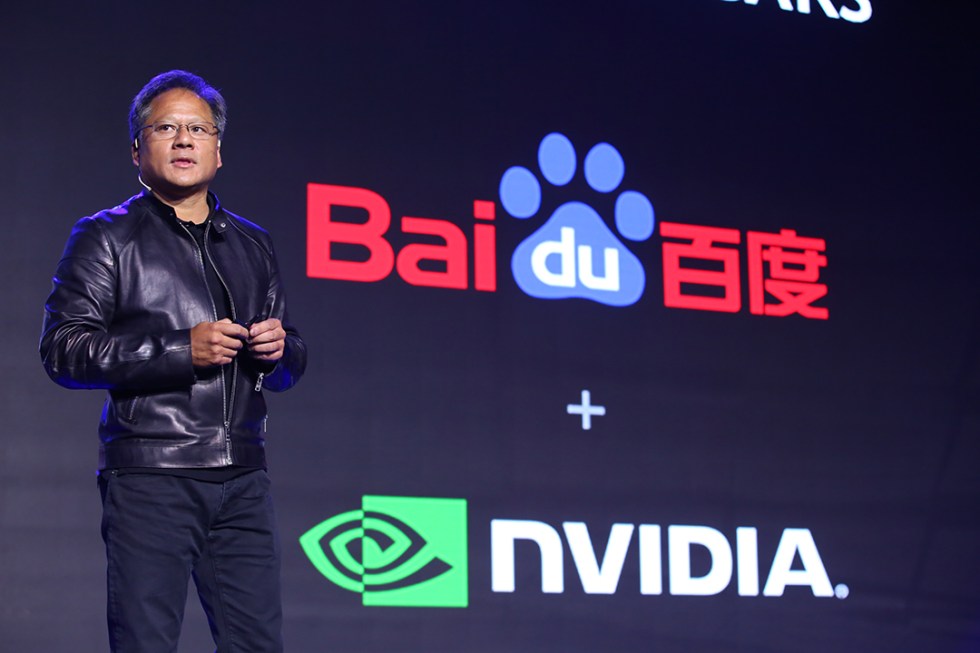
Baidu and NVIDIA are partnering to leverage artificial intelligence (AI) to create a cloud-to-car autonomous car platform for Chinese and global car makers. The partnership combines Baidu’s cloud platform and mapping technology with NVIDIA’s self-driving computing platform to develop solutions for HD maps, Level 3 autonomous vehicle control and automated parking.
Baidu CEO Robin Li and NVIDIA CEO Jen-Hsun Huang announced the collaboration at Baidu World Conference in Beijing yesterday.
“We’re going to bring together the technical capabilities and the expertise in AI and the scale of two world-class AI companies to build the self-driving car architecture from end-to-end, from top-to-bottom, from the cloud to the car,” said Huang .
NVIDIA adds AI and supercomputing prowess to driverless cars
 The new NVIDIA DRIVE PX 2 is set to give driverless cars a major boost.
Touted at the world’s most powerful engine for in-vehicle artificial intelligence, it allows the automotive industry to use artificial intelligence (AI) to tackle the complexities inherent in autonomous driving. NVIDIA DRIVE PX2 utilises deep learning on NVIDIA’s advanced GPUs for 360-degree situational awareness around the car, to determine precisely where the car is and to compute a safe, comfortable trajectory.
“Drivers deal with an infinitely complex world. Modern artificial intelligence and GPU breakthroughs enable us to finally tackle the daunting challenges of self-driving cars,” said Jen-Hsun Huang, Co-founder and CEO of NVIDIA. “NVIDIA’s GPU is central to advances in deep learning and supercomputing. We are leveraging these to create the brain of future autonomous vehicles that will be continuously alert, and eventually achieve superhuman levels of situational awareness. Autonomous cars will bring increased safety, new convenient mobility services and even beautiful urban designs – providing a powerful force for a better future.”
 Entelechy Asia