
By Edward Lim
The AI PC is here. But what exactly is an AI PC? What can it do that current PCs cannot? In the simplest explanation, an AI PC is one equipped with an AI engine powered by a neural processing unit (NPU).
Gartner expects global shipments of AI PCs to reach 114 million units in 2025, up 165.5 percent from the 43 million units expected for 2024. By 2026, AI laptops will be the only choice of laptop available to large businesses. That’s not too far away with 2025 just around the corner.
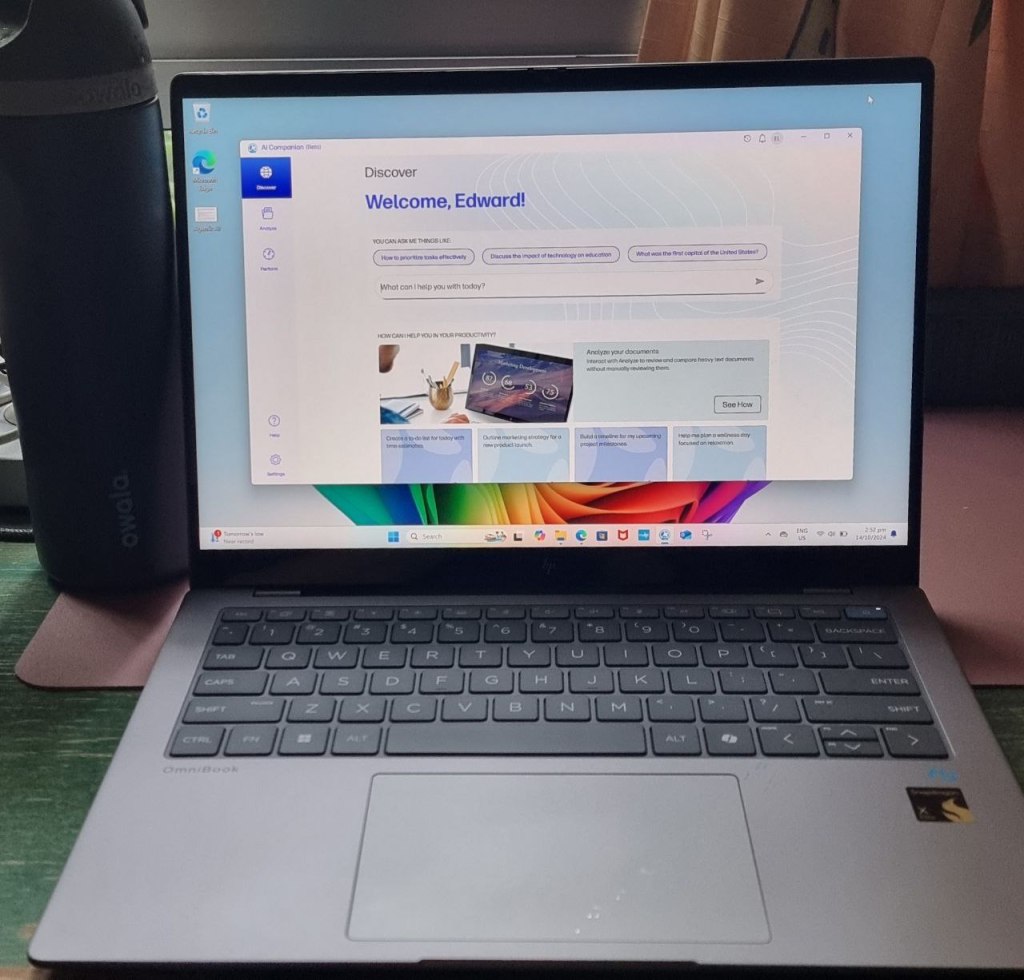
Thanks to HP’s public relations agency, we had the opportunity to learn more about AI PCs first hand! We managed to take a close look and check out the HP OmniBook X 14, one of a number of such laptops that are now available in the market.
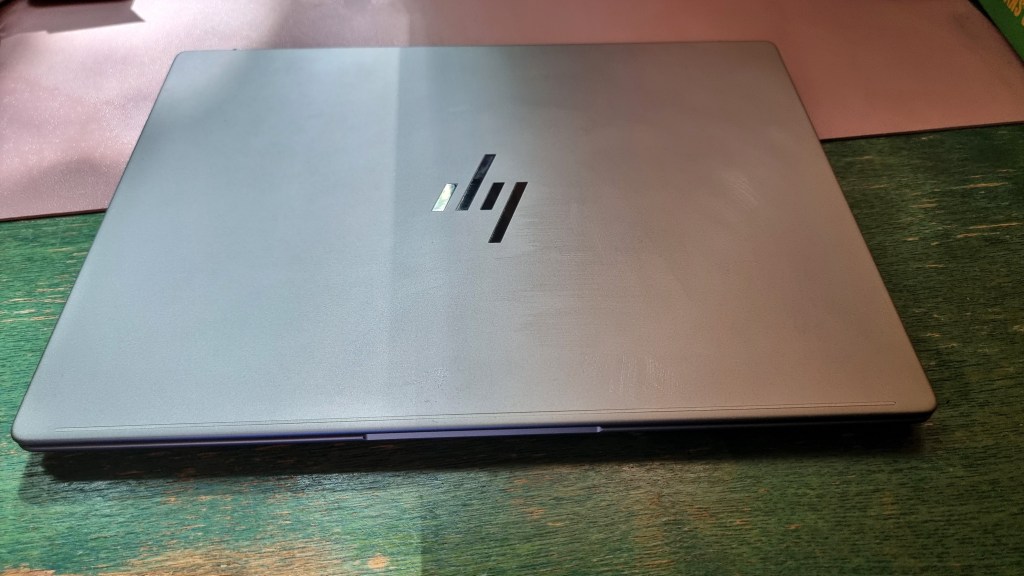
On the outside, the laptop looks just like any other laptop. When flipped open, there is an “AI” logo that distinguishes it from others. At its heart is the SnapdragonX Elite X1E-78-100 processor with an AI engine and dedicated NPU. No Intel or AMD chip. Qualcomm’s chip is a powerful alternative, plus with AI capabilities to boot!
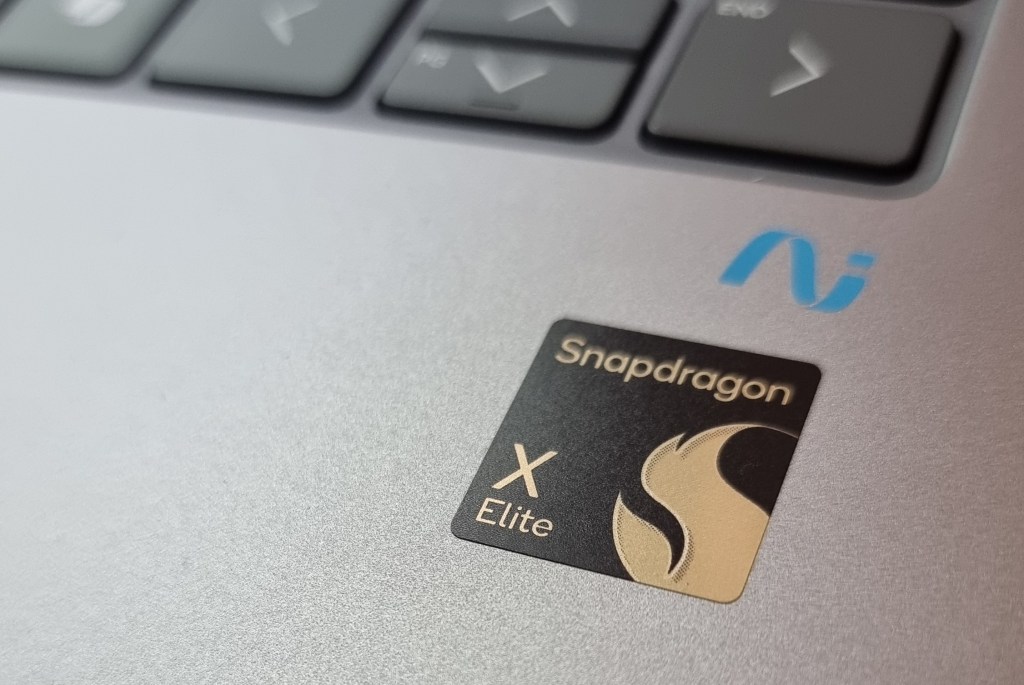
The Snapdragon X Elite is powerful enough for everyday tasks and even some video editing.
Light and long lasting
The HP OmniBook X 14 comes with 16GB LPDDR5x RAM and 1TB SSD hard drive. Weighing just 1.35kg makes it easy and comfortable to bring around for work and play.
Plus, the battery lasts really long, up to 26 hours, and charges quickly with HP Fast Charge. This makes the laptop excellent for those who need all-day battery life and are away for extended periods without access to power outlets.
A 14-inch 2.2K (2240 x 1400) IPS LCD touchscreen delivers sharp visuals though the brightness could have been better even under normal room lighting conditions.
For connectivity, there are two USB-C ports (40Gbps and 10Gbps), a USB-A port (10Gbps) and a 3.5mm headphone/microphone jack, plus Wi-Fi 7 and Bluetooth 5.4.
When tested using a Zoom call, the speakers sound decent and the microphone clear.
The AI in AI PCs
As a Copilot+ device, the HP OmniBook 14 comes with AI features, including a dedicated Copilot key on the keyboard. Its NPU performs at up to 45 trillion operations per second, making it suitable for local processing of AI tasks.
However, the AI on board doesn’t mean that users get faster results from using ChatGPT, Leonardo.ai and other online AI apps. These apps still need to be processed on servers where the large language models sit somewhere on the cloud.
What such PCs can do is handle real-time data analytics more effectively, making them ideal for tasks that require immediate insights such as financial trading, real-time health monitoring, or autonomous vehicle navigation. Content creators and creative professionals can also benefit from faster video rendering, image editing and 3D modelling.
The HP OmniBook X14 is pre-installed with the HP AI Companion app that leverages the AI capabilities of the NPU to optimise the device’s performance,
increase user productivity, and provide a more personalised computing experience.

The app learns from the user’s habits and preferences and adapts the PC to individual needs over time. For instance, it utilises generative AI to help users find relevant information, summarise long articles, or generate content based on personal files.
Working seamlessly in the background, it helps to maintain optimal system drivers, BIOS and firmware to maximise the performance of the AI PC.
Game for one?
AI is indeed the way to go as individuals and companies learn to harness it for greater productivity. The AI PC is the first step to bringing such capabilities to the PC level. It is a way for enterprises to future proof their devices. If the Gartner projections come to pass, the switchover to AI PCs is happening and should accelerate in the coming years.
For now, AI PCs such as the HP OmniBook X 14, come with a premium. But, it’s a case of future proofing with the growing prevalence of AI.
At S$1,999 (based on the review unit’s specs), the HP Omnibook X 14 offers buyers a slice of the future when the NPU proves its worth. If whole day use without access to a power socket is a regular way of working or playing, this device excels with its exceptional battery life. Otherwise, today’s laptops are good enough for most currently used AI applications without the onboard AI frills.
 Entelechy Asia