

The launch of the iPhone 8 and drop of prices of older models have helped Apple turn in a sterling quarter in China, with shipment rising 40 percent to 11 million units this Q3.
The launch of the iPhone 8 and drop of prices of older models have helped Apple turn in a sterling quarter in China, with shipment rising 40 percent to 11 million units this Q3.
By Edward Lim It’s official. The Samsung Galaxy Note Edge is my longest lasting phone. After 30 months, I’ve finally moved on to another smartphone — the Google Pixel (I’ll share more about this in […]
 A slew of demand for semiconductors is helping the industry to hit a targeted 7.2 percent growth to hit US$338 billion this year.
Apple and Samsung are among the many IT vendors that have unleashed new products in recent months, spurring the growth in the semiconductor market.
“Semiconductor revenue set an all-time record in the third quarter of 2014, fueled by a strong electronics build for the holiday season. Get ready for a flood of new product introductions, ranging from simple low-cost tablets to high-end ultramobiles and smartphones. Demand for the iPhone 6 and iPhone 6 Plus has been robust, but there is concern for other types of devices planned for the holidays,” said Jon Erensen, Research Director of Gartner.
Android once again dominated Q1 shipment for smartphone advanced operating systems with 80 percent market share (including AOSP) of just under 300 million smartphones shipped, according to ABI Research. “Interestingly, basic mobile phones lost five […]
 High ownership of smartphones, tablets and phablets in Hong Kong have been positively impacting sales of complementary products such as headphones and headsets, as well as mini-speakers, according to GfK.
The surge in audio accessories sales come at the back of consumers’ fixation with smart mobile devices, having spent more than US$4.2 billion on nearly 8.4 million units of such devices in the past 12 months.
The combined market of headphones, headsets and mini-speakers generated nearly US$77 million in the last one year, reflecting a 10 percent surge over a year ago. While sales revenue for headphones and headsets expanded by nine percent, mini-speakers sold 83 percent more in volume and raked in additional 32 percent in sales dollar.
Looks like interest in the Xiaomi Redmi smartphone is very high. Just six days after its debut sold out in Singapore, another batch of the smartphones was wiped out in just six minutes. While irate […]
Xiaomi has done it again! In its initial foray into Singapore, all its Redmi phones were sold out online in eight minutes — after it went on sale at noon today. At S$169, and without […]
With a focus on delivering a superior user experience, ZTE will launch the ultra slim Grand Memo II LTE with six-inch screen, one of the first Firefox OS 1.3 devices, the ZTE Open C and […]
Global shipment of devices (PCs, tablets, ultramobiles, and mobile phones) are projected to reach 2.5 billion units in 2014, a 7.6 percent increase from 2013, according to Gartner.
Among the operating system (OS) market, Android is on pace to surpass one billion users across all devices in 2014. By 2017, more than 75 percent of Android’s volumes will come from emerging markets.
“The device market continues to evolve, with buyers deciding which combination of devices is required to meet their wants and needs. Mobile phones are a must have and will continue to grow but at a slower pace, with opportunities moving away from the top-end premium devices to mid-end basic products,” said Ranjit Atwal, Research Director at Gartner. “Meanwhile users continue to move away from the traditional PC (notebooks and desk-based) as it becomes more of a shared content creation tool, while the greater flexibility of tablets, hybrids and lighter notebooks address users’ increasingly different demands.”
 ZTE’s boutique smartphone brand nubia has received 2.5 million orders for the Z5S and Z5S mini on JD.com as consumers in China.
The response to Z5S, priced at RMB1,999, and Z5S mini, priced at RMB1,499, surpassed a sales record previously set by Xiaomi. The two new smartphones were designed using consumer feedback garnered by nubia and JD.com in a C2B (consumer to business) approach to deliver a customer-defined user experience. Z5S and Z5S mini take nubia’s strengths in smartphone photography to a new level, becoming the first phones in China to offer the optical image stabiliser feature.
The new NEOVISION 3.0 system on Z5S and Z5S mini bring the feature of independent white-balance to smartphone users in China for the first time, after nubia pioneered independent focus and independent light-metering. The advanced imaging technology offered on Z5S and Z5S mini have earned the new handsets the moniker of “Single-Lens Reflex (SLR) Smartphones.” In addition, nubia’s industry-leading photography technology is now available for beta downloads (nubia Camera) by users of other handset manufacturers.
Southeast Asia consumers bought 41.5 million smartphones, spending US$10.8 billion in the first three quarters of this year, according to GfK Asia.
Indonesia led the way with sale of 14.8 million smartphones worth more than USS3.33 billion. Thailand and Malaysia were next with 7.2 million and 6.4 million units sold respectively. However, in terms of smartphone sales revenue, the ranking of these two countries are switched with Malaysia garnering US$2.25 billion while Thailand raked in US$1.96 billion in January to September.
“The increasing affordability of smartphones, particularly in the developing markets is helping many consumers in these countries make the switch from their basic feature phones to own their very first smartphone,” said Gerard Tan, Account Director for Digital Technology of GfK Asia. “It is worth highlighting the significant milestone of September being the month whereby sales penetration reached the halfway mark; where one in every two mobile handsets purchased in the region is now a smartphone.”
 Worldwide smartphone shipments are expected to surpass one billion units in 2013, representing 39.3 percent growth over 2012, according to a recently published mobile phone forecast from IDC Worldwide Quarterly Mobile Phone Tracker.
Despite a number of mature markets nearing smartphone saturation, the demand for low-cost computing in emerging markets continues to drive the smartphone market forward. By 2017, total smartphone shipments are expected to approach 1.7 billion units, resulting in a compound annual growth rate (CAGR) of 18.4 percent from 2013 to 2017.
While shipment has gone up, the average selling price (ASP) has seen a steady decline. Android has enabled a number of new manufacturers to enter the smartphone market supported by a variety of turnkey processing solutions. Many of these handset vendors have focused on low-cost devices as a way to build brand awareness.
 In four years’ time, your smartphone may be smarter than you. It will be able to predict your next move, next purchase or interpret actions based on what it knows, according to Gartner. This insight will be performed based on an individual’s data gathered using cognizant computing — the next step in personal cloud computing.
“Mobile phones have turned into smartphones thanks to two things: technology and apps,” Carolina Milanesi, Research Vice President of Gartner. “Technology has added features such as cameras, locations and sensors, while apps have connected those to an array of functions that, for the most part, add and improve our day to day life from a social, knowledge, entertainment and productivity point of view.”
What smartphones can do through apps has improved and broadened thanks to the personal cloud. “We assume that apps will acquire knowledge over time and get better with improved predictions of what users need and want, with data collection and response happening in real-time,” she added.
 Several trends are affecting the market for mobile device semiconductors. Two have been the shift towards multi-core application processors and the addition of x86 and MIPS to what used to be purely an ARM play. Two newer trends are the addition of heterogeneous processing functionality and 64-bit processors for mobile devices, according to ABI Research.
The trend towards more integrated platforms is the most crucial because the revenue of standalone components is folding into integrated platforms and the revenue for mobile device semiconductors lie with the higher cost components – mostly the application processor.
While the shift from standalone components to integrated platforms is drastic over the next five years in terms of shipments, this shift is even more radical in terms of revenue. From 2013 to 2018, the share of integrated platforms compared to all application processors in terms of shipments will jump from 46 percent to 79 percent while the revenue shares of the same will be higher. Smartphone application processor (integrated and standalone) revenue as a percentage of total mobile device semiconductor revenue for the major components will increase from 71 percent in 2013 to 89 percent in 2018.
Lower-priced devices are driving the growth of worldwide combined shipments of PCs, tablets and mobile phones in 2013, according to Gartner. The global devices market is expected to hit 2.32 billion units, a 4.5 percent increase from 2012.
Worldwide shipments of traditional PCs (desk-based and notebook) are forecast to total 303 million units in 2013, an 11.2 percent decline from 2012, and the PC market, including ultramobiles, is forecast to drop 8.4 percent. Mobile phone shipments are projected to grow 3.7 percent, with volume of more than 1.8 billion units.
Tablet shipments are expected to grow 42.7 percent this year, with shipments reaching 184 million units. Premium tablets are faced with continued price decline in the 7-inch form factor as a larger number of consumers prefer smaller form factors when it comes to content consumption.
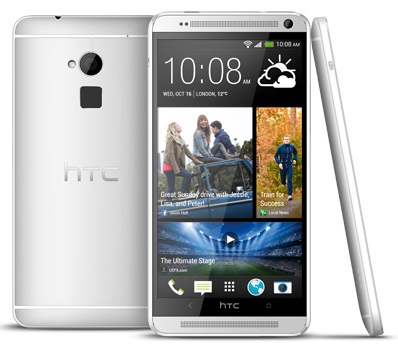 The HTC One has gotten a bigger brother — the 5.9-inch HTC One max. Just like the recently launched Apple iPhone 5S, the new smartphone has a fingerprint scan feature. Located on the back of the device, the fingerprint scanner allows users to lock or unlock the screen and quickly launch up to three favourite applications by assigning an individual finger to each.
With a larger and full HD1080p display, users can better enjoy photos, videos and movies. Driving the smartphone is the quad-core Qualcomm Snapdragon 600 processor featuring a quad-core 1.7 GHz CPU.
The 16GB or 32GB onboard memory can be expanded with the microSD card slot, and with up to 65GB of Google Drive storage free for two years offered to HTC One max owners.
The ANZ mobile phone market has dropped by five percent quarter-over-quarter and over 20 percent year-over-year, according to IDC.
More than 2.6 million devices were shipped in Q2, a contraction that is mainly attributed to the declining feature phone segment in which shipments fell by over 45 percent compared to last year. What was shocking was the slight decline in smartphones shipments during the period.
Despite the quarter witnessing some notable product launches such as Samsung’s flagship Galaxy S4, smartphones shipments saw a marginal fall compared to the previous quarter.
Smart watches may well provide the biggest opportunity for flexible displays in the short term, according to ABI Research.
A number of new smart watch vendors have incorporated some form of flexible display technology to maximise the screen size of the small device. Most of the digital smart watches and other fitness and health wearable devices will incorporate a flexible display over the next 18 months due to the robust and rugged characteristics of the displays.
Furthermore, flexible displays or e-ink displays could be used as secondary displays on smartphones and media tablets. Phablets are predicted to be a key application for secondary displays — it is anticipated that more than six percent of annual phablet shipments could include the display type in 2015.
China’s mobile phone shipments reached 110 million in Q2, with smartphones accounting for 86 million units, according to IDC. “The smartphone market has maintained a two-digit quarter-on-quarter growth rate in Q2 due to two reasons. First, […]
 Blackberry has agreed to be sold to Fairfax Financial Holdings for US$4.7 billion.
Fairfax, which already owns around 10 percent of BlackBerry, will pay US$9 per share for Blackberry, and take the company private. However, the deal is not done yet as Fairfax can walk away any time under the terms of the agreement.
“Unless Fairfax plans to radically change or accelerate BlackBerry’s strategy, it’s unlikely to be able to turn the company around. And that means we’re likely seeing the beginning of the end for one of the most iconic brands in mobile technology,” said Jan Dawson, Chief Telecoms Analyst of Ovum.
To most people around the world, Coolpad, Lenovo and Xiaomi don’t quite ring a bell when it comes to smartphones. But, in China, these three Chinese smartphone OEMs outsold Apple in Q2, according to ABI Research.
Only Samsung managed to hold its own but snaring a 17 percent market share. Lenovo was next with 13 percent, Coolpad with 10 percent and Xiaomi edged out Apple with 6.5 percent.
“Even though these OEMs are only selling into the Chinese market, the size of the market has allowed them to achieve shipment volumes that place these OEMs in the top 12 globally. It is not hard to imagine these OEMs as global competitors within the next two years,” said Michael Morgan, Senior Analyst of ABI Research.
Tablets and smartphone shipment will continue to drive growth in 2013, according to IDC, which expects tablet shipment to surpass total PC shipment (desktop plus portable PCs) in Q4. The worldwide smart connected device market, comprising PCs, tablets, and smartphones, is forecast to grow 27.8 percent year over year in 2013, slightly lower than the 30.3 percent growth in 2012.
PCs shipment is still expected to be greater than tablet shipment for the full year, but IDC forecasts tablet shipments will surpass total PC shipments on an annual basis by the end of 2015. Smartphones will continue to ship in high volumes, surpassing 1.4 billion units in 2015 and accounting for 69 percent of all smart connected device shipments worldwide.
In terms of shipment value, the worldwide smart connected device market will again exhibit double-digit year-over-year growth of 10.6 percent in 2013, but this growth will gradually slow to just 3.1 percent in 2017. The tapering revenue forecast reflects the increasing impact of low-cost smartphones and the white box tablet market.
 One billion smartphones are expected to be shipped this year, helping the global mobile phone market to rebound from just 1.2 percent growth in 2012 to 7.3, percent in 2013, according to IDC Worldwide Quarterly Mobile Phone Tracker.
The overall mobile phone market is growing faster than previously forecast thanks to a stronger-than-expected first half of the year driven by strong gains in emerging markets and the sub-US$200 smartphone segment. IDC previously projected 5.8 percent growth for the year. Vendors are now forecast to ship more than 1.8 billion mobile phones this year, growing to over 2.3 billion mobile phones in 2017.
Worldwide smartphone shipment is forecast to grow 40.0 percent year over year to more than one billion units this year. High smartphone growth is the result of a variety of factors, including steep device subsidies from carriers, especially in mature economic markets, as well as a growing array of sub-US$200 smartphones. Total smartphone shipment is forecast to reach 1.7 billion units in 2017.
 Android’s smartphone mobile app revenues are projected to reach almost US$6.8 billion by the end of 2013, nearly doubling its revenues from the previous year, according to ABI Research.
The Android platform has some way to go before catching iOS’s smartphone revenues but the smartphone app market will be Android’s most fruitful hunting ground compared to other devices.
ABI Research estimates that Android smartphone app revenues will increase from 59.1 percent to 65.9 percent when compared to iOS smartphone app revenues over the next 12 months.
Shipment of smartphones costing under US$200 are expected to grow from 238 million in 2013 to 758 million by 2018, driven by the low penetration of smartphones and large subscriber bases found in BRIC countries, according […]
 Samsung and Apple grew smartphone shipment by 55 percent and 20 percent respectively to maintain first and second place in Q2, according to Canalys.
However, both lost market share to Chinese vendors as the top 5 China vendors (Lenovo, Yulong, Huawei, ZTE, and Xiaomi) now account for 20 percent of the market, up from less than 15 percent a year ago.
Altogether, some 238.1 million units were shipped in Q2, an impressive 50 percent year-on-year gain.
Samsung has a device for every price point, giving it leadership in all, bar one category — the high end where it faces Apple.
According to ABI Research’s Device Portal sales channel analysis, the balance of power remains with Samsung/Android and Apple and looks set to remain so in the foreseeable future.
“This leaves little room for the other vendors to compete, especially the other Android vendors and those using uncompetitive operating system ecosystems. Despite some carrier’s efforts to create a more balanced smartphone device vendor industry with their use of subsidy, ultimately they are obliged to fulfill consumer demand and at the moment that means Samsung/Android and Apple,” said Nick Spencer, Senior Practice Director of ABI Research.
ZTE has grabbed five percent of the global smartphone market, catapulting it into fourth worldwide, according to Strategy Analytics. The 11.5 million smartphones shipped in Q2 represented a 79 percent year-on-year increase. The China smartphone maker will […]
Demand for mobile phones continue to grow. In Q2, the worldwide mobile phone market grew six percent year over year, according to the IDC Worldwide Quarterly Mobile Phone Tracker.
Vendors shipped a total of 432.1 million mobile phones in Q2 compared to 407.7 million units in the corresponding quarter of 2012. The Q2 total was also slightly higher than the 428.8 million units shipped in Q1.
The growth in the mobile phone market was partly driven by vendors from outside the Top 5 who experienced torrid shipment growth that outpaced the overall market. Several vendors, including Alcatel and Huawei, had high double- and triple-digit growth rates in Q2 for their Android-based offerings shipped to high-growth countries such as China and India. These vendors from outside the Top 5 accounted for 44.8 percent of the overall shipment volume, up from 42.2 percent in the same quarter one year ago.
 Fancy a new accessory? How about a smart watch? It looks like smart watches are going to be the next “must have” item. According to Canalys, the worldwide smart watch market will exceed five million units in 2014.
Canalys estimates that over 330,000 smart watches were shipped in 2012, led by Sony and Motorola. Kickstarter-backed Pebble Technology has joined Sony as a market leader in 2013. More than half a million units will be shipped this year. Smart watches are then set to explode by the end of 2014, growing tenfold as a new generation of devices from Apple, Google, Microsoft, Samsung, and others are launched.
Unlike earlier products, these smart watches will provide more sophisticated software and more elegant hardware. Glanceable information, integration across sensors and hooks into web services will be key features. These companion devices will not replace smart phones, but rather complement them as ‘appcessories’.
Smartphone shipments in Japan grew 4.0 percent year over year in Q1 to 6.8 million units to account for half of the overall mobile device market in Q1, according to IDC’s Japan Quarterly Mobile Device Tracker.
Total shipments in the Japan mobile device market for Q1 came to 13.6 million units, an increase of 9.7 percent on a year-over-year basis.
While the PC market declined by 4.6 percent in the quarter, the rapidly growing tablet market enjoyed year-over-year growth of 187.2 percent to slightly more than 2 million units. The tablet growth was largely driven by the availability of inexpensive new tablets and huge sales incentives from mobile operators to boost the shipping volumes of LTE (4G) tablets.
 Claimed to be the world’s slimmest smartphone at 6.18mm, the Huawei Ascend P6 weighs just 120g. Packed into this sleek design are a 1.5GHz quad-core processor, Android 4.2.2 operating system, 2000mAh battery, 4.7-inch HD in-cell LCD screen technology, and ‘MagicTouch’ for enhanced screen responsiveness even when wearing gloves.
As the flagship smartphone of the Huawei Ascend P series, it is targeted at the fashion conscious. The smartphone’s brushed metallic look with a naturally curved base is both elegant and intuitive.
“The Huawei Ascend P6 is a star among smartphones with its industry-leading design, high-quality camera, and intuitive user interface, Huawei’s proprietary Emotion UI,” said Richard Yu, Chief Executive Officer of Huawei Consumer Business Group.

At Computex in Taipei last week, tablets and mobile devices took centrestage. ASUS, maker of the Google Nexus 7, even introduced a tablet starting from just US$129. It looks like these vendors are right on track to tap a burgeoning demand for smart devices.
According to the International Data Corporation (IDC) Worldwide Quarterly Smart Connected Device Tracker, global shipments of smart connected devices (PCs, tablets, and smartphones) are expected to surpass 1.7 billion units by 2014 with roughly 1 billion units delivered to emerging markets.
Within the emerging markets, the BRIC countries — China, India, Brazil, and Russia — are expected to generate shipments of 662 million units with a shipment value of more than US$206 billion. More than 650 million units are forecast to be shipped to developed markets, with the US, UK, and Japan capturing more than 400 million units with a shipment value of US$204 billion.
 ZTE has launched a new flagship smartphone — the ZTE Grand X2 In — that comes with the Intel Atom processor Z2580 with up to 2GHz, Android Jelly Bean OS, an advanced 8MP camera and 1080p movie and video play back.
Pitched at demanding but value conscious users, it delivers faster webpage loads, application launch times and content download times, as well as amazing graphics capabilities and responsive multitasking.
The smartphone boasts an 8MP socially-smart camera with one of the shortest shot-to-shot times on the market, capable of up to 24 frames per second and no shutter lag. It secures a high image quality in challenging environments with real-time 2x axis stabilisation, and face and smart scene recognition.
 Samsung led the smartphone market as smartphones outshipped feature phones for the first time in Q1. According to IDC (see table below), Samsung not only maintained its pole position but widened its market share lead over Apple in the smartphone market. However, LG showed the most percentage improvement in this category with a 110 percent jump year-on-year.
Top Five Smartphone Vendors, Shipments, and Market Share, Q1 (Units in Millions)
| Vendor |
1Q13 Unit Shipments |
1Q13 Market Share |
1Q12 Unit Shipments |
1Q12 Market Share |
Year-over-year Change |
| Samsung |
70.7 |
32.7% |
44.0 |
28.8% |
60.7% |
| Apple |
37.4 |
17.3% |
35.1 |
23.0% |
6.6% |
| LG |
10.3 |
4.8% |
4.9 |
3.2% |
110.2% |
| Huawei |
9.9 |
4.6% |
5.1 |
3.3% |
94.1% |
| ZTE |
9.1 |
4.2% |
6.1 |
4.0% |
49.2% |
| Others |
78.8 |
36.4% |
57.5 |
37.7% |
37.0% |
| Total |
216.2 |
100.0% |
152.7 |
100.0% |
41.6%
|
The worldwide mobile phone market grew 4 percent year over year in the seasonally slow Q1. IDC’s Worldwide Quarterly Mobile Phone Tracker reports that vendors shipped a total of 418.6 million mobile phones in Q1 compared to 402.4 million units in Q1 of 2012 and 483.2 million units in Q4 of 2012.
 ZTE more than doubled its target shipment of smartphones in 2012. The growth in smartphone sales helped ZTE post a gross profit margin of 16.8 percent in its terminals division in 2012, an improvement of 1.6 percentage points compared to a year earlier.
In the US, ZTE’s smartphone shipments greatly increased due to the company’s focus on high-end markets. In emerging markets including India, Indonesia, Mexico, Argentina, and Russia, ZTE also achieved fast growth. In 2012, the distributors channel contributed 10 percent of ZTE’s terminal revenue for the first time.
The strong smartphone sales performance helped ZTE record RMB1.87 billion of operating cash flow in 2012. ZTE also posted positive free cash flow and operating cash flow for the first time in three years.
 ZTE and Intel are collaborating on developing the next generation of ZTE smartphones based on the new Intel Atom Processor Z2580 platform.
The platform’s dual-core processor with Intel Hyper-Threading Technology provides double the compute performance and up to 3x graphics capabilities over the previous generation Intel Atom Z2460 processor while delivering the same battery life.
This latest engagement builds on the multi-year relationship between ZTE and Intel that has already produced the ZTE Grand X IN, ZTE’s first smartphone with Intel Inside.
“Our work with ZTE has been instrumental as we work to expand our portfolio of mobile products and bring to market exciting new designs with Intel Inside, It’s great to work with ZTE on the new family of Intel Atom processors for smartphones and we’re confident that the combination of high performance, competitive battery life and overall value will be appreciated by consumers,” said Hendrik Unkel, Director for Marketing and Business Development at Intel.

Asia is becoming a leading force in the mobile communications space. Mobile product makers Samsung and Asus and mobile operators NTT Docomo, Bharti Airtel and SK Telecom were among the winners at the 18th Annual Global Mobile awards, held at the GSMA Mobile World Congress in Barcelona. The Government of New Zealand also nabbed the Spectrum for Mobile Broadband Award.
More than 170 independent analysts, journalists, academics, and subject matter experts and 13 representatives from mobile operators throughout the world participated in the judging of the 2013 awards.
The full list of winners and finalist for the 2013 Global Mobile Awards is available at www.globalmobileawards.com/winners-2013
ZTE expects to increase smartphone revenues by 30 percent in 2013, and maintain its position as one of the top 4 global handset manufacturers.
ZTE’s handset business has seen steady development and profit growth during 2012. Industry analyst IDC reported that ZTE had shipped 65 million handsets in 2012, accounting for 3.8 percent of the global handset market and confirming ZTE as one of the top 4 handset producers.
“We know that our future success means we have to build the ZTE brand, and another target for us is to be a top 5 vendor in terms of brand awareness and reputation within the next three years,” said He Shiyou, EVP and Head of the Mobile Devices Division at ZTE. “2013 is the final year of our three-year transformation into a high-end smartphone brand, but we have a lot of building still to do.”

ZTE has announced the ZTE Grand S – 5.0 FHD LTE, the flagship handset in its high-end Grand Series line of products.
The ZTE Grand S is the company’s first FHD smartphone and the world’s thinnest within five-inch FHD quad-core smartphones, enabled by the Qualcomm Snapdragon S4 Pro processor.
Developed by ZTE, the ultrathin body and high definition display of the ZTE Grand S offer consumers the latest in style, quality and functionality.
Mobile devices continue to grab the attention of consumers and enterprises in 2012. Every launch of a new smartphone and tablet, in particular if the brands relate to Apple or Samsung, is keenly followed. And […]
Most of us are aware that smartphones have numerous sensors that, well, help to make them smart. But, most believe the number of sensors to be around six to eight. At a presentation at SIGGRAPH […]
ZTE has become the first Chinese vendor to launch a smartphone running on Android 4.2 Jelly Bean. This announcement comes just one week after Google released Android 4.2. Users of the ZTE N880E upgrading to […]
Worldwide sales of mobile phones to end users reached almost 428 million units in the third quarter of 2012, a 3.1 percent decline from the third quarter of 2011, according to Gartner, Inc. Smartphone sales […]
 Entelechy Asia