
By KL Lim
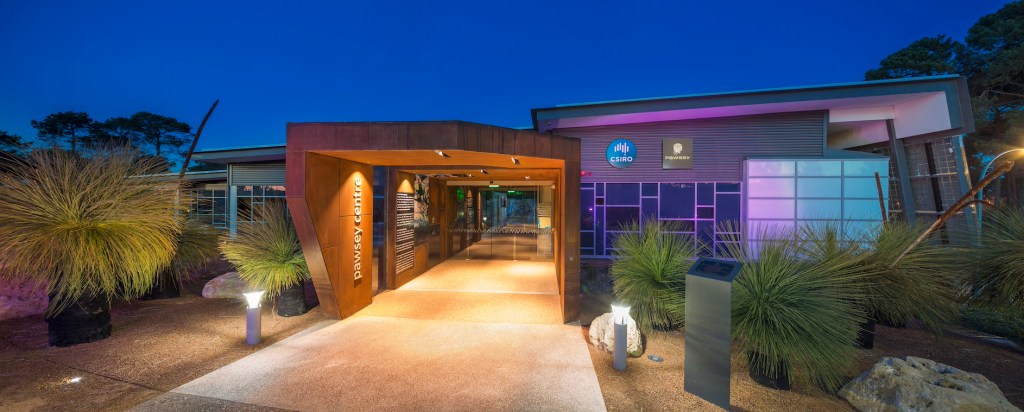
Australia’s Pawsey Supercomputing Research Centre will be integrating the NVIDIA CUDA Quantum platform into its National Supercomputing and Quantum Computing Innovation Hub.
This move signifies a significant leap forward in the pursuit of quantum supremacy. The CUDA Quantum platform, powered by the NVIDIA Grace Hopper Superchips, will help the Perth-based centre in creating quantum simulations and accelerating scientific discoveries.
CUDA Quantum is an open-source hybrid quantum computing platform that equips researchers with powerful simulation tools. It enables seamless programming across hybrid CPU, GPU and QPU systems. By leveraging CUDA Quantum, scientists at Pawsey Supercomputing Research Centre can explore complex quantum phenomena and optimise algorithms.
The NVIDIA cuQuantum Software Development Kit provides a suite of optimised libraries and tools specifically designed for quantum computing workflows. Researchers can accelerate their quantum simulations, fine-tune error correction methods, and delve into device design with unprecedented efficiency.
The NVIDIA Grace Hopper Superchip is a fusion of the NVIDIA Grace CPU and Hopper GPU architectures. Delivering extreme performance, it empowers high-fidelity and scalable quantum simulations, bridging the gap between theoretical models and real-world quantum hardware.
Pawsey is deploying eight NVIDIA Grace Hopper Superchip nodes based on NVIDIA MGX modular architecture. GH200 Superchips eliminate the need for a traditional CPU-to-GPU PCIe connection by combining an Arm-based NVIDIA Grace CPU with an NVIDIA H100 Tensor Core GPU in the same package, using NVIDIA NVLink-C2C chip interconnects.
This increases the bandwidth between GPU and CPU by 7x compared with the latest PCIe technology. It delivers up to 10x higher performance for applications running terabytes of data, giving quantum-classical researchers unprecedented power to solve the world’s most complex problems.
“High-performance simulation is essential for addressing the biggest challenges in quantum computing,” said Tim Costa, Director of High-Performance Computing and Quantum Computing at NVIDIA.
From unraveling novel algorithms to perfecting error correction techniques, simulation plays a pivotal role. The combination of CUDA Quantum and the Grace Hopper Superchip accelerates critical breakthroughs, propelling quantum-integrated supercomputing into the future.
“NVIDIA’s CUDA Quantum platform will allow our scientists to push the boundaries of what’s possible in quantum computing research,” said Mark Stickells, Executive Director of Pawsey Supercomputing Research Centre.
Pawsey will deploy the system to run quantum workloads directly from traditional high performance computing systems, leveraging their processing power and developing hybrid algorithms that intelligently divide calculations into classical and quantum kernels, using the quantum device to improve computing efficiency.
Key problem areas and applications to be targeted include quantum machine learning, chemistry simulations, image processing for radio astronomy, financial analysis, bioinformatics, and specialised quantum simulators.
Pawsey will make the NVIDIA Grace Hopper platform available to the Australian quantum community and its international partners.
Quantum breakthrough at UNSW
At the University of New South Wales (UNSW) Sydney, quantum computing researchers have discovered multiple ways to write quantum information in silicon for more flexible quantum chips design.
They have demostrated that they can encode quantum information – the special data in a quantum computer – in four unique ways within a single atom, inside a silicon chip.
The feat could alleviate some of the challenges in operating tens of millions of quantum computing units in just a few square millimetres of a silicon quantum computer chip.
“We are investing in a technology that is harder, slower, but for very good reasons, one of them being the extreme density of information that it’ll be able to handle,” said Professor Andrea Morello, who guides the research team.
“It’s all very well to have 25 million atoms in a square millimetre, but you have to control them one by one. Having the flexibility to do it with magnetic fields, or electric fields, or any combination of them, will give us lots of options to play with when scaling up the system,” he added.
 Entelechy Asia