

HPE has revealed its next-generation Cray supercomputing portfolio that comes complete with new compute blades, unified management software, and high-performance interconnects to boost AI productivity and scientific discoveries.
This launch is particularly significant for fast-developing Asian research labs and enterprises striving to stay ahead in the AI and HPC race. The portfolio offers the compute density and efficiency needed for diverse workloads — from climate modeling to generative AI training.
HPE’s new Cray GX5000 platform has attracted European HPC centres such as University of Stuttgart’s HLRS and the Leibniz Supercomputing Centre, but its capabilities speak directly to rapidly growing Asian tech hubs.
With a focus on converged AI and HPC workloads, it enables institutions and businesses across Asia to leapfrog competitors through faster simulations, real-time analytics, and advanced scientific research.
“Global organisations relying on supercomputing are looking for better computing performance for all of their workloads. Our new HPE Cray Supercomputing platform is the answer to customers’ needs for higher performance density with a unified AI and HPC architecture that is engineered for groundbreaking outcomes,” said Trish Damkroger, Senior Vice President and General Manager of HPC and AI Infrastructure Solutions at HPE.
The portfolio features three new blade types for multi-partner, multi-workload requirements:
- GX440n Accelerated Blade: Combines NVIDIA Vera CPUs and Rubin GPUs to provide up to 192 GPUs per rack — ideal for dense AI workloads including language modeling and super-resolution imaging.
- GX350a Accelerated Blade: Built for sovereign AI and HPC uses, powered by next-gen AMD EPYC Venice CPUs and new Instinct MI430X GPUs, scalable up to 112 GPUs per rack, suitable for governments and large enterprises advancing strategic AI initiatives.
- GX250 Compute Blade: CPU-only, packing eight Venice CPUs per blade, up to 40 blades per rack, for demanding double-precision scientific simulations.
All blades support HPE Slingshot 400 interconnects for reduced latency and unmatched sustained bandwidth.
The universal management software will enable IT teams to provision, monitor and scale supercomputers securely and efficiently.
DAOS goes mainstream
HPE has also introduced the Cray Supercomputing Storage Systems K3000, built on DAOS open-source architecture for extreme-speed, low-latency access.
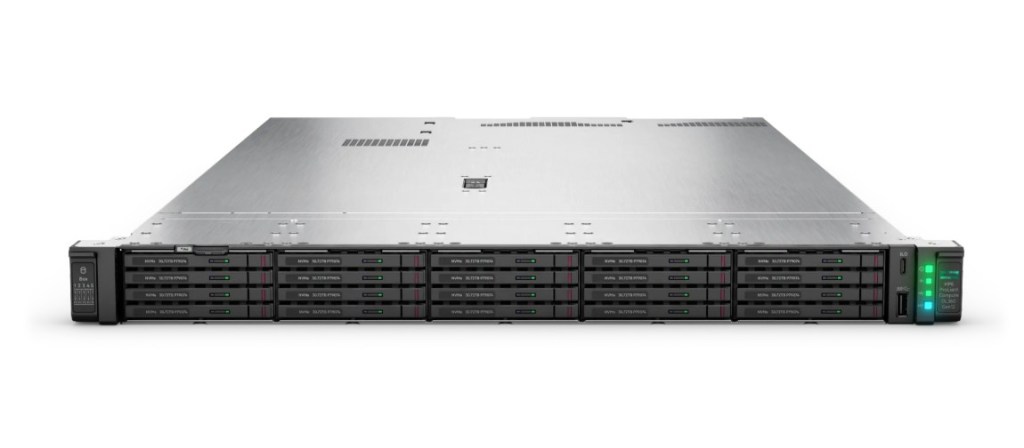
The K3000 offers a range of drive sizes and memory options, tailored for both performance and capacity-focused deployments, and supports multiple connectivity standards including InfiniBand and 400Gb Ethernet.
The new blades and management software will be available in early 2027, with storage systems arriving in early 2026.
 Entelechy Asia