
After nearly two decades, Intel has decided to bring the curtains down on its annual Intel Developer Forum(IDF). Even the China edition has been canned. A highly anticipated and popular event, IDF was the platform […]
Category: Events
Rise of accelerated computing in data centres
 Can’t say this was unexpected as NVIDIA retorts Google’s claim that its custom ASIC Tensor Processing Unit (TPU) was up to 30 times faster than CPUs and NVIDIA’s K80 G for inferencing workloads.
NVIDIA pointed out that Google’s TPU paper has drawn a clear conclusion – without accelerated computing, the scale-out of AI is simply not practical.
The role of data centres has changed considerably in today’s economy. Instead of just serving web pages, advertising and video content, data centres are now recognising voices, detecting images in video streams and connecting users with information they need when they need it.
No devices for US-bound flights from 13 countries
The US authorities are forbidding passengers of airlines from 13 countries to bring any electronic or electrical device larger than a mobile phone. This means that all notebook computers, tablets and cameras are not allowed […]
Hello, hello, it’s the Nokia 3310 again!
With a slew of product introductions now on at Mobile World Congress in Barcelona, what’s amazing is that an old icon has grabbed loads of attention. Nokia has resurrected its 3310 phone, albeit in an […]
NVIDIA DGX SATURNV ranked most efficient supercomputer
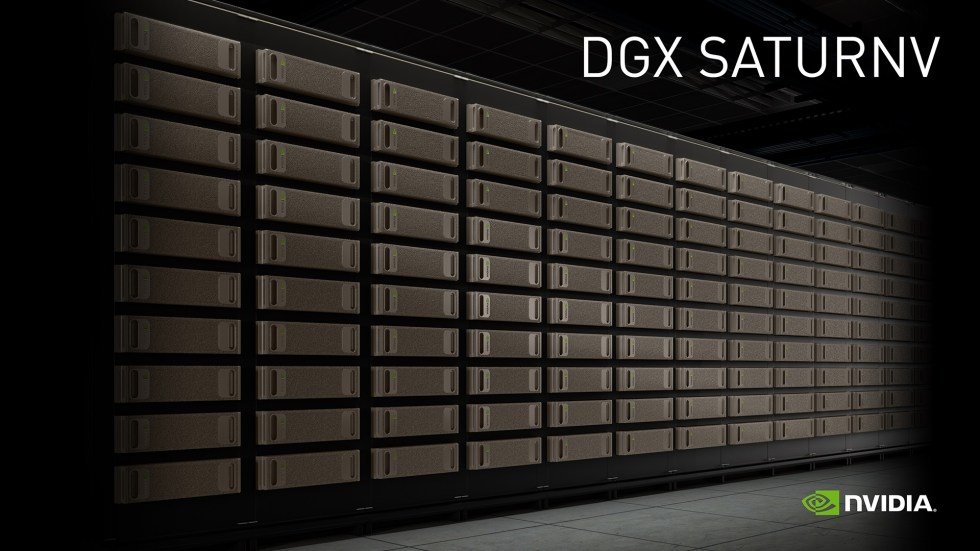 NVIDIA’s new DGX SATURNV supercomputer is ranked the world’s most efficient — and 28th fastest overall — on the latest Top500 list of supercomputers.
Powered by new Tesla P100 GPUs, it delivers 9.46 gigaflops/watt — a 42 percent improvement from the 6.67 gigaflops/watt delivered by the most efficient machine on the Top500 list released last June.
Compared with a supercomputer of similar performance, the Camphore 2 system, which is powered by Xeon Phi Knights Landing, SATURNV is 2.3x more energy efficient.hat efficiency is key to building machines capable of reaching exascale speeds — that’s 1 quintillion, or 1 billion billion, floating-point operations per second. Such a machine could help design efficient new combustion engines, model clean-burning fusion reactors, and achieve new breakthroughs in medical research.
Move aside content. Culture is king!
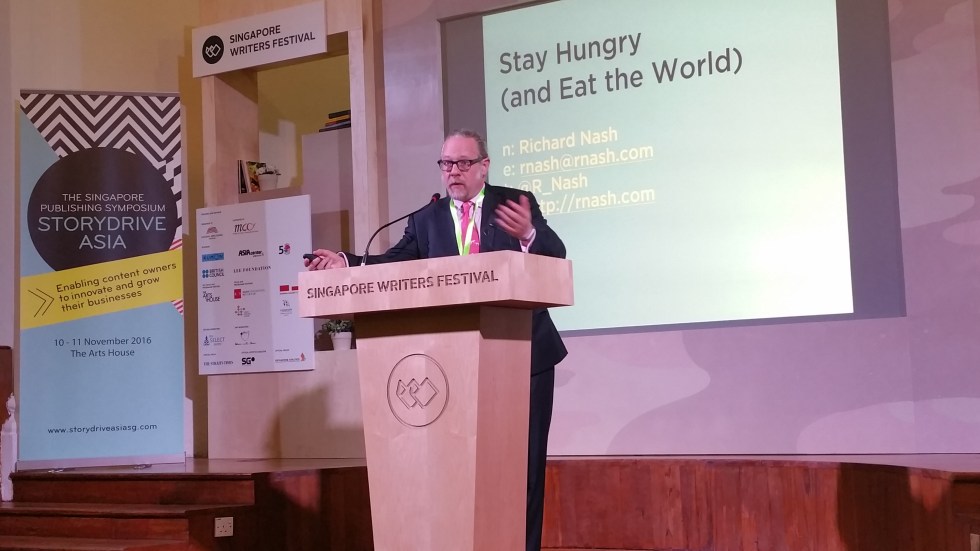 In the age of the Internet, it is widely believed that content is king.
However, US strategist and serial entreprenuer Richard Nash (above) thinks otherwise. He believes that the 21st century will be about sorting demand and culture is king, not content.
At his keynote address at StoryDrive Asia, Nash said the book publishing industry should start modelling itself as a service, rather than a manufacturing business.
Inaugural StoryDrive Asia to focus on transmedia
 Singapore Book Publishers Association and Frankfurt Book Fair organiser Frankfurter Buchmesse GmbH are putting together the inaugural StoryDrive Asia, a symposium for angel investors, incubators and professionals in publishing, software and gaming, photography and filmmaking and digital media.
The focus is on transmedia, which is about storytelling across media. For example, The Assassin’s Creed is more than just a computer game. It’s also a novel, comic book as well as a movie that’s slated for release on December 21. That’s transmedia, which is gaining traction across the globe.
“It’s a very exciting moment for publishing in Asia, especially in Southeast Asia, where media are interrelating in new and fascinating ways, and local content is getting better and better. And even as transmedia trends take root, our industry and local stakeholders have realised the importance of promoting the reading habit in this new media environment. We believe the best way to capture these trends, and reinforce Singapore’s role as a hub for IP and the media industry, is to partner with Frankfurter Buchmesse GmbH for a new kind of event: StoryDrive Asia,” said Peter Schoppert, President, Singapore Book Publishers Association.
ZTE releases Pre5G massive MIMO solution
 ZTE has released its latest Pre5G massive multiple-input multiple-output (MIMO) 2.0 solution at the 2016 China International Information and Communication Exhibition held in Beijing.
This new version is aimed at the high-end marketplace to help operators in the existing developed market meet the dual challenge of surging traffic demand, combined with limits on spectrum resource. With this new-generation product, single-station spectrum efficiency can be greatly improved and existing 4G user terminals can also benefit from the ultra-speed broadband experience without the need to change their mobile phones.
This new-generation massive MIMO 2.0 product is smaller in size, with 16-stream spatial division multiplexing, multi-carrier aggregation, and support for smooth evolution. The product can be flexibly deployed with support for two deployment modes: distribution and integration, to meet different requirement scenarios.
Baidu and NVIDIA team up on self-driving car
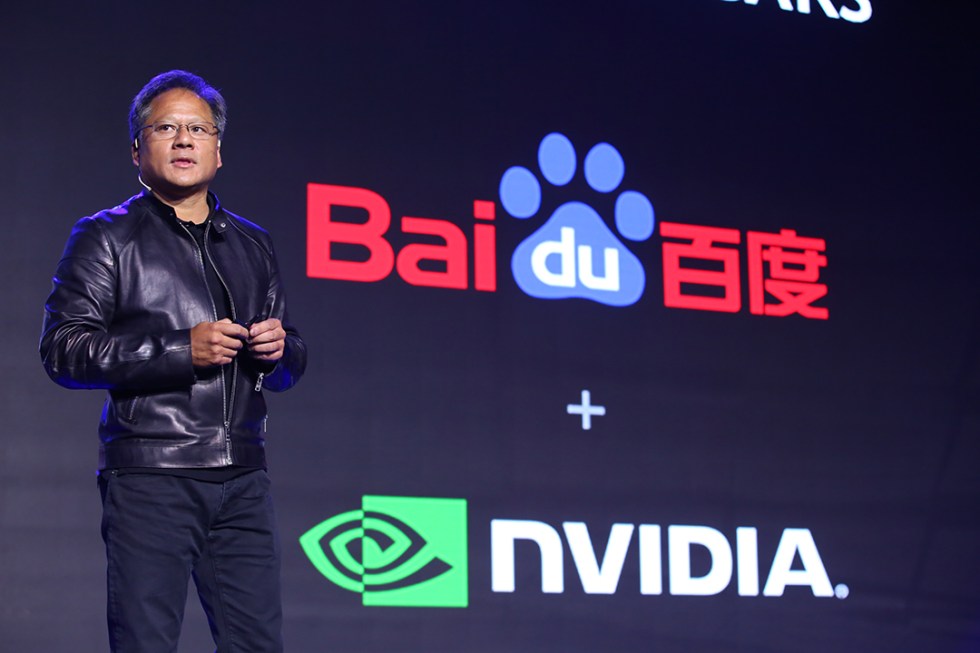
Baidu and NVIDIA are partnering to leverage artificial intelligence (AI) to create a cloud-to-car autonomous car platform for Chinese and global car makers. The partnership combines Baidu’s cloud platform and mapping technology with NVIDIA’s self-driving computing platform to develop solutions for HD maps, Level 3 autonomous vehicle control and automated parking.
Baidu CEO Robin Li and NVIDIA CEO Jen-Hsun Huang announced the collaboration at Baidu World Conference in Beijing yesterday.
“We’re going to bring together the technical capabilities and the expertise in AI and the scale of two world-class AI companies to build the self-driving car architecture from end-to-end, from top-to-bottom, from the cloud to the car,” said Huang .
NVIDIA brings GeForce 10-series GPUs to notebooks
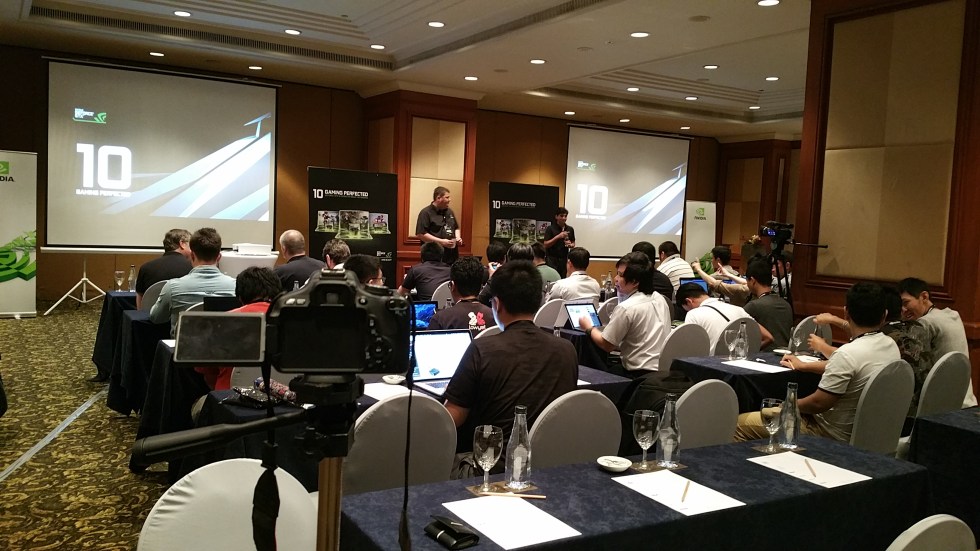
Hot on the heels of its recently-launched GeForce 10-series, NVIDIA has brought that same Pascal generation of GeForce power and performance to notebooks.
At an APAC Editors’ Day held in Bangkok, NVIDIA shared the capabilities that these notebook GPUs bring as well as gave the editors an opportunity to try out the virtual reality features on HTC Vive headsets.
The new GeForce GTX 1080, 1070 and 1060 GPUs for notebooks, providing gamers with a quantum leap forward in performance and power efficiency on the world’s fastest-growing gaming platform.
VR takes centre stage at Computex
 Virtual reality (VR) was the talk of the town at Computex in Taipei a couple of weeks ago.
At the NVIDIA Experience Centre in Grand Hyatt Taipei, a never-ending queue of people waited for the opportunity to check out VR demos powered by the newly-launched NVIDIA GeForce GTX 1080 GPUs.
In the halls — both at TWTC and Nangang — many exhibitors were up in force with their own flavours of VR. At one booth, a visitor put on a harness to try virtual parachuting while in several others, they checked out virtual Grand Prix racing and other demos.
NVIDIA scores perfect 10 with new GPU!
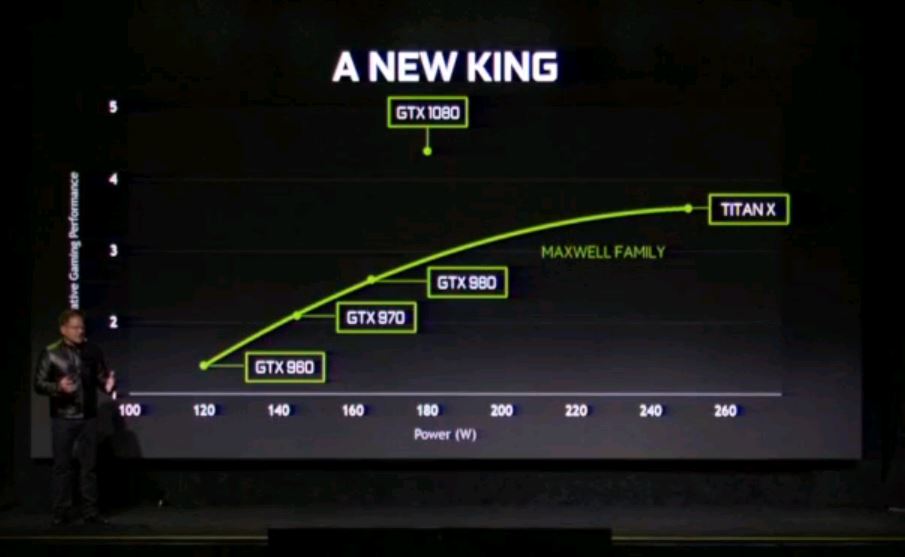 After weeks, if not months of rumours and false predictions, the announcement was finally made. NVIDIA finally revealed the much-awaited Pascal-based NVIDIA GeForce 1080.
What the rumours got correct was the new name of the card. What they missed was the launch date, which NVIDIA kept close to its hearts until CEO Jen-Hsun Huang made the announcement at a specially-gathered press event in Austin on Friday evening (Saturday morning Singapore time).
According to Huang, NVIDIA spent billions in research and development of Pascal and the new GPU.
Computex introduces InnoVEX to showcase ICT and IoT innovators
 Computex will introduce InnoVEX, a platform to showcase infocomm technology (ICT) and Internet of Things (IoT) innovators. Around 170 startups from 17 countries have already signed up to showcase their latest innovative products and services.
At InnoVEX, along with out-of-the-box, open booths and networking spaces, a wide range of events designed to maximise innovative, technological, and investment exchanges to help startups succeed, including forums, demos, matchmaking, networking events, and pitch contests with a cash prize of US$30,000.
The show will be held at Taipei World Trade Center (TWTC) Exhibition Hall 3 from May 31 to June 2. Diverse activities such as keynote speech, forums, demo, pitch contest, and networking parties will be held throughout the show.
NVIDIA unveils world’s first deep learning supercomputer

At his opening keynote address at GTC in San Jose, Jen-Hsun Huang, CEO of NVIDIA made a slew of announcements, including the world’s first deep learning supercomputer to meet the unlimited computing demands of artificial intelligence (AI).
As the first system designed specifically for deep learning, the NVIDIA DGX-1 comes fully integrated with hardware, deep learning software and development tools for quick, easy deployment. It is a turnkey system that contains a new generation of GPU accelerators, delivering the equivalent throughput of 250 x86 servers.
The DGX-1 deep learning system enables researchers and data scientists to easily harness the power of GPU-accelerated computing to create a new class of intelligent machines that learn, see and perceive the world as humans do. It delivers unprecedented levels of computing power to drive next-generation AI applications, allowing researchers to dramatically reduce the time to train larger, more sophisticated deep neural networks.
Clock ticking for Challenger flagship store
A sale offering products at up to 80 percent off will certainly catch the eye. But, it could also bring a tear or two to the generations that have frequented Challenger Technologies’ megastore at Funan DigitaLife […]
GTC to kick off tomorrow with live webcast of keynotes
 News of an impending new NVIDIA GeForce graphics card based on next generation Pascal technology have been circulating wildly over the past few weeks.
And many are waiting with great anticipation of confirmation by NVIDIA co-founder and CEO Jen-Hsun Huang at his keynote address at GPU Technology Conference (GTC) tomorrow (April 6, 2 to 3 am Singapore time).
For those unable to be at GTC in San Jose, NVIDIA is webcasting live on the NVIDIA blog the keynote addresses:
- April 6, 12 to 2am (Singapore): Jen-Hsun Huang, NVIDIA co-founder and CEO
- April 7, 2 to 3am (Singapore): Rob High, IBM Watson CTO
- April 8, 2 to 3 am (Singapore): Gill Pratt, Toyota Research Institute CEO
Monash University launches M3 to accelerate research

Monash University is taking research to another level with the launch of M3, the third-generation supercomputer available through the MASSIVE (Multi-modal Australian ScienceS Imaging and Visualisation Environment) facility.
Powered by ultra-high-performance NVIDIA Tesla K80 GPU accelerators, M3 will provide new simulation and real-time data processing capabilities to a wide selection of Australian researchers.
“Our collaboration with NVIDIA will take Monash research to new heights. By coupling some of Australia’s best researchers with NVIDIA’s accelerated computing technology we’re going to see some incredible impact. Our scientists will produce code that runs faster, but more significantly, their focus on deep learning algorithms will produce outcomes that are smarter,” said Professor Ian Smith, Vice Provost (Research and Research Infrastructure), Monash University.
Xenith iCafe opens with 100 NVIDIA GeForce GPU-Powered PCs
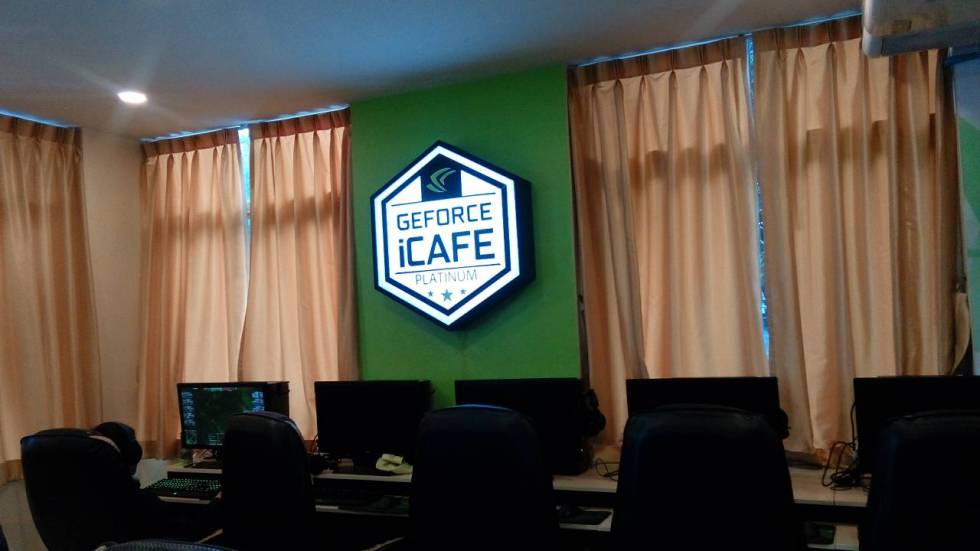 Gamers in northern Thailand, specifically Chiangmai, will get to enjoy premium gaming experience with the opening of Xenith iCafe in the city.
All its 100 PCs are equipped with NVIDIA GeForce GTX 960 GPUs, which deliver advanced performance, power efficiency, and realistic gameplay based on the latest NVIDIA Maxwell technology. They also come with high quality Razer gaming gear – mouse, keyboard and headset – all tailored to give gamers the best experience.
Situated near Chiangmai University , the modern and trendy Xenith iCafe features two gaming zones – a comfort zone and a VIP zone to cater to gamers’ needs as well as to host gaming events. This is a new trend in the iCafe market where owners can better balance cost, performance and functionality while delivering the gaming experience that their customers demand.
NVIDIA adds AI and supercomputing prowess to driverless cars
 The new NVIDIA DRIVE PX 2 is set to give driverless cars a major boost.
Touted at the world’s most powerful engine for in-vehicle artificial intelligence, it allows the automotive industry to use artificial intelligence (AI) to tackle the complexities inherent in autonomous driving. NVIDIA DRIVE PX2 utilises deep learning on NVIDIA’s advanced GPUs for 360-degree situational awareness around the car, to determine precisely where the car is and to compute a safe, comfortable trajectory.
“Drivers deal with an infinitely complex world. Modern artificial intelligence and GPU breakthroughs enable us to finally tackle the daunting challenges of self-driving cars,” said Jen-Hsun Huang, Co-founder and CEO of NVIDIA. “NVIDIA’s GPU is central to advances in deep learning and supercomputing. We are leveraging these to create the brain of future autonomous vehicles that will be continuously alert, and eventually achieve superhuman levels of situational awareness. Autonomous cars will bring increased safety, new convenient mobility services and even beautiful urban designs – providing a powerful force for a better future.”
NVIDIA unveils VR-ready programme
 NVIDIA is paving the way to virtual reality (VR) gaming experiences with the launch of its new VR-ready programme at CES.
Under the programme, PC and notebook makers and add-in card providers will deliver GeForce GTX VR Ready systems and graphics cards that deliver an immersive VR gaming experience. The programme minimises confusion regarding which equipment is necessary to play the range of VR games and applications increasingly coming to market.
Delivering a great VR experience demands seven times the graphics processing power of traditional 3D games and applications – driving framerates above 90 frames per second (fps) for two simultaneous images (one for each eye).
NVIDIA to unveil new technology for self-driving cars at CES
NVIDIA will unveil new technology for self-driving cars at CES, which will kick off in Las Vegas this week. Jen Hsun-Huang, CEO of NVIDIA will be hosting a press conference on January 5, 10am […]
NVIDIA brings VR to SEA

As the year heads to a close, the anticipation for virtual reality (VR) is gathering momentum. And NVIDIA has helped to raise the tempo by bringing VR to Southeast Asia in a closed door event for analysts, the media and enthusiasts.
Held on December 11 at Crown Plaza Changi Airport in Singapore, the event gave participants the opportunity to try out two of the hottest VR products — Oculus Rift and HTC Vive — powered by NVIDIA technologies.
Oculus Rift lets users immerse in three three-dimensional games (details are under embargo from the content owners), taking gaming to another level.
Unreal Engine 4 to include NVIDIA GameWorks VR
Epic Games will be using NVIDIA’s GameWorks VR technology, including Multi-Resolution Shading and VR SLI, for Unreal Engine 4 (UE4). UE4 software powers hundreds of games on PCs and consoles and is becoming a key tool […]
NVIDIA introduces Battlebox PC in ANZ
 At PAX Australia held over the weekend in Melbourne, NVIDIA introduced the combat-ready Battlebox PC, which is designed especially for hardcore gamers.
A Battlebox PC is a beast of a gaming machine with a powerful combination of the NVIDIA GeForce GTX 980 Ti GPU horsepower, two-Way NVIDIA SLI and the best components. It is also VR Ready and supports 4K gaming and DX12 for better visual effects and rendering techniques.
The Battlebox PC will is available from Centrecom, MSY, Mwave, PC Case Gear, PLE, Origin PC, Scorptec, and UMART in Australia, and Computer Lounge, PB Technologies and Playtech in New Zealand.
NVIDIA GRID 2.0 available in Australia
 Following its announcement at VMworld in August, NVIDIA GRID 2.0 is now available in Australia.
The performance, efficiency and flexibility improvements in the latest release of NVIDIA GRID mean enterprise businesses can now deliver even the most graphics-intensive applications to any connected device virtually.
With NVIDIA GRID 2.0, employees can work from almost anywhere without delays in downloading files, increasing their productivity. IT departments can equip workers with instant access to powerful applications, improving resource allocation. And data can be stored more securely in a central server, rather than on individual systems.
Bringing desktop gaming power to the notebook
Mobile gamers have always had a performance trade-off on their gaming notebooks. No matter how powerful the GPU is, it’s always a tad slower than its desktop cousin. But, not anymore! NVIDIA has announced the […]
Giving researchers instant feedback with immersive visualisation technologies
At GTC South Asia, Monash University shared how it has leveraged GPU technology to transform the way research is done. Entelechy Asia catches up with the university’s Professor Paul Bonnington (Professor and Director of E-research […]
NVIDIA establishes APAC’s first Deep Learning Technology Centre in Singapore
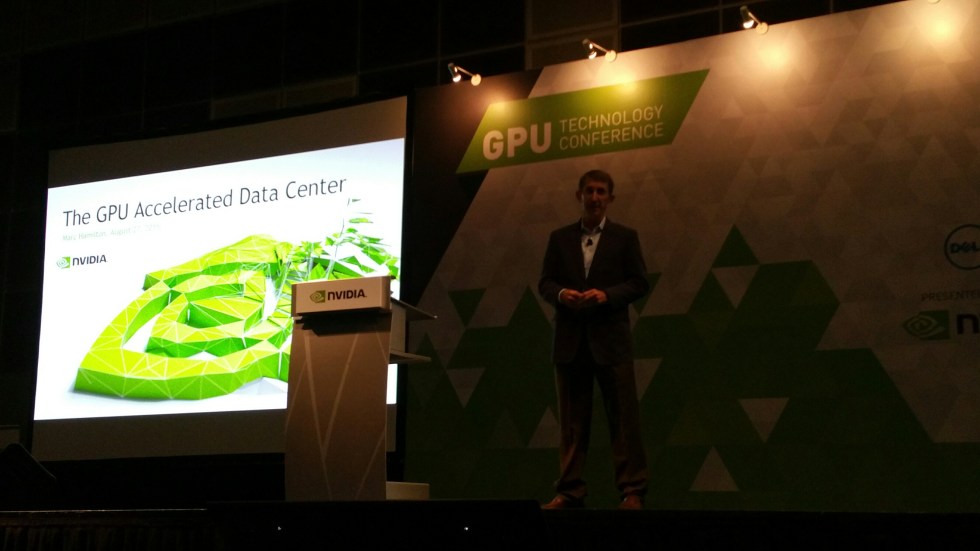
NVIDIA has established the NVIDIA Technology Centre Asia Pacific, the first of its kind in the region to focus on deep learning research and development (R&D).
Located at Nanyang Technological University in Singapore, the centre will leverage the power of NVIDIA’s graphics processing unit (GPU) platforms to develop innovative solutions for both the private and public sectors.
NVIDIA will invest more than S$20 million (US$14.2M) in the centre over a three-year period. This will include the deployment of a broad range of NVIDIA technologies — from the NVIDIA DRIVE PX platform for automated driver assistance systems and self-piloted vehicles, to the NVIDIA Tesla platform, which powers deep learning on the world’s top 5 public clouds as well as some of the world’s fastest supercomputers.
Virtual reality a hit at NVIDIA ballroom
At Computex, the exhibition officially closes at 6pm each day but at NVIDIA’s exhibition room, the doors only shut at 9pm. That’s because members of the IT industry fraternity and the public alike are making […]
SmarTech Festival a showcase of the smart home
Hall 3 of Taipei World Trade Centre has been transformed into a showcase of all things related to the smart home. From app-controlled lighting to the virtual wardrobe, visitors to the SmarTech Festival at Computex can […]
Kingston to unveil new gaming headset on June 4
A year after it introduced its first gaming headset, memory maker Kingston plans to unveil a new headset at Computex on June 4. From the grapevine, the new gaming headset will come in a limited […]
ThiEYE looks beyond China
Action cameras are all the rage, thanks to the popularity of GoPro. Even Xiaomi has delved into the market with its own iteration. Spotted at Computex 2015 today was ThiEYE, a China company that quietly but […]
Taiwan President Ma opens Computex
The world’s second largest technology show was opened today by President Ma Ying Jeou of Taiwan. He also handed out awards to winners of the Best Choice Awards. A quick tour of the halls […]
ZTE introduces new SDN-based OAM solution
ZTE has demonstrated a new OAM (operations, administration and management) solution based on SDN architecture at the Broadband & TV Connect Asia conference in Singapore.
The new Elastic SDN IPRAN OAM solution, powered by ZTE’s Elastic SDN technology, is claimed to enable operators to perform 90 percent of routine network OAM functions with one-touch control on mobile devices, generating at least 30 percent labour cost savings.
As operators accelerate deployments of 4G LTE networks to meet rising demand, it is becoming increasingly challenging to manage IP RAN mobile bearer networks. This problem is especially acute in Southeast Asia, where operators need to manage their IP RAN networks efficiently on outlying islands and mountainous terrain.
ZTE pitches Blade S6 Plus on eBay
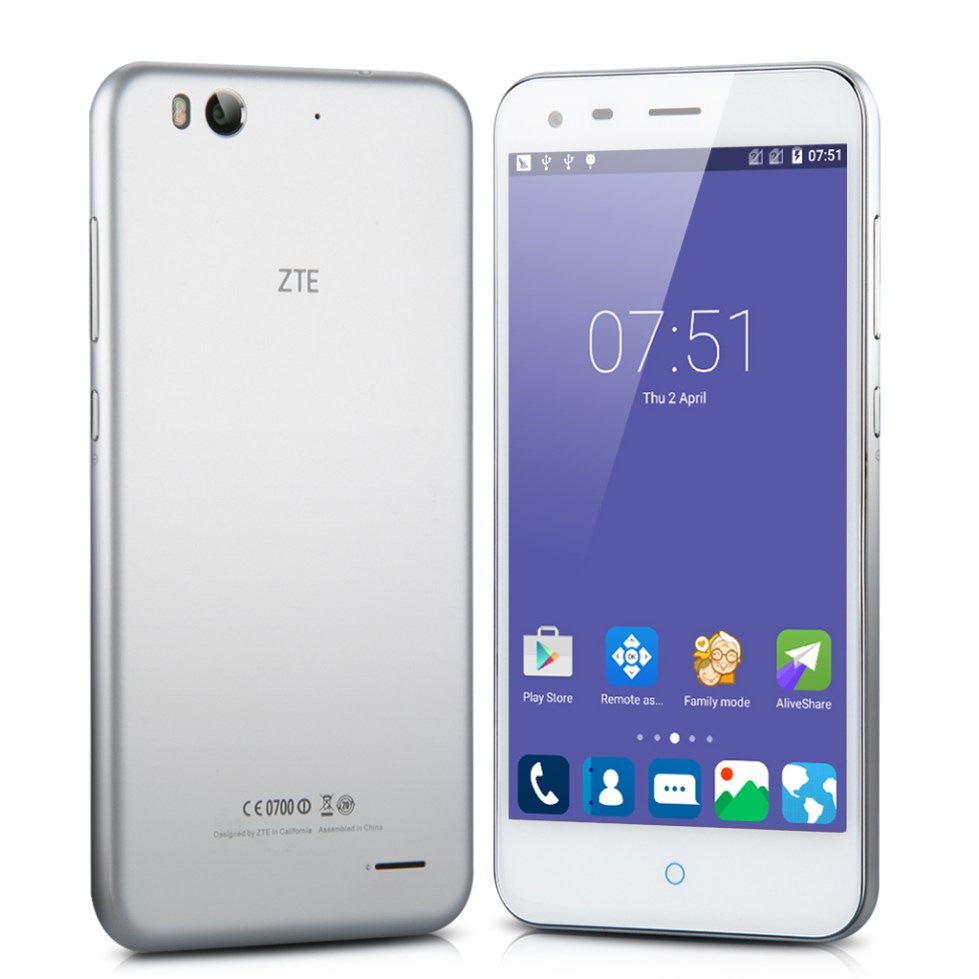 Another S6 has made its debut. It’s not Samsung’s but the ZTE Blade S6 Plus — and the company’s making it available globally on eBay for US$299.99.
The Blade S6 Plus was first showcased at Mobile World Congress 2015 in Barcelona, alongside the five-inch Blade S6, which was launched in January. Similar to the Blade S6, the Blade S6 Plus is powered by the Qualcomm Snapdragon 615 octa-core chipset and Adreno 405 image processor, and runs on Android 5.0 Lollipop with ZTE’s customisable MiFavor 3.0 user interface. It boasts a larger JDI Super Screen 5.5-inch HD display with In-Cell technology for better and more vibrant image quality, as well a higher-capacity 3000mAh battery.
Unique to the Blade S6 Plus is a function that allows the device to double as an infra-red remote control. Compatible with all major electronic and household appliance brands, the function allows Blade S6 Plus users to control televisions, set-top boxes, air conditioning units, DSLRs, and more. It is simple and easy to use, and saves users the hassle of switching between several different remote controls.
Mobile gaming fuelling gaming market growth
 Rising demand for mobile games is driving the video game market to reach US$80 billion in 2020, up from under US$70 billion last year, according to ABI Research.
Traditional PC and console segments, on the other hand, will see a one- to two-percent annual growth.
Triple-A titles have the potential to dramatically change a developer/publisher’s financials, but gaming’s long tail is equally important to the continued growth of the industry. This is particularly true in the mobile space where a hit title can catapult a mobile game developer into the upper echelons of the market — as was true for developers such as King Digital (Candy Crush Saga) and Supercell (Clash of Clans).
NVIDIA Titan X makes surprising debut
Rumours of an impending new Titan has been making the rounds for a while yet many were taken by surprise when it was announced at Game Developers Conference yesterday. Jen-Hsun Huang, President and CEO of NVIDIA, unveiled […]
New NVIDIA SHIELD made to game
 First, there was the SHIELD portable. Then, the SHIELD Tablet. Today, at Game Developers Conference in San Francisco, NVIDIA has unveiled its third SHIELD, an Android TV console that delivers video, music, apps. and amazing games to the home.
Built on Android TV, SHIELD can play top-quality 4K video content, includes one-click access to Google Voice Search and provides the richness of Android’s app ecosystem.
The sleek device comes loaded with NVIDIA technologies, including the recently launched NVIDIA Tegra X1 mobile superchip. It can also access the NVIDIA GRID game-streaming service, which is powered by GeForce GTX supercomputers in the cloud.
Renovo Coupe zooms ahead with NVIDIA DRIVE
Electric cars may not be common in Asia at the moment but Renovo is giving a foretaste of the capabilities with the Renovo Couple, the first all-electric American supercar. The 500-horsepower Coupe includes a cockpit concept […]
T3 Singapore ceases
Another technology publication in Singapore has breathed its last. T3 Singapore has folded with the September issue being its last. This is a sad development for the print media industry. According to PlayWorks, publisher of […]
Iray VCA renamed NVIDIA VCA to reflect expanded support
 At GPU Technology Conference in March, NVIDIA introduced Iray VCA (Visual Computing Appliance). Today, NVIDIA has renamed the appliance as NVIDIA VCA to reflect its expanded industry support for GPU rendering across multiple applications.
NVIDIA VCA dramatically accelerates ray tracing, enabling users to interact with computer models of such high visual fidelity that it can eliminate the need for 3D physical prototypes. In addition to native support of NVIDIA Iray, Chaos Group is supporting V-Ray RT on VCA for Autodesk 3ds Max, with Autodesk Maya, McNeel Rhino, and Trimble SketchUp for later in the year. Dassault Systemes 3DXCITE Bunkspeed support is also scheduled for later this year.
The scalable, network-attached GPU rendering appliance comes with eight high-end NVIDIA GPUs and is designed to do just one thing — provide designers and artists with the fastest and easiest way to create photorealistic images of their creations. It’s claimed to be so fast that designers can interact with their models or scenes in real-time rather than waiting minutes or even hours for rendered images to come back. This means that designers can study the play of light and reflection from their designs and catch flaws like glare on the interior windshield of a digital car model or see how the lobby of a proposed office building will look at different times of day.
Shenzhen hosts SIGGRAPH Asia for the first time in December
 SIGGRAPH Asia 2014, Asia’s largest computer graphics (CG) event, will be held in Shenzhen, China, for the first time from December 3 to 6
More than 7,700 attendees from over 60 countries are expected at the conference and exhibition, which will feature a myriad of experts and exhibits in fields such as hardware and software, film and game production, as well as research and education.
The conference will include a Business Symposium, dealing with discussions related to the business, creative management, production and efficiency, as well as best practices of the computer graphics industry; Computer Animation Festival that showcases the most innovative and compelling of international animation and visual effects works; courses on contemporary topics in computer graphics and interactive techniques, and a showcase of emerging technologies which features hands-on demonstrations and installations focusing on virtual reality, augmented reality, robotics, wearable devices, 3D graphics, haptic devices and more .
ZTE mobile phones get Google Now Launcher
 ZTE has pre-loaded Google Now Launcher on its smartphones to offer improved user experience and better value to users. It plans to pre-load Google Now Launcher on all Android 4.4 and above smartphones that have Google Mobile Services and Google Play enabled.
ZTE has worked closely with Google to pre-load Google Now Launcher onto several ZTE devices, including the Blade Vec 4G smartphone, which runs on Android 4.4 and sports the Snapdragon 400 processor with integrated multi-mode 3G/4G LTE designed to deliver a better user experience.
The ZTE Blade Vec 4G and one other ZTE premium device will be officially presented at a ZTE press conference to be held in Hong Kong on July 24.
ZTE moots pre-5G concept
With a highly-connected world where fast Internet access is vital, ZTE has pushed the envelope a little further with its pre-5G concept shared at LTE World Summit 2014 in Nice, France.
It has announced that under certain conditions, some 5G technologies can provide a 5G-like user experience on 4G terminals without changing the air interface standards.
“With next-generation 5G technologies being deployed in 2020, there were industry concerns over what technologies will be used in the next six years. To address this, ZTE proposes to apply some of the 5G technology on top of 4G to meet users’ requirements,” said Dr Xiang Jiying, CTO of wireless products at ZTE.
NVIDIA Tegra K1 leads Android charge
Google unveiled a host of upcoming technologies running on Android at its annual Google I/O and NVIDIA’s Tegra Ki is a key part of the foray into new mobile computing areas such as gaming, TV, automotive, and […]
Sweet on cloud
Cotton candy — what a simple, yet powerful illustration of the cloud. That’s what Acer offered at its booth at Computex, where visitors were treated to the sweet creation. It’s the Taiwanese IT giant’s way […]
Simply amazing! 4K and G-SYNC make gaming a dream come true
 It’s Dragon Boat Festival, a public holiday in Taiwan but instead of choosing to run off for the holidays, hundreds of young gamers made a beeline to ATT where NVIDIA held the NVIDIA Gamer’s Day as a run up to Computex, which starts tomorrow.
From the moment the event kicked off at noon, there was no holding back the enthusiasm as the crowd checked out the latest and greatest in gaming technologies such as 4K monitors, G-SYNC, GameStream, ShadowPlay, SHIELD, GeForce GTX 700 series GPUs, and GeForce GTX 800M series-enabled notebooks. They took photos, touched, played with, and experienced the gaming devices first hand. Watch Dogs, AC4 Black Flag and Daylight were among the games on offer.
A team of five amateur gamers blew aside all the competition by winning six consecutive games to take home a whopping US$10,000.
NVIDIA clinches Computex Best Choice Awards for Tegra K1 and GRID
 NVIDIA has done the double by snaring the Computex Best Choice Award for its NVIDIA GRID technology and the Golden Award for the NVIDIA Tegra K1 mobile processor.
This is the sixth year running that NVIDIA has picked up the award, marking the longest winning streak of any international Computex exhibitor. More than 475 technology products from nearly 200 vendors competed for this year’s recognition.
Tegra K1 is a 192-core super chip, built on the NVIDIA Kepler architecture — the world’s most advanced and energy-efficient GPU. Tegra K1’s 192 fully programmable CUDA cores deliver the most advanced mobile graphics and performance, and its compute capabilities open up many new applications and experiences in fields such as computer vision, advanced imaging, speech recognition and video editing.
NVIDIA helps power self-driving cars
Those futuristic movies showing self-driving cars have come to reality with the likes of the Audi A7. AT GTC 2014, the car glided across the stage as Jen-Hsun Huang, CEO of NVIDIA, delivered his keynote address […]
MWC reports record visitors
 More than 85,000 visitors from 201 countries attended Mobile World Congress (MWC), which ended yesterday. This is a record for the mobile industry event, which saw many new product launches and announcements.
In addition to the more than 80,000 attendees at MWC at Fira Gran Via, more than 5,000 people participated in a range of partner programmes at Fira Montjuïc.
“By any measure, the 2014 Mobile World Congress was a stunning success and we thank our attendees, exhibitors, sponsors and partners for their continued support,” said John Hoffman, CEO of GSMA. “Beyond the number of attendees and participating companies, the continued expansion of the event to address key adjacent industry sectors demonstrates just how pervasive mobile is in our everyday lives and how integrated it is becoming in everything that we do. It’s gratifying to be part of such a dynamic, exciting industry.”
ZTE launches 4K p60 Ultra HD set top box
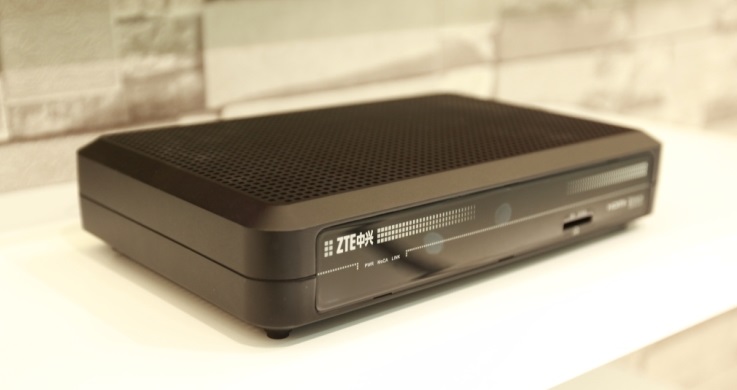 ZTE has launched its 4K p60 Ultra HD set top box (STB), the ZXV10 B803, at Mobile World Congress 2014 in Barcelona.
Based on the Broadcom BCM 7252 chip, the device supports 4Kx2KP60 decoding capability, which can decode Ultra HD video with the maximum resolution of 3840×2160. In comparison to traditional HD Internet STBs, the 4K UHD STB can display more vivid and precise images to significantly enhance the user experience.
4K video technology (also named as 2160p) is a new type of resolution standard. Its UHDTV specification can deliver a resolution of 3840×2160 pixels, and the maximum Full Aperture 4K specification reaches 4096×3112. In comparison to the current mainstream 1080p resolution of 1920×1080, 4K can provide over four times the image definition quality. In the future, 4K HD TV sets will be very popular, and the 4K HD and HEVC decoding technologies will help raise the HD market tide.
Qualcomm CEO receives 2014 GSMA Chairman’s Award
 Dr Paul E Jacobs, Chairman and CEO of Qualcomm, has been named the recipient of the 2014 GSMA Chairman’s Award. Established in 1995, the award recognises outstanding personal contribution to the growth and development of mobile communications around the world.
“This award recognises Paul’s long-term contribution, as well as that of Qualcomm, in delivering sustained innovation, ecosystem investment and a commitment to the convergence of technology standards for next-generation interoperability. The mobile industry has been a major beneficiary of his commitment to innovation and leadership, as have the billions of men and women around the world whose lives have been changed by mobile,” said Jon Fredrik, Chairman of GSMA.
Founded in 1985, Qualcomm has become one of the telecommunications industry’s greatest start-up success stories, pioneering some of the most significant innovations and technical developments and through its unique business model, heavily investing in R&D and broadly licensing its intellectual property to more than 250 companies across the industry.
ZTE introduces two new handsets at MWC
With a focus on delivering a superior user experience, ZTE will launch the ultra slim Grand Memo II LTE with six-inch screen, one of the first Firefox OS 1.3 devices, the ZTE Open C and […]
Facebook’s Mark Zuckerberg to speak at MWC
 Mark Zuckerberg, Founder and CEO of Facebook is among the line-up of new speakers in the keynote programme at the upcoming 2014 GSMA Mobile World Congress (MWC).
He will be headlining in the first of the week’s Mobile World Live keynote sessions on Monday, February 24 at 18:00-18:45. In this session, he and renowned technology journalist and writer David Kirkpatrick will explore the importance of extending the benefits of ubiquitous Internet access to the unconnected world. In addition to the live audience in the Conference Village in Fira Gran Via, the Mobile World Live keynotes will be streamed live across the venue and to hundreds of thousands of viewers globally via the Mobile World Live portal.
“Mobile World Congress 2014 is set to be our biggest, most ambitious and most diverse event yet, offering new experiences for attendees across the growing mobile ecosystem,” said Michael O’Hara, Chief Marketing Officer of GSMA. “Over four days, attendees will have the opportunity to see just how broadly mobile is impacting our everyday lives, how we work, live and play. We’re looking forward to seeing the mobile world gather in Barcelona.”
NVIDIA GRID VCA makes Asian debut
Visitors to SIGGRAPH Asia last week were the first to see and catch the demo of NVIDIA GRID VCA in Asia. Essentially, NVIDIA GRID VCA is a powerful GPU-based system that runs complex applications such as Autodesk […]
Power limiting progress in mobile devices
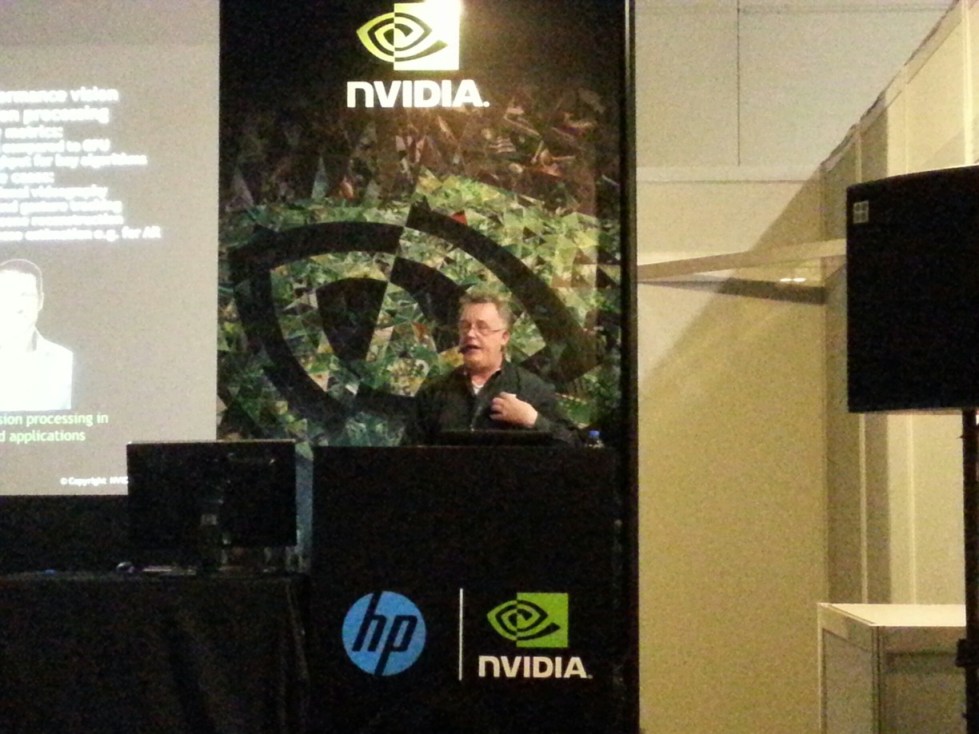 Power is a big limitation in mobile devices despite improvements in battery power, according to Neil Trevett, Vice President Mobile Content of NVIDIA.
“Power is the new performance limiter. Developers need to use acceleration to preserve battery life and high performance,” he said at NVIDIA Tech Talk at SIGGRAPH Asia in Hong Kong.
On the other hand, advanced mobile GPUs and new sensors are combining to make vision processing the next wave of mobile visual processing. NVIDIA is building a stack of advanced silicon, APIs and libraries to enable advanced mobile vision applications.
SIGGRAPH Asia 2013 opens in Hong Kong
Computer graphic professionals and enthusiasts made a beeline to Hong Kong Convention and Exhibition Centre in the opening day of SIGGRAPH Asia. The show has returned to Hong Kong after being held in Singapore last […]
SIGGRAPH Asia 2013 starts tomorrow
Exhibitors were working hard to get ready for SIGGRAPH Asia, which starts tomorrow at the Hong Kong Convention and Exhibition Centre. Among them are HP and NVIDIA which have lined up two full-days of Tech […]
New NVIDIA Tesla K40 speeds up supercomputing and big data analytics
 The NVIDIA Tesla K40 GPU accelerator is arguably the world’s highest performance accelerator ever built. It is capable of delivering extreme performance to a wide range of scientific, engineering, high performance computing (HPC), and enterprise applications.
Providing double the memory and up to 40 percent higher performance than its predecessor, the Tesla K20X GPU accelerator, and 10 times higher performance than the fastest CPU, the Tesla K40 GPU is the world’s first and highest-performance accelerator optimised for big data analytics and large-scale scientific workloads.
Featuring intelligent NVIDIA GPU Boost technology, which converts power headroom into a user-controlled performance boost, the Tesla K40 GPU accelerator enables users to unlock the untapped performance of a broad range of applications.
NVIDIA GRID brings visual computing capabilities to Australia
Businesses across Australia can now deploy graphics-accelerated virtual desktops to their employees – cost-effectively, anywhere and on any device – with the adoption of NVIDIA GRID technology by leading technology partners.
Servers from Cisco, Dell, HP, IBM and others are now incorporating NVIDIA GRID into their desktop virtualisation solutions. Combined with enterprise virtualisation software from Citrix, Microsoft or VMware, these solutions can deliver GPU-accelerated applications and desktops to engineers, designers, architects, product design teams and special-effects artists throughout Australia.
Melbourne-based Xenon Systems was appointed as the first NVIDIA GRID Demo Centre for Australia and New Zealand earlier this year.
 Entelechy Asia