
Arm has launched its first ever production silicon designed for large‑scale agentic AI workloads. The AGI CPU signifies a historic shift in the company’s business model from licensing CPU IP to also selling its own […]
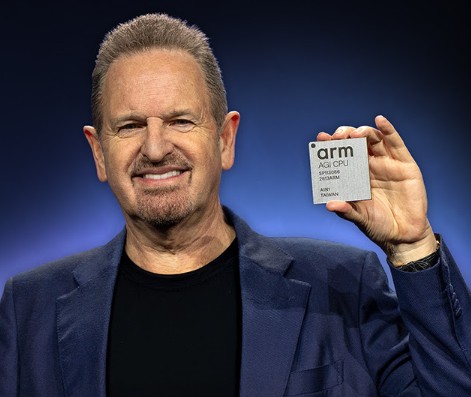
Arm has launched its first ever production silicon designed for large‑scale agentic AI workloads. The AGI CPU signifies a historic shift in the company’s business model from licensing CPU IP to also selling its own […]

One hundred billion devices that are ready for AI. That’s what Arm aims to deliver by 2025. At the Computex 2024 in Taipei, Arm CEO Rene Haas made a bold prediction that underscores the rapid […]

Qualcomm is eyeing a stake in Arm, according to reports. It plans to bring together a consortium to acquire the UK chip designer. This move comes after NVIDIA’s US$66 billion bid for Arm fell through […]

Seventeen months after NVIDIA announced its intention to acquire Arm, the deal has been called off. Rumours of the end of the agreement were swirling this morning with the media working on overdrive to confirm […]

Arm-based server has received a massive endorsement from industry benchmarking group MLCommons. The new server aced the group’s MLPerf benchmarks on inference tests in the data centre category. The latest benchmarks show that NVIDIA GPU-powered […]

CyberLink has linked up with Asus to develop a solution with integrated facial-recognition capabilities for use in areas such as security, access control, visitor management and contactless experiences for retail, public services, and hospitality. The […]

After weeks of speculation, it’s now official. NVIDIA will acquire Arm from SoftBank Group Corp (SBG) for US$40 billion.
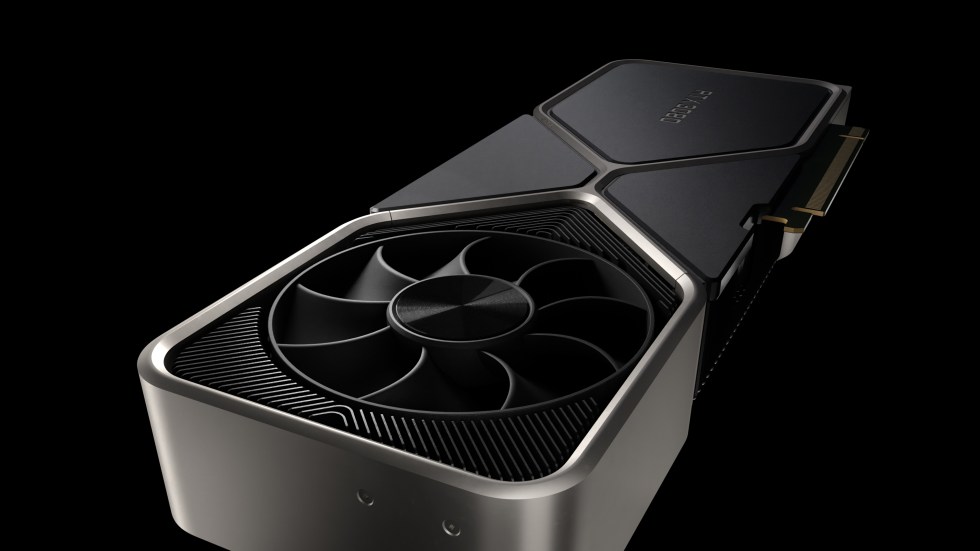
It seems like SoftBank is on the brink of selling Arm to NVIDIA. The deal is reported to be worth more than US$40 billion, representing more than 25 percent gain for SoftBank, which bought Arm for US$32 billion in 2016.

The rumours surrounding NVIDIA’s acquisition of Arm continue to swirl. According to Bloomberg citing people familiar with the matter, the talk is in an advanced stage with a deal expected to be reached in the next few weeks.

NVIDIA is reported to have sounded out SoftBank on acquiring a stake in British chipmaker Arm. If this pans out, it could be one of the biggest chip deal in the industry.
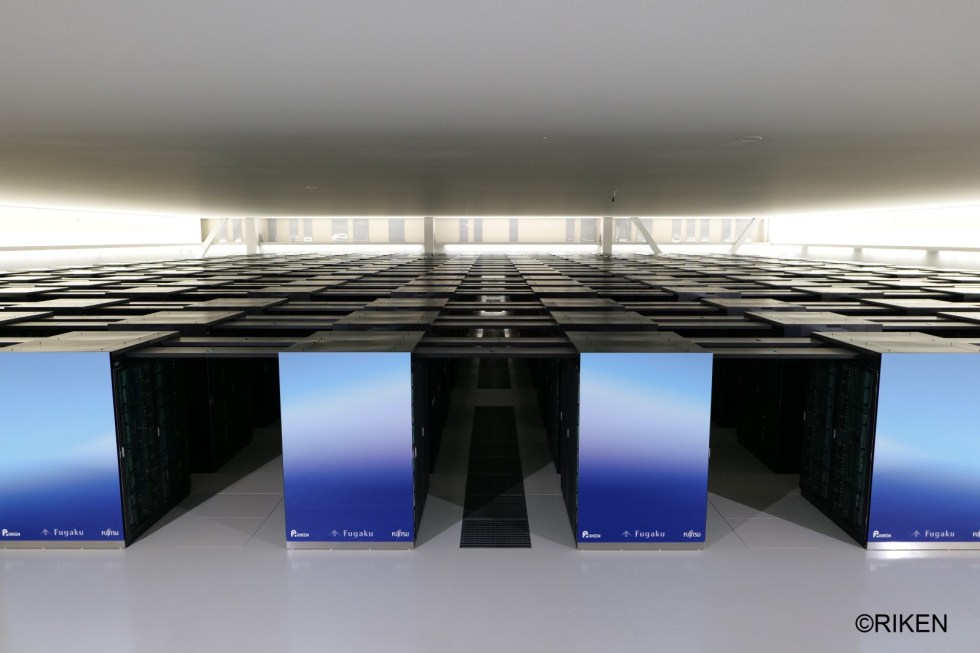
The Fugaku supercomputer jointly developed by RIKEN and Fujitsu has been crowed the world’s fastest supercomputer in the Top500 list. This follows its achievement as the world’s most efficient supercomputer on the Green500 list in November 2019.
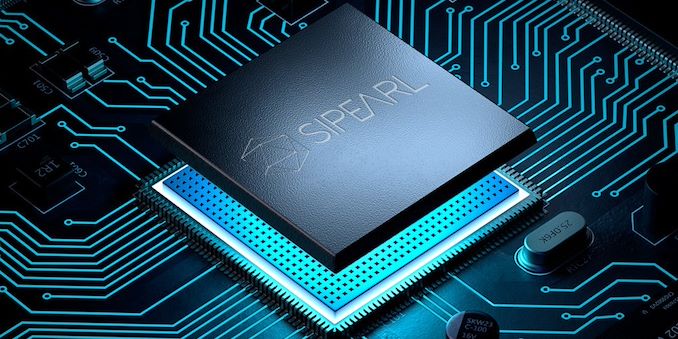 For the longest time, the CPU market has been predominantly about two players — AMD and Intel. While there are others, they are way behind the Big Two. But French company SiPearl seems to be making a play to be the third party with the signing of a major licensing agreement with Arm.
 Having powered generations of cellular devices, Arm has joined the O-RAN Alliance, a leading industry forum with a vision of openness and innovation fostered by a broad community of experts. And Arm aims to help drive this vision to become a reality.
 Arm has forged a strategic partnership with Hexing to use the Arm Pelion Internet of Things (IoT) platform to create full-stack IoT solutions for Hexing’s customers and expansion into new markets.

Source: ArmArm has launched the Cortex-M55, an artificial intelligence (AI) processor based on the Armv8.1-M architecture with Arm Helium vector processing technology for significantly enhanced, energy-efficient digital signal processing and machine learning (ML).
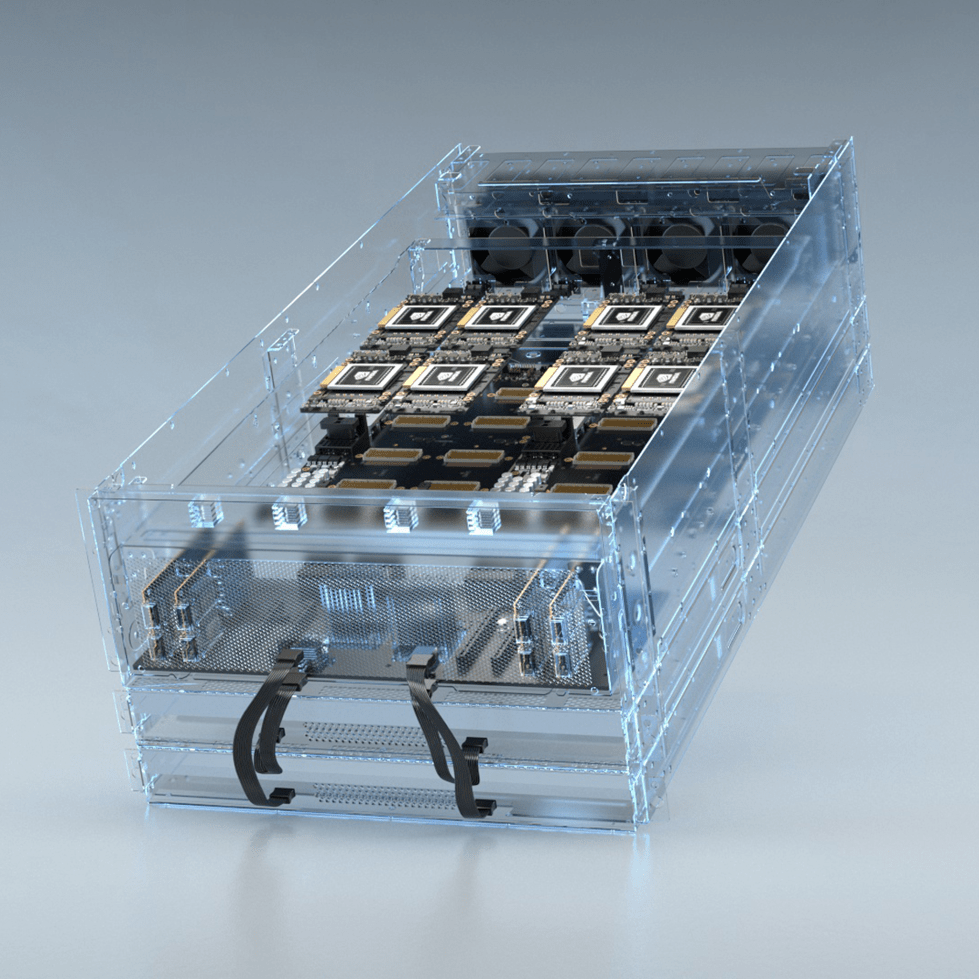
NVIDIA’s new reference design platform enables companies to build GPU-accelerated Arm servers for running a broad range of applications, from hyperscale-cloud to exascale supercomputing and beyond.NVIDIA has teamed up with Arm and a host of tech leaders to introduce a reference design platform for enterprises to quickly build GPU-accelerated Arm-based servers.
 Giving customers choices and enabling innovation in the high performance computing (HPC) space are the key reasons why NVIDIA is providing support for Arm CPUs.
 Arm is taking its recently-announced Project Trillium a step further with a collaboration with NVIDIA. The partners will bring the open-source NVIDIA Deep Learning Accelerator (NVDLA) architecture into Project Trillium platform for machine learning.
 OpenSynergy’s COQOS SDK v9.0 virtualisation platform now supports ARMv8-A architectures.
The 64-bit bus width of the ARMv8-A processors makes it possible to meet the high performance requirements of the next generation automotive ECU’s such as cockpit controllers or driver assistance systems.
“With COQOS SDK v9.0, we enable our customers to take full advantage of the newest automotive system-on-chips (SoCs),” said Stefaan Sonck Thiebaut, CEO of OpenSynergy.
 The personal computer (PC) is still alive and breathing. According to ABI Research, 163 million notebook PCs shipped globally in 2015.
The majority were laptops, which constituted nearly 80 percent of the category. The data suggests that despite a floating myth speculating that it will only be a matter of time before PCs meet their demise, the market is still going strong and shows no sign of slowing down in the immediate future.
“Industry experts greatly exaggerated the death of the PC. The platform is continuing to evolve its designs to provide flexibility for productivity purposes, while also adapting its shape to support tablet-like, touch applications. Chromebooks and ultraportable PCs will continue to drive the most growth within the notebook PC market,” said Jeff Orr, Research Director of ABI Research.
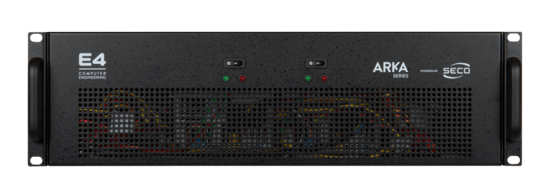
Server vendors are leveraging the performance of NVIDIA graphics processor unit (GPU) accelerators for 64-bit ARM development systems for high performance computing (HPC).
ARM64 server processors were primarily designed for micro-servers and web servers because of their extreme energy efficiency. Coupled with GPU accelerators using the NVIDIA CUDA 6.5 parallel programming platform, they can now tackle HPC-class workloads.
GPUs provide ARM64 server vendors with the muscle to tackle HPC workloads, enabling them to build high-performance systems that maximise the ARM architecture’s power efficiency and system configurability.
NVIDIA has made further inroads into high performance computing (HPC) with the acquisition of The Portland Group (PGI), a leading independent supplier of compilers and tools. Founded in 1989, PGI has a long history of innovation […]
 Entelechy Asia