
Baidu and Uber will begin offering Apollo Go autonomous ride-hailing trips on the Uber app in Dubai next month. Launched in partnership with Dubai’s Roads and Transport Authority, the fully driverless vehicles will initially operate […]

Baidu and Uber will begin offering Apollo Go autonomous ride-hailing trips on the Uber app in Dubai next month. Launched in partnership with Dubai’s Roads and Transport Authority, the fully driverless vehicles will initially operate […]

NVIDIA is collaborating with Uber to build the world’s largest level 4 autonomous robotaxi network using its Drive AGX Hyperion 10 platform. Under the partnership, Uber will be able to integrate human and robot drivers […]

Baidu and Uber are partnering to accelerate the deployment of autonomous vehicles for ride-hailing in global markets. The collaboration will see thousands of Baidu’s Apollo Go autonomous vehicles integrated into the Uber platform in cities […]
 Indonesia-based Gojek is taking its ride-hailing service island-wide in Singapore from today. This follows a successful beta launch in November which covered the southern-central and eastern part of Singapore.
 By Edward Lim
In the early 2000s, I visited Beijing for the first time and was amazed to see a taxi using a global positioning system (GPS) to get me to my destination. To put things in perspective, this was before the arrival of smartphones and GPS wasn’t even used in Singapore.
 Uber is miles ahead of the competition in the worldwide ride sharing market, according to ABI Research. Regional leader Grab came in at third, behind Didi Chuxing of China and ahead of Lyft.
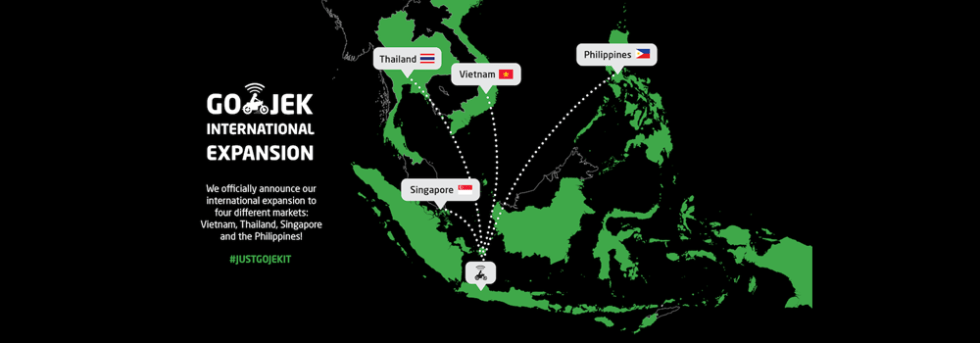 Go-Jek will be heading to the Philippines, Singapore, Thailand, and Vietnam in the next few months.
The Uber app will officially cease in Southeast Asia (SEA) on May 8, 2018. This follows the acquisition of its SEA business by rival Grab in March.
A 49-year-old woman has become the first pedestrian to be killed by an autonomous vehicle.
 Most Southeast Asian capitals and major cities are notorious for its traffic congestion. In separate developments, Alibaba and Google have taken steps to be more involved in the transportation industries in Malaysia and Indonesia respectively.
 Entelechy Asia turns five today. So much has changed since we launched in November 2012.
 Entelechy Asia