Category: Events

NVIDIA invests in Deep Instinct

NVIDIA is investing in Deep Instinct, an Israeli-based startup that uses deep learning to thwart cyber attacks.

Deep Instinct uses a GPU-based neural network and CUDA to achieve 99 percent detection rates, compared with about 80 percent detection from conventional cyber security software. Its software can automatically detect and defeat the most advanced cyber attacks.

“Deep Instinct is an emerging leader in applying GPU-powered AI through deep learning to address cybersecurity, a field ripe for disruption as enterprise customers migrate away from traditional solutions. We’re excited to work together with Deep Instinct to advance this important field,” said Jeff Herbst, Vice President of Business Development of NVIDIA.

Volvo, Autoliv to roll out NVIDIA-based self-driving cars by 2021

Volvo Cars and Autoliv are teaming up with NVIDIA to develop advanced systems and software for AI self-driving cars. The three companies will work together along with Zenuity — a newly-formed automotive software development joint venture equally owned by Volvo Cars and Autoliv — to develop next-generation self-driving car technologies.

Production vehicles built on the NVIDIA DRIVE PX car computing platform are planned for sale by 2021.

“Artificial intelligence (AI) is the essential tool for solving the incredibly demanding challenge of autonomous driving. We are building on our earlier collaboration with Volvo to create production vehicles that will make driving safer, lead to greener cities and reduce congestion on our roads,” said  Jensen Huang, Founder and CEO of NVIDIA, at a keynote address at  Automobil Elektronik Kongress.

Taiwan: Home of GeForce!

At the keynote of NVIDIA AI Forum, NVIDIA CEO and Founder Jensen Huang called “Taiwan is the home of NVIDIA’s GeForce system”.

Video gaming is a US$100 billion industry and “GeForce PC gaming is the number one platform, nearly 200 million GeForce installed base,” declared Huang.

He announced the new NVIDIA Max-Q platform which lets gaming notebook makers produce faster, slimmer and quieter machines.

Singapore to focus on 4 technology areas

Singapore will be focusing on four technology areas to build the foundation for its digital transformation. These are artificial intelligence (AI) and data science, cybersecurity, immersive media, and Internet of Things and future communications infrastructure.

At the opening of Infocomm Media Business Exchange at Marina Bay Sands Singapore Convention Centre, Minister for Communications and Information Dr Yaacob Ibrahim noted that “they are exciting fields with bright prospects in their own right, and they have great potential to transform other industries and enhance people’s lives”.

Artificial Intelligence and Data Science
The nation has established AI.SG, a national programme with funding of up to S$150 million to boost Singapore’s AI capabilities.

Deeper into AI

The keynote address at Google I/O yesterday showed that Google is much more than just a search company. It is becoming more artificial intelligence (AI). Google is specifically using deep learning to help in many areas of everyday life.


Here are some as shared on Google’s blog post:

Google Assistant can help answer your questions and find information—but it can also help you get all kinds of useful things done. Today we’re adding a few more:

  • Schedule new calendar appointments and create reminders. Starting today on Google Home, you can schedule appointments and soon you’ll also be able to add reminders. Since it’s the same Google Assistant across devices, you’ll be able to get a reminder at home or on the go.
  • Make your home smarter. We now have 70+ smart home partners supporting the Google Assistant across Google Home and Android phones, including August locks, TP-Link, Honeywell, Logitech, and LG.

Enhancing public safety

Motorola Solutions has unveiled highly advanced technology solutions to enhance the capabilities of nation-wide public safety networks at Critical Communications World 2017 in Hong Kong. These include mission-critical radio technologies, specialised software, mission critical broadband, command […]

Toyota cruises with NVIDIA Drive PX2

Prime mover powered by NVIDIA Drive PX2.

Toyota, one of the world’s largest automakers and renowned for its high standards and priority on safety, has picked NVIDIA Drive PX for its autonomous vehicles. It will use the AI car computer platform to power advanced autonomous driving systems planned for market introduction within the next few years

Engineering teams from the two companies are already developing sophisticated software that will enhance the capabilities of Toyota vehicles, enabling them to better understand the massive volume of data generated by sensors on the car, and to handle the broad spectrum of autonomous driving situations.

“Toyota has worked on autonomous driving technologies for over 20 years with the aim of reducing traffic fatalities to zero as an ultimate goal, achieving smoother traffic, and providing mobility for all. Through this collaboration, we intend to accelerate the development of autonomous driving systems that are even more safe and capable,” said Ken Koibuchi, Executive General Manager of Toyota.

Finally, the Big Bang for AI!

I am AI opening video at GTC 2017 keynote.

Artificial intelligence (AI) is not new. In fact, it has so many false starts over the past 60 years. The term went into hibernation for a long time.

Research into AI began way back in Dartmouth College in 1956 and was constantly associated with being the next frontier in the 1980s when mainframe computers ruled and supercomputers were a ginormous investment that very few could afford.

Despite the research put in over the years, the technology never quite took off and fell flat in many instances.

Voila, Volta!

NVIDIA CEO Jensen Huang announcing Tesla V100.

NVIDIA has pulled yet another trick out of its always-filled hat of technology goodies with the launch of Volta, the world’s most powerful GPU computing architecture. At his keynote address at GTC in San Jose, NVIDIA CEO Jensen Huang dubbed it “the next level of computer projects”.

Volta is created to drive the next wave of advancement in artificial intelligence (AI) and high performance computing.

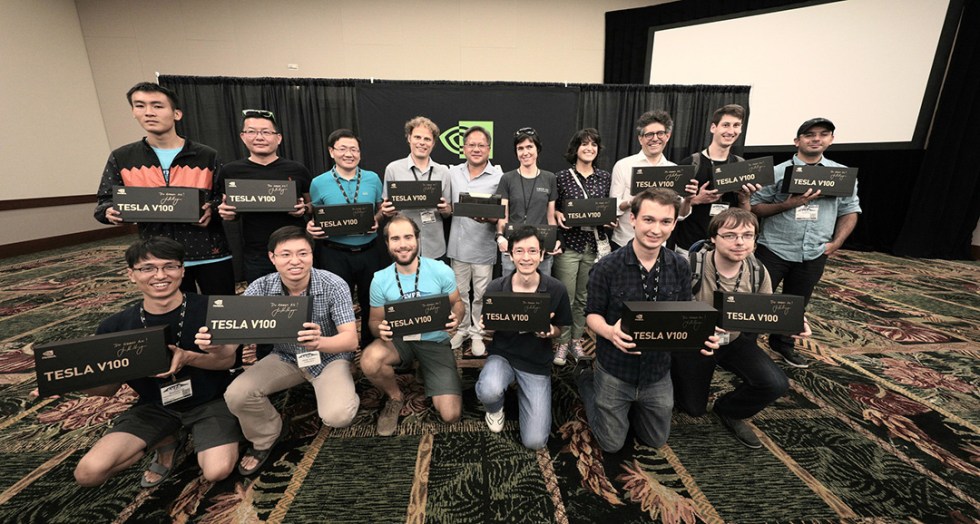
The first Volta-based processor is the NVIDIA Tesla V100 data centre GPU, which brings extraordinary speed and scalability for AI inferencing and training, as well as for accelerating HPC and graphics workloads.

NVIDIA to train 100,000 deep learning developers this year

Greg Estes of NVIDIA (left) addressing the global media at a press conference at GTC.

Interest in deep learning is growing so strongly that NVIDIA expects to train 100,000 developers this year — that’s 10 times more than last year —through its Deep Learning Institute (DLI).

According to research firm IDC, 80 percent of all applications will have an artificial intelligence (AI) component by 2020.

Greg Estes, Vice President of Developer Programs at NVIDIA, noted that there is a hunger for deep learning training. He cited the example of a DLI training at India Institute of Technology (IIT) in India where people came at 7.30am to try to sign up for a fully subscribed course.

Caffe2, anyone?

Facebook is developing new artificial intelligent (AI) systems to help manage the vast amount of information — such as text, images and videos — generated daily so people can better understand the world and communicate more effectively, even as the volume of information increases.
It has worked with NVIDIA on Caffe2, a new AI deep learning framework that allows developers and researchers to create large-scale distributed training scenarios and build machine learning applications for edge devices.

Providing AI-powered services on mobile is a complex data processing task that must happen within the blink of an eye. Increasingly, the processing of lightning-fast AI services requires GPU-accelerated computing, such as that offered by Facebook’s Big Basin servers, as well as highly optimised deep learning software that can leverage the full capability of the accelerated hardware.

No more IDF

After nearly two decades, Intel has decided to bring the curtains down on its annual Intel Developer Forum(IDF). Even the China edition has been canned. A highly anticipated and popular event, IDF was the platform […]

Rise of accelerated computing in data centres

Can’t say this was unexpected as NVIDIA retorts Google’s claim that its custom ASIC Tensor Processing Unit (TPU) was up to 30 times faster than CPUs and NVIDIA’s K80 G for inferencing workloads.

NVIDIA pointed out that Google’s  TPU paper has drawn a clear conclusion – without accelerated computing, the scale-out of AI is simply not practical.

The role of data centres has changed considerably in today’s economy. Instead of just serving web pages, advertising and video content, data centres are now recognising voices, detecting images in video streams and connecting users with information they need when they need it.

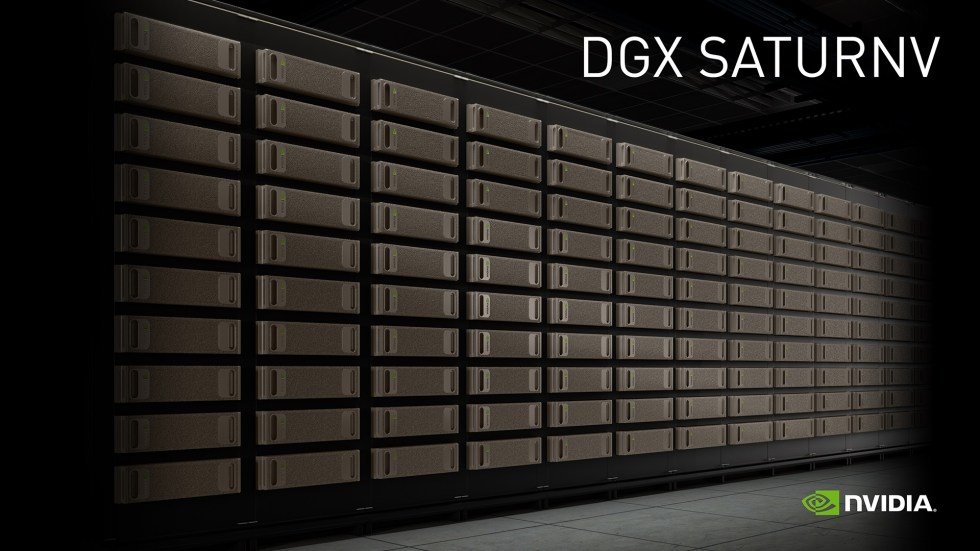
NVIDIA DGX SATURNV ranked most efficient supercomputer

nvidia_dgx_saturnvNVIDIA’s new DGX SATURNV supercomputer is ranked the world’s most efficient — and 28th fastest overall — on the latest Top500 list of supercomputers.

Powered by new Tesla P100 GPUs, it delivers 9.46 gigaflops/watt — a 42 percent improvement from the 6.67 gigaflops/watt delivered by the most efficient machine on the Top500 list released last June.

Compared with a supercomputer of similar performance, the Camphore 2 system, which is powered by Xeon Phi Knights Landing, SATURNV is 2.3x more energy efficient.hat efficiency is key to building machines capable of reaching exascale speeds — that’s 1 quintillion, or 1 billion billion, floating-point operations per second. Such a machine could help design efficient new combustion engines, model clean-burning fusion reactors, and achieve new breakthroughs in medical research.

Move aside content. Culture is king!

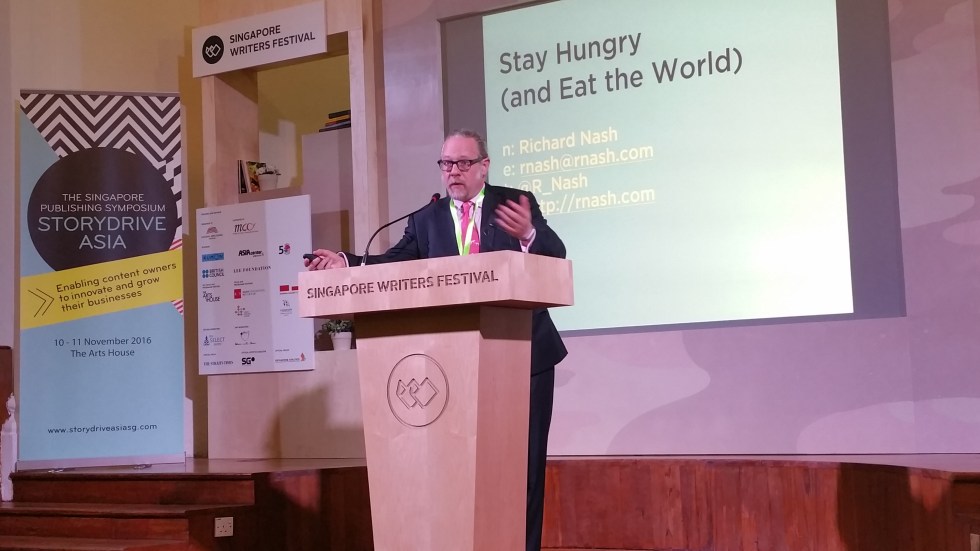
20161110_094140_1478850013151In the age of the Internet, it is widely believed that content is king.

However, US strategist and serial entreprenuer Richard Nash (above) thinks otherwise. He believes that the 21st century will be about sorting demand and culture is king, not content.

At his keynote address at StoryDrive Asia, Nash said the book publishing industry should start modelling itself as a service, rather than a manufacturing business.

Inaugural StoryDrive Asia to focus on transmedia

assassins-creed-unitySingapore Book Publishers Association and Frankfurt Book Fair organiser Frankfurter Buchmesse GmbH are putting together the inaugural StoryDrive Asia, a symposium for angel investors, incubators and professionals in publishing, software and gaming, photography and filmmaking and digital media.

The focus is on transmedia, which is about storytelling across media. For example, The Assassin’s Creed is more than just a computer game. It’s also a novel, comic book as well as a movie that’s slated for release on December 21. That’s transmedia, which is gaining traction across the globe.

“It’s a very exciting moment for publishing in Asia, especially in Southeast Asia, where media are interrelating in new and fascinating ways, and local content is getting better and better. And even as transmedia trends take root, our industry and local stakeholders have realised the importance of promoting the reading habit in this new media environment. We believe the best way to capture these trends, and reinforce Singapore’s role as a hub for IP and the media industry, is to partner with Frankfurter Buchmesse GmbH for a new kind of event: StoryDrive Asia,” said Peter Schoppert, President, Singapore Book Publishers Association.

ZTE releases Pre5G massive MIMO solution

ZTEZTE has released its latest Pre5G massive multiple-input multiple-output (MIMO) 2.0 solution at the 2016 China International Information and Communication Exhibition held in Beijing.
This new version is aimed at the high-end marketplace to help operators in the existing developed market meet the dual challenge of surging traffic demand, combined with limits on spectrum resource. With this new-generation product, single-station spectrum efficiency can be greatly improved and existing 4G user terminals can also benefit from the ultra-speed broadband experience without the need to change their mobile phones.

This new-generation massive MIMO 2.0 product is smaller in size, with 16-stream spatial division multiplexing, multi-carrier aggregation, and support for smooth evolution. The product can be flexibly deployed with support for two deployment modes: distribution and integration, to meet different requirement scenarios.

Baidu and NVIDIA team up on self-driving car

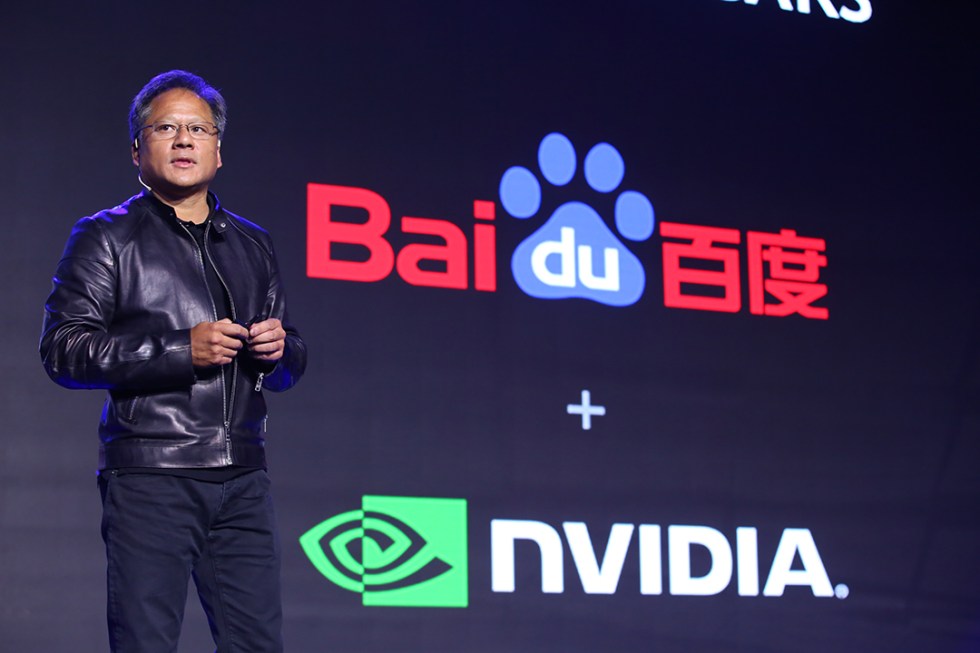
NVIDIA CEO Jen-Hsun Huang makes the announcement at Baidu World Conference in Beijing.

Baidu and NVIDIA are partnering to leverage artificial intelligence (AI) to create a cloud-to-car autonomous car platform for Chinese and global car makers. The partnership combines Baidu’s cloud platform and mapping technology with NVIDIA’s self-driving computing platform to develop solutions for HD maps, Level 3 autonomous vehicle control and automated parking.

Baidu CEO Robin Li and NVIDIA CEO Jen-Hsun Huang announced the collaboration at Baidu World Conference in Beijing yesterday.

“We’re going to bring together the technical capabilities and the expertise in AI and the scale of two world-class AI companies to build the self-driving car architecture from end-to-end, from top-to-bottom, from the cloud to the car,” said Huang .

NVIDIA brings GeForce 10-series GPUs to notebooks

20160809_101732
NVIDIA Technical Marketing Manager John Gillooly (front left) and GeForce Product Manager Gaurav Agarwal addressing the gathering of APAC editors in Bangkok.

Hot on the heels of its recently-launched GeForce 10-series, NVIDIA has brought that same Pascal generation of GeForce power and performance to notebooks.

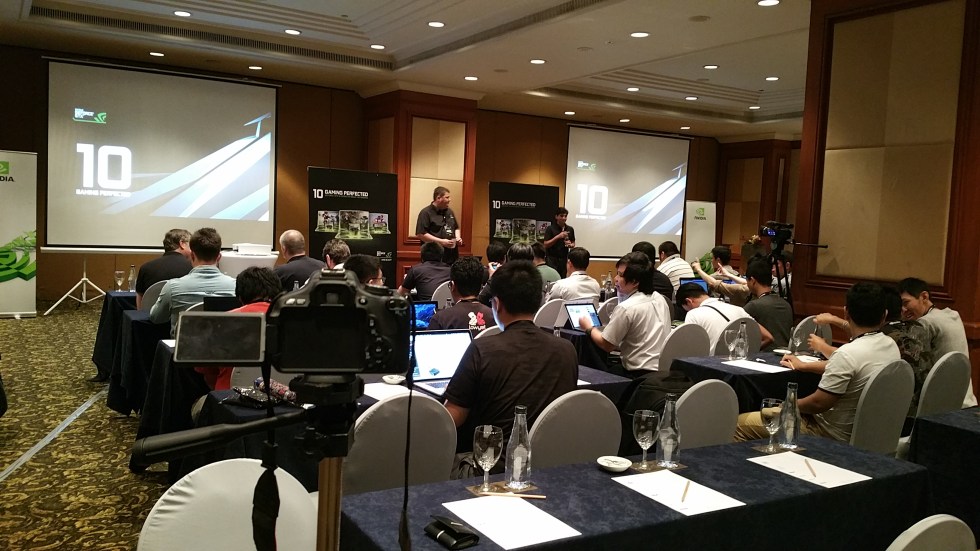
At an APAC Editors’ Day held in Bangkok, NVIDIA shared the capabilities that these notebook GPUs bring as well as gave the editors an opportunity to try out the virtual reality features on HTC Vive headsets.

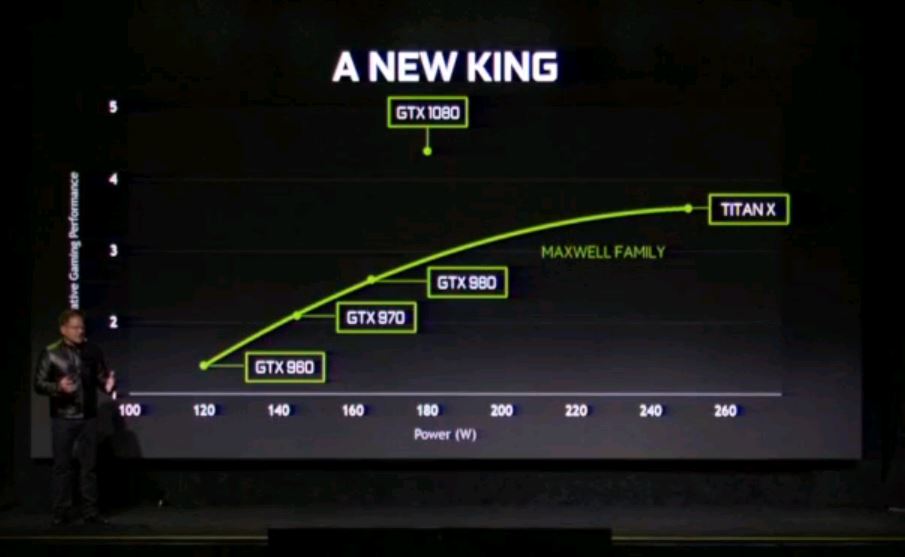
The new GeForce GTX 1080, 1070 and 1060 GPUs for notebooks, providing gamers with a quantum leap forward in performance and power efficiency on the world’s fastest-growing gaming platform.

VR takes centre stage at Computex

NVIDIA Experience CentreVirtual reality (VR) was the talk of the town at Computex in Taipei a couple of weeks ago.

At the NVIDIA Experience Centre in Grand Hyatt Taipei, a never-ending queue of people waited for the opportunity to check out VR demos powered by the newly-launched NVIDIA GeForce GTX 1080 GPUs.

In the halls — both at TWTC and Nangang — many exhibitors were up in force with their own flavours of VR. At one booth, a visitor put on a harness to try virtual parachuting while in several others, they checked out virtual Grand Prix racing and other demos.

NVIDIA scores perfect 10 with new GPU!

1080 fastAfter weeks, if not months of rumours and false predictions, the announcement was finally made. NVIDIA finally revealed the much-awaited Pascal-based NVIDIA GeForce 1080.

What the rumours got correct was the new name of the card. What they missed was the launch date, which NVIDIA kept close to its hearts until CEO Jen-Hsun Huang made the announcement at a specially-gathered press event in Austin on Friday evening (Saturday morning Singapore time).

According to Huang, NVIDIA spent billions in research and development of Pascal and the new GPU.

Computex introduces InnoVEX to showcase ICT and IoT innovators

InnoVEXComputex will introduce InnoVEX, a platform to showcase infocomm technology (ICT) and Internet of Things (IoT) innovators. Around 170 startups from 17 countries have already signed up to showcase their latest innovative products and services.

At InnoVEX, along with out-of-the-box, open booths and networking spaces, a wide range of events designed to maximise innovative, technological, and investment exchanges to help startups succeed, including forums, demos, matchmaking, networking events, and pitch contests with a cash prize of US$30,000.

The show will be held at Taipei World Trade Center (TWTC) Exhibition Hall 3 from May 31 to June 2. Diverse activities such as keynote speech, forums, demo, pitch contest, and networking parties will be held throughout the show.

NVIDIA unveils world’s first deep learning supercomputer

NVIDIA DGX-1

At his opening keynote address at GTC in San Jose, Jen-Hsun Huang, CEO of NVIDIA made a slew of announcements, including the world’s first deep learning supercomputer to meet the unlimited computing demands of artificial intelligence (AI).

As the first system designed specifically for deep learning, the NVIDIA DGX-1 comes fully integrated with hardware, deep learning software and development tools for quick, easy deployment. It is a turnkey system that contains a new generation of GPU accelerators, delivering the equivalent throughput of 250 x86 servers.

The DGX-1 deep learning system enables researchers and data scientists to easily harness the power of GPU-accelerated computing to create a new class of intelligent machines that learn, see and perceive the world as humans do. It delivers unprecedented levels of computing power to drive next-generation AI applications, allowing researchers to dramatically reduce the time to train larger, more sophisticated deep neural networks.

GTC to kick off tomorrow with live webcast of keynotes

GTC 2016News of an impending new NVIDIA GeForce graphics card based on next generation Pascal technology have been circulating wildly over the past few weeks.
And many are waiting with great anticipation of confirmation by NVIDIA co-founder and CEO Jen-Hsun Huang at his keynote address at GPU Technology Conference (GTC) tomorrow (April 6, 2 to 3 am Singapore time).

For those unable to be at GTC in San Jose, NVIDIA is webcasting live on the NVIDIA blog the keynote addresses:

  • April 6, 12 to 2am (Singapore): Jen-Hsun Huang, NVIDIA co-founder and CEO
  • April 7, 2 to 3am (Singapore): Rob High, IBM Watson CTO
  • April 8, 2 to 3 am (Singapore): Gill Pratt, Toyota Research Institute CEO

Monash University launches M3 to accelerate research

M3 launch
Australian Chief Scientist Alan Finkel AO and Monash Professor Ian Smith get ready to press the red button to launch M3.

Monash University is taking research to another level with the launch of M3, the third-generation supercomputer available through the MASSIVE (Multi-modal Australian ScienceS Imaging and Visualisation Environment) facility.

Powered by ultra-high-performance NVIDIA Tesla K80 GPU accelerators, M3 will provide new simulation and real-time data processing capabilities to a wide selection of Australian researchers.

“Our collaboration with NVIDIA will take Monash research to new heights. By coupling some of Australia’s best researchers with NVIDIA’s accelerated computing technology we’re going to see some incredible impact. Our scientists will produce code that runs faster, but more significantly, their focus on deep learning algorithms will produce outcomes that are smarter,” said Professor Ian Smith, Vice Provost (Research and Research Infrastructure), Monash University.

Xenith iCafe opens with 100 NVIDIA GeForce GPU-Powered PCs

Xenith iCafeGamers in northern Thailand, specifically Chiangmai, will get to enjoy premium gaming experience with the opening of Xenith iCafe in the city.

All its 100 PCs are equipped with NVIDIA GeForce GTX 960 GPUs, which deliver advanced performance, power efficiency, and realistic gameplay based on the latest NVIDIA Maxwell technology. They also come with high quality Razer gaming gear – mouse, keyboard and headset – all tailored to give gamers the best experience.

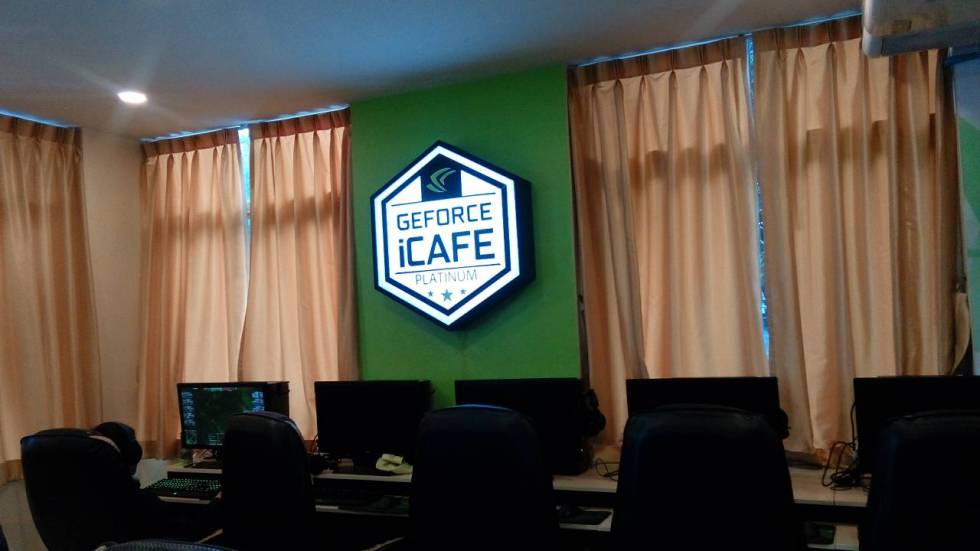
Situated near Chiangmai University , the modern and trendy Xenith iCafe features two gaming zones – a comfort zone and a VIP zone to cater to gamers’ needs as well as to host gaming events. This is a new trend in the iCafe market where owners can better balance cost, performance and functionality while delivering the gaming experience that their customers demand.

NVIDIA adds AI and supercomputing prowess to driverless cars

DRIVE PX_illustrationThe new NVIDIA DRIVE PX 2 is set to give driverless cars a major boost.

Touted at the world’s most powerful engine for in-vehicle artificial intelligence, it allows the automotive industry to use artificial intelligence (AI) to tackle the complexities inherent in autonomous driving. NVIDIA DRIVE PX2 utilises deep learning on NVIDIA’s advanced GPUs for 360-degree situational awareness around the car, to determine precisely where the car is and to compute a safe, comfortable trajectory.

“Drivers deal with an infinitely complex world. Modern artificial intelligence and GPU breakthroughs enable us to finally tackle the daunting challenges of self-driving cars,” said Jen-Hsun Huang, Co-founder and CEO of NVIDIA. “NVIDIA’s GPU is central to advances in deep learning and supercomputing. We are leveraging these to create the brain of future autonomous vehicles that will be continuously alert, and eventually achieve superhuman levels of situational awareness. Autonomous cars will bring increased safety, new convenient mobility services and even beautiful urban designs – providing a powerful force for a better future.”

NVIDIA unveils VR-ready programme

NV-GF-VR-Ready-logo-wht-RGBNVIDIA is paving the way to virtual reality (VR) gaming experiences with the launch of its new VR-ready programme at CES.

Under the programme, PC and notebook makers and add-in card providers will deliver GeForce GTX VR Ready systems and graphics cards that deliver an immersive VR gaming experience. The programme minimises confusion regarding which equipment is necessary to play the range of VR games and applications increasingly coming to market.

Delivering a great VR experience demands seven times the graphics processing power of traditional 3D games and applications – driving framerates above 90 frames per second (fps) for two simultaneous images (one for each eye).

NVIDIA brings VR to SEA

The HTC Vive takes users to another dimension adding freedom of movement to VR.

As the year heads to a close, the anticipation for virtual reality (VR) is gathering momentum. And NVIDIA has helped to raise the tempo by bringing VR to Southeast Asia in a closed door event for analysts, the media and enthusiasts.

Held on December 11 at Crown Plaza Changi Airport in Singapore, the event gave participants the opportunity to try out two of the hottest VR products — Oculus Rift and HTC Vive — powered by NVIDIA technologies.

Oculus Rift lets users immerse in three three-dimensional games (details are under embargo from the content owners), taking gaming to another level.

NVIDIA introduces Battlebox PC in ANZ

BattleboxAt PAX Australia held over the weekend in Melbourne, NVIDIA introduced the combat-ready Battlebox PC, which is designed especially for hardcore gamers.

A Battlebox PC is a beast of a gaming machine with a powerful combination of the NVIDIA GeForce GTX 980 Ti GPU horsepower, two-Way NVIDIA SLI and the best components. It is also VR Ready and supports 4K gaming and DX12 for better visual effects and rendering techniques.

The Battlebox PC will is available from Centrecom, MSY, Mwave, PC Case Gear, PLE, Origin PC, Scorptec, and UMART in Australia, and Computer Lounge, PB Technologies and Playtech in New Zealand.

NVIDIA GRID 2.0 available in Australia

NVIDIAFollowing its announcement at VMworld in August, NVIDIA GRID 2.0 is now available in Australia.
The performance, efficiency and flexibility improvements in the latest release of NVIDIA GRID mean enterprise businesses can now deliver even the most graphics-intensive applications to any connected device virtually.

With NVIDIA GRID 2.0, employees can work from almost anywhere without delays in downloading files, increasing their productivity. IT departments can equip workers with instant access to powerful applications, improving resource allocation. And data can be stored more securely in a central server, rather than on individual systems.


NVIDIA establishes APAC’s first Deep Learning Technology Centre in Singapore

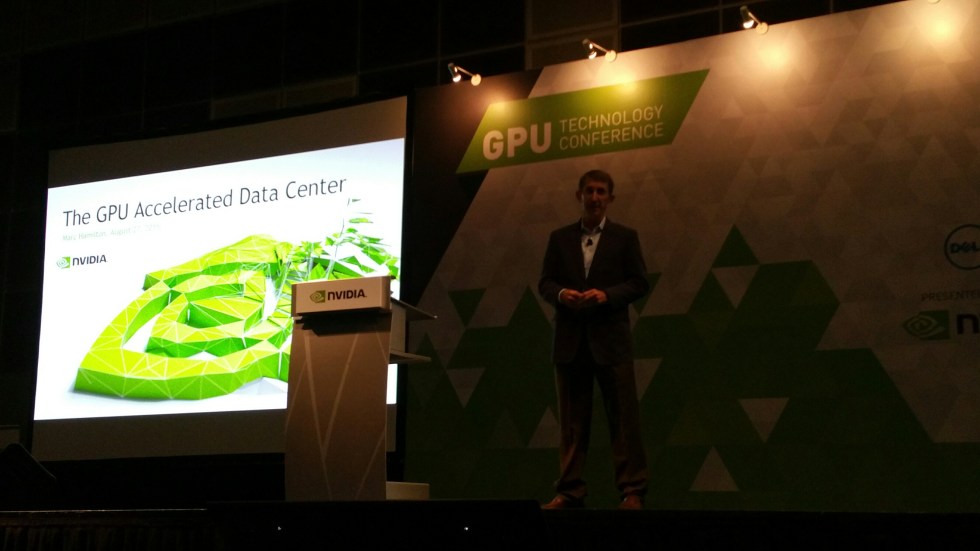
Marc Hamilton announces the establishment of the NVIDIA Technology Centre Asia Pacific at GTC South Asia.

NVIDIA has established the NVIDIA Technology Centre Asia Pacific, the first of its kind in the region to focus on deep learning research and development (R&D).

Located at Nanyang Technological University in Singapore, the centre will leverage the power of NVIDIA’s graphics processing unit (GPU) platforms to develop innovative solutions for both the private and public sectors.

NVIDIA will invest more than S$20 million (US$14.2M) in the centre over a three-year period. This will include the deployment of a broad range of NVIDIA technologies — from the NVIDIA DRIVE PX platform for automated driver assistance systems and self-piloted vehicles, to the NVIDIA Tesla platform, which powers deep learning on the world’s top 5 public clouds as well as some of the world’s fastest supercomputers.

ZTE introduces new SDN-based OAM solution

ZTEZTE has demonstrated a new OAM (operations, administration and management) solution based on SDN architecture at the Broadband & TV Connect Asia conference in Singapore.

The new Elastic SDN IPRAN OAM solution, powered by ZTE’s Elastic SDN technology, is claimed to enable operators to perform 90 percent of routine network OAM functions with one-touch control on mobile devices, generating at least 30 percent labour cost savings.

As operators accelerate deployments of 4G LTE networks to meet rising demand, it is becoming increasingly challenging to manage IP RAN mobile bearer networks. This problem is especially acute in Southeast Asia, where operators need to manage their IP RAN networks efficiently on outlying islands and mountainous terrain.

ZTE pitches Blade S6 Plus on eBay

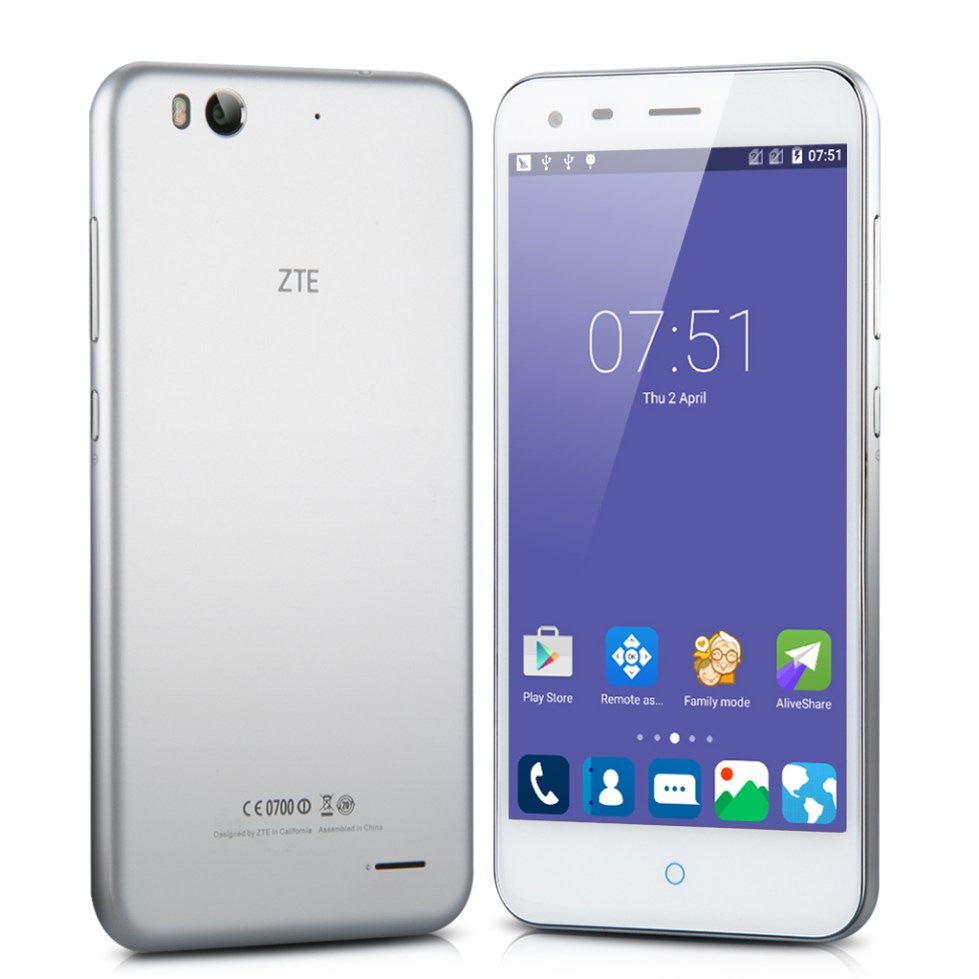
ZTE S6 PlusAnother S6 has made its debut. It’s not Samsung’s but the ZTE Blade S6 Plus — and the company’s making it available globally on eBay for US$299.99.

The Blade S6 Plus was first showcased at Mobile World Congress 2015 in Barcelona, alongside the five-inch Blade S6, which was launched in January. Similar to the Blade S6, the Blade S6 Plus is powered by the Qualcomm Snapdragon 615 octa-core chipset and Adreno 405 image processor, and runs on Android 5.0 Lollipop with ZTE’s customisable MiFavor 3.0 user interface. It boasts a larger JDI Super Screen 5.5-inch HD display with In-Cell technology for better and more vibrant image quality, as well a higher-capacity 3000mAh battery.

Unique to the Blade S6 Plus is a function that allows the device to double as an infra-red remote control. Compatible with all major electronic and household appliance brands, the function allows Blade S6 Plus users to control televisions, set-top boxes, air conditioning units, DSLRs, and more. It is simple and easy to use, and saves users the hassle of switching between several different remote controls.

Mobile gaming fuelling gaming market growth

abi researchRising demand for mobile games is driving the video game market to reach US$80 billion in 2020, up from under US$70 billion last year, according to ABI Research.

Traditional PC and console segments, on the other hand, will see a one- to two-percent annual growth.

Triple-A titles have the potential to dramatically change a developer/publisher’s financials, but gaming’s long tail is equally important to the continued growth of the industry. This is particularly true in the mobile space where a hit title can catapult a mobile game developer into the upper echelons of the market — as was true for developers such as King Digital (Candy Crush Saga) and Supercell (Clash of Clans).

New NVIDIA SHIELD made to game

SHIELDFirst, there was the SHIELD portable. Then, the SHIELD Tablet. Today, at Game Developers Conference in San Francisco, NVIDIA has unveiled its third SHIELD, an Android TV console that delivers video, music, apps. and amazing games to the home.

Built on Android TV, SHIELD can play top-quality 4K video content, includes one-click access to Google Voice Search and provides the richness of Android’s app ecosystem.

The sleek device comes loaded with NVIDIA technologies, including the recently launched NVIDIA Tegra X1 mobile superchip. It can also access the NVIDIA GRID game-streaming service, which is powered by GeForce GTX supercomputers in the cloud.

Iray VCA renamed NVIDIA VCA to reflect expanded support

NVIDIA VCAAt GPU Technology Conference in March, NVIDIA introduced Iray VCA (Visual Computing Appliance). Today, NVIDIA has renamed the appliance as NVIDIA VCA to reflect its expanded industry support for GPU rendering across multiple applications.

NVIDIA VCA dramatically accelerates ray tracing, enabling users to interact with computer models of such high visual fidelity that it can eliminate the need for 3D physical prototypes. In addition to native support of NVIDIA Iray, Chaos Group is supporting V-Ray RT on VCA for Autodesk 3ds Max, with Autodesk Maya, McNeel Rhino, and Trimble SketchUp for later in the year. Dassault Systemes 3DXCITE Bunkspeed support is also scheduled for later this year.

The scalable, network-attached GPU rendering appliance comes with eight high-end NVIDIA GPUs and is designed to do just one thing — provide designers and artists with the fastest and easiest way to create photorealistic images of their creations. It’s claimed to be so fast that designers can interact with their models or scenes in real-time rather than waiting minutes or even hours for rendered images to come back. This means that designers can study the play of light and reflection from their designs and catch flaws like glare on the interior windshield of a digital car model or see how the lobby of a proposed office building will look at different times of day.

Shenzhen hosts SIGGRAPH Asia for the first time in December

SIGGRAPH Asia 2014SIGGRAPH Asia 2014, Asia’s largest computer graphics (CG) event, will be held in Shenzhen, China, for the first time from December 3 to 6

More than 7,700 attendees from over 60 countries are expected at the conference and exhibition, which will feature a myriad of experts and exhibits in fields such as hardware and software, film and game production, as well as research and education.

The conference will include a Business Symposium, dealing with discussions related to the business, creative management, production and efficiency, as well as best practices of the computer graphics industry; Computer Animation Festival that showcases the most innovative and compelling of international animation and visual effects works; courses on contemporary topics in computer graphics and interactive techniques, and a showcase of emerging technologies which features hands-on demonstrations and installations focusing on virtual reality, augmented reality, robotics, wearable devices, 3D graphics, haptic devices and more .

ZTE mobile phones get Google Now Launcher

ZTE Blade Vec 4GZTE has pre-loaded Google Now Launcher on its smartphones to offer improved user experience and better value to users. It plans to pre-load Google Now Launcher on all Android 4.4 and above smartphones that have Google Mobile Services and Google Play enabled. 

ZTE has worked closely with Google to pre-load Google Now Launcher onto several ZTE devices, including the Blade Vec 4G smartphone, which runs on Android 4.4 and sports the Snapdragon 400 processor with integrated multi-mode 3G/4G LTE designed to deliver a better user experience.

The ZTE Blade Vec 4G and one other ZTE premium device will be officially presented at a ZTE press conference to be held in Hong Kong on July 24.

ZTE moots pre-5G concept

ZTEWith a highly-connected world where fast Internet access is vital, ZTE has pushed the envelope a little further with its pre-5G concept shared at LTE World Summit 2014 in Nice, France.

It has announced that under certain conditions, some 5G technologies can provide a 5G-like user experience on 4G terminals without changing the air interface standards.

“With next-generation 5G technologies being deployed in 2020, there were industry concerns over what technologies will be used in the next six years. To address this, ZTE proposes to apply some of the 5G technology on top of 4G to meet users’ requirements,” said Dr Xiang Jiying, CTO of wireless products at ZTE.