
 New Android mobile phone launches spurred growth in Australia, leading to year-on-year growth of 18.4 percent to 2.16 million units, exceeding expectations in Q2, according to IDC.
Smartphones accounted for nearly all of the shipped phones — totalling 2.06 million.
Android returned to being the most popular smartphone OS in Australia. Recently, iOS had overtaken Android as the most popular smartphone OS in Q4 2016 as it held over 54 percent of the market compared to 47 percent for Android.
 With prominent
  The cloud infrastructure services market is continuing to grow strongly, up 47 percent year on year in Q2 to reach US$14 billion, according to Canalys. Growth was driven by demand for primary cloud infrastructure services, such as on-demand computing and storage, across all customer segments and industries.
 The market for analytics within Pay TV services will grow by 105 percent in the next five years, from US$1.8 billion this year to US$3.7 billion in 2022, according to ABI Research.
 Australian educational institutions are increasing information technology (IT) spending in response to dramatic changes in student expectations, according to IDC.
 Shanghai and Singapore are among the world’s top four cities that are ready for autonomous vehicles, according to Canalys.
 The global economy is hitting IT spending, with Gartner predicting just a 0.6 percent increase over 2015 spending of US$3.52 trillion.
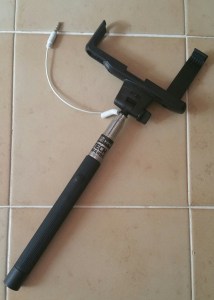 In a world of technological breakthroughs, the selfie stick is a really simple invention. Somebody had the bright idea to stick a holder at the end of a rod and voila, the selfie stick was born.
 This week’s introduction of the Samsung Galaxy S6 Edge brought back memories of when the first Samsung Galaxy Note came out in 2011. While many were pooh-poohing the smartphone for being too large and bulky, I was really excited and among the first owners.

 Entelechy Asia