
 Australian educational institutions are increasing information technology (IT) spending in response to dramatic changes in student expectations, according to IDC.
Spending by Australian educational institutions is expected to peak at US$1.6 billion by 2020, driven by software and services related investments. Education practices are shifting away from the classroom towards e-learning and virtual instructor-led training approaches as students are demanding anytime-anywhere remote access.
In its recently published Australian education sector report, IDC highlights the need to overhaul existing ICT management models in schools and universities so that a step-change improvement in delivery efficiency can be achieved.
 At the inaugural Audi Summit in Spain, Audi revealed that its flagship 2018 A8 features a multitude of high-tech wizardry powered by NVIDIA.
 PC shipment in the Asia-Pacific region surpassed 21,5 million units, down 5.1 percent in Q2 compared to the same period last year, according to Gartner.
 NVIDIA is investing in Deep Instinct, an Israeli-based startup that uses deep learning to thwart cyber attacks.
 Singapore’s Ministry of Communications and Information (MCI) and the Cyber Security Agency of Singapore (CSA) are seeking feedback on the proposed Cybersecurity Bill.
 Global demand for devices — PCs, tablets and smartphones — are expected to dip slightly this year, with Gartner projecting shipment exceeding 2.3 billion units, a decline of 0.3 percent from 2016.

 Volvo Cars and Autoliv are teaming up with NVIDIA to develop advanced systems and software for AI self-driving cars. The three companies will work together along with Zenuity — a newly-formed automotive software development joint venture equally owned by Volvo Cars and Autoliv — to develop next-generation self-driving car technologies.
 NVIDIA is among six technology companies to receive a total of US$258 funding from the US Department of Energy’s Exascale Computing Project (ECP).
 OpenSynergy’s COQOS SDK v9.0 virtualisation platform now supports ARMv8-A architectures.
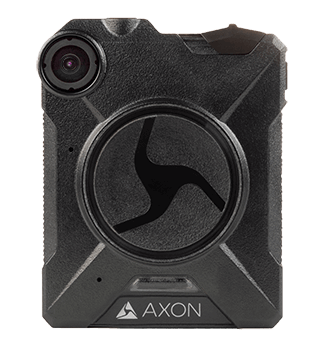 As the enterprise wearable camera market continues to grow through law enforcement, field services and first responder applications due to their ability to collect evidence and record interactions, so do privacy and data protection concerns, according to ABI Research.
 Shanghai and Singapore are among the world’s top four cities that are ready for autonomous vehicles, according to Canalys.
 Singapore will be focusing on four technology areas to build the foundation for its digital transformation. These are artificial intelligence (AI) and data science, cybersecurity, immersive media, and Internet of Things and future communications infrastructure.
 The keynote address at Google I/O yesterday showed that Google is much more than just a search company. It is becoming more artificial intelligence (AI). Google is specifically using deep learning to help in many areas of everyday life.
 By Kelly Aime


 Huawei has taken top spot again in China’s smartphone market, edging past Oppo after two quarters of trailing in second place. According to Canalys, the Chinese smartphone giant, which launched the P10 and P10 Plus during MWC, shipped close to 21 million units to secure an 18 percent market share in Q1.
 Facebook is developing new artificial intelligent (AI) systems to help manage the vast amount of information — such as text, images and videos — generated daily so people can better understand the world and communicate more effectively, even as the volume of information increases.
 Can’t say this was unexpected as NVIDIA retorts Google’s claim that its custom ASIC Tensor Processing Unit (TPU) was up to 30 times faster than CPUs and NVIDIA’s K80 G for inferencing workloads.
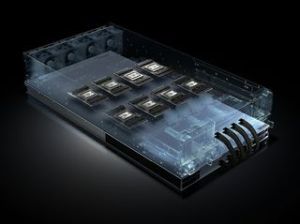 NVIDIA and Microsoft are working on a new hyperscale GPU accelerator that will provide hyperscale data centres with a fast, flexible path for artificial intelligence (AI).
 IoT faces new computing challenges, notably with deployment and scaling, according to ABI Research. Its future will rely in part on using embedded Real-Time Operating Systems (RTOS), which support many IoT application features, such as small size, constrained processing resources, low power consumption, limited maintenance, and real-time computing.

 Entelechy Asia