
Spurred by growing interest in artificial intelligence (AI), the Asia-Pacific (APAC) robotics market is expected to growth to US$162 billion in 2021, accounting for 70 percent of the world’s total robotics market in 2021, according to […]
ICML: Gathering of the brightest in AI
 “I’m amazed at the quality of the papers presented. The project teams’ line of thinking and breakthrough concepts are refreshing,” exclaimed a leading artificial intelligence (AI) scientist at the International Conference on Machine Learning (ICML) in Sydney.
International Convention Centre Sydney was a massive hive of activities as 3,000 of the world’s top researchers, developers and students in AI gathered for ICML. The participants moved rapidly from one workshop to another and took great interest in the exhibition booths of top deep learning proponents such as NVIDIA, Google and Facebook.
With so many bright young talents. the event proved to be a good fishing ground for vendors as they held recruitment interviews at their booths, as well as posted openings on the board.
Worldwide semiconductor market to grow 10.2% in 2017
 Global semiconductor market is expected to grow 10.2 percent in 2017, to US$77.7 billion, according to Gartner.
This growth rate is up from the previous quarter’s forecast of 1.4 percent, due to continued aggressive investment in memory and leading-edge logic which is driving spending in wafer-level equipment.
“Spending momentum is more concentrated in 2017 mainly due to strong manufacturing demand in memory and leading-edge logic. The NAND flash shortage was more pronounced in the first quarter of 2017 than the previous forecast, leading to over 20 percent growth of etch and chemical vapor deposition (CVD) segments in 2017 with a strong capacity ramp-up for 3D NAND,” said Takashi Ogawa, Research Vice President of Gartner.
5 reasons why I like the Google Pixel
By Edward Lim When the Google Pixel was first announced late last year, my antenna went up as my trusty Samsung Note Edge though working generally fine and still looking great was slowing down. I’ve […]
More graphics power for creative professionals
One of the flaws of notebooks is the lack of upgrading capabilities. This is especially so for creative professionals whose work are increasingly more demanding and complex, requiring more graphics processing power. NVIDIA has solved […]
AMD back in the game
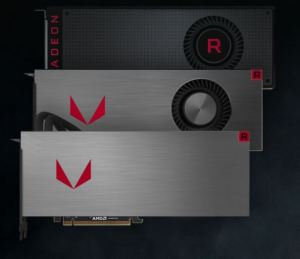 It’s been a long time coming but AMD has finally launched its new high end Radeon graphics cards. And it has done it in style, at Los Angeles to a gathering of global media, with three models — the Radeon RX Vega 64 Liquid Cooled Edition with 64 compute units, the Radeon RX Vega 64 with air cooling, and the Radeon RX Vega 56 which starts at US$399.
These new additions are pitted against the NVIDIA GeForce GTX 1080Ti and the NVIDIA GeForce GTX 1080, making for an interest battle, especially as NVIDIA is not known for sitting back and letting others take over its mantle.
“The enthusiast gaming experience is defined by high resolutions and a tear-free, buttery smooth 60 frames per second, something that only approximately 600,000 gamers are capable of enjoying today. But there are four million more gamers who aspire to enjoy that same enthusiast gaming experience without breaking the bank, and with Radeon RX Vega graphics cards we’re working to give them that,” said Raja Koduri, Senior Vice President and Chief Architect, Radeon Technologies Group, AMD.
AI to fuel next wave of cloud growth
 The cloud infrastructure services market is continuing to grow strongly, up 47 percent year on year in Q2 to reach US$14 billion, according to Canalys. Growth was driven by demand for primary cloud infrastructure services, such as on-demand computing and storage, across all customer segments and industries.
However, future growth is expected to be fueled by customers using the artificial intelligence (AI) platforms cloud service providers are building to develop new applications, processes, services, and user experiences.
Amazon Web Services (AWS) maintained its leadership position, growing 42 percent on an annual basis and accounting for more than 30 percent of total spend. But its growth rate was lower than those of its main rivals, Microsoft (up 97 percent growth) and Google (up 92 percent), but higher than fourth-placed IBM (up 23 percent). Overall, the top four cloud services providers represented 55 percent of the cloud infrastructure services market, which includes IaaS and PaaS.
Amazon Prime Now makes first SEA stop in Singapore
The online grocery market in Singapore has just gotten hotter with Amazon’s launch of its Prime Now service. It is the e-commerce giant’s first stop in the region. Prime Now offers tens of thousands of […]
Motorola and Neurala to work on intelligent cameras
 Motorola Solutions and Neurala will develop intelligent cameras that will enable police officers to more efficiently search for objects or persons of interest, such as missing children and suspects.
The companies will integrate Neurala’s artificial intelligence (AI) capabilities with Motorola Solutions’ software and cameras, including its Si500 body-worn camera. The integration will create intelligent cameras that can learn “at the edge” and automatically search for persons or objects of interest – significantly reducing the time and effort required to find a missing child or suspicious object in environments that are often crowded or chaotic.
“We see powerful potential for AI to improve safety and efficiency for our customers, which in turn helps create safer communities. But applying AI in a public safety setting presents unique challenges. Neurala’s ‘edge learning’ capabilities will help us explore solutions for a variety of public safety workflows such as finding a missing child or investigating an object of interest, such as a bicycle,” said Paul Steinberg, Chief Technology Officer of Motorola Solutions.
Flash to be switched off in 2020
Adobe Flash will be phased out by 2020. Improved open standards pushed by the World Wide Web Consortium have prompted Adobe to pull the plug on Flash, which enables video and interactive contents to be […]
NVIDIA Tesla V100 surprise for world’s top AI researchers
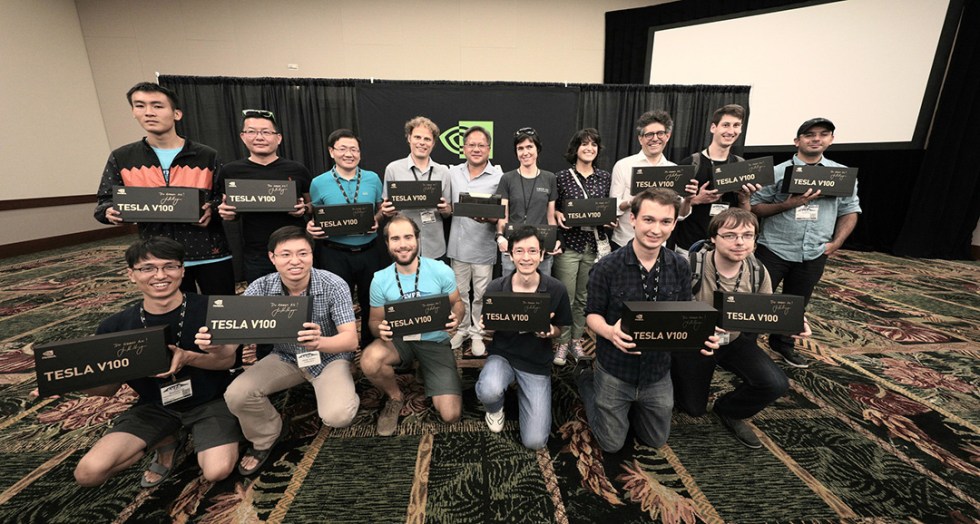
Fifteen top AI research institutions of the NVIDIA AI Labs programmes were each presented with the Volta-based NVIDIA Tesla V100 GPU accelerator.
They were participating in Computer Vision and Pattern Recognition (CVPR) conference in Honolulu.
“AI is the most powerful technology force that we have ever known. I’ve seen everything. I’ve seen the coming and going of the client-server revolution. I’ve seen the coming and going of the PC revolution. Absolutely nothing compares,” said Jensen Huang, CEO of NVIDIA.
There’s hope yet for Paint
After an initial report that Microsoft plans to remove Paint from the next update of Windows 10, there is hope yet for Paint users. In a blog post on Monday, Microsoft allayed fears of the […]
No more Paint
Yikes! It seems like Microsoft is removing from its next Windows 10 update Paint, the quintessential tool that helps with simple editing of graphics and images. A long-stay of a generation of Windows users, the tool […]
AI takes centrestage at ICML in Sydney
 NVIDIA is bringing its wealth of artificial intelligence (AI) solutions and expertise to the International Conference on Machine Learning (ICML) in Sydney.
Held at Sydney International Convention Centre from August 6 to 11, the event is expected to attract up to 3,000 participants, primarily faculty, researchers and PhD students in machine learning, data science, data mining, AI, statistics, and related fields.
The NVIDIA booth (Level 2, The Gallery, Booth #4) will feature many firsts in Australia, such as demos on 4K style transfer, a deep neural network to extract a specific artistic style from a source painting, and then synthesises this information with the content of a separate video; self-driving auto using the Drive PX2 AI car computing platform; Deepstream SDK that simplifies development of high performance video analytics applications powered by deep learning; and NVIDIA Isaac, the AI-based software platform lets developers train virtual robots using detailed and highly realistic test scenarios.
Video services analytics to double in 5 years
 The market for analytics within Pay TV services will grow by 105 percent in the next five years, from US$1.8 billion this year to US$3.7 billion in 2022, according to ABI Research.
Comcast, Netflix, Sky, Telstra, and other successful video companies differentiate themselves from their peers by their strong use of analytics to optimise and improve operational metrics. Pay TV companies are starting to transform products to support an analytical focus, moving in the direction of artificial intelligence and machine learning to enable self-optimisation.
Video companies sell today’s products in a host of point-solutions, including content and metadata engagement, customer management, network optimisation, and consumption measurement. Larger network-oriented business support systems and business intelligence vendors also play a significant role within these markets.
The 8s are coming
This is the year of the 8s. The Samsung Galaxy Note 8 is expected to be revealed on August 23 in New York City, according to invitations sent to the media. Samsung will be hoping […]
Dell launches 14th gen servers
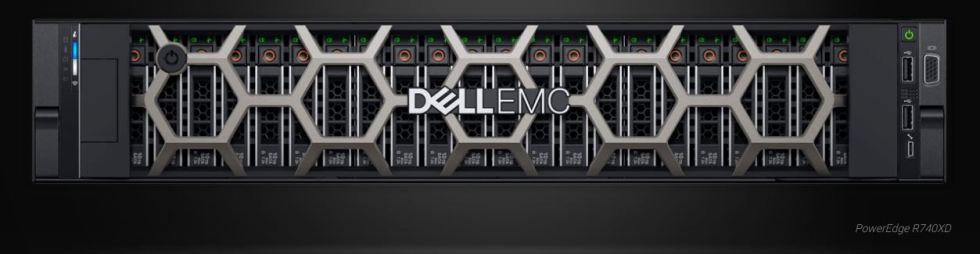 Dell has announced worldwide availability of the next generation of the Dell PowerEdge server portfolio which forms a scalable, automated and secure compute platform for traditional and cloud-native applications.
With its scalable business architecture, intelligent automation and integrated security, the new Dell PowerEdge 14th generation server portfolio delivers aims to be the bedrock of the modern data centre, enabling customers to push innovation further and faster to achieve their IT transformation goals.
The scalable business architecture of Dell PowerEdge servers helps customers efficiently meet their changing business needs with enhanced performance capabilities for traditional, virtualised and cloud-native workloads in a software-defined data centre.
Students’ demand drives Aussie IT spending
 Australian educational institutions are increasing information technology (IT) spending in response to dramatic changes in student expectations, according to IDC.
Spending by Australian educational institutions is expected to peak at US$1.6 billion by 2020, driven by software and services related investments. Education practices are shifting away from the classroom towards e-learning and virtual instructor-led training approaches as students are demanding anytime-anywhere remote access.
In its recently published Australian education sector report, IDC highlights the need to overhaul existing ICT management models in schools and universities so that a step-change improvement in delivery efficiency can be achieved.
30 months on the Edge
By Edward Lim It’s official. The Samsung Galaxy Note Edge is my longest lasting phone. After 30 months, I’ve finally moved on to another smartphone — the Google Pixel (I’ll share more about this in […]
Vertu no more
Imagine paying more than S$34,000 for a phone? Well, it’s hard to imagine that kind of price tag for mortals who already consider the Google Pixel, iPhone and Samsung S8 expensive. It’s not surprising then […]
Beat traffic jam with new Audi A8
 At the inaugural Audi Summit in Spain, Audi revealed that its flagship 2018 A8 features a multitude of high-tech wizardry powered by NVIDIA.
“The car of the future will make its occupants’ life easier with the help of artificial intelligence (AI),” declared Rupert Stadler, Chairman of the Board of Audi, as he introduced such A8 features as Audi AI Traffic Jam Pilot, Remote Park Pilot, Natural Voice Control and Swarm Intelligence.
The A8 is packed with NVIDIA powered systems, including revolutionary new user interfaces, a new infotainment system, a new virtual cockpit, and new rear seat entertainment options.
APAC PC market down 5.1% in Q2
 PC shipment in the Asia-Pacific region surpassed 21,5 million units, down 5.1 percent in Q2 compared to the same period last year, according to Gartner.
The dip was due to primarily due to market dynamics in India and China. In India, the pent up demand after the demonetisation cooled down after Q1, coupled with the absence of a large tender deal compared to a year ago and higher PC prices, brought about weak market growth. China was hugely impacted by the rise in PC prices due to the component shortage.
Overall, global PC shipment totaled 61.1 million units in Q2, a 4.3 percent decline from the same quarter last year.
Full PC backup with Google
Google has launched the Backup and Sync tool for users to easily back up practically all files on their computer. This new tool will replace the Google Photos desktop app and the Google Drive client applications for […]
NVIDIA invests in Deep Instinct
 NVIDIA is investing in Deep Instinct, an Israeli-based startup that uses deep learning to thwart cyber attacks.
Deep Instinct uses a GPU-based neural network and CUDA to achieve 99 percent detection rates, compared with about 80 percent detection from conventional cyber security software. Its software can automatically detect and defeat the most advanced cyber attacks.
“Deep Instinct is an emerging leader in applying GPU-powered AI through deep learning to address cybersecurity, a field ripe for disruption as enterprise customers migrate away from traditional solutions. We’re excited to work together with Deep Instinct to advance this important field,” said Jeff Herbst, Vice President of Business Development of NVIDIA.
Fujitsu announces new Xeon-based servers
 Fujitsu has introduced its fully refreshed range of Xeon-based dual- and quad-socket Primergy servers and octo-socket Primequest business critical server systems.
These new servers are powerful and flexible, enabling enterprises to build secure, agile, multi-cloud data centres.
Featuring the new Intel Xeon scalable processors, the Fujitsu Server Primergy and Primequest business model server systems are designed for exceptional workload-specific performance and hardware-enhanced security. Built for trusted data service delivery, the new models represent significant leaps in I/O, memory, storage and network technologies.
Facebook to add ads to Messenger
As if we don’t already have enough of ads. Facebook has announced that it will start rolling out ads to Messenger. With 1.2 billion users, the social media giant does have immense appeal for advertisers. It […]
Singapore seeks feedback on cybersecurity bill
 Singapore’s Ministry of Communications and Information (MCI) and the Cyber Security Agency of Singapore (CSA) are seeking feedback on the proposed Cybersecurity Bill.
The public consultation exercise will run till August 3.
“Cyber-attacks are getting increasingly frequent, sophisticated and impactful. Globally, we have also seen a surge in the number of cybersecurity incidents, such as ransomware, cyber theft, banking fraud, cyber espionage and disruptions to Internet services. In Singapore, the recent Advanced Persistent Threat (APT) attacks targeting two of our universities, and the occurrence of the global WannaCry and Petya/Petna malware attacks which also reached our shores, serve as stark reminders of Singapore’s vulnerability to cyber threats,” noted the joint press release.
Device market to dip in 2017
Global demand for devices — PCs, tablets and smartphones — are expected to dip slightly this year, with Gartner projecting shipment exceeding 2.3 billion units, a decline of 0.3 percent from 2016.
However, the market is forecast to return to growth in 2018 with a 1.6 percent increase in shipment.
“Overall, the shipment growth of the device market is steady for the first time in many years. PC shipments are slightly lower while phone shipments are slightly higher — leading to a slight downward revision in shipments from the previous forecast, “said Ranjit Atwal, Research Director of Gartner.
NVIDIA and Baidu team up on AI
 NVIDIA and Baidu have teamed up to bring artificial intelligence (AI) technology to cloud computing, self-driving vehicles and AI home assistants.
Baidu will deploy NVIDIA HGX architecture with Tesla Volta V100 and Tesla P4 GPU accelerators for AI training and inference in its data centres. Combined with Baidu’s PaddlePaddle deep learning framework and NVIDIA’s TensorRT deep learning inference software, researchers and companies can harness state-of-the-art technology to develop products and services with real-time understanding of images, speech, text and video.
To accelerate AI development, the companies will work together to optimise Baidu’s open-source PaddlePaddle deep learning framework on NVIDIA’s Volta GPU architecture.
Return of Note 7
The embattled Samsung Galaxy Note 7 is making a return — as a limited edition Galaxy Note Fan Edition! According to a statement, Samsung plans to sell the refurbished device (which comes with new battery) from […]
Petya ransomware cripples networks
 Just like a scene out of a Hollywood movie, one computer after computer shut down without notice during a meeting. That’s what happened at one of the organisations hit by the Petya ransomware attack.
The strike is malicious and deadly with many affected organisations struggling to recover lost data — some, if not all, of which may never be restored.
IT security teams are still working to get their networks and computers up and running. Some have turned to Apple computers, which are relatively unscathed, to work on the recovery process.
Volvo, Autoliv to roll out NVIDIA-based self-driving cars by 2021
 Volvo Cars and Autoliv are teaming up with NVIDIA to develop advanced systems and software for AI self-driving cars. The three companies will work together along with Zenuity — a newly-formed automotive software development joint venture equally owned by Volvo Cars and Autoliv — to develop next-generation self-driving car technologies.
Production vehicles built on the NVIDIA DRIVE PX car computing platform are planned for sale by 2021.
“Artificial intelligence (AI) is the essential tool for solving the incredibly demanding challenge of autonomous driving. We are building on our earlier collaboration with Volvo to create production vehicles that will make driving safer, lead to greener cities and reduce congestion on our roads,” said Jensen Huang, Founder and CEO of NVIDIA, at a keynote address at Automobil Elektronik Kongress.
Bizagi and Fuji Xerox HK in strategic partnership
 Digital process automation software provider Bizagi and Fuji Xerox (Hong Kong) have formed a strategic partnership to help organisations in Hong Kong thrive in the digital era.
Bizagi’s Digital Business Platform connects people, applications, devices and information to deliver the foundations of a digital business. It is known for its ease-of-use, short time to deliver value, scalability, and wide integration capabilities.
“We are pleased to form our first strategic partnership in the region. By combining the deep expertise from Fuji Xerox (Hong Kong) in business process services with the wide ranging capabilities of our leading digital business platform, we can offer the region’s most comprehensive solutions and services for digital transformation,” said Gustavo Gomez, CEO of Bizagi.
NVIDIA receives DOE funding for HPC research
 NVIDIA is among six technology companies to receive a total of US$258 funding from the US Department of Energy’s Exascale Computing Project (ECP).
The funding is to accelerate the development of next-generation supercomputers with the delivery of at least two exascale computing systems, one of which is targeted by 2021.
Such systems would be about 50 times more powerful than the US’ fastest supercomputer, Titan, located at Oak Ridge National Laboratory.
OpenSynergy’s virtualisation platform now supports ARMv8-A architecture
 OpenSynergy’s COQOS SDK v9.0 virtualisation platform now supports ARMv8-A architectures.
The 64-bit bus width of the ARMv8-A processors makes it possible to meet the high performance requirements of the next generation automotive ECU’s such as cockpit controllers or driver assistance systems.
“With COQOS SDK v9.0, we enable our customers to take full advantage of the newest automotive system-on-chips (SoCs),” said Stefaan Sonck Thiebaut, CEO of OpenSynergy.
Security concern for wearable cameras in enterprises
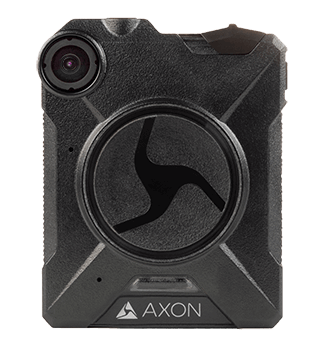 As the enterprise wearable camera market continues to grow through law enforcement, field services and first responder applications due to their ability to collect evidence and record interactions, so do privacy and data protection concerns, according to ABI Research.
The research firm forecasts enterprise wearable camera shipment to reach nearly 24 million in 2022.
“Despite clear advantages to the usage of this technology, enterprises fear attacks from cybercriminals and data theft. With massive data leaks often reaching mainstream news, public concern is rising over the security of wearable camera recordings, including who has access to such footage and for how long,” said Stephanie Lawrence, Research Analyst of ABI Research.
Singapore and Shanghai among top autonomous vehicle cities
 Shanghai and Singapore are among the world’s top four cities that are ready for autonomous vehicles, according to Canalys.
San Francisco is out in front while London is also among the top four. These rise to the top of a group of cities that, due to their size and populations, have some of the most complex transport networks in the world. The top four have a high need for autonomous vehicles to revolutionise their transport systems, combined with the ability to make it happen.
“Naturally, San Francisco leads the way and is the city best able to implement autonomous vehicles. The Bay Area is renowned as the world’s AV testing capital,” said Chris Jones, Chief Analyst of Canalys.
Taiwan: Home of GeForce!
 At the keynote of NVIDIA AI Forum, NVIDIA CEO and Founder Jensen Huang called “Taiwan is the home of NVIDIA’s GeForce system”.
Video gaming is a US$100 billion industry and “GeForce PC gaming is the number one platform, nearly 200 million GeForce installed base,” declared Huang.
He announced the new NVIDIA Max-Q platform which lets gaming notebook makers produce faster, slimmer and quieter machines.
It’s in the bag
The organisers of Computex are certainly very forward planning. Not only are the dates for next year’s event set but it seems that the tagline will remain the same — “Building Global Technology Ecosystems”. Also, […]
Computex starts tomorrow!
Computex, Asia’s biggest technology show and one of the largest in the world, will kick off in Taipei tomorrow and end on June 3. Spread across Taipei World Trade Centre halls in Xinyi District and […]
Softbank invests US$4b in NVIDIA
SoftBank Group has taken a US$4 billion stake in NVIDIA, according to Bloomberg. This dovetails nicely with SoftBank founder Masayoshi Son’s aim to become the biggest investor in technology over the next decade. NVIDIA’s stocks tripled last […]
Singapore to focus on 4 technology areas
 Singapore will be focusing on four technology areas to build the foundation for its digital transformation. These are artificial intelligence (AI) and data science, cybersecurity, immersive media, and Internet of Things and future communications infrastructure.
At the opening of Infocomm Media Business Exchange at Marina Bay Sands Singapore Convention Centre, Minister for Communications and Information Dr Yaacob Ibrahim noted that “they are exciting fields with bright prospects in their own right, and they have great potential to transform other industries and enhance people’s lives”.
Artificial Intelligence and Data Science
The nation has established AI.SG, a national programme with funding of up to S$150 million to boost Singapore’s AI capabilities.
Keeping drivers safe
With all that rage of artificial intelligence (AI) powering driverless cars, the same technology can also be used to keep drivers safe. It can acts like a guardian angel and look our for danger (watch […]
Deeper into AI
 The keynote address at Google I/O yesterday showed that Google is much more than just a search company. It is becoming more artificial intelligence (AI). Google is specifically using deep learning to help in many areas of everyday life.
Here are some as shared on Google’s blog post:
Google Assistant can help answer your questions and find information—but it can also help you get all kinds of useful things done. Today we’re adding a few more:
- Schedule new calendar appointments and create reminders. Starting today on Google Home, you can schedule appointments and soon you’ll also be able to add reminders. Since it’s the same Google Assistant across devices, you’ll be able to get a reminder at home or on the go.
- Make your home smarter. We now have 70+ smart home partners supporting the Google Assistant across Google Home and Android phones, including August locks, TP-Link, Honeywell, Logitech, and LG.
Farewell, MP3!
MP3, a word that has become synonymous with audio files, has become obsolete. The Fraunhofer Institute of Integrated Circuits that created the music format has terminated its licensing programme for certain MP3-related patents. The move means that […]
China vendors corner India smartphone market
China-based vendors strengthened their grip in the India smartphone market, snaring 51.4 percent share of the smartphone shipment in Q1, according to IDC. They grew 16.9 percent sequentially and an impressive 142.6 percent over the same period last year.
In contrast, share of homegrown vendors dropped to 13.5 percent in the Q1 from 40.5 percent in the same quarter last year.
Overall, 27 million smartphones were shipped in Q1, a 14.8 percent growth over the same period last year. Unlike last year, shipment grew sequentially in the first quarter of 2017 by 4.7 percent recovering from demonetisation impact in Q4.
Enhancing public safety
Motorola Solutions has unveiled highly advanced technology solutions to enhance the capabilities of nation-wide public safety networks at Critical Communications World 2017 in Hong Kong. These include mission-critical radio technologies, specialised software, mission critical broadband, command […]
From professional skills to utilities
Robots driven by artificial intelligence (AI) are replacing workers in various labour-intensive and service sectors but doctors, lawyers and even IT professionals are at risk of being made redundant. Or at least, certain aspects of each of these practices.
According to Gartner, smart machines and robots may replace highly trained professionals in tasks within medicine, law and IT by 2022 — that’s just five years more!
“The economics of AI and machine learning will lead to many tasks performed by professionals today becoming low-cost utilities. AI’s effects on different industries will force the enterprise to adjust its business strategy. Many competitive, high-margin industries will become more like utilities as AI turns complex work into a metered service that the enterprise pays for, like electricity,” said Stephen Prentice, Vice President and Gartner Fellow.
Battle for the cloud
The battle for cloud dominance has intensified with key players all growing significantly in Q1. The worldwide cloud infrastructure services market grew 42 percent year on year to reach US$11.4 billion, according to Canalys.
Amazon’s AWS maintained its leadership, holding a stable global market share of 31 percent. It was followed by Microsoft, Google and IBM.
In terms of growth, Microsoft led with 93 percent while Google was up 74 percent, AWS 43 percent, and IBM 38 percent.

Deep Instinct is Most Disruptive Startup
Hundreds of thousands of computers in 150 countries have been hit by the WannaCry ransomware. While users are scampering around trying to fix their computers, the top of mind question is whether this could have […]
7 months with an Android box
 By Kelly Aime
Last October, I took the plunge and decided to check out an Android TV box. It was not a spur of the moment decision but one prompted by the constant changing and removal of channels by my cable TV service provider.
The worst part of the changes is that users are often at the losing end. Whenever, the service provider’s contract with a particular channel deemed less popular is up for renewal, there’s that likelihood that the contract will not be renewed. And users have absolutely no say at all — even if the subscriber’s contract is still valid and the subscriber still wants to keep the channel.
Being at the mercy of my service provider pushed me to try out an alternative which can been around for a while — the Android TV box.
GTC draws the big guns!
As a sign of its coming of age, the GPU Technology Conference (GTC) held annually in San Jose, California since 2009, is no longer a niche event but one that is drawing the who’s who […]
Toyota cruises with NVIDIA Drive PX2

Toyota, one of the world’s largest automakers and renowned for its high standards and priority on safety, has picked NVIDIA Drive PX for its autonomous vehicles. It will use the AI car computer platform to power advanced autonomous driving systems planned for market introduction within the next few years
Engineering teams from the two companies are already developing sophisticated software that will enhance the capabilities of Toyota vehicles, enabling them to better understand the massive volume of data generated by sensors on the car, and to handle the broad spectrum of autonomous driving situations.
“Toyota has worked on autonomous driving technologies for over 20 years with the aim of reducing traffic fatalities to zero as an ultimate goal, achieving smoother traffic, and providing mobility for all. Through this collaboration, we intend to accelerate the development of autonomous driving systems that are even more safe and capable,” said Ken Koibuchi, Executive General Manager of Toyota.
Finally, the Big Bang for AI!

Artificial intelligence (AI) is not new. In fact, it has so many false starts over the past 60 years. The term went into hibernation for a long time.
Research into AI began way back in Dartmouth College in 1956 and was constantly associated with being the next frontier in the 1980s when mainframe computers ruled and supercomputers were a ginormous investment that very few could afford.
Despite the research put in over the years, the technology never quite took off and fell flat in many instances.
Voila, Volta!

NVIDIA has pulled yet another trick out of its always-filled hat of technology goodies with the launch of Volta, the world’s most powerful GPU computing architecture. At his keynote address at GTC in San Jose, NVIDIA CEO Jensen Huang dubbed it “the next level of computer projects”.
Volta is created to drive the next wave of advancement in artificial intelligence (AI) and high performance computing.
The first Volta-based processor is the NVIDIA Tesla V100 data centre GPU, which brings extraordinary speed and scalability for AI inferencing and training, as well as for accelerating HPC and graphics workloads.
The making of GTC
By Edward Lim I am attending the GPU Technology Conference (GTC) in San Jose, California this week. It’s a massive conference with more than 7,000 participants from all around the world. After decades of covering and […]
NVIDIA to train 100,000 deep learning developers this year

Interest in deep learning is growing so strongly that NVIDIA expects to train 100,000 developers this year — that’s 10 times more than last year —through its Deep Learning Institute (DLI).
According to research firm IDC, 80 percent of all applications will have an artificial intelligence (AI) component by 2020.
Greg Estes, Vice President of Developer Programs at NVIDIA, noted that there is a hunger for deep learning training. He cited the example of a DLI training at India Institute of Technology (IIT) in India where people came at 7.30am to try to sign up for a fully subscribed course.
GTC keeps growing
GPU Technology Conference (GTC) kicked off today in San Jose with more than 7,000 participants. This year’s event will cast the spotlight on artificial intelligence, which is gaining widespread interest around the world.
Singapore goes big on AI
Singapore is banking big on artificial intelligence to provide solutions in finance, city management and healthcare. The National Research Foundation (NRF) will be investing up to S$150 million over the next five years in AI.SG, […]
Huawei smartphone strides ahead in China
 Huawei has taken top spot again in China’s smartphone market, edging past Oppo after two quarters of trailing in second place. According to Canalys, the Chinese smartphone giant, which launched the P10 and P10 Plus during MWC, shipped close to 21 million units to secure an 18 percent market share in Q1.
Despite strong annual growth of 55 percent, Oppo fell to second place with shipments of just under 20 million units. Third-placed Vivo had the lowest annual growth of the top three, capturing a 15 percent share with its shipment of 17 million units.
“China’s smartphone market continues to grow, with shipments increasing by over nine percent year on year this quarter. But there is a clear indication that the market is consolidating. The top three vendors are pulling away at the head of the market, accounting for more than 50 percent of shipments for the first time this quarter,” said Lucio Chen, Research Analyst of Canalys.
 Entelechy Asia