
The stars are aligned. Samsung’s stars, that is. The Korean mobile phone giant has launched the Galaxy Note 7, bringing the phablet numerically in line with the Galaxy S series. And just like the […]
Huawei guns for top smartphone spot
 Huawei continues to retain resilience in a crowded and competitive global economic environment, aiming to become the top global smartphone vendor in five years’ time, according to ABI Research.
Its successive year-on-year rises in smartphone shipments particularly impressive, as Huawei managed to achieve its high ranking without effectively breaking out of its home market. To become a global electronics brand, the company will need to gain a strong foothold in the US and western European markets, but runs the risk of falling victim to the same plights as its larger competitors.
“Ranking by volume as third largest global smartphone vendor, Huawei is attempting to expand its reach by creating its own chipsets and mobile operating system based on Android. It may succeed with chipsets, but many other competitors tried similar OS development tactics in the past to no avail. It will be tough for Huawei to achieve this goal, even with improved global brand strength and volume gains,” said David McQueen, Research Director of ABI Research.
Worldwide semiconductor spending to dip 0.7% in 2016
 Worldwide semiconductor capital spending is expected to slide 0.7 percent in 2016, to US$64.3 billion, according to Gartner. This is up from the estimated 2 percent decline in Gartner’s previous quarterly forecast.
“Economic instability, inventory excess, weak demand for PC’s, tablets, and mobile products in the past three years has caused slow growth for the semiconductor industry. This slowdown in electronic product demand has driven semiconductor device manufacturers to be conservative in increasing production,” said David Christensen, Senior Research Analyst of Gartner.
“Looking ahead, it appears the second half of 2016 may see improved demand. However, following Brexit, semiconductor inventory levels may rise in the third and fourth quarters, which could lead to reduced production volumes,” he added.
Mastercard sports new logo
Mastercard has unveiled a new brand identity and logo to be aligned with its position as a forward-thinking, human-centred technology company. “To thrive in this new digital world where business moves faster than ever, we want […]
Enterprises driving AR market
 Pokemon Go is taking the world by storm with its use of augmented reality (AR). The craze has received widespread publicity across the world as hordes of people go around in search of Pokemon using their mobile devices.
AR is also set to leave footprint in the enterprise market. ABI Research forecasts that AR in enterprise will explode over the next five years, as the technology will add functionality to existing workforces that was not previously possible, with remote assistance to be the primary use case.
Combined with increased safety and efficiency, this will drive investors and project managers to explore AR with smart glasses applications in the healthcare, industry, and government market segments forecast to hit 27 million shipments by 2021.
NVIDIA springs Titan X surprise
 Just when we thought NVIDIA was done with the Pascal range of GPUs with the benchmark release of the GeForce GTX 1060 early this week, NVIDIA CEO Jen-Hsun Huang pulled off a major surprise with the announcement of the new NVIDIA Titan X at an artificial intelligence meeting in Stanford University.
The new NVIDIA Titan X, based on the new Pascal GPU architecture, is the biggest GPU ever built with a record-breaking 3,584 CUDA cores.
Here are the numbers that matter:
- 11 TFLOPS FP32
- 44 TOPS INT8 (new deep learning inferencing instruction)
- 12B transistors
- 3,584 CUDA cores at 1.53GHz (versus 3,072 cores at 1.08GHz in previous TITAN X)
- Up to 60 percent faster performance than previous TITAN X
- High performance engineering for maximum overclocking
- 12 GB of GDDR5X memory (480 GB/s)
Security software market up 3.7% in 2015
Worldwide security software revenue hit US$22.1 billion in 2015, a 3.7 percent increase in from 2014, according to Gartner.
Security information and event management (SIEM) remained the fastest-growing segment in 2015, with 15.8 percent growth, while consumer security software showed the sharpest decline at 5.9 percent year on year.
In 2015, the top five vendors together accounted for 37.6 percent of the security software revenue market share, down 3.1 percentage points from 2014. These vendors also displayed a collective decline of 4.2 percent in 2015, while the rest of the market (Others) grew strongly at 9.2 percent year on year.
7.5m cellular smartwatches to ship in 2016

Seven and a half million smartwatches with cellular connectivity will ship in 2016, rising to 53.6 million in 2020, according to Canalys. This represents a compound annual growth rate of 63 percent from 2016 to 2020.
In the short term, shipments are likely to be driven by a new Apple Watch with cellular connectivity. Samsung and LG have been very aggressive in bringing new cellular technologies to market, with smart watches such as the Gear S2 classic 3G/4G and the Watch Urbane 2nd Edition LTE, and will also play significant roles. Both the Tizen and Android Wear smart watch platforms already support cellular connectivity.
‘The phase 2 eSIM specification will enable more independent smart watches with a smoother user experience around cellular connectivity. Users will soon be able to easily choose among cellular providers and pay for monthly service. Many more smart watches with LTE and GPS/GNSS will also be released this year, thanks to the availability of new LTE Category 1 chipsets,” said Daniel Matte, Analyst of Canalys.
Worldwide IT spending to be flat in 2016
Worldwide IT spending is forecast to be flat in 2016, totaling US$3.41 trillion, according to Gartner, Inc. This is up from last quarter’s forecast of negative 0.5 percent growth. The change in the forecast is mainly due to currency fluctuations.
“The current Gartner Worldwide IT Spending Forecast assumes that the UK would not exit the European Union. With the UK’s exit, there will likely be an erosion in business confidence and price increases which will impact UK, Western Europe and worldwide IT spending,” said John-David Lovelock, Research Vice President of Gartner.
While the UK has embarked on a process to change, that change is yet to be defined. The “leave” vote will quickly affect IT spending in the UK and in Europe while other changes will take longer. Staff may be the largest immediate issue. The long-term uncertainty in work status will make the UK less attractive to new foreign workers. Retaining current non-UK staff and having less access to qualified new hires from abroad will impair UK IT Departments.
Global adoption of universal profile for RCS gathers momentum
 A global initiative to define a common, open and universal Rich Communications Services (RCS) profile has gained momentum with backing by 57 global operators and manufacturers.
They include operators AIS, Axiata Group, Beeline, Bell Mobility, China Mobile, China Telecom, China Unicom, Claro Brazil, Claro Colombia, Indosat Ooredoo, M1, Megafon, MTS, Optus, Personal Argentina, Personal Paraguay, Reliance Jio, Rogers Communications, Singtel, StarHub, Telcel Mexico, Tele2, Telefónica, Telkomsel, Telus, and T-Mobile US.
These operators are joined by handset manufacturers Alcatel, ASUS, General Mobile, HTC, Intex Technologies, Lava International Ltd., LG Electronics, Lenovo/Motorola, Samsung Electronics, and ZTE, as well as mobile OS providers Google and Microsoft.
China’s world’s fastest supercomputer built without US chips
China has continued its lead in the race for the world’s fastest supercomputer with the Sunway TaihuLight, whose Linpack mark of 93 petaflops outperforms the former TOP500 champ, Tianhe-2, by a factor of three. What’s more remarkable is […]
Philippines is fastest growing smartphone market in SEA
 The Philippines smartphone market jumped 20 percent in Q1, according to IDC. With a projected annual growth of 25 percent this year, this makes the country the fastest growing smartphone market in Southeast Asia (SEA).
“While many of the more mature smartphone markets of the world already displayed signs of saturation, the Philippines smartphone market continues to enjoy robust growth owing to a relatively low smartphone penetration rate (30 percent in 2015), active local brand presence, and healthy consumer spending,” said Jerome Dominguez, Market Analyst for Mobile Devices of IDC Philippines.
Local vendors continue to dominate the Philippines smartphone market as they flood it with the most affordable smartphone options.
Pebble pitches Time Round in silver and gold
Pebble has introduced the new Pebble Time Round in polished gold or silver with a black bezel. Only 2,000 units of each model are available at US$199 each on Kickstarter. Backers can get one Pebble Time Round and […]
Wearables market to grow 29% in 2016
Worldwide shipment of wearable devices are expected to reach 101.9 million units by the end of 2016, representing 29.0 percent growth over 2015, according to IDC.
The market for wearable devices will experience a compound annual growth rate (CAGR) of 20.3 percent, culminating in 213.6 million units shipped in 2020.
“Unlike the smartphone, which consolidated multiple technologies into one device, the wearables market is a collection of disparate devices,” said Jitesh Ubrani, Senior Research Analyst of IDC Mobile Device Trackers.
NTT Com Asia names new C-team
Hong Kong-based NTT Com Asia, the East Asia headquarters of NTT Communications, has named Hideaki Ozaki as President and CEO, Theodoric Chan as Chief Commercial Officer and Taylor Man as Chief Technology Officer. The three […]
VR takes centre stage at Computex
 Virtual reality (VR) was the talk of the town at Computex in Taipei a couple of weeks ago.
At the NVIDIA Experience Centre in Grand Hyatt Taipei, a never-ending queue of people waited for the opportunity to check out VR demos powered by the newly-launched NVIDIA GeForce GTX 1080 GPUs.
In the halls — both at TWTC and Nangang — many exhibitors were up in force with their own flavours of VR. At one booth, a visitor put on a harness to try virtual parachuting while in several others, they checked out virtual Grand Prix racing and other demos.
Garmin boosts Vivosmart HR+ with GPS feature
Finally, Garmin has added the GPS feature to its Vivosmart range. You’d think that being a company renowned for its GPS technology that GPS would be a staple in most of its products in the […]
NVIDIA scores perfect 10 with new GPU!
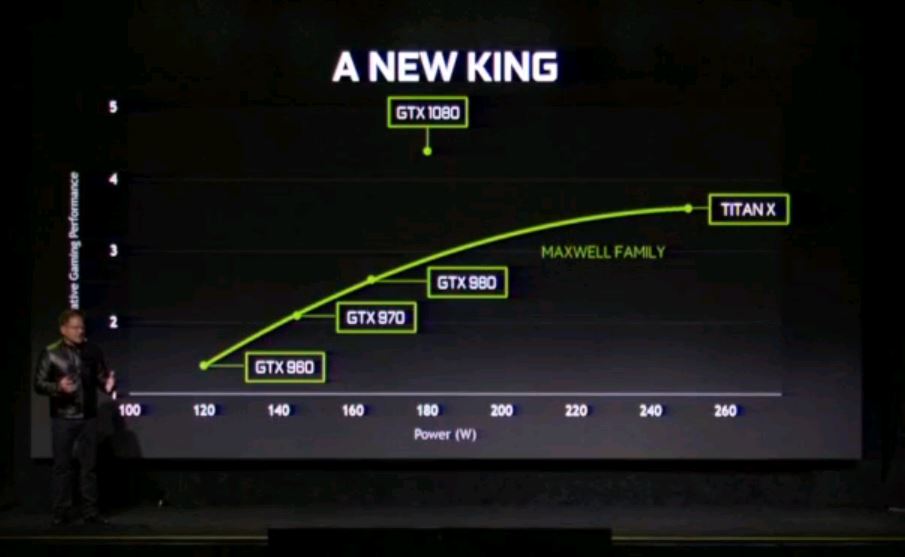 After weeks, if not months of rumours and false predictions, the announcement was finally made. NVIDIA finally revealed the much-awaited Pascal-based NVIDIA GeForce 1080.
What the rumours got correct was the new name of the card. What they missed was the launch date, which NVIDIA kept close to its hearts until CEO Jen-Hsun Huang made the announcement at a specially-gathered press event in Austin on Friday evening (Saturday morning Singapore time).
According to Huang, NVIDIA spent billions in research and development of Pascal and the new GPU.
India public cloud services to hit US$1.26b in 2016
The public cloud services market in India is projected to grow 30.4 percent in 2016 to hit US$1.26 billion, according to Gartner.
The highest growth will come from cloud system infrastructure services (infrastructure as a service [IaaS]), which is projected to grow 32.5 percent in 2016, with platform as a service (PaaS) projected to grow 31.7 percent.
“We are witnessing a shift from legacy IT services to cloud-based services. Cloud services are growing due to organizations pursuing a digital business strategy,” said Sid Nag, Research Director of Gartner.
Smartphone market in historic drop
It’s almost unthinkable but the smartphone market has dipped for the first time in its history.
According to Canalys, worldwide smartphone shipment fell from 324 million units in Q1 2015 to 321 million units in Q1 2016. The top two vendors both posted shipment declines, with Apple the worse hit.
Excluding Apple and Samsung, smartphone shipment grew five percent despite some of the big named international vendors outside the top five also faring badly. LG, Lenovo and TCL-Alcatel posted significant declines, while Sony plummeted by around 57 percent.

Computex introduces InnoVEX to showcase ICT and IoT innovators
 Computex will introduce InnoVEX, a platform to showcase infocomm technology (ICT) and Internet of Things (IoT) innovators. Around 170 startups from 17 countries have already signed up to showcase their latest innovative products and services.
At InnoVEX, along with out-of-the-box, open booths and networking spaces, a wide range of events designed to maximise innovative, technological, and investment exchanges to help startups succeed, including forums, demos, matchmaking, networking events, and pitch contests with a cash prize of US$30,000.
The show will be held at Taipei World Trade Center (TWTC) Exhibition Hall 3 from May 31 to June 2. Diverse activities such as keynote speech, forums, demo, pitch contest, and networking parties will be held throughout the show.
VR hardware to take off in 2016

Virtual reality (VR) is not new but it has had a few false starts in recent years. However, it looks like 2016 is going to be a great year for VR.
According to IDC, worldwide shipment of VR hardware will hit 9.6 million units in 2016. Led by key products from Samsung, Sony, HTC, and Oculus, the category should generate hardware revenue of about US$2.3 billion this year.
While VR will drive nearly all of the hardware volume in 2016, augmented reality (AR) hardware is forecast to ramp up over the next few years. The combined AR/VR device market will see hardware shipments surge past 110 million units in 2020.
Half of CEOs expects substantial digital transformation in their industries
Despite a slowing global economy, CEOs are still making business growth their top priority in 2016, according to a Gartner survey. After growth (54 percent), the second and third business priorities are customers (31 percent) and workforce (27 percent).
The Gartner CEO and senior business executive survey of 400 senior business leaders in user organisations worldwide was conducted in the fourth quarter of 2015, asking questions about 2016/2017. Most responding organisations were those with annual revenue of US$1 billion or more. The survey results show that while business conditions are challenging, CEOs remain confident enough to sanction strategic investments, particularly when it comes to digital business transformation.
“The big rise of explicit mentions of the word ‘customer’ was very noticeable in the results of this year’s survey, “CEOs seem to be concerned about improving customer service, relationship and satisfaction levels. At the same time, CEOs have become much more concerned about employee issues than a couple of years ago. The emphasis is as much on benefits, retention and training of mainstream staff. It is not constrained only to senior grade ‘talent’ issues,” said Mark Raskino, Vice President and Gartner Fellow.
NVIDIA appoints Raymond Teh as APAC sales and marketing chief
NVIDIA has named Raymond Teh as Vice President of Sales and Marketing for the Asia Pacific region. An IT veteran with more than 30 years of experience, Teh will lead the company’s APAC field sales […]
Samsung launches 2-in-1 Windows 10 tablet in Singapore
 Samsung Electronics Singapore has introduced the Samsung Galaxy TabPro S, its first 2-in-1 premium tablet featuring seamless integration of laptop and tablet capabilities.
As the first premium tablet range to be powered by Windows 10 to support LTE Category 6 capabilities, the Galaxy TabPro S comes with enhanced features and long-lasting battery life, making it suitable for on-the-go individuals seeking convenience and performance.
Encased in a 6.3mm slim and sleek exterior, it weighs just 696 grams. The tablet also comes with a full-sized keyboard and cover – the touchpad of the keyboard emulates that of a laptop. The Pogo pin on the Galaxy TabPro S keyboard eliminates the need for pairing or charging separately.
Alibaba to take US$1b stake in Lazada
Leading e-commerce giant Alibaba has announced that it would pay US$1 billion for a controlling stake in Singapore startup Lazada, which has e-commerce operations across Southeast Asia. Established by Rocket Internet in 2011, Lazada is a popular […]
PC shipment down 9.6% in Q1
Worldwide PC shipment shed 9.6 percent to 64.8 million in Q1, according to Gartner. This was the sixth consecutive quarter of PC shipment declines, and the first time since 2007 that shipment volume fell below 65 million units.
In the Asia-Pacific, PC shipment dropped 5.1 percent to 23.3 million units. The ongoing fragile Chinese economy and weak global demand continued to dampen consumer sentiment in the region.
With high PC penetration in the major cities, it was a challenge to invoke PC replacements on the appeal of new technology. The PC life cycle is lengthening as many consumers are waiting until their PC breaks down before purchasing a new one.
IBM and Mastercard to collaborate on market analytics for smaller merchants
 IBM and MasterCard are partnering to offer smaller merchants real-time, analytics-based market insights on revenue, market share, customer demographics and competitors in a particular location and across multiple locations.
The solution integrates IBM Watson Analytics with insights based on aggregated and anonymised MasterCard transaction data through MasterCard Advisors Local Market Intelligence (LMI).
According to MasterCard’s latest research, more than seven out of 10 smaller businesses in Asia-Pacific expect higher business costs in 2016. With this enhanced analytical platform powered by MasterCard Advisors and IBM, merchants will hence be better equipped to make informed decisions that lower costs based on a deeper knowledge of their business’ financial strengths and pitfalls.
Pascal-based NVIDIA Tesla P100 delivers 12 times performance of previous generation accelerator
 NVIDIA has introduced the NVIDIA Tesla P100 GPU, an advanced hyperscale data centre accelerator that can enable a new class of servers that can deliver the performance of hundreds of CPU server nodes.
Today’s data centres process large numbers of transactional workloads, such as web services. But they are inefficient at next-generation artificial intelligence and scientific applications, which require ultra-efficient, lightning-fast server nodes.
Based on the new NVIDIA Pascal GPU architecture, the Tesla P100 provides the performance and efficiency needed to power the computationally demanding applications. It delivers over a 12x increase in neural network training performance compared with a previous-generation NVIDIA Maxwell-based solution.
NVIDIA unveils world’s first deep learning supercomputer

At his opening keynote address at GTC in San Jose, Jen-Hsun Huang, CEO of NVIDIA made a slew of announcements, including the world’s first deep learning supercomputer to meet the unlimited computing demands of artificial intelligence (AI).
As the first system designed specifically for deep learning, the NVIDIA DGX-1 comes fully integrated with hardware, deep learning software and development tools for quick, easy deployment. It is a turnkey system that contains a new generation of GPU accelerators, delivering the equivalent throughput of 250 x86 servers.
The DGX-1 deep learning system enables researchers and data scientists to easily harness the power of GPU-accelerated computing to create a new class of intelligent machines that learn, see and perceive the world as humans do. It delivers unprecedented levels of computing power to drive next-generation AI applications, allowing researchers to dramatically reduce the time to train larger, more sophisticated deep neural networks.
Tesla Model 3 making history
 The electric car has been around since the 19th century. Yet, it has never quite taken off in a big scale. But, the Tesla Model 3 looks set to change that. Just days after its announcement, the new electric car has garnered more than 276,000 orders and that number is growing.
So, what’s so special? What’s the secret recipe that makes the Tesla Model 3 stand out from all its predecessors?
Several factors stand out:
- Long range: The Model 3 can cover up to 346km on a single charge. That’s close to the mileage of a tank of petrol for a high-capacity engine car.
- Attractive price: At US$35,000 before incentives, it’s affordable to many. The price is estimated to be about S$150,000 — placing it in the luxury car price category.
- Sleek design: It looks like something out of a James Bond movie — but better! The futuristic design includes an all-glass roof from the front windscreen down to the boot.
- Quick acceleration: In under 10 seconds, the car can move from zero to 96kph. It’s not the fastest in its price range but that’s fast for an electric car.
- Autopilot safety feature: Car electronics has come a long way and the autopilot safety technology should steer the car away from potential accidents.
Global semiconductor market drops 2.3 percent in 2015
Worldwide semiconductor revenue declined 2.3 percent to US$334.8 billion in 2015, according to final results by Gartner.
The combined revenue of the top 25 semiconductor vendors fell by 0.5 percent during 2015. This was a better performance than the rest of the market, however, which saw a 6.9 percent revenue decline. The top 25 vendors accounted for 73.5 percent of the market, down slightly from 74 percent in 2014.
“The worldwide semiconductor market declined in 2015 as slowing demand for key applications combined with strong currency fluctuations to subdue the market. 2015 saw a mixed performance by the different device categories, unlike 2014 when all categories posted positive growth. Non-optical sensors performed best due to increased usage of fingerprint sensors in smartphones, while discretes saw the strongest decline due to a mix of weak demand and currency issues,” said Andrew Norwood, Research Vice President of Gartner.
Clock ticking for Challenger flagship store
A sale offering products at up to 80 percent off will certainly catch the eye. But, it could also bring a tear or two to the generations that have frequented Challenger Technologies’ megastore at Funan DigitaLife […]
GTC to kick off tomorrow with live webcast of keynotes
 News of an impending new NVIDIA GeForce graphics card based on next generation Pascal technology have been circulating wildly over the past few weeks.
And many are waiting with great anticipation of confirmation by NVIDIA co-founder and CEO Jen-Hsun Huang at his keynote address at GPU Technology Conference (GTC) tomorrow (April 6, 2 to 3 am Singapore time).
For those unable to be at GTC in San Jose, NVIDIA is webcasting live on the NVIDIA blog the keynote addresses:
- April 6, 12 to 2am (Singapore): Jen-Hsun Huang, NVIDIA co-founder and CEO
- April 7, 2 to 3am (Singapore): Rob High, IBM Watson CTO
- April 8, 2 to 3 am (Singapore): Gill Pratt, Toyota Research Institute CEO
5 reasons why I like the Pebble Time
 By Edward Lim
Following the slow demise of my Garmin Vivosmart, I went searching for a replacement. With so many options of both activity trackers and smartwatches available — including the Apple Watch and Samsung Gear S2 — I was spoilt for choice.
As the prices of smartwatches (OK, some) are really close to activity trackers, I decided to give smartwatch a shot. My main considerations were price (nothing above US$200), battery life and functionality.
After evaluating against my criteria, I decided to go with the Pebble Time. A fortnight after using the smartwatch and I’m delighted with my choice. Here are five reasons why I like it:
Slower smartphone growth in 2016
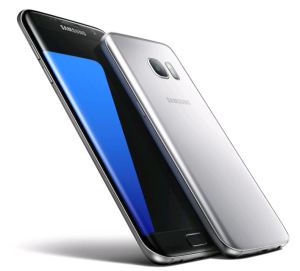
Global smartphone sale is expected to experience just a single-digit growth this year, according to Gartner.
It estimates that global smartphone sale will reach 1.5 billion units, a seven percent increase from 2015. The total mobile phone market is predicted to reach 1.9 billion units in 2016.
“The double-digit growth era for the global smartphone market has come to an end. Historically, worsening economic conditions had negligible impact on smartphone sales and spend, but this is no longer the case. China and North America smartphone sales are on pace to be flat in 2016, exhibiting a 0.7 per cent and 0.4 per cent growth respectively,” said Ranjit Atwal, Research Director of Gartner.
While smartphone sales will continue to grow in emerging markets, the growth will slow down. Gartner predicts that, through 2019, 150 million users will delay upgrades to smartphones in emerging Asia-Pacific, until the functionality and price combination of a low-cost smartphone becomes more desirable.
China Telecom Beijing Research Institute and ZTE to collaborate on R&D
 China Telecom Beijing Research Institute and ZTE have inked a strategic agreement to develop cutting edge technologies including SDN/NFV, 4G+/5G and IoT related.
They will work closely and share resources to develop better network technologies that will support China Telecom’s network construction and service reconstruction. The collaboration will also benefit the industry by bringing more advanced, cutting-edge technologies and innovations to market.
“As we enter the artificial intelligence era, operators are expected to provide a full range of network solutions. Through this partnership, we will be able to significantly advance SDN/NFV, 4G+/5G, cloud computing and big data technologies in the coming years. I believe the new technologies will become a reality through pilot deployments”, said Zhang Chengliang, Vice President of China Telecom Beijing Research Institute.
APAC bucks thin and terminal client down trend
The economic gloom has hit the global enterprise client device market comprising thin and terminal clients. The market was down 6.8 percent in Q4, bringing 2015 decline to 6.9 percent, according to IDC.
This was due to project cutback or delay in the face of a faltering economic outlook and reduced public budgets.
The Asia-Pacific region (excluding Japan) provided the only bright spark in the downturn, growing just over 10 percent in 2015.
Garmin Vivosmart: The case of the disappearing screen
 By Edward Lim
The true test of a product is not when it’s under review upon launch. After all, reviewers usually have only days to test the new products. The real test is when the product is used for a prolonged period. That’s when the qualities (or lack of) of the product comes forth. It can be called the test of time.
I’ve been using a Garmin Vivosmart for more than a year (see “5 reasons why I like the Garmin Vivosmart“). For the past 16 months, I stand by the five reasons why I like it and would have loved to continue using the activity tracker, except for the case of the disappearing screen.
After a few months of usage, I noticed that a line of pixel seem to be missing from the touchscreen. Though the first line seem to be faded out, the text was still legible so I let it pass. But, the screen got worse as the months went by. Soon, more of the pixels went missing and the display looks cropped out.
Amazon Fire to spark change in tablet market
 At just US$50, the Amazon Fire tablet is expected to stoke the flames in a highly-competitive tablet market, according to ABI Research.
The Fire’s price is significantly lower than the average vendor selling price of US$323. It is a calculated risk that Amazon can afford to take as the company shifts its revenue focus away from solely hardware and toward recurring digital content sales.
Sporting a seven-inch screen, the tablet comes with 8MB of built-in memory, quad-core 1.3GHz processor, dual camera, and battery life good for up to seven hours of reading, web surfing, video watching, and music listening.
PC revival! Chromebooks and ultraportable PCs to lead charge
 The personal computer (PC) is still alive and breathing. According to ABI Research, 163 million notebook PCs shipped globally in 2015.
The majority were laptops, which constituted nearly 80 percent of the category. The data suggests that despite a floating myth speculating that it will only be a matter of time before PCs meet their demise, the market is still going strong and shows no sign of slowing down in the immediate future.
“Industry experts greatly exaggerated the death of the PC. The platform is continuing to evolve its designs to provide flexibility for productivity purposes, while also adapting its shape to support tablet-like, touch applications. Chromebooks and ultraportable PCs will continue to drive the most growth within the notebook PC market,” said Jeff Orr, Research Director of ABI Research.
Monash University launches M3 to accelerate research

Monash University is taking research to another level with the launch of M3, the third-generation supercomputer available through the MASSIVE (Multi-modal Australian ScienceS Imaging and Visualisation Environment) facility.
Powered by ultra-high-performance NVIDIA Tesla K80 GPU accelerators, M3 will provide new simulation and real-time data processing capabilities to a wide selection of Australian researchers.
“Our collaboration with NVIDIA will take Monash research to new heights. By coupling some of Australia’s best researchers with NVIDIA’s accelerated computing technology we’re going to see some incredible impact. Our scientists will produce code that runs faster, but more significantly, their focus on deep learning algorithms will produce outcomes that are smarter,” said Professor Ian Smith, Vice Provost (Research and Research Infrastructure), Monash University.
Worldwide wearable market jumps 171.6% in 2015
Wearable devices are all the rage. Fueled by the growing popularity of fitness trackers and the Apple Watch, the global wearable device market grew 126.9 percent in Q4, bringing total annual shipment to 78.1 million units, a rise of 171.6 percent, according to IDC.
“Triple-digit growth highlights growing interest in the wearables market from both end-users and vendors. “It shows that wearables are not just for the technophiles and early adopters; wearables can exist and are welcome in the mass market. And since wearables have yet to fully penetrate the mass market, there is still plenty of room for growth in multiple vectors: new vendors, form factors, applications, and use cases. This will help propel the market further,” said Ramon Llamas, Research Manager of IDC’s wearables team.
“What is warranted is continued innovation and development. The market can only get so far with ‘me too’ and ‘copycat’ wearable devices. End-users expect improvement from what they have now, and new applications to spur replacement and increased adoption. Historical data, like steps taken and calories burned, has been a very good start. Prescriptive data, like what else a user can do to live a healthier life, coupled with popular applications like social media, news, and navigation, will push wearables further, and attract more users,” he added.
ZTE announces ultra HD 4K hybrid set-top box
 ZTE has announced its new ultra high definition (UHD) hybrid set-top box B820C-A10, which combines cable and OTT services and integrates with ZTE’s Smart Home 2.0 packages.
In compliance with the DVB-C standard, the B820C transfers DVB TS signals of UHD live content to users and can be deployed in the cable broadcast scenario. Equipped with the latest OTT technology, it supports interactive videos, downloads and installed applications of televisions. Integrated with the Smart Home 2.0 packages, it supports features such as video call and multi-screen sharing. B820C adopt the Android 5.1 system for compatibility with various Android applications.
The B820C’s 64-bit system architecture is built to handle complex algorithms with ease. With a dedicated design hardware decoder, it supports UHD stream decoding of up to 3840*2160, with frame a rate of 60P/s and 10bit colours. Users can enjoy enhanced UHD and a stunning viewing experience.
Oculus-ready PCs coming right up
The wait for a new way of gaming is nearly over. With the release of the Oculus Rift in March, virtual reality gaming is set to transform the way gamers interact with games. Oculus-Ready PCs from Dell, Alienware […]
China smartphone sale hit record high in Q4
Smartphone sale hit a record 117.3 million in China in Q4. This represents an eight percent growth compared to the same period last year.
The phenomenal increase was partly driven by China’s annual singles day online shopping festival in November and Huawei’s strong shipments in the quarter. China’s Q4 growth boosted the calendar year 2015 growth to three percent.
“Xiaomi, Huawei and Apple are the top smartphone players in 2015. This is a stark contrast to the top players in 2013, which was Samsung, Lenovo and Coolpad – with Samsung clearly dominating other players. With operators reducing smartphone subsidy and given the volatility of consumers’ brand preference in the market, the smartphone scene has changed significantly since then,” said Tay Xiaohan, Senior Market Analyst of IDC Asia/Pacific’s Client Devices team.
Apple conquers smart watch market
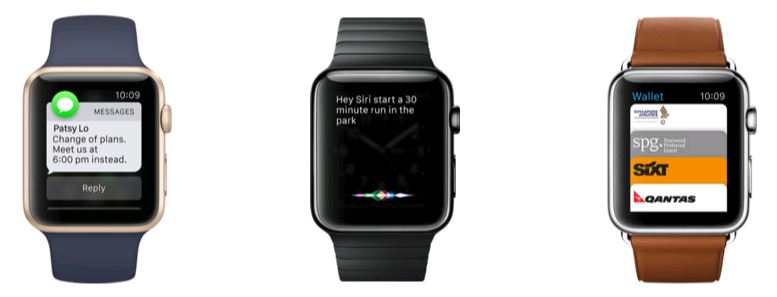 Apple is top of the league in the smart watch market in 2015, accounting for over 12 million units and two-thirds of all shipment, according to Canalys.
Samsung returned to second place in Q4, as the improved design of the Gear S2 saw a much better consumer reception than previous wearable efforts by the company. Pebble came third and Huawei fourth, establishing itself as the leading Android Wear vendor.
Basic bands exceeded 37 million shipments for the year. Fitbit set a quarterly shipment record as it comfortably led the category. Xiaomi held second place, shipping 12 million Mi Bands during 2015.
Xenith iCafe opens with 100 NVIDIA GeForce GPU-Powered PCs
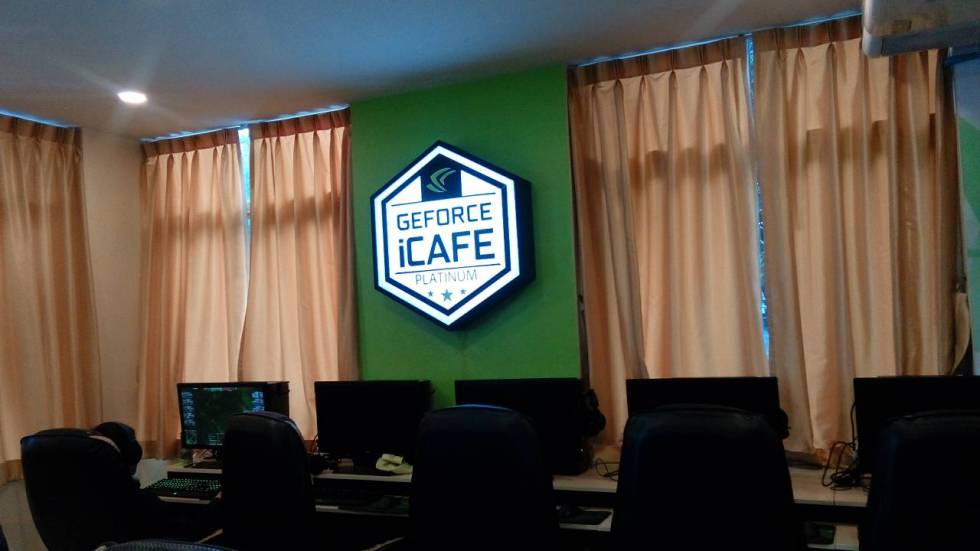 Gamers in northern Thailand, specifically Chiangmai, will get to enjoy premium gaming experience with the opening of Xenith iCafe in the city.
All its 100 PCs are equipped with NVIDIA GeForce GTX 960 GPUs, which deliver advanced performance, power efficiency, and realistic gameplay based on the latest NVIDIA Maxwell technology. They also come with high quality Razer gaming gear – mouse, keyboard and headset – all tailored to give gamers the best experience.
Situated near Chiangmai University , the modern and trendy Xenith iCafe features two gaming zones – a comfort zone and a VIP zone to cater to gamers’ needs as well as to host gaming events. This is a new trend in the iCafe market where owners can better balance cost, performance and functionality while delivering the gaming experience that their customers demand.
Samsung extends lead in India smartphone market
 Samsung has pulled further ahead of the competition with a quarter share of the India smartphone market in 2015, according to Canalys.
Micromax held on to second place, with annual shipment falling by more than 20%, primarily due to inventory build-up in its distribution network.
Lenovo and Motorola’s combined shipments were just short of three million units, up almost 60 percent up from the previous year, moving them past Intex to take third place in the market.
Oil gloom, data centre bloom
 Oversupply of oil in the global economy is set to accelerate data centre investment, according to Canalys, which forecasted that the large data centre segment will grow eight percent in 2016 as enterprises and service providers become more ambitious with the size of their facilities.
Oil prices have declined more than 70 percent since mid-2014, and will remain low as production ramps up across the US and Middle East. Data centres, with their monolithic energy consumption, will benefit from cheaper electricity as wholesale gas prices decline. Investment will focus on larger facilities, as energy becomes less of a constraint on operating costs.
Cheaper oil will accelerate a market that is already growing. Pre-eminent cloud service providers have already reacted to data sovereignty concerns by investing in the expansion of their global cloud footprint. This will continue and industry standard servers, network security and virtualisation technologies will become key growth categories. Incumbent data centre infrastructure vendors will pivot their focus towards high-end large and hyperscale facilities, but will face stiff competition from cheaper ODM alternatives.
Worldwide IT spending to remain flat this year
 The global economy is hitting IT spending, with Gartner predicting just a 0.6 percent increase over 2015 spending of US$3.52 trillion.
2015 saw the largest US dollar drop in IT spending since Gartner began tracking IT spending. US$216b less was spent on IT in 2015 than in 2014 and 2014 spending levels won’t be surpassed until 2019.
“The rising US dollar is the villain behind 2015 results. US multinationals’ revenue faced currency headwinds in 2015. However, in 2016 those headwinds go away and they can expect an additional five percent growth,” said John-David Lovelock, Research Vice President of Gartner.
Samsung introduces Galaxy A smartphones in Singapore
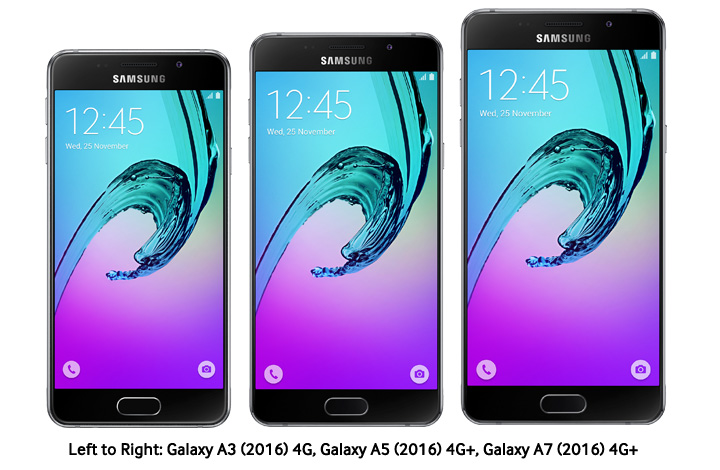 Samsung has launched its Galaxy A (2016) smartphones – the Galaxy A3 (2016) 4G, Galaxy A5 (2016) 4G+ and Galaxy A7 (2016) 4G+ – in Singapore. These additions come in three screen size options: 4.7-inch for the Galaxy A3 (2016) 4G, 5.2-inch for the Galaxy A5 (2016) 4G+ and 5.5-inch for the Galaxy A7 (2016) 4G+.
The ultra slim unibody sports a 2.7mm narrow bezel for an immersive viewing experience.
The smartphones pack a 13MP rear camera and a 5MP front-facing camera with brighter f1.9 aperture lenses. Innovative smart selfie features such as wide selfie, palm selfie and beauty face embedded in the Galaxy A (2016) allow users to capture high-resolution and vivid selfies with ease. The Galaxy A5 (2016) 4G+ and Galaxy A7 (2016) 4G+ rear cameras are also enhanced with optical image stabiliser for blur-free images.
AIS migrates to ZTE’s USPP
AIS, Thailand’s largest mobile operator, has successfully migrated 38 million subscribers from HLRs (Home Location Registers) to ZTE’s USPP (Universal Subscriber Profile Platform) solution. USPP was fully vetted in a series of proof-of-concept tests conducted by […]
Semiconductor market drops 1.9% in 2015
Worldwide semiconductor revenue was US$333.7 billion in 2015, a 1.9 percent decrease from 2014 revenue of US$340.3 billion, according to Gartner.
The top 25 semiconductor vendors’ combined revenue increased 0.2 percent, which was more than the overall industry’s growth. They also accounted for 73.2 percent of total market revenue, up from 71.7 percent in 2014.
“Weakened demand for key electronic equipment, the continuing impact of the strong dollar in some regions and elevated inventory are to blame for the decline in the market in 2015,” said Sergis Mushell, Research Director of Gartner.
NVIDIA adds AI and supercomputing prowess to driverless cars
 The new NVIDIA DRIVE PX 2 is set to give driverless cars a major boost.
Touted at the world’s most powerful engine for in-vehicle artificial intelligence, it allows the automotive industry to use artificial intelligence (AI) to tackle the complexities inherent in autonomous driving. NVIDIA DRIVE PX2 utilises deep learning on NVIDIA’s advanced GPUs for 360-degree situational awareness around the car, to determine precisely where the car is and to compute a safe, comfortable trajectory.
“Drivers deal with an infinitely complex world. Modern artificial intelligence and GPU breakthroughs enable us to finally tackle the daunting challenges of self-driving cars,” said Jen-Hsun Huang, Co-founder and CEO of NVIDIA. “NVIDIA’s GPU is central to advances in deep learning and supercomputing. We are leveraging these to create the brain of future autonomous vehicles that will be continuously alert, and eventually achieve superhuman levels of situational awareness. Autonomous cars will bring increased safety, new convenient mobility services and even beautiful urban designs – providing a powerful force for a better future.”
China to surpass the US in 3D printer market
China is set to overtake the US to become the biggest 3D printer market this year.
3D printer shipments in the China market passed 34,000 units in 2014, and is expected to reach 77,000 units in 2015, a growth rate over 120 percent, according to IDC.
This growth rate is largely driven by sales of desktop 3D printers priced under US$5,000. As the Chinese government continue to promote 3D printer awareness and usage within schools and educational institutions, the desktop 3D printer market is expected to maintain an annual growth trend in the coming years.
NVIDIA unveils VR-ready programme
 NVIDIA is paving the way to virtual reality (VR) gaming experiences with the launch of its new VR-ready programme at CES.
Under the programme, PC and notebook makers and add-in card providers will deliver GeForce GTX VR Ready systems and graphics cards that deliver an immersive VR gaming experience. The programme minimises confusion regarding which equipment is necessary to play the range of VR games and applications increasingly coming to market.
Delivering a great VR experience demands seven times the graphics processing power of traditional 3D games and applications – driving framerates above 90 frames per second (fps) for two simultaneous images (one for each eye).
NVIDIA to unveil new technology for self-driving cars at CES
NVIDIA will unveil new technology for self-driving cars at CES, which will kick off in Las Vegas this week. Jen Hsun-Huang, CEO of NVIDIA will be hosting a press conference on January 5, 10am […]
NVIDIA brings VR to SEA

As the year heads to a close, the anticipation for virtual reality (VR) is gathering momentum. And NVIDIA has helped to raise the tempo by bringing VR to Southeast Asia in a closed door event for analysts, the media and enthusiasts.
Held on December 11 at Crown Plaza Changi Airport in Singapore, the event gave participants the opportunity to try out two of the hottest VR products — Oculus Rift and HTC Vive — powered by NVIDIA technologies.
Oculus Rift lets users immerse in three three-dimensional games (details are under embargo from the content owners), taking gaming to another level.
Leadtek releases NVS 810 graphics card for HD multi-screen output
Leadtek Research has released the new NVS 810 professional graphics card, which is designed to provide high definition multi-screen output for large exhibits, outdoor advertisement walls and other digital image output applications. The NVS 810 uses […]
 Entelechy Asia