 NVIDIA has formed an alliance with Ubisoft to offer PC gamers the best gaming experiences possible for Ubisoft’s biggest fall titles, including Tom Clancy’s Splinter Cell Blacklist, Assassins Creed IV Black Flag and Watch Dogs.
NVIDIA’s developer technology team is working closely with Ubisoft’s development studios on incorporating graphics technology innovations to create game worlds that deliver new heights of realism and immersion. One example is NVIDIA® TXAA™ antialiasing, which provides Hollywood-levels of smooth animation, soft shadows, HBAO+ (horizon-based ambient occlusion) and advanced DX11 tessellation.
“PC gaming is stronger than ever and Ubisoft understands that PC gamers demand a truly elite experience — the best resolutions, the smoothest frame rates and the latest gaming breakthroughs,” said Tony Tamasi, Senior Vice President of Content and Technology at NVIDIA. “We’ve worked closely with Ubisoft’s incredibly talented creative team throughout the development process to incorporate our technologies and deliver the most immersive and visually spectacular game worlds imaginable.”
 By
By 
 NVIDIA has launched the NVIDIA GeoInt Accelerator, the world’s first GPU-accelerated geospatial intelligence platform to enable security analysts to find actionable insights quicker and more accurately than ever before from vast quantities of raw data, images and video.
 By
By 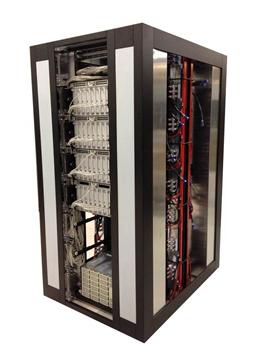 NVIDIA Tesla GPU accelerators are powering the world’s two most energy efficient supercomputers, according to the latest
 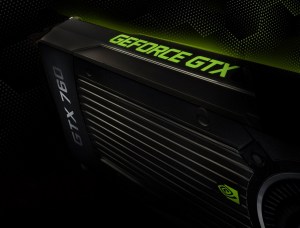 Barely a month after it introduced the first GeForce 7 series GPUs — the NVIDIA GeForce GTX 780 and the NVIDIA GeForce GTX 770 — NVIDIA has added another new card to its lineup. P
 NVIDIA has done something quite unheard of — dropping the price of a pre-ordered product just a week before shipping. According to a NVIDIA blog post, “we’ve heard from thousands of gamers that if the price was US$299, we’d have a home run. So we’re changing the price of SHIELD to US$299”.
 Just a week after launching its top-of-the-line GeForce GTX 780, NVIDIA has added a scaled-down sibling to its impressive lineup of GPUs based on t

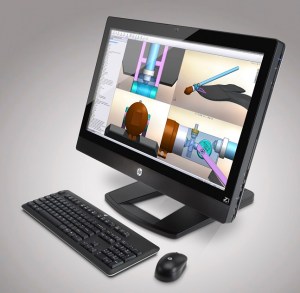 NVIDIA and HP are meeting the demanding needs of professionals with a range of
  Five new NVIDIA notebook GPUs deliver a trifecta of technologies that seamlessly and automatically maximise a consumer’s notebook performance and experience. With no effort or input from the notebook user, the technologies work in the background to save battery life, enhance performance and enrich the visual experience — providing the best notebook experience the GPU can deliver. They include: