
 Researchers working on sequencing the novel coronavirus and the genomes of people afflicted with COVID-19 now have a helping hand — NVIDIA is offering a free 90-day licence to Parabricks, which uses GPUs to accelerate by as much as 50 times the analysis of sequence data.
Tag: NVIDIA
NVIDIA holds off GTC announcements
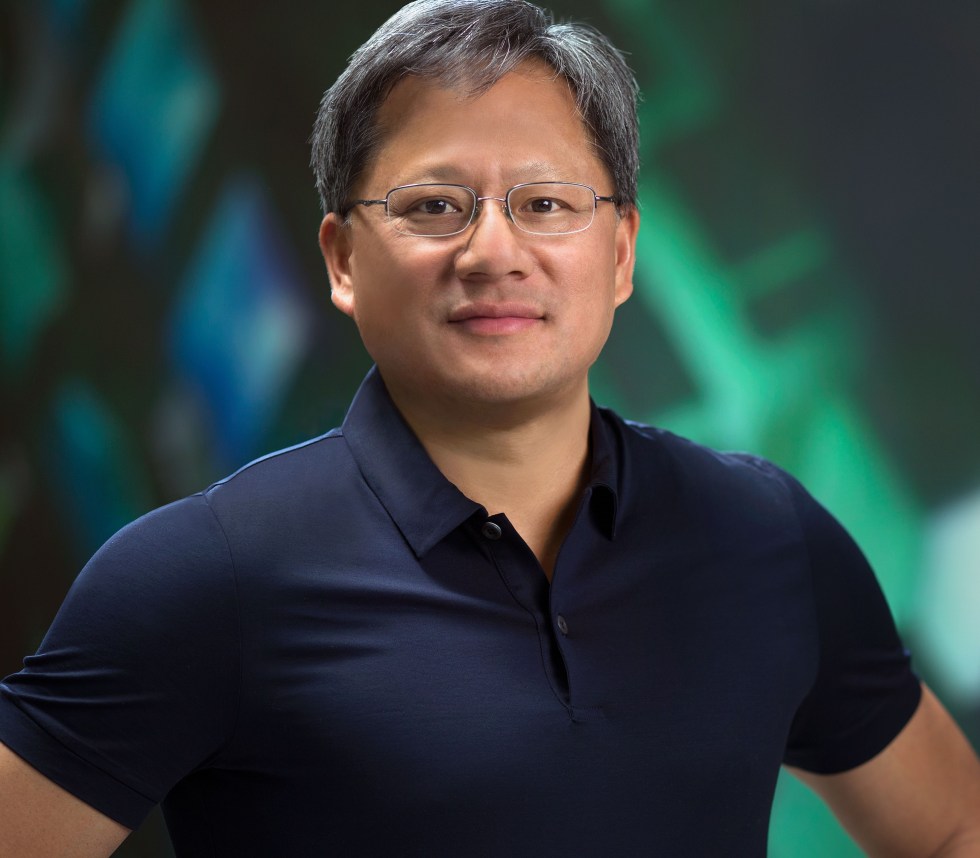
Huang: This is a time to focus on our family, our friends, our community.NVIDIA will not be making any product or news announcements next week, according to a NVIDIA blogpost.
GTC goes online, Google IO and GDC scratched
 It’s been a month of event cancellations due to COVID-19. NVIDIA has pulled the plug on the annual GPU Technology Conference (GTC) in San Jose and taking the show online. Just how much of the event will be held online is yet to be known but the definite go ahead is the keynote address by NVIDIA CEO Jensen Huang.
MWC Barcelona hit by string of withdrawals
 The list is growing. Amazon has joined Ericsson, LG and NVIDIA in pulling out from MWC Barcelona. Held from February 24 to 27, the leading mobile event is expected to see fewer participants this year because of the novel coronavirus situation.
Certis harnesses technologies, operationalises AI

Chua: Combining operations and technologyOperations and technology must work hand in hand in order for organisations to gain better leverage and improve services.
AI Innovation Day to focus on IVA
 From enhancing public safety to improving customer experience, intelligent video analytics (IVA) is shaping the way videos are used for more informed decision-making. The technology is the focus of AI Innovation Day, which will be held at Kent Ridge Guild House in Singapore on December 4.
NVIDIA hold hands with Arm and tech leaders on GPU-accelerated servers
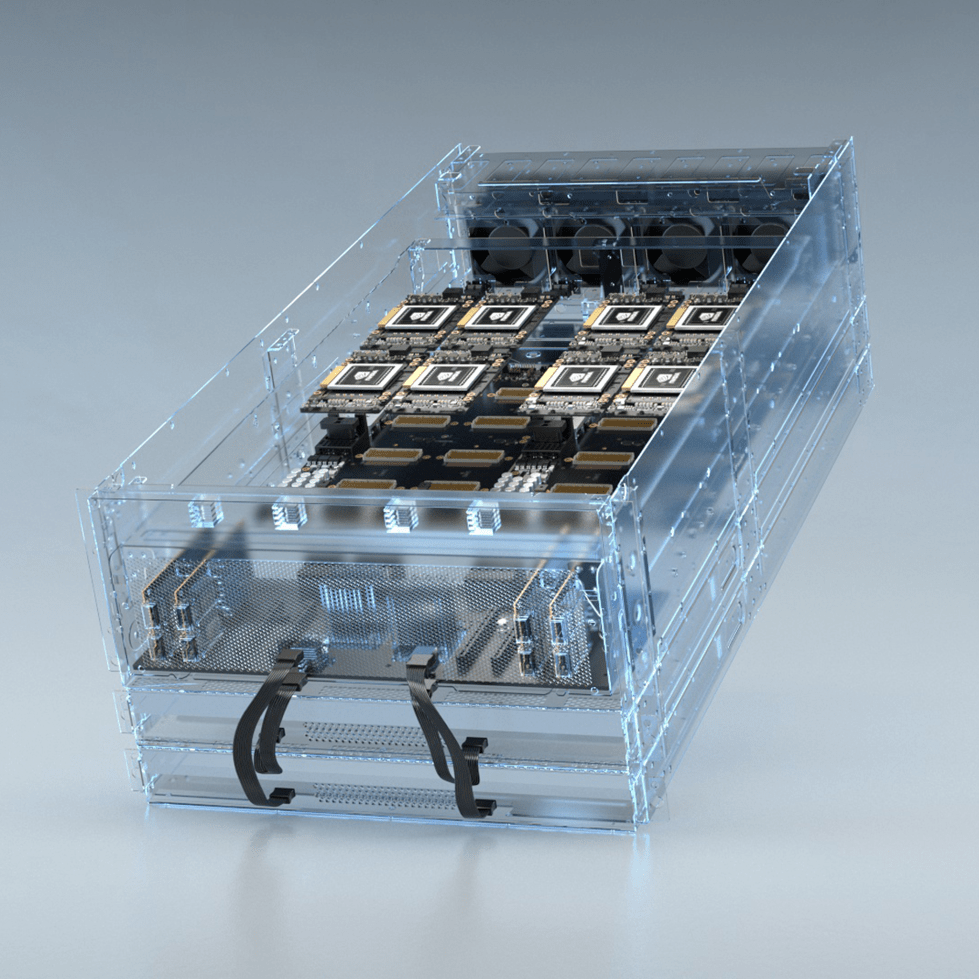
NVIDIA’s new reference design platform enables companies to build GPU-accelerated Arm servers for running a broad range of applications, from hyperscale-cloud to exascale supercomputing and beyond.NVIDIA has teamed up with Arm and a host of tech leaders to introduce a reference design platform for enterprises to quickly build GPU-accelerated Arm-based servers.
NVIDIA unveils Jetson Xavier NX for AI supercomputing at the edge
 NVIDIA has introduced the Jetson Xavier NX, which it dubbed as “the world’s smallest, most powerful AI supercomputer for robotic and embedded computing devices at the edge”.
NVIDIA announces EGX edge supercomputing platform for AI, IoT and 5G
 NVIDIA has announced the NVIDIA EGX Edge Supercomputing Platform which lets organisations deliver next-generation AI, IoT and 5G-based services at scale and with low latency. Along with annoucing this at his keynote address at the opening of Mobile World Congress in Los Angeles, NVIDIA Founder and CEO Jen-Hsun Huang declared that we have entered a new era, where billions of always-on IoT sensors will be connected by 5G and processed by AI.
APAC GPUaaS market poised for 40 CAGR by 2025

The global GPU as a Service (GPUaaS) market is expected to jump tenfold from around US$700 million in 2018 to US$7 billion by 2025, according to Global Market Insights. The Asia-Pacific (APAC) region is expected to lead this charge with a compounded annual growth rate of more than 40 percent between 2019 and 2025.
NVIDIA empowers Arm with AI and HPC software
 Giving customers choices and enabling innovation in the high performance computing (HPC) space are the key reasons why NVIDIA is providing support for Arm CPUs.
Taiwan’s fastest supercomputer goes online
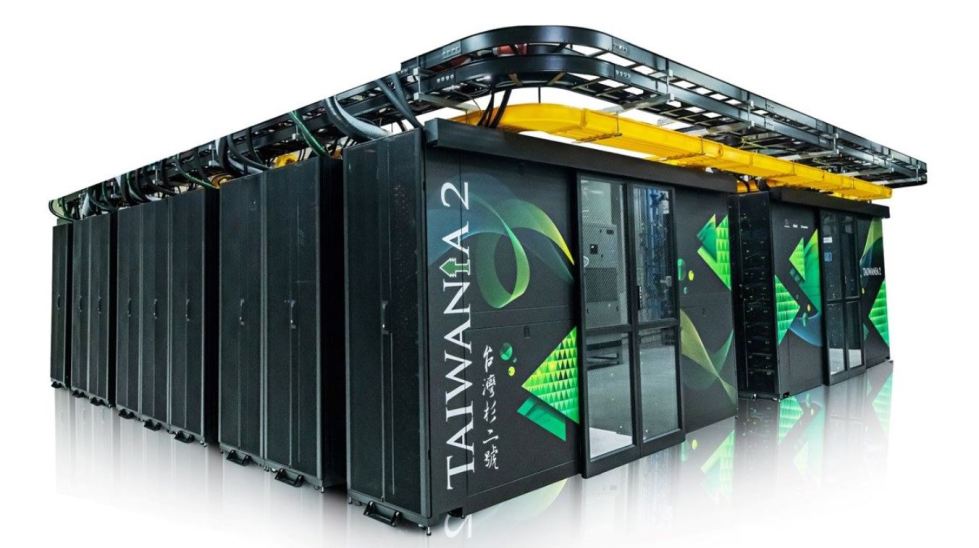
Taiwan’s new and fastest supercomputer, Taiwania 2 is also the world’s 20th fastest and 10th most energy efficient. Made in Taiwan, it will be used by the academic and research communities at the Taiwan Computing Cloud.
NVIDIA strikes back at Intel
 Take that, Intel! GPU giant NVIDIA has fired back at Intel, which reported that its Xeon Scalable processors outperforms NVIDIA GPU on ResNet-50 deep learning Inference.
NVIDIA unveils US$99 Jetson Nano
 NVIDIA Founder and CEO Jensen Huang made a slew of announcements during his near three-hour keynote address at the GPU Technology Conference last week. But among the date centre and server offerings, partnerships with leading brands and a new development in autonomous driving, one that doesn’t seem as loud and prominent could prove to be the spark to trigger a robotics tsunami.
NVIDIA to acquire Mellanox
 NVIDIA has reached a US$6.9 billion agreement to acquire Mellanox, a supplier of end-to-end Ethernet and smart interconnect solutions and services for servers and storage.
The age of AI in radiology is here

Speaking with a passion of an artificial intelligence (AI) in healthcare evangelist, Kimberly Powell declared that the age of AI in radiology is here. And she has earned the right to say that because she has been championing this since she joined NVIDIA 11 years ago.
Finally, an affordable ray tracing GPU from NVIDIA!
 When NVIDIA launched on last August the first GeForce RTX GPUs with ray tracing capabilities, fans were excited but taken aback by the the price tag. Costing from US$499, the three cards — the GeForce RTX 2080 Ti, 2080 and 2070 — were a little higher than most gamers were prepared to fork out.
Making 8K movie editing a reality
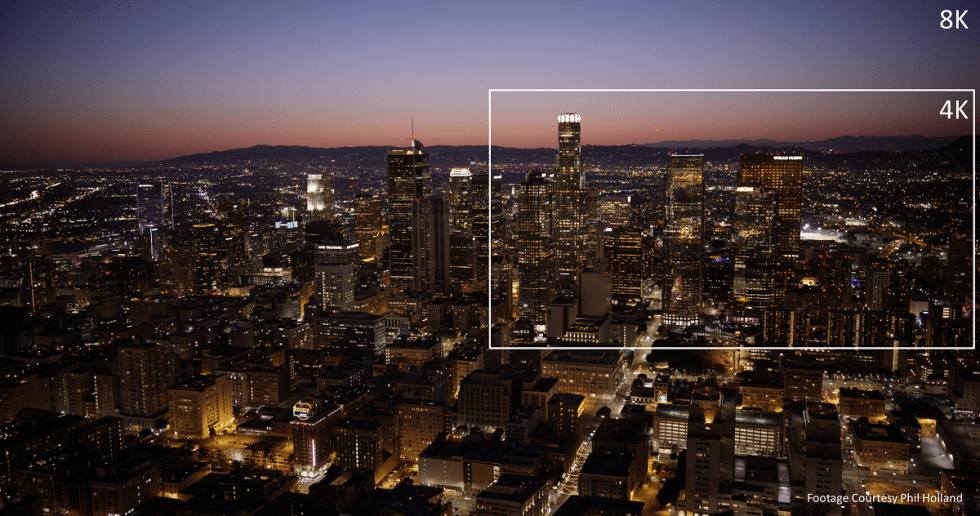 8K movie is the next big thing and an announcement by RED and NVIDIA is making editing such movies a reality. The partners have introduced the NVIDIA CUDA-accelerated REDCODE RAW decode SDK that gives software developers and studios a powerful new way to work with 8K video.
Amazon takes on big guns in machine learning
 A new player has entered the machine learning arena. While big players such as Google, Intel and NVIDIA have been slugging it out, Amazon has thrown its hat into the ring with its newly-launched Inferentia chip.
NVIDIA GPUs power a quarter of Top 500 supercomputers
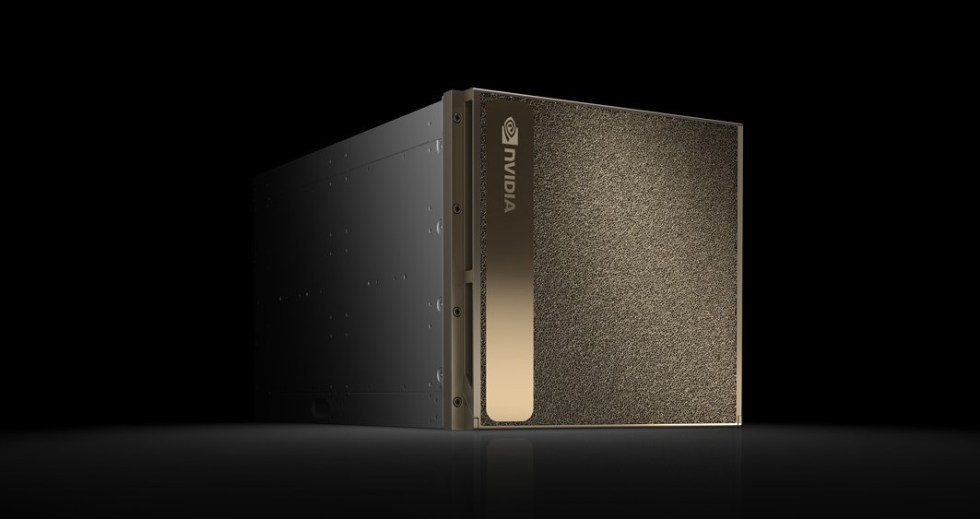
The world’s top two supercomputers — – the US Department of Energy’s Summit, at Oak Ridge National Laboratory, and Sierra, at Lawrence Livermore National Lab. — pack a combined total of more than 40,000 NVIDIA V100 Tensor Core GPUs, according to the latest of the Top 500 list released in conjunction with SC18.
The Weather Channel showcases realistic weather simulation
The weather wreaked havoc across the world last week with a number of hurricanes and typhoons. The Weather Channel leveraged the same technology used for computer games to create simulations that brought the impact of such weather into homes.
NVIDIA unveils Turing architecture and new Quadro products

To the uninitiated, images just look look sharper and more detailed because of improved resolution. But, there’s much more to that, one of which is ray tracing, a rendering technique used to generate an image by tracing the path of light as pixels in an image plane and simulating the effects of its encounters with virtual objects.
Consortium introduces standard to simplify VR headset connectivity
 NVIDIA, Oculus, Valve, AMD, and Microsoft have come together to introduce VirtualLink, an open standard that simplifies next-generation virtual reality (VR) headset connectivity to PCs and other devices. Instead of a range of cords and connectors, the new standard adopts the single, high-bandwidth USB Type-C connector.
Machine vs Machine
Singapore blogger Daryl Aiden Yow created a storm when he manipulated stock images and posted them on his Instagram account. The 27-year-old has since apologised but his action has cast more doubt on the blogging community.
One step closer to the World Cup
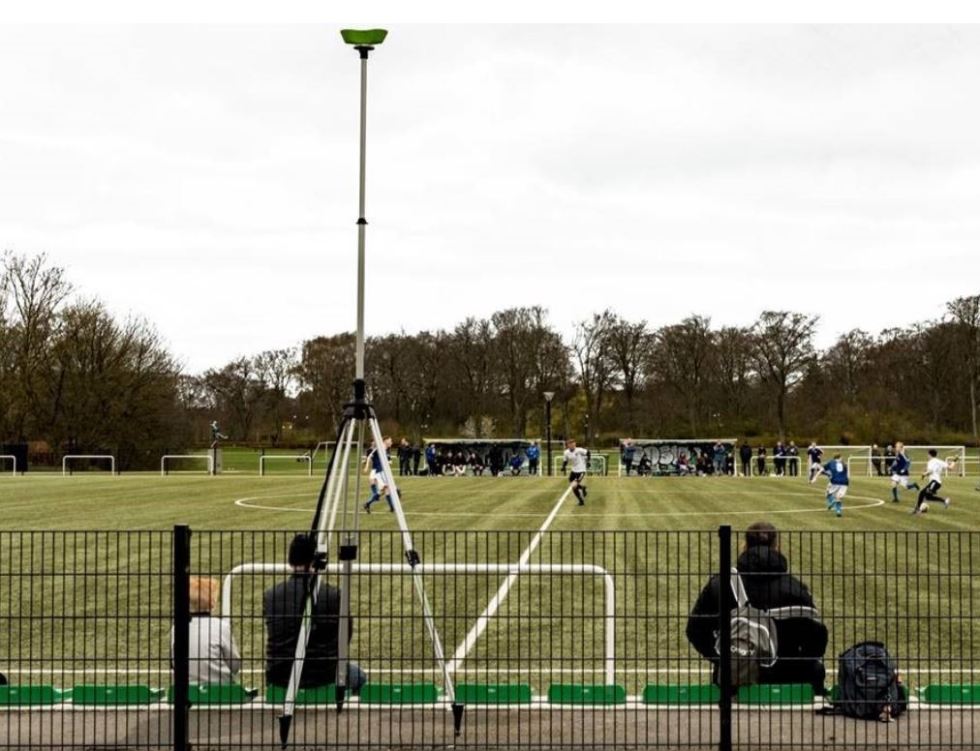 With World Cup fever in full force right now, many budding players are hoping for the day when they could be under the global spotlight. Well, a little help from artificial technology (AI) may help take them a step closer.
Intel tweet that launches a new GPU war
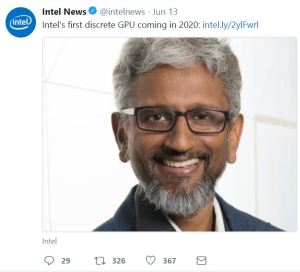 On June 13, Intel had the GPU world in a flurry when it tweeted “Intel’s first GPU coming in 2020”. The media were quick to post stories of this incoming new GPU, which would add interesting competition to a market dominated by NVIDIA with AMD a distant second.
NVIDIA announces platform to build intelligent robots
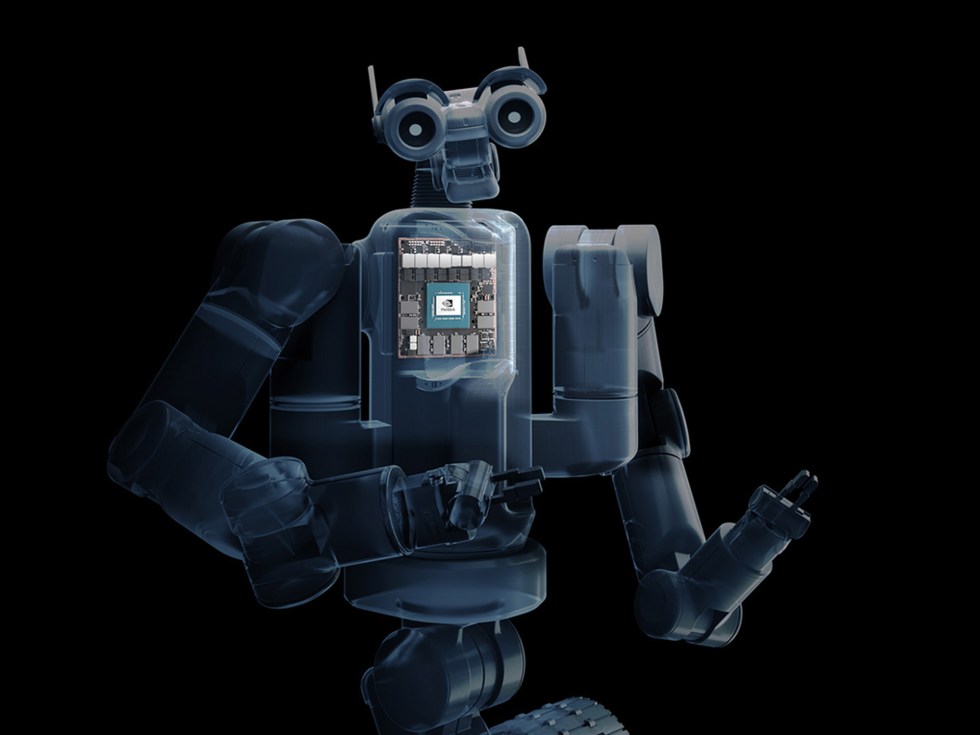
NVIDIA has announced the availability of NVIDIA Isaac, a new platform to power the next generation of autonomous machines, bringing artificial intelligence (AI) capabilities to robots for manufacturing, logistics, agriculture, construction, and many other industries.
Taiwan’s MOST and NVIDIA to collaborate on AI efforts
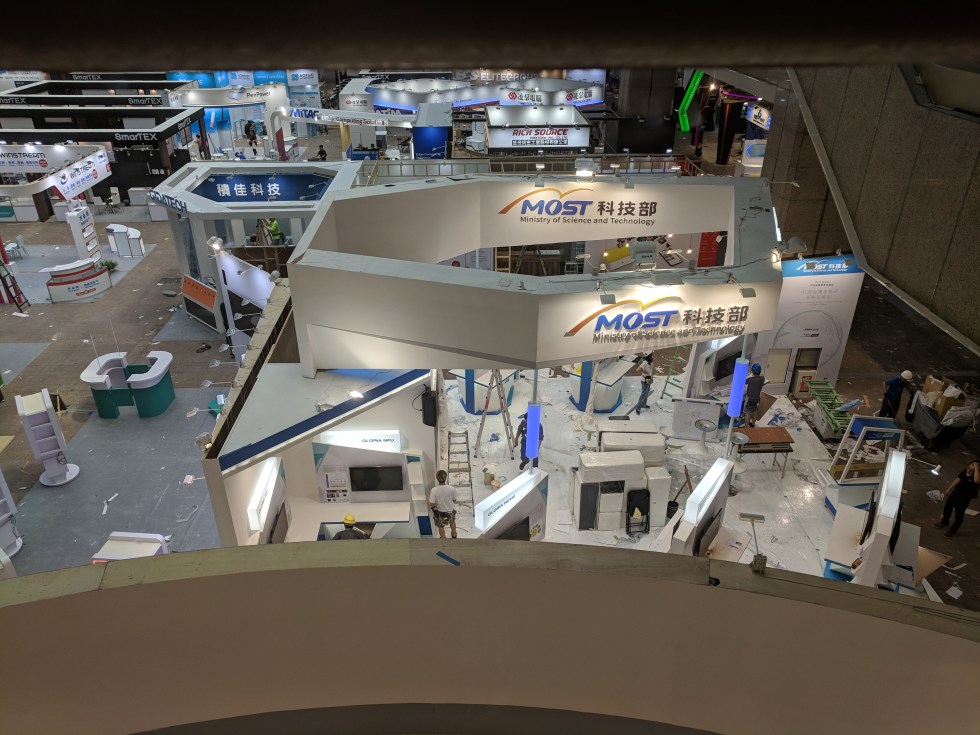
Taiwan is going big on artificial intelligence (AI) and its Ministry of Science and Technology (MOST) will be collaborating with NVIDIA on AI initiatives.
Power efficient chipsets to drive edge AI
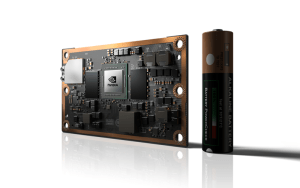
Power efficient chipsets are set to be the main driver as artificial intelligence (AI) moves makes a significant shift from the cloud to the edge, according to ABI Research.
Robot see, robot do
 NVIDIA researchers have demonstrated how robots can be trained to observe and repeat human actions — a “first of its kind” capability powered by deep learning.
NVIDIA researchers head to Brisbane for ICRA
 Dubbed “the brains behind the bots”, NVIDIA researchers will be heading to the International Conference on Robotics and Automation (ICRA) at Brisbane Convention and Exhibition Centre in Australia from May 21 to 25.
DEEPCORE teams up with NVIDIA to boost AI startups
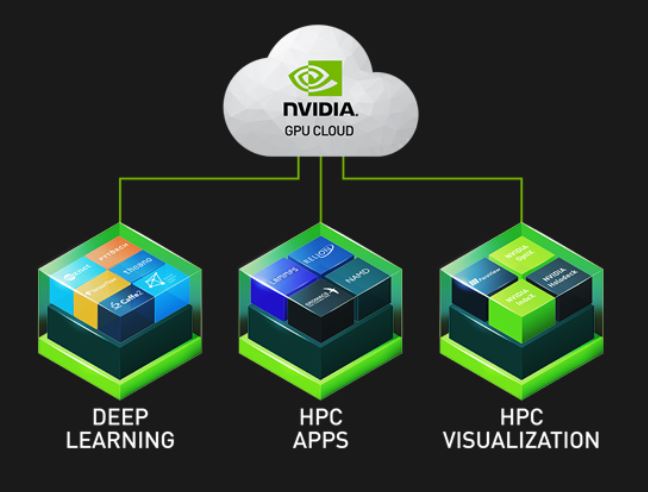 Tokyo-based startup incubator DEEPCORE is partnering NVIDIA to support AI startups and promote university research programmes across Japan.
IoT goes deep
 Arm is taking its recently-announced Project Trillium a step further with a collaboration with NVIDIA. The partners will bring the open-source NVIDIA Deep Learning Accelerator (NVDLA) architecture into Project Trillium platform for machine learning.
Adobe and NVIDIA team up to improve Sensei
 Adobe and NVIDIA have formed a strategic partnership to rapidly enhance their industry-leading artificial intelligence (AI) and deep learning technologies.
GTC hits new highs

The GPU Technology Conference (GTC) has hit new highs with a record of more than 8,000 participants, and filling the entire San Jose McEnery Convention Center.
Samsung to make cryptocurrency mining chip
 Cryptocurrency mining has been given a boost with the revelation that Samsung is working on chip just for that purpose.
Mindset change needed for an AI future
 Think artificial intelligence (AI) and the advent of powerful thinking machines and images of Arnold Schwarzenegger of The Terminator come to mind.
Chery to pop NVIDIA-powered ZP ProAI system into autonomous vehicles
 China carmaker Chery has adopted the new ZP ProAI system, powered by NVIDIA Drive AI self-driving technology, for its autonomous vehicles. The move will bring Level 3 autonomous driving to the world’s biggest auto market.
Spectre of a Meltdown

In a week where the world’s eyes were supposed to be focusing on the exciting new gadgets and technologies coming out at CES 2018, it was news from past technologies that had the world reeling.
Learn robotics at Udacity
 Robotics is no longer just a hobby but serious stuff. NVIDIA’s Deep Learning Institute is now working with online learning provider Udacity to develop a programme that will immerse students in the field of robotics, giving them career-ready skills.
We are 5!
 Entelechy Asia turns five today. So much has changed since we launched in November 2012.
NVIDIA expands DLI offerings

The need for deep learning skills is increasing as more and more companies and industries hop on the bandwagon. Launch a little more than a year ago, NVIDIA’s Deep Learning Institute (DLI) has already trained tens of thousands of students, developers and data scientists.
And the company is expanding its DLI offerings with:
- New partnerships: Team up with Booz Allen Hamilton and deeplearning.ai to train thousands of students, developers and government specialists in artificial intelligence (AI).
- New University Ambassador Program: Instructors worldwide can teach students critical job skills and practical applications of AI at no cost.
- New courses: More courses are added to teach domain-specific applications of deep learning for finance, natural language processing, robotics, video analytics, and self-driving cars.
NVIDIA to hold first AI-focused conference in Singapore in October
 With artificial intelligence (AI) being a hot topic this year, NVIDIA is organising its first AI-focused regional conference in Singapore on October 23 and 24.
The event will be held in two parts with the first day focusing on Deep Learning Institute (DLI) workshop where participants will received hands-on training on deep learningl and the second day filled with keynote addresses, panel discussion and three tracks. It is targeted at data scientists and senior decision makers in the field of AI in both public and private sectors.
“Singapore is aiming to be the world’s first smart nation and AI is playing a critical role. NVIDIA is well positioned to help drive the government’s Smart Nation initiative with the development of solutions based on AI. Our GPUs are making headlines across the world by enabling many breakthroughs in various industries using deep learning,” said Raymond Teh, Vice President of APAC sales and marketing at NVIDIA.
NVIDIA and Indonesia university set up first AI R&D centre in Jakarta
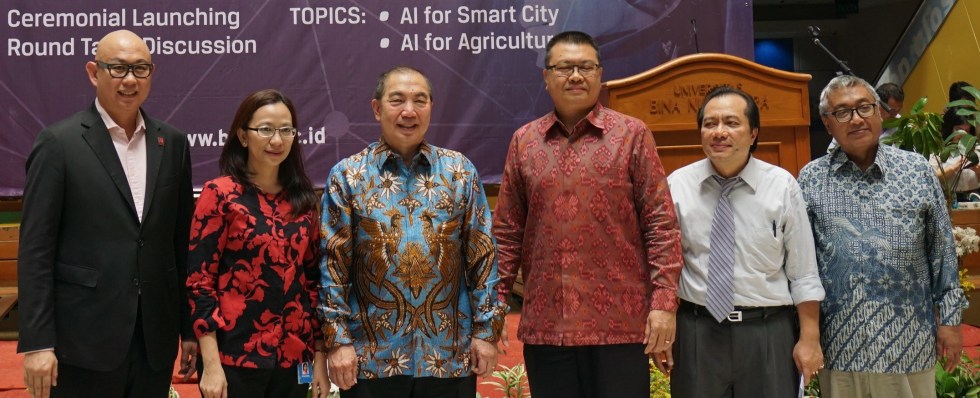
NVIDIA has teamed up with BINUS University and Kinetica to establish the first artificial intelligence (AI) research and development (R&D) centre in Indonesia.
Located at the university’s Anggrek Campus, the centre will support BINUS University’s aim to be the premier R&D hub for Al in Indonesia. Leveraging the power of NVIDIA’s GPUs, it will be a showcase of the commercial potential of GPU-accelerated deep learning applications.
“Today, we stand at the beginning of the AI computing era, ignited by a new computing model, GPU deep learning. This new model — where deep neural networks are trained to recognise patterns from massive amounts of data — has proven to be ‘unreasonably’ effective at solving some of the most complex problems in computer science. In this era, software writes itself and machines learn. Soon, hundreds of billions of devices will be infused with intelligence. AI will revolutionise every industry. NVIDIA provides the products and solutions to power this revolution,” said Raymond Teh, Vice President of APAC Sales and Marketing of NVIDIA.
NVIDIA invests in Chinese auto startup
 NVIDIA is among a group of investors led by Chinese social media company Sina investing more than US$20 million in Chinese startup TuSimple.
Formed in 2015, TuSimple has more than 100 employees in R&D centres in Beijing and San Diego developing technology for autonomous long-distance freight delivery. It uses NVIDIA GPUs, NVIDIA DRIVE PX 2, Jetson TX2, CUDA, TensorRT, and cuDNN to develop its autonomous driving solution.
In June, the company successfully completed a 200-mile Level 4 test drive from San Diego to Yuma, Arizona, using NVIDIA GPUs and cameras as the primary sensor.
ICML: Gathering of the brightest in AI
 “I’m amazed at the quality of the papers presented. The project teams’ line of thinking and breakthrough concepts are refreshing,” exclaimed a leading artificial intelligence (AI) scientist at the International Conference on Machine Learning (ICML) in Sydney.
International Convention Centre Sydney was a massive hive of activities as 3,000 of the world’s top researchers, developers and students in AI gathered for ICML. The participants moved rapidly from one workshop to another and took great interest in the exhibition booths of top deep learning proponents such as NVIDIA, Google and Facebook.
With so many bright young talents. the event proved to be a good fishing ground for vendors as they held recruitment interviews at their booths, as well as posted openings on the board.
Beat traffic jam with new Audi A8
 At the inaugural Audi Summit in Spain, Audi revealed that its flagship 2018 A8 features a multitude of high-tech wizardry powered by NVIDIA.
“The car of the future will make its occupants’ life easier with the help of artificial intelligence (AI),” declared Rupert Stadler, Chairman of the Board of Audi, as he introduced such A8 features as Audi AI Traffic Jam Pilot, Remote Park Pilot, Natural Voice Control and Swarm Intelligence.
The A8 is packed with NVIDIA powered systems, including revolutionary new user interfaces, a new infotainment system, a new virtual cockpit, and new rear seat entertainment options.
NVIDIA invests in Deep Instinct
 NVIDIA is investing in Deep Instinct, an Israeli-based startup that uses deep learning to thwart cyber attacks.
Deep Instinct uses a GPU-based neural network and CUDA to achieve 99 percent detection rates, compared with about 80 percent detection from conventional cyber security software. Its software can automatically detect and defeat the most advanced cyber attacks.
“Deep Instinct is an emerging leader in applying GPU-powered AI through deep learning to address cybersecurity, a field ripe for disruption as enterprise customers migrate away from traditional solutions. We’re excited to work together with Deep Instinct to advance this important field,” said Jeff Herbst, Vice President of Business Development of NVIDIA.
NVIDIA and Baidu team up on AI
 NVIDIA and Baidu have teamed up to bring artificial intelligence (AI) technology to cloud computing, self-driving vehicles and AI home assistants.
Baidu will deploy NVIDIA HGX architecture with Tesla Volta V100 and Tesla P4 GPU accelerators for AI training and inference in its data centres. Combined with Baidu’s PaddlePaddle deep learning framework and NVIDIA’s TensorRT deep learning inference software, researchers and companies can harness state-of-the-art technology to develop products and services with real-time understanding of images, speech, text and video.
To accelerate AI development, the companies will work together to optimise Baidu’s open-source PaddlePaddle deep learning framework on NVIDIA’s Volta GPU architecture.
NVIDIA receives DOE funding for HPC research
NVIDIA is among six technology companies to receive a total of US$258 funding from the US Department of Energy’s Exascale Computing Project (ECP).
The funding is to accelerate the development of next-generation supercomputers with the delivery of at least two exascale computing systems, one of which is targeted by 2021.
Such systems would be about 50 times more powerful than the US’ fastest supercomputer, Titan, located at Oak Ridge National Laboratory.
Softbank invests US$4b in NVIDIA
SoftBank Group has taken a US$4 billion stake in NVIDIA, according to Bloomberg. This dovetails nicely with SoftBank founder Masayoshi Son’s aim to become the biggest investor in technology over the next decade. NVIDIA’s stocks tripled last […]
Keeping drivers safe
With all that rage of artificial intelligence (AI) powering driverless cars, the same technology can also be used to keep drivers safe. It can acts like a guardian angel and look our for danger (watch […]
Deep Instinct is Most Disruptive Startup
Hundreds of thousands of computers in 150 countries have been hit by the WannaCry ransomware. While users are scampering around trying to fix their computers, the top of mind question is whether this could have […]
GTC draws the big guns!
As a sign of its coming of age, the GPU Technology Conference (GTC) held annually in San Jose, California since 2009, is no longer a niche event but one that is drawing the who’s who […]
Finally, the Big Bang for AI!

Artificial intelligence (AI) is not new. In fact, it has so many false starts over the past 60 years. The term went into hibernation for a long time.
Research into AI began way back in Dartmouth College in 1956 and was constantly associated with being the next frontier in the 1980s when mainframe computers ruled and supercomputers were a ginormous investment that very few could afford.
Despite the research put in over the years, the technology never quite took off and fell flat in many instances.
The making of GTC
By Edward Lim I am attending the GPU Technology Conference (GTC) in San Jose, California this week. It’s a massive conference with more than 7,000 participants from all around the world. After decades of covering and […]
Caffe2, anyone?
 Facebook is developing new artificial intelligent (AI) systems to help manage the vast amount of information — such as text, images and videos — generated daily so people can better understand the world and communicate more effectively, even as the volume of information increases.
It has worked with NVIDIA on Caffe2, a new AI deep learning framework that allows developers and researchers to create large-scale distributed training scenarios and build machine learning applications for edge devices.
Providing AI-powered services on mobile is a complex data processing task that must happen within the blink of an eye. Increasingly, the processing of lightning-fast AI services requires GPU-accelerated computing, such as that offered by Facebook’s Big Basin servers, as well as highly optimised deep learning software that can leverage the full capability of the accelerated hardware.
Mercedes and NVIDIA to bring AI-powered car to market
 Many cars were on display at CES last week but perhaps one of the most significant announcements is the collaboration between Mercedes-Benz and NVIDIA to bring an NVIDIA AI-powered car to market.
NVIDIA founder and CEO Jen-Hsun Huang (right) and Mercedes-Benz Vice President of Digital Vehicle and Mobility Sajjad Khan (left) talked about this new development at the Mercedes Benz Inspiration talk.
“When our teams came together there was instant chemistry, and we share a common vision about how AI can change your driving experience, and make it more enjoyable. Mercedes-Benz and NVIDIA share a common vision of the AI car. At this point it is clear AI will revolutionise the future of automobiles,,” said Huang, who pointed out that the collaboration began three years ago.
NVIDIA launches new Shield TV
 NVIDIA has unveiled at CES a new Shield TV media streamer, which like its predecessors will not be available in the Asia-Pacific region. However, a separate version of Shield, with custom software optimised for China, will be available later this year.
The new device is an Android open-platform media streamer that is claimed to deliver unmatched experiences in streaming, gaming and AI.
Sporting a sleek, new design and now shipping with both a remote and a game controller, the new Shield delivers rich visual experience with support for 4K HDR and three times the performance of other streamers.

SMU uses NVIDIA DGX-1 supercomputer for food recognition project
 Singapore is renowned as a food paradise. And with so many mouth-watering dishes to pick from, sometimes even locals have difficulty identifying a specific dish.
Singapore Management University (SMU) is working on a food artificial intelligence (AI) application that is calling on a supercomputer to help with recognising the local dishes to achieve smart food consumption and healthy lifestyle.
The project, developed as part of Singapore’s Smart Nation initiative, requires the analysis of a large number of food photos.

