

Ni: Seizing 5G and IoT opportunitiesZTE has appointed Ni Fei as President of Mobile Devices. Ni will continue to function as President of Nubia Technology, a position he has held since May 2019.
Ni: Seizing 5G and IoT opportunitiesZTE has appointed Ni Fei as President of Mobile Devices. Ni will continue to function as President of Nubia Technology, a position he has held since May 2019.

Photo by Olga Kononenko on UnsplashChina Mobile has launched the country’s first 5G medical edge cloud platform to meet the need for connection, computing, storage, middleware, service, and security in the medical industry.
 ZTE will launch the ZTE Axon 11 5G smartphone in China on March 23. The company has given little away from its announcement press release other than the fact that the ZTE Axon 11 will be compatible with both SA (standalone) and NSA (non-standalone) modes.
 The list is growing. Amazon has joined Ericsson, LG and NVIDIA in pulling out from MWC Barcelona. Held from February 24 to 27, the leading mobile event is expected to see fewer participants this year because of the novel coronavirus situation.
 China Unicom is readying to roll out 5G in China with the support of Qualcomm and in collaboration with device partners nubia, OnePlus, OPPO, Vivo, Xiaomi, and ZTE.
 The ongoing spat between China and the US seem to have claimed another victim. Apple has removed 25,000 gaming-related apps from its China app store. This move follows hard on the heels of the US ban on Huawei and ZTE technology from being used by the US government and government contractors yesterday.
 US$1 billion is a hefty sum to pay for a fine but for ZTE, it means getting its business back on track.
 ZTE looks like it’s getting a chance to resurrect its business, thanks to help from the highest office in the United States. Last week, the China telecom giant announced that it had to cease business activities because of US sanctions on critical components.
ZTE has hit a massive roadblock that has resulted in the cessation of its business operations. China’s number 2 telecom equipment maker was hit by the US’s seven-year blockade to vital components needed for its devices.
 New Android mobile phone launches spurred growth in Australia, leading to year-on-year growth of 18.4 percent to 2.16 million units, exceeding expectations in Q2, according to IDC.
Smartphones accounted for nearly all of the shipped phones — totalling 2.06 million.
Android returned to being the most popular smartphone OS in Australia. Recently, iOS had overtaken Android as the most popular smartphone OS in Q4 2016 as it held over 54 percent of the market compared to 47 percent for Android.
ZTE has released its latest Pre5G massive multiple-input multiple-output (MIMO) 2.0 solution at the 2016 China International Information and Communication Exhibition held in Beijing.
This new version is aimed at the high-end marketplace to help operators in the existing developed market meet the dual challenge of surging traffic demand, combined with limits on spectrum resource. With this new-generation product, single-station spectrum efficiency can be greatly improved and existing 4G user terminals can also benefit from the ultra-speed broadband experience without the need to change their mobile phones.
This new-generation massive MIMO 2.0 product is smaller in size, with 16-stream spatial division multiplexing, multi-carrier aggregation, and support for smooth evolution. The product can be flexibly deployed with support for two deployment modes: distribution and integration, to meet different requirement scenarios.
 China Telecom Beijing Research Institute and ZTE have inked a strategic agreement to develop cutting edge technologies including SDN/NFV, 4G+/5G and IoT related.
They will work closely and share resources to develop better network technologies that will support China Telecom’s network construction and service reconstruction. The collaboration will also benefit the industry by bringing more advanced, cutting-edge technologies and innovations to market.
“As we enter the artificial intelligence era, operators are expected to provide a full range of network solutions. Through this partnership, we will be able to significantly advance SDN/NFV, 4G+/5G, cloud computing and big data technologies in the coming years. I believe the new technologies will become a reality through pilot deployments”, said Zhang Chengliang, Vice President of China Telecom Beijing Research Institute.
ZTE has announced its new ultra high definition (UHD) hybrid set-top box B820C-A10, which combines cable and OTT services and integrates with ZTE’s Smart Home 2.0 packages.
In compliance with the DVB-C standard, the B820C transfers DVB TS signals of UHD live content to users and can be deployed in the cable broadcast scenario. Equipped with the latest OTT technology, it supports interactive videos, downloads and installed applications of televisions. Integrated with the Smart Home 2.0 packages, it supports features such as video call and multi-screen sharing. B820C adopt the Android 5.1 system for compatibility with various Android applications.
The B820C’s 64-bit system architecture is built to handle complex algorithms with ease. With a dedicated design hardware decoder, it supports UHD stream decoding of up to 3840*2160, with frame a rate of 60P/s and 10bit colours. Users can enjoy enhanced UHD and a stunning viewing experience.
AIS, Thailand’s largest mobile operator, has successfully migrated 38 million subscribers from HLRs (Home Location Registers) to ZTE’s USPP (Universal Subscriber Profile Platform) solution. USPP was fully vetted in a series of proof-of-concept tests conducted by […]
ZTE’s proprietary Pre5G technology is a step closer to commercial deployment after the successful testing of the 3D-MIMO (three-dimensional multiple input multiple output) solution on China Mobile’s commercial network.
The technology helped increase average data throughput by two to four times, with data rates at the cell edge going up as much as five to seven times, according to results from a test conducted on China Mobile’s commercial network in a metropolitan area of Guangzhou.
The pre-commercial test demonstrated the capability of ZTE’s 3D-MIMO solution to improve network throughput and coverage in an area with a high concentration of tall buildings.
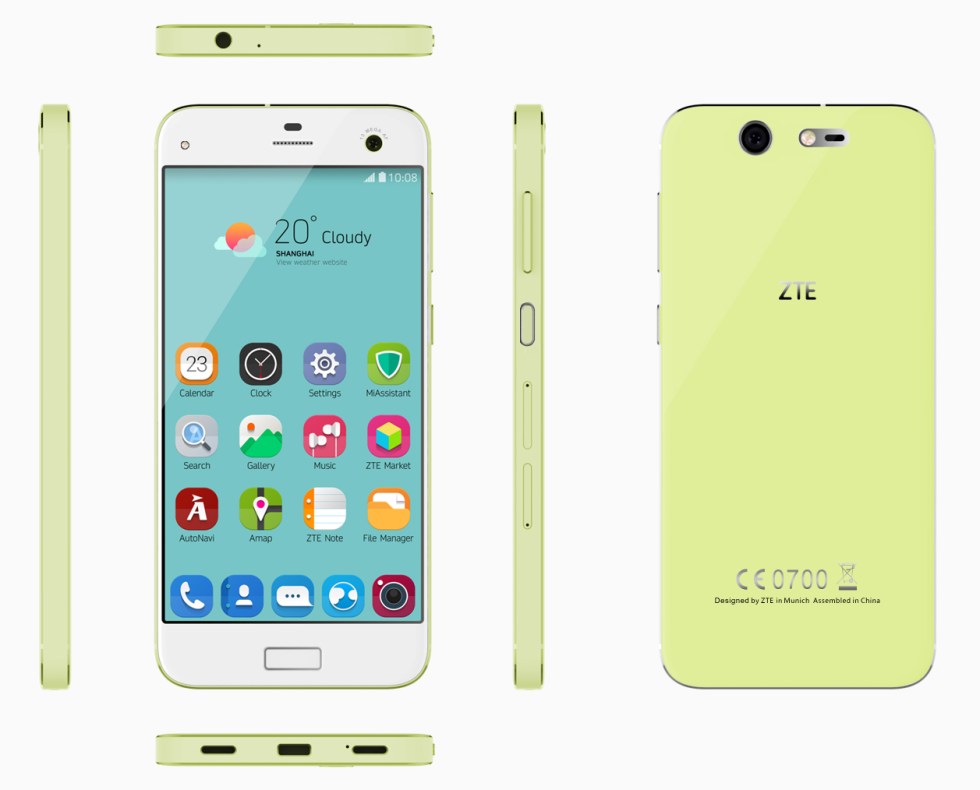 Looks like ZTE believes that Thais love to take selfies. The newly-launched ZTE Blade S7, which is designed for selfie lovers, will first be made available in Thailand before hitting the rest of the region.
The smartphone features a five-inch full HD LTPS screen with a 445 PPI Super Retina display for 178-degree full viewing angles. Housed in an aluminum alloy frame with thin bezels, Blade S7 offers a 72.1 percent screen-to-body ratio and is protected with 2.5D curved Gorilla Glass 3 on both the front and back.
Just 7.2mm thick and 67mm wide, it comes with a powerful 13-megapixel front-facing camera with a front flash and phase detection autofocus, as well as functions for panorama shots and 14 different beautification options. At the back is another 13-megapixel rear camera that supports professional and auto shooting modes, selective focus, and laser auto focus for fast and accurate shooting in low-light conditions.
ZTE has opened a new research and development (R&D) center in Tokyo to focus on the development of 5G and other next-generation network technologies. The new R&D centre will support ZTE’s partnerships with operators and […]
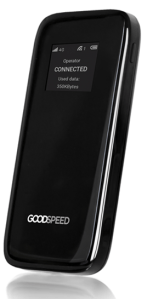 ZTE and Uros have introduced the Goodspeed 4G mobile hotspot MF900 — which is manufactured under a technology licence from Uros — providing travellers with affordable international data roaming.
The device is the world’s first commercially available 4G hotspot that accommodates up to 10 SIM cards at once. It provides private connectivity for up to 14 Wi-Fi connections and one USB connection simultaneously.
The Goodspeed MF900 supports all mainstream global 4G frequencies (LTE FDD & LTE TDD), allowing end-users to connect to 4G networks whenever, wherever. Powering the device is a Qualcomm Gobi MDM9225 modem chipset, which offers downlink data rates of up to 150Mbps and uplink rates of up to 50Mbps.
ZTE and South East Asia Telecom (Seatel) are teaming up to build a national FDD-LTE network in Cambodia to deliver high-performance mobile broadband services to consumers and businesses across the country. ZTE will provide end-to-end 4G solutions and […]
ZTE has demonstrated a new OAM (operations, administration and management) solution based on SDN architecture at the Broadband & TV Connect Asia conference in Singapore.
The new Elastic SDN IPRAN OAM solution, powered by ZTE’s Elastic SDN technology, is claimed to enable operators to perform 90 percent of routine network OAM functions with one-touch control on mobile devices, generating at least 30 percent labour cost savings.
As operators accelerate deployments of 4G LTE networks to meet rising demand, it is becoming increasingly challenging to manage IP RAN mobile bearer networks. This problem is especially acute in Southeast Asia, where operators need to manage their IP RAN networks efficiently on outlying islands and mountainous terrain.
The combined market share of Chinese brands fell to a two-year low on a global basis, as growth in China slowed to single digit in the first quarter of 2015, according to Canalys Apple increased […]
ZTE’s flagship Grand S3 now comes with Eyeprint ID, an eye-based biometric solution from EyeVerify that allows users a password-free method of unlocking the Grand S3, offering an enhanced level of privacy and security to […]
ZTE has launched its super HD 4K smart set-top box (STB) product B860A, which uses the 64-byte system solution, Cortex-A9 architecture and four-core CPU.
Running on Android 4.4, the STB supports the latest H.265 video code standard. It uses advanced technology to improve the relationship between the code stream, code quality, time delay and algorithm complexity so that it is at the most optimised setting.
In comparison to the video compression efficiency of H.264, H.265 can save half of the bandwidth, effectively helping to accelerate development of 4K super HD service. The STB has 4K (4096×2160) super high resolution, providing a significant visual difference between the 4K resolution and the ordinary HD.
ZTE has launched its new Unified Communication & Collaboration (UC&C) solution to help enterprises harness the power of mobility. It delivers cloud-based video conferencing and collaboration services for end users anywhere, anytime, supporting different devices and […]
ZTE has completed pre-commercial field testing of multi-user and multi-stream transmission on a Massive MIMO (multiple input multiple output) base station, setting new records in single-carrier transmission capacity and spectral efficiency. Using ZTE’s proprietary pre-5G […]
Pre5G will become available much earlier than 5G, according to ZTE at a high-level international meeting of experts and industry officials to discuss global development of 5G technology. In an address to the International Workshop on […]
 ZTE has launched a range of payment solutions including phone POS (point of sale), photonic and DTV (Digital TV) payment products.
With a NFC (near field communication) capable smartphone, users can install the phone POS app to enable the smartphone function as a POS payment device. Businesses and individuals can then manage a vast range of transactions including transferring money, checking account balances, paying off credit cards, topping up mobile phones and paying bills.
This functionality gives complete freedom to users, allowing them to complete transactions whenever and wherever they want, as well as allowing businesses to save on operating expenses by receiving immediate payment.
ZTE has announced the 4G Qcell solution uses cloud-based network coordination technology to overcome signaling leakage and interference. The solution supports multi-frequency and multi-mode network deployment, enabling operators to offer converged networks with superior indoor performance.
Unlike traditional DAS solutions, it implements Pico RRU network construction and power supplies through standard Ethernet cables, reducing construction difficulty and costs, and saving 60 percent of deployment time. The new solution helps operators quickly deploy low-cost and high-performance networks with integrated GSM/UMTS/LTE indoor coverage.
“ZTE’s 4G Qcell solution provides end-users with ubiquitous access to a superior network both indoors and outdoors, effectively addressing demands for both network capacity and service coverage in the 4G era. The new technology from ZTE outperforms existing solutions on the market, giving operators the advantages of large capacity, seamless coverage, rapid deployment, smooth evolution, manageability, and controllability,” said Zhang Jianguo, Vice President of ZTE.
ZTE is collaborating with Blue Jeans Network on video conferencing services, under which ZTE customers will be able to experience Blue Jeans Network’s cloud-based video conferencing services (VCS) and connect easily to one another via their ZTE VCS products, creating a uniform user experience that fosters collaboration.
Starting in August, ZTE VCS room system with Blue Jeans video conferencing services will be available in Singapore, Australia, the US, and Europe.
Blue Jeans Network extends high-quality video communications beyond the traditional boundaries of virtual conference rooms by allowing individuals, employees, partners and family and friends, to connect and interact with each other seamlessly and effectively. Its technology is used by customers such as Facebook, Foursquare, Match.com, and Stanford University.
With a highly-connected world where fast Internet access is vital, ZTE has pushed the envelope a little further with its pre-5G concept shared at LTE World Summit 2014 in Nice, France.
It has announced that under certain conditions, some 5G technologies can provide a 5G-like user experience on 4G terminals without changing the air interface standards.
“With next-generation 5G technologies being deployed in 2020, there were industry concerns over what technologies will be used in the next six years. To address this, ZTE proposes to apply some of the 5G technology on top of 4G to meet users’ requirements,” said Dr Xiang Jiying, CTO of wireless products at ZTE.
 Even as mobile broadband modems and hotspot router shipments fell 21 percent year-on-year to nearly 73 million units, Huawei continued to lead the market with nearly 61 percent share. Together with fellow China company ZTE, the pair shipped more than 85 percent of all mobile broadband modems, according to ABI Research.
The overall drop in the market could be attributed to the declining PC market. USB modem sticks and embedded modem modules led the two-year slide while mobile hotspot routers increased 32 percent.
As the computing marketing continues to evolve with more performance and choices than ever before, mobile broadband modems were not impervious to the transition.
ZTEsoft’s ZSmart 8 iCS (intelligent charging solution) will be used in a trial project by Viettel Group to develop innovative data service plans for users in Vietnam. The project is part of a joint effort […]
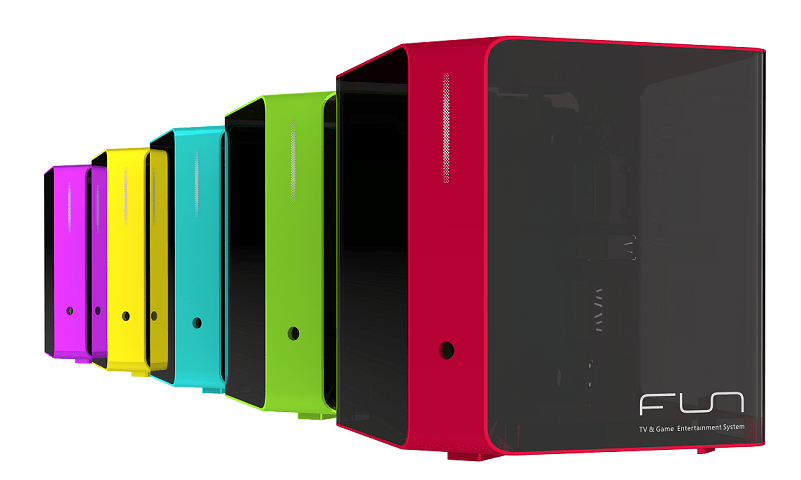 ZTE9 has released FunBox, which is claimed to be the world’s fastest home entertainment console. The console is expected to give consumers and families a unique high-performance all-in-one gaming, video-chatting and online video experience.
FunBox is the fruit of the engineering capabilities of ZTE and the video game development expertise of The9. ZTE9 is a joint venture between ZTE, one of the world’s leading manufacturers of mobile devices, and The9, one of China’s foremost video game companies. Online sales for FunBox will start on JD.com next month, and consumers can choose between 12 different colors.
The console is powered by NVIDIA’s Tegra 4 processor, based on the new A15 architecture, and the superior graphics performance is delivered by a 72-core GeForce graphics processor with 2GB DDR3L memory and 8GB of Flash memory.
The Red Wave is spreading from China to the rest of the mobile world. Huawei, ZTE and Lenovo may not be the leading names that come to mind when it comes to handset vendors today but their influence is spreading. As it Xiaomi, which is taking East Asia by storm with sellouts every time it puts its phones for sale online.
ABI Research has reported that Chinese handset vendors will account for more than half of mobile handsets in 2015. Chinese vendors already accounted for 38 percent of mobile handset shipments in 2013 and the ongoing shift in growth to low cost handsets, especially smartphones, will increase their market share.
Many oChinese OEMs have focused almost exclusively on the huge Chinese market, with little activity beyond its borders, but this is set to change. Huawei (6th in worldwide market share for 2013) and ZTE (5th) have already made an impact on the world stage, but other Chinese handset OEMs like Lenovo — the Motorola acquisition is a clear statement of intent — and Xiaomi are set to join them.
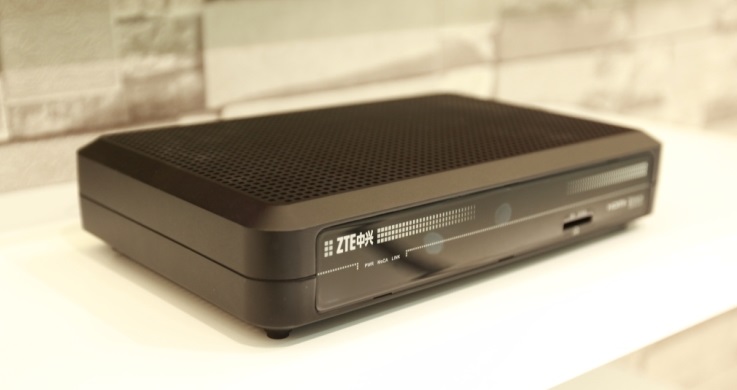 ZTE has launched its 4K p60 Ultra HD set top box (STB), the ZXV10 B803, at Mobile World Congress 2014 in Barcelona.
Based on the Broadcom BCM 7252 chip, the device supports 4Kx2KP60 decoding capability, which can decode Ultra HD video with the maximum resolution of 3840×2160. In comparison to traditional HD Internet STBs, the 4K UHD STB can display more vivid and precise images to significantly enhance the user experience.
4K video technology (also named as 2160p) is a new type of resolution standard. Its UHDTV specification can deliver a resolution of 3840×2160 pixels, and the maximum Full Aperture 4K specification reaches 4096×3112. In comparison to the current mainstream 1080p resolution of 1920×1080, 4K can provide over four times the image definition quality. In the future, 4K HD TV sets will be very popular, and the 4K HD and HEVC decoding technologies will help raise the HD market tide.
With a focus on delivering a superior user experience, ZTE will launch the ultra slim Grand Memo II LTE with six-inch screen, one of the first Firefox OS 1.3 devices, the ZTE Open C and […]
As mobile data services are undergoing tremendous growth, mobile networks demand multi-frequency and multi-system fusion. This leads to many challenges including high network deployment costs, insufficient site resources, too many antenna sites, and high operation […]
ZTE is cooperating with KDDI to offer a smart multimedia infotainment system to its subscribers, bringing a high-quality and enriching user experience to consumers in Japan. The sleek and stylish PHOTO-U TV system, equipped with a […]
 ZTE’s boutique smartphone brand nubia has received 2.5 million orders for the Z5S and Z5S mini on JD.com as consumers in China.
The response to Z5S, priced at RMB1,999, and Z5S mini, priced at RMB1,499, surpassed a sales record previously set by Xiaomi. The two new smartphones were designed using consumer feedback garnered by nubia and JD.com in a C2B (consumer to business) approach to deliver a customer-defined user experience. Z5S and Z5S mini take nubia’s strengths in smartphone photography to a new level, becoming the first phones in China to offer the optical image stabiliser feature.
The new NEOVISION 3.0 system on Z5S and Z5S mini bring the feature of independent white-balance to smartphone users in China for the first time, after nubia pioneered independent focus and independent light-metering. The advanced imaging technology offered on Z5S and Z5S mini have earned the new handsets the moniker of “Single-Lens Reflex (SLR) Smartphones.” In addition, nubia’s industry-leading photography technology is now available for beta downloads (nubia Camera) by users of other handset manufacturers.
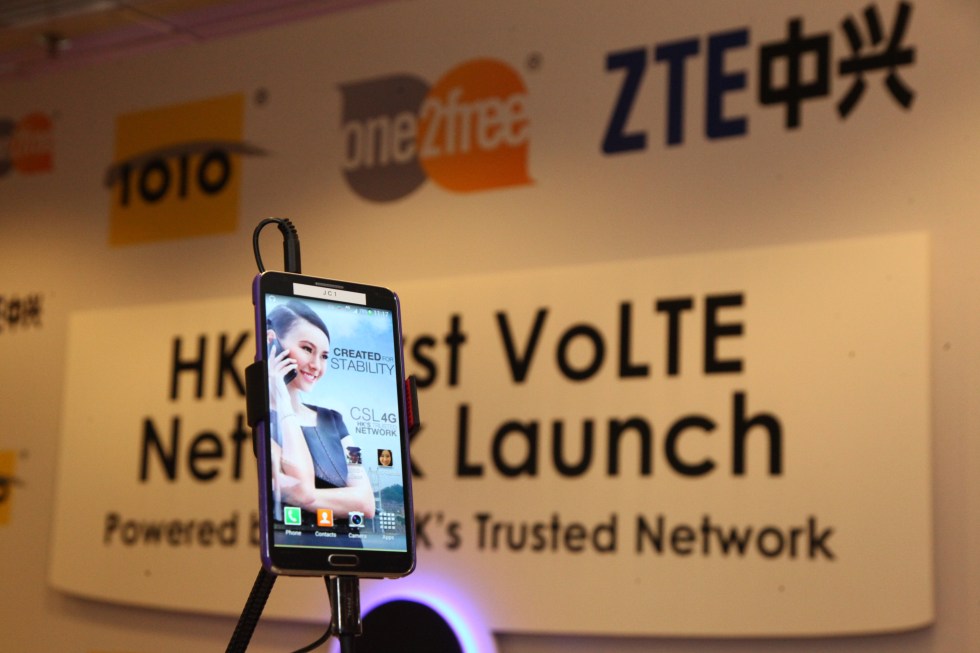 1O1O and one2free have turned on the first VoLTE (Voice over LTE) network in Hong Kong powered by Hong Kong’s Trusted Network. The full commercial launch is expected to take place in the first half of 2014, in line with projected device maturity in the market.
CSL’s VoLTE offers clearer voice, instant connection, and better quality video calls enabled by ZTE’s IMS (IP Multimedia Subsystem) solution. Customers will experience a clearer voice and richer multimedia experience, with a distinct improvement in video call quality with VoLTE.
VoLTE also allows 1O1O and one2free to achieve better spectral efficiencies and will increase network capacity and subsequently enhancing the 4G LTE experience.
ZTE has announced a strategic commitment to provide enhanced converged operations capabilities as a member of the Next Generation Mobile Network (NGMN). ZTE is collaborating with both its customers as well as NGMN, an alliance led by 22 of the largest international mobile network operators, via its Next Generation Converged Operations Requirements (NGCOR) project in order to meet and exceed current industry needs.
ZTE’s goal in the partnership is to help eliminate technical barriers caused by vendor incompatibilities, reduce network complexity, and minimize operations and maintenance costs. Based on years of system analysis, ZTE has planned a set of unified OSS platforms with unified interface standards to support converged network management. Once the platform is established, ZTE estimates the unified and centralized database will decrease the number of interfaces by 80 percent.
“ZTE is proud to be working with the NGMN and our key customers to advance these converged operations solutions,” said Sun Zhenge, Vice President of ZTE. “ZTE’s commitment is aimed at improving efficiency and quality of converged solutions, while also decreasing the time and cost involved.”
 Alibaba Group handled a record-breaking surge in online shopping traffic on China Singles’ Day on November 11 , the busiest day of the year for Internet retailers in China.
China’s largest e-commerce company broke its one-day sales record by more than 80 percent. ZTE’s ZXONE 8700 optical transport network system carried 90 percent of Alibaba’s operating data traffic that day, as online shopping orders pushed Alibaba’s peak data traffic to almost 300 Gbits per second, sustained for a period of seven hours.
For the 24-hour duration of China Singles’ Day, ZTE’s OTN systems deployed by Alibaba delivered excellent network performance and fault-free reliability, with no malfunction warning reported.
 China smartphone makers looking to take their domestic success globally need to carefully consider their expansion strategies, according to Frost & Sullivan.
While the China market has been driven by demand for cheap devices that offer a unique range of services such a virtual goods, messaging apps, and photo sharing, the more mature Western markets are very different, with carrier relationships, strong brand equity, and innovative features crucial to success.
Along with Huawei and ZTE, three interesting China companies have ambitions to take their smartphone businesses international: Lenovo, Yulong Coolpad and Xiaomi. The first and most successful China smartphone company is Lenovo, which has the largest smartphone market share of China companies, second only to Korean giant Samsung in China. Lenovo is also one of the most diversified China electronics companies, with a broad portfolio. The company has already achieved success on the global stage with its PC business, now the world’s largest after overtaking HP in 2012.
ZTE has introduced two new 4G mobile routers with data download speeds of 110 Megabits per second for users in Japan. The ZTE Pocket WiFi SoftBank 203Z and Pocket WiFi (GL09P) 4G routers, which are […]
ZTE has launched the Net Sphere home networking solution, which comprises multiple home networking terminals including a wireless router, portable APs and wireless PLC adapters to let users build high-quality home networks. The solution uses a wired […]
ZTE has released the BigMatrix 9900 series, the world’s largest-capacity data centre switches designed for large cloud computing and big data scenarios.
The new switches will helpscustomers achieve higher-density deployment in data centres. Each single slot can support up to 144 10G ports, 36 40G ports, or 12 100G ports. The Big Matrix 9900 series comprises four models, 9916, 9912, 9908, and 9904, with each unit supporting maximum switching capacity of 84.48T. Big Matrix 9900 meets the oriented service architecture (OSA) standards.
For big data systems, BigMatrix 9900 provides customers the capability to extract non-structurised and non-relevant data from existing databases. BigMatrix 9900 also adopts modular system design, and can be used to build a super-resilient non-blocking bi-directional forwarding platform with the switching capacity of 1.4P (1,440T) in Fat-Tree mode.
ZTE has unveiled the world’s first flexible reconfigurable terabit router to enable customers to build the highest-performance broadband networks.
The terabit router supports the deployment of multiple line cards with processing capability of 10 gigabits per second to 1T, and modules that offer scalable throughput of 200G to 18T. To enable convenient installation in a wide variety of environments, the flexible interfaces and loose-coupled component design of the router allow customers to configure networks that are customised for their needs, promoting adaptability, consistency and continuity.
The superior performance of the terabit router is built on two proprietary ZTE technology solutions, cloud routing and intelligent system resource scheduling. Cloud routing builds system control plane based on distributed modular technology to ensure efficient network resource utilisation, offering network scalability and support for simultaneous deployment of multiple transmission protocols. Intelligent system resource scheduling enables physical and logic system resource sharing and flexible scheduling to ensure automatic matching of system load and resource allocation, driving superior power-consumption performance of 0.8W/Gbps.
ZTE’s Grand Memo LTE is poised to become the first 4G device available for sale in China, after it became the first to be awarded a TD-LTE handset permit by the Ministry of Industry and […]
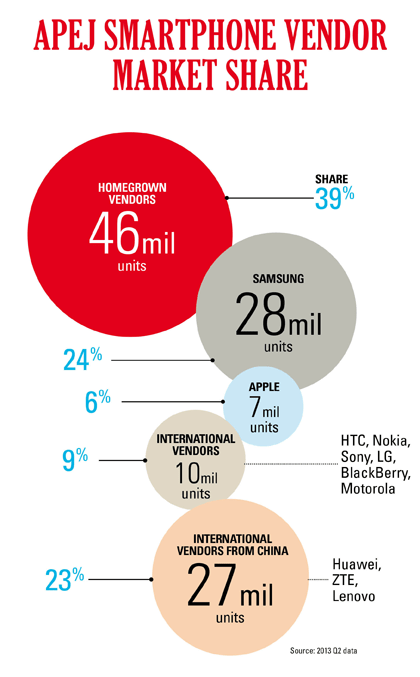
Homegrown brands are gaining more market share in the Asia-Pacific (excluding Japan) (APEJ) smartphone market. While Samsung continues to lead the smartphone pack, Apple fell out of the top five in the region for the first time. Chinese players — Lenovo, Coolpad, Huawei and ZTE — all outshipped Apple in the Q2, according to the IDC Asia/Pacific Quarterly Mobile Phone Tracker.
Shipment of smartphones costing under US$200 are expected to grow from 238 million in 2013 to 758 million by 2018, driven by the low penetration of smartphones and large subscriber bases found in BRIC countries, according […]
 Samsung and Apple grew smartphone shipment by 55 percent and 20 percent respectively to maintain first and second place in Q2, according to Canalys.
However, both lost market share to Chinese vendors as the top 5 China vendors (Lenovo, Yulong, Huawei, ZTE, and Xiaomi) now account for 20 percent of the market, up from less than 15 percent a year ago.
Altogether, some 238.1 million units were shipped in Q2, an impressive 50 percent year-on-year gain.
 ZTE has launched the MF253 LTE wireless router that enables 4G mobile data access for homes, retail stores and offices.
With a sleek upright design, the MF253 supports data downlink speeds of 100Mbps, and 50Mbps for uplink, delivering high-speed mobile Internet access for up to 32 users simultaneously. It comes with a streamlined white chassis and blue indicator lights.
Customised versions for markets in the Americas, Europe and China ensure comprehensive support for a broad range of LTE spectrum used in different markets globally. Support for an external antenna will allow the MF253 to be deployed in areas of poor mobile signals.
 Demand for mobile phones continue to grow. In Q2, the worldwide mobile phone market grew six percent year over year, according to the IDC Worldwide Quarterly Mobile Phone Tracker.
Vendors shipped a total of 432.1 million mobile phones in Q2 compared to 407.7 million units in the corresponding quarter of 2012. The Q2 total was also slightly higher than the 428.8 million units shipped in Q1.
The growth in the mobile phone market was partly driven by vendors from outside the Top 5 who experienced torrid shipment growth that outpaced the overall market. Several vendors, including Alcatel and Huawei, had high double- and triple-digit growth rates in Q2 for their Android-based offerings shipped to high-growth countries such as China and India. These vendors from outside the Top 5 accounted for 44.8 percent of the overall shipment volume, up from 42.2 percent in the same quarter one year ago.
ZTE Corporation has been awarded the most new contracts in phase 1 of China Telecom Group’s 2013 CDMA network procurement programme.
With the 2013 network procurement programme, China Telecom is strongly-positioned to grasp the new opportunities in CDMA services and meet the increasingly sophisticated needs of subscribers.
“We are fully committed to offering China Telecom the most advanced products and solutions,” said Fan Xiaobing, vice president of ZTE. “ZTE always strives to deliver the best technology, and the most customised services.”
ZTE and Easymeeting.net have entered into a strategic partnership to develop and release several major videoconferencing R&D initiatives in the next 12 to 18 months.
The videoconferencing industry is experiencing a huge shift from complicated high-cost solutions towards highly-scalable cloud-based software coupled with affordable hardware. The partnership between ZTE and Easymeeting.net will expedite the transition by making videoconferencing more affordable and simple to use.
ZTE’s depth of knowledge and experience with enterprise communication technology is a perfect match for Easymeeting.net whose focus is on providing innovative and disruptive services to the mass market.
 ZTE has introduced the new MF90 4G uFi (unified WiFi) mobile hotspot device that delivers high-speed data access for mobile consumers via LTE wireless networks.
The MF90 supports simultaneous wireless data access by 10 users, and offers maximum data transmission speeds of 100Mbps. It is supported on mainstream 4G frequency bands globally, including Asia Pacific, and is backward compatible with 3G and 2G networks. The MF90 supports dual-band 2.4GHz/5GHz WiFi networks, WiFi 2X2 MIMO, and 802.11 b/g/n.
Offering improved power consumption capabilities compared with first-generation LTE uFi devices, the MF90’s 2300mAh battery supports four hours of continuous use, meeting the needs of most business users and consumers.
 ZTE has overtaken Alcatel-Lucent to slot just behind leader Huawei in the global optical networking (ON) market. This is the first time that Chinese vendors are holding the top two ranks in ON, according to Ovum.
Ovum’s analysis of Q1 results in the US$14.5b global ON market has highlighted that growth in 100G remains a bright spot as annualised revenues exceeded $1b for the first time ever. However, market growth overall remains difficult and challenging equipment vendors with only Fujitsu posting sequential and year-over-year gains.
“While it is not uncommon for the market to decline going into the first calendar quarter, the decline is worrisome as this is the fifth straight time the market has declined versus the prior year’s quarter, and quarterly revenues are the lowest they’ve been in six years,” said Ron Kline, Network Infrastructure Analyst at Ovum.
 ZTE has launched a new flagship smartphone — the ZTE Grand X2 In — that comes with the Intel Atom processor Z2580 with up to 2GHz, Android Jelly Bean OS, an advanced 8MP camera and 1080p movie and video play back.
Pitched at demanding but value conscious users, it delivers faster webpage loads, application launch times and content download times, as well as amazing graphics capabilities and responsive multitasking.
The smartphone boasts an 8MP socially-smart camera with one of the shortest shot-to-shot times on the market, capable of up to 24 frames per second and no shutter lag. It secures a high image quality in challenging environments with real-time 2x axis stabilisation, and face and smart scene recognition.
 The Asia-Pacific region grew 6.4 percent year-on-year in Q1 mobile phone sales, the only region in the world to register growth, according to Gartner.
Worldwide mobile phone sales to end users totalled nearly 426 million units this period, only a slight increase of 0.7 percent from the same period last year. Worldwide smartphone sales hit 210 million units in the first quarter of 2013, up 42.9 percent from the first quarter of 2012.
“More than 226 million mobile phones were sold to end users in Asia-Pacific in the first quarter of 2013, which helped the region increase its share of global mobile phones to 53.1 percent year-on-year,” said Anshul Gupta, Principal Research Analyst at Gartner. “In addition, China saw its mobile phone sales increase 7.5 percent in the first quarter of 2013, and its sales represented 25.7 percent of global mobile phone sales, up nearly 2 percentage points year-on-year.
ZTE celebrated the 15th anniversary of its terminals division with the production of the 500 millionth handset, becoming the first Chinese mobile device brand to achieve the landmark.
It plans to promote the Grand S quad-core smartphone and the Grand Memo phablet internationally in the near future, after the two flagship products scored impressive results since their introduction in China this year. The Grand S and Grand Memo represent the state-of-the-art in performance, specifications and industrial design in the global smart devices industry.
Efforts to strengthen ZTE’s brand and engage consumers will be a key part of ZTE’s strategy. The Times Square in New York, the Fukuoka Yahoo! Japan Dome, the London Olympics stadium, and the works of Chinese film director Zhao Baogang are now some of touch-points where ZTE plans to form increased affinity with consumers around the world.
 Entelechy Asia