
One of the flaws of notebooks is the lack of upgrading capabilities. This is especially so for creative professionals whose work are increasingly more demanding and complex, requiring more graphics processing power. NVIDIA has solved […]
Category: Desktop
AMD back in the game
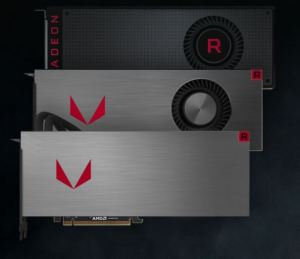 It’s been a long time coming but AMD has finally launched its new high end Radeon graphics cards. And it has done it in style, at Los Angeles to a gathering of global media, with three models — the Radeon RX Vega 64 Liquid Cooled Edition with 64 compute units, the Radeon RX Vega 64 with air cooling, and the Radeon RX Vega 56 which starts at US$399.
These new additions are pitted against the NVIDIA GeForce GTX 1080Ti and the NVIDIA GeForce GTX 1080, making for an interest battle, especially as NVIDIA is not known for sitting back and letting others take over its mantle.
“The enthusiast gaming experience is defined by high resolutions and a tear-free, buttery smooth 60 frames per second, something that only approximately 600,000 gamers are capable of enjoying today. But there are four million more gamers who aspire to enjoy that same enthusiast gaming experience without breaking the bank, and with Radeon RX Vega graphics cards we’re working to give them that,” said Raja Koduri, Senior Vice President and Chief Architect, Radeon Technologies Group, AMD.
Flash to be switched off in 2020
Adobe Flash will be phased out by 2020. Improved open standards pushed by the World Wide Web Consortium have prompted Adobe to pull the plug on Flash, which enables video and interactive contents to be […]
There’s hope yet for Paint
After an initial report that Microsoft plans to remove Paint from the next update of Windows 10, there is hope yet for Paint users. In a blog post on Monday, Microsoft allayed fears of the […]
No more Paint
Yikes! It seems like Microsoft is removing from its next Windows 10 update Paint, the quintessential tool that helps with simple editing of graphics and images. A long-stay of a generation of Windows users, the tool […]
Students’ demand drives Aussie IT spending
 Australian educational institutions are increasing information technology (IT) spending in response to dramatic changes in student expectations, according to IDC.
Spending by Australian educational institutions is expected to peak at US$1.6 billion by 2020, driven by software and services related investments. Education practices are shifting away from the classroom towards e-learning and virtual instructor-led training approaches as students are demanding anytime-anywhere remote access.
In its recently published Australian education sector report, IDC highlights the need to overhaul existing ICT management models in schools and universities so that a step-change improvement in delivery efficiency can be achieved.
APAC PC market down 5.1% in Q2
 PC shipment in the Asia-Pacific region surpassed 21,5 million units, down 5.1 percent in Q2 compared to the same period last year, according to Gartner.
The dip was due to primarily due to market dynamics in India and China. In India, the pent up demand after the demonetisation cooled down after Q1, coupled with the absence of a large tender deal compared to a year ago and higher PC prices, brought about weak market growth. China was hugely impacted by the rise in PC prices due to the component shortage.
Overall, global PC shipment totaled 61.1 million units in Q2, a 4.3 percent decline from the same quarter last year.
Full PC backup with Google
Google has launched the Backup and Sync tool for users to easily back up practically all files on their computer. This new tool will replace the Google Photos desktop app and the Google Drive client applications for […]
NVIDIA invests in Deep Instinct
 NVIDIA is investing in Deep Instinct, an Israeli-based startup that uses deep learning to thwart cyber attacks.
Deep Instinct uses a GPU-based neural network and CUDA to achieve 99 percent detection rates, compared with about 80 percent detection from conventional cyber security software. Its software can automatically detect and defeat the most advanced cyber attacks.
“Deep Instinct is an emerging leader in applying GPU-powered AI through deep learning to address cybersecurity, a field ripe for disruption as enterprise customers migrate away from traditional solutions. We’re excited to work together with Deep Instinct to advance this important field,” said Jeff Herbst, Vice President of Business Development of NVIDIA.
Device market to dip in 2017
 Global demand for devices — PCs, tablets and smartphones — are expected to dip slightly this year, with Gartner projecting shipment exceeding 2.3 billion units, a decline of 0.3 percent from 2016.
However, the market is forecast to return to growth in 2018 with a 1.6 percent increase in shipment.
“Overall, the shipment growth of the device market is steady for the first time in many years. PC shipments are slightly lower while phone shipments are slightly higher — leading to a slight downward revision in shipments from the previous forecast, “said Ranjit Atwal, Research Director of Gartner.
Petya ransomware cripples networks
 Just like a scene out of a Hollywood movie, one computer after computer shut down without notice during a meeting. That’s what happened at one of the organisations hit by the Petya ransomware attack.
The strike is malicious and deadly with many affected organisations struggling to recover lost data — some, if not all, of which may never be restored.
IT security teams are still working to get their networks and computers up and running. Some have turned to Apple computers, which are relatively unscathed, to work on the recovery process.
Taiwan: Home of GeForce!
 At the keynote of NVIDIA AI Forum, NVIDIA CEO and Founder Jensen Huang called “Taiwan is the home of NVIDIA’s GeForce system”.
Video gaming is a US$100 billion industry and “GeForce PC gaming is the number one platform, nearly 200 million GeForce installed base,” declared Huang.
He announced the new NVIDIA Max-Q platform which lets gaming notebook makers produce faster, slimmer and quieter machines.
Deeper into AI
 The keynote address at Google I/O yesterday showed that Google is much more than just a search company. It is becoming more artificial intelligence (AI). Google is specifically using deep learning to help in many areas of everyday life.
Here are some as shared on Google’s blog post:
Google Assistant can help answer your questions and find information—but it can also help you get all kinds of useful things done. Today we’re adding a few more:
- Schedule new calendar appointments and create reminders. Starting today on Google Home, you can schedule appointments and soon you’ll also be able to add reminders. Since it’s the same Google Assistant across devices, you’ll be able to get a reminder at home or on the go.
- Make your home smarter. We now have 70+ smart home partners supporting the Google Assistant across Google Home and Android phones, including August locks, TP-Link, Honeywell, Logitech, and LG.
Voila, Volta!

NVIDIA has pulled yet another trick out of its always-filled hat of technology goodies with the launch of Volta, the world’s most powerful GPU computing architecture. At his keynote address at GTC in San Jose, NVIDIA CEO Jensen Huang dubbed it “the next level of computer projects”.
Volta is created to drive the next wave of advancement in artificial intelligence (AI) and high performance computing.
The first Volta-based processor is the NVIDIA Tesla V100 data centre GPU, which brings extraordinary speed and scalability for AI inferencing and training, as well as for accelerating HPC and graphics workloads.
No more IDF
After nearly two decades, Intel has decided to bring the curtains down on its annual Intel Developer Forum(IDF). Even the China edition has been canned. A highly anticipated and popular event, IDF was the platform […]
New Jetson doubles performance
The newly-announced NVIDIA Jetson TX2, a credit card-sized platform that delivers artificial intelligence (AI) computing at the edge, opens the door to powerfully intelligent factory robots, commercial drones and smart cameras for AI cities. Jetson […]
NVIDIA launches the ‘Ultimate GeForce’
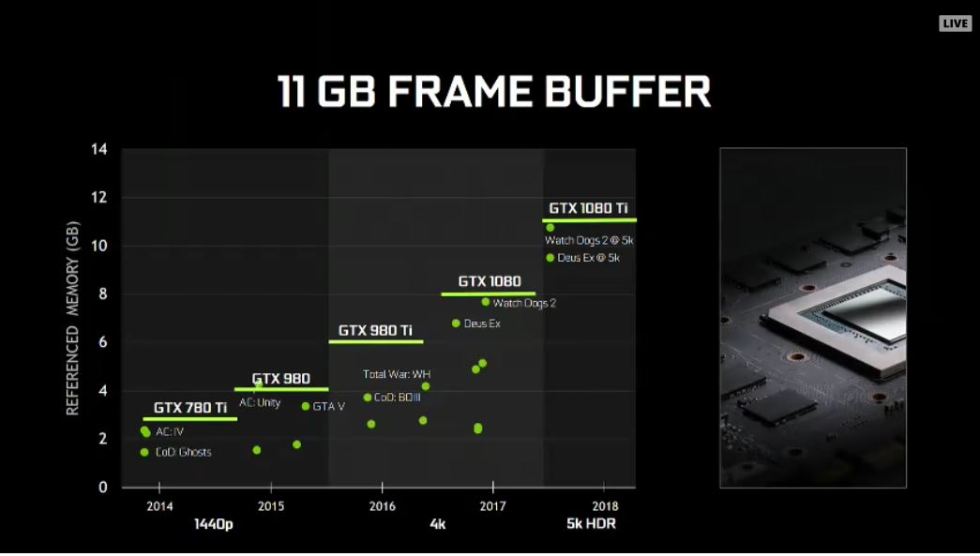 NVIDIA has just announced the GeForce GTX 1080Ti, which comes with 11GB of frame buffer to run today’s most demanding games. Jen-Hsun Huang, CEO of NVIDIA, dubbed it the “Ultimate GeForce” at a gathering of global media this morning.
Packed with extreme gaming horsepower, the GeForce GTX 1080 Ti delivers up to 35 percent more performance than the GTX 1080.
NVIDIA designed the GeForce GTX 1080 Ti to handle the graphical demands of 4K and 5K gaming, DX12, HDR and immersive VR.
Enter Pascal-based Quadro cards
 NVIDIA has introduced a range of Pascal-based Quadro products that transforms desktop workstations into supercomputers with breakthrough capabilities for professional workflows across many industries.
Workflows in design, engineering and other areas are evolving rapidly to meet the exponential growth in data size and complexity that comes with photorealism, virtual reality and deep learning technologies.
To tap into these opportunities, the new NVIDIA Quadro Pascal-based lineup – the GP100, P4000, P2000, P1000, P600, and P400 – provides an enterprise-grade visual computing platform that streamlines design and simulation workflows with up to twice the performance of the previous generation, and ultra-fast memory.
Device market to remain flat till 2018
While the economic looks to be getting better in some instances, worldwide shipment of PCs, tablets, ultramobiles and mobile phones are projected to remain flat in 2017.
According to Gartner, worldwide shipment for these devices are projected to total 2.3 billion in 2017, the same as 2016 estimates.
There were nearly seven billion phones, tablets and PCs in use in the world by the end of 2016. However, Gartner does not expect any growth in shipments of traditional devices until 2018, when a small increase in ultramobiles and mobile phone shipments is expected.
NVIDIA makes two masterstrokes with Microsoft Surface and Nintendo Switch

The Nintendo Switch and Microsoft Surface Studio are two of the exciting announcements in recent weeks. While one thrilled gamers, the other is set to transform the desktop.
What both have in common are NVIDIA GPUs.
The Nintendo Switch is powered by the NVIDIA Tegra, a high-efficiency scalable processor based on the same architecture as the world’s top-performing GeForce gaming graphics cards.
NVIDIA brings GeForce 10-series GPUs to notebooks
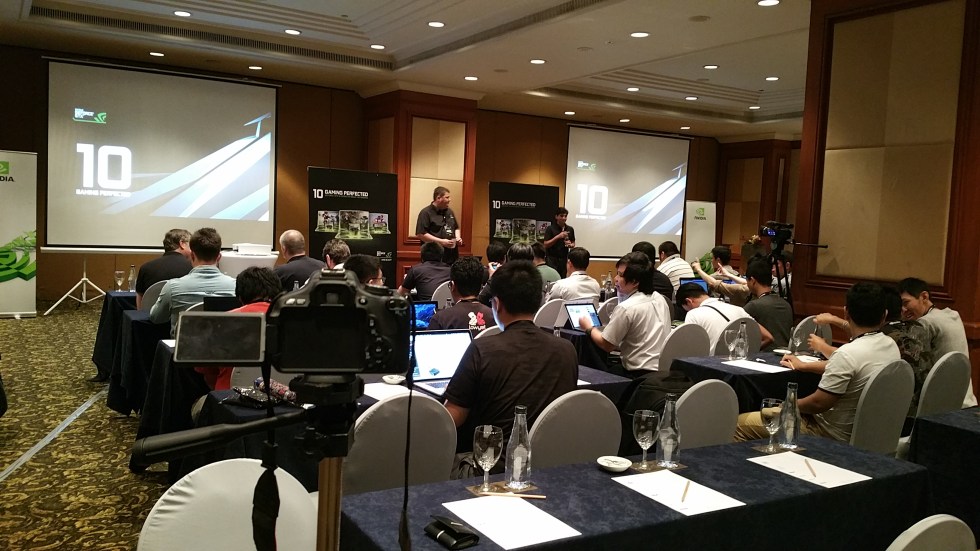
Hot on the heels of its recently-launched GeForce 10-series, NVIDIA has brought that same Pascal generation of GeForce power and performance to notebooks.
At an APAC Editors’ Day held in Bangkok, NVIDIA shared the capabilities that these notebook GPUs bring as well as gave the editors an opportunity to try out the virtual reality features on HTC Vive headsets.
The new GeForce GTX 1080, 1070 and 1060 GPUs for notebooks, providing gamers with a quantum leap forward in performance and power efficiency on the world’s fastest-growing gaming platform.
NVIDIA springs Titan X surprise
 Just when we thought NVIDIA was done with the Pascal range of GPUs with the benchmark release of the GeForce GTX 1060 early this week, NVIDIA CEO Jen-Hsun Huang pulled off a major surprise with the announcement of the new NVIDIA Titan X at an artificial intelligence meeting in Stanford University.
The new NVIDIA Titan X, based on the new Pascal GPU architecture, is the biggest GPU ever built with a record-breaking 3,584 CUDA cores.
Here are the numbers that matter:
- 11 TFLOPS FP32
- 44 TOPS INT8 (new deep learning inferencing instruction)
- 12B transistors
- 3,584 CUDA cores at 1.53GHz (versus 3,072 cores at 1.08GHz in previous TITAN X)
- Up to 60 percent faster performance than previous TITAN X
- High performance engineering for maximum overclocking
- 12 GB of GDDR5X memory (480 GB/s)
Worldwide IT spending to be flat in 2016
Worldwide IT spending is forecast to be flat in 2016, totaling US$3.41 trillion, according to Gartner, Inc. This is up from last quarter’s forecast of negative 0.5 percent growth. The change in the forecast is mainly due to currency fluctuations.
“The current Gartner Worldwide IT Spending Forecast assumes that the UK would not exit the European Union. With the UK’s exit, there will likely be an erosion in business confidence and price increases which will impact UK, Western Europe and worldwide IT spending,” said John-David Lovelock, Research Vice President of Gartner.
While the UK has embarked on a process to change, that change is yet to be defined. The “leave” vote will quickly affect IT spending in the UK and in Europe while other changes will take longer. Staff may be the largest immediate issue. The long-term uncertainty in work status will make the UK less attractive to new foreign workers. Retaining current non-UK staff and having less access to qualified new hires from abroad will impair UK IT Departments.
NVIDIA scores perfect 10 with new GPU!
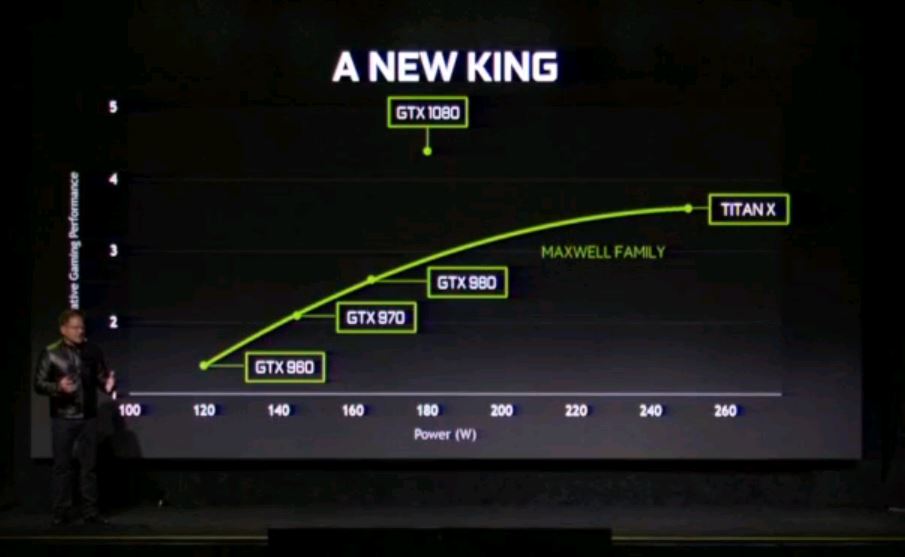 After weeks, if not months of rumours and false predictions, the announcement was finally made. NVIDIA finally revealed the much-awaited Pascal-based NVIDIA GeForce 1080.
What the rumours got correct was the new name of the card. What they missed was the launch date, which NVIDIA kept close to its hearts until CEO Jen-Hsun Huang made the announcement at a specially-gathered press event in Austin on Friday evening (Saturday morning Singapore time).
According to Huang, NVIDIA spent billions in research and development of Pascal and the new GPU.
PC shipment down 9.6% in Q1
Worldwide PC shipment shed 9.6 percent to 64.8 million in Q1, according to Gartner. This was the sixth consecutive quarter of PC shipment declines, and the first time since 2007 that shipment volume fell below 65 million units.
In the Asia-Pacific, PC shipment dropped 5.1 percent to 23.3 million units. The ongoing fragile Chinese economy and weak global demand continued to dampen consumer sentiment in the region.
With high PC penetration in the major cities, it was a challenge to invoke PC replacements on the appeal of new technology. The PC life cycle is lengthening as many consumers are waiting until their PC breaks down before purchasing a new one.
Global semiconductor market drops 2.3 percent in 2015
Worldwide semiconductor revenue declined 2.3 percent to US$334.8 billion in 2015, according to final results by Gartner.
The combined revenue of the top 25 semiconductor vendors fell by 0.5 percent during 2015. This was a better performance than the rest of the market, however, which saw a 6.9 percent revenue decline. The top 25 vendors accounted for 73.5 percent of the market, down slightly from 74 percent in 2014.
“The worldwide semiconductor market declined in 2015 as slowing demand for key applications combined with strong currency fluctuations to subdue the market. 2015 saw a mixed performance by the different device categories, unlike 2014 when all categories posted positive growth. Non-optical sensors performed best due to increased usage of fingerprint sensors in smartphones, while discretes saw the strongest decline due to a mix of weak demand and currency issues,” said Andrew Norwood, Research Vice President of Gartner.
Clock ticking for Challenger flagship store
A sale offering products at up to 80 percent off will certainly catch the eye. But, it could also bring a tear or two to the generations that have frequented Challenger Technologies’ megastore at Funan DigitaLife […]
GTC to kick off tomorrow with live webcast of keynotes
 News of an impending new NVIDIA GeForce graphics card based on next generation Pascal technology have been circulating wildly over the past few weeks.
And many are waiting with great anticipation of confirmation by NVIDIA co-founder and CEO Jen-Hsun Huang at his keynote address at GPU Technology Conference (GTC) tomorrow (April 6, 2 to 3 am Singapore time).
For those unable to be at GTC in San Jose, NVIDIA is webcasting live on the NVIDIA blog the keynote addresses:
- April 6, 12 to 2am (Singapore): Jen-Hsun Huang, NVIDIA co-founder and CEO
- April 7, 2 to 3am (Singapore): Rob High, IBM Watson CTO
- April 8, 2 to 3 am (Singapore): Gill Pratt, Toyota Research Institute CEO
PC revival! Chromebooks and ultraportable PCs to lead charge
 The personal computer (PC) is still alive and breathing. According to ABI Research, 163 million notebook PCs shipped globally in 2015.
The majority were laptops, which constituted nearly 80 percent of the category. The data suggests that despite a floating myth speculating that it will only be a matter of time before PCs meet their demise, the market is still going strong and shows no sign of slowing down in the immediate future.
“Industry experts greatly exaggerated the death of the PC. The platform is continuing to evolve its designs to provide flexibility for productivity purposes, while also adapting its shape to support tablet-like, touch applications. Chromebooks and ultraportable PCs will continue to drive the most growth within the notebook PC market,” said Jeff Orr, Research Director of ABI Research.
Oculus-ready PCs coming right up
The wait for a new way of gaming is nearly over. With the release of the Oculus Rift in March, virtual reality gaming is set to transform the way gamers interact with games. Oculus-Ready PCs from Dell, Alienware […]
Xenith iCafe opens with 100 NVIDIA GeForce GPU-Powered PCs
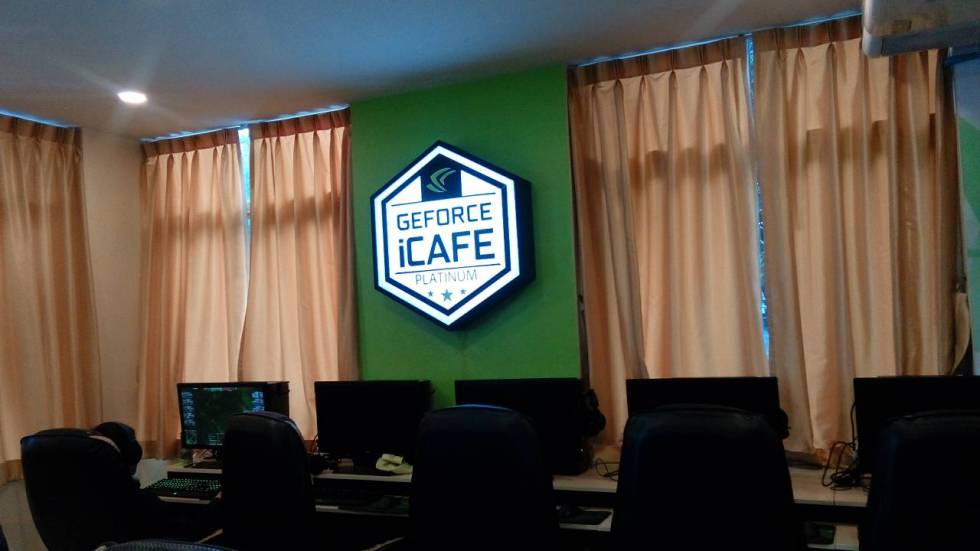 Gamers in northern Thailand, specifically Chiangmai, will get to enjoy premium gaming experience with the opening of Xenith iCafe in the city.
All its 100 PCs are equipped with NVIDIA GeForce GTX 960 GPUs, which deliver advanced performance, power efficiency, and realistic gameplay based on the latest NVIDIA Maxwell technology. They also come with high quality Razer gaming gear – mouse, keyboard and headset – all tailored to give gamers the best experience.
Situated near Chiangmai University , the modern and trendy Xenith iCafe features two gaming zones – a comfort zone and a VIP zone to cater to gamers’ needs as well as to host gaming events. This is a new trend in the iCafe market where owners can better balance cost, performance and functionality while delivering the gaming experience that their customers demand.
Worldwide IT spending to remain flat this year
 The global economy is hitting IT spending, with Gartner predicting just a 0.6 percent increase over 2015 spending of US$3.52 trillion.
2015 saw the largest US dollar drop in IT spending since Gartner began tracking IT spending. US$216b less was spent on IT in 2015 than in 2014 and 2014 spending levels won’t be surpassed until 2019.
“The rising US dollar is the villain behind 2015 results. US multinationals’ revenue faced currency headwinds in 2015. However, in 2016 those headwinds go away and they can expect an additional five percent growth,” said John-David Lovelock, Research Vice President of Gartner.
China to surpass the US in 3D printer market
China is set to overtake the US to become the biggest 3D printer market this year.
3D printer shipments in the China market passed 34,000 units in 2014, and is expected to reach 77,000 units in 2015, a growth rate over 120 percent, according to IDC.
This growth rate is largely driven by sales of desktop 3D printers priced under US$5,000. As the Chinese government continue to promote 3D printer awareness and usage within schools and educational institutions, the desktop 3D printer market is expected to maintain an annual growth trend in the coming years.
NVIDIA unveils VR-ready programme
 NVIDIA is paving the way to virtual reality (VR) gaming experiences with the launch of its new VR-ready programme at CES.
Under the programme, PC and notebook makers and add-in card providers will deliver GeForce GTX VR Ready systems and graphics cards that deliver an immersive VR gaming experience. The programme minimises confusion regarding which equipment is necessary to play the range of VR games and applications increasingly coming to market.
Delivering a great VR experience demands seven times the graphics processing power of traditional 3D games and applications – driving framerates above 90 frames per second (fps) for two simultaneous images (one for each eye).
NVIDIA releases SDKs for VR platforms
 NVIDIA has released the 1.0 version of two powerful VR software development kits (SDKs) — NVIDIA GameWorks VR and NVIDIA DesignWorks VR — to help developers deliver VR games and applications.
Immersive VR requires seven times the graphics processing power compared to traditional 3D apps and games.
When used in conjunction with the company’s industry-leading GeForce and Quadro GPUs, these SDKs provide developers the tools to create VR experiences, increase performance, reduce latency, improve hardware compatibility, and accelerate 360-degree video broadcasts.
NVIDIA introduces Battlebox PC in ANZ
 At PAX Australia held over the weekend in Melbourne, NVIDIA introduced the combat-ready Battlebox PC, which is designed especially for hardcore gamers.
A Battlebox PC is a beast of a gaming machine with a powerful combination of the NVIDIA GeForce GTX 980 Ti GPU horsepower, two-Way NVIDIA SLI and the best components. It is also VR Ready and supports 4K gaming and DX12 for better visual effects and rendering techniques.
The Battlebox PC will is available from Centrecom, MSY, Mwave, PC Case Gear, PLE, Origin PC, Scorptec, and UMART in Australia, and Computer Lounge, PB Technologies and Playtech in New Zealand.
HP multiplies
As of November 1, HP split into two — Hewlett Packard Enterprise (HPE) and HP Inc. HPE will focus on selling enterprise hardware, such as servers while HP Inc will push PCs and printers.
Giving researchers instant feedback with immersive visualisation technologies
At GTC South Asia, Monash University shared how it has leveraged GPU technology to transform the way research is done. Entelechy Asia catches up with the university’s Professor Paul Bonnington (Professor and Director of E-research […]
NVIDIA makes game sharing easier
Together with the launch of the NVIDIA GeForce GTX 950 GPU for the mainstream market, NVIDIA has introduced new features to its GeForce Experience software that takes game sharing to another level. These include […]
Q2 PC shipment drops 9.5%
Lenovo remained the top PC vendor amidst a 9.5 percent global PC shipment decline in Q2, according to Gartner. On the whole, Lenovo suffered along with the rest of the industry with a year-on-year shipment decline for the first time since Q2 2013.
HP also experienced a shipment decline after five consecutive quarters of PC shipment growth. It was impacted by tight inventory controls in the consumer market before the Windows 10 launch.
Worldwide PC shipment totalled 68.4 million units in Q2 with 2015 shipment expected to drop 4.4 percent.
Logitech becomes Logi
Logitech has shortened its brand to Logi as part of its transformation to produce more than just PC peripherals. The new name will be on selected products in existing categories with “a few surprises in new categories”.“We’ve […]
Global PC shipment down 7% in Q1
 Apple held on to its top spot despite a 16 percent drop in PC shipment in Q1. It shipped 17.2 million units, taking a 15 percent market share while Lenovo and HP came in second and third place respectively. Samsung was next with 9.5 million units shipped with Dell just behind with 9.4 million units.
Overall, the global PC market, including tablets, declined seven percent, according to Canalys.
“The growth drivers that previously helped the market through 2014 will have little effect this year. Vendors are struggling with exchange rate fluctuations which is making financial planning more difficult and forcing price increases. These challenges, combined with a softening of demand as Windows 10 draws nearer along with Microsoft’s free upgrade plans, means PC market declines will be greater in the second quarter than they were in the first,” said Tim Coulling, Senior Analyst of Canalys.
PC prices to rise by 10%
PC vendors will have to raise the prices of PCs to offset the effects of currency devaluation, according to Gartner. Prices of PCs in the Eurozone and Japan will increase by up to 10 percent during […]
APAC device shipment to grow 3.2% in 2015
Shipment of devices (PCs, tablets, ultramobiles, and mobile phones) in Asia Pacific are expected to hit 1.2 billion units in 2015, an increase of 3.2 percent over 2014, according to Gartner.
“Device penetration is very high in Asia Pacific – at or beyond saturation point in mature markets and major cities in the emerging markets. Market saturation, along with consumers extending the lifetime of their tablets, has caused a re-calibration in the growth trajectory in the market. From 2016, we expect the tablet market to resume growth from a stabilised base,” said Lillian Tay, Principal Analyst of Gartner.
The computing devices market is forecast to drop 1.9 percent this year, affected by weak demand for tablets. The PC market overall will continue to grow slightly, as shipment in the premium ultramobile category compensate for a decline in sales of traditional desk-based and notebook PCs.
Vietnam only bright spark in Asia PC market
Vietnam is the only growth market for PCs in Asia in Q4, according to IDC. A total of 610,000 PCs were shipped during this period, bringing annual total to 2.13 million units, a two-percent increase over 2014.
In the second half of 2014, promotions of Windows 8.1 with Bing notebooks and the slow but steady growth of convertibles led to an increase in volumes that helped to stabilise the PC market.
“While it helps to prevent the drop of PC shipment in Vietnam, aggressive moves from vendors generally took down the price further that impacts the margins too. Looking at 2015, we’re still expecting a resilient PC spending added with small but growing gaming market to keep the market stable,” said Yen Phan, Market Analyst for PCs at IDC Vietnam.
NVIDIA Titan X makes surprising debut
Rumours of an impending new Titan has been making the rounds for a while yet many were taken by surprise when it was announced at Game Developers Conference yesterday. Jen-Hsun Huang, President and CEO of NVIDIA, unveiled […]
NVIDIA and VMware combine to offer scalable virtualised graphics capabilities
Remote access to rich graphics applications is now possible with VMware Horizon 6 and vSphere 6 and NVIDIA GRID vGPU. Launched last August, an early access programme has attracted more than 300 customers, including University of Southern California, […]
Tablet shipment down 12% globally in Q4
The stats are in – tablet shipment dropped 12 percent to 67 million units in Q4, according to Canalys. The desktop market fell back into a decline in Q4 as Windows XP upgrades waned. The notebook market held firm with another quarter of just one percent growth.
Total PC shipments (desktops, notebooks and tablets) fell six percent in Q4 to reach 148 million units, resulting in full-year 2014 shipments of 528 million units, up three percent on 2013.
Apple regained the top spot in the PC market on the strength of holiday sales, with just under 27 million units shipped. Lenovo’s shipments grew six percent year on year to almost 20 million units as it increased its market share to 13.3 percent. Samsung dropped out of the top three to make way for HP, with growth of 17 percent driving shipments over 17 million units, its best quarter since Q3 2011.
Dropping oil price a US$1 trillion boost for GDP and IT spending in H1 2015
What has proven a massive hit for the oil and gas industry may turn out to be a silver lining for the IT industry and GDP as a whole in the first half of this year.
According to Canalys, business and consumer IT spending will be boosted by the current oil shock, as prices remain below US$50 per barrel. It believes the reduction in prices will provide a short-term economic stimulus equivalent to a large tax cut, boosting corporate profits and consumer disposable incomes, which will filter into IT spending.
“Price falls translate into a transfer of wealth from producers to importers. Oil producers received approximately US$340 billion less in the second half of 2014 compared with the first half of the year, based on average monthly production and prices. The difference will be even more significant if prices remain at US$50 per barrel and production continues at the same level for the next six months. If this scenario happens, producers will receive almost US$1 trillion dollars less compared with the first half of 2014,” said Matthew Ball, Principal Analyst of Canalys.
Mainstream Maxwell hits sweet spot
When NVIDIA introduced the Maxwell-based GeForce GTX 980 and 970, the gaming community was all abuzz with not just the performance but the exciting new features, such as dynamic super resolution (DSR) and multi-frame anti-aliasing (MFAA). […]
WhatsApp comes to the desktop
Ever wished that you could use WhatsApp on your desktop? After all, it would make reading easier and writing messages faster. If you have, your wish was granted yesterday! WhatsApp is now available on the desktop […]
APAC PC market down 6% in 2014
It’s not surprising but the Asia-Pacific (excluding Japan) PC market dipped 6.3 percent to 101 million units in 2014, according to preliminary results from IDC. The fall is not as bad as in 2013, which saw a 10.3 percent drop.
In Q4, the market was flat year-on-year, reaching 25.9 million units, which was marginally higher than IDC’s initial forecasts.
“The good news is that 2015 should not contract as much as last year. While high retail channel inventory and uncertain economic conditions will still bear down on China, upcoming commercial sector activity should help offset that somewhat. India should still have post-elections momentum and yet another large education tender. Indonesia should similarly have post-elections momentum, although high inflation and currency fluctuations are downside risks,” said Handoko Andi Research Manager for Client Devices Research at IDC Asia-Pacific.”
Lenovo strengthens grip on top spot as PC shipment rises 1% in Q4
Lenovo maintained its pole position in the PC market, holding off HP and Dell. However, the gap between Lenovo and HP narrowed as HP garnered 18.8 percent of the market in Q4, relative to Lenovo’s 19.4 percent, according to Gartner. Dell remained third with 12.7 percent market share.
Overall, worldwide PC shipment totalled 83.7 million units in Q4, a one-percent increase from the fourth quarter of 2013. These results indicate a slow, but consistent improvement following more than two years of decline.
“The PC market is quietly stabilising after the installed base reduction driven by users diversifying their device portfolios. Installed base PC displacement by tablets peaked in 2013 and the first half of 2014. Now that tablets have mostly penetrated some key markets, consumer spending is slowly shifting back to PCs,” said Mikako Kitagawa, Principal Analyst of Gartner.
APAC PC market up 8% in Q3
Spurred by consumer PC demand in China and India, the APAC (excluding Japan) PC market rose eight percent in Q3, according to IDC’s preliminary results. However, shipment dropped five percent year-on-year compared to Q3 2014 to 26.6 million units.
In India, positive consumer sentiment after the elections resulted in high retail walk-ins while vendors in China pushed volumes in spite of a poor sell-out. Asean was a mixed bag with Indonesia, Malaysia and Thailand experiencing double-digit annual declines, while other countries such as Vietnam did well.
“XP migration helped boost commercial PC spending earlier this year. But in recent quarters, we have seen Microsoft add a lot to the entry-level segment by launching the Windows 8.1 with Bing programme. This programme has helped consumers buy licensed OS PC in many countries in the region,” said Handoko Andi, Research Manager for Client Devices Research at IDC Asia/Pacific.
HP to split
 When it comes to technology companies, being big may not be the best. In the mid-1990s, IBM, then the world’s leading IT company, had to wrestle with its size. It eventually divested product lines that were deemed to have low margins to focus on software and services. Out went its printers and hard drives. In 2005, IBM sold its personal computer business, including the ThinkPad notebooks to Lenovo. And last week, it officially pulled out of the x86 server market with the sale to Lenovo.
It looks like HP is facing size challenges and taking the same route as IBM of old. While IBM slumbered, HP went on an acquisition spree, chomping up Compaq, EDS and 3Com and many others. It became the world’s top technology company with revenues exceeding US$100 billion.
However, yesterday, HP announced plans to split into two companies — HP Enterprise to focus on enterprise technology infrastructure, software and services businesses, and HP Inc, which will concentrate on the PC and printing businesses.
Microsoft jumps to Windows 10
 Skipping a generation seems to be the norm these days. A couple of weeks ago, NVIDIA introduced its GeForce GTX 900 series, bypassing the 800 series. Yesterday, Microsoft made a similar move by skipping a highly anticipated Windows 9 to introduce Windows 10.
In a technical preview, Microsoft highlighted advancements in the new operating system that are designed for business, including an updated user experience and enhanced security and management capabilities.
“Windows 10 represents the first step of a whole new generation of Windows, unlocking new experiences to give customers new ways to work, play and connect. This will be our most comprehensive operating system and the best release Microsoft has ever done for our business customers, and we look forward to working together with our broader Windows community to bring Windows 10 to life in the months ahead,” said Terry Myerson, Executive Vice President of the Operating Systems group at Microsoft.
Maxwell is here! NVIDIA launches GeForce GTX 980 and 970
NVIDIA has skipped the GeForce GTX 800 series with the launch of the new Maxwell-based GeForce GTX 980 and 970 GPUs. To showcase the new series’ capabilities, NVIDIA has produced a video clip to debunk the myth that Apollo 11 may not really have taken place. That is, that man did not really land on the moon then.
Based on the Maxwell chip architecture, the new GeForce GTX 980 and 970 GPUs deliver unmatched performance, major new graphics capabilities and twice the energy efficiency of the previous generation.
A new Voxel Global Illumination (VXGI) technology enables gaming GPUs for the first time to deliver real-time dynamic global illumination. Scenes are significantly more life-like as light interacts realistically in the game environment — resulting in deeper levels of immersion for gamers.
Lithium-ion battery revenue to quadruple by 2020
 Many technologies have come and gone — replaced by new innovations. But, in the midst of the technological changes, one unsung technology remains and is expected to be in even greater demand in the years ahead.
We’re talking about the lithium-ion battery which powers most of today’s devices. In fact, it is innovation that makes the battery highly popular — beyond gadgets and computer wizardry to other industries
According to Frost & Sullivan, the global lithium-ion battery market is expected to quadruple from 2013 to 2020. Developing applications in the grid and renewable energy storage segment are helping boost demand for lithium-ion batteries.
India PC market up on consumer PC rebound
Strong demand for consumer PCs has helped the India PC market grow to 2.55 million units in Q2, jumping 23.6 percent over Q1 2014, according to IDC.
Overall consumer PC market recorded 1.16 million units, a quarter-on-quarter growth of 12.8 percent over Q1.
“The overall sentiments have picked up and IDC observes improved discretionary spending from consumers across devices. It is expected to have a positive influence on the market as we enter the festival season starting Onam,” said Manish Yaday, Market Analyst of Client Devices at IDC India.
VMware, NVIDIA and Google to deliver graphics-rich applications to Chromebooks
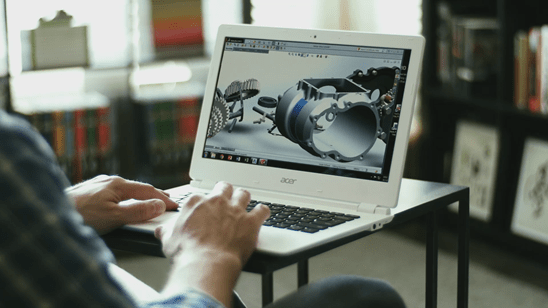
The Google Chromebook is often associated with simplicity — a simple and affordable notebook that offers connectivity and provides access to everyday applications. Well, that’s about to change with a collaboration between VMware, NVIDIA and Google.
The three tech giants are working together to deliver high-performance virtual desktops and workstation-class graphics to Google Chromebooks. This would give the humble Chromebooks power to handle even the most demanding visual computing applications.
“We are breaking down traditional barriers to adopting virtual desktops and offering new economics for the delivery of graphics-intensive applications through the power of the cloud. Organisations of all industries and requirements will soon be able to embrace the mobile-cloud using a solution that offers a new way to work from three proven industry leaders.,” said Sanjay Poonen, Executive Vice President and General Manager of End-User Computing at VMware.
 Entelechy Asia