
 Rising demand for broadband will spur economies in the Asia-Pacific region (APAC).
According to a new GSMA report, increased broadband connections in APAC will generate US$1.2 trillion of GDP growth and create up to 35 million new jobs by 2020.
However, this opportunity can only be realised if governments act now to fully release existing harmonised mobile spectrum bands and allocate more spectrum for mobile to meet rising consumer demand and support the development of new mobile services in the longer term.
 Wearable electronic devices for fitness shipments are forecast to reach 68.1 million units in 2015, down from 70 million units in 2014, according to Gartner. This temporary dip in sales will be driven by an overlap in functionality between smart wristbands, other wearable fitness monitors and smartwatches.
 Data and value-added services have driven mobile growth in Malaysia to reach 42.9 million subscribers and rake in revenues of US$7.45 billion in 2014.

 g quarter for smartphones as global shipment broke the 300 million unit barrier for the first time. This represented year-on-year growth of 23 percent, according to Canalys.
 Australia’s on-premise unified communications (UC) market experienced a decline in revenues in 2013, according to Frost & Sullivan. This was mainly due to the improved understanding of the benefits of hosted and cloud-based UC solutions, which have now reached mainstream adoption.
 GSMA has introduced two special awards to commemorate the 20th anniversary of the Global Mobile Awards. The Young Mobile Innovator of the Year and Connected Women: Leadership in Industry awards will be presented at the Global Mobile Awards ceremony at GSMA Mobile World Congress in Barcelona on March 3, 2015.
 Singapore possesses the necessary ingredients for sustained Smart City developments, according to IDC Government Insights.
 Algebra can be a bane to students and while some turn to their teachers for help, others request for assistance from parents, siblings and tutors. With PhotoMath, they now have another source of help. Best of all, it’s free!
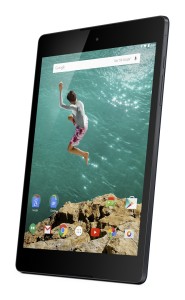 When Google announced the Nexus 9 last Wednesday, one of the more pertinent developments is that the new tablet sports the NVIDIA Tegra K1, which brings 64-bit capabilities to Android for the first time.
 ZTE has launched a range of payment solutions including phone POS (point of sale), photonic and DTV (Digital TV) payment products.
 Smartwatches are set to be more than health trackers with countries around the world exploring different potential.
 When it comes to technology companies, being big may not be the best. In the mid-1990s, IBM, then the world’s leading IT company, had to wrestle with its size. It eventually divested product lines that were deemed to have low margins to focus on software and services. Out went its printers and hard drives. In 2005, IBM sold its personal computer business, including the ThinkPad notebooks to Lenovo. And last week, it officially pulled out of the x86 server market with the sale to Lenovo.
 Having exited the x86 server business, IBM has turned its focus to a new range of systems that leverages GPU acceleration delivered by NVIDIA.
 A slew of demand for semiconductors is helping the industry to hit a targeted 7.2 percent growth to hit US$338 billion this year.


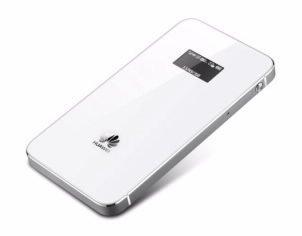 Huawei has unveiled the Huawei Mobile WiFi Prime E5878, claimed to be the world’s thinnest at 7.5mm, the equivalent of five credit cards stacked on top of each other.
 NVIDIA VCA (visual computing appliance), which began shipping in August, has opened up the possibility of graphics-as-a-service.
 David Fincher’s highly anticipated thriller Gone Girl starring Ben Affleck, Rosamund Pike and Neil Patrick Harris hits theatres on October 3. The film is generating as much attention for its star power as it is for the highly advanced production approach of the filmmakers. It’s the first feature shot entirely in 6K and the first feature to use NVIDIA Next-Gen Quadro GPUs. Edited by two-time Academy Award-winner Kirk Baxter, ACE, it’s also the first studio feature edited entirely in Adobe Premiere Pro CC.
 ZTE has announced the 4G Qcell solution uses cloud-based network coordination technology to overcome signaling leakage and interference. The solution supports multi-frequency and multi-mode network deployment, enabling operators to offer converged networks with superior indoor performance.
 Huawei has launched IP Video Solution 2.0, which integrates diverse features and a new user experience to improve video business platform facilitation from Internet Protocol TV (IPTV) to Video Everywhere.
 Smartwatches are attracting lots of attention but the prices are keeping many at bay, at least for now. Come next year, the prices are expected to average US$30, as smartphone vendors and component suppliers look to tap this market. In fact, Xiaomi has already introduced the
  While the attention of the technology world has been on gadgets, smartphones and wearables in recent weeks, Stratasys has turned the spotlight back on 3D printing with the



 Entelechy Asia