 NVIDIA has introduced Iray Visual Computing Appliance (VCA), a GPU rendering appliance that dramatically accelerates ray tracing, enabling professional designers to interact with computer models of such high visual fidelity that it can largely replace the lengthy, costly process of building physical prototypes.
Honda Research and Development is an initial user of NVIDIA Iray VCA, with a prototype cluster made up of 25 nodes to refine styling designs on future cars.
Iray VCA combines hardware and software to greatly accelerate the work of NVIDIA Iray — a photorealistic renderer integrated into leading design tools like Dassault Systèmes’ CATIA and Autodesk’s 3ds Max. Because the appliance is scalable, multiple units can be linked, speeding up by hundreds of times or more the simulation of light bouncing off surfaces in the real world.
As a result, automobiles and other complex designs can be viewed seamlessly at high visual fidelity from all angles. This enables the viewer to move around a model while it’s still in the digital domain, as if it were a 3D physical prototype.
“Iray VCA lets designers do what they’ve always wanted to — interact with their ideas as if they were already real,” said Jeff Brown, Vice President and General Manager of Professional Visualisation and Design at NVIDIA. “It removes the time-consuming step of building prototypes or rendering out movies, enabling designs to be explored, tweaked and confirmed in real time. Months, even years — and enormous cost — can be saved in bringing products to market.”

 High ownership of smartphones, tablets and phablets in Hong Kong have been positively impacting sales of complementary products such as headphones and headsets, as well as mini-speakers, according to GfK.
 Samsung has opened its largest Samsung Experience Store at Westgate in Singapore. The 6,027-square foot standalone triplex store will provide give those staying in the western part of Singapore access to Samsung’s latest range of products with infotainment and educational content as well as in-store dining options.
 Global PC shipment dipped 1.7 percent to 76.6 million units Q1, compared to the same period last year, according to apreliminary results by Gartner.
 NVIDIA has released new drivers built on DirectX11 to offer enhanced performance, a version of GeForce Experience packed with new features, and an over-the-air (OTA) software upgrade for SHIELD.
 GSMA has completed its second Mobile Energy Efficiency (MEE) Optimisation project in Pakistan, working in conjunction with mobile operator Warid Telecom and systems integrator Cascadiant.
 Once a luxury item, embedded in-car navigation systems are now increasingly becoming less expensive and are offered in mass-market cars. At the same time, more and more car navigation units are becoming connected and multi-functional as they converge with other technologies in the car.
 The much sought after tablet — the darling of the technology industry in recent years — is expected to grow just 19.4 percent this year. That’s a massive slow down from last year’s growth of 51.6 percent. According to the IDC
  NetApp has introduced a new line of enterprise storage systems and enhanced software designed to accelerate the broadest range of virtualised applications.
 More than 85,000 visitors from 201 countries attended Mobile World Congress (MWC), which ended yesterday. This is a record for the mobile industry event, which saw many new product launches and announcements.
 Dr Paul E Jacobs, Chairman and CEO of Qualcomm, has been named the recipient of the 2014 GSMA Chairman’s Award. Established in 1995, the award recognises outstanding personal contribution to the growth and development of mobile communications around the world.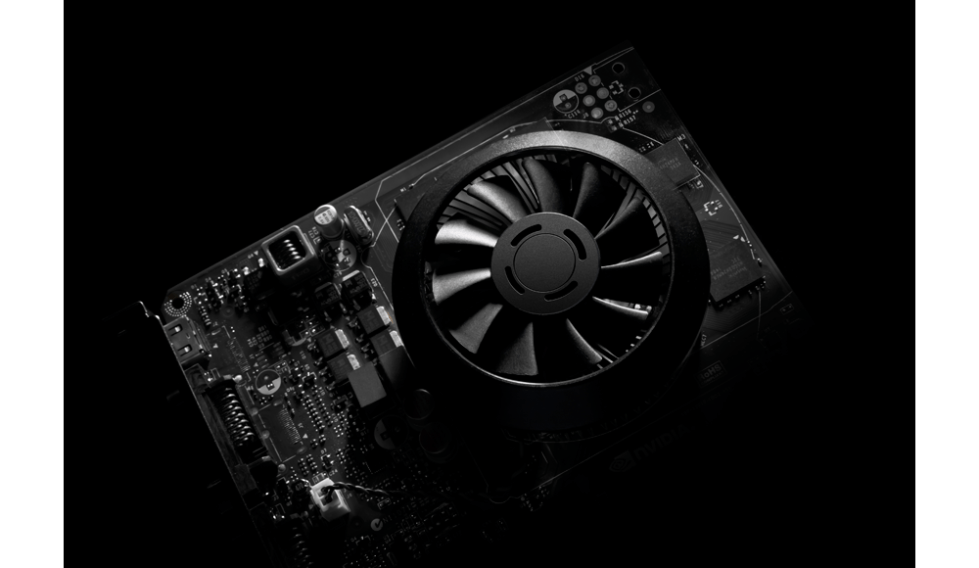
 Fancy a slimmer Samsung Galaxy Tab? Samsung has rolled out the Galaxy Tab 3 Lite (7.0”) WiFi, which sports a slim, lightweight design with a more compact bezel that makes it comfortable to carry around in one hand.
  Tablet shipment grew 65.2 percent year-on-year to
  Samsung Electronics is the world’s top semiconductor buyer, and together with second placed Apple, increased their combined semiconductor demand by 17 percent in 2013, according to Gartner.
 Huawei has taken a shot at the English Premier League by becoming the official smartphone partner of league leaders Arsenal.
 Companies worldwide are quickly realising that mobile has not only changed digital operations, but that it will fundamentally change entire businesses in decades to come, according to Forrester Research.
 NVIDIA unveiled at CES the Tegra K1 mobile processor, a 192-core super chip featuring the same NVIDIA Kepler architecture that powers the NVIDIA GeForce GTX 780 Ti. For the first time, next-generation PC gaming will now be available on mobile platforms.
 Telecom New Zealand has launched a new 4G LTE network that can provide speeds of up to 150 Mb/s to mobile subscribers in parts of Auckland, Wellington and Christchurch.

 Red Bull has implemented a new global B2B order management portal based on the hybris

 Entelechy Asia