

The downward trend continues for worldwide PC shipment with a 1.4 percent drop in Q1, making it the 14th consecutive quarter of decline, according to Gartner.
The downward trend continues for worldwide PC shipment with a 1.4 percent drop in Q1, making it the 14th consecutive quarter of decline, according to Gartner.

 Bangladesh mobile operators began offering 4G services last month, albeit in limited areas, after gaining the necessary licences.
India has become the fastest growing smartphone market in the world with total shipment growing 14 percent to 124 million units in 2017, according to IDC.
 Amid rumours that Apple was going to axe the iPhone X came encouraging sales numbers by Canalys.
 Global IT spending is expected to grow to US$3.7 trillion in 2018, an increase of 4.5 percent from 2017, according to Gartner.
 China artificial intelligence (AI) startup SenseTime has signed a strategic investment agreement with Qualcomm.
 PC shipment in the Asia-Pacific region surpassed 21,5 million units, down 5.1 percent in Q2 compared to the same period last year, according to Gartner.
The dip was due to primarily due to market dynamics in India and China. In India, the pent up demand after the demonetisation cooled down after Q1, coupled with the absence of a large tender deal compared to a year ago and higher PC prices, brought about weak market growth. China was hugely impacted by the rise in PC prices due to the component shortage.
Overall, global PC shipment totaled 61.1 million units in Q2, a 4.3 percent decline from the same quarter last year.
China-based vendors strengthened their grip in the India smartphone market, snaring 51.4 percent share of the smartphone shipment in Q1, according to IDC. They grew 16.9 percent sequentially and an impressive 142.6 percent over the same period last year.
In contrast, share of homegrown vendors dropped to 13.5 percent in the Q1 from 40.5 percent in the same quarter last year.
Overall, 27 million smartphones were shipped in Q1, a 14.8 percent growth over the same period last year. Unlike last year, shipment grew sequentially in the first quarter of 2017 by 4.7 percent recovering from demonetisation impact in Q4.
 Huawei has taken top spot again in China’s smartphone market, edging past Oppo after two quarters of trailing in second place. According to Canalys, the Chinese smartphone giant, which launched the P10 and P10 Plus during MWC, shipped close to 21 million units to secure an 18 percent market share in Q1.
Despite strong annual growth of 55 percent, Oppo fell to second place with shipments of just under 20 million units. Third-placed Vivo had the lowest annual growth of the top three, capturing a 15 percent share with its shipment of 17 million units.
“China’s smartphone market continues to grow, with shipments increasing by over nine percent year on year this quarter. But there is a clear indication that the market is consolidating. The top three vendors are pulling away at the head of the market, accounting for more than 50 percent of shipments for the first time this quarter,” said Lucio Chen, Research Analyst of Canalys.
After nearly two decades, Intel has decided to bring the curtains down on its annual Intel Developer Forum(IDF). Even the China edition has been canned. A highly anticipated and popular event, IDF was the platform […]


Everybody knows China is big but with nearly half a billion smartphones shipped last year, the market is massive — that’s one smartphone for every three person in the world’s most populous country.
According to Canalys estimates, China reached 476.5 million unit shipment, growing year on year at 11.4 percent, far exceeding the annual growth rate of 1.9 percent in 2015. China shipment reached 131.6 million units in Q4, which is the highest single quarter total in history, accounting for nearly a third of worldwide shipment.
Huawei took the top spot in the market with 76.2 million shipment, a small lead ahead of runner-up Oppo with 73.2 million units, followed by Vivo in third place at 63.2 million units.
 While Samsung remained at the top, China smartphone makers occupied four of the top five positions to snare the lion’s share in India in Q4, according to Canalys.
Their extremely price-competitive devices pushed out India makers, who have been hit hard by the Indian government’s decision to demonetise the INR500 and INR1,000 (US$7.30 and US$14.65) banknotes.
“Local brands’ target customers typically buy in cash and from independent retailers. With the short-term liquidity crunch caused by demonetisation, these retailers are suffering a slowdown in consumer spending. Local vendors are losing out as retailers look to shift their stock to fast-moving, current devices. In Q4 2015, Micromax, Intex and Lava took second, third and fifth place, accounting for almost 30 percent of the market. One year on and all three vendors have dropped out of the top five, with their collective share falling to around 11 percent,” said Rushabh Doshi, Analyst of Canalys.
 NVIDIA has unveiled at CES a new Shield TV media streamer, which like its predecessors will not be available in the Asia-Pacific region. However, a separate version of Shield, with custom software optimised for China, will be available later this year.
The new device is an Android open-platform media streamer that is claimed to deliver unmatched experiences in streaming, gaming and AI.
Sporting a sleek, new design and now shipping with both a remote and a game controller, the new Shield delivers rich visual experience with support for 4K HDR and three times the performance of other streamers.
 Advances in various technologies will drive users to interact with their smartphones in more intuitive ways, said Gartner. It expect that, by 2019, 20 percent of all user interactions with the smartphone will take place via virtual personal assistants (VPAs).
“The role of interactions will intensify through the growing popularity of VPAs among smartphone users and conversations made with smart machines,” said Annette Zimmermann, Research Director of Gartner.
Gartner’s annual mobile apps survey conducted in Q4 among 3,021 consumers across three countries (US, UK and China) found that 42 percent of respondents in the US and 32 percent in the UK used VPAs on their smartphones in the last three months. More than 37 percent of respondents (average across US and UK) used a VPA at least one or more times a day.
Many of us may know Xiaomi as a leading China handphone maker with its unique business model of selling in batches online. In an interesting revelation to Reuters, Xiaomi Global Vice President declared that the […]
Worldwide semiconductor capital spending is expected to slide 0.7 percent in 2016, to US$64.3 billion, according to Gartner. This is up from the estimated 2 percent decline in Gartner’s previous quarterly forecast.
“Economic instability, inventory excess, weak demand for PC’s, tablets, and mobile products in the past three years has caused slow growth for the semiconductor industry. This slowdown in electronic product demand has driven semiconductor device manufacturers to be conservative in increasing production,” said David Christensen, Senior Research Analyst of Gartner.
“Looking ahead, it appears the second half of 2016 may see improved demand. However, following Brexit, semiconductor inventory levels may rise in the third and fourth quarters, which could lead to reduced production volumes,” he added.
China has continued its lead in the race for the world’s fastest supercomputer with the Sunway TaihuLight, whose Linpack mark of 93 petaflops outperforms the former TOP500 champ, Tianhe-2, by a factor of three. What’s more remarkable is […]
Leading e-commerce giant Alibaba has announced that it would pay US$1 billion for a controlling stake in Singapore startup Lazada, which has e-commerce operations across Southeast Asia. Established by Rocket Internet in 2011, Lazada is a popular […]
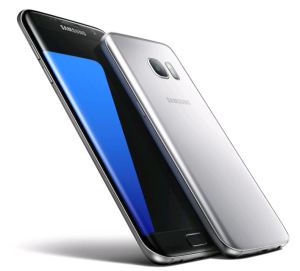
Global smartphone sale is expected to experience just a single-digit growth this year, according to Gartner.
It estimates that global smartphone sale will reach 1.5 billion units, a seven percent increase from 2015. The total mobile phone market is predicted to reach 1.9 billion units in 2016.
“The double-digit growth era for the global smartphone market has come to an end. Historically, worsening economic conditions had negligible impact on smartphone sales and spend, but this is no longer the case. China and North America smartphone sales are on pace to be flat in 2016, exhibiting a 0.7 per cent and 0.4 per cent growth respectively,” said Ranjit Atwal, Research Director of Gartner.
While smartphone sales will continue to grow in emerging markets, the growth will slow down. Gartner predicts that, through 2019, 150 million users will delay upgrades to smartphones in emerging Asia-Pacific, until the functionality and price combination of a low-cost smartphone becomes more desirable.
 China Telecom Beijing Research Institute and ZTE have inked a strategic agreement to develop cutting edge technologies including SDN/NFV, 4G+/5G and IoT related.
They will work closely and share resources to develop better network technologies that will support China Telecom’s network construction and service reconstruction. The collaboration will also benefit the industry by bringing more advanced, cutting-edge technologies and innovations to market.
“As we enter the artificial intelligence era, operators are expected to provide a full range of network solutions. Through this partnership, we will be able to significantly advance SDN/NFV, 4G+/5G, cloud computing and big data technologies in the coming years. I believe the new technologies will become a reality through pilot deployments”, said Zhang Chengliang, Vice President of China Telecom Beijing Research Institute.
Smartphone sale hit a record 117.3 million in China in Q4. This represents an eight percent growth compared to the same period last year.
The phenomenal increase was partly driven by China’s annual singles day online shopping festival in November and Huawei’s strong shipments in the quarter. China’s Q4 growth boosted the calendar year 2015 growth to three percent.
“Xiaomi, Huawei and Apple are the top smartphone players in 2015. This is a stark contrast to the top players in 2013, which was Samsung, Lenovo and Coolpad – with Samsung clearly dominating other players. With operators reducing smartphone subsidy and given the volatility of consumers’ brand preference in the market, the smartphone scene has changed significantly since then,” said Tay Xiaohan, Senior Market Analyst of IDC Asia/Pacific’s Client Devices team.
China is set to overtake the US to become the biggest 3D printer market this year.
3D printer shipments in the China market passed 34,000 units in 2014, and is expected to reach 77,000 units in 2015, a growth rate over 120 percent, according to IDC.
This growth rate is largely driven by sales of desktop 3D printers priced under US$5,000. As the Chinese government continue to promote 3D printer awareness and usage within schools and educational institutions, the desktop 3D printer market is expected to maintain an annual growth trend in the coming years.
 Every other piece of mobile accessory in the world is sold in the Asia-Pacific (APAC) region. To be precise, APAC accounts for 52.9 percent of all mobile accessories shipment, according to ABI Research.
Admittedly, the region does have a huge population but the sales figures are still staggering as global revenues for mobile accessories are expected to hit US$81.5 billion this year.
Driving the demand are cost competitive smartphones. China holds huge opportunities for accessories due to its large existing and potential consumer base, rapid growth of smartphone and tablet adoption, a growing online retail market and increasing disposable incomes.
 The public cloud market in China will more than double in the next five years, from US$1.8 billion this year to US$3.8 billion in 2020, according to Forrester.
Two-thirds of Chinese software decision-makers surveyed by Forrester are making increased use of public cloud platforms a top priority over the next 12 months.
Enterprise public cloud platform vendors in China are improving in terms of their service diversity, simple abstraction for operational efficiency, and operational autonomy for on-demand elasticity. Forrester has evaluated the strengths and weaknesses of 11 cloud vendors Alibaba, AWS, ChinaC, DaoCloud, JD.com, Microsoft, MoPaaS, QingCloud, Tencent, UCloud, and UnitedStack.
Huawei has dethroned Xiaomi as China’s top smart phone vendor in Q3. This is Huawei’s first time at the summit of China’s smartphone, according to Canalys. The company powered its way to first place with 81 percent […]

Camera drones are getting the attention, or rather causing concern among governments and the general public. While the public is usually perturbed by the invasion of privacy, governments has security and safety concerns.
That’s why it’s surprising that China’s camera drone market is thriving and used in areas such as film and television, geological exploration, and emergency response.
According to IDC, with a growing demand for more sophisticated products, Chinese consumers view camera drones as a trendy and in vogue product.
Xiaomi continued its phenomenal growth to regained its crown as the largest smart phone vendor in China with 15.9 percent market share in Q2, according to Canalys. One in three smartphones shipped were from Xiaomi or […]
NVIDIA is teaming up with China high performance computing firm Sugon and the Institute of Computing Technology, of the Chinese Academy of Sciences to jointly operate a deep learning laboratory. The laboratory will promote deep learning […]
Action cameras are all the rage, thanks to the popularity of GoPro. Even Xiaomi has delved into the market with its own iteration. Spotted at Computex 2015 today was ThiEYE, a China company that quietly but […]
Software revenue in India rose 8.3 percent to hit US$4 billion in 2014, according to Gartner.
“The enterprise software marketplace is dynamic and ever-changing. Its growth and structure are being shaped by the factors and forces of decentralised purchasing, consumerisation and mobility, influence of emerging markets, cloud-based implementations, and new consumption models. Improvement in global economic conditions has somewhat relaxed the strain on the Indian economy, thereby boosting corporate sentiments. Along with a new stable government at the center, this has helped in alleviating concerns about economic growth — to a certain extent — with early signs of spending in growth initiatives beginning to emerge,” said Bhavish Sood, Research Director of Gartner.
Several leading trends include:
LTE is growing phenomenally in China. By the end of 2014, China gained almost 100 million LTE subscriptions in the first year of full LTE commercialisation, demonstrating an accelerating growth momentum, according to ABI Research.
Thanks to the first-mover advantages, China Mobile seized almost 90 percent share of the LTE market in China.
“Since the other two China mobile operators — China Unicom and China Telecom — were granted preferred FDD-LTE licenses in March 2015, it is expected that China will overtake the US to become the largest 4G market in the world, accumulating 500 million LTE subscriptions, or 36.5 percent of the domestic cellular subscriptions in 2015,” said Marina Lu, Research Analyst of ABI Research.
The combined market share of Chinese brands fell to a two-year low on a global basis, as growth in China slowed to single digit in the first quarter of 2015, according to Canalys Apple increased […]
Shipment of devices (PCs, tablets, ultramobiles, and mobile phones) in Asia Pacific are expected to hit 1.2 billion units in 2015, an increase of 3.2 percent over 2014, according to Gartner.
“Device penetration is very high in Asia Pacific – at or beyond saturation point in mature markets and major cities in the emerging markets. Market saturation, along with consumers extending the lifetime of their tablets, has caused a re-calibration in the growth trajectory in the market. From 2016, we expect the tablet market to resume growth from a stabilised base,” said Lillian Tay, Principal Analyst of Gartner.
The computing devices market is forecast to drop 1.9 percent this year, affected by weak demand for tablets. The PC market overall will continue to grow slightly, as shipment in the premium ultramobile category compensate for a decline in sales of traditional desk-based and notebook PCs.
ZTE’s flagship Grand S3 now comes with Eyeprint ID, an eye-based biometric solution from EyeVerify that allows users a password-free method of unlocking the Grand S3, offering an enhanced level of privacy and security to […]
 ZTE has launched its super HD 4K smart set-top box (STB) product B860A, which uses the 64-byte system solution, Cortex-A9 architecture and four-core CPU.
Running on Android 4.4, the STB supports the latest H.265 video code standard. It uses advanced technology to improve the relationship between the code stream, code quality, time delay and algorithm complexity so that it is at the most optimised setting.
In comparison to the video compression efficiency of H.264, H.265 can save half of the bandwidth, effectively helping to accelerate development of 4K super HD service. The STB has 4K (4096×2160) super high resolution, providing a significant visual difference between the 4K resolution and the ordinary HD.
 Saw a product you like in a brick-and-mortar shop? Why not whip out your smartphone to read a review of the product or compare prices with other stores? That’s what more and more shoppers are doing during their visit to physical stores.
According to a GfK survey of mobile phone users in 23 countries, 40 percent of shoppers compare prices online while another 40 percent contact a friend or family member for advice. Thirty-six percent take photos of products that interest them.
Globally, men outweigh women on using their mobile phone inside a store to compare prices on a regular basis, standing at 42 percent and 37 percent respectively. The most active age group is shoppers aged 20-29, with nearly half (49 percent) saying they regularly do this, followed by those aged 15-19 and 30-39, both at 45 percent.
What has proven a massive hit for the oil and gas industry may turn out to be a silver lining for the IT industry and GDP as a whole in the first half of this year.
According to Canalys, business and consumer IT spending will be boosted by the current oil shock, as prices remain below US$50 per barrel. It believes the reduction in prices will provide a short-term economic stimulus equivalent to a large tax cut, boosting corporate profits and consumer disposable incomes, which will filter into IT spending.
“Price falls translate into a transfer of wealth from producers to importers. Oil producers received approximately US$340 billion less in the second half of 2014 compared with the first half of the year, based on average monthly production and prices. The difference will be even more significant if prices remain at US$50 per barrel and production continues at the same level for the next six months. If this scenario happens, producers will receive almost US$1 trillion dollars less compared with the first half of 2014,” said Matthew Ball, Principal Analyst of Canalys.
Global SIM card shipment will reach 5.2 billion units in 2014, a 5.32 percent increase from 2013, according to ABI Research.
LTE, NFC, and M2M are gaining momentum and considered the trends for the next few years.
Large markets such as India, China, and Saudi Arabia are currently among the last countries to undergo ID registration regulations. Among them only India saw a massive decline in shipments during 2013 but data from 2014 show that the market has successfully stabilised and steady growth is expected from 2015 onwards.
Lenovo maintained its pole position in the PC market, holding off HP and Dell. However, the gap between Lenovo and HP narrowed as HP garnered 18.8 percent of the market in Q4, relative to Lenovo’s 19.4 percent, according to Gartner. Dell remained third with 12.7 percent market share.
Overall, worldwide PC shipment totalled 83.7 million units in Q4, a one-percent increase from the fourth quarter of 2013. These results indicate a slow, but consistent improvement following more than two years of decline.
“The PC market is quietly stabilising after the installed base reduction driven by users diversifying their device portfolios. Installed base PC displacement by tablets peaked in 2013 and the first half of 2014. Now that tablets have mostly penetrated some key markets, consumer spending is slowly shifting back to PCs,” said Mikako Kitagawa, Principal Analyst of Gartner.
The smartphone market continued to grow in Asia-Pacific excluding Japan in Q3, albeit at a modest six percent quarter on quarter, according to IDC.
During this period, India led with 23 million units shipped, and added around five million units to the market over Q2.
Emerging markets in the region also surged ahead with 23 million units shipped, accounting for 22 percent growth as tier-1 Chinese vendors extended their reach outside China.
 November 11 is Singles’ Day in China and the singular thing retailers are aiming for today is record sales. China e-commerce giant Alibaba has set US$8.18 billion (RMB50 billion) as its 2014 target of single-day transaction value for the November 11 online shopping festival, according to IDC.
The research firm believes Alibaba is very likely to achieve five percent more. “11.11” is not only a festival for Alibaba, online shoppers, and online retailers; it also changes consumers’ buying behaviour and impacts the evolution of the China e-commerce ecosystem.
“11.11” has become a special day for many Chinese consumers ever since Alibaba created this single-day online shopping festival in 2009. The total transaction value during last year’s “11.11” reached US$5.73 billion (RMB35 billion), which shocked Alibaba’s e-commerce competitors all around the world as well as the entire retail industry.
Q3 is a stunnin g quarter for smartphones as global shipment broke the 300 million unit barrier for the first time. This represented year-on-year growth of 23 percent, according to Canalys.
While Samsung and Apple remain the market leaders, the tussle for the third spot is heating up with was Xiaomi (six percent) followed closely by Lenovo and Huawei at five percent each.
“The global market is becoming more competitive, with vendors beyond Samsung and Apple enjoying growing success. A year ago, in Q3 2013, Samsung and Apple together accounted for 48 percent of worldwide smart phone shipments. While still impressive, in Q3 2014 this had slipped to 38 percent. This trend is likely to continue. It is down to the strong value proposition and increasing quality of products offered across all price points by competing vendors, most notably Chinese companies. In fact, six of the top 10 global vendors in Q3 are based in China,” said Chris Jones, Vice President and Principal Analyst of Canalys.
Spurred by consumer PC demand in China and India, the APAC (excluding Japan) PC market rose eight percent in Q3, according to IDC’s preliminary results. However, shipment dropped five percent year-on-year compared to Q3 2014 to 26.6 million units.
In India, positive consumer sentiment after the elections resulted in high retail walk-ins while vendors in China pushed volumes in spite of a poor sell-out. Asean was a mixed bag with Indonesia, Malaysia and Thailand experiencing double-digit annual declines, while other countries such as Vietnam did well.
“XP migration helped boost commercial PC spending earlier this year. But in recent quarters, we have seen Microsoft add a lot to the entry-level segment by launching the Windows 8.1 with Bing programme. This programme has helped consumers buy licensed OS PC in many countries in the region,” said Handoko Andi, Research Manager for Client Devices Research at IDC Asia/Pacific.
 India, China, Pakistan, and Vietnam are among the top five emerging markets that will drive tech devices sale in 2015, according to GfK.
The resarch firm has forecasted that the global technology device market will remain at US$1 trillion next year, just as it has been since 2011.
| Top 10 tech device growth markets in 2015 | ||||
|---|---|---|---|---|
| | 2014 (U$b) | 2015 (U$b) | Percentage YoY | Growth (U$b) |
| India | 30.0 | 34.8 | 16% | 4.8 |
| China | 199.0 | 200.8 | 1% | 1.8 |
| Nigeria | 5.1 | 5.7 | 13% | 0.7 |
| Pakistan | 4.2 | 4.8 | 15% | 0.6 |
| Vietnam | 5.5 | 6.1 | 11% | 0.6 |
| Bangladesh | 3.3 | 3.8 | 13% | 0.4 |
| Brazil | 39.0 | 39.3 | 1% | 0.4 |
| Egypt | 4.6 | 5.0 | 8% | 0.3 |
| Indonesia | 12.4 | 12.7 | 3% | 0.3 |
| Philippines | 3.8 | 4.1 | 6% | 0.2 |
| TOTAL | 306.9 | 317.1 | 3% | 10.1 |
Source: GfK
 Smartphones will grow from one in three today to two out of every three mobile connections globally by 2020, according to GSMA Intelligence, the research arm of the GSMA.
It forecasts that the number of smartphone connections will grow three-fold over the next six years, reaching six billion by 2020. Basic phones, feature phones and data terminals such as tablets, dongles and routers will account for the remaining connections. The study excludes M2M from the connections totals.
“The smartphone has sparked a wave of global innovation that has brought new services to millions and efficiencies to businesses of every type. In the hands of consumers, these devices are improving living standards and changing lives, especially in developing markets, while contributing to growing economies by stimulating entrepreneurship.,” said Hyunmi Yang, Chief Strategy Officer of GSMA.
Activity tracker: technology before sports brands At IFA Berlin last week, vendors introduced a number of wearable devices. Of course, most are not available immediately but it’s a […]
 SIGGRAPH Asia 2014, Asia’s largest computer graphics (CG) event, will be held in Shenzhen, China, for the first time from December 3 to 6
More than 7,700 attendees from over 60 countries are expected at the conference and exhibition, which will feature a myriad of experts and exhibits in fields such as hardware and software, film and game production, as well as research and education.
The conference will include a Business Symposium, dealing with discussions related to the business, creative management, production and efficiency, as well as best practices of the computer graphics industry; Computer Animation Festival that showcases the most innovative and compelling of international animation and visual effects works; courses on contemporary topics in computer graphics and interactive techniques, and a showcase of emerging technologies which features hands-on demonstrations and installations focusing on virtual reality, augmented reality, robotics, wearable devices, 3D graphics, haptic devices and more .
 Huawei has won the bid for the Shenhua Group Corporation’s Shuo Huang Railway (SHR) LTE project.
One of the largest coal supplying and trading companies, Shenhua has developed and implemented the world’s first LTE network for heavy-haul railways. SHR, with an operating route length of 594km, is a critical railway section for China’s West-to-East Coal Transfer project.
Shenhua hopes to expand the railway’s capacity to transfer 350 million tons of coal and needed to maintain efficient and safe operations of 20,000-ton capacity heavy-haul trains. A wireless broadband system was required to communicate between the master-slave locomotives located at both ends of trains, which could be up to 2.5km apart. The railway’s 800MHz and 400kHz communications system would not be able to support the expansion with its limited coverage distance and low reliability.
Though made in China, gaming consoles were banned in the country from 2000. That has since changed with the lifting of the ban last year, which allows gaming console makers in a free trade zone […]
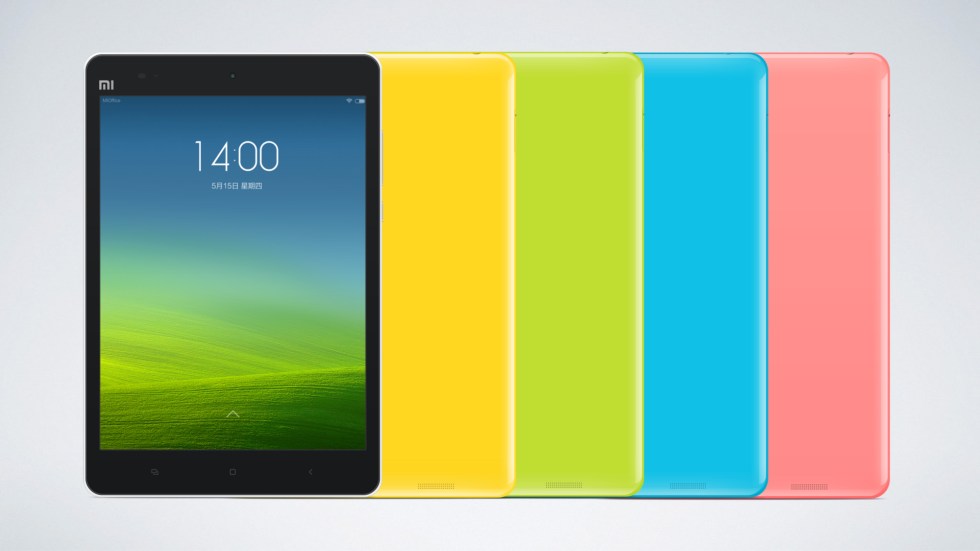 Xiaomi introduced a slew of products in Beijing yesterday and one that really stood out was Mi Pad, it first tablet powered by the ultra-fast NVIDIA Tegra K1 mobile processor.
Sporting a 7.9-inch display with 2,048 x 1,536 resolution, this tablet comes with very long battery life — its 6700 mAh battery is good for up to 1300 hours of standby time or 11 hours of video streaming. It features 8MP rear and 5MP front cameras, 2GB of RAM, and 16GB or 64GB of built-in memory. If more storage is needed, there’s a microSD slot.
What’s amazing is under the hood. Powering the Mi Pad is the 192-core NVIDIA Tegra K1 mobile processor, which is based on the parallel processing GPU architecture found in the world’s most powerful supercomputers.
The Asia/Pacific (excluding Japan) PC market declined eight percent sequentially and 11 percent year-on-year in 2014 Q1 to reach 23.8 million units, according to preliminary results from IDC.
Elections in some of the bigger markets contributed to the region’s overall decline. In India, an ongoing large education project was postponed due to the upcoming elections, shaving off about half a million units from the commercial PC segment. In Thailand, political unrest continued to have an adverse impact on the economy, while in Indonesia, government funds were diverted in the run-up to the elections, resulting in lower commercial spending in PCs there this quarter.
“However, as these markets stabilise after the elections, IDC expects commercial activity to resume in the second half as a result of pent-up demand,” said Handoko Andi, Research Manager for Client Devices of IDC Asia/Pacific. “On the consumer side, ongoing distractions from smartphones and tablets as well as cautious channel intake impacted most markets in the region, especially in Southeast Asia.”
Global PC shipment dipped 1.7 percent to 76.6 million units Q1, compared to the same period last year, according to apreliminary results by Gartner.
“The end of XP support by Microsoft on April 8 has played a role in the easing decline of PC shipments,” said Mikako Kitagawa, Principal Analyst of Gartner. “All regions indicated a positive effect since the end of XP support stimulated the PC refresh of XP systems. Professional desktops, in particular, showed strength in the quarter. Among key countries, Japan was greatly affected by the end of XP support, registering a 35 percent year-over-year increase in PC shipments. The growth was also boosted by sales tax change. We expect the impact of XP migration worldwide to continue throughout 2014.”
“While the PC market remains weak, it is showing signs of improvement compared to last year. The PC professional market generally improved in regions such as EMEA. The US saw the gradual recovery of PC spending as the impact of tablets faded.” said Kitagawa.
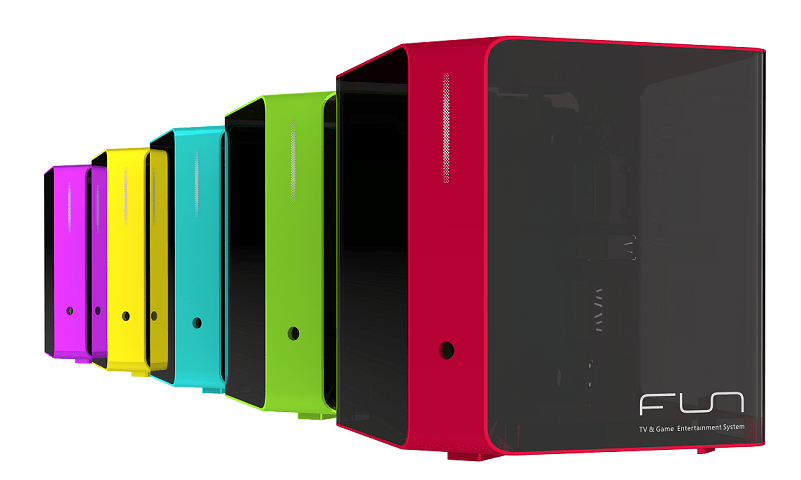 ZTE9 has released FunBox, which is claimed to be the world’s fastest home entertainment console. The console is expected to give consumers and families a unique high-performance all-in-one gaming, video-chatting and online video experience.
FunBox is the fruit of the engineering capabilities of ZTE and the video game development expertise of The9. ZTE9 is a joint venture between ZTE, one of the world’s leading manufacturers of mobile devices, and The9, one of China’s foremost video game companies. Online sales for FunBox will start on JD.com next month, and consumers can choose between 12 different colors.
The console is powered by NVIDIA’s Tegra 4 processor, based on the new A15 architecture, and the superior graphics performance is delivered by a 72-core GeForce graphics processor with 2GB DDR3L memory and 8GB of Flash memory.
NVIDIA has boosted its Tegra Note 7 with the i500 LTE modem – and its 4G LTE cellular connection. The seven-inch tablet is available with LTE and HSPA+ mobile connectivity and can operate on popular carriers across […]
The Asia/Pacific (excluding Japan) PC market declined 10 percent in 2013 to reach 108 million units, according to preliminary results from IDC.
The economic sluggishness in big emerging markets in the region adversely affected buying sentiments, with education sector projects being a lone bright spot in the commercial space, without which the region could have dropped even further. On the consumer side, smartphone and tablet distractions spread throughout the region this year, further contributing to the sharp decline in the PC market.
In Q4, the market came in two percent below IDC’s initial forecasts with a nine percent year-on-year decline. While most of the region was generally in line with forecasts, Thailand stood out as an exception, as the market there was plagued by the ongoing political turmoil. Shipment volumes this quarter will likely be the lowest in Thailand in the last four years.
Global mobile Internet service revenue grew an estimated 23.4 percent to US$300 billion last year, according to ABI Research. Wireless broadband subscription grew 28.8 percent and the smartphone share of total subscriptions advanced by 6.6 […]
 ZTE’s boutique smartphone brand nubia has received 2.5 million orders for the Z5S and Z5S mini on JD.com as consumers in China.
The response to Z5S, priced at RMB1,999, and Z5S mini, priced at RMB1,499, surpassed a sales record previously set by Xiaomi. The two new smartphones were designed using consumer feedback garnered by nubia and JD.com in a C2B (consumer to business) approach to deliver a customer-defined user experience. Z5S and Z5S mini take nubia’s strengths in smartphone photography to a new level, becoming the first phones in China to offer the optical image stabiliser feature.
The new NEOVISION 3.0 system on Z5S and Z5S mini bring the feature of independent white-balance to smartphone users in China for the first time, after nubia pioneered independent focus and independent light-metering. The advanced imaging technology offered on Z5S and Z5S mini have earned the new handsets the moniker of “Single-Lens Reflex (SLR) Smartphones.” In addition, nubia’s industry-leading photography technology is now available for beta downloads (nubia Camera) by users of other handset manufacturers.
The uptake of 4G-LTE is expected to grow to pass one billion by 2017, according to a new study by GSMA Intelligence. This translates to one in eight of the more than eight billion total mobile connections forecast by that point, up from 176 million LTE connections at the end of 2013. And around half of these are expected to be in Asia.
Nearly 500 LTE networks are forecast to be in service across 128 countries, roughly double the number of live LTE networks today.
“Since the launch of the first commercial 4G-LTE networks in late 2009 we are seeing deployments accelerate across the globe,” said Hyunmi Yang, Chief Strategy Officer of GSMA. “Our new report highlights a number of factors that are driving LTE growth: the timely allocation of suitable spectrum to mobile operators; the availability of affordable LTE devices; and the implementation of innovative tariffs that encourage adoption of high-speed data services. Mobile operators in both developed and developing markets are seeing LTE services contributing to a significant increase in ARPU.”
 Entelechy Asia