
Gamers, rejoice! ASUS wants to take gaming experience to “incredible” level with its new lineup of gaming desktop and notebook PCs. Announcing this to a global media gathering at TICC in Taipei, ASUS Chairman Jonney […]
Category: Desktop
ASUS transforms expectations with exciting new products
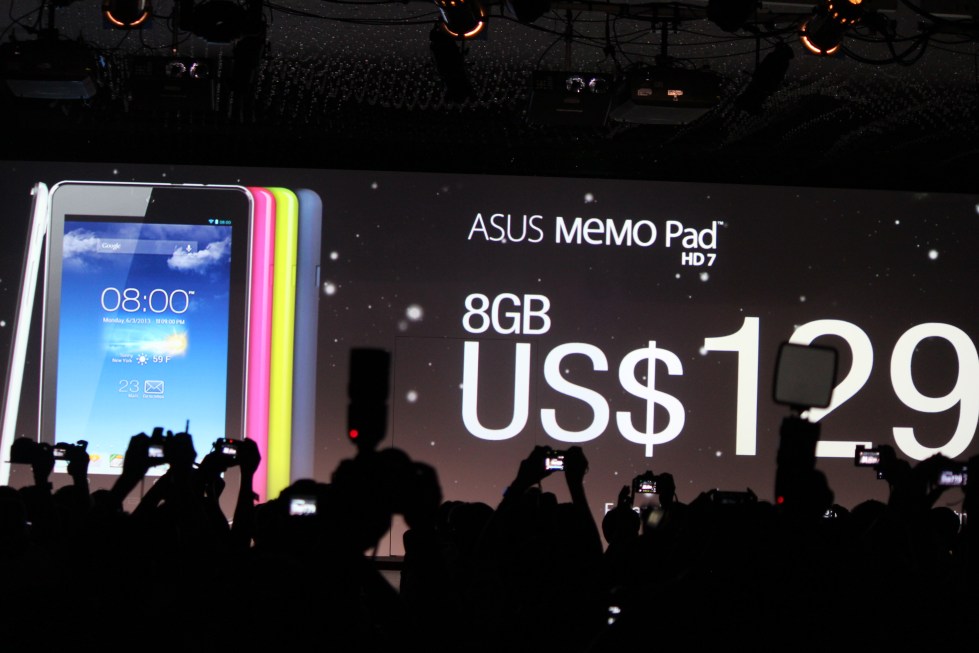 As a prelude to Computex, which starts tomorrow, ASUS has announced a slew of products at a press conference packed with journalists from around the world at Le Meridien Taipei. The products are part of what Chairman Jonney Shih described as “innovations that transform the market”.
The lineup include a powerful tablet, a phablet, a value tablet, a PC with a difference, complete with mouse and router, an all-in-one PC.
First up is the ASUS Transformer Pad Infinity, the world’s first NVIDIA Tegra 4-powered tablet.
NVIDIA adds GeForce GTX 770 to its lineup
 Just a week after launching its top-of-the-line GeForce GTX 780, NVIDIA has added a scaled-down sibling to its impressive lineup of GPUs based on the award-winning NVIDIA Kepler architecture.
Priced at US$399, the new NVIDIA GeForce GTX 770 GPU joins the GTX TITAN and the GTX 780 in delivering superior gaming performance, advanced features, and silky smooth frame rates for unsurpassed high-definition PC gaming.
“Only NVIDIA GPUs consistently provide gamers with the ability to achieve extremely fast frame rates at high-definition resolutions with all of the eye candy turned on,” said Scott Herkelman, General Manager of the GeForce GPU business at NVIDIA. “The GeForce GTX 770 represents a new threshold of performance and features for under US$400 and our commitment to PC gaming is why GeForce GPUs continue to be the No. 1 choice of gamers worldwide.”
Tablets to outship portable PCs in 2013
 Low-cost Android-based devices are fueling growth in the tablet market, which, in turn, is predicted to outstrip portable PC shipment this year.
According to IDC’s Worldwide Quarterly Tablet Tracker, the worldwide average selling price (ASP) for tablets is expected to decline -10.8 percent to US$381 this year. In comparison, the ASP of a PC in 2013 is nearly double that at US$635.
IDC expects tablet prices to decline further, which will allow vendors to deliver a viable computing experience into the hands of many more people at price points the PC industry has strived to meet for years.
NVIDIA GeForce GTX 780 new king of single GPU cards
Just three months after it introduced the NVIDIA GeForce GTX TITAN, NVIDIA has rolled out another top of the line graphics card. The NVIDIA GeForce GTX 780 GPU is designed to deliver great performance for […]
NVIDIA GRID unleashes graphics for virtualised desktops
 NVIDIA has unleashed the full graphics potential of enterprise desktop virtualisation with the availability of NVIDIA GRID vGPU integrated into Citrix XenDesktop 7.
NVIDIA GRID vGPU technology addresses a challenge that has grown in recent years with the rise of employees using their own notebooks and portable devices for work. These workers have increasingly relied on desktop virtualisation technologies for anytime access to computing resources, but until now this was generally used for the more standard enterprise applications. Performance and compatibility constraints had made it difficult for applications such as building information management (BIM), product-lifecycle management (PLM) and video-photo editing.
Two decades ago, hardware-based graphics replaced software emulation. Desktop virtualisation solutions stood alone as the only modern computing form without dedicated graphics hardware. As a result, an already busy virtualised CPU limited performance and software emulation hampered application compatibility.
Gartner: India IT infrastructure spending to reach US$2.3b by 2014
 The Indian IT infrastructure market, comprising of server, storage and networking equipment, will hit US$2.1 billion this year, growing 9.7 percent compared to 2012, according to Gartner.
“Despite global economic challenges, India provides strong growth opportunities across segments including infrastructure. Infrastructure alone is expected to surpass US$2.9 billion in 2017,” said Naveen Mishra, Research Director at Gartner. “The Nexus of Forces – big data, cloud, social and mobility – are finding real-time business driven use cases which is bringing a paradigm shift in the way IT is delivering business impact and hence, changing the role of an Indian CIO.”
The Indian IT infrastructure market is driven by hardware refresh, optimisation and consolidation efforts. New data centre build out, primarily driven by service providers, is providing added impetus to this market.
NVIDIA and HP deliver unprecedented workstation capabilities to professionals
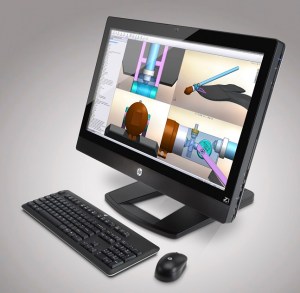 NVIDIA and HP are meeting the demanding needs of professionals with a range of NVIDIA® Quadro® professional graphics products powering HP Workstations, including the market’s first 27-inch all-in-one HP Z1 Workstation and the HP Z820 Workstation, showcased to editors from around Southeast Asia at the NVIDIA Quadro Day in Kuala Lumpur on April 26.
Built on the NVIDIA Kepler™ architecture, the NVIDIA Quadro lineup offers unprecedented workstation performance and capabilities for professionals in manufacturing, engineering, medical, architectural, and media and entertainment companies. The dual-socket HP Z820 Workstation leverages the power of NVIDIA Quadro graphics to deliver exceptional performance in an expandable chassis, while the HP Z1 offers blazingly fast rendering and interactive performance, enabling digital artists to spend more time being creative.
“NVIDIA closely collaborates with technology providers like HP and with ISVs, so professionals can enjoy outstanding performance with CAD and DCC applications,” said Sandeep Gupte, senior director of the Professional Solutions Group at NVIDIA. “With NVIDIA Quadro, professionals have a choice that is stable, reliable and affordable – that’s why it powers a vast range of consumer product design.”
IDC: Indonesia a growing market despite global PC slump
 Despite the reported decline of PC shipment globally, IDC believes that Indonesia will grow slightly in the coming years.
According to IDC WW Smart Connected Devices (PC) tracker, the trend of the PC market is moving towards flat to negative growth in China, India, and ASEAN.
“While the slowdown is a global phenomenon we have to accept as fact, it does not necessarily signal the beginning of the end for the PC market in Indonesia,” noted Wilhendra Akmam, Research Manager at IDC Indonesia.
Transforming computing experiences from the device to the cloud
 Intel has announced new technologies and partnerships aimed at transforming how people experience technology from the device to the cloud. The announcements at the Intel Developer Forum (IDF) included details on new data centre product lines based on the 22-nanometer (nm) process technology and the new Intel rack scale architecture, along with details on the forthcoming 4th generation Intel Core processor family.
During her keynote, Diane Bryant, Intel Senior Vice President and General Manager of the Datacentre and Connected Systems Group, underscored the importance of the data centre in enabling amazing personal computing experiences to deliver real-time information and services. She also outlined the steps Intel is taking to provide the hardware and software needed for data analytics to improve the capabilities of intelligent devices and data center infrastructure.
“People are increasingly demanding more from their devices through applications and services whether at home, at work or wherever they may be,” Bryant said. “Intel is delivering a powerful portfolio of hardware and software computing technologies from the device to the data center that can improve experiences and enable new services.”
Gartner: 2.4b PCs, tablets and mobile phones to ship in 2013
 Worldwide shipment of PCs, tablets and mobile phones are expected to top 2.4 billion units in 2013, a 9 percent increase from 2012, according to Gartner. Device shipments are predicted to reach more than 2.9 billion units in 2017. However, the mix of these devices will significantly change over the forecast period.
The proliferation of lower-priced tablets and their growing capability is accelerating the shift from PCs to tablets.
“While there will be some individuals who retain both a personal PC and a tablet, especially those who use either or both for work and play, most will be satisfied with the experience they get from a tablet as their main computing device,” said Carolina Milanesi, Research Vice President at Gartner. “As consumers shift their time away from their PC to tablets and smartphones, they will no longer see their PC as a device that they need to replace on a regular basis.”
BOOST hits the sweet spot
 What’s the sweet spot in pricing for gamers looking for a graphics card to play this year’s hottest games? While those who are more financially endowed will go for the highest end cards, such as the NVIDIA GeForce GTX 680 or 690, NVIDIA believes that most mainstream gamers are prepared to fork out around US$169.
Putting this belief into action, the company has just launched the NVIDIA GeForce GTX 650 Ti BOOST GPU, which is based on the NVIDIA Kepler architecture and equipped with 768 NVIDIA CUDA cores. This new product is available in two flavours – the 2GB version for US$169 and the 1GB configuration for US$149.
This introduction has led to a revision of pricing for other NVIDIA cards with the entry level
- GeForce GTX 650 going at US$109 and the
- GeForce GTX 650 Ti now priced at US$129.
NVIDIA unveils visual computing appliance

NVIDIA has introduced the industry’s first visual computing appliance that enables businesses to deliver ultra-fast GPU performance to any Windows, Linux or Mac client on their network.
The NVIDIA GRID Visual Computing Appliance (VCA) is a powerful GPU-based system that runs complex applications such as those from Adobe Systems, Autodesk and Dassault Systèmes, and sends their graphics output over the network to be displayed on a client computer. This remote GPU acceleration gives users the same rich graphics experience they would get from an expensive, dedicated PC under their desk.
NVIDIA GRID VCA provides enormous flexibility to small and medium-size businesses with limited IT infrastructures. Their employees can, through the simple click of an icon, create a virtual machine called a workspace. These workspaces – which are, effectively, dedicated, high-performance GPU-based systems – can be added, deleted or reallocated as needed.
New NVIDIA Quadro cards offer unprecedented performance
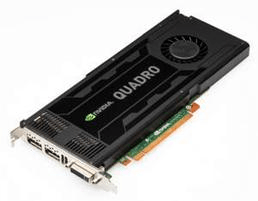 A new range of NVIDIA Quadro professional graphics products offers unprecedented workstation performance and capabilities for professionals in manufacturing, engineering, medical, architectural, and media and entertainment companies.
Built on the ultra-efficient processing power of the NVIDIA Kepler architecture – the world’s fastest, most efficient GPU architecture – the new lineup includes:
- NVIDIA Quadro K4000 – A high-end card that delivers blazing-fast performance for graphics-intensive applications. Has 3 GB of onboard memory, multi-monitor support and stereo capability in a single-slot configuration.
- NVIDIA Quadro K2000 – A midrange card that offers outstanding performance with a broad range of professional applications. Comes with 2 GB of onboard memory to hold large models and multi-monitor support for enhanced desktop productivity.
- NVIDIA Quadro K2000D – A variant of the Quadro K2000, with native support for two dual-link DVI display connectors for interfacing with ultra-high-resolution medical imaging displays.
- NVIDIA Quadro K600 – An entry-level card with great performance and certifications for leading professional applications. Equipped with 1 GB of onboard memory, comes in a low-profile design for maximum usage flexibility.
Intel accelerates mobile computing push
 Intel Corporation has announced a range of new products, including a new dual-core Atom SoC (“Clover Trail+”) platform for smartphones and Android tablets, and its first global, multimode-multiband LTE solution that will ship in the first half of this year.
Other disclosures included “Bay Trail” momentum, mobile device enabling efforts, and continued smartphone momentum in emerging markets with the Intel Atom Z2420 processor-based platform.
“Today’s announcements build on Intel’s growing device portfolio across a range of mobile market segments,” said Hermann Eul, Intel Vice President and co-General Manager of the Mobile and Communications Group. “In less than a year’s time, we have worked closely with our customers to bring Intel-based smartphones to market in more than 20 countries around the world, and have also delivered an industry-leading low-power Atom SoC tablet solution running Windows 8, and shipping with leading OEM customers today. Looking forward, we will build upon this foundation and work closely with our ecosystem partners, across operating systems, to deliver the best mobile products and experiences for consumers with Intel Inside.”
NVIDIA unleashes GeForce GTX TITAN
The power of supercomputing brought to the desktop. That’s what NVIDIA has done with the introduction of the GeForce GTX TITAN. Powered by the fastest GPU on the planet, it is designed to unleash the world’s fastest gaming PCs including personal gaming supercomputers and svelte, quiet, small form-factor PCs.
GeForce GTX TITAN is built with the same NVIDIA Kepler architecture that powers Oak Ridge National Laboratory’s newly launched Titan supercomputer, which tops the list of the Top 500 supercomputers in the world.
By harnessing the power of three GeForce GTX TITAN GPUs simultaneously in three-way SLI mode, gamers can max out every visual setting without fear of a meltdown while playing any of the most demanding PC gaming titles.
Fix to hacked Yahoo! email accounts
Many Yahoo! email accounts were compromised recently. The hacked accounts were sending out email messages with links to sites in Germany. A quick fix for those affected is to change your password immediately.
NVIDIA reports record US$4.28 billion revenue for FY13
 NVIDIA has reported revenue for fiscal 2013 ended January 27, 2013, of a record $4.28 billion, up 7.1 percent from $4.00 billion in fiscal 2012.
GAAP earnings per share for the year were $0.90 per diluted share, a decrease of 4.3 percent from $0.94 in fiscal 2012. Non-GAAP earnings per diluted share were $1.17, down 1.7 percent from $1.19 in fiscal 2012. During the quarter, NVIDIA repurchased $100.0 million of stock and paid a dividend of $0.075 per share, equivalent to $46.9 million.
“This year we did the best work in our company’s history,” said Jen-Hsun Huang, president and chief executive officer of NVIDIA. “We achieved record revenues, margins and cash, despite significant market headwinds.
Samsung opens first Partner Shop in Macau
 Samsung opened its first Partner Shop in Macau today. Located at No. 63-65 on Avenida do Infante D. Henrique, the stylish and modern shop aims to provide every visitor with the best quality of customer service with unexpected personalised experience.
“As the world leader in consumer electronics and information technology, Samsung is dedicated to introducing innovative products with diversified features and functions to meet customer needs. Further to the launch of two Samsung Partner Shops in Hong Kong last year, Samsung continues to expand its business by launching the first Samsung Partner Shop in Macau,” said Lawrence Chow, Chief Marketing Officer of Samsung Electronics Hong Kong.
Adjacent to various scenic spots, the shop is a one-minute walk from Senado Square and two-minute walk from Grand Lisboa Hotel. With everything under one roof, it lets visitors experience Samsung’s innovative technology and modern digital living.
The making of Project SHIELD
NVIDIA’s Project SHIELD attracted much attention when demonstrated by CEO Jen-Hsun Huang at CES 2013. The gaming portable for open platforms aims to revolutionise the way people play games. The concept had been brewing at NVIDIA […]
Nanyang Technological University becomes Southeast Asia’s first CUDA Teaching Center
 NVIDIA has appointed Nanyang Technological University as the first Southeast Asia CUDA Teaching Center (CTC).
The CUDA Teaching Center Program is designed to support and encourage teaching establishments to include GPU Computing using CUDA C/C++ as part of their course offerings.
Under the program, NVIDIA will donate CUDA enabled GPUs to be installed in teaching lab computers at NTU’s School of Computer Engineering. Students and other members of the university community will have direct access to CUDA enabled systems for hands-on experience of CUDA C/C++ development, debugging and experimentation.
Intel revenue dips slightly in 2012
Intel has reported full-year revenue of $53.3 billion in 2012, down 1.2 percent from 2011. Operating income was $14.6 billion (down 16 percent) while net income was $11.0 billion (down 15 percent).
The company generated about $18.9 billion in cash from operations, paid dividends of $4.4 billion, and used $4.8 billion to repurchase 191 million shares of stock.
For the fourth quarter, Intel posted revenue of $13.5 billion, operating income of $3.2 billion, net income of $2.5 billion and EPS of 48 cents. The company generated about $6 billion in cash from operations, paid dividends of $1.1 billion and used $1.0 billion to repurchase 47 million shares of stock.
Gartner: Declining worldwide PC shipments in Q4 of 2012 signal structural shift
Worldwide PC shipments totaled 90.3 million units in the fourth quarter of 2012, a 4.9 percent decline from the fourth quarter of 2011, according to preliminary results by Gartner. Analysts said the PC industry’s problems point to something beyond a weak economy.
PC shipments in Asia/Pacific totalled 29.9 million units in the fourth quarter of 2012, a 1.8 percent decline from the fourth quarter of 2011. Vendors struggled to offer compelling products to convince buyers to upgrade and attract new buyers as consumers’ interest continues to be on smartphones and tablets. The introduction of Windows 8 met with lukewarm response and availability was primarily on the higher-end models, which were priced beyond the mainstream price point for volume sales.
“Tablets have dramatically changed the device landscape for PCs, not so much by ‘cannibalizing’ PC sales, but by causing PC users to shift consumption to tablets rather than replacing older PCs,” said Mikako Kitagawa, principal analyst at Gartner. “Whereas as once we imagined a world in which individual users would have both a PC and a tablet as personal devices, we increasingly suspect that most individuals will shift consumption activity to a personal tablet, and perform creative and administrative tasks on a shared PC. There will be some individuals who retain both, but we believe they will be exception and not the norm. Therefore, we hypothesise that buyers will not replace secondary PCs in the household, instead allowing them to age out and shifting consumption to a tablet.”
NVIDIA untethers gaming with Project SHIELD

NVIDIA has announced Project SHIELD, a gaming portable for open platforms, designed for gamers who yearn to play when, where and how they want.
Created with the philosophy that gaming should be open and flexible, Project SHIELD flawlessly plays both Android and PC titles. As a pure Android device, it gives access to any game on Google Play. And as a wireless receiver and controller, it can stream games from a PC powered by NVIDIA® GeForce GTX GPUs, accessing titles on its STEAM game library from anywhere in the home.
“Project SHIELD was created by NVIDIA engineers who love to game and imagined a new way to play,” said Jen-Hsun Huang, co-founder and chief executive officer at NVIDIA. “We were inspired by a vision that the rise of mobile and cloud technologies will free us from our boxes, letting us game anywhere, on any screen. We imagined a device that would do for games what the iPod and Kindle have done for music and books, letting us play in a cool new way. We hope other gamers love SHIELD as much as we do.”
Project SHIELD combines the advanced processing power of NVIDIA Tegra 4, breakthrough game-speed Wi-Fi technology and stunning HD video and audio built into a console-grade controller. It can be used to play on its own integrated screen or on a big screen, and on the couch or on the go.
Leading cloud gaming pioneers adopt NVIDIA GRID platform
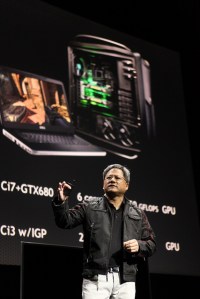
Six leading international cloud-gaming companies plan to use the NVIDIA GRID Cloud Gaming Platform to deliver gaming services to global broadband companies.
The NVIDIA GRID Platform enables the smooth, seamless interactive experience of a high-performance gaming PC anywhere, on any screen – including smart TVs, PCs, tablets and smartphones.
NVIDIA GRID is a server designed to concurrently serve up to 36 times more HD-quality game streams than first-generation cloud-gaming systems, while reducing lag. It is fully integrated with a high density of NVIDIA® GPUs, specialised graphics-application streaming software and NVIDIA® VGX™ Hypervisor technology, which allows multiple users to share a GPU.
Initial partners on the NVIDIA GRID Platform include Agawi (United States); Cloud Union (China); Cyber Cloud Technologies (China); G-cluster Global (Japan); Playcast Media Systems (Israel); and Ubitus (Taiwan).
Gartner: Worldwide IT spending to reach US$3.7 trillion in 2013
Worldwide IT spending is projected to total US$3.7 trillion in 2013, a 4.2 percent increase from 2012 spending of $3.6 trillion, according to the latest forecast by Gartner. The 2013 outlook for IT spending growth has been revised upward from 3.8 percent in the 3Q12 forecast.
Gartner analysts said much of this spending increase is the result from projected gains in the value of foreign currencies versus the US dollar. When measured in constant dollars, 2013 spending growth is forecast to be 3.9 percent.
The Gartner Worldwide IT Spending Forecast is the leading indicator of major technology trends across the hardware, software, IT services and telecom markets. For more than a decade, global IT and business executives have been using these highly anticipated quarterly reports to recognize market opportunities and challenges, and base their critical business decisions on proven methodologies rather than guesswork.
Gartner’s Top 5 IT predictions for China in 2013 and beyond
Gartner has published its top five IT predictions for China in 2013 and beyond, as China’s IT market undergoes major transformation, especially in cloud and mobility. Analysts said that although China’s IT market has similarities with the global IT market, it also faces challenges and opportunities that are very specific to the Chinese marketplace.
Enterprise spending on IT in China is forecast to grow from US$117.8 billion in 2013 to reach $172.4 billion in 2016, representing a compound annual growth rate of 8 percent, compared to a global growth rate of 3 percent over the same period, according to Gartner.
“In common with many emerging markets, cloud and mobile initiatives are hot and enterprises are also making progress in adopting virtualisation technologies, a key stepping stone in the journey to cloud,” said Matthew Cheung, principal research analyst at Gartner. “Without the legacy systems that hamper many western enterprises, Chinese organisations have an opportunity to leapfrog in the adoption of new technologies. However, the current hype around cloud could also result in its failure to live up to market expectation in a few years time. In mobility, China is a market characterised by strong local flavors, especially in the fast growing smartphone and tablet markets.”
Gartner predictions for IT organisations and users for 2013 and beyond
Gartner has revealed its top predictions for IT organisations and IT users for 2013 and beyond.
Gartner’s top predictions focus on economic risks, opportunities and innovations that will impel CIOs to move to the next generation of business-driven solutions. Selected from across Gartner’s research areas as the most compelling and critical predictions, they address the trends and topics that underline the reduction of control that IT has over the forces that affect it.
“The priorities of CEOs must be dealt with by CIOs who exist in a still-turbulent economy and increasingly uncertain technology future,” said Daryl Plummer, Managing Vice President and Gartner Fellow. “As consumerisation takes hold and the Nexus of Forces drives CEOs to certain expectations, CIOs must still provide reliability, serviceability and availability of systems and services. Their priorities must span multiple areas. As the world of IT moves forward, it is finding that it must coordinate activities in a much wider scope than it once controlled, and as a result, a loss of control echoes through several predictions we are making.”
Copyright hindering democratisation of 3D

Increasing power of GPUs is enabling designers to create 3D models quicker and in greater detail. Such additional details may include specific models of cars, cameras or other products instead of just generic models. This should pave the way towards democratisation of 3D.
However, a major barrier can halt this progress.
While creating a specific product is now easier, using that created model may be a challenge. Standing in the way are copyright laws and more importantly, copyright owners.
“Copyright owners own the right to models of their products. They can decide whether users can use or should remove 3D models of their products. Users need to seek permission to use such models,” said Gavin Greenwalt, Senior Artist of Straightface Studios.
Khronos updates OpenCL 1.2 specification
 The Knronos Group has announced the ratification and public release of an update to the OpenCL 1.2 specification, the open, royalty-free standard for cross-platform, parallel programming of modern processors. This backwards compatible version updates the core OpenCL 1.2 specification with bug fixes and clarifications and defines additional optional extensions for enhanced performance, functionality and robustness for parallel programming on a wide variety of platforms. Optional extensions are not required to be supported by a conformant OpenCL implementation, but are expected to be widely available; they define functionality that is likely to move into the required feature set in a future revision of the OpenCL specification. The updated OpenCL 1.2 specifications, together with online reference pages and reference cards, are available at www.khronos.org/opencl/.
“The OpenCL working group continues to listen closely to the demands of the developer community, and this update provides a timely increase in functionality and reliability of code ported across vendor implementations,” said Neil Trevett, chair of the OpenCL working group, president of the Khronos Group and vice president of mobile content at NVIDIA. “The new extensions enable early access to functionality for key use cases, including security capabilities for implementations of WebCL that enable access to OpenCL within a browser.”
Gartner: Worldwide server shipments up 3.6%, revenue down 2.8%
 In the third quarter of 2012 worldwide server shipments grew 3.6 percent year-on-year, while revenue decreased 2.8 from the third quarter of 2011, according to Gartner, Inc.
“The third quarter of 2012 again produced shipment growth on a worldwide level, but server revenue was weak due to ongoing economic weakness and market segment differences,” said Jeffrey Hewitt, research vice president at Gartner. “Only the North America and Asia/Pacific regions managed any revenue growth, and even those were essentially flat year to year, with North America showing a 1.1 percent increase and Asia/Pacific a 0.7 percent increase. The picture in terms of shipments was slightly more positive with North America, Latin America and Asia/Pacific all growing, but both EMEA and Japan continue to struggle and both saw shipments contract, compared to the same period last year.”
Rhythm & Hues makes skies soar with NVIDIA GPUs in Life of Pi
 Global visual effects giant Rhythm & Hues (R&H) recently completed the lion’s share of visual effects shots on the acclaimed new film, “Life of Pi,” leveraging NVIDIA GPUs to maximize throughput and accelerate creative workflows. “Life of Pi,” from Academy Award-winning director Ang Lee, tapped legions of R&H artists at offices in Los Angeles, India, Kuala Lumpur, Vancouver, and Taiwan to create several hundred visual effects shots in stereo 3D that included the Bengal tiger, digitally recreated water and skies, Meerkat Island and myriad additional creatures and effects.
R&H is known for its custom development of proprietary visual effects tools, many of which are written specifically for the GPU. One of those tools, dubbed Rampage, was particularly instrumental in achieving the remarkable skies that set the tone in this tale of an Indian zookeeper’s son named Pi, shipwrecked with a Bengal tiger and adrift in the Pacific Ocean.
Atomic makes last stand alone
 Atomic, an Australian technology magazine targeted at PC enthusiasts, has just breathed its last — as a standalone publication. From the February issue, it will be merged with PC & Tech Authority (PC&TA).
“With the media landscape shifting at such a fast pace, we felt it was vital that we prepare for the future by pouring all of our resources into one overriding consumer tech brand. It gives the team focus and allows us to invest in areas that deliver expert content, while creating a stronger footing in the consumer tech market,” said Jeremy Vaughan, Managing Director of Haymarket Media.
Going forward, PC & Tech Authority will be carry more than 16 pages on PC component reviews and gaming content.
Evolution of IT shows
SITEX has just started in Singapore and crowds are expected to throng the halls at Singapore Expo for bargains — just like they did three previous times this year. Singapore has four major IT shows […]
Mugshot: Data General
Minicomputers used to be hot — really hot — from the late 1960s to the early 1990s. And one of the leading players then was Data General. Unfortunately, the emergence of the microcomputer led to […]
Mugshot: HP and Apple
HP and printers are synonymous. For more than two decades, HP has been producing and delivering award winning printers — both inkjet and laser. Today, it carries many models that give companies more than just […]
User guide, anyone?
Buy any (or at least most) product and you will get a user guide. In the past, this is something that people will pour over diligently to learn how to use the product. When they […]
AMD fights on amidst the rumbles
What happened to AMD? Sean Hollister of The Verge asks this pointed question as he analyses development at the chipmaker in recent years. Fighting the behemoth that is Intel, AMD had done well to carve a […]
Fencing your desktop
Saving files on the desktop is supposed to make files easy to access without having to go through multiple clicks. However, if left unattended, this can lead to clutter and finding files may just be […]
NVIDIA releases new drivers
NVIDIA released a new set of GeForce drivers optimized for Call of Duty: Black Ops 2 and Assassin’s Creed III. This beta driver is up to 26% faster than the current driver in Call of Duty: […]
GPU Accelerators support enable faster simulations
Seventy more widely used applications have added support for GPU acceleration so far this year, bringing the total number available to researchers, engineers and designers to more than 200, according to NVIDIA. Three of the newest applications to […]
Gartner: Asia Pacific IT spending to reach US$743 billion in 2013
IT spending in Asia Pacific is forecast to reach US$743 billion in 2013, an increase of 7.9 percent over 2012, according to Gartner, Inc. In 2012, IT spending in Asia Pacific is on pace to […]
 Entelechy Asia