
BY GRACE CHNG
Over the last 12 to 18 months, the enterprise world has been a hotbed of AI experimentation. Yet, while prototypes abound, many remain stuck in pilot phase because enterprises lack the specialised infrastructure required to properly test and validate their assumptions.
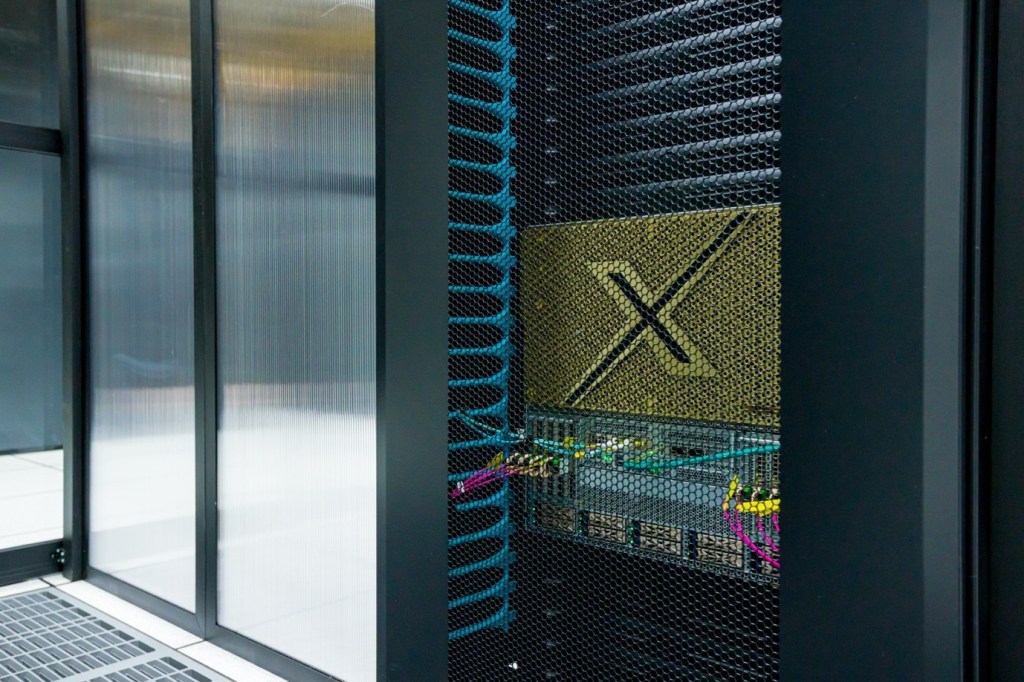
To bridge this gap, STT Global Data Centres and SuperX AI Technology have launched an AI Innovation Centre to help organisations move from AI experimentation to production-ready deployment.
Located within STT’s data centre 5, the Centre provides the high-performance compute power necessary for short-term workloads like proof-of-concepts and model benchmarking. It has already attracted an initial cohort of users tackling complex tasks, including large-scale data simulations and advanced modeling. One notable project involves a collaboration between local scientists and institutions of higher learning to run LLM workloads on dedicated GPU resources.
Launched on April 15, the Centre is built on a secure, enterprise-grade architecture equipped with NVIDIA’s Blackwell GPUs. Crucially for compliance and latency, all workloads remain in Singapore. Through a dedicated portal, teams can rapidly provision standard GPU plans, significantly shortening the path to deployment.
The Centre is currently open to enterprises, regional businesses, and institutions of higher learning. Participants will have a 14-day trial to validate performance, cost, and feasibility. The facility which can host up to eight projects simultaneously, will enable enterprises to launch a pilot in weeks rather than months.
The engagement does not end after the test phase. Chris Street, STT’s Chief Revenue Officer, stressed that the goal is to provide a clear pathway to full production.
“That’s the commercial intent for us,” he noted, adding that once validated, these pilots need a permanent home, as server rooms in typical corporate offices are not equipped to handle the demands of scaled AI.
Lionel Yeo, STT CEO for Southeast Asia, viewed the Singapore launch as just the beginning. The company plans to export this model across Southeast Asia to support customers who have the ambition for AI but lack the roadmap.
“This is the opportunity for us to partner with SuperX to move further up the tech stack,” Yeo said. “We want to help enterprises that don’t know where to start to finally deploy their AI projects.”
The Broader Regional Stakes
The urgency for such facilities is grounded by a stark reality: while 90 per cent of organisations in the region have begun their AI journeys, a staggering 71 per cent remain stalled in the “Building” phase.
These companies are caught in a Catch-22 where they lack the infrastructure to scale promising pilots into production, which in turn prevents them from proving the revenue outcomes needed to secure more budget.
Facilities like the AI Innovation Centre are designed to break this cycle by providing the immediate, high-density compute power that nearly half of surveyed organizations currently lack, said STT GDC Street. He was referencing a newly released report called Mind the Gap: Bridging the AI Infrastructure Readiness Divide, commissioned by STT.
For many enterprises, the traditional 12-to-18-month cycle for building in-house data centres is simply too slow to keep pace with rapid AI hardware evolution. By the time a private server room is ready, the GPUs inside may already be nearing obsolescence.
Shifting to a partnership model allows businesses to reduce their time-to-deployment from over a year to just a few months, effectively offloading the technical deficit to specialists who manage the complex cooling and power requirements AI demands.
Beyond hardware, a significant operations gap is quietly undermining AI ambitions, added Street.
More than half of 600 organisations in the report admit they lack the internal expertise to manage the intricate, high-density environments required for modern AI workloads. Since this specialised talent is in high demand and short supply, leveraging a managed centre provides businesses with an instant operations team. This allows enterprise developers to focus on their models and data science rather than worrying about managing heat loads or orchestrating hybrid cloud environments.
As AI workloads scale, they bring an inevitable surge in power and water consumption, yet only nine per cent of organisations currently prioritise sustainability when choosing an infrastructure partner. Leading enterprises are beginning to realise that designing for sustainability, such as using liquid cooling and renewable energy, is not just an ethical choice but a financial one.
By validating their prototypes in a centre built for efficiency, businesses can avoid the massive costs of retrofitting their own outdated server rooms later, ensuring their AI applications are both environmentally responsible and commercially viable for the long term.

