
Singapore is pushing the boundaries of AI in academia with the National University of Singapore (NUS) unveiling a homegrown conversational platform designed to change how research begins. AI Sense Maker (ASM) positions NUS as the first university in Southeast Asia to develop such a system that enables students and researchers to explore complex topics through natural language instead of traditional keyword searches.
Developed by NUS Libraries and NUS Information Technology (NUS IT), the web-based platform is powered by OpenAI’s large language model and lets users begin research using natural language queries.
Instead of relying on traditional keyword-based searches across multiple databases, ASM interprets intent through semantic search to surface relevant materials, even when terminology differs.
It generates concise summaries, identifies related concepts, curates references for further reading, and builds interactive knowledge graphs to visualise how ideas connect. This approach streamlines early-stage research that reduce the need to manually sift through individual sources.
According to NUS University Librarian Natalie Pang, researchers today are not short of information but they are short of time and clarity. “AI Sense Maker is designed to help people make sense of information, not simply find it. By connecting ideas across trusted sources, it gives students and researchers a more intuitive starting point for deeper inquiry. Rather than replacing critical thinking, it helps people ask better questions, discover new connections and generate fresh insights.”
ASM will launch on August 20 with an initial dataset of 150,000 digitised materials sourced from ScholarBank, NUS’ institutional repository, and Digital Gems, a collection of rare and special materials dating back to the 17th century, with a focus on Southeast Asia.
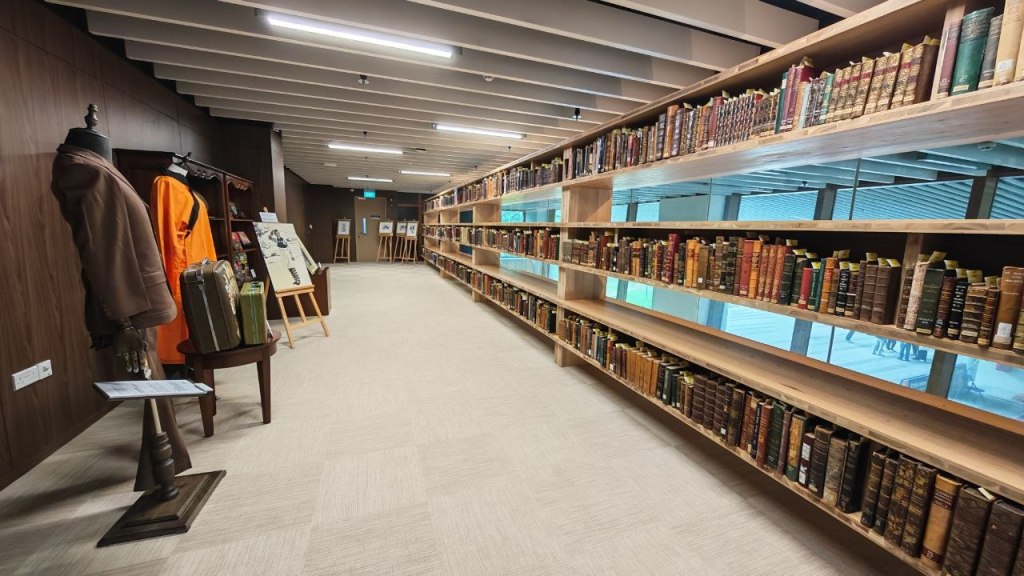
The initiative also complements NUS Libraries’ physical collections, including the BookBridge (top) at the Central Library, which houses more than 3,000 rare books and artefacts.
 Entelechy Asia