
 Adobe and NVIDIA have formed a strategic partnership to rapidly enhance their industry-leading artificial intelligence (AI) and deep learning technologies.
Category: Enterprise
Nyriad and ThinkParQ to certify GPU-accelerated storage
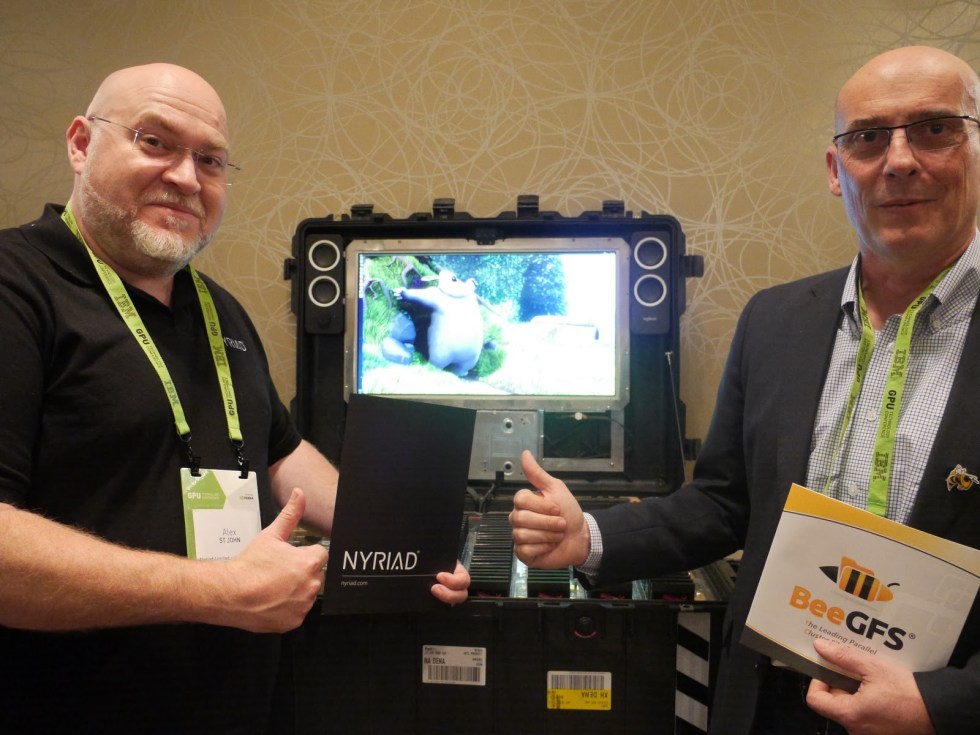 Nyriad and ThinkParQ are partnering to develop a certification programme for high performance, resilient storage systems that combine BeeGFS with NSULATE, Nyriad’s solution for GPU-accelerated storage-processing.
VRgineers ups the notch in enterprise VR
 VRgineers is harnessing the potential of the new NVIDIA Quadro GV100 GPU for its high-resolution virtual reality (VR) headset, enabling even complex 3D scenes, high-poly models and high-resolution textures to perform smoothly at full refresh rates.
Leadtek introduces new entry-level workstation GPU
 Leadtek has released NVIDIA Quadro P620, an entry level professional GPU that gives designers an expansive visual workspace to view all creations in stunning detail.
Project Clara is truly amazing
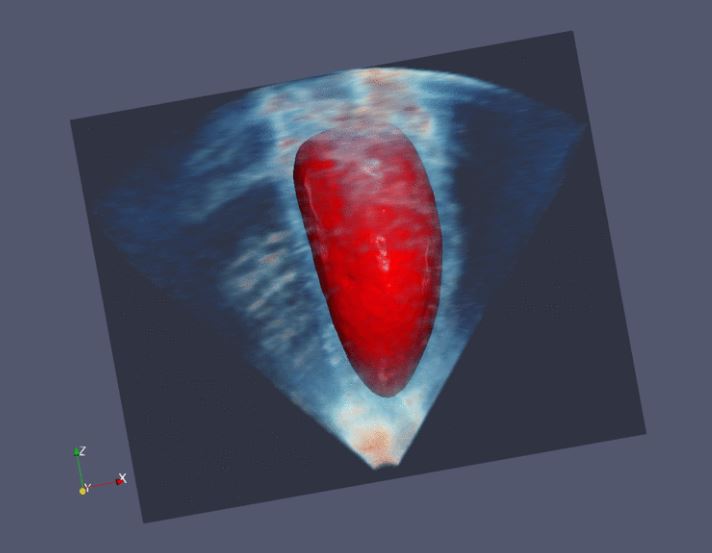 One of the most eye-catching demo during NVIDIA CEO Jensen Huang’s keynote address at GTC 2018 is Project Clara.
NVIDIA DGX-2: Insanely powerful

NVIDIA CEO Jensen Huang (above) dubbed it the “world’s biggest GPU”. And he certainly wasn’t kidding as the NVIDIA DGX-2 is a massive 350-pounder that delivers an amazing two petaflops of computational power.
GTC hits new highs

The GPU Technology Conference (GTC) has hit new highs with a record of more than 8,000 participants, and filling the entire San Jose McEnery Convention Center.
Broadcom’s takeover bid of Qualcomm takes broadside hit
 Singapore-based Broadcom has been dealt a major blow in its takeover bid of Qualcomm. US president Donald Trump has issued an order against the US$117 billion deal.
Xjera Labs zooms in to AI to enhance security

Security is a growing concern among governments and organisations of all sizes. They must balance the need to provide access to the right people while keeping suspicious folks at bay. Any lapse can result in dire consequences that impact confidence in the country or company.
ViSenze takes visual search and image recognition to the next level

Every day, around three billion images and videos are uploaded online, creating a massive need to make them discoverable and searchable.
Emtech Asia: AI, quantum computing and more

Marina Bay Sands Expo and Convention Centre was a hive of activities of a different sort as more than 700 technologists from 21 countries converged for EmTech Asia on January 30 and 31.
Dathena transforms data from liability to asset

It’s been said that more data was generated in 2017 than in the previous 5,000 years. According to Statista, this figure will increase 10 times in less than a decade.
Towards a longer life
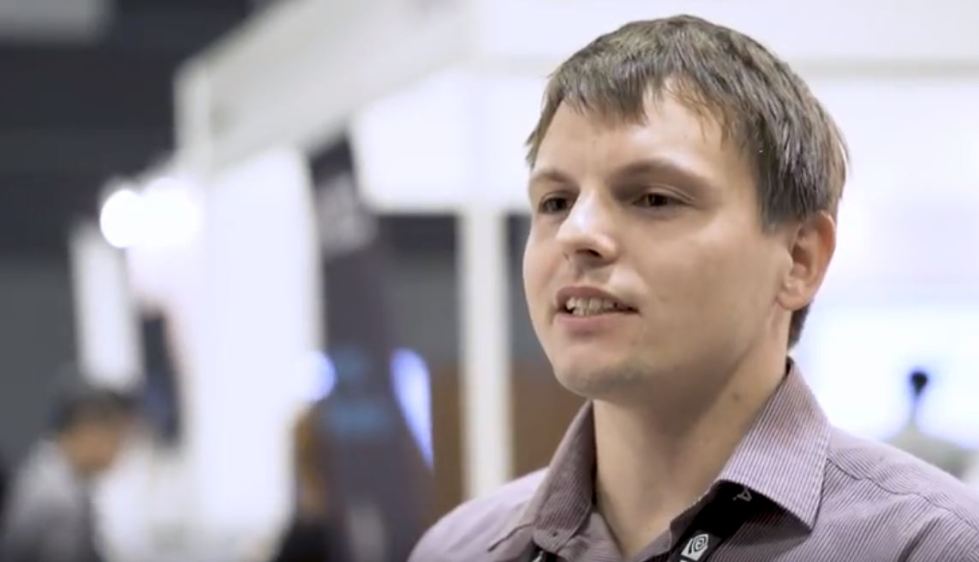
Throughout the ages, men have always been searching for the mythical Fountain of Youth and ways to extend life. Needless to say, many have tried and failed.
SAP to acquire Callidus
 SAP has agreed to acquire Callidus Software for US$2.4 billion.
Alibaba and Google drive SEA transportation initiatives
 Most Southeast Asian capitals and major cities are notorious for its traffic congestion. In separate developments, Alibaba and Google have taken steps to be more involved in the transportation industries in Malaysia and Indonesia respectively.
More analysis than data scientists
 For the past few years, data scientists are highly sought after to analyse data that can help organisations better understand their business, customers and trends. But, it looks like artificial intelligence-based solutions may be taking over that role in the near future.
Mindset change needed for an AI future
 Think artificial intelligence (AI) and the advent of powerful thinking machines and images of Arnold Schwarzenegger of The Terminator come to mind.
Global IT spending to rise to US$3.7t in 2018
Global IT spending is expected to grow to US$3.7 trillion in 2018, an increase of 4.5 percent from 2017, according to Gartner.
Spectre of a Meltdown

In a week where the world’s eyes were supposed to be focusing on the exciting new gadgets and technologies coming out at CES 2018, it was news from past technologies that had the world reeling.
Keysight and SUTD to advance electronic measurement research

Keysight Technologies and Singapore University of Technology and Design (SUTD) have inked a Memorandum of Understanding (MOU) for research collaboration and opened the new Measurement Technologies Laboratory.
AI will create more jobs
One of the biggest fears amid the excitement about artificial intelligence (AI) is the loss of jobs. Many are afraid of being made redundant as AI becomes more pervasive.
NVIDIA Titan V: Not for gamers
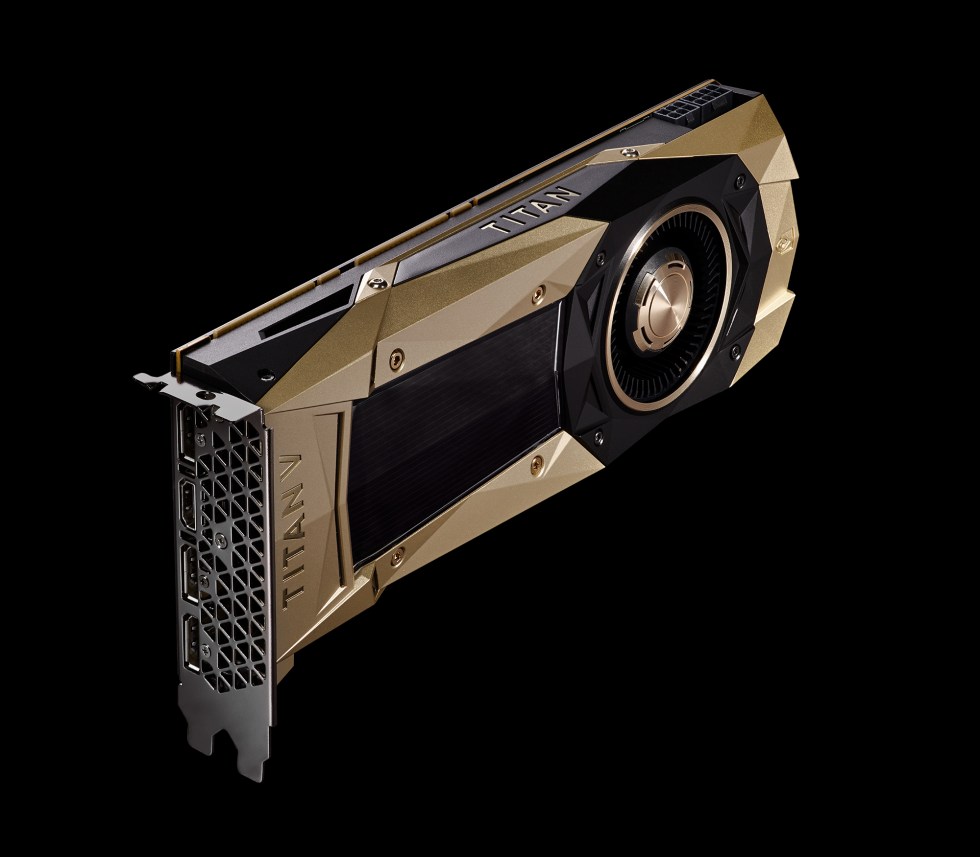
It’s easy to understand why the media and gamers were getting all excited following NVIDIA’s announcement of the Titan V. After all, it’s dubbed as “the world’s most powerful GPU for the PC, driven by the world’s most advanced GPU architecture, NVIDIA Volta”.
Learn robotics at Udacity
 Robotics is no longer just a hobby but serious stuff. NVIDIA’s Deep Learning Institute is now working with online learning provider Udacity to develop a programme that will immerse students in the field of robotics, giving them career-ready skills.
Qualcomm invests in China AI startup SenseTime
 China artificial intelligence (AI) startup SenseTime has signed a strategic investment agreement with Qualcomm.
NVIDIA Tesla V100 gains widespread acceptance
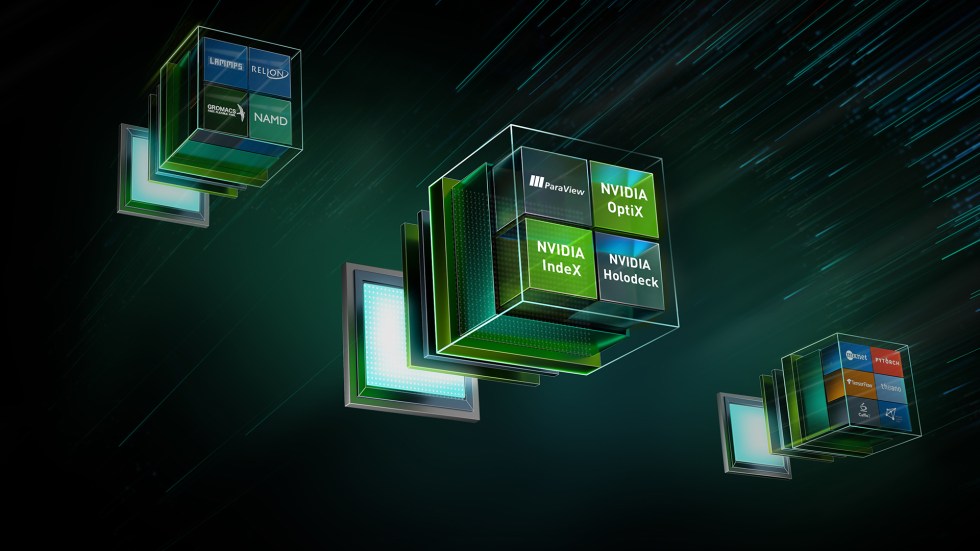
NVIDIA’s Volta architecture is leaving quite an impression. According to a NVIDIA press release issued at SC17, the Volta-based NVIDIA Tesla V100 GPU is available through every major computer maker and chosen by every major cloud to deliver artificial intelligence (AI) and high performance computing.
NVIDIA expands DLI offerings

The need for deep learning skills is increasing as more and more companies and industries hop on the bandwagon. Launch a little more than a year ago, NVIDIA’s Deep Learning Institute (DLI) has already trained tens of thousands of students, developers and data scientists.
And the company is expanding its DLI offerings with:
- New partnerships: Team up with Booz Allen Hamilton and deeplearning.ai to train thousands of students, developers and government specialists in artificial intelligence (AI).
- New University Ambassador Program: Instructors worldwide can teach students critical job skills and practical applications of AI at no cost.
- New courses: More courses are added to teach domain-specific applications of deep learning for finance, natural language processing, robotics, video analytics, and self-driving cars.
Singapore’s AI agenda gets double boost!
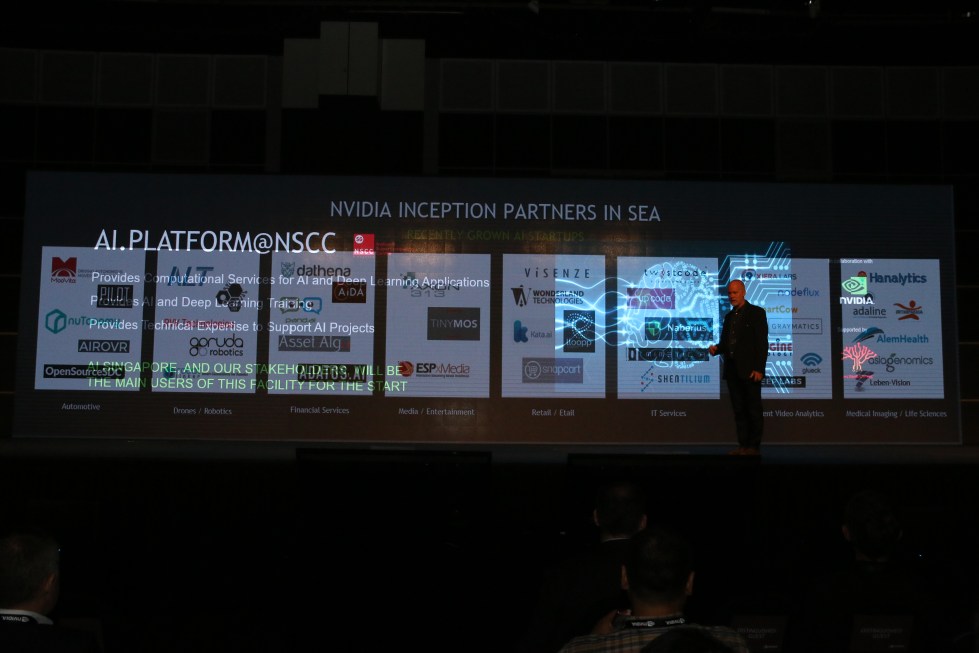
Singapore’s aim to be an artificial intelligence (AI) hub has been boosted with two initiatives — the setting up of a shared AI platform for researchers and the awarding of scholarships to develop AI talents.
At the NVIDIA AI Conference in Singapore yesterday, NVIDIA and Singapore’s National Supercomputing Centre (NSCC) agreed to establish a platform to bolster AI capabilities among its academic, research and industry stakeholders and in support of AI Singapore (AISG), a national programme set up in May to drive AI adoption, research and innovation in Singapore.
Called AI.Platform@NSCC, it will provide AI training, technical expertise and computing services to AISG, which brings together all Singapore-based research and tertiary institutions, including the National University of Singapore (NUS), Nanyang Technological University (NTU), Singapore University of Design and Technology (SUTD), Singapore Management University (SMU), as well as research institutions in the Agency for Science, Technology and Research (A*STAR).
Tantalising line-up of speakers at NVIDIA AI Conference
 More than 1,000 participants attending the NVIDIA AI Conference in Singapore next week are in for a treat as the organisers are bringing in a tantalising line-up of speakers.
The two keynote speakers are Dr David B Kirk, NVIDIA Fellow and inventor of more than 60 patents and patent applications relating to graphics design; and Dr Wanli Min, AI scientist of Alibaba Cloud, who will touch on A Revolutionary Road to Data Intelligence.
Besides these two, there are special guest-of-honour Chng Kai Fong, Managing Director of Singapore’s Economic Development Board, and a panel discussion on AI for the Future of Singapore Economy.
E-commerce to account for a quarter of retail sales by 2025
 Greater internet and mobile device accessibility are driving e-commerce growth in Southeast Asia.
According to ABI Research, Smart Retail has gone through revolutionary changes in the past 10 years and will exponentially continue to do so going forward. Brick and mortar stores are no longer the only option for consumers across the globe to make their everyday purchases, due to significant advancements in technology, both in-store and online.
Key players include Senion, who implements some of the world’s largest Indoor Positioning System (IPS) solutions to enhance in-store experiences, and AisleLabs who provides shopper traffic behavior analytics to help retailers optimise store layouts. Leading POS software vendors, Shopkeep and Square are allowing retailers to sell across multi-channels from a single platform. These and other key vendors are paving paths to making the offline and online worlds seamless experiences.
All 3b Yahoo accounts breached in 2013
This. Is. Serious. Yahoo has revealed that ALL of its three billion user accounts were affected by the August 2013 data theft. The number is three times the one billion accounts that Yahoo said were […]
Changing role of CIO
The role of the CIO is changing, according to a Gartner survey of 3,160 CIO respondents in 98 countries.
The findings revealed that the CIO role is transitioning from delivery executive to business executive, from controlling cost and engineering processes, to driving revenue and exploiting data.
Ninety-five percent of CIOs expect their jobs to change or be remixed due to digitalisation. While world-class IT delivery management is a given, it will take up less and less of the CIO’s time.
Appier appoints Sean Chu as CSO
Appier has appointed Sean Chu as Chief Strategy Officer (CSO) to lead its operations in Japan and Korea. Chu will help drive the company’s growth as it moves to create new AI platforms to help […]
Enterprise wearables to hit 118m units in 2022

Enterprise wearable shipment will reach over 118 million in 2022, increasing from just over 38 million in 2017, a CAGR of 25 percent, according to ABI Research.
The enterprise wearables market is continuing to see stronger growth than the consumer market, which has shipment numbers increasing at a lower CAGR of 13 percent.
Healthcare devices, wearable cameras, and wearable scanners will account for 73 percent of enterprise wearable shipments in 2022. Innovative companies are leading the charge, such as Royole with flexible components, Waverly with real-time translation, and Axon (previously Taser) with wearable cameras.
China’s tech giants bet on NVIDIA Volta
 China’s top technology companies are betting big on the NVIDIA Volta platform.
Alibaba Cloud, Baidu, and Tencent are incorporating NVIDIA Tesla V100 GPU accelerators into their data centres and cloud-service infrastructures to accelerate AI for a broad range of enterprise and consumer applications.
At the heart of the new Volta-based systems is the NVIDIA V100 data centre GPU. Built with 21 billion transistors, it provides a 5x improvement over the preceding NVIDIA Pascal architecture P100 GPU accelerators, while delivering the equivalent performance of 100 CPUs for deep learning. This performance surpasses by 4x the improvements that Moore’s law would have predicted over the same period of time.
Inspur, Lenovo and Huawei are using the NVIDIA HGX reference architecture to offer Volta-based accelerated systems for hyperscale data centres. Using HGX as a starter “recipe,” original equipment manufacturer and original design manufacturer partners can work with NVIDIA to more quickly design and bring to market a wide range of qualified GPU-accelerated AI systems for hyperscale data centres to meet the industry’s growing demand for AI cloud computing.
Dell boosts new SCV3000 series entry storage arrays with enterprise-class features
Dell has extended a full range of enterprise-grade capabilities to its entry-level SC Series offering, providing access to advanced storage technology for businesses of all sizes and budgets. The affordable new Dell SCv3000 arrays complete […]
More NVIDIA GPU offerings on Google Cloud Platform
 Google has expanded its NVIDIA GPU offerings on the Google Cloud Platform. These include:
- Performance boost with the public launch of NVIDIA P100 GPUs in beta
- NVIDIA Tesla K80 GPUs available on Google Compute Engine
- Introduction of sustained use discounts on both the Tesla K80 and P100 GPUs
According to a Google Cloud Platform blog, cloud GPUs can accelerate workloads including machine learning training and inference, geophysical data processing, simulation, seismic analysis, molecular modeling, genomics and many more high performance compute use cases.
HPE to cut 5,000 jobs
Hewlett Packard Enterprise (HPE) plans to shed 10 percent of its workforce, accounting for at least 5,000 workers globally, according to a Bloomberg report. Expected to start before the year end, the move is in […]
Dell and Asus posts solid growth in monitor market in Q2
Dell and Asus are the leading lights in an overall weak PC monitor market in Q2. Total shipment was 28.5 million units in Q2, a 6.4 percent decline from the corresponding period last year, according to […]
NVIDIA to hold first AI-focused conference in Singapore in October
 With artificial intelligence (AI) being a hot topic this year, NVIDIA is organising its first AI-focused regional conference in Singapore on October 23 and 24.
The event will be held in two parts with the first day focusing on Deep Learning Institute (DLI) workshop where participants will received hands-on training on deep learningl and the second day filled with keynote addresses, panel discussion and three tracks. It is targeted at data scientists and senior decision makers in the field of AI in both public and private sectors.
“Singapore is aiming to be the world’s first smart nation and AI is playing a critical role. NVIDIA is well positioned to help drive the government’s Smart Nation initiative with the development of solutions based on AI. Our GPUs are making headlines across the world by enabling many breakthroughs in various industries using deep learning,” said Raymond Teh, Vice President of APAC sales and marketing at NVIDIA.
Australia PC market bucks global trend by inching up 3.3%
 Consumer and enterprise PC purchases are driving growth in the Australia PC market, which includes desktop, notebook and workstation.
The consumer segment grew 8.6 percent year over year (YoY) in Q2, according to IDC.
“The retail channel was negatively impacted by Dick Smith’s exit last year. This year however, promotional events such as Modern PC program run by Harvey Norman spiked growth in the consumer space. AMD’s new Ryzen series launch and EOFY sales further fuelled growth in this segment,” said Sagar Raghavendra, Client Devices Analyst of IDC Australia.
March ending for Google Drive
Google Drive on the PC and Mac will cease to exist in its current form from March 2018. According to a blog post by Google, the app will no longer be supported starting on December […]
Amazon searches for 2nd HQ
Red alert, North America cities. It’s time to dust your red carpet. Amazon is on the hunt for a city to host its second headquarters. The e-commerce giant’s new campus will take up about eight […]
Sun slips into history
Some may have already forgotten about Sun Microsystems, the company that introduced the SPARC processor and developed Java. The once mighty workstation maker was bought by Oracle in 2010. It seems that the last of […]
NVIDIA and Indonesia university set up first AI R&D centre in Jakarta
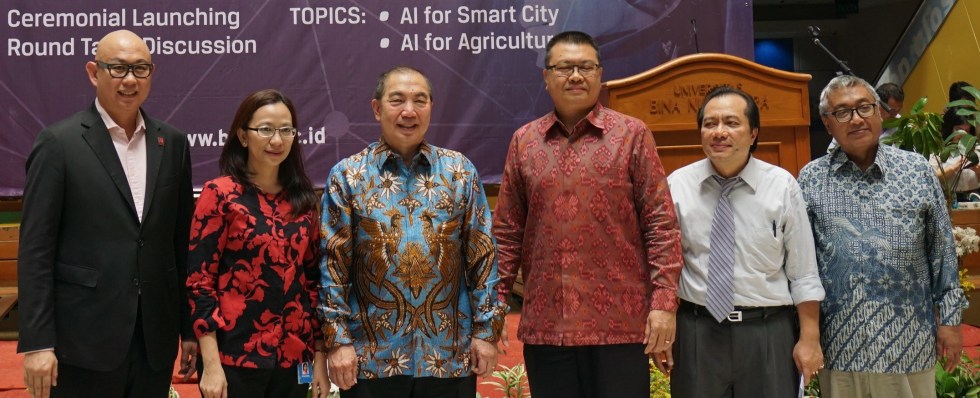
NVIDIA has teamed up with BINUS University and Kinetica to establish the first artificial intelligence (AI) research and development (R&D) centre in Indonesia.
Located at the university’s Anggrek Campus, the centre will support BINUS University’s aim to be the premier R&D hub for Al in Indonesia. Leveraging the power of NVIDIA’s GPUs, it will be a showcase of the commercial potential of GPU-accelerated deep learning applications.
“Today, we stand at the beginning of the AI computing era, ignited by a new computing model, GPU deep learning. This new model — where deep neural networks are trained to recognise patterns from massive amounts of data — has proven to be ‘unreasonably’ effective at solving some of the most complex problems in computer science. In this era, software writes itself and machines learn. Soon, hundreds of billions of devices will be infused with intelligence. AI will revolutionise every industry. NVIDIA provides the products and solutions to power this revolution,” said Raymond Teh, Vice President of APAC Sales and Marketing of NVIDIA.
Security spending to hit US$86.4billion in 2017
With prominent ransomware attacks that affected many organisations, it is unsurprising that many are investing more in security products and services. According to Gartner, worldwide spending on information security products and services is expected to reach US$86.4 billion in 2017, an increase of 7 percent over 2016. This is expected to grow to US$93 billion in 2018.
Within the infrastructure protection segment, Gartner forecasts fast growth in the security testing market (albeit from a small base) due to continued data breaches and growing demands for application security testing as part of DevOps. Spending on emerging application security testing tools, particularly interactive application security testing, will contribute to the growth of this segment through 2021.
Security services will continue to be the fastest growing segment, especially IT outsourcing, consulting and implementation services. However, hardware support services will see growth slowing, due to the adoption of virtual appliances, public cloud and software as a service editions of security solutions, which reduces the need for attached hardware support overall.
NVIDIA invests in Chinese auto startup
 NVIDIA is among a group of investors led by Chinese social media company Sina investing more than US$20 million in Chinese startup TuSimple.
Formed in 2015, TuSimple has more than 100 employees in R&D centres in Beijing and San Diego developing technology for autonomous long-distance freight delivery. It uses NVIDIA GPUs, NVIDIA DRIVE PX 2, Jetson TX2, CUDA, TensorRT, and cuDNN to develop its autonomous driving solution.
In June, the company successfully completed a 200-mile Level 4 test drive from San Diego to Yuma, Arizona, using NVIDIA GPUs and cameras as the primary sensor.
China to dominate APAC robotics spending
Spurred by growing interest in artificial intelligence (AI), the Asia-Pacific (APAC) robotics market is expected to growth to US$162 billion in 2021, accounting for 70 percent of the world’s total robotics market in 2021, according to […]
ICML: Gathering of the brightest in AI
 “I’m amazed at the quality of the papers presented. The project teams’ line of thinking and breakthrough concepts are refreshing,” exclaimed a leading artificial intelligence (AI) scientist at the International Conference on Machine Learning (ICML) in Sydney.
International Convention Centre Sydney was a massive hive of activities as 3,000 of the world’s top researchers, developers and students in AI gathered for ICML. The participants moved rapidly from one workshop to another and took great interest in the exhibition booths of top deep learning proponents such as NVIDIA, Google and Facebook.
With so many bright young talents. the event proved to be a good fishing ground for vendors as they held recruitment interviews at their booths, as well as posted openings on the board.
Worldwide semiconductor market to grow 10.2% in 2017
Global semiconductor market is expected to grow 10.2 percent in 2017, to US$77.7 billion, according to Gartner.
This growth rate is up from the previous quarter’s forecast of 1.4 percent, due to continued aggressive investment in memory and leading-edge logic which is driving spending in wafer-level equipment.
“Spending momentum is more concentrated in 2017 mainly due to strong manufacturing demand in memory and leading-edge logic. The NAND flash shortage was more pronounced in the first quarter of 2017 than the previous forecast, leading to over 20 percent growth of etch and chemical vapor deposition (CVD) segments in 2017 with a strong capacity ramp-up for 3D NAND,” said Takashi Ogawa, Research Vice President of Gartner.
More graphics power for creative professionals
One of the flaws of notebooks is the lack of upgrading capabilities. This is especially so for creative professionals whose work are increasingly more demanding and complex, requiring more graphics processing power. NVIDIA has solved […]
AI to fuel next wave of cloud growth
 The cloud infrastructure services market is continuing to grow strongly, up 47 percent year on year in Q2 to reach US$14 billion, according to Canalys. Growth was driven by demand for primary cloud infrastructure services, such as on-demand computing and storage, across all customer segments and industries.
However, future growth is expected to be fueled by customers using the artificial intelligence (AI) platforms cloud service providers are building to develop new applications, processes, services, and user experiences.
Amazon Web Services (AWS) maintained its leadership position, growing 42 percent on an annual basis and accounting for more than 30 percent of total spend. But its growth rate was lower than those of its main rivals, Microsoft (up 97 percent growth) and Google (up 92 percent), but higher than fourth-placed IBM (up 23 percent). Overall, the top four cloud services providers represented 55 percent of the cloud infrastructure services market, which includes IaaS and PaaS.
Amazon Prime Now makes first SEA stop in Singapore
The online grocery market in Singapore has just gotten hotter with Amazon’s launch of its Prime Now service. It is the e-commerce giant’s first stop in the region. Prime Now offers tens of thousands of […]
Motorola and Neurala to work on intelligent cameras
 Motorola Solutions and Neurala will develop intelligent cameras that will enable police officers to more efficiently search for objects or persons of interest, such as missing children and suspects.
The companies will integrate Neurala’s artificial intelligence (AI) capabilities with Motorola Solutions’ software and cameras, including its Si500 body-worn camera. The integration will create intelligent cameras that can learn “at the edge” and automatically search for persons or objects of interest – significantly reducing the time and effort required to find a missing child or suspicious object in environments that are often crowded or chaotic.
“We see powerful potential for AI to improve safety and efficiency for our customers, which in turn helps create safer communities. But applying AI in a public safety setting presents unique challenges. Neurala’s ‘edge learning’ capabilities will help us explore solutions for a variety of public safety workflows such as finding a missing child or investigating an object of interest, such as a bicycle,” said Paul Steinberg, Chief Technology Officer of Motorola Solutions.
NVIDIA Tesla V100 surprise for world’s top AI researchers
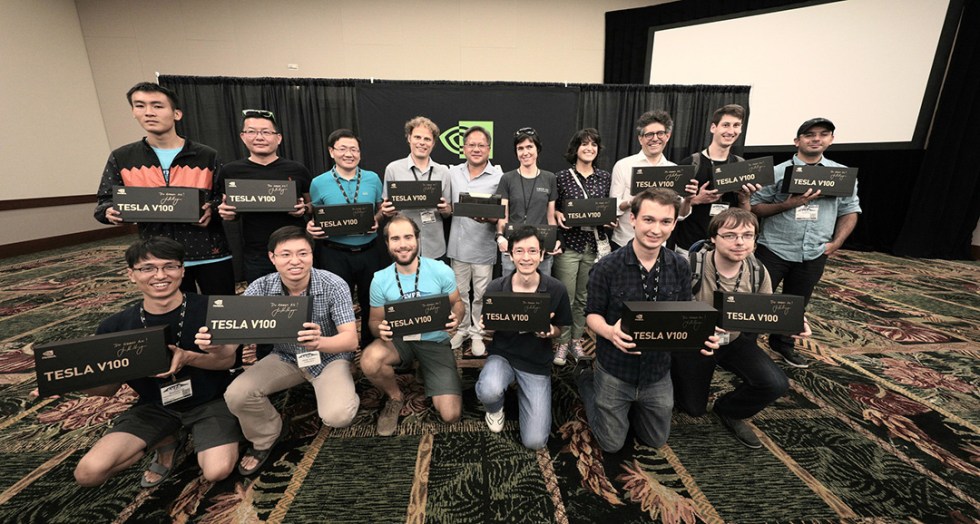
Fifteen top AI research institutions of the NVIDIA AI Labs programmes were each presented with the Volta-based NVIDIA Tesla V100 GPU accelerator.
They were participating in Computer Vision and Pattern Recognition (CVPR) conference in Honolulu.
“AI is the most powerful technology force that we have ever known. I’ve seen everything. I’ve seen the coming and going of the client-server revolution. I’ve seen the coming and going of the PC revolution. Absolutely nothing compares,” said Jensen Huang, CEO of NVIDIA.
AI takes centrestage at ICML in Sydney
 NVIDIA is bringing its wealth of artificial intelligence (AI) solutions and expertise to the International Conference on Machine Learning (ICML) in Sydney.
Held at Sydney International Convention Centre from August 6 to 11, the event is expected to attract up to 3,000 participants, primarily faculty, researchers and PhD students in machine learning, data science, data mining, AI, statistics, and related fields.
The NVIDIA booth (Level 2, The Gallery, Booth #4) will feature many firsts in Australia, such as demos on 4K style transfer, a deep neural network to extract a specific artistic style from a source painting, and then synthesises this information with the content of a separate video; self-driving auto using the Drive PX2 AI car computing platform; Deepstream SDK that simplifies development of high performance video analytics applications powered by deep learning; and NVIDIA Isaac, the AI-based software platform lets developers train virtual robots using detailed and highly realistic test scenarios.
Dell launches 14th gen servers
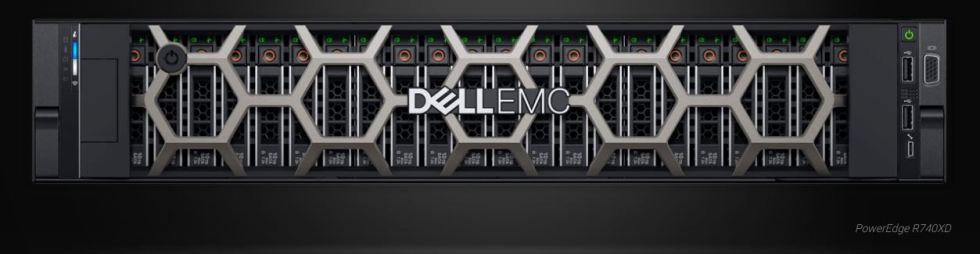 Dell has announced worldwide availability of the next generation of the Dell PowerEdge server portfolio which forms a scalable, automated and secure compute platform for traditional and cloud-native applications.
With its scalable business architecture, intelligent automation and integrated security, the new Dell PowerEdge 14th generation server portfolio delivers aims to be the bedrock of the modern data centre, enabling customers to push innovation further and faster to achieve their IT transformation goals.
The scalable business architecture of Dell PowerEdge servers helps customers efficiently meet their changing business needs with enhanced performance capabilities for traditional, virtualised and cloud-native workloads in a software-defined data centre.
Students’ demand drives Aussie IT spending
Australian educational institutions are increasing information technology (IT) spending in response to dramatic changes in student expectations, according to IDC.
Spending by Australian educational institutions is expected to peak at US$1.6 billion by 2020, driven by software and services related investments. Education practices are shifting away from the classroom towards e-learning and virtual instructor-led training approaches as students are demanding anytime-anywhere remote access.
In its recently published Australian education sector report, IDC highlights the need to overhaul existing ICT management models in schools and universities so that a step-change improvement in delivery efficiency can be achieved.
APAC PC market down 5.1% in Q2
 PC shipment in the Asia-Pacific region surpassed 21,5 million units, down 5.1 percent in Q2 compared to the same period last year, according to Gartner.
The dip was due to primarily due to market dynamics in India and China. In India, the pent up demand after the demonetisation cooled down after Q1, coupled with the absence of a large tender deal compared to a year ago and higher PC prices, brought about weak market growth. China was hugely impacted by the rise in PC prices due to the component shortage.
Overall, global PC shipment totaled 61.1 million units in Q2, a 4.3 percent decline from the same quarter last year.
Full PC backup with Google
Google has launched the Backup and Sync tool for users to easily back up practically all files on their computer. This new tool will replace the Google Photos desktop app and the Google Drive client applications for […]
NVIDIA invests in Deep Instinct
 NVIDIA is investing in Deep Instinct, an Israeli-based startup that uses deep learning to thwart cyber attacks.
Deep Instinct uses a GPU-based neural network and CUDA to achieve 99 percent detection rates, compared with about 80 percent detection from conventional cyber security software. Its software can automatically detect and defeat the most advanced cyber attacks.
“Deep Instinct is an emerging leader in applying GPU-powered AI through deep learning to address cybersecurity, a field ripe for disruption as enterprise customers migrate away from traditional solutions. We’re excited to work together with Deep Instinct to advance this important field,” said Jeff Herbst, Vice President of Business Development of NVIDIA.
 Entelechy Asia