Category: Enterprise

Cloud IT infrastructure market to grow 24% this year

IDCTotal spending on cloud IT infrastructure (server, storage, and Ethernet switch, excluding double counting between server and storage) will grow by 24.1 percent to reach US$32.6 billion in 2015, according to IDC.

This amount will account for a third of the overall end user spending on enterprise IT infrastructure, up from 27.9 percent in 2014. In comparison, spending on IT infrastructure deployed in traditional, non-cloud, environments will decline by 1.6 percent in 2015, although at US$66.8 billion will remain the largest segment of the market.

Spending on private cloud IT infrastructure in 2015 will grow by 15.8 percent year over year to US$12.1 billion, while spending on public cloud IT infrastructure will increase by 29.6 percent to US$20.5 billion.

NVIDIA supercharges Microsoft Azure

Azure

Virtualisation just got a little turbo charge with the introduction of NVIDIA GPU-enabled professional graphics applications and accelerated computing capabilities to the Microsoft Azure cloud platform.

Microsoft is the first to leverage NVIDIA GRID 2.0 virtualised graphics for its enterprise customers.

Businesses will have a range of graphics prowess — depending on their needs. They can deploy NVIDIA Quadro-grade professional graphics applications and accelerated computing on-premises, in the cloud through Azure, or via a hybrid of the two using both Windows and Linux virtual machines.

NVIDIA establishes APAC’s first Deep Learning Technology Centre in Singapore

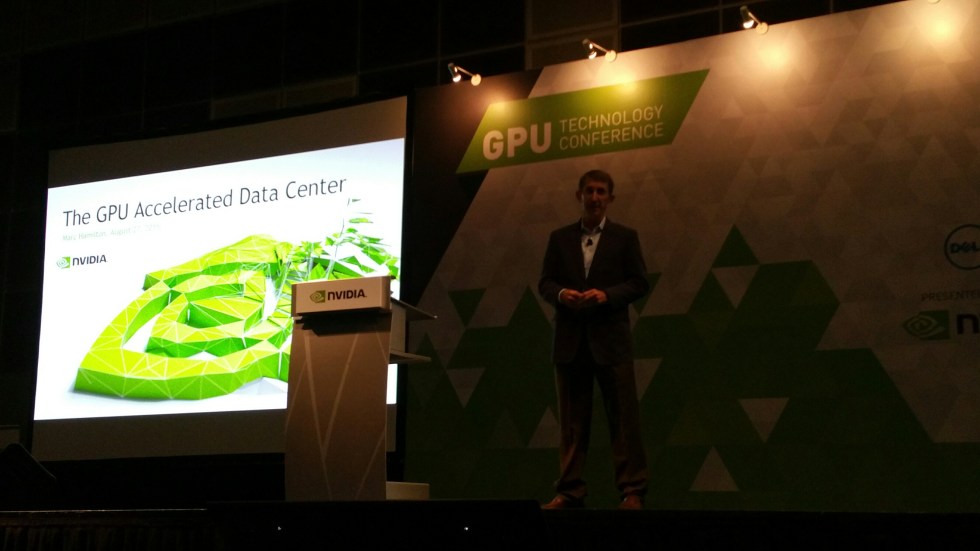
Marc Hamilton announces the establishment of the NVIDIA Technology Centre Asia Pacific at GTC South Asia.

NVIDIA has established the NVIDIA Technology Centre Asia Pacific, the first of its kind in the region to focus on deep learning research and development (R&D).

Located at Nanyang Technological University in Singapore, the centre will leverage the power of NVIDIA’s graphics processing unit (GPU) platforms to develop innovative solutions for both the private and public sectors.

NVIDIA will invest more than S$20 million (US$14.2M) in the centre over a three-year period. This will include the deployment of a broad range of NVIDIA technologies — from the NVIDIA DRIVE PX platform for automated driver assistance systems and self-piloted vehicles, to the NVIDIA Tesla platform, which powers deep learning on the world’s top 5 public clouds as well as some of the world’s fastest supercomputers.

Pixar licenses NVIDIA technologies to accelerate feature film production

INSIDE OUT – Anger, Fear, Joy, Sadness and Disgust look out upon Riley's Islands of Personality. ©2015 Disney•Pixar. All Rights Reserved.
INSIDE OUT – Anger, Fear, Joy, Sadness and Disgust look out upon Riley’s Islands of Personality. ©2015 Disney•Pixar. All Rights Reserved.

Pixar Animation Studios is licensing a suite of NVIDIA technologies to accelerate production of its computer-animated feature films and short film content.

The multi-year strategic licensing agreement gives Pixar access to NVIDIA’s quasi-Monte Carlo (QMC) rendering methods. These methods can make rendering more efficient, especially when powered by GPUs and other massively parallel computing architectures.

“Pixar has long used NVIDIA GPU technology to push the limits of what is possible in animation and the film-making process. NVIDIA’s particular QMC implementation has the potential to enhance rendering functionality and significantly reduce our rendering times,” said Steve May, Vice President and CTO of Pixar.

India x86 server market edges up in Q1

IDCHP continued to lead the India x86 server market in Q1 2015 with 38 percent market share in terms of units, followed by Dell with 19 percent, according to IDC. Lenovo increased its share marginally due to large multi-million dollars deal in central government vertical.

White box players have also witnessed year on year growth as some of the organisations specially cloud providers are preferring them for reducing cost and greater control over their infrastructure.

Overalll, the x86 server market in India grew by 7.5 percent in terms of units and double-digit in revenue in Q1.

NVIDIA software update doubles performance for deep learning training

NVIDIANVIDIA has updated its GPU-accelerated deep learning software that will double deep learning training performance.

With the new software, data scientists and researchers can supercharge their deep learning projects and product development work by creating more accurate neural networks through faster model training and more sophisticated model design.

The NVIDIA DIGITS Deep Learning CPU Training System version 2 (DIGITS 2) and NVIDIA CUDA Deep Neural Network library version 3 (cuDNN 3) provide significant performance enhancements and new capabilities.

Singtel leverages Appier’s programmatic TV platform to help advertisers reach right audience

appierAs the digital space becomes more cluttered and complex, advertisers are finding it increasingly difficult to determine the best way to reach their target customers.

Singtel Advertising has taken a step towards helping advertisers address this conundrum by leveraging artificial intelligence (AI) technology. It has inked an agreement with Appier to introduce the first programmatic TV solution in Singapore, enabling advertisers to more effectively reach Singapore’s substantial but fragmented TV-watching population.

With Appier’s programmatic TV platform, advertisers can now plan TV campaigns based on specific target audience profiles and purchase Singtel TV’s inventory with just a few clicks. Appier’s channel recommendation system will also incorporate insights from Singtel Advertising’s existing suite of analytics capabilities, enabling brands in Singapore to leverage automation to identify the most relevant channels.

India software market up 8% in 2014

GartnerSoftware revenue in India rose 8.3 percent to hit US$4 billion in 2014, according to Gartner.

“The enterprise software marketplace is dynamic and ever-changing. Its growth and structure are being shaped by the factors and forces of decentralised purchasing, consumerisation and mobility, influence of emerging markets, cloud-based implementations, and new consumption models. Improvement in global economic conditions has somewhat relaxed the strain on the Indian economy, thereby boosting corporate sentiments. Along with a new stable government at the center, this has helped in alleviating concerns about economic growth — to a certain extent — with early signs of spending in growth initiatives beginning to emerge,” said Bhavish Sood, Research Director of Gartner.

Several leading trends include:

  • Software as a service (SaaS) adoption and development
  • Open-source software (OSS) adoption and its broader market implications
  • Changing buying behaviors and purchasing styles associated with the digital business
  • Spending in key growth markets such as India and China

Amazon takes pole position in Gartner Supply Chain Top 25 ranking

GartnerE-commerce giant Amazon has emerged tops in Gartner’s 11th annual Supply Chain Top 25 ranking, which identifies global supply chain leaders and highlights their best practices.

Fast food chain McDonald’s came in second and consumer goods maker Unilever third.

“In this edition of the Supply Chain Top 25, we have several longtime leaders with new lessons to share and a number of more recent entrants from the high-tech, consumer products, retail and industrial sectors,” said Stan Aronow, Research Vice President of Gartner.

3D printing market to hit $20.2b in 2019

CanalysThe global 3D printer market will reach US$5.2 billion this year, up from US$3.3 billion in 2014, growing 56 percent, according to Calanys.

This is expected to grow further to US$20.2 billion by 2019, representing an expected compound annual growth rate (CAGR) of 44 percent from 2014 to 2019.

“As we expected, the 3D printing market has grown substantially over the past few years. We have seen improving print speeds, a wider range of materials and new forms of additive manufacturing methods. There has also been a substantial increase in the number of vendors entering this space, with many coming from Asia, challenging the previous dominance of 3D printing hotspots such as Germany and the US. Long-existing vendors such as Stratasys and 3D Systems are well placed to take advantage of this growth but may find their dominant positions challenged by newer rivals,” said Joe Kempton, Research Analyst of Canalys.

Business intelligence and analytics top priorities for Asean CIOs

GartnerBusiness intelligence and analytics are the top priorities of CIOs in Southeast Asia (SEA), according to a Gartner survey.Next on their list are mobile, ERP and cloud.

Eighty-four percent of CIOs in SEA recognise the need to adapt their leadership style in the next three years to succeed in digital business, compared with the global average of 75 percent. To achieve this, 69 percent said that they want to decrease their controlling approach to focus on significantly increasing their visionary and coaching attributes.

The annual survey covered more than 2,810 CIOs worldwide, representing more than US$397 billion in CIO IT budgets in 84 countries. It included responses from 117 CIOs from Indonesia, Malaysia, Philippines, Singapore, Thailand, and Vietnam.

GSMA launches e-commerce platform for telecoms industry

GSMAGSMA has launched GSMA Marketplace, an e-commerce platform dedicated to the mobile industry.

GSMA Marketplace leverages the associations’s reputation as a trusted intermediary in the telecoms industry to bring together buyers and sellers to do business more easily with each other.

“Whether you are a buyer looking for greater innovation or better prices in your procurement of products or services, or a seller seeking to win new business and enter new markets, GSMA Marketplace will let you browse, contact and connect with companies who can help you achieve your objectives,” said John Hoffman, CEO of GSMA.

GfK and Abacus to collaborate on big data analysis

gfk_logoGfK and Abacus have agreed to advance the analytics available to the travel industry by supplying anonymised booking data for the specialist GfK Travelscan report.

GfK will receive a feed of the aggregated weekly live bookings of participating Abacus agents, initially based in Singapore, to produce a set of predictive analytics that should help to refine travel retail strategy for the sector.

“We are delighted to intensify our partnership with the leading provider of travel agent solutions across the APAC region. This will help to scale the robustness and representation of GfK Travelscan, while offering added value to the Abacus client base,” said Laurens Van Den Oever, Global Industry Lead of Travel & Hospitality at GfK.

Dropping oil price a US$1 trillion boost for GDP and IT spending in H1 2015

CanalysWhat has proven a massive hit for the oil and gas industry may turn out to be a silver lining for the IT industry and GDP as a whole in the first half of this year.

According to Canalys, business and consumer IT spending will be boosted by the current oil shock, as prices remain below US$50 per barrel. It believes the reduction in prices will provide a short-term economic stimulus equivalent to a large tax cut, boosting corporate profits and consumer disposable incomes, which will filter into IT spending.

“Price falls translate into a transfer of wealth from producers to importers. Oil producers received approximately US$340 billion less in the second half of 2014 compared with the first half of the year, based on average monthly production and prices. The difference will be even more significant if prices remain at US$50 per barrel and production continues at the same level for the next six months. If this scenario happens, producers will receive almost US$1 trillion dollars less compared with the first half of 2014,” said Matthew Ball, Principal Analyst of Canalys.

APAC PC market down 6% in 2014

IDCIt’s not surprising but the Asia-Pacific (excluding Japan) PC market dipped 6.3 percent to 101 million units in 2014, according to preliminary results from IDC. The fall is not as bad as in 2013, which saw a 10.3 percent drop.

In Q4, the market was flat year-on-year, reaching 25.9 million units, which was marginally higher than IDC’s initial forecasts.

“The good news is that 2015 should not contract as much as last year. While high retail channel inventory and uncertain economic conditions will still bear down on China, upcoming commercial sector activity should help offset that somewhat. India should still have post-elections momentum and yet another large education tender. Indonesia should similarly have post-elections momentum, although high inflation and currency fluctuations are downside risks,” said Handoko Andi Research Manager for Client Devices Research at IDC Asia-Pacific.”

Lenovo strengthens grip on top spot as PC shipment rises 1% in Q4

GartnerLenovo maintained its pole position in the PC market, holding off HP and Dell. However, the gap between Lenovo and HP narrowed as HP garnered 18.8 percent of the market in Q4, relative to Lenovo’s 19.4 percent, according to Gartner. Dell remained third with 12.7 percent market share.

Overall, worldwide PC shipment totalled 83.7 million units in Q4, a one-percent increase from the fourth quarter of 2013. These results indicate a slow, but consistent improvement following more than two years of decline.

“The PC market is quietly stabilising after the installed base reduction driven by users diversifying their device portfolios. Installed base PC displacement by tablets peaked in 2013 and the first half of 2014. Now that tablets have mostly penetrated some key markets, consumer spending is slowly shifting back to PCs,” said Mikako Kitagawa, Principal Analyst of Gartner.

Flash-based array market clips US$11b in 2014

IDCFlash-based array is more than just a flash in the pan. The emergence of more robust offerings that can handle a wide range of increasingly complex workloads helped drive the worldwide flash-based array market to US$11.3 billion in 2014, according to IDC.

The impact that flash-based arrays will have on the datacentre is undeniable as more flash-based platforms are delivering enterprise-class data services, including snapshots, clones, encryption, replication, and quality of service (QoS) as well as storage efficiency features.

Once dominated by storage startups looking to carve out a niche with flash-optimised solutions, the promise of flash in the datacentre is driving traditional enterprise storage vendors, such as Dell, EMC, HDS, HP, IBM, NetApp, and Oracle, to all get on board and offer flash-optimised hybrid flash arrays, and in some cases, all-flash arrays.

Singapore government IT spending hits US$3.2b

GartnerThe Singapore government continued to invest in IT this year with spending expected to hit US$3.2 billion, up 3.2 percent from 2013.

According to Anurag Gupta, Research Director of Gartner, IT services, which includes consulting, implementation, IT outsourcing and business process outsourcing, would be the largest overall spending category throughout the forecast period within the government sector.”

“Government spending on IT services is expected to grow three percent in 2014 to reach US$1.9 billion, up from US$1.8 billion in 2013 – with the business process outsourcing segment growing 5.3 percent in 2014,” he noted.

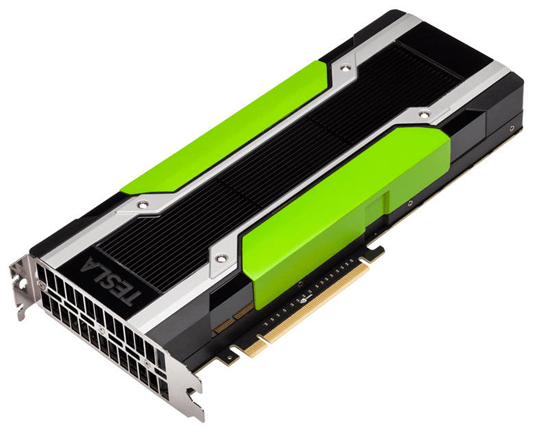
NVIDIA introduces Tesla K80

NVIDIA Tesla K80NVIDIA has unveiled the Tesla K80 dual-GPU accelerator designed for a wide range of machine learning, data analytics, scientific, and high performance computing (HPC) applications.

The Tesla K80 dual-GPU is the new flagship offering of the Tesla Accelerated Computing Platform, the leading platform for accelerating data analytics and scientific computing.

It combines the world’s fastest GPU accelerators, the widely used CUDA parallel computing model, and a comprehensive ecosystem of software developers, software vendors, and datacentre system OEMs.

Alibaba sets US$8b target for November 11 sales

Alibaba 1111November 11 is Singles’ Day in China and the singular thing retailers are aiming for today is record sales. China e-commerce giant Alibaba has set US$8.18 billion (RMB50 billion) as its 2014 target of single-day transaction value for the November 11 online shopping festival, according to IDC.

The research firm believes Alibaba is very likely to achieve five percent more. “11.11” is not only a festival for Alibaba, online shoppers, and online retailers; it also changes consumers’ buying behaviour and impacts the evolution of the China e-commerce ecosystem.

“11.11” has become a special day for many Chinese consumers ever since Alibaba created this single-day online shopping festival in 2009. The total transaction value during last year’s “11.11” reached US$5.73 billion (RMB35 billion), which shocked Alibaba’s e-commerce competitors all around the world as well as the entire retail industry.

NVIDIA joins VMware in APAC vForums

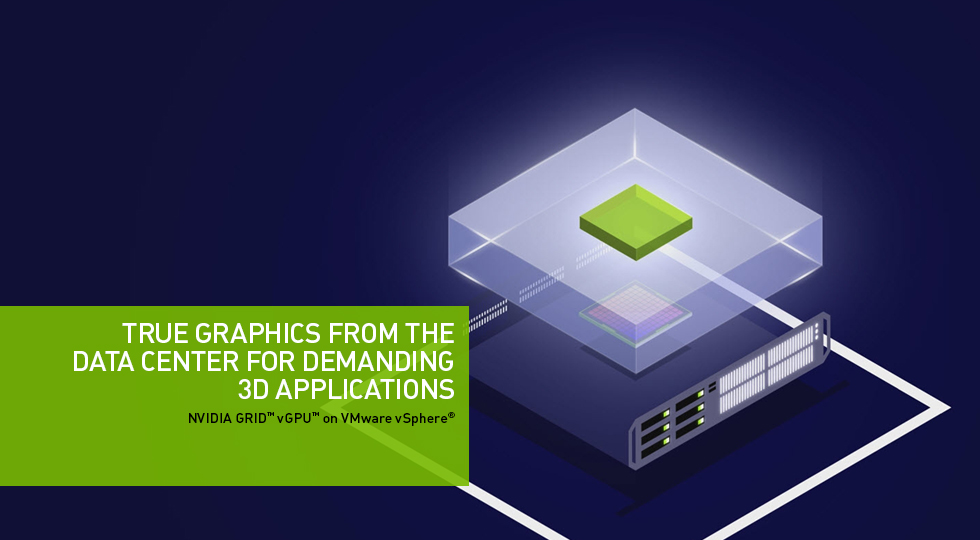
NVIDIA GRID vGPU vSphereImagine the power of shared GPUs? NVIDIA and VMware are showcasing how enterprises can leverage the power of shared GPU using VMware vSphere and NVIDIA GRID vGPU at vForums currently on in Singapore, Sydney and Tokyo.

NVIDIA GRID vGPU technology allows multiple virtual machines to share the power of a single GPU to deliver rich graphics experiences with professional 2D and 3D applications.

The partners are also pushing an early access programme that provides a technology preview of these technologies. Enterprises can try the GPU virtualisation and virtual application and desktop infrastructure, ahead of its general availability by signing up at www.nvidia.com/grid-vmware-vgpu. Those selected get to work directly with the engineering teams from both NVIDIA and VMware.

Australia nudges towards hosted and cloud-based UC solutions

frost and sullivanAustralia’s on-premise unified communications (UC) market experienced a decline in revenues in 2013, according to Frost & Sullivan. This was mainly due to the improved understanding of the benefits of hosted and cloud-based UC solutions, which have now reached mainstream adoption.


Organisations are now able to deploy any UC application over a hosted model, and have a much improved understanding of the benefits of hosted and cloud-based UC solutions. In addition, the capital intensive nature of on-premise solutions limits the flexibility for organisations to adapt to the changing communication and collaboration environments. As a result, the on-premise UC market is approaching a phase where growth rates are flat or declining.

According to Anand Balasubramanian, Industry Analyst of ICT Practice, Australia & New Zealand at Frost & Sullivan, the decline in the Australian UC market revenues can be attributed to the changing business preferences for communication and collaboration solutions.

3D printers set for rapid growth

GartnerThe global 3D printer market is set to double next year to reach 217,350 units in 2015, according to Gartner.

From then, 3D printer shipment will more than double every year between 2015 and 2018, by which time worldwide shipments are forecast to reach more than 2.3 million.

“As we noted last year, the 3D printer market is at an inflection point. Unit shipment growth rates for 3D printers, which languished in the low single and double digits per year throughout the 30 years since the first 3D printers were invented, are poised to increase dramatically beginning in 2015. As radical as the forecast numbers may seem, bear in mind that even the 2.3 million shipments that we forecast will be sold in 2018 are a small fraction of the total potential market of consumers, businesses and government organisations worldwide,” said Pete Basiliere, Research Vice President of Gartner.

APAC PC market up 8% in Q3

IDCSpurred by consumer PC demand in China and India, the APAC (excluding Japan) PC market rose eight percent in Q3, according to IDC’s preliminary results. However, shipment dropped five percent year-on-year compared to Q3 2014 to 26.6 million units.

In India, positive consumer sentiment after the elections resulted in high retail walk-ins while vendors in China pushed volumes in spite of a poor sell-out. Asean was a mixed bag with Indonesia, Malaysia and Thailand experiencing double-digit annual declines, while other countries such as Vietnam did well.

“XP migration helped boost commercial PC spending earlier this year. But in recent quarters, we have seen Microsoft add a lot to the entry-level segment by launching the Windows 8.1 with Bing programme. This programme has helped consumers buy licensed OS PC in many countries in the region,” said Handoko Andi, Research Manager for Client Devices Research at IDC Asia/Pacific.

VMware and NVIDIA preview NVIDIA GRID vGPU

NVIDIA_GRID_vGPUVMware and NVIDIA have announced that Airbus Group, CH2MHILL and MetroHealth are among the first to join their early access programme to try the latest technology for GPU virtualisation and virtual application and desktop infrastructure, ahead of its general availability.

Customers selected to participate in the programme have deployed a technology preview of the solution. They get to work directly with the engineering teams from both NVIDIA and VMware, and provide direct input about their experiences — influencing future products, training, documentation and services.

NVIDIA GRID vGPU technology allows multiple virtual machines to share the power of a single GPU to deliver rich graphics experiences with professional 2D and 3D applications. Combined with VMware Horizon, the technology can deliver a great user experience and the scalability that IT teams require for the most demanding users in their organizations.

ZTE launches payment solutions

ZTEZTE has launched a range of payment solutions including phone POS (point of sale), photonic and DTV (Digital TV) payment products.

With a NFC (near field communication) capable smartphone, users can install the phone POS app to enable the smartphone function as a POS payment device. Businesses and individuals can then manage a vast range of transactions including transferring money, checking account balances, paying off credit cards, topping up mobile phones and paying bills.

This functionality gives complete freedom to users, allowing them to complete transactions whenever and wherever they want, as well as allowing businesses to save on operating expenses by receiving immediate payment.

HP to split

HPWhen it comes to technology companies, being big may not be the best. In the mid-1990s, IBM, then the world’s leading IT company, had to wrestle with its size. It eventually divested product lines that were deemed to have low margins to focus on software and services. Out went its printers and hard drives. In 2005, IBM sold its personal computer business, including the ThinkPad notebooks to Lenovo. And last week, it officially pulled out of the x86 server market with the sale to Lenovo.

It looks like HP is facing size challenges and taking the same route as IBM of old. While IBM slumbered, HP went on an acquisition spree, chomping up Compaq, EDS and 3Com and many others. It became the world’s top technology company with revenues exceeding US$100 billion.

However, yesterday, HP announced plans to split into two companies — HP Enterprise to focus on enterprise technology infrastructure, software and services businesses, and HP Inc, which will concentrate on the PC and printing businesses.

IBM turns to NVIDIA to power OpenPOWER-based systems

IBM PowerHaving exited the x86 server business, IBM has turned its focus to a new range of systems that leverages GPU acceleration delivered by NVIDIA.

Built on IBM’s POWER8 processor, the new IBM Power S824L servers are optimised for big data workloads. The new systems tightly integrate IBM and other OpenPOWER member technologies, including NVIDIA’s GPU accelerator technology for the first time, to unleash computing performance to help enable banks to better analyse risk, energy companies to more precisely locate oil reserves, and scientists to more quickly identify cures for diseases.

They provide clients the ability to run data-intensive tasks on the POWER8 processor while offloading other compute-intensive Big Data workloads to GPU accelerators which are capable of running millions of data computations in parallel and are designed to significantly speed up compute-intensive applications.

Microsoft jumps to Windows 10

Windows 10 familySkipping a generation seems to be the norm these days. A couple of weeks ago, NVIDIA introduced its GeForce GTX 900 series, bypassing the 800 series. Yesterday, Microsoft made a similar move by skipping a highly anticipated Windows 9 to introduce Windows 10.

In a technical preview, Microsoft highlighted advancements in the new operating system that are designed for business, including an updated user experience and enhanced security and management capabilities.

“Windows 10 represents the first step of a whole new generation of Windows, unlocking new experiences to give customers new ways to work, play and connect. This will be our most comprehensive operating system and the best release Microsoft has ever done for our business customers, and we look forward to working together with our broader Windows community to bring Windows 10 to life in the months ahead,” said Terry Myerson, Executive Vice President of the Operating Systems group at Microsoft.

Lenovo becomes leading x86 server provider in China

IDCLenovo is now the biggest x86 server provider in China, following the completion of its acquisition of IBM’s x86 server business. And IDC believes this acquisition will enrich Lenovo’s x86 server portfolio and strengthen its products and channels.

According to the research firm’s latest data, Lenovo shipped 99,101 units in the first half of 2014 and is ranked 4th among all vendors in the same category.

Combining IBM and Lenovo’s shipments in this period of time would make Lenovo the biggest vendor in China x86 server market with a market share of 23.9 percent.

Graphics-as-a-service a ‘very attractive business model to consider’

Sandeep GupteNVIDIA VCA (visual computing appliance), which began shipping in August, has opened up the possibility of graphics-as-a-service.

The scalable, network-attached GPU rendering appliance with eight high-end NVIDIA GPUs is designed to provide designers and artists with the graphics power needed to create photorealistic images. It dramatically accelerates ray tracing, enabling users to interact with computer models of such high visual fidelity that it can eliminate the need for 3D physical prototypes.

While currently designed for ray tracing, NVIDIA is working with independent software vendors (ISVs) to apply VCA to other areas, according to Sandeep Gupte, Senior Director of Professional Services Group at NVIDIA (right).

75% of mobile apps will fail security test

Gartner

Enterprise employees are downloading mobile applications from app stores and use these applications to access enterprise assets or perform business functions. What’s scary is that many of these applications have little or no security assurances.

According to Gartner, more than 75 percent of mobile applications will fail basic security tests in 2015. These applications are exposed to attacks and violations of enterprise security policies.

“Enterprises that embrace mobile computing and bring your own device (BYOD) strategies are vulnerable to security breaches unless they adopt methods and technologies for mobile application security testing and risk assurance. Most enterprises are inexperienced in mobile application security. Even when application security testing is undertaken, it is often done casually by developers who are mostly concerned with the functionality of applications, not their security,” said Dionisio Zumerle, Principal Research Analyst of Gartner.

Stratasys introduces multi-material 3D printers

Objet500 Connex2 Digital ABS Injection MoldWhile the attention of the technology world has been on gadgets, smartphones and wearables in recent weeks, Stratasys has turned the spotlight back on 3D printing with the Objet500 Connex1 and Objet500 Connex2 Multi-material 3D Printers — that’s right, the new printers can print on multi-materials.

The printers leverage Stratasys’ triple-jetting technology, which is designed to allow the user to build products with up to three different materials in a single run, or even mix multiple material droplets to form new digital materials such as tough Digital ABS.

Equipped with a large build envelope, the Objet500 Connex1 Multi-material 3D Printer can produce parts from three  materials in a single production run. This allows users to create assemblies with components formed from three different materials, or it can produce components that contain both rigid and flexible materials, such as rubber-like Tango and rigid Vero material.

Lithium-ion battery revenue to quadruple by 2020

frost and sullivanMany technologies have come and gone — replaced by new innovations. But, in the midst of the technological changes, one unsung technology remains and is expected to be in even greater demand in the years ahead.

We’re talking about the lithium-ion battery which powers most of today’s devices. In fact, it is innovation that makes the battery highly popular — beyond gadgets and computer wizardry to other industries

According to Frost & Sullivan, the global lithium-ion battery market is expected to quadruple from 2013 to 2020. Developing applications in the grid and renewable energy storage segment are helping boost demand for lithium-ion batteries.

VMware, NVIDIA and Google to deliver graphics-rich applications to Chromebooks

Google Chromebook
The Google Chromebook is often associated with simplicity — a simple and affordable notebook that offers connectivity and provides access to everyday applications. Well, that’s about to change with a collaboration between VMware, NVIDIA and Google.

The three tech giants are working together to deliver high-performance virtual desktops and workstation-class graphics to Google Chromebooks. This would give the humble Chromebooks power to handle even the most demanding visual computing applications.

“We are breaking down traditional barriers to adopting virtual desktops and offering new economics for the delivery of graphics-intensive applications through the power of the cloud. Organisations of all industries and requirements will soon be able to embrace the mobile-cloud using a solution that offers a new way to work from three proven industry leaders.,” said Sanjay Poonen, Executive Vice President and General Manager of End-User Computing at VMware.

ZTE teams up with Blue Jeans Network on videoconferencing services

ZTEZTE is collaborating with Blue Jeans Network on video conferencing services, under which ZTE customers will be able to experience Blue Jeans Network’s cloud-based video conferencing services (VCS) and connect easily to one another via their ZTE VCS products, creating a uniform user experience that fosters collaboration.

Starting in August, ZTE VCS room system with Blue Jeans video conferencing services will be available in Singapore, Australia, the US, and Europe.

Blue Jeans Network extends high-quality video communications beyond the traditional boundaries of virtual conference rooms by allowing individuals, employees, partners and family and friends, to connect and interact with each other seamlessly and effectively. Its technology is used by customers such as Facebook, Foursquare, Match.com, and Stanford University.

More enterprises eyeing DDoS solutions

frost and sullivanIn our highly networked society, corporate networks are becoming more at risk. Distributed denial of service (DDoS) attacks are growing in scale and sophistication and increasingly difficult to stop without purpose-built platforms.

According to Frost & Sullivan, DDoS mitigation solutions are rapidly gaining traction among businesses of all sizes. Government and industry regulations that mandate proactive investments in DDoS mitigation will further propel market development.

It pointed out that the US$354.0 million market in 2013 is estimated to reach US$929.5 million by 2018.

Consumer 3D printing not quite there yet

GartnerWhile 3D printing is a much talked about topic these days with several startups getting crowdfunding to deliver such solutions, Gartner beileves that the technology is five to 10 years away from mainstream adoption.

The research firm pointed out that consumer adoption will be outpaced by business and medical applications that have more compelling use cases in the short term.

“Consumer 3D printing is around five to 10 years away from mainstream adoption. Today, approximately 40 manufacturers sell the 3D printers most commonly used in businesses, and over 200 startups worldwide are developing and selling consumer-oriented 3D printers, priced from just a few hundred dollars. However, even this price is too high for mainstream consumers at this time, despite broad awareness of the technology and considerable media interest,” said Pete Basiliere, Research Vice President of Gartner.

NVIDIA unveils new Quadro lineup

NVIDIA QuadroNVIDIA has unveiled its next generation of NVIDIA Quadro GPUs — the K5200, K4200, K2200, K620, and K420.

The new lineup delivers an enterprise-grade visual computing platform with up to twice the application performance and data-handling capability of the previous generation.

“The next generation of Quadro GPUs not only dramatically increases graphics and compute performance to handle huge data sets. It extends the concept of visual computing from a graphics card in a workstation to a connected environment. The new Quadro lineup lets users interact with their designs or data locally on a workstation, remotely on a mobile device or in tandem with cloud-based services,” said Jeff Brown, Vice President of Professional Visualisation at NVIDIA.

Iray VCA renamed NVIDIA VCA to reflect expanded support

NVIDIA VCAAt GPU Technology Conference in March, NVIDIA introduced Iray VCA (Visual Computing Appliance). Today, NVIDIA has renamed the appliance as NVIDIA VCA to reflect its expanded industry support for GPU rendering across multiple applications.

NVIDIA VCA dramatically accelerates ray tracing, enabling users to interact with computer models of such high visual fidelity that it can eliminate the need for 3D physical prototypes. In addition to native support of NVIDIA Iray, Chaos Group is supporting V-Ray RT on VCA for Autodesk 3ds Max, with Autodesk Maya, McNeel Rhino, and Trimble SketchUp for later in the year. Dassault Systemes 3DXCITE Bunkspeed support is also scheduled for later this year.

The scalable, network-attached GPU rendering appliance comes with eight high-end NVIDIA GPUs and is designed to do just one thing — provide designers and artists with the fastest and easiest way to create photorealistic images of their creations. It’s claimed to be so fast that designers can interact with their models or scenes in real-time rather than waiting minutes or even hours for rendered images to come back. This means that designers can study the play of light and reflection from their designs and catch flaws like glare on the interior windshield of a digital car model or see how the lobby of a proposed office building will look at different times of day.

Shenzhen hosts SIGGRAPH Asia for the first time in December

SIGGRAPH Asia 2014SIGGRAPH Asia 2014, Asia’s largest computer graphics (CG) event, will be held in Shenzhen, China, for the first time from December 3 to 6

More than 7,700 attendees from over 60 countries are expected at the conference and exhibition, which will feature a myriad of experts and exhibits in fields such as hardware and software, film and game production, as well as research and education.

The conference will include a Business Symposium, dealing with discussions related to the business, creative management, production and efficiency, as well as best practices of the computer graphics industry; Computer Animation Festival that showcases the most innovative and compelling of international animation and visual effects works; courses on contemporary topics in computer graphics and interactive techniques, and a showcase of emerging technologies which features hands-on demonstrations and installations focusing on virtual reality, augmented reality, robotics, wearable devices, 3D graphics, haptic devices and more .

Chromebook sales to nearly triple by 2017

Acer Chromebook 13Acer has launched the Acer Chromebook 13, its first 13-inch Chromebook as well as the first Chromebook to use the NVIDIA Tegra K1 processor, which gives the new Chromebook a performance edge and longer battery life of up to 13 hours.

This rollout should help Acer concretise its position as the number in the Chromebook market, behind leader Samsung, which had 64.9 percent market share in 2013.

Gartner expects sales of Chromebooks to reach 5.2 million units this year, a 79 percent increase from 2013. By 2017, sales of Chromebooks are set to nearly triple to reach 14.4 million units.

India security market on track for 8% growth this year

GartnerSecurity vendor revenue (hardware, software and services) in India will grow from US$882 million in 2013 to US$953 million this year, according to Gartner.

Security spending will continue to grow to reach $1.06 billion next year. Security services (including consulting, implementation, support, and managed security services) revenue accounted for more than 55 percent of this total revenue in 2013 and this trend will continue into the foreseeable future.

“Enterprises in India that traditionally did not focus on, or invest in, a lot of security technologies are now beginning to realize the implications that a weak security and risk posture can have on their business,” said Sid Deshpande, Principal Research Analyst ofGartner.

Mobile data to overtake voice in Malaysia in 2017

IDCMobile data is expected to bring in more revenue than mobile voice in Malaysia in 2017, according to IDC.
Despite the penetration rate of Malaysian mobile users exceeding 140 percent and high prepaid-postpaid ratio, mobile operators have still been able to maintain their revenue growth. Total revenue has grown by 35 percent in the last three years, and IDC expects the revenue to continue to grow to RM27.6 billion in 2018 at a compound annual growth rate (CAGR) of 2.6 percent.
“Mobile data revenue will continue to grow strongly at CAGR of 8.5 percent and become the main driver of the total mobile revenue in the next five years,” said Alfie Amir, Research Manager of Telecommunications at IDC Malaysia.

NVIDIA GRID Test Drive comes to SEA and Australia

NVIDIANVIDIA has availed GRID Test Drive in Southeast Asia and Australia. GRID Test Drive is a simple and secure way to test the power of NVIDIA’s GRID technology for cloud-delivered graphics acceleration.

NVIDIA GRID technology allows knowledge workers and high-end graphics users such as engineers and designers to utilise graphics-rich applications through the cloud anywhere on any device – with the same quality and performance they would have on a professional workstation.

As the demand for virtualised desktop infrastructure (VDI) continues to grow, NVIDIA’s GRID Test Drive allows anyone considering VDI, or those frustrated with the performance of their current VDI deployment, to easily test GRID for free and experience the difference of having powerful graphics behind their remote desktops and applications, without first having to build a proof-of-concept private cloud.

Huawei secures railway LTE project

SHRHuawei has won the bid for the Shenhua Group Corporation’s Shuo Huang Railway (SHR) LTE project.

One of the largest coal supplying and trading companies, Shenhua has developed and implemented the world’s first LTE network for heavy-haul railways. SHR, with an operating route length of 594km, is a critical railway section for China’s West-to-East Coal Transfer project.

Shenhua hopes to expand the railway’s capacity to transfer 350 million tons of coal and needed to maintain efficient and safe operations of 20,000-ton capacity heavy-haul trains. A wireless broadband system was required to communicate between the master-slave locomotives located at both ends of trains, which could be up to 2.5km apart. The railway’s 800MHz and 400kHz communications system would not be able to support the expansion with its limited coverage distance and low reliability.

Gartner acquires Q&A platform

Gartner has acquired Senexx, a cloud-based question and answer platform that identifies and manages expertise within organisations. It will leverage Senexx’s proven expertise to significantly enhance its web search capability and augment its content recommendation engine and […]

More consumers buying 3D printers

Canalys3D printing has been all the rage this past year. And that’s now backed up by figures that show that this technology is gaining traction. According to Canalys, 26,800 3D printers were shipped worldwide in Q1.

What’s interesting is that while most were purchased by enterprises, 46 percent were bought by consumers, up from 43 percent last year.

“While enterprise engagement will continue to grow, it looks to be the consumer space that will drive shipments in the near future. We are already seeing significant numbers of early technology adopters and hobbyists investing in relatively cheap 3D printers. As prices continue to fall, the technology improves and use cases are tested, this trend is set to continue,” said Tim Shepherd, Senior Analyst of Canalys.

Violin Memory boosts enterprise flash storage with data services software

Concerto 7000

Violin Memory has given enterprises a boost with its new Concerto™ 7000 All Flash Array, which comes with comprehensive data services software for synchronous and asynchronous replication, stretch metro cluster, storage snapshots, thin provisioning, logical unit number (LUN) and capacity expansion, advanced data protection, and storage scaling.

With these data services, enterprises and cloud service providers can have greater business agility, consolidate data centre resources and leverage new business opportunities.

Critical elements of Violin’s Concerto enterprise data services software include continuous data protection, WAN optimised replication and in-flight encryption that can all be configured on a LUN-by-LUN basis, giving enterprises the ability to tailor the solution to their unique deployment and data centre requirements.

NVIDIA GPU accelerators powering ARM64 HPC systems

E4 EK003
The E4 EK003 dual-motherboard server appliance features two Tesla K20 GPU accelerators

Server vendors are leveraging the performance of NVIDIA graphics processor unit (GPU) accelerators for 64-bit ARM development systems for high performance computing (HPC).

ARM64 server processors were primarily designed for micro-servers and web servers because of their extreme energy efficiency. Coupled with GPU accelerators using the NVIDIA CUDA 6.5 parallel programming platform, they can now tackle HPC-class workloads.

GPUs provide ARM64 server vendors with the muscle to tackle HPC workloads, enabling them to build high-performance systems that maximise the ARM architecture’s power efficiency and system configurability.

NetApp introduces storage system platforms

NetAppNetApp has rolled out two new storage system platforms—the extreme-performance FAS8080 EX and the entry value-priced FAS2500. The FAS8080 EX lets growing organisations and service providers drive the performance-intensive SAN and NAS workloads while the FAS2500 hybrid arrays simplify operations, increase productivity through superior integration with ecosystem, extend system life, and minimise future costs.

Designed for demanding business-critical applications, the FAS8080 EX scales to four million IOPS of performance and offers advanced quality-of-service capabilities to enable predictable performance that meets or exceeds challenging service-level objectives. It can be configured either as an all-flash array with more than 4.6PB (petabytes) of flash storage or as a hybrid array with an industry-leading flash cache of nearly half a petabyte.

Additionally, the FAS8080 EX dynamically responds to growing data requirements with seamless scaling to nearly 70PB of capacity and more than 600 I/O connections, which are critical for service providers and large organisations that are consolidating workloads.

GST implementation a boon for enterprise application market in Malaysia

IDCWhile the implementation of the Goods and Services Tax (GST) is not welcomed by most Malaysians, the move is expected to drive growth in the enterprise application (EA) market.

According to IDC, the tax initiative will be a boost to EA vendors as it forces business to either upgrade or replace their legacy system with a system that is GST compliant.

“With GST coming into effect in the early part of 2015, we predict there will be a scramble from the businesses to be fully GST ready in line with government regulations and the implementation will be one of the catalysts for growth in Malaysian EA market for 2014 and possibly in 2015 as well,” said Wong Yih-Khai, Market Analyst of Software at IDC Malaysia.