As if we don’t already have enough of ads. Facebook has announced that it will start rolling out ads to Messenger. With 1.2 billion users, the social media giant does have immense appeal for advertisers. It […]
Category: Gadgets
Device market to dip in 2017
Global demand for devices — PCs, tablets and smartphones — are expected to dip slightly this year, with Gartner projecting shipment exceeding 2.3 billion units, a decline of 0.3 percent from 2016.
However, the market is forecast to return to growth in 2018 with a 1.6 percent increase in shipment.
“Overall, the shipment growth of the device market is steady for the first time in many years. PC shipments are slightly lower while phone shipments are slightly higher — leading to a slight downward revision in shipments from the previous forecast, “said Ranjit Atwal, Research Director of Gartner.
NVIDIA and Baidu team up on AI
NVIDIA and Baidu have teamed up to bring artificial intelligence (AI) technology to cloud computing, self-driving vehicles and AI home assistants.
Baidu will deploy NVIDIA HGX architecture with Tesla Volta V100 and Tesla P4 GPU accelerators for AI training and inference in its data centres. Combined with Baidu’s PaddlePaddle deep learning framework and NVIDIA’s TensorRT deep learning inference software, researchers and companies can harness state-of-the-art technology to develop products and services with real-time understanding of images, speech, text and video.
To accelerate AI development, the companies will work together to optimise Baidu’s open-source PaddlePaddle deep learning framework on NVIDIA’s Volta GPU architecture.
Return of Note 7
The embattled Samsung Galaxy Note 7 is making a return — as a limited edition Galaxy Note Fan Edition! According to a statement, Samsung plans to sell the refurbished device (which comes with new battery) from […]
Volvo, Autoliv to roll out NVIDIA-based self-driving cars by 2021
Volvo Cars and Autoliv are teaming up with NVIDIA to develop advanced systems and software for AI self-driving cars. The three companies will work together along with Zenuity — a newly-formed automotive software development joint venture equally owned by Volvo Cars and Autoliv — to develop next-generation self-driving car technologies.
Production vehicles built on the NVIDIA DRIVE PX car computing platform are planned for sale by 2021.
“Artificial intelligence (AI) is the essential tool for solving the incredibly demanding challenge of autonomous driving. We are building on our earlier collaboration with Volvo to create production vehicles that will make driving safer, lead to greener cities and reduce congestion on our roads,” said Jensen Huang, Founder and CEO of NVIDIA, at a keynote address at Automobil Elektronik Kongress.
Keeping drivers safe
With all that rage of artificial intelligence (AI) powering driverless cars, the same technology can also be used to keep drivers safe. It can acts like a guardian angel and look our for danger (watch […]
Deeper into AI
The keynote address at Google I/O yesterday showed that Google is much more than just a search company. It is becoming more artificial intelligence (AI). Google is specifically using deep learning to help in many areas of everyday life.
Here are some as shared on Google’s blog post:
Google Assistant can help answer your questions and find information—but it can also help you get all kinds of useful things done. Today we’re adding a few more:
- Schedule new calendar appointments and create reminders. Starting today on Google Home, you can schedule appointments and soon you’ll also be able to add reminders. Since it’s the same Google Assistant across devices, you’ll be able to get a reminder at home or on the go.
- Make your home smarter. We now have 70+ smart home partners supporting the Google Assistant across Google Home and Android phones, including August locks, TP-Link, Honeywell, Logitech, and LG.
7 months with an Android box
By Kelly Aime
Last October, I took the plunge and decided to check out an Android TV box. It was not a spur of the moment decision but one prompted by the constant changing and removal of channels by my cable TV service provider.
The worst part of the changes is that users are often at the losing end. Whenever, the service provider’s contract with a particular channel deemed less popular is up for renewal, there’s that likelihood that the contract will not be renewed. And users have absolutely no say at all — even if the subscriber’s contract is still valid and the subscriber still wants to keep the channel.
Being at the mercy of my service provider pushed me to try out an alternative which can been around for a while — the Android TV box.
Toyota cruises with NVIDIA Drive PX2

Toyota, one of the world’s largest automakers and renowned for its high standards and priority on safety, has picked NVIDIA Drive PX for its autonomous vehicles. It will use the AI car computer platform to power advanced autonomous driving systems planned for market introduction within the next few years
Engineering teams from the two companies are already developing sophisticated software that will enhance the capabilities of Toyota vehicles, enabling them to better understand the massive volume of data generated by sensors on the car, and to handle the broad spectrum of autonomous driving situations.
“Toyota has worked on autonomous driving technologies for over 20 years with the aim of reducing traffic fatalities to zero as an ultimate goal, achieving smoother traffic, and providing mobility for all. Through this collaboration, we intend to accelerate the development of autonomous driving systems that are even more safe and capable,” said Ken Koibuchi, Executive General Manager of Toyota.
Huawei smartphone strides ahead in China
Huawei has taken top spot again in China’s smartphone market, edging past Oppo after two quarters of trailing in second place. According to Canalys, the Chinese smartphone giant, which launched the P10 and P10 Plus during MWC, shipped close to 21 million units to secure an 18 percent market share in Q1.
Despite strong annual growth of 55 percent, Oppo fell to second place with shipments of just under 20 million units. Third-placed Vivo had the lowest annual growth of the top three, capturing a 15 percent share with its shipment of 17 million units.
“China’s smartphone market continues to grow, with shipments increasing by over nine percent year on year this quarter. But there is a clear indication that the market is consolidating. The top three vendors are pulling away at the head of the market, accounting for more than 50 percent of shipments for the first time this quarter,” said Lucio Chen, Research Analyst of Canalys.
No devices for US-bound flights from 13 countries
The US authorities are forbidding passengers of airlines from 13 countries to bring any electronic or electrical device larger than a mobile phone. This means that all notebook computers, tablets and cameras are not allowed […]
21b IoT devices with embedded OS by 2022
IoT faces new computing challenges, notably with deployment and scaling, according to ABI Research. Its future will rely in part on using embedded Real-Time Operating Systems (RTOS), which support many IoT application features, such as small size, constrained processing resources, low power consumption, limited maintenance, and real-time computing.
ABI Research forecasts 21 billion IoT devices will ship with embedded RTOS by 2022.
“The tremendous expansion of the IoT revived the embedded RTOS market, with open source platforms springing up rapidly to jostle long-established proprietary players. While industrial demand for RTOS has a decade-long history, the development of new IoT applications in other segments, such as consumer, digital home, connected car, and smart cities, jolted demand for embedded RTOS,” said Michela Menting, Research Director of ABI Research.
New Jetson doubles performance
The newly-announced NVIDIA Jetson TX2, a credit card-sized platform that delivers artificial intelligence (AI) computing at the edge, opens the door to powerfully intelligent factory robots, commercial drones and smart cameras for AI cities. Jetson […]
NVIDIA launches the ‘Ultimate GeForce’
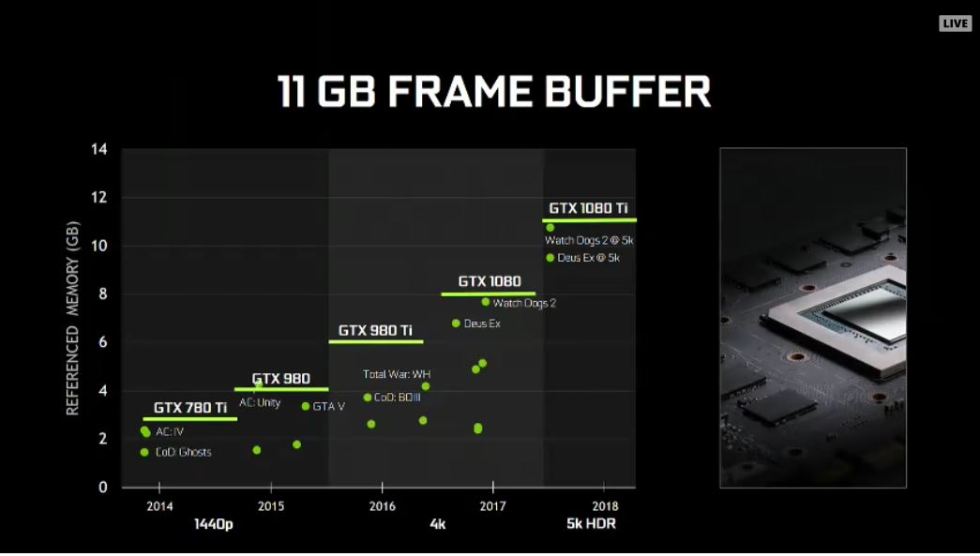
NVIDIA has just announced the GeForce GTX 1080Ti, which comes with 11GB of frame buffer to run today’s most demanding games. Jen-Hsun Huang, CEO of NVIDIA, dubbed it the “Ultimate GeForce” at a gathering of global media this morning.
Packed with extreme gaming horsepower, the GeForce GTX 1080 Ti delivers up to 35 percent more performance than the GTX 1080.
NVIDIA designed the GeForce GTX 1080 Ti to handle the graphical demands of 4K and 5K gaming, DX12, HDR and immersive VR.
Youtube: 1b hours of viewing per day!
One billion hours! That’s a lot of time to spend watching video online. And did we say that it’s one billion hours per day. And for just one site. Of course, it helps that that […]
Hello, hello, it’s the Nokia 3310 again!
With a slew of product introductions now on at Mobile World Congress in Barcelona, what’s amazing is that an old icon has grabbed loads of attention. Nokia has resurrected its 3310 phone, albeit in an […]
HTC leads in China VR market

China phone makers dominate India market in Q4
While Samsung remained at the top, China smartphone makers occupied four of the top five positions to snare the lion’s share in India in Q4, according to Canalys.
Their extremely price-competitive devices pushed out India makers, who have been hit hard by the Indian government’s decision to demonetise the INR500 and INR1,000 (US$7.30 and US$14.65) banknotes.
“Local brands’ target customers typically buy in cash and from independent retailers. With the short-term liquidity crunch caused by demonetisation, these retailers are suffering a slowdown in consumer spending. Local vendors are losing out as retailers look to shift their stock to fast-moving, current devices. In Q4 2015, Micromax, Intex and Lava took second, third and fifth place, accounting for almost 30 percent of the market. One year on and all three vendors have dropped out of the top five, with their collective share falling to around 11 percent,” said Rushabh Doshi, Analyst of Canalys.
Samsung Galaxy Note 7 verdict out on January 23
It’s official! Samsung Electronics will be announcing the findings of its investigation report of the Galaxy Note 7 in a press conference in Seoul, South Korea, on January 23, 2017, 9am. UPDATE: The problem was […]
The battery did it!
After months of investigation, it looks like the source of the Samsung Galaxy Note 7 problem has been found. It’s the battery, according to a Samsung insider. It seems that the result of the investigation is […]
Mercedes and NVIDIA to bring AI-powered car to market
Many cars were on display at CES last week but perhaps one of the most significant announcements is the collaboration between Mercedes-Benz and NVIDIA to bring an NVIDIA AI-powered car to market.
NVIDIA founder and CEO Jen-Hsun Huang (right) and Mercedes-Benz Vice President of Digital Vehicle and Mobility Sajjad Khan (left) talked about this new development at the Mercedes Benz Inspiration talk.
“When our teams came together there was instant chemistry, and we share a common vision about how AI can change your driving experience, and make it more enjoyable. Mercedes-Benz and NVIDIA share a common vision of the AI car. At this point it is clear AI will revolutionise the future of automobiles,,” said Huang, who pointed out that the collaboration began three years ago.
Device market to remain flat till 2018
While the economic looks to be getting better in some instances, worldwide shipment of PCs, tablets, ultramobiles and mobile phones are projected to remain flat in 2017.
According to Gartner, worldwide shipment for these devices are projected to total 2.3 billion in 2017, the same as 2016 estimates.
There were nearly seven billion phones, tablets and PCs in use in the world by the end of 2016. However, Gartner does not expect any growth in shipments of traditional devices until 2018, when a small increase in ultramobiles and mobile phone shipments is expected.
NVIDIA launches new Shield TV
NVIDIA has unveiled at CES a new Shield TV media streamer, which like its predecessors will not be available in the Asia-Pacific region. However, a separate version of Shield, with custom software optimised for China, will be available later this year.
The new device is an Android open-platform media streamer that is claimed to deliver unmatched experiences in streaming, gaming and AI.
Sporting a sleek, new design and now shipping with both a remote and a game controller, the new Shield delivers rich visual experience with support for 4K HDR and three times the performance of other streamers.
End of Galaxy Note 7
It’s the final farewell for the Samsung Galaxy Note 7. Samsung Singapore implemented on December 28 an OTA update that completely restricted the smartphone from charging past zero percent. That’s tantamount to rendering the device […]
1 in 5 user interaction with smartphone will be via VPAs in 2019
Advances in various technologies will drive users to interact with their smartphones in more intuitive ways, said Gartner. It expect that, by 2019, 20 percent of all user interactions with the smartphone will take place via virtual personal assistants (VPAs).
“The role of interactions will intensify through the growing popularity of VPAs among smartphone users and conversations made with smart machines,” said Annette Zimmermann, Research Director of Gartner.
Gartner’s annual mobile apps survey conducted in Q4 among 3,021 consumers across three countries (US, UK and China) found that 42 percent of respondents in the US and 32 percent in the UK used VPAs on their smartphones in the last three months. More than 37 percent of respondents (average across US and UK) used a VPA at least one or more times a day.
Pebble on the verge?
The Pebble Time may become a collector’s item if rumours of a Pebble takeover bid by Fitbit comes to pass. Fanning the reports is the utter silence in the Pebble campaign page on Kickstarter. The […]
Inaugural StoryDrive Asia to focus on transmedia
Singapore Book Publishers Association and Frankfurt Book Fair organiser Frankfurter Buchmesse GmbH are putting together the inaugural StoryDrive Asia, a symposium for angel investors, incubators and professionals in publishing, software and gaming, photography and filmmaking and digital media.
The focus is on transmedia, which is about storytelling across media. For example, The Assassin’s Creed is more than just a computer game. It’s also a novel, comic book as well as a movie that’s slated for release on December 21. That’s transmedia, which is gaining traction across the globe.
“It’s a very exciting moment for publishing in Asia, especially in Southeast Asia, where media are interrelating in new and fascinating ways, and local content is getting better and better. And even as transmedia trends take root, our industry and local stakeholders have realised the importance of promoting the reading habit in this new media environment. We believe the best way to capture these trends, and reinforce Singapore’s role as a hub for IP and the media industry, is to partner with Frankfurter Buchmesse GmbH for a new kind of event: StoryDrive Asia,” said Peter Schoppert, President, Singapore Book Publishers Association.

NVIDIA makes two masterstrokes with Microsoft Surface and Nintendo Switch

The Nintendo Switch and Microsoft Surface Studio are two of the exciting announcements in recent weeks. While one thrilled gamers, the other is set to transform the desktop.
What both have in common are NVIDIA GPUs.
The Nintendo Switch is powered by the NVIDIA Tegra, a high-efficiency scalable processor based on the same architecture as the world’s top-performing GeForce gaming graphics cards.
Fuji Xerox launches next-generation printers in Hong Kong
Fuji Xerox (Hong Kong) has introduced three printers — DocuPrint CP315 dw and CM315 z colour printers and the DocuPrint P365 d monochrome laser printer.
Designed for small- to medium-sized enterprises (SMEs), they offer high-performance print technology, outstanding usability and flexibility, and features to reduce their impact on the environment.
“We are thrilled to introduce the DocuPrint C315 series and DocuPrint P365 d, which offer a host of new technology, productivity and cost-saving features for SMEs. Designed with the needs of SMEs in mind, the DocuPrint C315 series leverages Fuji Xerox’s award-winning CCSLED technology and includes a new Super-EA ECO toner to deliver unrivaled print quality in a small, stylish footprint. Meanwhile, with features that mimic those of large enterprise printers, DocuPrint P365 d provides the best of both worlds to ensure lower running costs and efficiency are prioritised,” said Lee Cheung, Director, Printer Channels, Fuji Xerox (Hong Kong) Limited.
Smartwatch market drops 5.6% in Q3
One of the hottest products recently is experiencing growing pains. Smartwatch shipment slid 51.6 percent to 2.7 million units in Q3 compared to the same period last year, according to IDC.
Although the decline is significant, it is worth noting that Q3 was the first time Apple’s Watch had widespread retail availability after a limited online launch. Meanwhile, the second generation Apple Watch was only available in the last two weeks of Q3.
“The sharp decline in smartwatch shipment volumes reflects the way platforms and vendors are realigning. Apple revealed a new look and feel to watchOS that did not arrive until the launch of the second generation watch at the end of September. Google’s decision to hold back Android Wear 2.0 has repercussions for its OEM partners as to whether to launch devices before or after the holidays. Samsung’s Gear S3, announced at IFA in September, has yet to be released. Collectively, this left vendors relying on older, aging devices to satisfy customers,” said Ramon Llamas, Research Manager of IDC’s Wearables team.
Global devices market continue to shrink for second year
Worldwide combined shipments for devices (PCs, tablets, ultramobiles and mobile phones) are expected to drop three percent in 2016, according to Gartner.
This will mark the second consecutive year of decline as the global devices market fell by 0.75 percent in 2015. And the immediate future remains bleak for this market.
“The global devices market is not on pace to return to single-digit growth soon,” said Ranjit Atwal, Research Director of Gartner.
NVIDIA unleashes palm-sized AI computer for autonomous vehicles
NVIDIA has unveiled a palm-sized, energy-efficient artificial intelligence (AI) computer that car makers can use to power automated and autonomous vehicles for driving and mapping.
The new single-processor configuration of the NVIDIA DRIVE PX 2 AI computing platform for AutoCruise functions — which include highway automated driving and HD mapping — consumes just 10 watts of power and enables vehicles to use deep neural networks to process data from multiple cameras and sensors. It will be deployed by China’s Baidu as the in-vehicle car computer for its self-driving cloud-to-car system.
DRIVE PX 2 enables car makers and their tier 1 suppliers to accelerate production of automated and autonomous vehicles. A car using the small form-factor DRIVE PX 2 for AutoCruise can understand in real time what is happening around it, precisely locate itself on an HD map and plan a safe path forward.
Explosive start for Galaxy Note 7
UPDATE: It’s official. Samsung is recalling the Galaxy Note 7. Samsung’s Galaxy Note 7 smartphone has launched with a bang (literally). According to reports, some of these devices overheated and exploded while being charging — leading […]
360-degree camera demand to rise
What was popularised by Google Earth is now easily available and affordable for consumers. That is the 360-degree camera, of course.
Demand for such cameras is expected to surge among prosumers and professionals. ABI Research expects professional grade cameras and mid-tier, prosumer 360-degree cameras to hit nearly two million shipments by 2021, with consumer 360-degree cameras to top four million by the same year.
“The most prominent force driving 360-degree video content and hardware is virtual reality (VR). And though VR has been experiencing a period of content starvation due to its novelty, small early install base, and the high cost of premium VR, support from major content platforms will lessen this for 360-degree video,” said Eric Abbruzzese, Senior Analyst of ABI Research.
Worldwide semiconductor spending to dip 0.7% in 2016
Worldwide semiconductor capital spending is expected to slide 0.7 percent in 2016, to US$64.3 billion, according to Gartner. This is up from the estimated 2 percent decline in Gartner’s previous quarterly forecast.
“Economic instability, inventory excess, weak demand for PC’s, tablets, and mobile products in the past three years has caused slow growth for the semiconductor industry. This slowdown in electronic product demand has driven semiconductor device manufacturers to be conservative in increasing production,” said David Christensen, Senior Research Analyst of Gartner.
“Looking ahead, it appears the second half of 2016 may see improved demand. However, following Brexit, semiconductor inventory levels may rise in the third and fourth quarters, which could lead to reduced production volumes,” he added.
Enterprises driving AR market
Pokemon Go is taking the world by storm with its use of augmented reality (AR). The craze has received widespread publicity across the world as hordes of people go around in search of Pokemon using their mobile devices.
AR is also set to leave footprint in the enterprise market. ABI Research forecasts that AR in enterprise will explode over the next five years, as the technology will add functionality to existing workforces that was not previously possible, with remote assistance to be the primary use case.
Combined with increased safety and efficiency, this will drive investors and project managers to explore AR with smart glasses applications in the healthcare, industry, and government market segments forecast to hit 27 million shipments by 2021.
7.5m cellular smartwatches to ship in 2016

Seven and a half million smartwatches with cellular connectivity will ship in 2016, rising to 53.6 million in 2020, according to Canalys. This represents a compound annual growth rate of 63 percent from 2016 to 2020.
In the short term, shipments are likely to be driven by a new Apple Watch with cellular connectivity. Samsung and LG have been very aggressive in bringing new cellular technologies to market, with smart watches such as the Gear S2 classic 3G/4G and the Watch Urbane 2nd Edition LTE, and will also play significant roles. Both the Tizen and Android Wear smart watch platforms already support cellular connectivity.
‘The phase 2 eSIM specification will enable more independent smart watches with a smoother user experience around cellular connectivity. Users will soon be able to easily choose among cellular providers and pay for monthly service. Many more smart watches with LTE and GPS/GNSS will also be released this year, thanks to the availability of new LTE Category 1 chipsets,” said Daniel Matte, Analyst of Canalys.
Pebble pitches Time Round in silver and gold
Pebble has introduced the new Pebble Time Round in polished gold or silver with a black bezel. Only 2,000 units of each model are available at US$199 each on Kickstarter. Backers can get one Pebble Time Round and […]
Wearables market to grow 29% in 2016
Worldwide shipment of wearable devices are expected to reach 101.9 million units by the end of 2016, representing 29.0 percent growth over 2015, according to IDC.
The market for wearable devices will experience a compound annual growth rate (CAGR) of 20.3 percent, culminating in 213.6 million units shipped in 2020.
“Unlike the smartphone, which consolidated multiple technologies into one device, the wearables market is a collection of disparate devices,” said Jitesh Ubrani, Senior Research Analyst of IDC Mobile Device Trackers.
VR takes centre stage at Computex
Virtual reality (VR) was the talk of the town at Computex in Taipei a couple of weeks ago.
At the NVIDIA Experience Centre in Grand Hyatt Taipei, a never-ending queue of people waited for the opportunity to check out VR demos powered by the newly-launched NVIDIA GeForce GTX 1080 GPUs.
In the halls — both at TWTC and Nangang — many exhibitors were up in force with their own flavours of VR. At one booth, a visitor put on a harness to try virtual parachuting while in several others, they checked out virtual Grand Prix racing and other demos.
Garmin boosts Vivosmart HR+ with GPS feature
Finally, Garmin has added the GPS feature to its Vivosmart range. You’d think that being a company renowned for its GPS technology that GPS would be a staple in most of its products in the […]
Computex introduces InnoVEX to showcase ICT and IoT innovators
Computex will introduce InnoVEX, a platform to showcase infocomm technology (ICT) and Internet of Things (IoT) innovators. Around 170 startups from 17 countries have already signed up to showcase their latest innovative products and services.
At InnoVEX, along with out-of-the-box, open booths and networking spaces, a wide range of events designed to maximise innovative, technological, and investment exchanges to help startups succeed, including forums, demos, matchmaking, networking events, and pitch contests with a cash prize of US$30,000.
The show will be held at Taipei World Trade Center (TWTC) Exhibition Hall 3 from May 31 to June 2. Diverse activities such as keynote speech, forums, demo, pitch contest, and networking parties will be held throughout the show.
VR hardware to take off in 2016

Virtual reality (VR) is not new but it has had a few false starts in recent years. However, it looks like 2016 is going to be a great year for VR.
According to IDC, worldwide shipment of VR hardware will hit 9.6 million units in 2016. Led by key products from Samsung, Sony, HTC, and Oculus, the category should generate hardware revenue of about US$2.3 billion this year.
While VR will drive nearly all of the hardware volume in 2016, augmented reality (AR) hardware is forecast to ramp up over the next few years. The combined AR/VR device market will see hardware shipments surge past 110 million units in 2020.
Samsung launches 2-in-1 Windows 10 tablet in Singapore
Samsung Electronics Singapore has introduced the Samsung Galaxy TabPro S, its first 2-in-1 premium tablet featuring seamless integration of laptop and tablet capabilities.
As the first premium tablet range to be powered by Windows 10 to support LTE Category 6 capabilities, the Galaxy TabPro S comes with enhanced features and long-lasting battery life, making it suitable for on-the-go individuals seeking convenience and performance.
Encased in a 6.3mm slim and sleek exterior, it weighs just 696 grams. The tablet also comes with a full-sized keyboard and cover – the touchpad of the keyboard emulates that of a laptop. The Pogo pin on the Galaxy TabPro S keyboard eliminates the need for pairing or charging separately.
Tesla Model 3 making history
The electric car has been around since the 19th century. Yet, it has never quite taken off in a big scale. But, the Tesla Model 3 looks set to change that. Just days after its announcement, the new electric car has garnered more than 276,000 orders and that number is growing.
So, what’s so special? What’s the secret recipe that makes the Tesla Model 3 stand out from all its predecessors?
Several factors stand out:
- Long range: The Model 3 can cover up to 346km on a single charge. That’s close to the mileage of a tank of petrol for a high-capacity engine car.
- Attractive price: At US$35,000 before incentives, it’s affordable to many. The price is estimated to be about S$150,000 — placing it in the luxury car price category.
- Sleek design: It looks like something out of a James Bond movie — but better! The futuristic design includes an all-glass roof from the front windscreen down to the boot.
- Quick acceleration: In under 10 seconds, the car can move from zero to 96kph. It’s not the fastest in its price range but that’s fast for an electric car.
- Autopilot safety feature: Car electronics has come a long way and the autopilot safety technology should steer the car away from potential accidents.
Clock ticking for Challenger flagship store
A sale offering products at up to 80 percent off will certainly catch the eye. But, it could also bring a tear or two to the generations that have frequented Challenger Technologies’ megastore at Funan DigitaLife […]
5 reasons why I like the Pebble Time
By Edward Lim
Following the slow demise of my Garmin Vivosmart, I went searching for a replacement. With so many options of both activity trackers and smartwatches available — including the Apple Watch and Samsung Gear S2 — I was spoilt for choice.
As the prices of smartwatches (OK, some) are really close to activity trackers, I decided to give smartwatch a shot. My main considerations were price (nothing above US$200), battery life and functionality.
After evaluating against my criteria, I decided to go with the Pebble Time. A fortnight after using the smartwatch and I’m delighted with my choice. Here are five reasons why I like it:
Slower smartphone growth in 2016

Global smartphone sale is expected to experience just a single-digit growth this year, according to Gartner.
It estimates that global smartphone sale will reach 1.5 billion units, a seven percent increase from 2015. The total mobile phone market is predicted to reach 1.9 billion units in 2016.
“The double-digit growth era for the global smartphone market has come to an end. Historically, worsening economic conditions had negligible impact on smartphone sales and spend, but this is no longer the case. China and North America smartphone sales are on pace to be flat in 2016, exhibiting a 0.7 per cent and 0.4 per cent growth respectively,” said Ranjit Atwal, Research Director of Gartner.
While smartphone sales will continue to grow in emerging markets, the growth will slow down. Gartner predicts that, through 2019, 150 million users will delay upgrades to smartphones in emerging Asia-Pacific, until the functionality and price combination of a low-cost smartphone becomes more desirable.
Garmin Vivosmart: The case of the disappearing screen
By Edward Lim
The true test of a product is not when it’s under review upon launch. After all, reviewers usually have only days to test the new products. The real test is when the product is used for a prolonged period. That’s when the qualities (or lack of) of the product comes forth. It can be called the test of time.
I’ve been using a Garmin Vivosmart for more than a year (see “5 reasons why I like the Garmin Vivosmart“). For the past 16 months, I stand by the five reasons why I like it and would have loved to continue using the activity tracker, except for the case of the disappearing screen.
After a few months of usage, I noticed that a line of pixel seem to be missing from the touchscreen. Though the first line seem to be faded out, the text was still legible so I let it pass. But, the screen got worse as the months went by. Soon, more of the pixels went missing and the display looks cropped out.
Amazon Fire to spark change in tablet market
At just US$50, the Amazon Fire tablet is expected to stoke the flames in a highly-competitive tablet market, according to ABI Research.
The Fire’s price is significantly lower than the average vendor selling price of US$323. It is a calculated risk that Amazon can afford to take as the company shifts its revenue focus away from solely hardware and toward recurring digital content sales.
Sporting a seven-inch screen, the tablet comes with 8MB of built-in memory, quad-core 1.3GHz processor, dual camera, and battery life good for up to seven hours of reading, web surfing, video watching, and music listening.
Worldwide wearable market jumps 171.6% in 2015
Wearable devices are all the rage. Fueled by the growing popularity of fitness trackers and the Apple Watch, the global wearable device market grew 126.9 percent in Q4, bringing total annual shipment to 78.1 million units, a rise of 171.6 percent, according to IDC.
“Triple-digit growth highlights growing interest in the wearables market from both end-users and vendors. “It shows that wearables are not just for the technophiles and early adopters; wearables can exist and are welcome in the mass market. And since wearables have yet to fully penetrate the mass market, there is still plenty of room for growth in multiple vectors: new vendors, form factors, applications, and use cases. This will help propel the market further,” said Ramon Llamas, Research Manager of IDC’s wearables team.
“What is warranted is continued innovation and development. The market can only get so far with ‘me too’ and ‘copycat’ wearable devices. End-users expect improvement from what they have now, and new applications to spur replacement and increased adoption. Historical data, like steps taken and calories burned, has been a very good start. Prescriptive data, like what else a user can do to live a healthier life, coupled with popular applications like social media, news, and navigation, will push wearables further, and attract more users,” he added.
Oculus-ready PCs coming right up
The wait for a new way of gaming is nearly over. With the release of the Oculus Rift in March, virtual reality gaming is set to transform the way gamers interact with games. Oculus-Ready PCs from Dell, Alienware […]
Apple conquers smart watch market
Apple is top of the league in the smart watch market in 2015, accounting for over 12 million units and two-thirds of all shipment, according to Canalys.
Samsung returned to second place in Q4, as the improved design of the Gear S2 saw a much better consumer reception than previous wearable efforts by the company. Pebble came third and Huawei fourth, establishing itself as the leading Android Wear vendor.
Basic bands exceeded 37 million shipments for the year. Fitbit set a quarterly shipment record as it comfortably led the category. Xiaomi held second place, shipping 12 million Mi Bands during 2015.
Xenith iCafe opens with 100 NVIDIA GeForce GPU-Powered PCs
Gamers in northern Thailand, specifically Chiangmai, will get to enjoy premium gaming experience with the opening of Xenith iCafe in the city.
All its 100 PCs are equipped with NVIDIA GeForce GTX 960 GPUs, which deliver advanced performance, power efficiency, and realistic gameplay based on the latest NVIDIA Maxwell technology. They also come with high quality Razer gaming gear – mouse, keyboard and headset – all tailored to give gamers the best experience.
Situated near Chiangmai University , the modern and trendy Xenith iCafe features two gaming zones – a comfort zone and a VIP zone to cater to gamers’ needs as well as to host gaming events. This is a new trend in the iCafe market where owners can better balance cost, performance and functionality while delivering the gaming experience that their customers demand.
NVIDIA adds AI and supercomputing prowess to driverless cars
The new NVIDIA DRIVE PX 2 is set to give driverless cars a major boost.
Touted at the world’s most powerful engine for in-vehicle artificial intelligence, it allows the automotive industry to use artificial intelligence (AI) to tackle the complexities inherent in autonomous driving. NVIDIA DRIVE PX2 utilises deep learning on NVIDIA’s advanced GPUs for 360-degree situational awareness around the car, to determine precisely where the car is and to compute a safe, comfortable trajectory.
“Drivers deal with an infinitely complex world. Modern artificial intelligence and GPU breakthroughs enable us to finally tackle the daunting challenges of self-driving cars,” said Jen-Hsun Huang, Co-founder and CEO of NVIDIA. “NVIDIA’s GPU is central to advances in deep learning and supercomputing. We are leveraging these to create the brain of future autonomous vehicles that will be continuously alert, and eventually achieve superhuman levels of situational awareness. Autonomous cars will bring increased safety, new convenient mobility services and even beautiful urban designs – providing a powerful force for a better future.”
NVIDIA unveils VR-ready programme
NVIDIA is paving the way to virtual reality (VR) gaming experiences with the launch of its new VR-ready programme at CES.
Under the programme, PC and notebook makers and add-in card providers will deliver GeForce GTX VR Ready systems and graphics cards that deliver an immersive VR gaming experience. The programme minimises confusion regarding which equipment is necessary to play the range of VR games and applications increasingly coming to market.
Delivering a great VR experience demands seven times the graphics processing power of traditional 3D games and applications – driving framerates above 90 frames per second (fps) for two simultaneous images (one for each eye).
NVIDIA to unveil new technology for self-driving cars at CES
NVIDIA will unveil new technology for self-driving cars at CES, which will kick off in Las Vegas this week. Jen Hsun-Huang, CEO of NVIDIA will be hosting a press conference on January 5, 10am […]
NVIDIA brings VR to SEA

As the year heads to a close, the anticipation for virtual reality (VR) is gathering momentum. And NVIDIA has helped to raise the tempo by bringing VR to Southeast Asia in a closed door event for analysts, the media and enthusiasts.
Held on December 11 at Crown Plaza Changi Airport in Singapore, the event gave participants the opportunity to try out two of the hottest VR products — Oculus Rift and HTC Vive — powered by NVIDIA technologies.
Oculus Rift lets users immerse in three three-dimensional games (details are under embargo from the content owners), taking gaming to another level.
Samsung Gear VR available in Singapore
Powered by Oculus technology, Samsung Gear VR will be available for S$148 from November 28 in Singapore. The headset is fully optimised and compatible with the latest Samsung flagship smartphones, including the Galaxy Note 5 4G+, […]
7m Apple Watches sold in six months
Apple’s magic formula for success has continued with the Apple Watch. The highly-sought after smart watch dominated the market with nearly seven million units sold since launch, according to Canalys.
And this figure in just two quarters exceeds all other vendors’ combined shipments over the previous five quarters. That’s simply amazing!
In Q3, Apple was the only smart watch vendor to ship more than 300,000 units. The quarter also saw the release of the Pebble Time Steel, which helped the company ship more than 200,000 total smart watches, while Samsung’s Gear shipment declined ahead of the Q4 release of the Gear S2. Vendors will continue to battle for position behind Apple in Q4 as a raft of new devices from a diverse set of companies hits the market. For example, both Fossil and Tag Heuer will be launching their first smart watches before the end of the year.