
NVIDIA has named Raymond Teh as Vice President of Sales and Marketing for the Asia Pacific region. An IT veteran with more than 30 years of experience, Teh will lead the company’s APAC field sales […]
Samsung launches 2-in-1 Windows 10 tablet in Singapore
 Samsung Electronics Singapore has introduced the Samsung Galaxy TabPro S, its first 2-in-1 premium tablet featuring seamless integration of laptop and tablet capabilities.
As the first premium tablet range to be powered by Windows 10 to support LTE Category 6 capabilities, the Galaxy TabPro S comes with enhanced features and long-lasting battery life, making it suitable for on-the-go individuals seeking convenience and performance.
Encased in a 6.3mm slim and sleek exterior, it weighs just 696 grams. The tablet also comes with a full-sized keyboard and cover – the touchpad of the keyboard emulates that of a laptop. The Pogo pin on the Galaxy TabPro S keyboard eliminates the need for pairing or charging separately.
Alibaba to take US$1b stake in Lazada
Leading e-commerce giant Alibaba has announced that it would pay US$1 billion for a controlling stake in Singapore startup Lazada, which has e-commerce operations across Southeast Asia. Established by Rocket Internet in 2011, Lazada is a popular […]
PC shipment down 9.6% in Q1
 Worldwide PC shipment shed 9.6 percent to 64.8 million in Q1, according to Gartner. This was the sixth consecutive quarter of PC shipment declines, and the first time since 2007 that shipment volume fell below 65 million units.
In the Asia-Pacific, PC shipment dropped 5.1 percent to 23.3 million units. The ongoing fragile Chinese economy and weak global demand continued to dampen consumer sentiment in the region.
With high PC penetration in the major cities, it was a challenge to invoke PC replacements on the appeal of new technology. The PC life cycle is lengthening as many consumers are waiting until their PC breaks down before purchasing a new one.
IBM and Mastercard to collaborate on market analytics for smaller merchants
 IBM and MasterCard are partnering to offer smaller merchants real-time, analytics-based market insights on revenue, market share, customer demographics and competitors in a particular location and across multiple locations.
The solution integrates IBM Watson Analytics with insights based on aggregated and anonymised MasterCard transaction data through MasterCard Advisors Local Market Intelligence (LMI).
According to MasterCard’s latest research, more than seven out of 10 smaller businesses in Asia-Pacific expect higher business costs in 2016. With this enhanced analytical platform powered by MasterCard Advisors and IBM, merchants will hence be better equipped to make informed decisions that lower costs based on a deeper knowledge of their business’ financial strengths and pitfalls.
Pascal-based NVIDIA Tesla P100 delivers 12 times performance of previous generation accelerator
 NVIDIA has introduced the NVIDIA Tesla P100 GPU, an advanced hyperscale data centre accelerator that can enable a new class of servers that can deliver the performance of hundreds of CPU server nodes.
Today’s data centres process large numbers of transactional workloads, such as web services. But they are inefficient at next-generation artificial intelligence and scientific applications, which require ultra-efficient, lightning-fast server nodes.
Based on the new NVIDIA Pascal GPU architecture, the Tesla P100 provides the performance and efficiency needed to power the computationally demanding applications. It delivers over a 12x increase in neural network training performance compared with a previous-generation NVIDIA Maxwell-based solution.
NVIDIA unveils world’s first deep learning supercomputer

At his opening keynote address at GTC in San Jose, Jen-Hsun Huang, CEO of NVIDIA made a slew of announcements, including the world’s first deep learning supercomputer to meet the unlimited computing demands of artificial intelligence (AI).
As the first system designed specifically for deep learning, the NVIDIA DGX-1 comes fully integrated with hardware, deep learning software and development tools for quick, easy deployment. It is a turnkey system that contains a new generation of GPU accelerators, delivering the equivalent throughput of 250 x86 servers.
The DGX-1 deep learning system enables researchers and data scientists to easily harness the power of GPU-accelerated computing to create a new class of intelligent machines that learn, see and perceive the world as humans do. It delivers unprecedented levels of computing power to drive next-generation AI applications, allowing researchers to dramatically reduce the time to train larger, more sophisticated deep neural networks.
Tesla Model 3 making history
 The electric car has been around since the 19th century. Yet, it has never quite taken off in a big scale. But, the Tesla Model 3 looks set to change that. Just days after its announcement, the new electric car has garnered more than 276,000 orders and that number is growing.
So, what’s so special? What’s the secret recipe that makes the Tesla Model 3 stand out from all its predecessors?
Several factors stand out:
- Long range: The Model 3 can cover up to 346km on a single charge. That’s close to the mileage of a tank of petrol for a high-capacity engine car.
- Attractive price: At US$35,000 before incentives, it’s affordable to many. The price is estimated to be about S$150,000 — placing it in the luxury car price category.
- Sleek design: It looks like something out of a James Bond movie — but better! The futuristic design includes an all-glass roof from the front windscreen down to the boot.
- Quick acceleration: In under 10 seconds, the car can move from zero to 96kph. It’s not the fastest in its price range but that’s fast for an electric car.
- Autopilot safety feature: Car electronics has come a long way and the autopilot safety technology should steer the car away from potential accidents.
Global semiconductor market drops 2.3 percent in 2015
Worldwide semiconductor revenue declined 2.3 percent to US$334.8 billion in 2015, according to final results by Gartner.
The combined revenue of the top 25 semiconductor vendors fell by 0.5 percent during 2015. This was a better performance than the rest of the market, however, which saw a 6.9 percent revenue decline. The top 25 vendors accounted for 73.5 percent of the market, down slightly from 74 percent in 2014.
“The worldwide semiconductor market declined in 2015 as slowing demand for key applications combined with strong currency fluctuations to subdue the market. 2015 saw a mixed performance by the different device categories, unlike 2014 when all categories posted positive growth. Non-optical sensors performed best due to increased usage of fingerprint sensors in smartphones, while discretes saw the strongest decline due to a mix of weak demand and currency issues,” said Andrew Norwood, Research Vice President of Gartner.
Clock ticking for Challenger flagship store
A sale offering products at up to 80 percent off will certainly catch the eye. But, it could also bring a tear or two to the generations that have frequented Challenger Technologies’ megastore at Funan DigitaLife […]
GTC to kick off tomorrow with live webcast of keynotes
 News of an impending new NVIDIA GeForce graphics card based on next generation Pascal technology have been circulating wildly over the past few weeks.
And many are waiting with great anticipation of confirmation by NVIDIA co-founder and CEO Jen-Hsun Huang at his keynote address at GPU Technology Conference (GTC) tomorrow (April 6, 2 to 3 am Singapore time).
For those unable to be at GTC in San Jose, NVIDIA is webcasting live on the NVIDIA blog the keynote addresses:
- April 6, 12 to 2am (Singapore): Jen-Hsun Huang, NVIDIA co-founder and CEO
- April 7, 2 to 3am (Singapore): Rob High, IBM Watson CTO
- April 8, 2 to 3 am (Singapore): Gill Pratt, Toyota Research Institute CEO
5 reasons why I like the Pebble Time
 By Edward Lim
Following the slow demise of my Garmin Vivosmart, I went searching for a replacement. With so many options of both activity trackers and smartwatches available — including the Apple Watch and Samsung Gear S2 — I was spoilt for choice.
As the prices of smartwatches (OK, some) are really close to activity trackers, I decided to give smartwatch a shot. My main considerations were price (nothing above US$200), battery life and functionality.
After evaluating against my criteria, I decided to go with the Pebble Time. A fortnight after using the smartwatch and I’m delighted with my choice. Here are five reasons why I like it:
Slower smartphone growth in 2016

Global smartphone sale is expected to experience just a single-digit growth this year, according to Gartner.
It estimates that global smartphone sale will reach 1.5 billion units, a seven percent increase from 2015. The total mobile phone market is predicted to reach 1.9 billion units in 2016.
“The double-digit growth era for the global smartphone market has come to an end. Historically, worsening economic conditions had negligible impact on smartphone sales and spend, but this is no longer the case. China and North America smartphone sales are on pace to be flat in 2016, exhibiting a 0.7 per cent and 0.4 per cent growth respectively,” said Ranjit Atwal, Research Director of Gartner.
While smartphone sales will continue to grow in emerging markets, the growth will slow down. Gartner predicts that, through 2019, 150 million users will delay upgrades to smartphones in emerging Asia-Pacific, until the functionality and price combination of a low-cost smartphone becomes more desirable.
China Telecom Beijing Research Institute and ZTE to collaborate on R&D
 China Telecom Beijing Research Institute and ZTE have inked a strategic agreement to develop cutting edge technologies including SDN/NFV, 4G+/5G and IoT related.
They will work closely and share resources to develop better network technologies that will support China Telecom’s network construction and service reconstruction. The collaboration will also benefit the industry by bringing more advanced, cutting-edge technologies and innovations to market.
“As we enter the artificial intelligence era, operators are expected to provide a full range of network solutions. Through this partnership, we will be able to significantly advance SDN/NFV, 4G+/5G, cloud computing and big data technologies in the coming years. I believe the new technologies will become a reality through pilot deployments”, said Zhang Chengliang, Vice President of China Telecom Beijing Research Institute.
APAC bucks thin and terminal client down trend
 The economic gloom has hit the global enterprise client device market comprising thin and terminal clients. The market was down 6.8 percent in Q4, bringing 2015 decline to 6.9 percent, according to IDC.
This was due to project cutback or delay in the face of a faltering economic outlook and reduced public budgets.
The Asia-Pacific region (excluding Japan) provided the only bright spark in the downturn, growing just over 10 percent in 2015.
Garmin Vivosmart: The case of the disappearing screen
 By Edward Lim
The true test of a product is not when it’s under review upon launch. After all, reviewers usually have only days to test the new products. The real test is when the product is used for a prolonged period. That’s when the qualities (or lack of) of the product comes forth. It can be called the test of time.
I’ve been using a Garmin Vivosmart for more than a year (see “5 reasons why I like the Garmin Vivosmart“). For the past 16 months, I stand by the five reasons why I like it and would have loved to continue using the activity tracker, except for the case of the disappearing screen.
After a few months of usage, I noticed that a line of pixel seem to be missing from the touchscreen. Though the first line seem to be faded out, the text was still legible so I let it pass. But, the screen got worse as the months went by. Soon, more of the pixels went missing and the display looks cropped out.
Amazon Fire to spark change in tablet market
 At just US$50, the Amazon Fire tablet is expected to stoke the flames in a highly-competitive tablet market, according to ABI Research.
The Fire’s price is significantly lower than the average vendor selling price of US$323. It is a calculated risk that Amazon can afford to take as the company shifts its revenue focus away from solely hardware and toward recurring digital content sales.
Sporting a seven-inch screen, the tablet comes with 8MB of built-in memory, quad-core 1.3GHz processor, dual camera, and battery life good for up to seven hours of reading, web surfing, video watching, and music listening.
PC revival! Chromebooks and ultraportable PCs to lead charge
 The personal computer (PC) is still alive and breathing. According to ABI Research, 163 million notebook PCs shipped globally in 2015.
The majority were laptops, which constituted nearly 80 percent of the category. The data suggests that despite a floating myth speculating that it will only be a matter of time before PCs meet their demise, the market is still going strong and shows no sign of slowing down in the immediate future.
“Industry experts greatly exaggerated the death of the PC. The platform is continuing to evolve its designs to provide flexibility for productivity purposes, while also adapting its shape to support tablet-like, touch applications. Chromebooks and ultraportable PCs will continue to drive the most growth within the notebook PC market,” said Jeff Orr, Research Director of ABI Research.
Monash University launches M3 to accelerate research

Monash University is taking research to another level with the launch of M3, the third-generation supercomputer available through the MASSIVE (Multi-modal Australian ScienceS Imaging and Visualisation Environment) facility.
Powered by ultra-high-performance NVIDIA Tesla K80 GPU accelerators, M3 will provide new simulation and real-time data processing capabilities to a wide selection of Australian researchers.
“Our collaboration with NVIDIA will take Monash research to new heights. By coupling some of Australia’s best researchers with NVIDIA’s accelerated computing technology we’re going to see some incredible impact. Our scientists will produce code that runs faster, but more significantly, their focus on deep learning algorithms will produce outcomes that are smarter,” said Professor Ian Smith, Vice Provost (Research and Research Infrastructure), Monash University.
Worldwide wearable market jumps 171.6% in 2015
Wearable devices are all the rage. Fueled by the growing popularity of fitness trackers and the Apple Watch, the global wearable device market grew 126.9 percent in Q4, bringing total annual shipment to 78.1 million units, a rise of 171.6 percent, according to IDC.
“Triple-digit growth highlights growing interest in the wearables market from both end-users and vendors. “It shows that wearables are not just for the technophiles and early adopters; wearables can exist and are welcome in the mass market. And since wearables have yet to fully penetrate the mass market, there is still plenty of room for growth in multiple vectors: new vendors, form factors, applications, and use cases. This will help propel the market further,” said Ramon Llamas, Research Manager of IDC’s wearables team.
“What is warranted is continued innovation and development. The market can only get so far with ‘me too’ and ‘copycat’ wearable devices. End-users expect improvement from what they have now, and new applications to spur replacement and increased adoption. Historical data, like steps taken and calories burned, has been a very good start. Prescriptive data, like what else a user can do to live a healthier life, coupled with popular applications like social media, news, and navigation, will push wearables further, and attract more users,” he added.
ZTE announces ultra HD 4K hybrid set-top box
 ZTE has announced its new ultra high definition (UHD) hybrid set-top box B820C-A10, which combines cable and OTT services and integrates with ZTE’s Smart Home 2.0 packages.
In compliance with the DVB-C standard, the B820C transfers DVB TS signals of UHD live content to users and can be deployed in the cable broadcast scenario. Equipped with the latest OTT technology, it supports interactive videos, downloads and installed applications of televisions. Integrated with the Smart Home 2.0 packages, it supports features such as video call and multi-screen sharing. B820C adopt the Android 5.1 system for compatibility with various Android applications.
The B820C’s 64-bit system architecture is built to handle complex algorithms with ease. With a dedicated design hardware decoder, it supports UHD stream decoding of up to 3840*2160, with frame a rate of 60P/s and 10bit colours. Users can enjoy enhanced UHD and a stunning viewing experience.
Oculus-ready PCs coming right up
The wait for a new way of gaming is nearly over. With the release of the Oculus Rift in March, virtual reality gaming is set to transform the way gamers interact with games. Oculus-Ready PCs from Dell, Alienware […]
China smartphone sale hit record high in Q4
Smartphone sale hit a record 117.3 million in China in Q4. This represents an eight percent growth compared to the same period last year.
The phenomenal increase was partly driven by China’s annual singles day online shopping festival in November and Huawei’s strong shipments in the quarter. China’s Q4 growth boosted the calendar year 2015 growth to three percent.
“Xiaomi, Huawei and Apple are the top smartphone players in 2015. This is a stark contrast to the top players in 2013, which was Samsung, Lenovo and Coolpad – with Samsung clearly dominating other players. With operators reducing smartphone subsidy and given the volatility of consumers’ brand preference in the market, the smartphone scene has changed significantly since then,” said Tay Xiaohan, Senior Market Analyst of IDC Asia/Pacific’s Client Devices team.
Apple conquers smart watch market
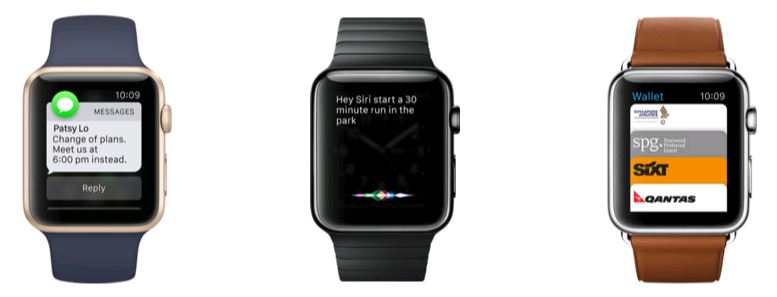 Apple is top of the league in the smart watch market in 2015, accounting for over 12 million units and two-thirds of all shipment, according to Canalys.
Samsung returned to second place in Q4, as the improved design of the Gear S2 saw a much better consumer reception than previous wearable efforts by the company. Pebble came third and Huawei fourth, establishing itself as the leading Android Wear vendor.
Basic bands exceeded 37 million shipments for the year. Fitbit set a quarterly shipment record as it comfortably led the category. Xiaomi held second place, shipping 12 million Mi Bands during 2015.
Xenith iCafe opens with 100 NVIDIA GeForce GPU-Powered PCs
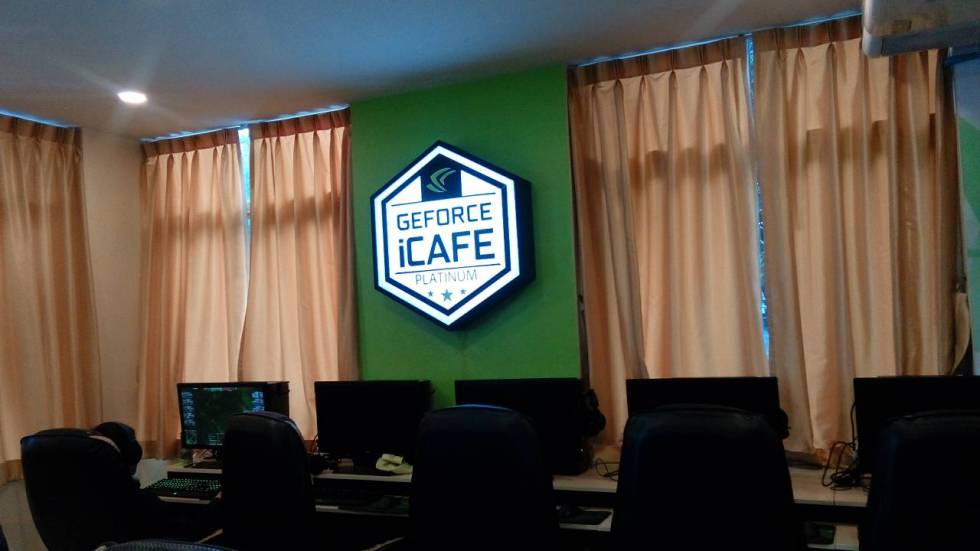 Gamers in northern Thailand, specifically Chiangmai, will get to enjoy premium gaming experience with the opening of Xenith iCafe in the city.
All its 100 PCs are equipped with NVIDIA GeForce GTX 960 GPUs, which deliver advanced performance, power efficiency, and realistic gameplay based on the latest NVIDIA Maxwell technology. They also come with high quality Razer gaming gear – mouse, keyboard and headset – all tailored to give gamers the best experience.
Situated near Chiangmai University , the modern and trendy Xenith iCafe features two gaming zones – a comfort zone and a VIP zone to cater to gamers’ needs as well as to host gaming events. This is a new trend in the iCafe market where owners can better balance cost, performance and functionality while delivering the gaming experience that their customers demand.
Samsung extends lead in India smartphone market
 Samsung has pulled further ahead of the competition with a quarter share of the India smartphone market in 2015, according to Canalys.
Micromax held on to second place, with annual shipment falling by more than 20%, primarily due to inventory build-up in its distribution network.
Lenovo and Motorola’s combined shipments were just short of three million units, up almost 60 percent up from the previous year, moving them past Intex to take third place in the market.
Oil gloom, data centre bloom
 Oversupply of oil in the global economy is set to accelerate data centre investment, according to Canalys, which forecasted that the large data centre segment will grow eight percent in 2016 as enterprises and service providers become more ambitious with the size of their facilities.
Oil prices have declined more than 70 percent since mid-2014, and will remain low as production ramps up across the US and Middle East. Data centres, with their monolithic energy consumption, will benefit from cheaper electricity as wholesale gas prices decline. Investment will focus on larger facilities, as energy becomes less of a constraint on operating costs.
Cheaper oil will accelerate a market that is already growing. Pre-eminent cloud service providers have already reacted to data sovereignty concerns by investing in the expansion of their global cloud footprint. This will continue and industry standard servers, network security and virtualisation technologies will become key growth categories. Incumbent data centre infrastructure vendors will pivot their focus towards high-end large and hyperscale facilities, but will face stiff competition from cheaper ODM alternatives.
Worldwide IT spending to remain flat this year
 The global economy is hitting IT spending, with Gartner predicting just a 0.6 percent increase over 2015 spending of US$3.52 trillion.
2015 saw the largest US dollar drop in IT spending since Gartner began tracking IT spending. US$216b less was spent on IT in 2015 than in 2014 and 2014 spending levels won’t be surpassed until 2019.
“The rising US dollar is the villain behind 2015 results. US multinationals’ revenue faced currency headwinds in 2015. However, in 2016 those headwinds go away and they can expect an additional five percent growth,” said John-David Lovelock, Research Vice President of Gartner.
Samsung introduces Galaxy A smartphones in Singapore
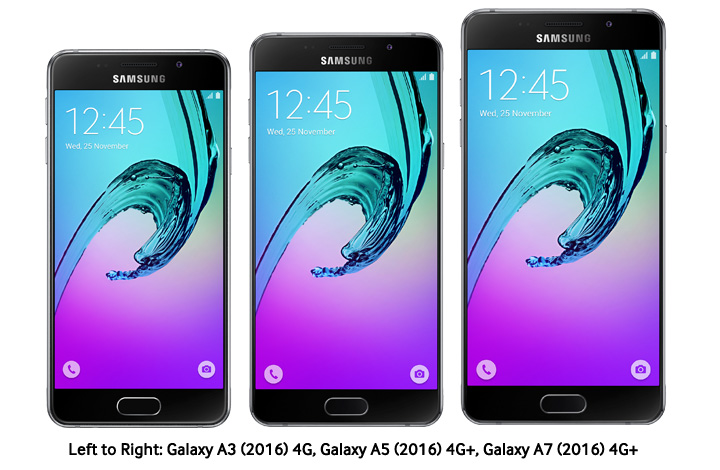 Samsung has launched its Galaxy A (2016) smartphones – the Galaxy A3 (2016) 4G, Galaxy A5 (2016) 4G+ and Galaxy A7 (2016) 4G+ – in Singapore. These additions come in three screen size options: 4.7-inch for the Galaxy A3 (2016) 4G, 5.2-inch for the Galaxy A5 (2016) 4G+ and 5.5-inch for the Galaxy A7 (2016) 4G+.
The ultra slim unibody sports a 2.7mm narrow bezel for an immersive viewing experience.
The smartphones pack a 13MP rear camera and a 5MP front-facing camera with brighter f1.9 aperture lenses. Innovative smart selfie features such as wide selfie, palm selfie and beauty face embedded in the Galaxy A (2016) allow users to capture high-resolution and vivid selfies with ease. The Galaxy A5 (2016) 4G+ and Galaxy A7 (2016) 4G+ rear cameras are also enhanced with optical image stabiliser for blur-free images.
AIS migrates to ZTE’s USPP
AIS, Thailand’s largest mobile operator, has successfully migrated 38 million subscribers from HLRs (Home Location Registers) to ZTE’s USPP (Universal Subscriber Profile Platform) solution. USPP was fully vetted in a series of proof-of-concept tests conducted by […]
Semiconductor market drops 1.9% in 2015
Worldwide semiconductor revenue was US$333.7 billion in 2015, a 1.9 percent decrease from 2014 revenue of US$340.3 billion, according to Gartner.
The top 25 semiconductor vendors’ combined revenue increased 0.2 percent, which was more than the overall industry’s growth. They also accounted for 73.2 percent of total market revenue, up from 71.7 percent in 2014.
“Weakened demand for key electronic equipment, the continuing impact of the strong dollar in some regions and elevated inventory are to blame for the decline in the market in 2015,” said Sergis Mushell, Research Director of Gartner.
NVIDIA adds AI and supercomputing prowess to driverless cars
 The new NVIDIA DRIVE PX 2 is set to give driverless cars a major boost.
Touted at the world’s most powerful engine for in-vehicle artificial intelligence, it allows the automotive industry to use artificial intelligence (AI) to tackle the complexities inherent in autonomous driving. NVIDIA DRIVE PX2 utilises deep learning on NVIDIA’s advanced GPUs for 360-degree situational awareness around the car, to determine precisely where the car is and to compute a safe, comfortable trajectory.
“Drivers deal with an infinitely complex world. Modern artificial intelligence and GPU breakthroughs enable us to finally tackle the daunting challenges of self-driving cars,” said Jen-Hsun Huang, Co-founder and CEO of NVIDIA. “NVIDIA’s GPU is central to advances in deep learning and supercomputing. We are leveraging these to create the brain of future autonomous vehicles that will be continuously alert, and eventually achieve superhuman levels of situational awareness. Autonomous cars will bring increased safety, new convenient mobility services and even beautiful urban designs – providing a powerful force for a better future.”
China to surpass the US in 3D printer market
China is set to overtake the US to become the biggest 3D printer market this year.
3D printer shipments in the China market passed 34,000 units in 2014, and is expected to reach 77,000 units in 2015, a growth rate over 120 percent, according to IDC.
This growth rate is largely driven by sales of desktop 3D printers priced under US$5,000. As the Chinese government continue to promote 3D printer awareness and usage within schools and educational institutions, the desktop 3D printer market is expected to maintain an annual growth trend in the coming years.
NVIDIA unveils VR-ready programme
 NVIDIA is paving the way to virtual reality (VR) gaming experiences with the launch of its new VR-ready programme at CES.
Under the programme, PC and notebook makers and add-in card providers will deliver GeForce GTX VR Ready systems and graphics cards that deliver an immersive VR gaming experience. The programme minimises confusion regarding which equipment is necessary to play the range of VR games and applications increasingly coming to market.
Delivering a great VR experience demands seven times the graphics processing power of traditional 3D games and applications – driving framerates above 90 frames per second (fps) for two simultaneous images (one for each eye).
NVIDIA to unveil new technology for self-driving cars at CES
NVIDIA will unveil new technology for self-driving cars at CES, which will kick off in Las Vegas this week. Jen Hsun-Huang, CEO of NVIDIA will be hosting a press conference on January 5, 10am […]
NVIDIA brings VR to SEA

As the year heads to a close, the anticipation for virtual reality (VR) is gathering momentum. And NVIDIA has helped to raise the tempo by bringing VR to Southeast Asia in a closed door event for analysts, the media and enthusiasts.
Held on December 11 at Crown Plaza Changi Airport in Singapore, the event gave participants the opportunity to try out two of the hottest VR products — Oculus Rift and HTC Vive — powered by NVIDIA technologies.
Oculus Rift lets users immerse in three three-dimensional games (details are under embargo from the content owners), taking gaming to another level.
Leadtek releases NVS 810 graphics card for HD multi-screen output
Leadtek Research has released the new NVS 810 professional graphics card, which is designed to provide high definition multi-screen output for large exhibits, outdoor advertisement walls and other digital image output applications. The NVS 810 uses […]
ZTE’s 3D-MIMO closer to commercial deployment
ZTE’s proprietary Pre5G technology is a step closer to commercial deployment after the successful testing of the 3D-MIMO (three-dimensional multiple input multiple output) solution on China Mobile’s commercial network.
The technology helped increase average data throughput by two to four times, with data rates at the cell edge going up as much as five to seven times, according to results from a test conducted on China Mobile’s commercial network in a metropolitan area of Guangzhou.
The pre-commercial test demonstrated the capability of ZTE’s 3D-MIMO solution to improve network throughput and coverage in an area with a high concentration of tall buildings.
Tablet market to drop 8% in 2015
The year’s looking bad for tablets as worldwide demand is expected to slide 8.1-percent to just 211.3 million units, according to IDC.
The new forecast follows three consecutive quarters of declining worldwide tablet shipments in 2015. Despite the challenges facing the overall market, IDC expects detachable tablets will continue to represent a growing portion of total shipments.
“We’re witnessing a real market transition as end users shift their demand towards detachables and more broadly towards a productivity-based value proposition. The proliferation of detachable offerings from hardware vendors continues to help drive this switch. We’re starting to see the impact of competition within this space as the major platform vendors – Apple, Google and Microsoft – now have physical product offerings. With attractive price points, including the introduction of sub-US$100 detachables, and platform innovation being driven by competition, IDC is confident that the detachables segment will nearly double in size in the next year, recording more than 75 percent growth compared to 2015,” said Jean Philippe Bouchard , Research Director, Tablets, IDC.
Samsung Gear VR available in Singapore
Powered by Oculus technology, Samsung Gear VR will be available for S$148 from November 28 in Singapore. The headset is fully optimised and compatible with the latest Samsung flagship smartphones, including the Galaxy Note 5 4G+, […]
Smartphones account for 1/3 of mobile phone sale in India in Q3
Smartphone sale is rising in India with 28.3 million shipped in Q3, according to IDC. That’s a 21.4 percent increase from 23.3 million units for the same period last year.
In Q3, 4G enabled devices have witnessed almost a three-fold increase in unit shipment over the previous quarter.
“The growth in the smartphone market was helped by rising demand for affordable 4G smartphones,” said Karthik J, Senior Market Analyst, Client Devices, IDC.
NVIDIA releases SDKs for VR platforms
 NVIDIA has released the 1.0 version of two powerful VR software development kits (SDKs) — NVIDIA GameWorks VR and NVIDIA DesignWorks VR — to help developers deliver VR games and applications.
Immersive VR requires seven times the graphics processing power compared to traditional 3D apps and games.
When used in conjunction with the company’s industry-leading GeForce and Quadro GPUs, these SDKs provide developers the tools to create VR experiences, increase performance, reduce latency, improve hardware compatibility, and accelerate 360-degree video broadcasts.
First green data centre thermal management solution to debut in Hong Kong
 NTT Communications’ new data centre cooling technology will debut at Hong Kong Financial Data Center Tower 2 (FDC2) in December. The first green thermal management solution in Hong Kong will feature a new front-flow cooling system (AHU) designed to optimise both energy usage and cost of the data centre, increasing energy efficiency by more than 20 percent compared with traditional cooling systems.
The innovative front-flow cooling system, a custom air handling and Fay Array CRAH launched in partnership with Emerson Network Power, is designed to keep power consumption to a minimum while ensuring the data center stays online and is reliable at all time. This benefits enterprise users that leverage lower energy costs to build a competitive business edge.
“With power consumption accounting for a major operating expense of data centers today, we have recognised that enhancing energy efficiency would be a top priority when we incorporate a high density design within the soon-to-be launched FDC2. We are confident that our new AHU will change the way data centers are designed, and help our clients drive business performance by optimising costs in the long term,” said Taylor Man, Executive Vice President, Cloud Business Division, NTT Com Asia.
Accelerated systems account for more than 20% of TOP500 supercomputers
 Accelerated systems, or GPU-powered systems, for the first time accounted for more than 100 on the list of the world’s 500 most powerful supercomputers. That’s a total of 143 petaflops, over one-third of the list’s total FLOPS.
NVIDIA Tesla GPU-based supercomputers comprise 70 of these systems – including 23 of the 24 new systems on the list – reflecting compound annual growth of nearly 50 percent over the past five years.
There are three primary reasons accelerators are becoming increasingly adopted for high performance computing.
- Moore’s Law continues to slow, forcing the industry to find new ways to deliver computational power more efficiently.
- Hundreds of applications – including the vast majority of those most commonly used – are now GPU accelerated.
- Even modest investments in accelerators can now result in significant increases in throughput, maximising efficiency for supercomputing sites and hyperscale datacentres.
ZTE Blade S7 designed for selfies
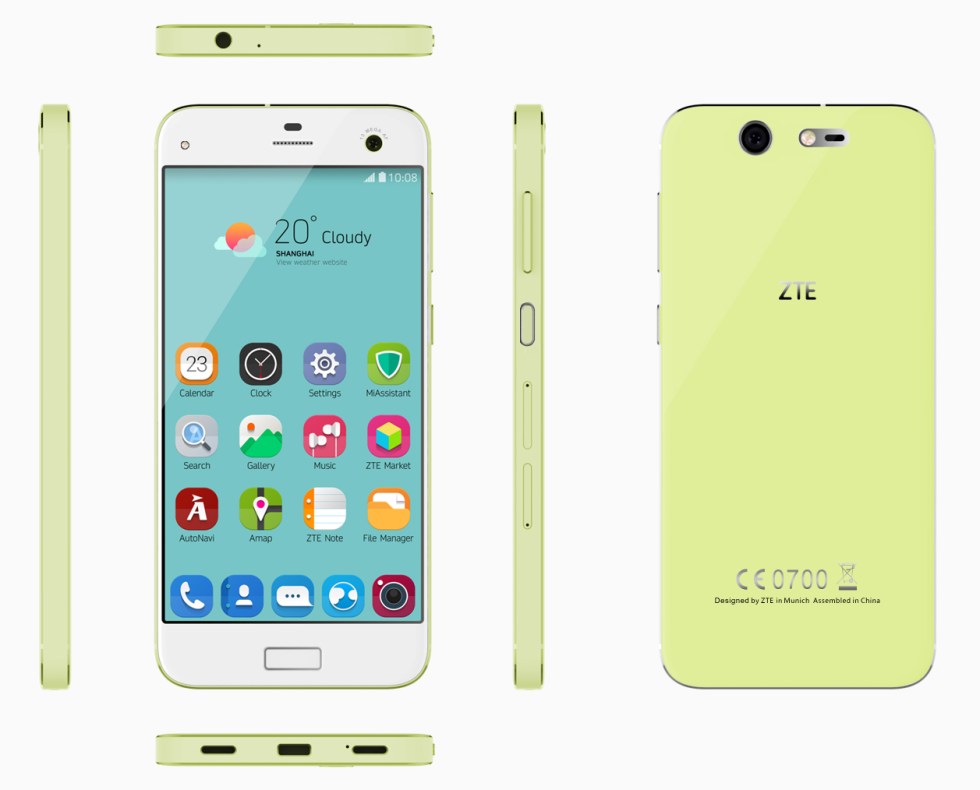 Looks like ZTE believes that Thais love to take selfies. The newly-launched ZTE Blade S7, which is designed for selfie lovers, will first be made available in Thailand before hitting the rest of the region.
The smartphone features a five-inch full HD LTPS screen with a 445 PPI Super Retina display for 178-degree full viewing angles. Housed in an aluminum alloy frame with thin bezels, Blade S7 offers a 72.1 percent screen-to-body ratio and is protected with 2.5D curved Gorilla Glass 3 on both the front and back.
Just 7.2mm thick and 67mm wide, it comes with a powerful 13-megapixel front-facing camera with a front flash and phase detection autofocus, as well as functions for panorama shots and 14 different beautification options. At the back is another 13-megapixel rear camera that supports professional and auto shooting modes, selective focus, and laser auto focus for fast and accurate shooting in low-light conditions.
Omni-channel communications gaining traction in APAC
 While voice interaction remains the primary communication channel in contact centres, the concept of an omni-channel is gaining popularity in Asia-Pacific, according to Frost & Sullivan.
With smartphone penetration and social media usage on the rise, an increasing number of organisations are working closely with system integrators and independent software vendors to implement the omni-channel platform. Their objective is to overcome the existing silo nature of communication channels and provide a consistent and seamless customer experience across voice, email, SMS, Web-chat, social media and real-time video interactions. In response, contact centers are transforming into ‘customer engagement centers’ with multi-channel strategies that are tightly integrated with mobile applications and self-service capabilities.
According to Frost & Sullivan, the market earned revenues of US$699.5 million in 2014 and is estimated to reach US$952.9 million in 2021 with a compound annual growth rate of 4.5 percent. The study covers automatic call distributors, outbound systems, computer telephony integration, interactive voice response, workforce management, call monitoring, speech technology and multimedia systems. Workforce optimisation and analytics are expected to lead revenue growth across these segments, driven by the continuous focus on contact centre operation performance management.
NVIDIA Jetson TX1 powers machine learning
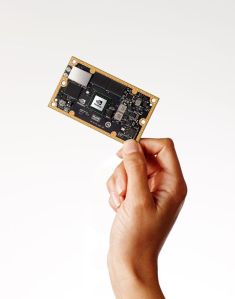 As the first embedded computer designed to process deep neural networks, the new NVIDIA Jetson TX1 is set to enable a new wave of smart devices. Drones will evolve beyond flying by remote control to navigating through a forest for search and rescue. Security surveillance systems will be able to identify suspicious activities, not just scan crowds. Robots will be able to perform tasks customised to individuals’ habits.
That’s what the credit-card sized module can do. It can harness the power of machine learning to enable a new generation of smart, autonomous machines that can learn.
Deep neural networks are computer software that can learn to recognise objects or interpret information. This new approach to program computers is called machine learning and can be used to perform complex tasks such as recognising images, processing conversational speech, or analysing a room full of furniture and finding a path to navigate across it. Machine learning is a groundbreaking technology that will give autonomous devices a giant leap in capability.
Unreal Engine 4 to include NVIDIA GameWorks VR
Epic Games will be using NVIDIA’s GameWorks VR technology, including Multi-Resolution Shading and VR SLI, for Unreal Engine 4 (UE4). UE4 software powers hundreds of games on PCs and consoles and is becoming a key tool […]
7m Apple Watches sold in six months
 Apple’s magic formula for success has continued with the Apple Watch. The highly-sought after smart watch dominated the market with nearly seven million units sold since launch, according to Canalys.
And this figure in just two quarters exceeds all other vendors’ combined shipments over the previous five quarters. That’s simply amazing!
In Q3, Apple was the only smart watch vendor to ship more than 300,000 units. The quarter also saw the release of the Pebble Time Steel, which helped the company ship more than 200,000 total smart watches, while Samsung’s Gear shipment declined ahead of the Q4 release of the Gear S2. Vendors will continue to battle for position behind Apple in Q4 as a raft of new devices from a diverse set of companies hits the market. For example, both Fossil and Tag Heuer will be launching their first smart watches before the end of the year.
ZTE opens 5G R&D centre in Japan
ZTE has opened a new research and development (R&D) center in Tokyo to focus on the development of 5G and other next-generation network technologies. The new R&D centre will support ZTE’s partnerships with operators and […]
NVIDIA introduces Battlebox PC in ANZ
 At PAX Australia held over the weekend in Melbourne, NVIDIA introduced the combat-ready Battlebox PC, which is designed especially for hardcore gamers.
A Battlebox PC is a beast of a gaming machine with a powerful combination of the NVIDIA GeForce GTX 980 Ti GPU horsepower, two-Way NVIDIA SLI and the best components. It is also VR Ready and supports 4K gaming and DX12 for better visual effects and rendering techniques.
The Battlebox PC will is available from Centrecom, MSY, Mwave, PC Case Gear, PLE, Origin PC, Scorptec, and UMART in Australia, and Computer Lounge, PB Technologies and Playtech in New Zealand.
HP multiplies
As of November 1, HP split into two — Hewlett Packard Enterprise (HPE) and HP Inc. HPE will focus on selling enterprise hardware, such as servers while HP Inc will push PCs and printers.
APAC consumes half of world’s mobile accessories
Every other piece of mobile accessory in the world is sold in the Asia-Pacific (APAC) region. To be precise, APAC accounts for 52.9 percent of all mobile accessories shipment, according to ABI Research.
Admittedly, the region does have a huge population but the sales figures are still staggering as global revenues for mobile accessories are expected to hit US$81.5 billion this year.
Driving the demand are cost competitive smartphones. China holds huge opportunities for accessories due to its large existing and potential consumer base, rapid growth of smartphone and tablet adoption, a growing online retail market and increasing disposable incomes.
Tablet sale slides 12.6% in Q3
Tablet sale continued its decline for the fourth straight quarter, according to IDC. Q3 shipment of 48.7 million units represented a 12.6 drop year on year, further highlighting the challenges the tablet market is facing.
At the close of 2014, IDC estimated the installed base of tablets to be 581.9 million globally, which was up 36 percent from 2013 but slowing quickly. With mature markets such as North America, Western Europe, and Asia/Pacific well past 100 million active tablets per region, the opportunities for growth are getting fewer.
“We continue to get feedback that tablet users are holding onto devices upwards of four years. We believe the traditional slate tablet has a place in the personal computing world. However, as the smartphone installed base continues to grow and the devices get bigger and more capable, the need for smaller form factor slate tablets becomes less clear. With shipment volumes slowing over four consecutive quarters, the market appears to be in transition,” said Ryan Reith, Program Director of IDC.
Alibaba joins Microsoft and AWS as leaders in China cloud market
 The public cloud market in China will more than double in the next five years, from US$1.8 billion this year to US$3.8 billion in 2020, according to Forrester.
Two-thirds of Chinese software decision-makers surveyed by Forrester are making increased use of public cloud platforms a top priority over the next 12 months.
Enterprise public cloud platform vendors in China are improving in terms of their service diversity, simple abstraction for operational efficiency, and operational autonomy for on-demand elasticity. Forrester has evaluated the strengths and weaknesses of 11 cloud vendors Alibaba, AWS, ChinaC, DaoCloud, JD.com, Microsoft, MoPaaS, QingCloud, Tencent, UCloud, and UnitedStack.
NetApp Data Fabric enables seamless data management in hybrid cloud
 NetApp has announced new Data Fabric solutions and services that deliver the data management capabilities organisations need to accelerate success in the hybrid cloud era.
With the new offerings, organisations can seamlessly manage data across whatever IT resource they choose, speeding innovation and enabling better business decisions.
“Management of digital data is essential for organisations to innovate faster and capture new revenue opportunities in a fast changing technology landscape,” said Lee Caswell, Vice President, Product, Solutions and Services Marketing, NetApp.
Huawei surges to top spot in China smartphone market
Huawei has dethroned Xiaomi as China’s top smart phone vendor in Q3. This is Huawei’s first time at the summit of China’s smartphone, according to Canalys. The company powered its way to first place with 81 percent […]
NVIDIA GRID 2.0 available in Australia
 Following its announcement at VMworld in August, NVIDIA GRID 2.0 is now available in Australia.
The performance, efficiency and flexibility improvements in the latest release of NVIDIA GRID mean enterprise businesses can now deliver even the most graphics-intensive applications to any connected device virtually.
With NVIDIA GRID 2.0, employees can work from almost anywhere without delays in downloading files, increasing their productivity. IT departments can equip workers with instant access to powerful applications, improving resource allocation. And data can be stored more securely in a central server, rather than on individual systems.
9 IT CEOs make Harvard Business Review Top 100 list
 Harvard Business Review has included nine CEOs of IT companies among its Top 100 Best Performing CEOs in the world.
Slotting in among the top 50 are Cisco’s John Chambers (#2), Seagate Technology’s Stephen Luczo (#5), Canon’s Fujio Mitarai (#10), NVIDIA’s Jen-Hsun Huang (#29), and Hon Hai Precision Industry’s Terry Gou (#33).
The new study in the November issue of Harvard Business Review rated CEOs based on an 80-20 weighting between the company’s financial performance and its performance on environmental, social and governance criteria.
Dell to acquire EMC for US$67b
In possibly the biggest acquisition deal in recent times, Dell has announced plans to acquire EMC for a whopping US$67 billion. This merger combines the massive server resources of Dell with a the storage prowess […]
 Entelechy Asia