Alibaba sets US$8b target for November 11 sales

Alibaba 1111November 11 is Singles’ Day in China and the singular thing retailers are aiming for today is record sales. China e-commerce giant Alibaba has set US$8.18 billion (RMB50 billion) as its 2014 target of single-day transaction value for the November 11 online shopping festival, according to IDC.

The research firm believes Alibaba is very likely to achieve five percent more. “11.11” is not only a festival for Alibaba, online shoppers, and online retailers; it also changes consumers’ buying behaviour and impacts the evolution of the China e-commerce ecosystem.

“11.11” has become a special day for many Chinese consumers ever since Alibaba created this single-day online shopping festival in 2009. The total transaction value during last year’s “11.11” reached US$5.73 billion (RMB35 billion), which shocked Alibaba’s e-commerce competitors all around the world as well as the entire retail industry.

Global smartphone shipment soars past 300m mark in Q3

Q3 is a stunninCanalysg quarter for smartphones as global shipment broke the 300 million unit barrier for the first time. This represented year-on-year growth of 23 percent, according to Canalys.
While Samsung and Apple remain the market leaders, the tussle for the third spot is heating up with was Xiaomi (six percent) followed closely by Lenovo and Huawei at five percent each.

“The global market is becoming more competitive, with vendors beyond Samsung and Apple enjoying growing success. A year ago, in Q3 2013, Samsung and Apple together accounted for 48 percent of worldwide smart phone shipments. While still impressive, in Q3 2014 this had slipped to 38 percent. This trend is likely to continue. It is down to the strong value proposition and increasing quality of products offered across all price points by competing vendors, most notably Chinese companies. In fact, six of the top 10 global vendors in Q3 are based in China,” said Chris Jones, Vice President and Principal Analyst of Canalys.

NVIDIA joins VMware in APAC vForums

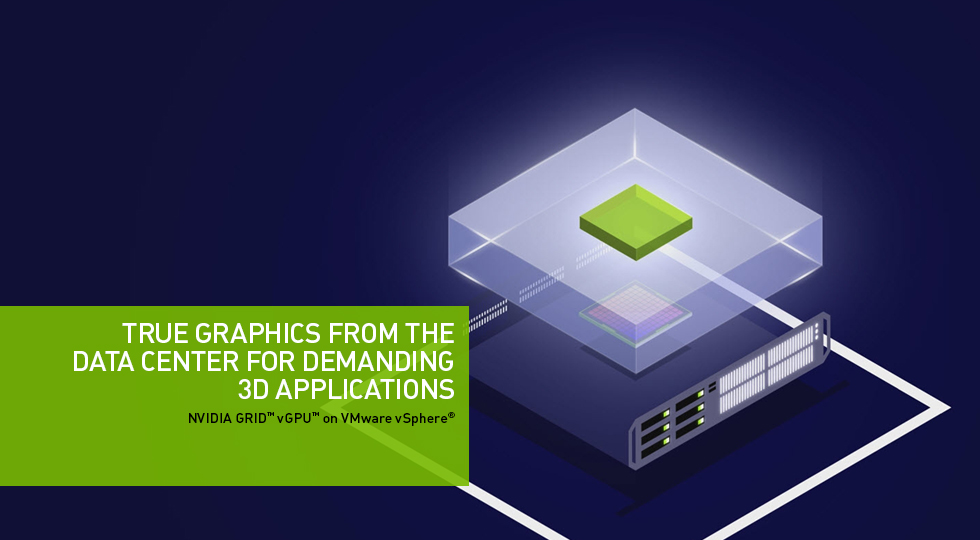
NVIDIA GRID vGPU vSphereImagine the power of shared GPUs? NVIDIA and VMware are showcasing how enterprises can leverage the power of shared GPU using VMware vSphere and NVIDIA GRID vGPU at vForums currently on in Singapore, Sydney and Tokyo.

NVIDIA GRID vGPU technology allows multiple virtual machines to share the power of a single GPU to deliver rich graphics experiences with professional 2D and 3D applications.

The partners are also pushing an early access programme that provides a technology preview of these technologies. Enterprises can try the GPU virtualisation and virtual application and desktop infrastructure, ahead of its general availability by signing up at www.nvidia.com/grid-vmware-vgpu. Those selected get to work directly with the engineering teams from both NVIDIA and VMware.

Australia nudges towards hosted and cloud-based UC solutions

frost and sullivanAustralia’s on-premise unified communications (UC) market experienced a decline in revenues in 2013, according to Frost & Sullivan. This was mainly due to the improved understanding of the benefits of hosted and cloud-based UC solutions, which have now reached mainstream adoption.

Organisations are now able to deploy any UC application over a hosted model, and have a much improved understanding of the benefits of hosted and cloud-based UC solutions. In addition, the capital intensive nature of on-premise solutions limits the flexibility for organisations to adapt to the changing communication and collaboration environments. As a result, the on-premise UC market is approaching a phase where growth rates are flat or declining.

According to Anand Balasubramanian, Industry Analyst of ICT Practice, Australia & New Zealand at Frost & Sullivan, the decline in the Australian UC market revenues can be attributed to the changing business preferences for communication and collaboration solutions.

3D printers set for rapid growth

GartnerThe global 3D printer market is set to double next year to reach 217,350 units in 2015, according to Gartner.

From then, 3D printer shipment will more than double every year between 2015 and 2018, by which time worldwide shipments are forecast to reach more than 2.3 million.

“As we noted last year, the 3D printer market is at an inflection point. Unit shipment growth rates for 3D printers, which languished in the low single and double digits per year throughout the 30 years since the first 3D printers were invented, are poised to increase dramatically beginning in 2015. As radical as the forecast numbers may seem, bear in mind that even the 2.3 million shipments that we forecast will be sold in 2018 are a small fraction of the total potential market of consumers, businesses and government organisations worldwide,” said Pete Basiliere, Research Vice President of Gartner.

GSMA to recognise young innovator and connected women

GSMAGSMA has introduced two special awards to commemorate the 20th anniversary of the Global Mobile Awards. The Young Mobile Innovator of the Year and Connected Women: Leadership in Industry awards will be presented at the Global Mobile Awards ceremony at GSMA Mobile World Congress in Barcelona on March 3, 2015.

The Young Mobile Innovator of the Year is designed to showcase young and exciting new talent from across the mobile ecosystem and is open to anyone between 18 and 25 years old, working in an organisation or independently, or currently pursuing further education. The Connected Women: Leadership in Industry award, will recognise leadership in the establishment of initiatives that have a positive impact in reducing the digital skills gap and attracting and retaining women and girls in mobile and telecommunications.

“These additional awards will put the spotlight on individuals and organisations that will be shaping the face of the mobile industry in the years to come,” said Michael O’Hara, Chief Marketing Officer of GSMA.

Singapore has right attributes for Smart City development

IDCSingapore possesses the necessary ingredients for sustained Smart City developments, according to IDC Government Insights.

While it is still unclear which paths lead to the success of Smart City implementations, IDC explains that this forecast relates to an effective and innovative strategic leadership as well as strengths in close cross-industry ties across a multitude of technology and business partners alike to drive the necessary future developments of its city.

It defines Smart Cities as a district, town, city, county, metropolitan area, city state, or even functionally clustered government operations such as public order and safety, transportation, healthcare, and education sectors. Such next-generation models of cities are anticipated to capture, analyse, and use information to achieve over-arching long-term sustainability goals around improving the lives of their residents, business, and government services.

PhotoMath app solves algebra problems using smartphone camera

PhotoMathAlgebra can be a bane to students and while some turn to their teachers for help, others request for assistance from parents, siblings and tutors. With PhotoMath, they now have another source of help. Best of all, it’s free!
PhotoMath, which is now available on iOS and Windows smartphones, leverage the devices’ cameras to scan a printed math problem and provide an answer in an instant — complete with the steps to solving the problem.

All the student needs to do is to install the app, scan the equation within a red frame and the app does the rest.

APAC PC market up 8% in Q3

IDCSpurred by consumer PC demand in China and India, the APAC (excluding Japan) PC market rose eight percent in Q3, according to IDC’s preliminary results. However, shipment dropped five percent year-on-year compared to Q3 2014 to 26.6 million units.

In India, positive consumer sentiment after the elections resulted in high retail walk-ins while vendors in China pushed volumes in spite of a poor sell-out. Asean was a mixed bag with Indonesia, Malaysia and Thailand experiencing double-digit annual declines, while other countries such as Vietnam did well.

“XP migration helped boost commercial PC spending earlier this year. But in recent quarters, we have seen Microsoft add a lot to the entry-level segment by launching the Windows 8.1 with Bing programme. This programme has helped consumers buy licensed OS PC in many countries in the region,” said Handoko Andi, Research Manager for Client Devices Research at IDC Asia/Pacific.

Google’s Nexus 9 breaks new ground with NVIDIA Tegra K1 64-bit processor

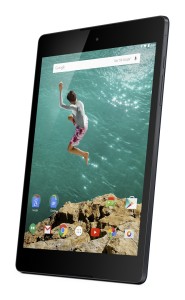
Google Nexus 9When Google announced the Nexus 9 last Wednesday, one of the more pertinent developments is that the new tablet sports the NVIDIA Tegra K1, which brings 64-bit capabilities to Android for the first time.

Google’s first tablet, the first Nexus 7, was also powered by the NVIDIA Tegra two years ago.

The Nexus 9 has broken new ground as the Tegra K1 is the first ARM processor for Android to take advantage of Lollipop support for 64-bit CPU architectures. Earlier known as Project Denver, the ARM v8-based custom CPU design brings class-leading efficiency and power to mobile devices.

VMware and NVIDIA preview NVIDIA GRID vGPU

NVIDIA_GRID_vGPUVMware and NVIDIA have announced that Airbus Group, CH2MHILL and MetroHealth are among the first to join their early access programme to try the latest technology for GPU virtualisation and virtual application and desktop infrastructure, ahead of its general availability.

Customers selected to participate in the programme have deployed a technology preview of the solution. They get to work directly with the engineering teams from both NVIDIA and VMware, and provide direct input about their experiences — influencing future products, training, documentation and services.

NVIDIA GRID vGPU technology allows multiple virtual machines to share the power of a single GPU to deliver rich graphics experiences with professional 2D and 3D applications. Combined with VMware Horizon, the technology can deliver a great user experience and the scalability that IT teams require for the most demanding users in their organizations.

ZTE launches payment solutions

ZTEZTE has launched a range of payment solutions including phone POS (point of sale), photonic and DTV (Digital TV) payment products.

With a NFC (near field communication) capable smartphone, users can install the phone POS app to enable the smartphone function as a POS payment device. Businesses and individuals can then manage a vast range of transactions including transferring money, checking account balances, paying off credit cards, topping up mobile phones and paying bills.

This functionality gives complete freedom to users, allowing them to complete transactions whenever and wherever they want, as well as allowing businesses to save on operating expenses by receiving immediate payment.

China open to using smartwatches as payment system

gfk_logoSmartwatches are set to be more than health trackers with countries around the world exploring different potential.

According to a recent GfK survey, 54 percent of respondents are keen to use smartwatches for payment even though mobile payment using a smartphone to pay at the checkout with near field communication (NFC) technology hasn’t proved very popular so far.

Besides mobile payment, the survey covering China, Germany, South Korea, the UK, and the US, revealed taht people in these countries see potential in using smartwatches to “carry” tickets for passenger transport or as security keys to their computers and online accounts.

GSMA announces connectivity guidelines to accelerate the Internet of Things

GSMAGSMA has published guidelines for the Internet of Things (IoT) market that outline how devices and applications should communicate via mobile networks in the most intelligent and efficient way.

The report, IoT Device Connection Efficiency Guidelines, has received the backing of leading mobile operators including AT&T, China Mobile, China Telecom, China Unicom, Deutsche Telekom, Etisalat, KT Corporation, Orange, NTT DOCOMO, Tata Teleservices, Telefónica, Telenor Connexion, and VimpelCom as well as ecosystem partners including Sierra Wireless and Jasper and aims to support device and application developers as the IoT market develops.

The guidelines include a number of best practice areas such as data aggregation within devices, non-synchronous network access, application scalability and guidance on how to manage signaling traffic from de-activated or out-of-subscription SIMs.

HP to split

HPWhen it comes to technology companies, being big may not be the best. In the mid-1990s, IBM, then the world’s leading IT company, had to wrestle with its size. It eventually divested product lines that were deemed to have low margins to focus on software and services. Out went its printers and hard drives. In 2005, IBM sold its personal computer business, including the ThinkPad notebooks to Lenovo. And last week, it officially pulled out of the x86 server market with the sale to Lenovo.

It looks like HP is facing size challenges and taking the same route as IBM of old. While IBM slumbered, HP went on an acquisition spree, chomping up Compaq, EDS and 3Com and many others. It became the world’s top technology company with revenues exceeding US$100 billion.

However, yesterday, HP announced plans to split into two companies — HP Enterprise to focus on enterprise technology infrastructure, software and services businesses, and HP Inc, which will concentrate on the PC and printing businesses.

IBM turns to NVIDIA to power OpenPOWER-based systems

IBM PowerHaving exited the x86 server business, IBM has turned its focus to a new range of systems that leverages GPU acceleration delivered by NVIDIA.

Built on IBM’s POWER8 processor, the new IBM Power S824L servers are optimised for big data workloads. The new systems tightly integrate IBM and other OpenPOWER member technologies, including NVIDIA’s GPU accelerator technology for the first time, to unleash computing performance to help enable banks to better analyse risk, energy companies to more precisely locate oil reserves, and scientists to more quickly identify cures for diseases.

They provide clients the ability to run data-intensive tasks on the POWER8 processor while offloading other compute-intensive Big Data workloads to GPU accelerators which are capable of running millions of data computations in parallel and are designed to significantly speed up compute-intensive applications.

Worldwide semiconductor market to grow 7.2% this year

GartnerA slew of demand for semiconductors is helping the industry to hit a targeted 7.2 percent growth to hit US$338 billion this year.

Apple and Samsung are among the many IT vendors that have unleashed new products in recent months, spurring the growth in the semiconductor market.

“Semiconductor revenue set an all-time record in the third quarter of 2014, fueled by a strong electronics build for the holiday season. Get ready for a flood of new product introductions, ranging from simple low-cost tablets to high-end ultramobiles and smartphones. Demand for the iPhone 6 and iPhone 6 Plus has been robust, but there is concern for other types of devices planned for the holidays,” said Jon Erensen, Research Director of Gartner.

Samsung Galaxy Note 4 4G+ available for pre-order in Singapore

Samsung Galaxy Note 4 pre-orderThe Samsung Galaxy Note 4 is now available for pre-order from telcos and the Samsung Experience Stores in Singapore with delivery from October 11.

Those interested can register their interest at:

Alternatively, those who would like to pre-order the S$1,088 phablet without a contract can do so at Samsung Experience Stores at Great World City, Tampines Mall, AMK Hub, and Jurong Point.

New Honda cars to feature NVIDIA Tegra-powered Android infotainment system

Kristian - Israel

The 2015 editions of the Honda Civic, Civic Tourer and CR-V will leverage the power of  the energy-efficient automotive-grade NVIDIA Tegra processor for the Honda Connect infotainment system.

Easy and intuitive to use, the Android-based system is responsive to touchscreen gestures such as pinch, zoom and swipe to give drivers the same experience that they get on their smartphones and tablets.

Featuring rich, vibrant graphics and the ability to customize screens, Honda Connect delivers a personal experience to whoever is behind the wheel. The Tegra-powered system drives a seven-inch capacitive touchscreen display for satellite navigation, AM/FM/DAB, rearview camera and vehicle information. Access to the Honda App Center enables compatible apps for use on the touchscreen, such as Aha Radio.

Microsoft jumps to Windows 10

Windows 10 familySkipping a generation seems to be the norm these days. A couple of weeks ago, NVIDIA introduced its GeForce GTX 900 series, bypassing the 800 series. Yesterday, Microsoft made a similar move by skipping a highly anticipated Windows 9 to introduce Windows 10.

In a technical preview, Microsoft highlighted advancements in the new operating system that are designed for business, including an updated user experience and enhanced security and management capabilities.

“Windows 10 represents the first step of a whole new generation of Windows, unlocking new experiences to give customers new ways to work, play and connect. This will be our most comprehensive operating system and the best release Microsoft has ever done for our business customers, and we look forward to working together with our broader Windows community to bring Windows 10 to life in the months ahead,” said Terry Myerson, Executive Vice President of the Operating Systems group at Microsoft.

Lenovo becomes leading x86 server provider in China

IDCLenovo is now the biggest x86 server provider in China, following the completion of its acquisition of IBM’s x86 server business. And IDC believes this acquisition will enrich Lenovo’s x86 server portfolio and strengthen its products and channels.

According to the research firm’s latest data, Lenovo shipped 99,101 units in the first half of 2014 and is ranked 4th among all vendors in the same category.

Combining IBM and Lenovo’s shipments in this period of time would make Lenovo the biggest vendor in China x86 server market with a market share of 23.9 percent.

Huawei presents stylish Prime mobile wifi

Huawei Prime E5878Huawei has unveiled the Huawei Mobile WiFi Prime E5878, claimed to be the world’s thinnest at 7.5mm, the equivalent of five credit cards stacked on top of each other.

Delivering download speeds of up to 150 Mbps and connectivity for up to 10 devices, Huawei Prime is so compact and portable at 109.5mm long and 58mm wide that it can easily slide into a pocket or bag to stay connected on-the-go, making it ideal for small and home office business professionals.

Huawei Prime features press and play functionality with a five-second start up to provide quick connectivity for up to 10 WiFi-enabled devices at once with a range of 100 metres.

Emerging markets to give tech devices US$10b boost

gfk_logoIndia, China, Pakistan, and Vietnam are among the top five emerging markets that will drive tech devices sale in 2015, according to GfK.

The resarch firm has forecasted that the global technology device market will remain at US$1 trillion next year, just as it has been since 2011.

Top 10 tech device growth markets in 2015​ ​ ​ ​
2014 (U$b)​ ​2015 (U$b) ​Percentage YoY ​Growth (U$b)
​India 30.0​ 34.8​ 16%​ 4.8​
China​ 199.0​ 200.8​ 1%​ 1.8​
Nigeria​ 5.1​ 5.7​ 13%​ 0.7​
Pakistan​ 4.2​ 4.8​ 15%​ 0.6​
Vietnam​ 5.5​ 6.1​ 11%​ 0.6​
Bangladesh​ 3.3​ 3.8​ 13%​ 0.4​
Brazil​ 39.0​ 39.3​ 1%​ 0.4​
Egypt​ 4.6​ 5.0​ 8%​ 0.3​
Indonesia​ 12.4​ 12.7​ 3%​ 0.3​
​Philippines 3.8​ 4.1​ 6%​ 0.2​
TOTAL​ 306.9​ 317.1​ 3%​ 10.1

Source: GfK

Cellular offloading strategies drive wi-fi test equipment market


frost and sullivanIn its revised mobile service bundles, SingTel added free wi-fi access for its mobile users in selected locations in Singapore. This is said to be part of its strategy to alleviate data congestion on its 3G and 4G networks.

The trend is set to continue across the globe as telcos wrestle to cope with the increasing demand for mobile data. To enable wi-fi access, they need to purchase wi-fi test equipment, creating strong opportunities for Wi-Fi test equipment manufacturers globally.

According to Frost & Sullivan, the wi-fi test equipment market earned revenues of US$528.9 million in 2013. This is expected to more than double to reach US$1.09 billion in 2020.

Graphics-as-a-service a ‘very attractive business model to consider’

Sandeep GupteNVIDIA VCA (visual computing appliance), which began shipping in August, has opened up the possibility of graphics-as-a-service.

The scalable, network-attached GPU rendering appliance with eight high-end NVIDIA GPUs is designed to provide designers and artists with the graphics power needed to create photorealistic images. It dramatically accelerates ray tracing, enabling users to interact with computer models of such high visual fidelity that it can eliminate the need for 3D physical prototypes.

While currently designed for ray tracing, NVIDIA is working with independent software vendors (ISVs) to apply VCA to other areas, according to Sandeep Gupte, Senior Director of Professional Services Group at NVIDIA (right).

Gone Girl is first 6K film produced using NVIDIA Quadro

Gone GirlDavid Fincher’s highly anticipated thriller Gone Girl starring Ben Affleck, Rosamund Pike and Neil Patrick Harris hits theatres on October 3. The film is generating as much attention for its star power as it is for the highly advanced production approach of the filmmakers. It’s the first feature shot entirely in 6K and the first feature to use NVIDIA Next-Gen Quadro GPUs. Edited by two-time Academy Award-winner Kirk Baxter, ACE, it’s also the first studio feature edited entirely in Adobe Premiere Pro CC.

The production system and workflow for Gone Girl is the most advanced technical design of any feature film to date. The filmmakers opted to shoot in 6K, but frame for 5K to have an ability to reframe and stabilise, with greater resolution than before. They also wanted to retain control over a majority of the post-production in-house to improve turnaround and reduce overall costs.

“Shooting in 6K, we had a large amount of RED media content to be converted and reviewed,” explained Jeff Brue, Post Engineer. “This, combined with a need for an ability during editorial for every shot to be reframed, posed a unique challenge.”

Samsung avails Curved Soundbar in Singapore

Samsung Curved SoundbarIf you own a Samsung Curved TV, match it with the Samsung Curved Soundbar HW-H7501 which is now available in Singapore for S$999.

Designed to work in conjunction with Samsung’s Curved UHD TVs. the Samsung Curved Soundbar is crafted with a finely brushed aluminium finish that  matches and complements the Samsung Curved UHD TVs.

It can be easily wall-mounted and installed under the TV without the need to drill separate holes into the wall. With a width of 42mm and same curvature radius of 4,200mm as the Samsung Curved UHD TVs, the soundbar delivers a greater sense of curve by surrounding the viewer and providing a powerful listening experience.

ZTE unleashes 4G Qcell solution

ZTEZTE has announced the 4G Qcell solution uses cloud-based network coordination technology to overcome signaling leakage and interference. The solution supports multi-frequency and multi-mode network deployment, enabling operators to offer converged networks with superior indoor performance.

Unlike traditional DAS solutions, it implements Pico RRU network construction and power supplies through standard Ethernet cables, reducing construction difficulty and costs, and saving 60 percent of deployment time. The new solution helps operators quickly deploy low-cost and high-performance networks with integrated GSM/UMTS/LTE indoor coverage.

“ZTE’s 4G Qcell solution provides end-users with ubiquitous access to a superior network both indoors and outdoors, effectively addressing demands for both network capacity and service coverage in the 4G era. The new technology from ZTE outperforms existing solutions on the market, giving operators the advantages of large capacity, seamless coverage, rapid deployment, smooth evolution, manageability, and controllability,” said Zhang Jianguo, Vice President of ZTE.

Huawei introduces IP Video Solution 2.0

HuaweiHuawei has launched IP Video Solution 2.0, which integrates diverse features and a new user experience to improve video business platform facilitation from Internet Protocol TV (IPTV) to Video Everywhere.

The platform is part of Huawei’s video everywhere strategy to enable video@home, video@move and video@enterprise. Over the next few years, more than 80 percent of total internet traffic will be in video format.

Leveraging cloud technology, the solution provides a disruptive new user experience by supporting 4K and Evolved Multimedia Broadcast Multicast (eMBMS) over LTE on one convergent platform, delivering five key values for operators.

Watch for it — US$30 smartwatches next year!

mi-bandSmartwatches are attracting lots of attention but the prices are keeping many at bay, at least for now. Come next year, the prices are expected to average US$30, as smartphone vendors and component suppliers look to tap this market. In fact, Xiaomi has already introduced the Mi Band at just US$13.

Gartner predicts that by 2016, smartwatches will comprise about 40 percent of consumer wristworn devices. Nine out of the top 10 smartphone vendors have entered the wearables market to date or are about to ship a first product, while a year ago only two vendors were in that space.

“Apple has finally unveiled its Apple Watch, which we expect to trigger more consumer interest once it starts shipping in 2015,” said Angela McIntyre, Research Director of Gartner.

Maxwell is here! NVIDIA launches GeForce GTX 980 and 970

NVIDIA has skipped the GeForce GTX 800 series with the launch of the new Maxwell-based GeForce GTX 980 and 970 GPUs. To showcase the new series’ capabilities, NVIDIA has produced a video clip to debunk the myth that Apollo 11 may not really have taken place. That is, that man did not really land on the moon then.

Based on the Maxwell chip architecture, the new GeForce GTX 980 and 970 GPUs deliver unmatched performance, major new graphics capabilities and twice the energy efficiency of the previous generation.

A new Voxel Global Illumination (VXGI) technology enables gaming GPUs for the first time to deliver real-time dynamic global illumination. Scenes are significantly more life-like as light interacts realistically in the game environment — resulting in deeper levels of immersion for gamers.

75% of mobile apps will fail security test

Gartner

Enterprise employees are downloading mobile applications from app stores and use these applications to access enterprise assets or perform business functions. What’s scary is that many of these applications have little or no security assurances.

According to Gartner, more than 75 percent of mobile applications will fail basic security tests in 2015. These applications are exposed to attacks and violations of enterprise security policies.

“Enterprises that embrace mobile computing and bring your own device (BYOD) strategies are vulnerable to security breaches unless they adopt methods and technologies for mobile application security testing and risk assurance. Most enterprises are inexperienced in mobile application security. Even when application security testing is undertaken, it is often done casually by developers who are mostly concerned with the functionality of applications, not their security,” said Dionisio Zumerle, Principal Research Analyst of Gartner.

Smartphones to grab lion’s share of mobile market by 2020

GSMASmartphones will grow from one in three today to two out of every three mobile connections globally by 2020, according to GSMA Intelligence, the research arm of the GSMA.

It forecasts that the number of smartphone connections will grow three-fold over the next six years, reaching six billion by 2020. Basic phones, feature phones and data terminals such as tablets, dongles and routers will account for the remaining connections. The study excludes M2M from the connections totals.

“The smartphone has sparked a wave of global innovation that has brought new services to millions and efficiencies to businesses of every type. In the hands of consumers, these devices are improving living standards and changing lives, especially in developing markets, while contributing to growing economies by stimulating entrepreneurship.,” said Hyunmi Yang, Chief Strategy Officer of GSMA.

Stratasys introduces multi-material 3D printers

Objet500 Connex2 Digital ABS Injection MoldWhile the attention of the technology world has been on gadgets, smartphones and wearables in recent weeks, Stratasys has turned the spotlight back on 3D printing with the Objet500 Connex1 and Objet500 Connex2 Multi-material 3D Printers — that’s right, the new printers can print on multi-materials.

The printers leverage Stratasys’ triple-jetting technology, which is designed to allow the user to build products with up to three different materials in a single run, or even mix multiple material droplets to form new digital materials such as tough Digital ABS.

Equipped with a large build envelope, the Objet500 Connex1 Multi-material 3D Printer can produce parts from three  materials in a single production run. This allows users to create assemblies with components formed from three different materials, or it can produce components that contain both rigid and flexible materials, such as rubber-like Tango and rigid Vero material.

Apple Watch to spur worldwide wearable growth of 129% next year

Watch lineupJust a day after Tim Cook announced the much-awaited Apple Watch to a thrilled gathering of journalists, Canalys is predicting that the device will be the biggest driver behind wearable band shipment in 2015.

The global wearable market is expected to grow 129 percent year on year to reach 43.2 million units in 2015, of which 28.2 million will be smart bands and 15.0 million will be basic bands, according Canalys.

Canalys defines smart bands as those capable of running third-party applications, and basic bands, as those which are not.

New iPhones are bigger with Watch to come in 2015

iPhone 6It’s confirmed. The new iPhone 6 and 6 plus are bigger than their predecessors. Of course, this is not exactly news with the numerous leaks over the past weeks.

Sporting a 4.7-inch Retina HD display, the iPhone 6 is the smaller of the two and is marginally thinner than the previous incarnation. The larger iPhone 6 plus ventures into the phablet space with a 5.5-inch display. Both smartphones come with the A8 processor, a 8MP rear and 2.1MP front camera.

Singapore, Hong Kong, Japan, and Australia are among the 15 countries where the Apple products will be first sold on September 19.

Lithium-ion battery revenue to quadruple by 2020

frost and sullivanMany technologies have come and gone — replaced by new innovations. But, in the midst of the technological changes, one unsung technology remains and is expected to be in even greater demand in the years ahead.

We’re talking about the lithium-ion battery which powers most of today’s devices. In fact, it is innovation that makes the battery highly popular — beyond gadgets and computer wizardry to other industries

According to Frost & Sullivan, the global lithium-ion battery market is expected to quadruple from 2013 to 2020. Developing applications in the grid and renewable energy storage segment are helping boost demand for lithium-ion batteries.

Wearables to boost smart mobile government projects in APAC

IDCWearable technologies are not only the rage among consumers and health fanatics but are also set to shape the way governments work and interact with the public.

According to IDC Government Insights, wearables will boost Smart Mobile Government (Smart mGovt) projects and consequently, pave the way for public sector Internet of Things (IoT) ecosystems.

Its “Designing Tomorrow’s Smart mGovernment Landscapes Enabled by the Growth of Wearables and the Internet of Things” report has identified the IoT, context, instantaneous reach, privacy, security, technology readiness, and wearables as the seven key ingredients for Smart mGovt adoption.

India PC market up on consumer PC rebound

IDCStrong demand for consumer PCs has helped the India PC market grow to 2.55 million units in Q2, jumping 23.6 percent over Q1 2014, according to IDC.

Overall consumer PC market recorded 1.16 million units, a quarter-on-quarter growth of 12.8 percent over Q1.

“The overall sentiments have picked up and IDC observes improved discretionary spending from consumers across devices. It is expected to have a  positive influence on the market as we enter the festival season starting Onam,” said Manish Yaday, Market Analyst of Client Devices at IDC India.

VMware, NVIDIA and Google to deliver graphics-rich applications to Chromebooks

Google Chromebook
The Google Chromebook is often associated with simplicity — a simple and affordable notebook that offers connectivity and provides access to everyday applications. Well, that’s about to change with a collaboration between VMware, NVIDIA and Google.

The three tech giants are working together to deliver high-performance virtual desktops and workstation-class graphics to Google Chromebooks. This would give the humble Chromebooks power to handle even the most demanding visual computing applications.

“We are breaking down traditional barriers to adopting virtual desktops and offering new economics for the delivery of graphics-intensive applications through the power of the cloud. Organisations of all industries and requirements will soon be able to embrace the mobile-cloud using a solution that offers a new way to work from three proven industry leaders.,” said Sanjay Poonen, Executive Vice President and General Manager of End-User Computing at VMware.

ZTE teams up with Blue Jeans Network on videoconferencing services

ZTEZTE is collaborating with Blue Jeans Network on video conferencing services, under which ZTE customers will be able to experience Blue Jeans Network’s cloud-based video conferencing services (VCS) and connect easily to one another via their ZTE VCS products, creating a uniform user experience that fosters collaboration.

Starting in August, ZTE VCS room system with Blue Jeans video conferencing services will be available in Singapore, Australia, the US, and Europe.

Blue Jeans Network extends high-quality video communications beyond the traditional boundaries of virtual conference rooms by allowing individuals, employees, partners and family and friends, to connect and interact with each other seamlessly and effectively. Its technology is used by customers such as Facebook, Foursquare, Match.com, and Stanford University.

Fitness band market jumps 684% in H1

mibandA wrist accessory with a silicon strap has become the latest fashion statement and a must-have for the sporty. We’re talking about the fitness band, which helps to keep track of distance covered, calories burnt and sleep among other things.

According to Canalys, the global wearable band market grew an astonishing 684 percent in the first half of this year compared with the same period of 2013.

“Fitbit and Jawbone have very successfully grown and strengthened their relationships with channel partners internationally to grow global shipment volumes. They took first and second place respectively in the basic wearable band market in the first half 2014,’ said Chris Jones, Vice President and Principal Analyst of Canalys.

More enterprises eyeing DDoS solutions

frost and sullivanIn our highly networked society, corporate networks are becoming more at risk. Distributed denial of service (DDoS) attacks are growing in scale and sophistication and increasingly difficult to stop without purpose-built platforms.

According to Frost & Sullivan, DDoS mitigation solutions are rapidly gaining traction among businesses of all sizes. Government and industry regulations that mandate proactive investments in DDoS mitigation will further propel market development.

It pointed out that the US$354.0 million market in 2013 is estimated to reach US$929.5 million by 2018.

Consumer 3D printing not quite there yet

GartnerWhile 3D printing is a much talked about topic these days with several startups getting crowdfunding to deliver such solutions, Gartner beileves that the technology is five to 10 years away from mainstream adoption.

The research firm pointed out that consumer adoption will be outpaced by business and medical applications that have more compelling use cases in the short term.

“Consumer 3D printing is around five to 10 years away from mainstream adoption. Today, approximately 40 manufacturers sell the 3D printers most commonly used in businesses, and over 200 startups worldwide are developing and selling consumer-oriented 3D printers, priced from just a few hundred dollars. However, even this price is too high for mainstream consumers at this time, despite broad awareness of the technology and considerable media interest,” said Pete Basiliere, Research Vice President of Gartner.

Intel, NVIDIA and Qualcomm charge into automotive head-unit processor market

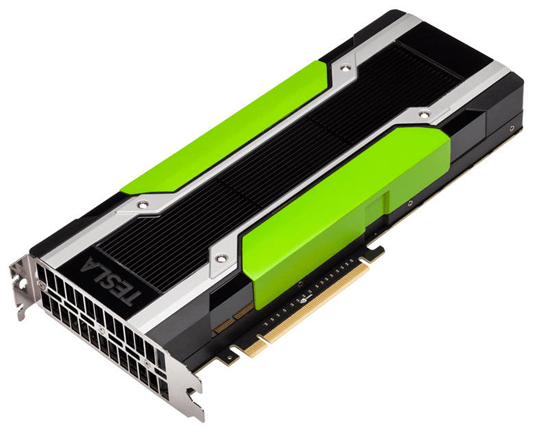
Tesla

Intel, NVIDIA and Qualcomm are leaders in their respective markets but all of them have set their eyes on and foot into the automotive market. Building on their leading edge technologies, these consumer chipmakers have developed solutions that are competing against established automotive chipset suppliers such as Freescale, Renesas, TI, and STMicroelectronics.

The reason is clear as the automotive head-unit processor market is expected to grow from US$680 million in 2013 to US$1.95 billion in 2020, according to ABI Research.

“Automotive head-units are transitioning from proprietary architectures requiring long development cycles and Tier1-led integration efforts towards platform designs. Ford set the tone back in 2007 with its SYNC solution based on CPU hardware from Freescale and the Windows Embedded OS allowing quicker development time frames and independence from the previously dominant Tier 1 suppliers,”said Dominique Bonte, Vice President and Practice Director of ABI Research.

NVIDIA unveils new Quadro lineup

NVIDIA QuadroNVIDIA has unveiled its next generation of NVIDIA Quadro GPUs — the K5200, K4200, K2200, K620, and K420.

The new lineup delivers an enterprise-grade visual computing platform with up to twice the application performance and data-handling capability of the previous generation.

“The next generation of Quadro GPUs not only dramatically increases graphics and compute performance to handle huge data sets. It extends the concept of visual computing from a graphics card in a workstation to a connected environment. The new Quadro lineup lets users interact with their designs or data locally on a workstation, remotely on a mobile device or in tandem with cloud-based services,” said Jeff Brown, Vice President of Professional Visualisation at NVIDIA.

Global smartphone shipment soars past 300m units in Q2

DIDCemand for smartphones are on the rise with more 301.3 million units shipped worldwide in Q2, up 25.3 percent from the 240.5 million units shipped in the corresponding quarter last year, according to IDC.

The dominant smartphone operating systems (OS), Android and iOS, saw their combined market share swell to 96.4 percent for the quarter, leaving little space for competitors.

Android was the primary driver with its vendor partners shipping a total of 255.3 million Android-based smartphones in Q2, up 33.3 percent year over year. Meanwhile, iOS saw its market share decline despite posting 12.7 percent year-over-year shipment growth. While Android and iOS both realised gains from a year ago, the rest of the market recorded losses.

Iray VCA renamed NVIDIA VCA to reflect expanded support

NVIDIA VCAAt GPU Technology Conference in March, NVIDIA introduced Iray VCA (Visual Computing Appliance). Today, NVIDIA has renamed the appliance as NVIDIA VCA to reflect its expanded industry support for GPU rendering across multiple applications.

NVIDIA VCA dramatically accelerates ray tracing, enabling users to interact with computer models of such high visual fidelity that it can eliminate the need for 3D physical prototypes. In addition to native support of NVIDIA Iray, Chaos Group is supporting V-Ray RT on VCA for Autodesk 3ds Max, with Autodesk Maya, McNeel Rhino, and Trimble SketchUp for later in the year. Dassault Systemes 3DXCITE Bunkspeed support is also scheduled for later this year.

The scalable, network-attached GPU rendering appliance comes with eight high-end NVIDIA GPUs and is designed to do just one thing — provide designers and artists with the fastest and easiest way to create photorealistic images of their creations. It’s claimed to be so fast that designers can interact with their models or scenes in real-time rather than waiting minutes or even hours for rendered images to come back. This means that designers can study the play of light and reflection from their designs and catch flaws like glare on the interior windshield of a digital car model or see how the lobby of a proposed office building will look at different times of day.

Shenzhen hosts SIGGRAPH Asia for the first time in December

SIGGRAPH Asia 2014SIGGRAPH Asia 2014, Asia’s largest computer graphics (CG) event, will be held in Shenzhen, China, for the first time from December 3 to 6

More than 7,700 attendees from over 60 countries are expected at the conference and exhibition, which will feature a myriad of experts and exhibits in fields such as hardware and software, film and game production, as well as research and education.

The conference will include a Business Symposium, dealing with discussions related to the business, creative management, production and efficiency, as well as best practices of the computer graphics industry; Computer Animation Festival that showcases the most innovative and compelling of international animation and visual effects works; courses on contemporary topics in computer graphics and interactive techniques, and a showcase of emerging technologies which features hands-on demonstrations and installations focusing on virtual reality, augmented reality, robotics, wearable devices, 3D graphics, haptic devices and more .

Chromebook sales to nearly triple by 2017

Acer Chromebook 13Acer has launched the Acer Chromebook 13, its first 13-inch Chromebook as well as the first Chromebook to use the NVIDIA Tegra K1 processor, which gives the new Chromebook a performance edge and longer battery life of up to 13 hours.

This rollout should help Acer concretise its position as the number in the Chromebook market, behind leader Samsung, which had 64.9 percent market share in 2013.

Gartner expects sales of Chromebooks to reach 5.2 million units this year, a 79 percent increase from 2013. By 2017, sales of Chromebooks are set to nearly triple to reach 14.4 million units.