
ACCA launches vendor-neutral cloud assessment tool

ACCAThe Asia Cloud Computing Association (ACCA) has launched the online version of its Cloud Assessment Tool (CAT), which is designed to help businesses choose the most suitable cloud provider.

CAT provides a standard framework for IT users to measure their requirements against vendor offerings. The vendor-neutral framework will help enterprises make informed decisions as they consider migrating their data and applications to the cloud.

ACCA is currently benchmarking services and platforms provided by its members, including PLDT/Smart, Microsoft, Verizon Terremark, Telenor, Equinix, and Hiring Solutions.

Asian mobile players and operators among Global Mobile award winners

The ASUS-made Google Nexus 7 clinched the Best Tablet Award.

Asia is becoming a leading force in the mobile communications space. Mobile product makers Samsung and Asus and mobile operators NTT Docomo, Bharti Airtel and SK Telecom were among the winners at the 18th Annual Global Mobile awards, held at the GSMA Mobile World Congress in Barcelona. The Government of New Zealand also nabbed the Spectrum for Mobile Broadband Award.

More than 170 independent analysts, journalists, academics, and subject matter experts and 13 representatives from mobile operators throughout the world participated in the judging of the 2013 awards.

The full list of winners and finalist for the 2013 Global Mobile Awards is available at www.globalmobileawards.com/winners-2013

Women underserved by mobile financial services providers


GSMA
VisaWomen in developing countries represent a significant underserved market and commercial opportunity for mobile financial service providers.

According to the study by the GSMA mWomen Programme and Visa, more than two billion people worldwide, the majority of whom are women, lack access to basic financial services.

The study, entitled, Unlocking the Potential: Women and Mobile Financial Services in Emerging Markets, focused on women in Indonesia, Kenya, Pakistan, Papua New Guinea, and Tanzania. It was undertaken to gain additional insight into how financial institutions and mobile network operators can better support the complex financial lives of women at the base of the pyramid.

New ZTE Grand Memo features Qualcomm Snapdragon 800 processor

ZTE Grand MemoThe newly-launched ZTE Grand Memo 5.7-inch handset runs on Qualcomm Snapdragon 800 processors.

It balances the portability of a handset and the larger viewing and easier touch-interaction experience of a tablet. The new phone features a 5.7-inch, high definition, 720 x 1280 display, and a powerful Qualcomm 800 processor with quad-core Krait CPUs and 2GB of RAM. Combined with a 13MP rear-facing camera, 1MP front-facing camera and 1080 HD video playback, this gives users a smooth, high quality multimedia experience that is perfect for gaming and video.

The Grand Memo caters to those who are always on-the-go, with voice-response technology which allows users to answer calls safely while driving, and A-GPS and car-mode navigation system for high quality mapping and directions. It comes with a HD version of ZTE’s Mifavor user interface that is specially designed for smartphones, providing a simpler user experience, and ZTE’s Z Cloud service for the security and access-anywhere provided by cloud services. It also includes a 3200mAh battery for super-long standby time.

GSMA announces OneAPI Exchange

GSMAGSMA has announced OneAPI Exchange, a new, flexible technical platform that will deliver network capabilities to mobile apps. This latest phase of the OneAPI global initiative, which facilitates closer collaboration between operators and developers, has been undertaken with leading mobile operators including AT&T, Deutsche Telekom, Orange, Telefónica, and Vodafone.  OneAPI Exchange will be operated by Apigee.

“The OneAPI Exchange promises to elevate the mobile app experience for consumers,” said Michael O’Hara, Chief Marketing Officer of GSMA. “By supporting closer operator-developer relationships and greater cross-carrier interoperability, the platform will lead to seamless access to exciting mobile apps with enhanced features. End users will benefit from operator services they already know and trust, such as billing, messaging and operator identity, embedded within the apps they choose.”

The new initiative incorporates the work undertaken by the Wholesale Application Community (WAC), which was integrated into the GSMA in July 2012. The OneAPI Exchange, which is currently in a working proof of concept form, improves that capability by giving operators the choice of providing developers with either their own customised application programming interfaces (APIs) or standardised APIs. This leads to better flexibility for operators to participate in the OneAPI Exchange programme, according to their own business objectives, while also providing benefits of scale and reach to their developers through API interoperability.

ZTE debuts world’s first Firefox OS smartphone

ZTE OpenZTE has launched ZTE Open, the world’s first smartphone to run on Mozilla’s Firefox OS open mobile ecosystem. Together with global operator Telefónica, ZTE will first launch the ZTE Open in Spain, Venezuela and Colombia in mid-2013.

The ZTE Open is an entry-level smartphone ideal for young people who are keen to experience the very latest technology, and people on limited budgets looking to make the move from a feature phone to their first smartphone. It features a 3.5-inch, HVGA TFT touchscreen display and has 256MB RAM and 512MB ROM combined with a 3.2MP camera. It supports Bluetooth 2.1, WIFI 802.11b/g/n and AGPS and has a 1200mAH battery.

“ZTE continues to push the boundaries with the aim of bringing customers the very latest that mobile technology has to offer.” said He Shiyou, EVP and Head of ZTE’s Mobile Devices Division. 

Korean mobile operators KT and SK Telecom win GSMA Chairman’s Award

GSMAKorean mobile operators KT Corporation and SK Telecom have been named the joint recipients of the 2013 GSMA Chairman’s Award. Established in 1996, the award is the GSMA’s most prestigious award and recognises outstanding contribution to the growth and development of mobile communications around the world. This year’s award recognises SK Telecom and KT for their pioneering efforts and leadership in driving the adoption of SIM-based mobile near field communication (NFC) services.

“KT and SK Telecom have been at the forefront of global commercialisation of NFC, catalysing the financial ecosystem for mobile NFC from an early stage,” said Franco Bernabè, Chairman, GSMA and Chairman and CEO of Telecom Italia Group.

“These efforts have not only led to an explosion in demand for NFC-based services domestically, but ensured that the country leads in the worldwide adoption of a single standard for mobile NFC. On behalf of the GSMA, and indeed the entire mobile industry, I commend SK Telecom and KT for their cooperative spirit and a commitment to making life-enhancing new mobile services for users everywhere,” he added.

Global mobile data revenue to surpass voice revenue by 2018

GSMAMobile operator data revenues will overtake voice revenues globally by 2018, according to a new GSMA report. The mobile data explosion is being driven by a surge in demand for connected devices and machine-to-machine (M2M) communications and is transforming the socioeconomic future of people in developed and developing countries.

The increase in mobile operator data revenues is a global trend across both developed and emerging markets. In 2012, Japan became the first country where data revenues exceeded voice revenues, due largely to the availability of advanced mobile broadband networks and a higher adoption of the latest smartphones, tablets and connected devices.

Data growth has spurred significant advances in connected devices and M2M technologies globally. Four sectors in particular – health, automotive, education and smart cities – are building on the evolution of mobile broadband access and services.

Intel accelerates mobile computing push

IntelIntel Corporation has announced a range of new products, including a new dual-core Atom SoC (“Clover Trail+”) platform for smartphones and Android tablets, and its first global, multimode-multiband LTE solution that will ship in the first half of this year.

Other disclosures included “Bay Trail” momentum, mobile device enabling efforts, and continued smartphone momentum in emerging markets with the Intel Atom Z2420 processor-based platform.

“Today’s announcements build on Intel’s growing device portfolio across a range of mobile market segments,” said Hermann Eul, Intel Vice President and co-General Manager of the Mobile and Communications Group. “In less than a year’s time, we have worked closely with our customers to bring Intel-based smartphones to market in more than 20 countries around the world, and have also delivered an industry-leading low-power Atom SoC tablet solution running Windows 8, and shipping with leading OEM customers today. Looking forward, we will build upon this foundation and work closely with our ecosystem partners, across operating systems, to deliver the best mobile products and experiences for consumers with Intel Inside.”

ZTE to increase smartphone revenues by 30% in 2013

ZTEZTE expects to increase smartphone revenues by 30 percent in 2013, and maintain its position as one of the top 4 global handset manufacturers.

ZTE’s handset business has seen steady development and profit growth during 2012. Industry analyst IDC reported that ZTE had shipped 65 million handsets in 2012, accounting for 3.8 percent of the global handset market and confirming ZTE as one of the top 4 handset producers.

“We know that our future success means we have to build the ZTE brand, and another target for us is to be a top 5 vendor in terms of brand awareness and reputation within the next three years,” said He Shiyou, EVP and Head of the Mobile Devices Division at ZTE. “2013 is the final year of our three-year transformation into a high-end smartphone brand, but we have a lot of building still to do.”

1 in 2 worldwide uses mobile phone

GSMANearly half of the world’s population now uses mobile communicationsThe number of mobile subscribers now stands at 3.2 billion people and is expected to increase by another 700 million subscribers by 2017. The 4 billion-subscriber milestone will be reached in 2018, according to a new GSMA report.

“The Mobile Economy 2013”, which provides a comprehensive overview of the mobile industry today, outlines the key opportunities and challenges for the mobile industry over the next five years. Developed by the GSMA and A.T. Kearney, the wide-ranging study offers critical insights into the health of the mobile communications industry and details the global enablers needed to spur further investment and growth in the sector. 

“Mobile is a vibrant and evolving industry at the heart of everyday life for billions of people around the world,” said Anne Bouverot, Director General of GSMA. “Mobile has gone beyond being a mere communications tool to one that provides life-enhancing, and in some cases life-saving, services to men, women and children. It’s exciting to look at the possibilities ahead of us as we connect the world’s population to the mobile Internet.”

GTC 2013 features world-class keynote speakers

A world-class line-up of keynote speakers will be present at the 4th GPU Technology Conference (GTC), which will be held at the McEnery Convention Center in San Jose, California, from March 18 to 21.

NVIDIA CEO and co-founder Jen-Hsun Huang will discuss the profound and growing impact of GPU technology in gaming, science, industry, media and entertainment, design and other fields in an opening keynote address on Tuesday, March 19 at 9 a.m. PT.

Erez AidenOn Wednesday, March 20, Erez Lieberman Aiden (right), a pioneering genomics researcher, will discuss his work sequencing the human genome in 3D, which allows scientists to gain deep insights into gene behavior and fundamental biological processes of life. Aiden will reveal how his team harnesses GPUs to accelerate the analysis of massive amounts of genomic information and simulate the physical process of genome folding, uncovering insights into gene expression that can now be used by thousands of researchers.

NetApp adds Flash offerings

NetAppNetApp has announced the availability of the EF540 all-flash array for today’s extreme performance-driven enterprise applications, and previewed the architecture of its new, purpose-built FlashRay product family, which will deliver rich scale-out and storage efficiency features to maximise the benefits of all-flash arrays.

The new product introductions extend the comprehensive NetApp enterprise flash portfolio, which maximizes the value of flash across the entire compute, network and storage stack, enabling the flexibility to choose the best approach to unique workloads.

With the strongest and broadest flash portfolio in the industry, in a complete line of products, including intelligent caching technologies Flash Cache, Flash Pool, and Flash Accel, the new EF540 flash array and the forthcoming FlashRay family provide flexibility and choice and maximise the value of flash across the entire compute, network, and storage stack. NetApp has deployed more than 36PB of flash in the market to date. These new product introductions will further extend that leadership.

HCL Technologies and hybris to provide integrated omni-channel solutions

HCLhybrisHCL Technologies, is partnering hybris, to provide end-to-end omni-channel commerce solutions and integration services to HCL’s customers worldwide. The alliance will also enable hybris to leverage HCL’s footprint in the digital media commerce market and its long-term relationships with leading global businesses and infrastructure in markets in regions such as the Middle-East.

This combination of HCL’s domain and technology expertise, along with hybris’ market leading commerce platform, will help business decision makers change the game by improving the quality of the customer buying experience, thereby extending brand loyalty and spend.

As part of the partnership, HCL will co-create customised solutions, tools and storefront accelerators based on the hybris Commerce Suite that focus on vertical segments such as consumer products, media, entertainment, retail, telecom, and manufacturing.

Dell expands networking portfolio

DellDell has expanded its networking portfolio to help customers enhance their networks to thrive in next-generation, software-defined 10G cloud and virtualised data centres.

The Dell S4820T top-of-rack (ToR) switch is purpose-built for deployment in high-performance data centre and cloud computing environments, leveraging the popularity of twisted-pair copper cabling and providing the right mix of scalability, performance, operational simplicity and cost-effectiveness.

It is powered by the Force10 operating system (FTOS) and designed to support both Layer 2 and Layer 3 functionality required for Web 2.0, enterprise and cloud services provider data centers.

ZTE and NVIDIA partner to launch first Tegra 4 super phones

Tegra 4ZTE is teaming up with NVIDIA to deliver the first super phones powered by the NVIDIA Tegra 4 mobile processor, with the first models to be launched in China in the first half of 2013.

Launched at CES in January, the NVIDIA Tegra 4 will enable the ZTE devices to deliver ultra-fast web browsing, improved app load times, more realistic gaming experiences and great battery life – thanks to the processor’s 72 custom NVIDIA GeForce cores and quad-core ARM Cortex-A15 CPU.

Tegra 4 also enables worldwide 4G LTE voice and data support through an optional chipset, the NVIDIA i500 processor. ZTE and NVIDIA are also planning a new LTE super phone using the i500 LTE chipset for blazing-fast networking.

NVIDIA announces new camera capabilities with Chimera

ChimeraAvailable in the NVIDIA Tegra 4 family of mobile processors, the NVIDIA Chimera Computational Photography Architecture offers a number of features never before available on mobile devices, including always-on high-dynamic range (HDR) photos and videos, HDR panoramic and persistent tap-to-track capabilities.

Previous mobile device architectures have made it difficult to use the best tools for different parts of complex image processing. Chimera architecture removes those boundaries by providing the power to conduct nearly 100 billion mathematical operations per second to perform image processing, using computational techniques used in X-ray CT scanners, deep space telescopes and spy satellites.

“We developed the Chimera Computational Photography Architecture to take mobile photography far beyond where it is today,” said Brian Cabral, Vice President of Computation Imaging at NVIDIA. “We’re enabling developers and users to not only use image processing to enhance their photos, but also use computer algorithms to create images no lens can capture alone.”

NVIDIA showcases Tegra 4i-based Phoenix reference smartphone

PhoenixNVIDIA has introduced its reference smartphone platform code-named “Phoenix” for the newly-announced Tegra 4i processor. Phoenix is a blueprint that phone makers can reference in designing and building future Tegra 4i smartphones to help get them to market quicker.

Previously codenamed “Project Grey”, the Tegra 4i, is NVIDIA’s first fully integrated 4G LTE mobile processor. It features 60 custom NVIDIA GPU cores; a quad-core CPU based on ARM’s newest and most efficient core — the R4 Cortex-A9 CPU — plus a fifth battery saver core; and a version of the NVIDIA i500 LTE modem optimised for integration. The result is an extremely power efficient, compact, high- performance mobile processor that enables smartphone performance and capability previously available only in expensive super phones.

“NVIDIA is delivering for the first time a single, integrated processor that powers all the major functions of a smartphone,” said Phil Carmack, senior vice president of the Mobile business at NVIDIA. “Tegra 4i phones will provide amazing computing power, world-class phone capabilities, and exceptionally long battery life.”

NVIDIA unleashes GeForce GTX TITAN

The power of supercomputing brought to the desktop. That’s what NVIDIA has done with the introduction of the GeForce GTX TITAN. Powered by the fastest GPU on the planet, it is designed to unleash the world’s fastest gaming PCs including personal gaming supercomputers and svelte, quiet, small form-factor PCs.

GeForce GTX TITAN is built with the same NVIDIA Kepler architecture that powers Oak Ridge National Laboratory’s newly launched Titan supercomputer, which tops the list of the Top 500 supercomputers in the world.

By harnessing the power of three GeForce GTX TITAN GPUs simultaneously in three-way SLI mode, gamers can max out every visual setting without fear of a meltdown while playing any of the most demanding PC gaming titles.

ZTE launches UniCare service solution

ZTEZTE has launched UniCare, a service solution developed specifically for mobile operators.

UniCare is an end-to-end integrated solution covering the whole network by offering operation assurance aimed at network performance management, service quality management and customer experience assurance, as well as operation consulting aimed at network, service and market development.

“Traditionally, technical services have focused on a specific area of an operator’s business, rather than the whole operation. As a result, they have failed to bring about improvements in operational efficiencies or user experience and have not delivered increased revenues or profits,” said Yang Jiaxiao, Vice President of ZTE. “The UniCare service solution overcomes these failures by providing mobile operators with an overall service assurance for their entire business.”

NVIDIA reports record US$4.28 billion revenue for FY13

NVIDIANVIDIA has reported revenue for fiscal 2013 ended January 27, 2013, of a record $4.28 billion, up 7.1 percent from $4.00 billion in fiscal 2012.

GAAP earnings per share for the year were $0.90 per diluted share, a decrease of 4.3 percent from $0.94 in fiscal 2012. Non-GAAP earnings per diluted share were $1.17, down 1.7 percent from $1.19 in fiscal 2012. During the quarter, NVIDIA repurchased $100.0 million of stock and paid a dividend of $0.075 per share, equivalent to $46.9 million.

“This year we did the best work in our company’s history,” said Jen-Hsun Huang, president and chief executive officer of NVIDIA. “We achieved record revenues, margins and cash, despite significant market headwinds.

GSMA: Mobile drives unprecedented growth in Arab world

GSMAGSMA has published its first in-depth assessment of the impact of the mobile industry on the Arab States, highlighting the explosive growth of mobile services in the region. Based on research from Deloitte, the GSMA Arab States Mobile Observatory details strong regional market competition and falling handset prices, fuelling a 32 percent average annual growth in mobile connections over the past 10 years, soaring from 19 million connections in 2002 to 391 million in 2012.

While highlighting the extraordinary development of the region over the past decade, the report identifies fundamental challenges that put the continued growth of the sector at risk, including limited spectrum availability, high taxation and stifling regulation.

“Mobile communications in the Arab States have transformed society and fostered substantial growth in investment, innovation and productivity,” commented Tom Phillips, Chief Government and Regulatory Affairs Officer, GSMA. “However, there are far greater opportunities that the mobile industry can deliver for the region. Governments need to take action now to increase spectrum availability and stabilise the regulatory environment if they want to continue the momentum and realise mobile’s full potential.”

ZTE launches Grand Era V985 smartphone in Hong Kong

ZTE Grand Era V985ZTE has launched the Grand Era V985 smartphone in Hong Kong, enabling consumers to enjoy the device’s quad-core powered performance, and a rich media and entertainment experience.

The Grand Era V985’s simple, slim-body styling will appeal to discerning consumers – measuring just 7.9mm thick and weighing 115g. The streamlined design of Grand Era V985 conceals the device’s features. Fitted with the NVIDIA Tegra 3 quad-core 1.5GHz processor, the Grand Era V985 offers superior multitasking performance, fast Web browsing experience, and improved power efficiency for longer battery life.

Equipped with the NVIDIA 12-core Geforce graphics processor, a 4.5-inch Retina screen supporting high-definition videos, a IPS full-view display with a resolution of 1280 x 720 and 326 pixels per inch, and built-in support for Flash videos, the Grand Era V985 delivers best-in-class display quality, and offers user experience matching leading game consoles, meeting the requirements of mobile gamers and online video aficionados.

Cisco and NetApp expand partnership with FlexPod architecture

NetAppciscoCisco and NetApp have an expanded partnership to deliver new converged infrastructure innovation to unify branch office, data centre and public cloud infrastructures under the FlexPod architecture. The partnership expansion includes efforts in technology integration, solution development, and continued go-to-market collaboration – all designed to make it easier for customers to deploy and access next-generation cloud infrastructure solutions.

Current IT architectures comprise a fragmented combination of infrastructure along with public, private and hybrid clouds offered by different organizations and addressing distinct customer needs. Through a shared vision of a unified data center, Cisco and NetApp offer the ability to simplify deployment, management and orchestration — connecting enterprise clouds to service providers, enterprises to branch offices, consumers to enterprises, and clouds to clouds.

Deeper integration across computing, networking, storage and orchestration components of FlexPod, combined with broader support for its open ecosystem of partners, will greatly simplify data centre deployment and management, deliver greater budget efficiency, reduce risk, and increase agile business responsiveness.

ZTE unveils LTE Small Cell backhaul solutions

ZTEZTE has announced a new series of backhaul solutions for LTE Small Cell technology that will enable network operators to meet rising subscriber demand for mobile broadband.

As the increasing use of smart terminals enrich the lives of consumers, network operators face rising challenges. To ensure high-quality user experience, operators need to construct networks that offer dense and miniaturized coverage. Small Cell technology will therefore play a more important role. The deployment of Small Cell networks also places more stringent demands on backhaul technology, with increased emphasis on high capacity, low-cost, security and speed of network construction.

ZTE’s new series of backhaul solutions for LTE Small Cells will help operators address these technical challenges, offering support for a wide range of data transmission methods, including packet bearer network backhaul solution, fixed broadband backhaul solution (through PON, xDSL and Cable), Microwave Wireless backhaul solution, WiFi Non-line-of-sight (NLOS) Wireless backhaul solution and TD-LTE backhaul solution. Operators will enjoy more flexibility and choice in customising their backhaul networks based on their own requirements.

Samsung opens first Partner Shop in Macau

Shop frontSamsung opened its first Partner Shop in Macau today. Located at No. 63-65 on Avenida do Infante D. Henrique, the stylish and modern shop aims to provide every visitor with the best quality of customer service with unexpected personalised experience.

“As the world leader in consumer electronics and information technology, Samsung is dedicated to introducing innovative products with diversified features and functions to meet customer needs. Further to the launch of two Samsung Partner Shops in Hong Kong last year, Samsung continues to expand its business by launching the first Samsung Partner Shop in Macau,” said Lawrence Chow, Chief Marketing Officer of Samsung Electronics Hong Kong.

Adjacent to various scenic spots, the shop is a one-minute walk from Senado Square and two-minute walk from Grand Lisboa Hotel. With everything under one roof, it lets visitors experience Samsung’s innovative technology and modern digital living.

Eurora supercomputer sets world record for energy efficiency

EuroraItaly’s “Eurora” supercomputer has set a new record for data centre energy efficiency. Based on NVIDIA Tesla GPU accelerators, it is built by Eurotech and deployed at the Cineca facility in Bologna. It is Italy’s most powerful supercomputing centre, reaching 3,150 megaflops per watt of sustained performance – a mark 26 percent higher than the top system on the most recent Green500 list of the world’s most efficient supercomputers.

Eurora achieved the record-breaking achievement by combining 128 high-performance, energy-efficient NVIDIA Tesla K20 accelerators with the Eurotech Aurora Tigon supercomputer, featuring innovative Aurora Hot Water Cooling technology, which uses direct hot water cooling on all electronic and electrical components of the HPC system.

Available to members of the Partnership for Advanced Computing in Europe (PRACE) and major Italian research entities, Eurora will enable scientists to advance research and discovery across a range of scientific disciplines, including material science, astrophysics, life sciences, and Earth sciences.

Nanyang Technological University becomes Southeast Asia’s first CUDA Teaching Center

CUDA Teaching CenterNVIDIA has appointed Nanyang Technological University as the first Southeast Asia CUDA Teaching Center (CTC).

The CUDA Teaching Center Program is designed to support and encourage teaching establishments to include GPU Computing using CUDA C/C++ as part of their course offerings.

Under the program, NVIDIA will donate CUDA enabled GPUs to be installed in teaching lab computers at NTU’s School of Computer Engineering. Students and other members of the university community will have direct access to CUDA enabled systems for hands-on experience of CUDA C/C++ development, debugging and experimentation.

Gartner: Worldwide mobile advertising revenue to hit US$11.4b this year

GartnerWorldwide mobile advertising revenue is forecast to reach $11.4 billion in 2013, up from $9.6 billion in 2012, according to Gartner. Worldwide revenue will reach $24.5 billion in 2016 with mobile advertising revenue creating new opportunities for app developers, ad networks, mobile platform providers, specialty agencies and even communications service providers in certain regions.

“The mobile advertising market took off even faster than we expected due to an increased uptake in smartphones and tablets, as well as the merger of consumer behaviors on computers and mobile devices,” said Stephanie Baghdassarian, Research Director of Gartner. “Growth in mobile advertising comes in part at the expense of print formats, especially local newspapers, which currently face much lower ad yields as a result of mobile publishing initiatives.”

“Smartphones and media tablets extend the addressable market for mobile advertising in more and more geographies as an increasing population of users spends an increasing share of its time with these devices,” said Andrew Frank, Research Vice President of Gartner. “This market will therefore become easier to segment and target, driving the growth of mobile advertising spend for brands and advertisers. Mobile advertising should be integrated into advertisers’ overall marketing campaigns in order to connect with their audience in very specific, actionable ways through their smartphones and/or tablets.”

20,000 to attend 2nd Mobile Asia Expo in Shanghai

GSMA

Mobile Asia Expo will offer more to conference participants in Shanghai from June 26 to 28.

Now in its second year, the expo will include a conference programme featuring CEOs and senior executives from leading companies in Asia and around the world; an extensive exhibition showcasing innovative mobile products and services, including the new Connected City; the App Planet programme for the mobile application development community; a government and regulatory programme; and a variety of other seminars, meetings and educational programmes.

“We are pleased to be returning to Shanghai for our second Mobile Asia Expo,” said Michael O’Hara, Chief Marketing Officer, GSMA. “Building on the success of our inaugural event last year, the 2013 edition of Mobile Asia Expo will attract more than 20,000 attendees, including executives and mobile professionals from across the broad mobile communications ecosystem, government officials, technology-savvy consumers. Mobile Asia Expo 2013 promises to be bigger and better, with a range of new programmes and activities for both business and consumer attendees.”

ZTE forecasts profitable Q1

ZTEZTE expects to report a profit in the first quarter of 2013 as a result of the company’s operational review and strategic realignment efforts.

It is executing its comprehensive strategic review begun last year to sharpen its focus on key products and markets and strengthen cash flow management. ZTE is generating net cash inflows from operations and recorded higher sales collection, achieved increased profitability on new contracts, applied stringent cost controls and recognised investment gains.

Due to delays in the progress of some domestic and international network projects, the recognition of earlier lower-margin contracts and a drop in revenue for terminal products, ZTE may post a full-year net loss attributable to shareholders of the listed company of between RMB2.5 billion and RMB2.9 billion in 2012, a reversal of 221.35% and 240.77% compared to a year earlier.

Intel revenue dips slightly in 2012

IntelIntel has reported full-year revenue of $53.3 billion in 2012, down 1.2 percent from 2011. Operating income was $14.6 billion (down 16 percent) while net income was $11.0 billion (down 15 percent).

The company generated about $18.9 billion in cash from operations, paid dividends of $4.4 billion, and used $4.8 billion to repurchase 191 million shares of stock.

For the fourth quarter, Intel posted revenue of $13.5 billion, operating income of $3.2 billion, net income of $2.5 billion and EPS of 48 cents. The company generated about $6 billion in cash from operations, paid dividends of $1.1 billion and used $1.0 billion to repurchase 47 million shares of stock.

hybris expands hybris Extend ISV Partner Program

hybrisCommerce platform provider hybris has expanded its hybris Extend program for independent software vendors.

hybris Extend is an online integration marketplace giving customers access to best-of-breed applications, extensions and network services developed by hybris partners, all of which are optimized to work with the hybris OmniCommerce platform.  While hundreds of third-party products have been integrated and deployed in hybris customer implementations, only those vendors having a close working relationship with hybris and promising pre-built integrations with hybris software qualify for hybris Extend – assuring customers higher quality, smoother, more efficient deployments and better business relationships.

“The hybris OmniCommerce Suite is comprehensive, but our solutions often are the hub of an even larger ecosystem of technologies and solutions,” said Ariel Lüdi, CEO of hybris. “The best way for us to serve our customers is to make their technical and business integrations across that ecosystem as seamless and easy as possible.  That is the goal of hybris Extend”.

Gartner: Declining worldwide PC shipments in Q4 of 2012 signal structural shift

GartnerWorldwide PC shipments totaled 90.3 million units in the fourth quarter of 2012, a 4.9 percent decline from the fourth quarter of 2011, according to preliminary results by Gartner. Analysts said the PC industry’s problems point to something beyond a weak economy.

PC shipments in Asia/Pacific totalled 29.9 million units in the fourth quarter of 2012, a 1.8 percent decline from the fourth quarter of 2011. Vendors struggled to offer compelling products to convince buyers to upgrade and attract new buyers as consumers’ interest continues to be on smartphones and tablets. The introduction of Windows 8 met with lukewarm response and availability was primarily on the higher-end models, which were priced beyond the mainstream price point for volume sales.

“Tablets have dramatically changed the device landscape for PCs, not so much by ‘cannibalizing’ PC sales, but by causing PC users to shift consumption to tablets rather than replacing older PCs,” said Mikako Kitagawa, principal analyst at Gartner. “Whereas as once we imagined a world in which individual users would have both a PC and a tablet as personal devices, we increasingly suspect that most individuals will shift consumption activity to a personal tablet, and perform creative and administrative tasks on a shared PC. There will be some individuals who retain both, but we believe they will be exception and not the norm. Therefore, we hypothesise that buyers will not replace secondary PCs in the household, instead allowing them to age out and shifting consumption to a tablet.”

Intel delivers broad range of new mobile experiences at CES

Intel plans to accelerate new mobile device experiences across the company’s growing portfolio of smartphone, tablet and Ultrabook offerings.

These include a new smartphone platform for emerging markets, a forthcoming 22nm quad-core SoC for tablets, and more personal and intuitive Ultrabook devices in innovative convertible designs. The plans were shared by Mike Bell, Vice President and General Manager of the Mobile and Communications Group, and Kirk Skaugen, Vice President and General Manager of the PC Client Group at Intel.

“The best of Intel is coming to a mobile device near you,” said Skaugen. “We are set to deliver the biggest increase in battery efficiency in Intel’s history with 4th generation Intel Core processors, while adding broad new human interfaces to computing devices through touch, voice, facial recognition, and gesture-based interactions. We’re also significantly extending the performance and power savings in Atom™ processors as we accelerate our mobile offerings in an unprecedented fashion in 2013.”

ZTE debuts thinnest 5.0 FHD quad-core smartphone Grand S at CES 2013

Image
The thin ZTE Grand S – 5.0 FHD LTE

ZTE has announced the ZTE Grand S – 5.0 FHD LTE, the flagship handset in its high-end Grand Series line of products.

The ZTE Grand S is the company’s first FHD smartphone and the world’s thinnest within five-inch FHD quad-core smartphones, enabled by the Qualcomm Snapdragon S4 Pro processor.

Developed by ZTE, the ultrathin body and high definition display of the ZTE Grand S offer consumers the latest in style, quality and functionality.

NVIDIA untethers gaming with Project SHIELD

Gaming power at the fingertips.

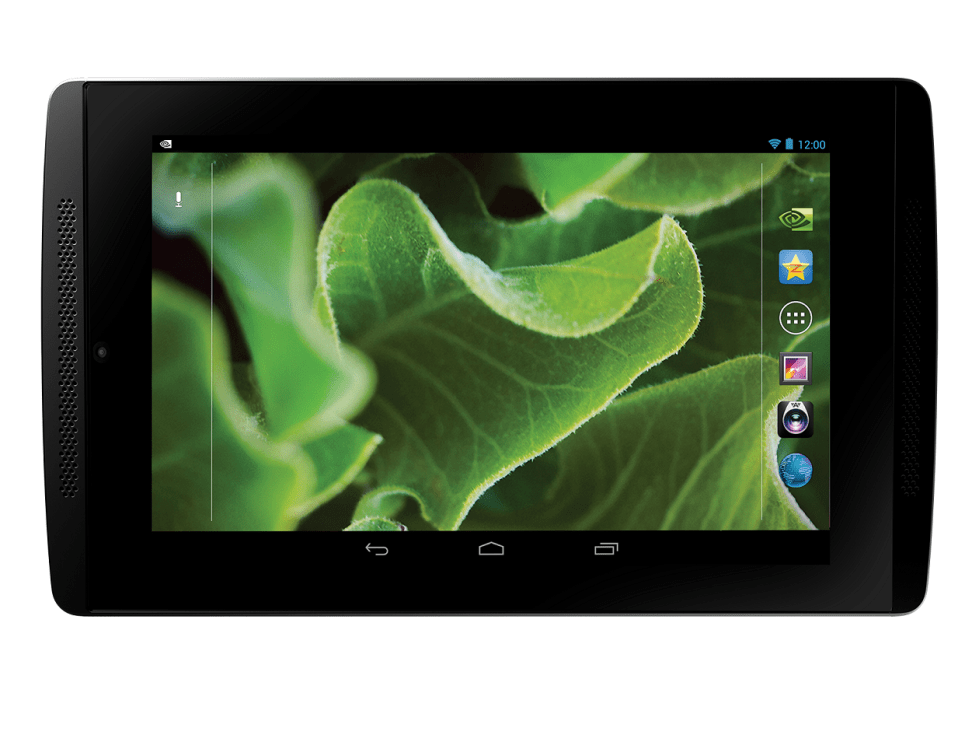
NVIDIA has announced Project SHIELD, a gaming portable for open platforms, designed for gamers who yearn to play when, where and how they want.

Created with the philosophy that gaming should be open and flexible, Project SHIELD flawlessly plays both Android and PC titles. As a pure Android device, it gives access to any game on Google Play. And as a wireless receiver and controller, it can stream games from a PC powered by NVIDIA® GeForce GTX GPUs, accessing titles on its STEAM game library from anywhere in the home.

“Project SHIELD was created by NVIDIA engineers who love to game and imagined a new way to play,” said Jen-Hsun Huang, co-founder and chief executive officer at NVIDIA. “We were inspired by a vision that the rise of mobile and cloud technologies will free us from our boxes, letting us game anywhere, on any screen. We imagined a device that would do for games what the iPod and Kindle have done for music and books, letting us play in a cool new way. We hope other gamers love SHIELD as much as we do.”

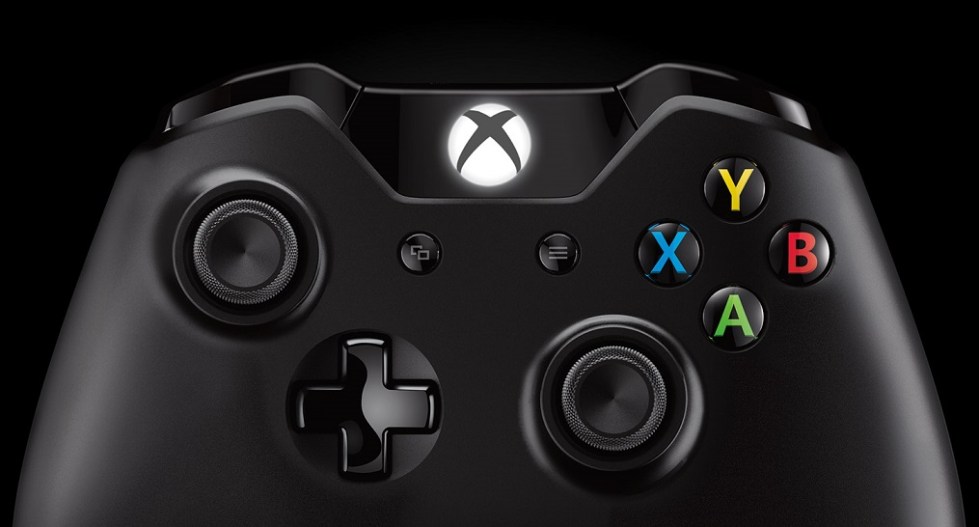
Project SHIELD combines the advanced processing power of NVIDIA Tegra 4, breakthrough game-speed Wi-Fi technology and stunning HD video and audio built into a console-grade controller. It can be used to play on its own integrated screen or on a big screen, and on the couch or on the go.

NVIDIA unleashes Tegra 4

Tegra 4 announced at CES2013

NVIDIA has introduced NVIDIA Tegra 4 , the world’s fastest mobile processor, with record-setting performance and battery life to flawlessly power smartphones and tablets, gaming devices, auto infotainment and navigation systems, and PCs.

Tegra 4 offers exceptional graphics processing, with lightning-fast web browsing, stunning visuals and new camera capabilities through computational photography.

Previously codenamed “Wayne,” Tegra 4 features 72 custom NVIDIA GeForce GPU cores – or six times the GPU horsepower of Tegra 3 – which deliver more realistic gaming experiences and higher resolution displays. It includes the first quad-core application of ARM’s most advanced CPU core, the Cortex-A15, which delivers 2.6x faster web browsing and breakthrough performance for apps.

Tegra 4 also enables worldwide 4G LTE voice and data support through an optional chipset, the fifth-generation NVIDIA Icera® i500 processor. More efficient and 40 percent the size of conventional modems, i500 delivers four times the processing capability of its predecessor.

Leading cloud gaming pioneers adopt NVIDIA GRID platform

Jen-Hsun Huang at CES

Six leading international cloud-gaming companies plan to use the NVIDIA  GRID Cloud Gaming Platform to deliver gaming services to global broadband companies.

The NVIDIA GRID Platform enables the smooth, seamless interactive experience of a high-performance gaming PC anywhere, on any screen – including smart TVs, PCs, tablets and smartphones.

NVIDIA GRID is a server designed to concurrently serve up to 36 times more HD-quality game streams than first-generation cloud-gaming systems, while reducing lag. It is fully integrated with a high density of NVIDIA® GPUs, specialised graphics-application streaming software and NVIDIA® VGX™ Hypervisor technology, which allows multiple users to share a GPU.

Initial partners on the NVIDIA GRID Platform include Agawi (United States); Cloud Union (China); Cyber Cloud Technologies (China); G-cluster Global (Japan); Playcast Media Systems (Israel); and Ubitus (Taiwan).

Gartner: Worldwide IT spending to reach US$3.7 trillion in 2013

GartnerWorldwide IT spending is projected to total US$3.7 trillion in 2013, a 4.2 percent increase from 2012 spending of $3.6 trillion, according to the latest forecast by Gartner. The 2013 outlook for IT spending growth has been revised upward from 3.8 percent in the 3Q12 forecast.

Gartner analysts said much of this spending increase is the result from projected gains in the value of foreign currencies versus the US dollar. When measured in constant dollars, 2013 spending growth is forecast to be 3.9 percent.

The Gartner Worldwide IT Spending Forecast is the leading indicator of major technology trends across the hardware, software, IT services and telecom markets. For more than a decade, global IT and business executives have been using these highly anticipated quarterly reports to recognize market opportunities and challenges, and base their critical business decisions on proven methodologies rather than guesswork.

hybris announces first commerce solution specifically designed for telcos

hybrishybris has announced the industry’s only commerce solution specifically designed to help carriers sell more phones, plans and value-added services on the web and in the store. The new hybris Telco Accelerator comes bundled with the industry acclaimed hybris Commerce Suite and includes capabilities aimed at helping carriers launch fully functional wireless phone commerce experiences that drive higher average revenue per user (ARPU) in as little as three to four months.

“hybris has long been recognised as offering the best multi-channel user experience for selling anything online” according to Ariel Ludi, CEO of hybris. “Now, the hybris Telco Accelerator makes it much easier and faster for wireless carriers to implement a feature-rich commerce solution specifically designed to deliver a rich shopping experience for their customers regardless of channel.”

hybris Telco Accelerator includes the rich set of B2B and B2C commerce functionality rated by both major IT analyst firms as “leader” and among the top 2 or 3 general-purpose commerce platforms in the world – and now tailored for telcos.

ZTE introduces dual-mode Grand Era LTE smartphone in Hong Kong

ZTE has introduced its first dual-mode LTE smartphone, the Grand Era LTE, in Hong Kong as part of the launch of China Mobile Hong Kong (CMHK)’s first commercial converged TD-LTE/LTE FDD network.

The TDD/FDD dual-mode ZTE Grand Era LTE smartphone operates on the Android 4.0 Ice Cream Sandwich platform.  It features a 1.5GHz dual core CPU, 1GB of memory and a multi-touch 4.5-inch 1280×720 Gorilla Glass display providing a high quality user experience on high-speed LTE networks.  The device also has a 1780mAh battery and ZTE’s customisable Mifavor User Interface.

In addition, ZTE will showcase its FDD/TDD dual-mode MF93E uFi device and the MF825 data card on the new Hong Kong network. Both devices use Qualcomm’s MDM9215 second-generation LTE chip platform.  The size and average power consumption of the MF93E and the MF 825 have been reduced by nearly a third compared to the first generation LTE devices making them smaller and faster.

ZTE Grand X with Jelly Bean makes world debut in Indonesia

ZTE has officially introduced the ZTE Grand X with Jelly Bean, its latest smartphone with Android 4.1.1 operating system, in Indonesia.

The ZTE Grand X Indonesia launch was the world’s first ever commercial launch of a ZTE Jelly Bean-based smartphone.
 
The Grand X’s design was inspired by sport cars. The phone has a 1GHz dual-core processor and an IPS panel 4.3-inch screen with QHD (960×540 pixel) resolution. The display delivers better, natural colours compared to AMOLED screens. Furthermore, users can enjoy songs and movies in maximum clarity, thanks to the Grand X’s Dolby ProLogic plus SRS Audio technology.
 

China Mobile Hong Kong launches world’s first converged TD-LTE/LTE FDD network

The start of Hong Kong’s first TD-LTE/FDD LTE converged network ushered in a new age in the city’s 4G telecommunications market, and unleashed vital impetus to propel the development of TD-LTE services globally.

Chairman of China Mobile Hong Kong, Tiger Lin, Director and Chief Executive Officer, Sean Lee, and ZTE Vice President Zhang Jianguo officiated at a large-scale press conference in Hong Kong today to introduce the new service. Live demonstrations showcasing the high-speed data download capabilities of TD-LTE and LTE FDD networks and the seamless hand-over between TD-LTE and FDD LTE networks for online video transmission were conducted at the event.

China Mobile Hong Kong, a wholly-owned subsidiary of China Mobile, acquired spectrum in the 2330MHz-2360MHz band for TD-LTE services in February 2012. On July 19, it announced a partnership with ZTE and Ericsson for the construction of the TD-LTE network offering dual-mode connectivity with existing FDD LTE services, giving subscribers a higher-quality 4G user experience and a more robust service.

ITU accepts ZTE’s GoTa digital trunking standard

ITUThe GoTa (Global open Trunking architecture) digital trunking standard submitted by China was accepted by the ITU (International Telecommunications Union) report on the ITU conference in Geneva, marking another breakthrough in the field of communications standards for Chinese technology developers.

Now the digital trunking standard for the next generation, GoTa was jointly developed by ZTE and Chinese national research departments. A digital trunking system is a mobile communications network – using network-specific handsets communicating over a network just like a mobile phone system – that provides group scheduling command and communications with a high degree of security. It has been widely used by government organisations to provide scheduling and security for events such as Olympic Games, National Games, the European Cup and other major sporting events, as well as in public security, fire, ports, logistics, construction, transportation, forestry, rental, factories, and enterprises as well as for individual requirements.

GSMA elects new board

Franco BernabeGSMA has elected new board members for the two-year period from January 2013 through December 2014. It also has re-elected Franco Bernabè, Chairman and Chief Executive Officer, Telecom Italia Group, as its Chairman, and Jon Fredrik Baksaas, President and CEO, Telenor Group as its Deputy Chairman, for a second term in these roles.

Bernabè has served as GSMA Chairman since January 2011, overseeing the strategic direction of the organisation, which represents nearly 800 of the world’s mobile operators, as well as more than 230 companies in the broader mobile ecosystem. Baksaas has also served as Deputy Chairman since January 2011.