
 In four years’ time, your smartphone may be smarter than you. It will be able to predict your next move, next purchase or interpret actions based on what it knows, according to Gartner. This insight will be performed based on an individual’s data gathered using cognizant computing — the next step in personal cloud computing.
“Mobile phones have turned into smartphones thanks to two things: technology and apps,” Carolina Milanesi, Research Vice President of Gartner. “Technology has added features such as cameras, locations and sensors, while apps have connected those to an array of functions that, for the most part, add and improve our day to day life from a social, knowledge, entertainment and productivity point of view.”
What smartphones can do through apps has improved and broadened thanks to the personal cloud. “We assume that apps will acquire knowledge over time and get better with improved predictions of what users need and want, with data collection and response happening in real-time,” she added.
 Customer experience management (CEM) has emerged as the top driver of telco IT investments in 2014, according to Ovum’s ICT Enterprise Insights. Telco IT spend is expected to reach US$60.7b by 2017, with investments geared towards telecoms infrastructure (cloud platforms, server virtualisation and BSS/OSS systems to support LTE implementations) and online channels to support customers’ increasingly digital lifestyles.
 The numbers are clear. Big is getting more popular. Large screen smart phones (five-inch and above) accounted for 22 percent of the quarter billion smartphones shipped in Q3. This is the highest number ever and translates to a staggering 56 million units.
 AMD fired the first salvo after a long period of silence to reignite the GPU battle. But, NVIDIA has hit back immediately and regained the crown with the GeForce GTX 780 Ti. Besides sheer performance, NVIDIA’s armoury also includes G-SYNC, GeForce Experience and ShadowPlay.
 Apple’s “iOS in the Car” will lead the market for in-vehicle infotainment (IVI) systems equipped with smartphone integration technologies, according to ABI Research.
 Touch is in. Beyond touch screen phones, users in Asia-Pacific want touch-enabled notebooks.
 Professional high-end 3D visualisation solution provider


 Cisco and NetApp have broadened the
  Businesses across Australia can now deploy graphics-accelerated virtual desktops to their employees – cost-effectively, anywhere and on any device – with the adoption of NVIDIA GRID technology by leading technology partners.
 Huawei has announced MBB Insider Online, a cloud-based mobile platform for evaluating mobile broadband (MBB) app network friendliness.
 India’s spending on green IT and sustainability initiatives will reach US$29.2 billion in 2013 a 17.6 percent increase from US$24.8 billion in 2012, according to Gartner.
 The adoption of mobile money is increasing with 208 live deployments for unbanked services in 83 countries, compared to 178 in 74 countries as of January, asccording to GSMA’s
 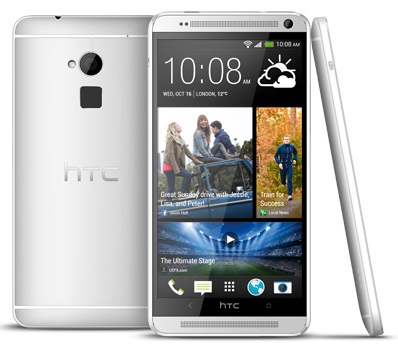 The HTC One has gotten a bigger brother — the 5.9-inch HTC One max. Just like the recently launched Apple iPhone 5S, the new smartphone has a fingerprint scan feature. Located on the back of the device, the fingerprint scanner allows users to lock or unlock the screen and quickly launch up to three favourite applications by assigning an individual finger to each.

 After the first Samsung Galaxy Note 3 reached the hands of eager fans, one glaringky unwanted feature was spotted — the smartphone has region locked its SIM card.
 GSMA is collaborating
  ZTE has released the BigMatrix 9900 series, the world’s largest-capacity data centre switches designed for large cloud computing and big data scenarios.
 Blackberry has agreed to be sold to Fairfax Financial Holdings for US$4.7 billion.

 alahari.com has selected

 Entelechy Asia