
Global edge server deployments are expected to accelerate significantly over the next five years, according to ABI Research. On-premises and carrier deployment will lead the 53.8 percent CAGR, creating an addressable market of US$18.99 billion […]

Global edge server deployments are expected to accelerate significantly over the next five years, according to ABI Research. On-premises and carrier deployment will lead the 53.8 percent CAGR, creating an addressable market of US$18.99 billion […]

Autonomous vehicles (AVs) with all the technological wizardry have been getting the limelight in recent years. But, many of the same technologies applied to AVs are being deployed in vehicle traffic management industry. According to […]

Worldwide deployment of automated guided vehicles (AVGs) in seaports are expected to grow at a compounded annual growth rate (CAGR) of more than 26 percent to exceed 150,000 units by 2027, according to ABI Research. […]
 A battle of sorts is taking place in the field of artificial intelligence (AI). It has been widely reported that China is ramping up its focus on the technology that is expected to transform businesses and industries. Numbers from ABI Research point to a swing in favour of China.
 Uber is miles ahead of the competition in the worldwide ride sharing market, according to ABI Research. Regional leader Grab came in at third, behind Didi Chuxing of China and ahead of Lyft.
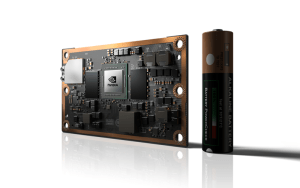
Power efficient chipsets are set to be the main driver as artificial intelligence (AI) moves makes a significant shift from the cloud to the edge, according to ABI Research.
 ABI Research expects eight million consumer vehicles shipping in 2025 will feature SAE Level 3 and 4 technologies, where drivers will still be necessary but are able to completely shift safety-critical functions to the vehicle under certain conditions, and SAE Level 5 technology, where no driver will be required at all.
Virtual reality (VR) has been tipped to be the next innovative technology to improve and impact retail and marketing.
Greater internet and mobile device accessibility are driving e-commerce growth in Southeast Asia.
According to ABI Research, Smart Retail has gone through revolutionary changes in the past 10 years and will exponentially continue to do so going forward. Brick and mortar stores are no longer the only option for consumers across the globe to make their everyday purchases, due to significant advancements in technology, both in-store and online.
Key players include Senion, who implements some of the world’s largest Indoor Positioning System (IPS) solutions to enhance in-store experiences, and AisleLabs who provides shopper traffic behavior analytics to help retailers optimise store layouts. Leading POS software vendors, Shopkeep and Square are allowing retailers to sell across multi-channels from a single platform. These and other key vendors are paving paths to making the offline and online worlds seamless experiences.

Enterprise wearable shipment will reach over 118 million in 2022, increasing from just over 38 million in 2017, a CAGR of 25 percent, according to ABI Research.
The enterprise wearables market is continuing to see stronger growth than the consumer market, which has shipment numbers increasing at a lower CAGR of 13 percent.
Healthcare devices, wearable cameras, and wearable scanners will account for 73 percent of enterprise wearable shipments in 2022. Innovative companies are leading the charge, such as Royole with flexible components, Waverly with real-time translation, and Axon (previously Taser) with wearable cameras.
The market for analytics within Pay TV services will grow by 105 percent in the next five years, from US$1.8 billion this year to US$3.7 billion in 2022, according to ABI Research.
Comcast, Netflix, Sky, Telstra, and other successful video companies differentiate themselves from their peers by their strong use of analytics to optimise and improve operational metrics. Pay TV companies are starting to transform products to support an analytical focus, moving in the direction of artificial intelligence and machine learning to enable self-optimisation.
Video companies sell today’s products in a host of point-solutions, including content and metadata engagement, customer management, network optimisation, and consumption measurement. Larger network-oriented business support systems and business intelligence vendors also play a significant role within these markets.
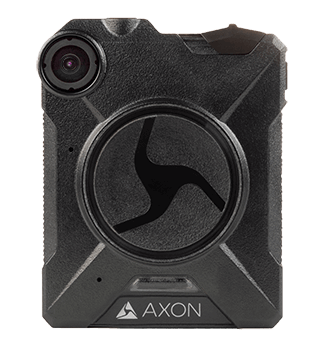 As the enterprise wearable camera market continues to grow through law enforcement, field services and first responder applications due to their ability to collect evidence and record interactions, so do privacy and data protection concerns, according to ABI Research.
The research firm forecasts enterprise wearable camera shipment to reach nearly 24 million in 2022.
“Despite clear advantages to the usage of this technology, enterprises fear attacks from cybercriminals and data theft. With massive data leaks often reaching mainstream news, public concern is rising over the security of wearable camera recordings, including who has access to such footage and for how long,” said Stephanie Lawrence, Research Analyst of ABI Research.
IoT faces new computing challenges, notably with deployment and scaling, according to ABI Research. Its future will rely in part on using embedded Real-Time Operating Systems (RTOS), which support many IoT application features, such as small size, constrained processing resources, low power consumption, limited maintenance, and real-time computing.
ABI Research forecasts 21 billion IoT devices will ship with embedded RTOS by 2022.
“The tremendous expansion of the IoT revived the embedded RTOS market, with open source platforms springing up rapidly to jostle long-established proprietary players. While industrial demand for RTOS has a decade-long history, the development of new IoT applications in other segments, such as consumer, digital home, connected car, and smart cities, jolted demand for embedded RTOS,” said Michela Menting, Research Director of ABI Research.
What was popularised by Google Earth is now easily available and affordable for consumers. That is the 360-degree camera, of course.
Demand for such cameras is expected to surge among prosumers and professionals. ABI Research expects professional grade cameras and mid-tier, prosumer 360-degree cameras to hit nearly two million shipments by 2021, with consumer 360-degree cameras to top four million by the same year.
“The most prominent force driving 360-degree video content and hardware is virtual reality (VR). And though VR has been experiencing a period of content starvation due to its novelty, small early install base, and the high cost of premium VR, support from major content platforms will lessen this for 360-degree video,” said Eric Abbruzzese, Senior Analyst of ABI Research.
 Huawei continues to retain resilience in a crowded and competitive global economic environment, aiming to become the top global smartphone vendor in five years’ time, according to ABI Research.
Its successive year-on-year rises in smartphone shipments particularly impressive, as Huawei managed to achieve its high ranking without effectively breaking out of its home market. To become a global electronics brand, the company will need to gain a strong foothold in the US and western European markets, but runs the risk of falling victim to the same plights as its larger competitors.
“Ranking by volume as third largest global smartphone vendor, Huawei is attempting to expand its reach by creating its own chipsets and mobile operating system based on Android. It may succeed with chipsets, but many other competitors tried similar OS development tactics in the past to no avail. It will be tough for Huawei to achieve this goal, even with improved global brand strength and volume gains,” said David McQueen, Research Director of ABI Research.
 Pokemon Go is taking the world by storm with its use of augmented reality (AR). The craze has received widespread publicity across the world as hordes of people go around in search of Pokemon using their mobile devices.
AR is also set to leave footprint in the enterprise market. ABI Research forecasts that AR in enterprise will explode over the next five years, as the technology will add functionality to existing workforces that was not previously possible, with remote assistance to be the primary use case.
Combined with increased safety and efficiency, this will drive investors and project managers to explore AR with smart glasses applications in the healthcare, industry, and government market segments forecast to hit 27 million shipments by 2021.
 At just US$50, the Amazon Fire tablet is expected to stoke the flames in a highly-competitive tablet market, according to ABI Research.
The Fire’s price is significantly lower than the average vendor selling price of US$323. It is a calculated risk that Amazon can afford to take as the company shifts its revenue focus away from solely hardware and toward recurring digital content sales.
Sporting a seven-inch screen, the tablet comes with 8MB of built-in memory, quad-core 1.3GHz processor, dual camera, and battery life good for up to seven hours of reading, web surfing, video watching, and music listening.
The personal computer (PC) is still alive and breathing. According to ABI Research, 163 million notebook PCs shipped globally in 2015.
The majority were laptops, which constituted nearly 80 percent of the category. The data suggests that despite a floating myth speculating that it will only be a matter of time before PCs meet their demise, the market is still going strong and shows no sign of slowing down in the immediate future.
“Industry experts greatly exaggerated the death of the PC. The platform is continuing to evolve its designs to provide flexibility for productivity purposes, while also adapting its shape to support tablet-like, touch applications. Chromebooks and ultraportable PCs will continue to drive the most growth within the notebook PC market,” said Jeff Orr, Research Director of ABI Research.
 NVIDIA has released the 1.0 version of two powerful VR software development kits (SDKs) — NVIDIA GameWorks VR and NVIDIA DesignWorks VR — to help developers deliver VR games and applications.
Immersive VR requires seven times the graphics processing power compared to traditional 3D apps and games.
When used in conjunction with the company’s industry-leading GeForce and Quadro GPUs, these SDKs provide developers the tools to create VR experiences, increase performance, reduce latency, improve hardware compatibility, and accelerate 360-degree video broadcasts.
Every other piece of mobile accessory in the world is sold in the Asia-Pacific (APAC) region. To be precise, APAC accounts for 52.9 percent of all mobile accessories shipment, according to ABI Research.
Admittedly, the region does have a huge population but the sales figures are still staggering as global revenues for mobile accessories are expected to hit US$81.5 billion this year.
Driving the demand are cost competitive smartphones. China holds huge opportunities for accessories due to its large existing and potential consumer base, rapid growth of smartphone and tablet adoption, a growing online retail market and increasing disposable incomes.
More Chinese smartphone vendors are investing in equipping their devices with fingerprint sensors with such phones expected to hit one billion shipment by 2020, marking a 17 percent CAGR, according to ABI Research.
Biometrics on smartphone devices have moved past the simple authentication option and are headed towards establishing a more robust mobile payment solution.
However, other biometric modalities such as face, voice and eye-based recognition are currently moving out of the fledgling phase and are to be integrated as highly-secure – albeit more expensive – biometric capabilities in smartphone devices with a five-year CAGR revenue growth of 144 percent.

Tablet shipment has experienced the sharpest drop — 35 percent quarter-on-quarter decrease — since 2009. The consumer device also lost 16 percent year-on-year, according to ABI Research.
Apple and Samsung have been key market players and continue to dominate a significant majority of the tablet market.
“2015 is the pivotal year for smaller, competing vendors to step-up, build their business, and gain market share in advanced and emerging markets. The tablet market lacks a truly competitive playing field needing a strong third even fourth vendor to drive the market out of stagnation. Acer, ASUS and Lenovo all show promise for claiming those spots but need to focus on building their businesses especially in markets where purchase decisions are still largely to be made,” said Jeff Orr, Senior Practice Director of ABI Research.
LTE is growing phenomenally in China. By the end of 2014, China gained almost 100 million LTE subscriptions in the first year of full LTE commercialisation, demonstrating an accelerating growth momentum, according to ABI Research.
Thanks to the first-mover advantages, China Mobile seized almost 90 percent share of the LTE market in China.
“Since the other two China mobile operators — China Unicom and China Telecom — were granted preferred FDD-LTE licenses in March 2015, it is expected that China will overtake the US to become the largest 4G market in the world, accumulating 500 million LTE subscriptions, or 36.5 percent of the domestic cellular subscriptions in 2015,” said Marina Lu, Research Analyst of ABI Research.
Can’t say that we did not see this coming. Tablets are set to overtake notebooks as the largest mobile computing category (includes tablets, MS Windows laptops, Chromebooks, and Ultraportable PCs), according to ABI Research.
Tablets, agreed by many to be in competition with Notebook PCs, will gain 52 percent majority of the mobile computing market by the end of 2015.
ABI Research forecasts the flat growth of notebooks, due to longer replacement cycles and device market competition, causing notebook devices to drop from 51 percent market share in 2013 to 48 percent in 2015, and further to 47 percent by 2016.
Rising demand for mobile games is driving the video game market to reach US$80 billion in 2020, up from under US$70 billion last year, according to ABI Research.
Traditional PC and console segments, on the other hand, will see a one- to two-percent annual growth.
Triple-A titles have the potential to dramatically change a developer/publisher’s financials, but gaming’s long tail is equally important to the continued growth of the industry. This is particularly true in the mobile space where a hit title can catapult a mobile game developer into the upper echelons of the market — as was true for developers such as King Digital (Candy Crush Saga) and Supercell (Clash of Clans).
Smartphones and tablets helped boost Android’s reign over all smart device operating systems (OS) in 2014.
According to the ABI Research report, although Android’s reign is strong, that dominance may have reached its peak as OS competition increases. It expects Android to experience a modest CAGR of 10 percent between 2014 and 2019 as leading OEMs realise the profits produced by Android vendors is finite and seek new OSs for differentiation.
Since inception, the smart device market has been rapidly increasing as devices, especially smartphones, become ubiquitous.
Driven by increasing complexity in security requirements, the global managed security services market is expected to be worth US$15.4 billion by the end of 2015 and hit US$32.9 in 2020, according to ABI Research.
Implementing and managing a successful security programme is a complex affair and most organisations lack the security expertise to manage security solutions from a wide variety of vendors. Rising threats, government regulations and a lack of internal resources are driving businesses to turn to managed security service providers which offer expertise and dedicated security personnel.
Information security incidents are on the rise as cybercriminals increase their focus on both large and small businesses. In 2014, there was a 49-percent increase in data breaches and a 78-percent increase in the number of data records stolen or lost compared with 2013. This indicates that a comprehensive IT security system is becoming increasingly necessary across the corporate, consumer, and public sectors.
Many may have been misled that Google Glass is dead and gone, a failed innovation. But that’s not what is happening. Google has simply retired it Glass Explorer Program and graduated Glass out of Google[x].
Smart glass is alive and well and ABI Research expects 2015 to be a big year for smart glasses with unit shipment growth of nearly 150 percent, almost of all of which will be in the enterprise and public sector.
More than 90 percent of smart glasses are expected to be sold in the enterprise or public sector for uses such as remote assistance, police and military, security, warehouse and barcode scanning, and, in the consumer space for gaming.
Global SIM card shipment will reach 5.2 billion units in 2014, a 5.32 percent increase from 2013, according to ABI Research.
LTE, NFC, and M2M are gaining momentum and considered the trends for the next few years.
Large markets such as India, China, and Saudi Arabia are currently among the last countries to undergo ID registration regulations. Among them only India saw a massive decline in shipments during 2013 but data from 2014 show that the market has successfully stabilised and steady growth is expected from 2015 onwards.
With more 4G LTE models announced this year, shipment is set to grow by 204 million units to 676 million in 2015.
ABI Research estimates that the total number of LTE connected devices shipped worldwide will exceed 1.89 billion units by end 2019, demonstrating the need for infrastructure and spectrum to support the stellar growth in the industry.
“With the proliferation of larger screen smart devices driving up the insatiable appetites for content and faster speeds, ABI Research estimates that there will be 350 commercial LTE networks forecasted by 4Q 2014,” said Cheri Wong, Research Analyst of ABI Research.

Intel, NVIDIA and Qualcomm are leaders in their respective markets but all of them have set their eyes on and foot into the automotive market. Building on their leading edge technologies, these consumer chipmakers have developed solutions that are competing against established automotive chipset suppliers such as Freescale, Renesas, TI, and STMicroelectronics.
The reason is clear as the automotive head-unit processor market is expected to grow from US$680 million in 2013 to US$1.95 billion in 2020, according to ABI Research.
“Automotive head-units are transitioning from proprietary architectures requiring long development cycles and Tier1-led integration efforts towards platform designs. Ford set the tone back in 2007 with its SYNC solution based on CPU hardware from Freescale and the Windows Embedded OS allowing quicker development time frames and independence from the previously dominant Tier 1 suppliers,”said Dominique Bonte, Vice President and Practice Director of ABI Research.
Samsung has retained its pole position in ABI Research’s tablet vendor Competitive Assessment. In the analysis of 23 leading tablet vendors, ABI Research ranked companies on several criteria for product implementation and vendor innovation. The Korean giant prevailed in the innovation category and finished second in the implementation strategy.
Close behind Samsung in second place is Apple. Clearly dominating in shipment volume, Apple has been a strong contender in the tablet ecosystem. Apple places number one in implementation strategy but comes in close second for innovation. The two leading tablet makers have managed to stay ahead of other tablet OEM vendors.
In third place is Lenovo, which has done a great job of expanding its tablet portfolio by marketing to a large audience range and providing unique user interfaces.
Android once again dominated Q1 shipment for smartphone advanced operating systems with 80 percent market share (including AOSP) of just under 300 million smartphones shipped, according to ABI Research. “Interestingly, basic mobile phones lost five […]
Smartphone components are being used in smartwatches in lieu of optimised smartwatch components, even when claimed otherwise, according to ABI Research.
Teardowns of a number of devices found that nobody has an optimal wearable peripheral solution yet. The Samsung Galaxy Gear and Z-watch use application processors originally targeted for smartphone/tablets and the uWatch goes a step further by using a full blown GPRS SOC, MediaTek MT6260, but only uses the integrated BT. Other watches such as the Sony series and Pebble use discrete solutions. The end result is less than optimal battery life and unnecessary cost/size that get passed on to the consumer.
“Our findings show the chipset suppliers are playing the ‘wait and see’ game before making investments into wearable peripherals. Of the solutions available the oversized application processors draw too much current and cost far too much. Discrete solutions tend to be physically large and also a little higher cost than necessary. The closest match is the SOCs with embedded BT whichcan be both power and size efficient withthe only drawback being slight cost impact. Once the market takes off expect to see a number of truly optimal solutions available,” said Jim Mielke, Vice President of Engineering at ABI Research.
Once a luxury item, embedded in-car navigation systems are now increasingly becoming less expensive and are offered in mass-market cars. At the same time, more and more car navigation units are becoming connected and multi-functional as they converge with other technologies in the car.
The attachment of embedded in-dash factory installed navigation units is expected to increase from 22 percent at the end of 2013 to 38 percent by 2019, according to ABI Reseach. This represents a compounded annual growth rate of 13.6 percent.
“However, this growth will be eclipsed by the number of smartphone-based navigation devices used in the car, particularly off-board devices, where navigation is performed in the cloud as opposed to on the device,” said Gareth Owen, Principal Analyst of ABI Research, which forecasts that shipment of handset-based navigation services will reach 1.68 billion globally by 2019.
The Red Wave is spreading from China to the rest of the mobile world. Huawei, ZTE and Lenovo may not be the leading names that come to mind when it comes to handset vendors today but their influence is spreading. As it Xiaomi, which is taking East Asia by storm with sellouts every time it puts its phones for sale online.
ABI Research has reported that Chinese handset vendors will account for more than half of mobile handsets in 2015. Chinese vendors already accounted for 38 percent of mobile handset shipments in 2013 and the ongoing shift in growth to low cost handsets, especially smartphones, will increase their market share.
Many oChinese OEMs have focused almost exclusively on the huge Chinese market, with little activity beyond its borders, but this is set to change. Huawei (6th in worldwide market share for 2013) and ZTE (5th) have already made an impact on the world stage, but other Chinese handset OEMs like Lenovo — the Motorola acquisition is a clear statement of intent — and Xiaomi are set to join them.
Ultra-portables are becoming increasingly popular, growing 100 percent from 2012 to 2013, according to ABI Research. This translates to 12.3 percent (22.5 million) of notebook PC shipment in 2013 (182.7 million).
“Across 24 countries tracked in November 2013, we found average ultra-portable PC selling prices ranging from US$940 to US$1,540 with the majority of models offered above US$1,200 in each country,” said Jeff Orr, Senior Practice Director of ABI Research. “The ASPs suggest ultra-portables including the convertible and detachable 2-in-1 configurations remained at the high-end of the notebook PC category exiting 2013.”
Beyond Apple’s MacBook Air running MacOS, the bulk of ultra-portable PCs are powered by the Windows 8 operating system, which suffered fits and starts during 2013 due to usability issues and poor first impressions by early adopter audiences. A revision, Windows 8.1, was released in the second half of the year to address these concerns, though popular opinion suggests many considering a refresh to their existing systems are willing to wait for the hiccups to be worked out before making a financial commitment.
Global mobile Internet service revenue grew an estimated 23.4 percent to US$300 billion last year, according to ABI Research. Wireless broadband subscription grew 28.8 percent and the smartphone share of total subscriptions advanced by 6.6 […]
IMS Core Network deployments are edging up as operators put the necessary infrastructure and capacity in place for planned 2014 VoLTE launches, according to ABI Research.
Spending for the core network products (HSS, CSC, Media Controllers and Gateways, MSF, IBCF, SBC and P-CSCF) integral to a functioning IMS network will reach US$4 billion by 2017. “We see increasing IMS Core Network revenues through 2017, after which IMS revenues will flatten and reflect capacity expansion,” said Joe Hoffman, Research Director of ABI Research.
IMS spending for mobile 4G markets follows the LTE deployments, as operators seek to get their network coverage in place, stabilised, and compatible mobiles for VoLTE become available. The leading LTE market, North America, will peak 2015 to 2016, while the largest market, Asia-Pacific shows continued growth into the foreseeable future.
Apple’s “iOS in the Car” will lead the market for in-vehicle infotainment (IVI) systems equipped with smartphone integration technologies, according to ABI Research.
It predicts that the market will grow substantially during the next five years to reach 35.1 million units globally by 2018. Of these, 49.8 percent will be equipped with Apple’s “iOS in the Car”, 43.6 percent with MirrorLink and 28.2 percent with other technologies.
Developments in the smartphone world are revolutionising consumers’ in-car expectations. Besides Internet connectivity itself, the ability to select apps whenever they choose is probably one of the IVI features that consumers value the most.
China’s booming luxury market along with more mature markets such as Japan, South Korea, and Australia will drive growth in the APAC region for smart home appliances at a five-year CAGR of 92 percent, according […]
Smart watches may well provide the biggest opportunity for flexible displays in the short term, according to ABI Research.
A number of new smart watch vendors have incorporated some form of flexible display technology to maximise the screen size of the small device. Most of the digital smart watches and other fitness and health wearable devices will incorporate a flexible display over the next 18 months due to the robust and rugged characteristics of the displays.
Furthermore, flexible displays or e-ink displays could be used as secondary displays on smartphones and media tablets. Phablets are predicted to be a key application for secondary displays — it is anticipated that more than six percent of annual phablet shipments could include the display type in 2015.
A shift in leadership is now upon the tablet mobile computing market, observed ABI Research.
At the year’s mid-point, the market intelligence firm has identified a trio of events signalling Apple’s iPad family of products has passed the baton to the Android ecosystem. During Q2, the number of Android-powered tablets surpassed iOS-based slates for the first time, tablet-related hardware revenues reached parity, and perhaps most important, the average selling price (ASP) of iPad is rapidly approaching the market average.
Overall shipments in the quarter dropped 17 percent sequentially while growing 23 percent year-over-year for the same quarterly period. “Smaller 7-inch class tablets are finally the majority of shipments,” says Jeff Off, Senior Practice Director at ABI Research. “The 7.9-inch iPad mini represented about 60 percent of total iPad shipments and 49 percent of iPad-related device revenues in the quarter.”
To most people around the world, Coolpad, Lenovo and Xiaomi don’t quite ring a bell when it comes to smartphones. But, in China, these three Chinese smartphone OEMs outsold Apple in Q2, according to ABI Research.
Only Samsung managed to hold its own but snaring a 17 percent market share. Lenovo was next with 13 percent, Coolpad with 10 percent and Xiaomi edged out Apple with 6.5 percent.
“Even though these OEMs are only selling into the Chinese market, the size of the market has allowed them to achieve shipment volumes that place these OEMs in the top 12 globally. It is not hard to imagine these OEMs as global competitors within the next two years,” said Michael Morgan, Senior Analyst of ABI Research.
 Android’s smartphone mobile app revenues are projected to reach almost US$6.8 billion by the end of 2013, nearly doubling its revenues from the previous year, according to ABI Research.
The Android platform has some way to go before catching iOS’s smartphone revenues but the smartphone app market will be Android’s most fruitful hunting ground compared to other devices.
ABI Research estimates that Android smartphone app revenues will increase from 59.1 percent to 65.9 percent when compared to iOS smartphone app revenues over the next 12 months.
Korean giant Samsung has nudged aside all competition in ABI Research’s assessment of 19 top tablets.
The competitive assessment ranked companies on several criteria related to both product implementation and vendor innovation.
Samsung bested all other tablet vendors in the innovation category while scoring second overall in the implementation category. Clearly king of the hill when it comes to tablet shipment volumes, Apple trailed Samsung on tablet Innovation landing in second.
Shipment of smartphones costing under US$200 are expected to grow from 238 million in 2013 to 758 million by 2018, driven by the low penetration of smartphones and large subscriber bases found in BRIC countries, according […]
Samsung has a device for every price point, giving it leadership in all, bar one category — the high end where it faces Apple.
According to ABI Research’s Device Portal sales channel analysis, the balance of power remains with Samsung/Android and Apple and looks set to remain so in the foreseeable future.
“This leaves little room for the other vendors to compete, especially the other Android vendors and those using uncompetitive operating system ecosystems. Despite some carrier’s efforts to create a more balanced smartphone device vendor industry with their use of subsidy, ultimately they are obliged to fulfill consumer demand and at the moment that means Samsung/Android and Apple,” said Nick Spencer, Senior Practice Director of ABI Research.
Accelerometers, vision-based gesture recognition, gyroscopes, and NFC are predicted to be the feature set big winners in smartphones in 2013, according to ABI Research.
“Gesture recognition is soon going to become a key differentiator in high-end flagship smartphones. Samsung’s latest Galaxy S4 has already incorporated the technology within its handset and has received significant plaudits for its new innovative user experience. Today’s consumers are becoming much savvier with their smartphones and they’re looking for new interesting ways to communicate with each other and their devices,” said Joshua Flood, Senior Analyst of ABI Research.
In 2013, almost 12 percent of smartphones shipped will have vision-based gesture recognition capabilities. It is unsure if Apple will include the technology in its next generation iPhone but the company is expected to include a full array of MEMS sensors and NFC.
Cyber security spending for critical infrastructure will hit US$46 billion by the end of 2013, according to ABI Research. Increased spending over the next five years will be driven by a growing number of policies […]
Out of 470 LTE commitments tracked by ABI Research, 193 have gone commercial. Over the next two years, another 123 network commitments are expected to do likewise. Additionally, ABI Research is currently tracking 69 LTE-TDD commitments.
“By 2018, LTE deployments should deliver population coverage of 57 percent (4.2 billion) and 31 percent (2.3 billion) in legacy WCDMA and CDMA2000 markets respectively. Significantly, LTE-TDD coverage should achieve 49 percent population coverage by the end of the five year period,” said Jake Saunders, Vice President – Core Forecasting at ABI Research.
These coverage targets will be driven by macrocells and small cells. By 2018, the number of LTE macrocell base stations will reach 2.43m to achieve the population coverage targets. Small cells are an integral part of the LTE operator’s network strategy. As a result, ABI Research estimates that 18,000 LTE outdoor small cells will ship in 2013, and will expand to 986,000 by 2018.
 Entelechy Asia