
Remote access to rich graphics applications is now possible with VMware Horizon 6 and vSphere 6 and NVIDIA GRID vGPU. Launched last August, an early access programme has attracted more than 300 customers, including University of Southern California, […]
Tag: NVIDIA
Mainstream Maxwell hits sweet spot
When NVIDIA introduced the Maxwell-based GeForce GTX 980 and 970, the gaming community was all abuzz with not just the performance but the exciting new features, such as dynamic super resolution (DSR) and multi-frame anti-aliasing (MFAA). […]
IBM turns to NVIDIA to power OpenPOWER-based systems
 Having exited the x86 server business, IBM has turned its focus to a new range of systems that leverages GPU acceleration delivered by NVIDIA.
Built on IBM’s POWER8 processor, the new IBM Power S824L servers are optimised for big data workloads. The new systems tightly integrate IBM and other OpenPOWER member technologies, including NVIDIA’s GPU accelerator technology for the first time, to unleash computing performance to help enable banks to better analyse risk, energy companies to more precisely locate oil reserves, and scientists to more quickly identify cures for diseases.
They provide clients the ability to run data-intensive tasks on the POWER8 processor while offloading other compute-intensive Big Data workloads to GPU accelerators which are capable of running millions of data computations in parallel and are designed to significantly speed up compute-intensive applications.
Intel, NVIDIA and Qualcomm charge into automotive head-unit processor market

Intel, NVIDIA and Qualcomm are leaders in their respective markets but all of them have set their eyes on and foot into the automotive market. Building on their leading edge technologies, these consumer chipmakers have developed solutions that are competing against established automotive chipset suppliers such as Freescale, Renesas, TI, and STMicroelectronics.
The reason is clear as the automotive head-unit processor market is expected to grow from US$680 million in 2013 to US$1.95 billion in 2020, according to ABI Research.
“Automotive head-units are transitioning from proprietary architectures requiring long development cycles and Tier1-led integration efforts towards platform designs. Ford set the tone back in 2007 with its SYNC solution based on CPU hardware from Freescale and the Windows Embedded OS allowing quicker development time frames and independence from the previously dominant Tier 1 suppliers,”said Dominique Bonte, Vice President and Practice Director of ABI Research.
Shenzhen hosts SIGGRAPH Asia for the first time in December
 SIGGRAPH Asia 2014, Asia’s largest computer graphics (CG) event, will be held in Shenzhen, China, for the first time from December 3 to 6
More than 7,700 attendees from over 60 countries are expected at the conference and exhibition, which will feature a myriad of experts and exhibits in fields such as hardware and software, film and game production, as well as research and education.
The conference will include a Business Symposium, dealing with discussions related to the business, creative management, production and efficiency, as well as best practices of the computer graphics industry; Computer Animation Festival that showcases the most innovative and compelling of international animation and visual effects works; courses on contemporary topics in computer graphics and interactive techniques, and a showcase of emerging technologies which features hands-on demonstrations and installations focusing on virtual reality, augmented reality, robotics, wearable devices, 3D graphics, haptic devices and more .
Gaming, datacentre & cloud and mobile drive NVIDIA growth in Q2
NVIDIA has posted sterling results in Q2, driven by strong growth in gaming, datacentre and cloud, and mobile. Q2 revenue hit US$1.10 billion, up 13 percent from $977 million a year earlier. Revenue for the first […]
Cherry Mobile brings Tegra Note 7 to the Philippines
NVIDIA has partnered with Cherry Mobile to bring the Tegra Note 7 to the Philippines. Priced at Php 9999, the Wifi version is available at launch from Cherry Mobile’s concept stores (http://www.cherrymobile.com.ph/content/stores). Cherry Mobile will introduce the LTE […]
NVIDIA adds another SHIELD — an 8-inch tablet for gamers!

The new incarnation of the NVIDIA SHIELD has arrived but it comes in a different form factor, albeit an exciting one for gamers.
The SHIELD tablet and the SHIELD wireless controller combine to take mobile gaming to another level. Together, they sport and leverage a variety of NVIDIA technologies, such as SHIELD, NVIDIA Tegra K1, DirectStylus 2, ShadowPlay, GameStream, and GRID cloud gaming.
Let’s talk about the SHIELD tablet first. Designed and built by NVIDIA, it is a high-performance tablet powered by the NVIDIA Tegra K1 advanced mobile processor and supplemented by regular, over-the-air software upgrades that bring new capabilities and levels of performance.
NVIDIA GRID Test Drive comes to SEA and Australia
 NVIDIA has availed GRID Test Drive in Southeast Asia and Australia. GRID Test Drive is a simple and secure way to test the power of NVIDIA’s GRID technology for cloud-delivered graphics acceleration.
NVIDIA GRID technology allows knowledge workers and high-end graphics users such as engineers and designers to utilise graphics-rich applications through the cloud anywhere on any device – with the same quality and performance they would have on a professional workstation.
As the demand for virtualised desktop infrastructure (VDI) continues to grow, NVIDIA’s GRID Test Drive allows anyone considering VDI, or those frustrated with the performance of their current VDI deployment, to easily test GRID for free and experience the difference of having powerful graphics behind their remote desktops and applications, without first having to build a proof-of-concept private cloud.
NVIDIA GPU accelerators powering ARM64 HPC systems
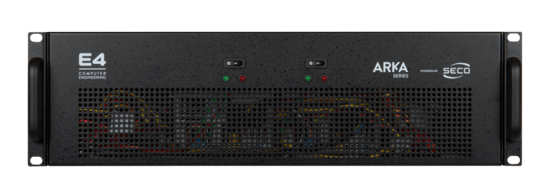
Server vendors are leveraging the performance of NVIDIA graphics processor unit (GPU) accelerators for 64-bit ARM development systems for high performance computing (HPC).
ARM64 server processors were primarily designed for micro-servers and web servers because of their extreme energy efficiency. Coupled with GPU accelerators using the NVIDIA CUDA 6.5 parallel programming platform, they can now tackle HPC-class workloads.
GPUs provide ARM64 server vendors with the muscle to tackle HPC workloads, enabling them to build high-performance systems that maximise the ARM architecture’s power efficiency and system configurability.
Adobe Illustrator CC gets GPU acceleration
NVIDIA has announced the first GPU-acceleration of Adobe Illustrator CC – enabling graphic artists to seamlessly interact with vector art at any resolution, and to smoothly pan and zoom significantly faster than previously possible. With this new feature powered by NVIDIA GPUs, Illustrator CC can now accelerate the entire canvas by up to 10-times faster than previously possible on Windows 7 or 8-based systems with compatible GPUs.
GPU acceleration in Illustrator CC specifically benefits the wide range of users working with 2D vector graphics, including graphic designers, illustrators and typographers creating media across web, print, mobile and more. While GPU acceleration is the norm in 3D content creation, those working in 2D have traditionally been restricted to driving all computing performance through the CPU. Now 2D artists and designers can experience fully interactive performance with even the most complex, high-resolution graphics.
This new Illustrator CC performance boost is based on an optimised NVIDIA technology called NV Path Rendering that is implemented as an extension to OpenGL, an open standard for graphics performance.
Simply amazing! 4K and G-SYNC make gaming a dream come true
 It’s Dragon Boat Festival, a public holiday in Taiwan but instead of choosing to run off for the holidays, hundreds of young gamers made a beeline to ATT where NVIDIA held the NVIDIA Gamer’s Day as a run up to Computex, which starts tomorrow.
From the moment the event kicked off at noon, there was no holding back the enthusiasm as the crowd checked out the latest and greatest in gaming technologies such as 4K monitors, G-SYNC, GameStream, ShadowPlay, SHIELD, GeForce GTX 700 series GPUs, and GeForce GTX 800M series-enabled notebooks. They took photos, touched, played with, and experienced the gaming devices first hand. Watch Dogs, AC4 Black Flag and Daylight were among the games on offer.
A team of five amateur gamers blew aside all the competition by winning six consecutive games to take home a whopping US$10,000.
NVIDIA clinches Computex Best Choice Awards for Tegra K1 and GRID
 NVIDIA has done the double by snaring the Computex Best Choice Award for its NVIDIA GRID technology and the Golden Award for the NVIDIA Tegra K1 mobile processor.
This is the sixth year running that NVIDIA has picked up the award, marking the longest winning streak of any international Computex exhibitor. More than 475 technology products from nearly 200 vendors competed for this year’s recognition.
Tegra K1 is a 192-core super chip, built on the NVIDIA Kepler architecture — the world’s most advanced and energy-efficient GPU. Tegra K1’s 192 fully programmable CUDA cores deliver the most advanced mobile graphics and performance, and its compute capabilities open up many new applications and experiences in fields such as computer vision, advanced imaging, speech recognition and video editing.
NVIDIA releases new drivers, GeForce Experience and SHIELD software upgrade
 NVIDIA has released new drivers built on DirectX11 to offer enhanced performance, a version of GeForce Experience packed with new features, and an over-the-air (OTA) software upgrade for SHIELD.
The new 337.50 Beta driver delivers up to 71 percent faster gaming performance, including Call of Duty: Black Ops II (up 20 percent), Sleeping Dogs (31 percent), and Alien vs. Predator, Total War: Rome 2, and Sniper Elite v2 (more than 40 percent).
Along with the new 337.50 Beta driver, GeForce Experience 2.0 now includes the ability to optimise more than 150 games. It brings two signature features to notebooks for the first time. Shadowplay, which allows gamers to capture their gaming exploits with little hit to frame rates, and share them on platforms such as live-streaming video service Twitch, and GameStream, which allows gamers to stream games and enjoy them on the go.
NVIDIA helps power self-driving cars
Those futuristic movies showing self-driving cars have come to reality with the likes of the Audi A7. AT GTC 2014, the car glided across the stage as Jen-Hsun Huang, CEO of NVIDIA, delivered his keynote address […]
NVIDIA unveils first mobile supercomputer for embedded systems
 Dubbed the world’s first mobile supercomputer for embedded systems, the NVIDIA® Jetson TK1 platform will enable the development of a new generation of applications that employ computer vision, image processing and real-time data processing.
It provides developers with the tools to create systems and applications that can enable robots to seamlessly navigate, physicians to perform mobile ultrasound scans, drones to avoid moving objects and cars to detect pedestrians.
With unmatched performance of 326 gigaflops – nearly three times more than any similar embedded platform – the Jetson TK1 Developer Kit includes a full C/C++ toolkit based on NVIDIA CUDA architecture, the most pervasive parallel computing platform and programming model. This makes it much easier to program than the FPGA, custom ASIC and DSP processors that are commonly used in current embedded systems.
Iray VCA to transform product design
 NVIDIA has introduced Iray Visual Computing Appliance (VCA), a GPU rendering appliance that dramatically accelerates ray tracing, enabling professional designers to interact with computer models of such high visual fidelity that it can largely replace the lengthy, costly process of building physical prototypes.
Honda Research and Development is an initial user of NVIDIA Iray VCA, with a prototype cluster made up of 25 nodes to refine styling designs on future cars.
Iray VCA combines hardware and software to greatly accelerate the work of NVIDIA Iray — a photorealistic renderer integrated into leading design tools like Dassault Systèmes’ CATIA and Autodesk’s 3ds Max. Because the appliance is scalable, multiple units can be linked, speeding up by hundreds of times or more the simulation of light bouncing off surfaces in the real world.
As a result, automobiles and other complex designs can be viewed seamlessly at high visual fidelity from all angles. This enables the viewer to move around a model while it’s still in the digital domain, as if it were a 3D physical prototype.
“Iray VCA lets designers do what they’ve always wanted to — interact with their ideas as if they were already real,” said Jeff Brown, Vice President and General Manager of Professional Visualisation and Design at NVIDIA. “It removes the time-consuming step of building prototypes or rendering out movies, enabling designs to be explored, tweaked and confirmed in real time. Months, even years — and enormous cost — can be saved in bringing products to market.”
NVIDIA launches NVLink, world’s first high-speed GPU interconnect
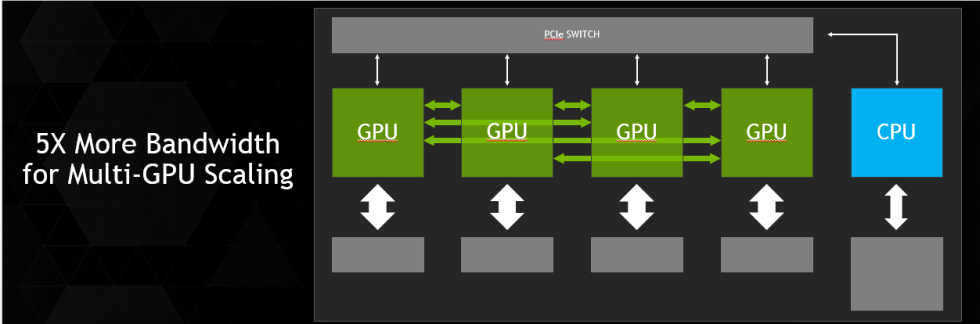 In the opening keynote for GTC 2014 in San Jose, NVIDIA CEO Jen-Hsun Huang made a host of announcements, the first of which is NVIDIA NVLink, a high-speed interconnect that enables GPUs and CPUs to share data five to 12 times faster than they can today. This will eliminate a longstanding bottleneck and help pave the way for a new generation of exascale supercomputers that are 50-100 times faster than today’s most powerful systems.
NVIDIA will add NVLink technology into its Pascal GPU architecture – expected to be introduced in 2016 – following this year’s new NVIDIA Maxwell compute architecture. The new interconnect was co-developed with IBM, which is incorporating it in future versions of its POWER CPUs.
“NVLink technology unlocks the GPU’s full potential by dramatically improving data movement between the CPU and GPU, minimising the time that the GPU has to wait for data to be processed,” said Brian Kelleher, Senior Vice President of GPU Engineering at NVIDIA.
“NVLink enables fast data exchange between CPU and GPU, thereby improving data throughput through the computing system and overcoming a key bottleneck for accelerated computing today,” said Bradley McCredie, vice president and IBM Fellow at IBM. “NVLink makes it easier for developers to modify high-performance and data analytics applications to take advantage of accelerated CPU-GPU systems. We think this technology represents another significant contribution to our OpenPOWER ecosystem.”
More power and better performance with new NVIDIA GeForce 800M

NVIDIA has launched its GeForce 800M line-up of notebook GPUs that deliver up to 60 percent performance improvement over the previous generation.
The new mobile GPUs sport a multitude of new features designed just for gamers, first of which is NVIDIA Battery Boost, which delivers up to double the gaming battery life.
Instead of pushing every notebook component to its max, Battery Boost targets a user defined frame rate, such as 30 FPS. The driver level governor takes over and operates all system components, including CPU, GPU, and memory at peak efficiency, while maintaining a smooth, playable experience.
NVIDIA adds LTE to Tegra Note 7
NVIDIA has boosted its Tegra Note 7 with the i500 LTE modem – and its 4G LTE cellular connection. The seven-inch tablet is available with LTE and HSPA+ mobile connectivity and can operate on popular carriers across […]
NVIDIA unleashes first Maxwell-based GPU
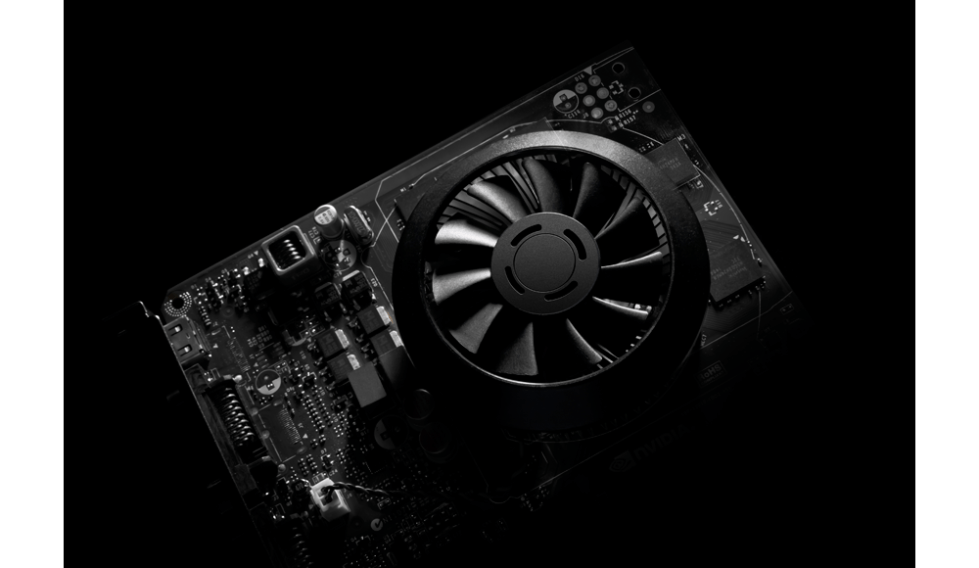 NVIDIA has introduced the GeForce GTX 750 Ti and GTX 750, the first GPUs based on the new Maxwell graphics architecture.
A GeForce GTX 750 Ti running at 1080p resolution doubles the performance and uses half the power of the GTX 550 Ti, which was built with the Fermi architecture, and is one of the most used NVIDIA GPUs, according to the Steam Hardware Survey.
“We know that to advance performance, we must advance performance per watt, because every system we design for has a power limit — from supercomputers to PCs to smartphones,” said Scott Herkelman, General Manager of the GeForce business unit at NVIDIA. “That’s why we architected Maxwell to be the most efficient GPU architecture ever built.”
Audi adds NVIDIA Tegra-based visual computing power to its cars
 Three new in-vehicle systems powered by the NVIDIA Tegra Visual Computing Module (VCM) will soon begin shipping in Audi’s vehicles.
These innovative solutions, disclosed at the German automaker’s press conference at the 2014 International Consumer Electronics Show, include:
- a connected infotainment system with twice the performance of its predecessor;
- the world’s first automotive-grade tablet that is fully integrated into the car’s infotainment system; and
- a high-resolution digital cockpit with unprecedented, vivid 3D graphical displays.
New alliance formed to bring Android to automobile
A coalition of auto and technology companies have formed a new industry alliance to bring the Android platform to a device that’s always been mobile: the car.
Audi, GM, Google, Honda, Hyundai, and NVIDIA have joined together to form the Open Automotive Alliance (OAA), a global alliance of technology and auto industry leaders committed to bringing the Android platform to cars starting in 2014. OAA is dedicated to a common platform that will drive innovation, and make technology in the car safer and more intuitive for everyone.
OAA is aimed at accelerating auto innovation with an approach that offers openness, customization and scale, key tenets that have already made Android a familiar part of millions of people’s lives. This open development model and common platform will allow automakers to more easily bring cutting-edge technology to their drivers, and create new opportunities for developers to deliver powerful experiences for drivers and passengers in a safe and scalable way.
Solved! Mystery of “192” crop circle
For a couple of weeks, the US media were reporting on a crop circle that appeared in Salinas, a small town two hours south of San Francisco. An intrepid reporter deciphered the message as “192”. […]
NVIDIA unveils revolutionary Tegra K1 super chip for mobile platform
 NVIDIA unveiled at CES the Tegra K1 mobile processor, a 192-core super chip featuring the same NVIDIA Kepler architecture that powers the NVIDIA GeForce GTX 780 Ti. For the first time, next-generation PC gaming will now be available on mobile platforms.
The Tegra K1 processor sets new mobile standards by supporting the latest PC-class gaming technologies, enabling it to run sophisticated gaming engines like Epic Games’ Unreal Engine 4. It delivers advanced computation capabilities to speed the development of applications for computer vision and speech recognition. And its extraordinary efficiency delivers higher performance than any other mobile GPU at the same power level.
“Over the past two decades, NVIDIA invented the GPU and has developed more graphics technologies than any other company,” said Jen-Hsun Huang, co-founder and CEO, NVIDIA. “With Tegra K1, we’re bringing that heritage to mobile. It bridges the gap for developers, who can now build next-gen games and apps that will run on any device.”
NVIDIA bundles games for extra holiday cheer
‘Tis the season to be jolly and NVIDIA is giving PC gamers more for their dollar. In Southeast Asia and Australia, every purchase of a NVIDIA GeForce GTX 600 and 700 series card will come with […]
NVIDIA GRID VCA makes Asian debut
Visitors to SIGGRAPH Asia last week were the first to see and catch the demo of NVIDIA GRID VCA in Asia. Essentially, NVIDIA GRID VCA is a powerful GPU-based system that runs complex applications such as Autodesk […]
Power limiting progress in mobile devices
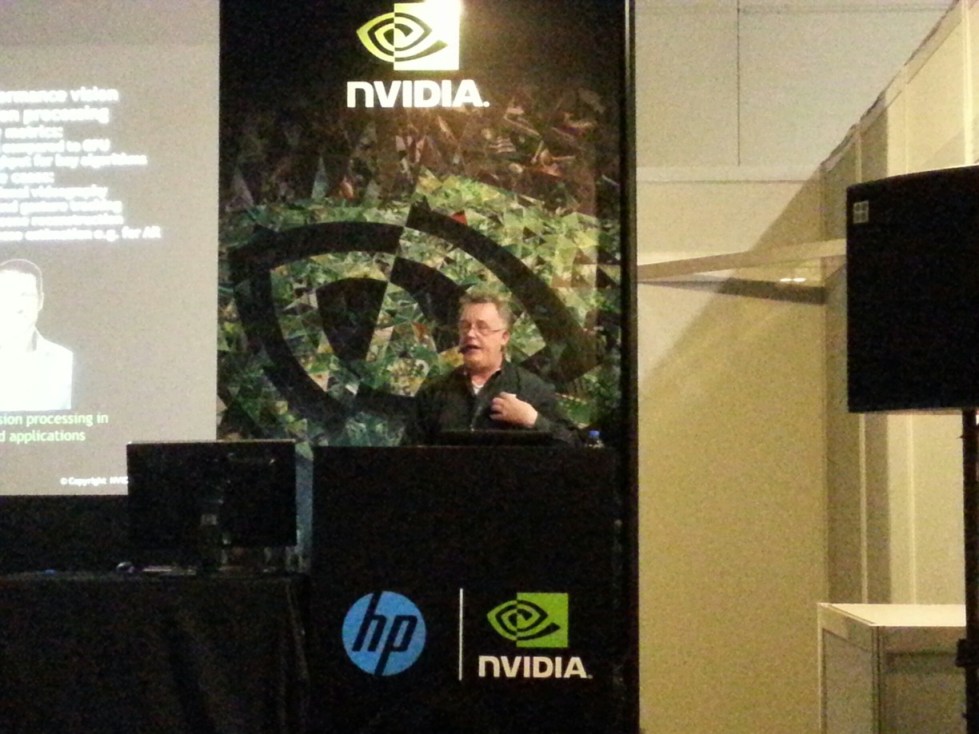 Power is a big limitation in mobile devices despite improvements in battery power, according to Neil Trevett, Vice President Mobile Content of NVIDIA.
“Power is the new performance limiter. Developers need to use acceleration to preserve battery life and high performance,” he said at NVIDIA Tech Talk at SIGGRAPH Asia in Hong Kong.
On the other hand, advanced mobile GPUs and new sensors are combining to make vision processing the next wave of mobile visual processing. NVIDIA is building a stack of advanced silicon, APIs and libraries to enable advanced mobile vision applications.
SIGGRAPH Asia 2013 starts tomorrow
Exhibitors were working hard to get ready for SIGGRAPH Asia, which starts tomorrow at the Hong Kong Convention and Exhibition Centre. Among them are HP and NVIDIA which have lined up two full-days of Tech […]
IBM and NVIDIA to supercharge data centre applications
 IBM and NVIDIA plan to collaborate on GPU-accelerated versions of IBM’s wide portfolio of enterprise software applications — taking GPU accelerator technology for the first time into the heart of enterprise-scale data centres.
The collaboration aims to enable IBM customers to more rapidly process, secure and analyse massive volumes of streaming data.
“Harnessing GPU technology to IBM’s enterprise software platforms will bring advanced, in-memory processing to a wider variety of new application areas,” said Sean Poulley, Vice President of Databases and Data Warehousing at IBM. “We are looking at a new generation of higher-performance solutions to help data center customers overcome their most challenging computing problems.”
New NVIDIA Tesla K40 speeds up supercomputing and big data analytics
 The NVIDIA Tesla K40 GPU accelerator is arguably the world’s highest performance accelerator ever built. It is capable of delivering extreme performance to a wide range of scientific, engineering, high performance computing (HPC), and enterprise applications.
Providing double the memory and up to 40 percent higher performance than its predecessor, the Tesla K20X GPU accelerator, and 10 times higher performance than the fastest CPU, the Tesla K40 GPU is the world’s first and highest-performance accelerator optimised for big data analytics and large-scale scientific workloads.
Featuring intelligent NVIDIA GPU Boost technology, which converts power headroom into a user-controlled performance boost, the Tesla K40 GPU accelerator enables users to unlock the untapped performance of a broad range of applications.
NVIDIA fights back in battle of the GPUs with GeForce GTX 780 Ti
 AMD fired the first salvo after a long period of silence to reignite the GPU battle. But, NVIDIA has hit back immediately and regained the crown with the GeForce GTX 780 Ti. Besides sheer performance, NVIDIA’s armoury also includes G-SYNC, GeForce Experience and ShadowPlay.
The new card delivers smooth frame rates at extreme resolutions for the latest and hottest PC games, including Assassin’s Creed IV — Black Flag, Call of Duty: Ghosts and Batman: Arkham Origins. It also this with cool, quiet operation that is critical to providing an immersive gaming experience.
Powering the GPU is the NVIDIA Kepler architecture, which provides an advanced, low-thermal-density design that translates into better cooling, quieter acoustics and record-breaking performance.
NVIDIA GRID brings visual computing capabilities to Australia
Businesses across Australia can now deploy graphics-accelerated virtual desktops to their employees – cost-effectively, anywhere and on any device – with the adoption of NVIDIA GRID technology by leading technology partners.
Servers from Cisco, Dell, HP, IBM and others are now incorporating NVIDIA GRID into their desktop virtualisation solutions. Combined with enterprise virtualisation software from Citrix, Microsoft or VMware, these solutions can deliver GPU-accelerated applications and desktops to engineers, designers, architects, product design teams and special-effects artists throughout Australia.
Melbourne-based Xenon Systems was appointed as the first NVIDIA GRID Demo Centre for Australia and New Zealand earlier this year.
NVIDIA believes that PC gaming is thriving

Think that PC gaming is on the wane? NVIDIA certainly doesn’t think so and has brought a group of top journalists to Montreal to deliver this message.
“Some of the season’s most anticipated PC games have been built with technology developed by NVIDIA,” wrote Tony Tamasi, Senior Vice President of Content and Technology of NVIDIA, in a blog post (http://blogs.nvidia.com/blog/2013/10/17/twimtbp/).
“We have a proud heritage on the PC platform, delivering amazing performance and advanced technologies for gamers. Technologies developed as part of our The Way It’s Meant To Be Played programme are among the most deployed in the industry,” he added.
GPU computing is more than just about gaming

Visual computing is no longer just about gaming but has now permeated everyday lives, Dr Simon See, Director and Chief Solution Architect of NVIDIA, told a gathering of 450 start-ups, investors and R&D providers in digital media.
He pointed out that GPUs now help power the 3D web, location-based visualisation applications, creative content creation, computer vision, user interfaces, image recognition, HD video processing, and virtual worlds.
In his talk, Simon also discussed the vibrant ecosystem of developers that have adopted the CUDA GPU computing platform, how early stage companies can leverage the GPU for visual and other computing applications, and what global programmes NVIDIA offers to nurture and inspire innovation and business opportunities throughout these ecosystems.
NVIDIA Tegra Note coming soon
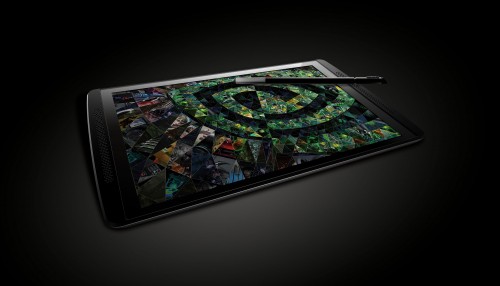 At this year’s Computex, NVIDIA gave a preview of a tablet, tentatively called Tegra Tab, that leverages the NVIDIA DirectStylus technology, which significantly improves passive stylus performance.
That device is now called NVIDIA Tegra Note and will be available in the next few months. Designed by NVIDIA, it will be marketed by NVIDIA partners including Colorful, Shenzhen Homecare Technology, XOLO, and ZOTAC XOLO in Asia-Pacific.
The suggested retail price for the Android-based device is US$199, making it highly competitive in the growing tablet space.
NVIDIA appoints new CFO
NVIDIA has named Colette Kress, a 24-year veteran of the tech industry, as Executive Vice President and Chief Financial Officer. The appointment takes effect later this month. Kress most recently served for three years as Senior […]
Xiaomi introduces world’s first NVIDIA Tegra 4-powered super phone
 China mobile device maker Xiaomi has announced the Xiaomi Mi3, the world’s first to be based on the NVIDIA Tegra 4 mobile processor.
Delivering superb gaming and lightning-fast web browsing, the flagship phone represents the first collaboration between NVIDIA and Xiaomi. The Mi3 will launch on China Mobile, the world’s largest carrier, in October.
Based on the Tegra 4 – the world’s fastest mobile processor — the phone combines premium specs and features with all-day battery life. In addition to Tegra 4, it includes a 5-inch 1080p full HD display with 441ppi, 2GB RAM and up to 64GB of storage. The Tegra 4 processor offers record levels of performance and battery life with its 72-core NVIDIA GeForce GPU, quad-core ARM Cortex-A15 and fifth battery-saver CPU core, also based on Cortex-A15.
NVIDIA and Ubisoft team up for latest games
 NVIDIA has formed an alliance with Ubisoft to offer PC gamers the best gaming experiences possible for Ubisoft’s biggest fall titles, including Tom Clancy’s Splinter Cell Blacklist, Assassins Creed IV Black Flag and Watch Dogs.
NVIDIA’s developer technology team is working closely with Ubisoft’s development studios on incorporating graphics technology innovations to create game worlds that deliver new heights of realism and immersion. One example is NVIDIA® TXAA™ antialiasing, which provides Hollywood-levels of smooth animation, soft shadows, HBAO+ (horizon-based ambient occlusion) and advanced DX11 tessellation.
“PC gaming is stronger than ever and Ubisoft understands that PC gamers demand a truly elite experience — the best resolutions, the smoothest frame rates and the latest gaming breakthroughs,” said Tony Tamasi, Senior Vice President of Content and Technology at NVIDIA. “We’ve worked closely with Ubisoft’s incredibly talented creative team throughout the development process to incorporate our technologies and deliver the most immersive and visually spectacular game worlds imaginable.”
NVIDIA acquires PGI
NVIDIA has made further inroads into high performance computing (HPC) with the acquisition of The Portland Group (PGI), a leading independent supplier of compilers and tools. Founded in 1989, PGI has a long history of innovation […]
Rhythm & Hues Studios creates award-winning visual effects with NVIDIA GPUs
 By Edward Lim, Managing Consultant, CIZA Concept
Founded in 1987, Rhythm & Hues Studios is a visual effects company with corporate headquarters in El Segundo, California and production facilities in India, Malaysia, Canada, and Taiwan.
The studio has won the Academy Award for Best Visual Effects for Babe (1995), The Golden Compass (2008) and Life of Pi (2013), on top of four Scientific and Technical Academy Awards from the Academy of Motion Picture Arts and Sciences (AMPAS).
Computing power and unified platform needed
Lots of computing power are needed to create computer graphics imagery (CGI) in films. Besides this requirement, Rhythm & Hues also needed to standardize on a platform that can be used in its studios around the world. This unified platform is critical as work is shared and done concurrently in different parts of the world.
NVIDIA unveils Quadro K6000 GPU

NVIDIA has unveiled the NVIDIA Quadro K6000 GPU and a new line of professional graphics GPUs for mobile workstations.
The Quadro K6000 GPU delivers five times higher compute performance and nearly double the graphics capability of its predecessor, the NVIDIA Quadro 6000 GPU, and features the world’s largest and fastest graphics memory.
Combining breakthrough performance and advanced capabilities in a power-efficient design, it enables leading organisations such as Pixar, Nissan, Apache Corporation, and the Weather Channel’s WSI division to tackle visualisation and analysis workloads of unprecedented size and scope.
NVIDIA Shield to ship on July 31
It’s official! NVIDIA has informed those who pre-ordered the NVIDIA Shield gaming portable that the product would be shipped to US and Canada customers on July 31. This is more than a month off its […]
NVIDIA launches world’s first GPU-accelerated platform for geospatial intelligence analysts
NVIDIA has launched the NVIDIA GeoInt Accelerator, the world’s first GPU-accelerated geospatial intelligence platform to enable security analysts to find actionable insights quicker and more accurately than ever before from vast quantities of raw data, images and video.
The platform provides defence and homeland security analysts with tools that enable faster processing of high-resolution satellite imagery, facial recognition in surveillance video, combat mission planning using geographic information system (GIS) data, and object recognition in video collected by drones.
It offers a complete solution consisting of an NVIDIA Tesla GPU accelerated system, software applications for geospatial intelligence analysis, and advanced application development libraries.
RMI counts on GPU computing for credit risk analysis
 By Edward Lim, Managing Consultant, CIZA Concept
Established in 2006 as a research institute at the National University of Singapore (NUS), the NUS Risk Management Institute (RMI) is dedicated to financial risk management. Its establishment was supported by the Monetary Authority of Singapore (MAS) under its program on Risk Management and Financial Innovation.
In 2009, RMI embarked on a non-profit Credit Research Initiative (CRI) in response to the financial crisis, with the intent to spur research and development in the critical area of credit rating. Besides being just a typical research project, it wanted to demonstrate the operational feasibility of its research and become a trusted source of credit information.
CRI currently covers more than 35,000 companies in 106 economies in Asia-Pacific, North America, Europe, Latin America, Africa, and the Middle East.
Richmanclub Studios relies on NVIDIA GPUs to produce upcoming film
By Edward Lim, Managing Consultant, CIZA Concept Founded by Rich Ho in Singapore in 2004, Richmanclub Studios is a motion picture production company. Its first official production was the short film, “The Alien Invasion” in […]
NVIDIA Tesla GPU accelerators power world’s most energy efficient supercomputer
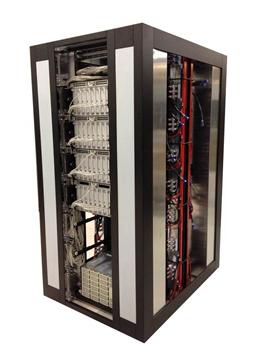 NVIDIA Tesla GPU accelerators are powering the world’s two most energy efficient supercomputers, according to the latest Green500 list published last week.
The winning system is Eurora at CINECA, Italy’s largest supercomputing centre, in Casalecchio di Reno. Equipped with NVIDIA Kepler architecture-based GPU accelerators – the highest-performance, most efficient accelerators ever built – Eurora delivers 3,210 MFlops per watt, making it 2.6 times more energy efficient than the best system using Intel CPUs alone (at Météo France). It also greatly surpasses the most efficient Intel Xeon Phi accelerator-based system, Beacon, at the National Institute for Computational Sciences, at the University of Tennessee.
The number two system on the June 2013 Green500 list is the Aurora Tigon supercomputer at the Selex ES facilities Chieti, Italy.
NVIDIA Shield shipment delayed till July
Those hoping to lay their hands on a NVIDIA Shield gaming portable device have to wait a little longer. As “some final quality-assurance testing has just turned up a mechanical issue that we’re not happy […]
NVIDIA rolls out GeForce GTX 760
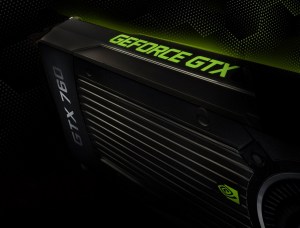 Barely a month after it introduced the first GeForce 7 series GPUs — the NVIDIA GeForce GTX 780 and the NVIDIA GeForce GTX 770 — NVIDIA has added another new card to its lineup. Priced at US$249, the new NVIDIA GeForce GTX 760 GPU, is designed to deliver extreme frame rates for this year’s hottest PC games, including Call of Duty: Ghosts, Watch Dogs, and Battlefield 4,.
According to NVIDIA, this would be its last GeForce 7 series card to be introduced this year. The new lineup now consists of:
- GeForce GTX TITAN/GeForce GTX 690
- GeForce GTX 780
- GeForce GTX 770
- GeForce GTX 760
- GeForce GTX 660
- GeForce GTX 650 Ti BOOST
- GeForce GTX 650 Ti
- GeForce GTX 650
Powered by an NVIDIA Kepler architecture-based GPU with an incredible 2.3 gigaflops of processing horsepower, the GeForce GTX 760 is more powerful than the next-generation game consoles expected by the end of the year.
NVIDIA drops price of SHIELD to US$299
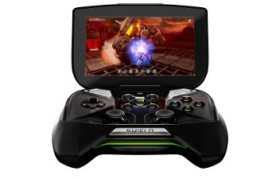 NVIDIA has done something quite unheard of — dropping the price of a pre-ordered product just a week before shipping. According to a NVIDIA blog post, “we’ve heard from thousands of gamers that if the price was US$299, we’d have a home run. So we’re changing the price of SHIELD to US$299”.
All pre-orders will be charged the new price of US$299 when the product ships.
“We want to get SHIELD into the hands of as many gamers as possible. That’s because we think they’ll have the same reaction to it as thousands of gamers already have: joy,” said NVIDIA Product Manager Jason Paul.
Stanford University researchers build world’s largest artificial neural network
NVIDIA has collaborated with a research team at Stanford University to create the world’s largest artificial neural network built to model how the human brain learns. The network is 6.5 times bigger than the previous record-setting network developed by Google in 2012.
Computer-based neural networks are capable of “learning” how to model the behaviour of the brain – including recognising objects, characters, voices, and audio in the same way that humans do.
Yet creating large-scale neural networks is extremely computationally expensive. For example, Google used approximately 1,000 CPU-based servers, or 16,000 CPU cores, to develop its neural network, which taught itself to recognise cats in a series of YouTube videos. The network included 1.7 billion parameters, the virtual representation of connections between neurons.
NVIDIA SHIELD ready for the market
The cameras came out instantly as NVIDIA showcased the production version of NVIDIA SHIELD to journalists at a demo suite at Grand Hyatt Taipei. The NVIDIA Tegra-powered gaming portable can play games on its own […]
ASUS aims to take gaming to “incredible” level
Gamers, rejoice! ASUS wants to take gaming experience to “incredible” level with its new lineup of gaming desktop and notebook PCs. Announcing this to a global media gathering at TICC in Taipei, ASUS Chairman Jonney […]
NVIDIA adds GeForce GTX 770 to its lineup
 Just a week after launching its top-of-the-line GeForce GTX 780, NVIDIA has added a scaled-down sibling to its impressive lineup of GPUs based on the award-winning NVIDIA Kepler architecture.
Priced at US$399, the new NVIDIA GeForce GTX 770 GPU joins the GTX TITAN and the GTX 780 in delivering superior gaming performance, advanced features, and silky smooth frame rates for unsurpassed high-definition PC gaming.
“Only NVIDIA GPUs consistently provide gamers with the ability to achieve extremely fast frame rates at high-definition resolutions with all of the eye candy turned on,” said Scott Herkelman, General Manager of the GeForce GPU business at NVIDIA. “The GeForce GTX 770 represents a new threshold of performance and features for under US$400 and our commitment to PC gaming is why GeForce GPUs continue to be the No. 1 choice of gamers worldwide.”
NVIDIA GPU accelerators enable HIV research breakthrough
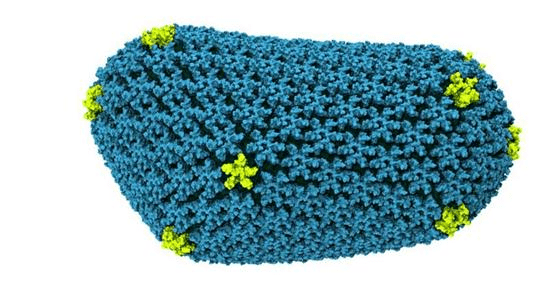 Researchers at the University of Illinois at Urbana-Champaign (UIUC) have achieved a major breakthrough in the battle to fight the spread of the human immunodeficiency virus (HIV) using NVIDIA Tesla GPU accelerators.
Featured on the cover of the latest issue of Nature, the world’s most-cited interdisciplinary science journal, a new paper details how UIUC researchers collaborating with researchers at the University of Pittsburgh School of Medicine have, for the first time, determined the precise chemical structure of the HIV “capsid,” a protein shell that protects the virus’s genetic material and is a key to its virulence. Understanding this structure may hold the key to the development of new and more effective antiretroviral drugs to combat a virus that has killed an estimated 25 million people and infected 34 million more.
UIUC researchers uncovered detail about the capsid structure by running the first all-atom simulation of HIV on the Blue Waters Supercomputer. Powered by 3,000 NVIDIA Tesla K20X GPU accelerators – the highest performance, most efficient accelerators ever built – the Cray XK7 supercomputer gave researchers the computational performance to run the largest simulation ever published, involving 64 million atoms.
NVIDIA GeForce GTX 780 new king of single GPU cards
Just three months after it introduced the NVIDIA GeForce GTX TITAN, NVIDIA has rolled out another top of the line graphics card. The NVIDIA GeForce GTX 780 GPU is designed to deliver great performance for […]
NVIDIA GRID unleashes graphics for virtualised desktops
NVIDIA has unleashed the full graphics potential of enterprise desktop virtualisation with the availability of NVIDIA GRID vGPU integrated into Citrix XenDesktop 7.
NVIDIA GRID vGPU technology addresses a challenge that has grown in recent years with the rise of employees using their own notebooks and portable devices for work. These workers have increasingly relied on desktop virtualisation technologies for anytime access to computing resources, but until now this was generally used for the more standard enterprise applications. Performance and compatibility constraints had made it difficult for applications such as building information management (BIM), product-lifecycle management (PLM) and video-photo editing.
Two decades ago, hardware-based graphics replaced software emulation. Desktop virtualisation solutions stood alone as the only modern computing form without dedicated graphics hardware. As a result, an already busy virtualised CPU limited performance and software emulation hampered application compatibility.
NVIDIA PhysX supports Microsoft Xbox One
 NVIDIA has announced its support for the Microsoft Xbox One game console with its popular NVIDIA PhysX and NVIDIA APEX software development kits (SDKs).
Together, PhysX and APEX provide solutions for collision detection and simulation of rigid bodies, clothing, fluids, particle systems and more, across a wide range of platforms, including desktop PCs, game consoles, and mobile and handheld devices.
NVIDIA PhysX technology is the world’s most pervasive physics solution for designing real-time, real-world effects into interactive entertainment titles. The PhysX development environment gives developers unprecedented control over the look of their final in-game interactivity.
SHIELD ready for pre-order
NVIDIA’s Project SHIELD has been much-talked and written about these past months. After all that buzz, the product, henceforth called SHIELD, is now ready for pre-order. Priced at US$349, it will ship in June and […]
Tegra to drive NVIDIA growth in 2012
NVIDIA has reported revenue for Q1 of fiscal 2014, ended April 28, 2013, of US$954.7 million, down 13.7 percent from US$1.11 billion in Q4 of fiscal 2013.
GAAP earnings per diluted share were US$0.13, down 53.6 percent from US$0.28 in the prior quarter. Non-GAAP earnings per diluted share were US$0.18, down 48.6 percent from US$0.35 in the prior quarter.
As previously announced, NVIDIA plans to return in excess of $1 billion this fiscal year to shareholders in the form of share repurchases and quarterly dividend payments. During Q1, NVIDIA returned US$146.3 million to shareholders by repurchasing US$100 million of shares, and paying US$46.3 million of dividends, or US$0.075 per share.
 Entelechy Asia