
 Amid rumours that Apple was going to axe the iPhone X came encouraging sales numbers by Canalys.
Author: entelechyasia
Entelechy Asia is passionate about technology -- from the home to the enterprise, and telecommunications. We deliver news, views and reviews from Asia from the perspectives of practitioners and followers.
Chery to pop NVIDIA-powered ZP ProAI system into autonomous vehicles
 China carmaker Chery has adopted the new ZP ProAI system, powered by NVIDIA Drive AI self-driving technology, for its autonomous vehicles. The move will bring Level 3 autonomous driving to the world’s biggest auto market.
Global IT spending to rise to US$3.7t in 2018
 Global IT spending is expected to grow to US$3.7 trillion in 2018, an increase of 4.5 percent from 2017, according to Gartner.
Spectre of a Meltdown

In a week where the world’s eyes were supposed to be focusing on the exciting new gadgets and technologies coming out at CES 2018, it was news from past technologies that had the world reeling.
Gaming monitors get bigger

BFGD — that’s the new acronym that gamers need to know. Introduced by Jensen Huang, CEO of NVIDIA this week, it stands for Big Format Gaming Display.
Smart speaker adoption to rise in 2018

Amazon and Google went head to head in the smart speaker market last year and the battle is expected to be more intense in the coming days with more players joining the fray.
Keysight and SUTD to advance electronic measurement research

Keysight Technologies and Singapore University of Technology and Design (SUTD) have inked a Memorandum of Understanding (MOU) for research collaboration and opened the new Measurement Technologies Laboratory.
Apple apologises
 Apple has apologised for slowing down the performance of older iPhone models to prevent accidental shutdowns due to aging batteries.
Apple caught slowing down
 The names Benjamin Lazarus, Jeffrey Aberman, Stephen Margolis, Sandy Brodsky, and Victoria Childs are probably unfamiliar to most. But inthe days to come, they may become more popular.
AI will create more jobs
One of the biggest fears amid the excitement about artificial intelligence (AI) is the loss of jobs. Many are afraid of being made redundant as AI becomes more pervasive.
NVIDIA Titan V: Not for gamers

It’s easy to understand why the media and gamers were getting all excited following NVIDIA’s announcement of the Titan V. After all, it’s dubbed as “the world’s most powerful GPU for the PC, driven by the world’s most advanced GPU architecture, NVIDIA Volta”.
Honda to accelerate smart car R&D with SenseTime
Honda has signed a long-term agreement to develop autonomous cars with SenseTime, a China artificial intelligence (AI) company. The partnership will leverage Honda’s vehicle control system with SenseTime’s AI algorithms to jointly create an autonomous driving […]
Forced migration

By Edward Lim
The telecommunications market, except for mobile, is facing a slowdown in growth. According to IDC, the Pay TV services market, which consists of cable, satellite, Internet protocol (IP), and digital terrestrial TV services, will remain flat over from 2017 to 2021.
Learn robotics at Udacity
 Robotics is no longer just a hobby but serious stuff. NVIDIA’s Deep Learning Institute is now working with online learning provider Udacity to develop a programme that will immerse students in the field of robotics, giving them career-ready skills.
Robotaxis are coming!
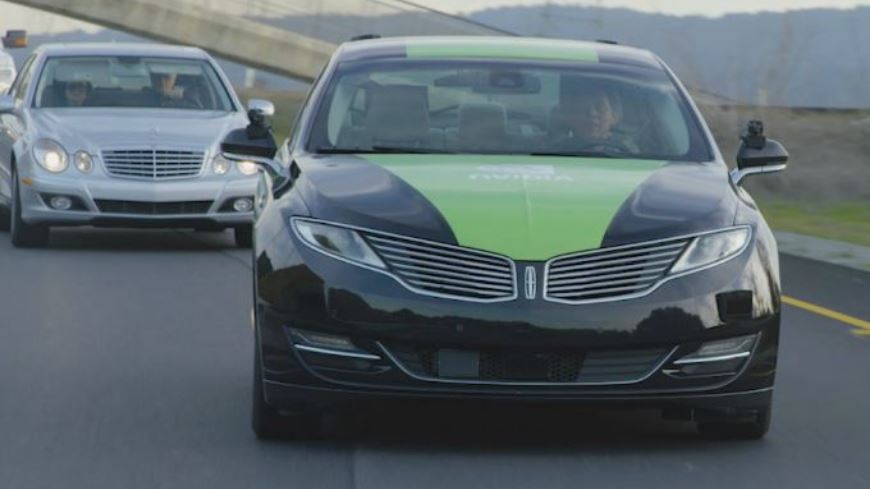
With the advent of robotaxis, car sales are expected to peak in 2022, according to Canalys.
Pre-order Razer smartphone on November 23

Razer’s first smartphone will be available for pre-order in Singapore on November 23.
Qualcomm invests in China AI startup SenseTime
 China artificial intelligence (AI) startup SenseTime has signed a strategic investment agreement with Qualcomm.
NVIDIA Tesla V100 gains widespread acceptance
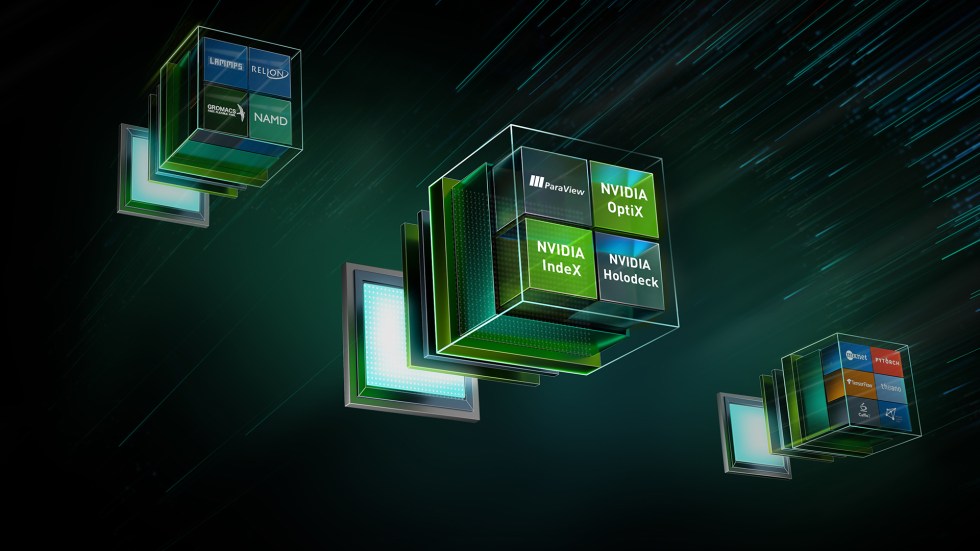
NVIDIA’s Volta architecture is leaving quite an impression. According to a NVIDIA press release issued at SC17, the Volta-based NVIDIA Tesla V100 GPU is available through every major computer maker and chosen by every major cloud to deliver artificial intelligence (AI) and high performance computing.
We are 5!
 Entelechy Asia turns five today. So much has changed since we launched in November 2012.
Short cut to A-
 An Asean scholar disgruntled with his grades hacked his professor’s account to bump himself from B to A-. The Singapore Management University (SMU) student was soon found out and will be spending four months in prison reflecting on his folly.
5 things to do when your social media platform is down
 When WhatsApp was down for a few hours last Friday (November 3), Facebook timelines were filled with panic posts by people unable to communicate on WhatsApp. Snapchat is reported to be down at the point of writing and again, there is frenzy over the outage.
Beware of fake Facebook accounts
 It’s become something of a daily routine. Friend requests are coming from people we don’t know on Facebook.
Sweet quarter for Apple in China

The launch of the iPhone 8 and drop of prices of older models have helped Apple turn in a sterling quarter in China, with shipment rising 40 percent to 11 million units this Q3.
Enter the gaming smartphone

Finally, a smartphone that’s made for gamers. Razer has launched in London the latest high-end smartphone with a focus on mobile gaming.
But what makes this phone different from others in the market? And how does it enhance the mobile gaming experience?
NVIDIA expands DLI offerings

The need for deep learning skills is increasing as more and more companies and industries hop on the bandwagon. Launch a little more than a year ago, NVIDIA’s Deep Learning Institute (DLI) has already trained tens of thousands of students, developers and data scientists.
And the company is expanding its DLI offerings with:
- New partnerships: Team up with Booz Allen Hamilton and deeplearning.ai to train thousands of students, developers and government specialists in artificial intelligence (AI).
- New University Ambassador Program: Instructors worldwide can teach students critical job skills and practical applications of AI at no cost.
- New courses: More courses are added to teach domain-specific applications of deep learning for finance, natural language processing, robotics, video analytics, and self-driving cars.
7-minute grace

Ever sent a WhatsApp message only to wish that you could delete it later? Or have you ever sent a message to a wrong chat? Well, it looks like you’re not alone because WhatsApp has introduced a delete function that lets users delete messages within seven minutes of sending.
This seven-minute grace could be a face- or even life-saver for those moments when we hit sent too quickly.
Delete only works if both the sender and recipient are using the latest version of WhatsApp for Android, iPhone or Windows Phone.
Samsung Pay extended to smartwatches
Guess it was only a matter of time as Samsung Pay has been extended to the Gear 3 and Gear Sport. This will let consumers use their smartwatches, on top of their smartphones, to make […]
Smartphone makers in a rush?
 In 2016, Samsung had battery overheating issues with its Note 7. Recently, Apple is constantly pushing out iOS 11 fixes to improve battery life for the iPhone 8. And now, Google is working on a solution to address the screen burn-in issues of the Pixel 2.
What’s happening? Are smartphone makers in such a rush to launch new phones that they are cutting short quality tests? Admittedly, this is the probably the hottest segment of the consumer technology market and every player is trying its best to outdo each other.
According to IDC, the worldwide smartphone market will reach a total of 1.53 billion units shipped in 2017, up 4.2 percent from the 1.47 billion units shipped in 2016. That’s a lot of phones and perhaps the reason why makers are hurrying to snare a share.
GeForce GTX 1070 Ti arrives on November 2
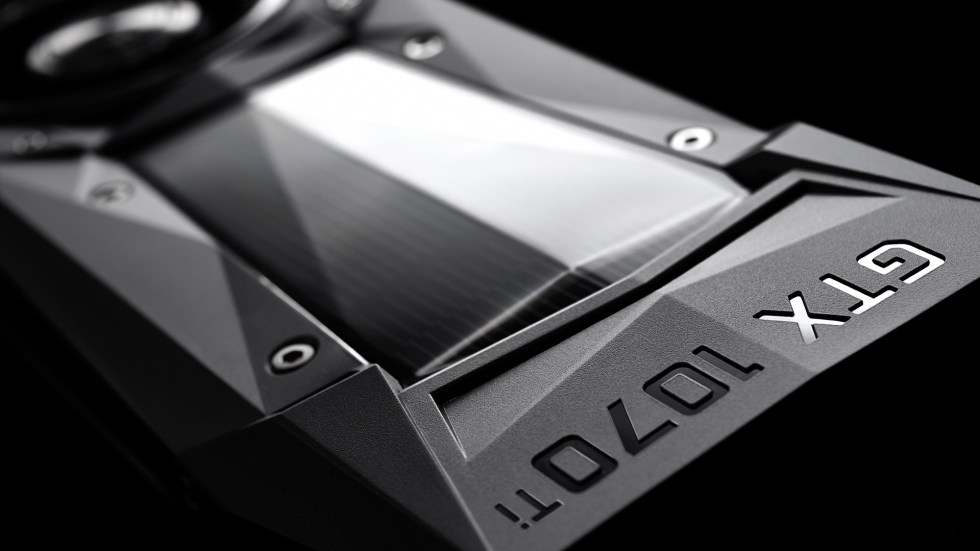 No matter how hard NVIDIA tries to keep things quiet, it always seems that some sites out there know something about unannounced products. Case in point is the much touted GeForce GTX 1070 Ti.
Media frenzy was already high in the weeks running up to the announcement, thanks to drips of information that were permeating the Web.
NVIDIA finally announced it hours ago in a blog post. Truth be told, it sounds like a good product with its award-winning Pascal GPU architecture, 2,432 cores and 8GB of memory running at 8Gbps for a total bandwidth of 256 GB/s. And it performs twice as fast as the immensely popular GeForce GTX 970.
Singapore’s AI agenda gets double boost!
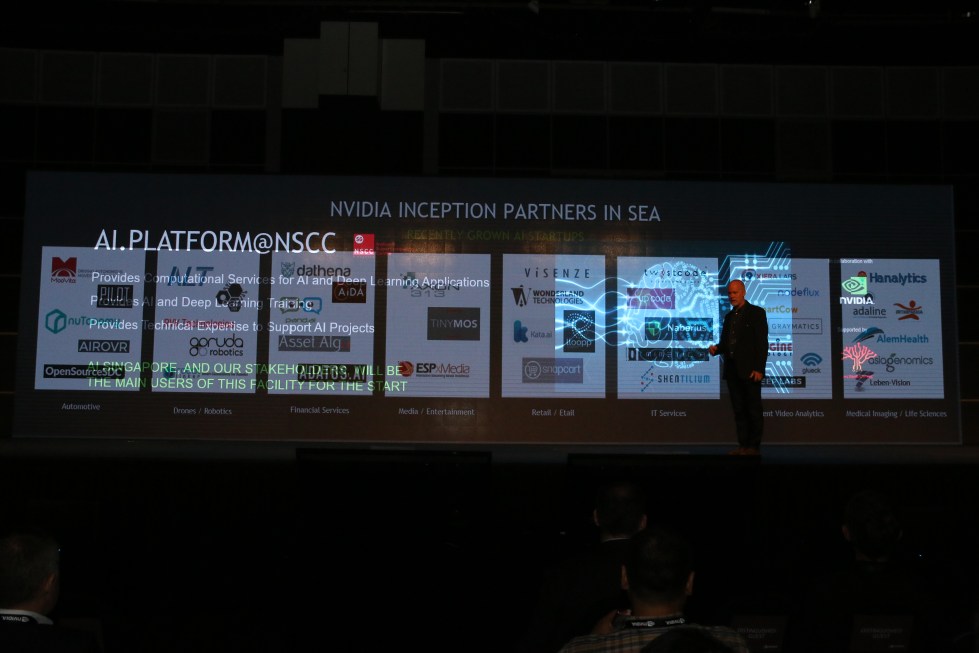
Singapore’s aim to be an artificial intelligence (AI) hub has been boosted with two initiatives — the setting up of a shared AI platform for researchers and the awarding of scholarships to develop AI talents.
At the NVIDIA AI Conference in Singapore yesterday, NVIDIA and Singapore’s National Supercomputing Centre (NSCC) agreed to establish a platform to bolster AI capabilities among its academic, research and industry stakeholders and in support of AI Singapore (AISG), a national programme set up in May to drive AI adoption, research and innovation in Singapore.
Called AI.Platform@NSCC, it will provide AI training, technical expertise and computing services to AISG, which brings together all Singapore-based research and tertiary institutions, including the National University of Singapore (NUS), Nanyang Technological University (NTU), Singapore University of Design and Technology (SUTD), Singapore Management University (SMU), as well as research institutions in the Agency for Science, Technology and Research (A*STAR).
5 reasons why I like Google Home
 By Edward Lim
Perhaps it’s something like a forbidden fruit. The harder it it to get, the more we want it. Google tempted us with the Google Home smart speaker but it was not available in Singapore or anywhere in the region. It was only in July that the device was finally available in Australia.
Anyway, as with most gadget lovers, there’s always a way to get our hands on the desired device. In my case, I managed to snare one in Walmart in San Jose while attending a conference there in April. Actually, I bought two — one as a gift to a friend.
Tantalising line-up of speakers at NVIDIA AI Conference
 More than 1,000 participants attending the NVIDIA AI Conference in Singapore next week are in for a treat as the organisers are bringing in a tantalising line-up of speakers.
The two keynote speakers are Dr David B Kirk, NVIDIA Fellow and inventor of more than 60 patents and patent applications relating to graphics design; and Dr Wanli Min, AI scientist of Alibaba Cloud, who will touch on A Revolutionary Road to Data Intelligence.
Besides these two, there are special guest-of-honour Chng Kai Fong, Managing Director of Singapore’s Economic Development Board, and a panel discussion on AI for the Future of Singapore Economy.
E-commerce to account for a quarter of retail sales by 2025
 Greater internet and mobile device accessibility are driving e-commerce growth in Southeast Asia.
According to ABI Research, Smart Retail has gone through revolutionary changes in the past 10 years and will exponentially continue to do so going forward. Brick and mortar stores are no longer the only option for consumers across the globe to make their everyday purchases, due to significant advancements in technology, both in-store and online.
Key players include Senion, who implements some of the world’s largest Indoor Positioning System (IPS) solutions to enhance in-store experiences, and AisleLabs who provides shopper traffic behavior analytics to help retailers optimise store layouts. Leading POS software vendors, Shopkeep and Square are allowing retailers to sell across multi-channels from a single platform. These and other key vendors are paving paths to making the offline and online worlds seamless experiences.
Robotaxis on the way
 No steering wheels, pedals or mirrors. Sounds like science fiction but the fully autonomous robotaxi is on its way with the launch of a new system that NVIDIA has codenamed Pegasus.
Pegasus extends the NVIDIA Drive PX AI computing platform to handle Level 5 driverless vehicles. NVIDIA DRIVE PX Pegasus delivers over 320 trillion operations per second — more than 10 times the performance of its predecessor, NVIDIA DRIVE PX 2, announced Jensen Huang, Founder and CEO of NVIDIA at his keynote address at GTC Europe in Munich.
Robotaxis powered by NVIDIA DRIVE PX Pegasus will have interiors that feel like a living room and arrive on demand to safely whisk passengers to their destinations, bringing mobility to everyone, including the elderly and disabled.
Google sets up online Singapore store
 Hurray, Google has finally set up an online store for Singapore! Amid the flurry of announcements made yesterday, this is probably the most significant for those in Singapore. After all, what’s the point of reading and hearing about all the launches in recent years without being able to buy the products anywhere in the country.
The bad news, however, is that only three products were listed on the Google Wifi, Google Chromecast and the newly-launched Google Pixel 2 XL.
Google’s latest smartphone sports front-facing stereo speakers, and front and rear cameras capable of producing amazing shots using fused image stabilisation of optical and digital zoom. Though the headphone jack is gone, Google has introduced Pixel Buds that can translate up to 40 languages on the fly.
All 3b Yahoo accounts breached in 2013
This. Is. Serious. Yahoo has revealed that ALL of its three billion user accounts were affected by the August 2013 data theft. The number is three times the one billion accounts that Yahoo said were […]
Changing role of CIO
The role of the CIO is changing, according to a Gartner survey of 3,160 CIO respondents in 98 countries.
The findings revealed that the CIO role is transitioning from delivery executive to business executive, from controlling cost and engineering processes, to driving revenue and exploiting data.
Ninety-five percent of CIOs expect their jobs to change or be remixed due to digitalisation. While world-class IT delivery management is a given, it will take up less and less of the CIO’s time.
Nokia 3310 makes comeback at under S$100
 Nokia’s announcement at Mobile World Congress in February that it was resurrecting the iconic Nokia 3310 was met with enthusiasm, which was quickly dampened when the phone was said to run on 2.5G.
However, Nokia has responded remarkably by upgrading the 3310 to 3G and making it available at “below S$100”.
“Our fans around the world have been asking for this iconic phone to support 3G. Fans asked, we listened, and today welcome the Nokia 3310 3G,” said Mr Juho Sarvikas, Chief Product Officer of HMD Global, maker of the Nokia phone.
Appier appoints Sean Chu as CSO
Appier has appointed Sean Chu as Chief Strategy Officer (CSO) to lead its operations in Japan and Korea. Chu will help drive the company’s growth as it moves to create new AI platforms to help […]
Enterprise wearables to hit 118m units in 2022

Enterprise wearable shipment will reach over 118 million in 2022, increasing from just over 38 million in 2017, a CAGR of 25 percent, according to ABI Research.
The enterprise wearables market is continuing to see stronger growth than the consumer market, which has shipment numbers increasing at a lower CAGR of 13 percent.
Healthcare devices, wearable cameras, and wearable scanners will account for 73 percent of enterprise wearable shipments in 2022. Innovative companies are leading the charge, such as Royole with flexible components, Waverly with real-time translation, and Axon (previously Taser) with wearable cameras.
China’s tech giants bet on NVIDIA Volta
 China’s top technology companies are betting big on the NVIDIA Volta platform.
Alibaba Cloud, Baidu, and Tencent are incorporating NVIDIA Tesla V100 GPU accelerators into their data centres and cloud-service infrastructures to accelerate AI for a broad range of enterprise and consumer applications.
At the heart of the new Volta-based systems is the NVIDIA V100 data centre GPU. Built with 21 billion transistors, it provides a 5x improvement over the preceding NVIDIA Pascal architecture P100 GPU accelerators, while delivering the equivalent performance of 100 CPUs for deep learning. This performance surpasses by 4x the improvements that Moore’s law would have predicted over the same period of time.
Inspur, Lenovo and Huawei are using the NVIDIA HGX reference architecture to offer Volta-based accelerated systems for hyperscale data centres. Using HGX as a starter “recipe,” original equipment manufacturer and original design manufacturer partners can work with NVIDIA to more quickly design and bring to market a wide range of qualified GPU-accelerated AI systems for hyperscale data centres to meet the industry’s growing demand for AI cloud computing.
Dell boosts new SCV3000 series entry storage arrays with enterprise-class features
Dell has extended a full range of enterprise-grade capabilities to its entry-level SC Series offering, providing access to advanced storage technology for businesses of all sizes and budgets. The affordable new Dell SCv3000 arrays complete […]
More NVIDIA GPU offerings on Google Cloud Platform
 Google has expanded its NVIDIA GPU offerings on the Google Cloud Platform. These include:
- Performance boost with the public launch of NVIDIA P100 GPUs in beta
- NVIDIA Tesla K80 GPUs available on Google Compute Engine
- Introduction of sustained use discounts on both the Tesla K80 and P100 GPUs
According to a Google Cloud Platform blog, cloud GPUs can accelerate workloads including machine learning training and inference, geophysical data processing, simulation, seismic analysis, molecular modeling, genomics and many more high performance compute use cases.
HPE to cut 5,000 jobs
Hewlett Packard Enterprise (HPE) plans to shed 10 percent of its workforce, accounting for at least 5,000 workers globally, according to a Bloomberg report. Expected to start before the year end, the move is in […]
Google snares HTC hardware talents
Google is flexing its muscles in the hardware business with the acquisition of a team of hardware talents from HTC. The move marks another milestone in a decade-long relationship between the two companies. “These future […]
Dell and Asus posts solid growth in monitor market in Q2
Dell and Asus are the leading lights in an overall weak PC monitor market in Q2. Total shipment was 28.5 million units in Q2, a 6.4 percent decline from the corresponding period last year, according to […]
NVIDIA to hold first AI-focused conference in Singapore in October
 With artificial intelligence (AI) being a hot topic this year, NVIDIA is organising its first AI-focused regional conference in Singapore on October 23 and 24.
The event will be held in two parts with the first day focusing on Deep Learning Institute (DLI) workshop where participants will received hands-on training on deep learningl and the second day filled with keynote addresses, panel discussion and three tracks. It is targeted at data scientists and senior decision makers in the field of AI in both public and private sectors.
“Singapore is aiming to be the world’s first smart nation and AI is playing a critical role. NVIDIA is well positioned to help drive the government’s Smart Nation initiative with the development of solutions based on AI. Our GPUs are making headlines across the world by enabling many breakthroughs in various industries using deep learning,” said Raymond Teh, Vice President of APAC sales and marketing at NVIDIA.
New Apple iPhone is real X — for eXpensive!
Even though the X in the newly announced iPhone X is supposed to be pronounced as “10”, it can be interpreted as eXpensive. At S$1,648 for the 64GB version and S$1,888 for the 256GB iteration, […]
Australia PC market bucks global trend by inching up 3.3%
 Consumer and enterprise PC purchases are driving growth in the Australia PC market, which includes desktop, notebook and workstation.
The consumer segment grew 8.6 percent year over year (YoY) in Q2, according to IDC.
“The retail channel was negatively impacted by Dick Smith’s exit last year. This year however, promotional events such as Modern PC program run by Harvey Norman spiked growth in the consumer space. AMD’s new Ryzen series launch and EOFY sales further fuelled growth in this segment,” said Sagar Raghavendra, Client Devices Analyst of IDC Australia.
March ending for Google Drive
Google Drive on the PC and Mac will cease to exist in its current form from March 2018. According to a blog post by Google, the app will no longer be supported starting on December […]
Amazon searches for 2nd HQ
Red alert, North America cities. It’s time to dust your red carpet. Amazon is on the hunt for a city to host its second headquarters. The e-commerce giant’s new campus will take up about eight […]
Sun slips into history
Some may have already forgotten about Sun Microsystems, the company that introduced the SPARC processor and developed Java. The once mighty workstation maker was bought by Oracle in 2010. It seems that the last of […]
New Android devices boost Australia smartphone market in Q2
 New Android mobile phone launches spurred growth in Australia, leading to year-on-year growth of 18.4 percent to 2.16 million units, exceeding expectations in Q2, according to IDC.
Smartphones accounted for nearly all of the shipped phones — totalling 2.06 million.
Android returned to being the most popular smartphone OS in Australia. Recently, iOS had overtaken Android as the most popular smartphone OS in Q4 2016 as it held over 54 percent of the market compared to 47 percent for Android.
NVIDIA and Indonesia university set up first AI R&D centre in Jakarta

NVIDIA has teamed up with BINUS University and Kinetica to establish the first artificial intelligence (AI) research and development (R&D) centre in Indonesia.
Located at the university’s Anggrek Campus, the centre will support BINUS University’s aim to be the premier R&D hub for Al in Indonesia. Leveraging the power of NVIDIA’s GPUs, it will be a showcase of the commercial potential of GPU-accelerated deep learning applications.
“Today, we stand at the beginning of the AI computing era, ignited by a new computing model, GPU deep learning. This new model — where deep neural networks are trained to recognise patterns from massive amounts of data — has proven to be ‘unreasonably’ effective at solving some of the most complex problems in computer science. In this era, software writes itself and machines learn. Soon, hundreds of billions of devices will be infused with intelligence. AI will revolutionise every industry. NVIDIA provides the products and solutions to power this revolution,” said Raymond Teh, Vice President of APAC Sales and Marketing of NVIDIA.
Samsung Galaxy Note 8 available in Singapore from Sep 15
 After missing a beat with the Galaxy Note 7, which resulted in a massive recall and lots of bad press, Samsung has launched the Galaxy Note 8 with availability in Singapore from September 15.
Sporting a similar look to the Galaxy S8, the new smartphone’s key differentiator is the S Pen, which is designed to communicate in more personal ways. It has a finer tip, improved pressure sensitivity, and features such as Live Messaging that enable users to better express themselves.
The always on display allows users to stay on top of notifications without unlocking their phone. Screen off memo lets them take up to one hundred pages of notes as soon as they remove the S Pen. Users can also pin notes to the always on display and make edits directly.
AMD Vega price hike irks reviewers
When AMD launched the RX Vega 64 and 56 last month, reviewers were impressed by its price-performance and thought that the new GPUs could give NVIDIA a run for its money. However, it has turned […]
Security spending to hit US$86.4billion in 2017
With prominent ransomware attacks that affected many organisations, it is unsurprising that many are investing more in security products and services. According to Gartner, worldwide spending on information security products and services is expected to reach US$86.4 billion in 2017, an increase of 7 percent over 2016. This is expected to grow to US$93 billion in 2018.
Within the infrastructure protection segment, Gartner forecasts fast growth in the security testing market (albeit from a small base) due to continued data breaches and growing demands for application security testing as part of DevOps. Spending on emerging application security testing tools, particularly interactive application security testing, will contribute to the growth of this segment through 2021.
Security services will continue to be the fastest growing segment, especially IT outsourcing, consulting and implementation services. However, hardware support services will see growth slowing, due to the adoption of virtual appliances, public cloud and software as a service editions of security solutions, which reduces the need for attached hardware support overall.
NVIDIA invests in Chinese auto startup
 NVIDIA is among a group of investors led by Chinese social media company Sina investing more than US$20 million in Chinese startup TuSimple.
Formed in 2015, TuSimple has more than 100 employees in R&D centres in Beijing and San Diego developing technology for autonomous long-distance freight delivery. It uses NVIDIA GPUs, NVIDIA DRIVE PX 2, Jetson TX2, CUDA, TensorRT, and cuDNN to develop its autonomous driving solution.
In June, the company successfully completed a 200-mile Level 4 test drive from San Diego to Yuma, Arizona, using NVIDIA GPUs and cameras as the primary sensor.
Singapore to trial on-demand bus service

Bus commuters have always been dependent on fixed bus routes and timings. What if you can customise your own time and route? That’d be a bus commuter’s dream come true.
Singapore’s Land Transport Authority (LTA) is calling for a tender to seek proposals to trial on-demand, dynamically-routed public bus services.
According to the LTA press release, the trial will enable LTA to evaluate the feasibility of operating public bus services based on real-time commuter demand and along dynamic routes, instead of plying on the basis of pre-determined and fixed timetables and routes. Through a mobile application, commuters will be able to request pick-ups and drop-offs at any bus stop within a defined operating area.
China to dominate APAC robotics spending
Spurred by growing interest in artificial intelligence (AI), the Asia-Pacific (APAC) robotics market is expected to growth to US$162 billion in 2021, accounting for 70 percent of the world’s total robotics market in 2021, according to […]

