 Facebook is developing new artificial intelligent (AI) systems to help manage the vast amount of information — such as text, images and videos — generated daily so people can better understand the world and communicate more effectively, even as the volume of information increases.
It has worked with NVIDIA on Caffe2, a new AI deep learning framework that allows developers and researchers to create large-scale distributed training scenarios and build machine learning applications for edge devices.
Providing AI-powered services on mobile is a complex data processing task that must happen within the blink of an eye. Increasingly, the processing of lightning-fast AI services requires GPU-accelerated computing, such as that offered by Facebook’s Big Basin servers, as well as highly optimised deep learning software that can leverage the full capability of the accelerated hardware.
 Can’t say this was unexpected as NVIDIA retorts Google’s claim that its custom ASIC Tensor Processing Unit (TPU) was up to 30 times faster than CPUs and NVIDIA’s K80 G for inferencing workloads.
 The growth of cloud and industrialised services and the decline of traditional data centre outsourcing (DCO) indicate a massive shift toward hybrid infrastructure services, according to Gartner.
 Governments in Asia Pacific are notably vested in the Internet of Things (IoT) technologies because it enables a broad new range of citizen services, according to IDC’s 2016 Global IoT Decision Maker Survey.
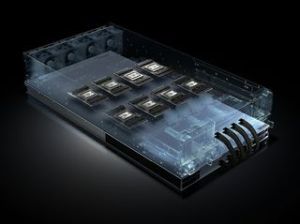 NVIDIA and Microsoft are working on a new hyperscale GPU accelerator that will provide hyperscale data centres with a fast, flexible path for artificial intelligence (AI).
 IoT faces new computing challenges, notably with deployment and scaling, according to ABI Research. Its future will rely in part on using embedded Real-Time Operating Systems (RTOS), which support many IoT application features, such as small size, constrained processing resources, low power consumption, limited maintenance, and real-time computing.


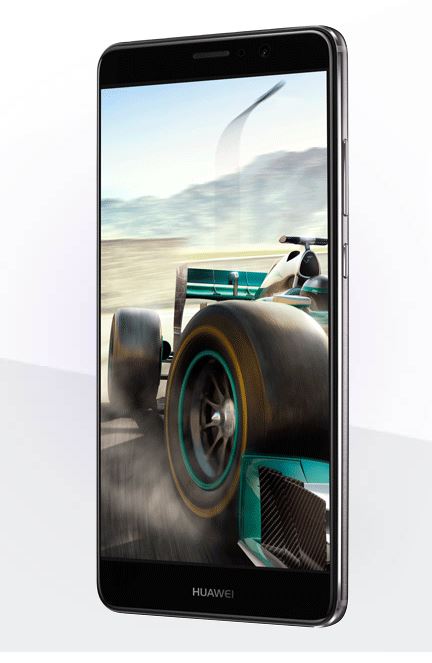

 While Samsung remained at the top, China smartphone makers occupied four of the top five positions to snare the lion’s share in India in Q4, according to Canalys.
 Many cars were on display at CES last week but perhaps one of the most significant announcements is the collaboration between Mercedes-Benz and NVIDIA to bring an NVIDIA AI-powered car to market.
 NVIDIA has unveiled at CES a new Shield TV media streamer, which like its predecessors will not be available in the Asia-Pacific region. However, a separate version of Shield, with custom software optimised for China, will be available later this year.
 Advances in various technologies will drive users to interact with their smartphones in more intuitive ways, said Gartner. It expect that, by 2019, 20 percent of all user interactions with the smartphone will take place via virtual personal assistants (VPAs).



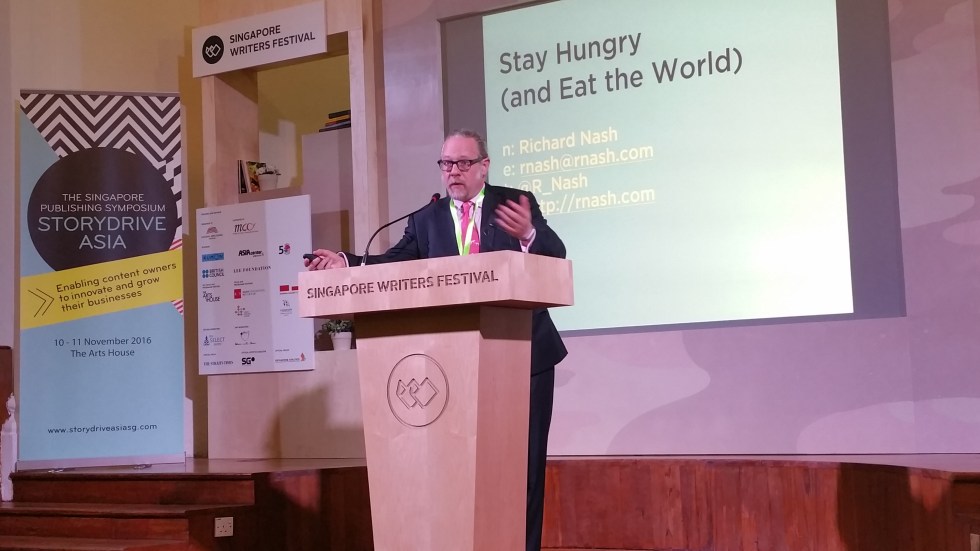
 Singapore Book Publishers Association and Frankfurt Book Fair organiser Frankfurter Buchmesse GmbH are putting together the inaugural StoryDrive Asia, a symposium for angel investors, incubators and professionals in publishing, software and gaming, photography and filmmaking and digital media.

 Three Chinese smartphone vendors — Huawei, Oppo and vivo — helped drive the global smartphone market in Q3. Together their shipment grew 60 percent while the overall global market just moved up six percent that quarter, according to Canalys.


 One of the hottest products recently is experiencing growing pains. Smartwatch shipment slid 51.6 percent to 2.7 million units in Q3 compared to the same period last year, according to IDC.

 ZTE has released its latest Pre5G massive multiple-input multiple-output (MIMO) 2.0 solution at the 2016 China International Information and Communication Exhibition held in Beijing.