
 Just two months after it’s acquisition of data visualisation firm Tableau, Salesforce has gone shopping again. This time, it has bagged ClickSoftware for US$1.35 billion.
Category: Cloud
Qualcomm and Tencent Games ink MOU

Qualcomm and Tencent Games have signed a non-binding memorandum of understanding (MoU) for a strategic cooperation on digital entertainment. This includes joint efforts to optimise future projects such as Qualcomm Snapdragon-based mobile gaming devices, game content and performance optimisations, Snapdragon Elite Gaming enhancements, cloud gaming, AR/VR, 5G gaming use case developments and additional relevant technologies.
The future of database is in the cloud

Unsurprisingly, a Gartner report is predicting that three quarters of all databases will reside in the cloud by 2022. Only five percent of migration will remain on premises.
Worldwide cloud services to grow exponentially through 2022
 Cloud services are really hot with projected growth of 17.5 percent to US$214.3 billion in 2019, according to Gartner. The momentum is expected to continue through to 2022 with the research firm projecting the market size and growth of the cloud services industry at nearly three time the growth of overall IT services.
NVIDIA to acquire Mellanox
 NVIDIA has reached a US$6.9 billion agreement to acquire Mellanox, a supplier of end-to-end Ethernet and smart interconnect solutions and services for servers and storage.
Google avails NVIDIA Tesla T4 GPUs on Google Cloud Platform in Singapore
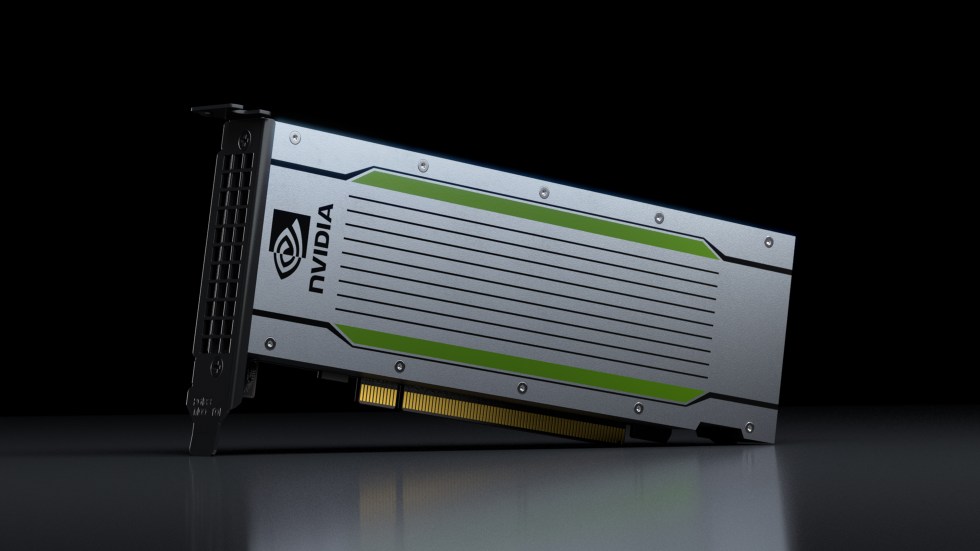 The Google Cloud Platform running on NVIDIA Tesla T4 GPUs (above) has been beta launched in Singapore, availing the power of GPU cloud computing to customers around the region.
Amazon takes on big guns in machine learning
 A new player has entered the machine learning arena. While big players such as Google, Intel and NVIDIA have been slugging it out, Amazon has thrown its hat into the ring with its newly-launched Inferentia chip.
IBM in “game-changer” Red Hat acquisition
 IBM has announced its US$34 billion acquisition of open source leader Red Hat. The move has been dubbed a “game-changer” by Ginni Rometty, IBM Chairman, President and Chief Executive Officer, who added that it changes everything about the cloud market.
Infineon gives startups a heads up with first Co-Innovation Space
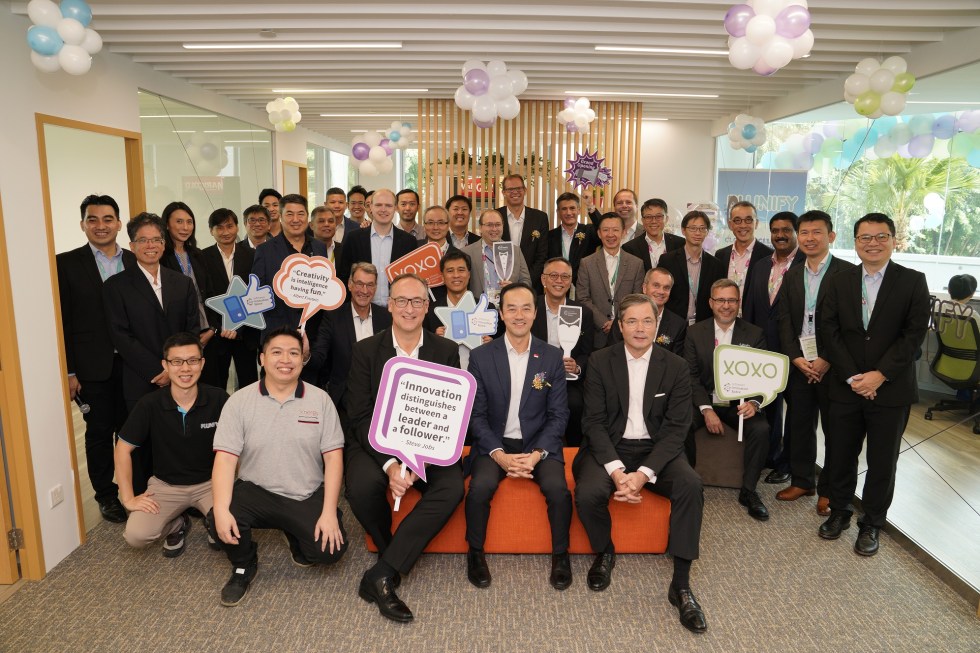
Names such as Ampotech, Plunify, SHADO, and XNERGY may not ring a bell today but with a little help from Infineon, they may well become the successes of tomorrow.
NVIDIA AI Conference keynotes: Transforming industries, creating AI infrastructure
 The first NVIDIA AI Conference in Sydney on September 4 will kick off with two keynote addresses. Marc Hamilton, Vice President of Solutions Architecture and Engineering, NVIDIA, will talk about Transforming Industries With AI. Jason Humphrey (right), Head of Retail Risk, ANZ Bank, will then share on Creating the Infrastructure to Undertake Deep Learning.
Free WhatsApp backup on Google Drive
 WhatsApp backup will no longer count towards Google Drive storage quota, thanks to a new agreement between the two companies.
NetApp rolls out NVIDIA-powered NetApp ONTAP AI architecture
 NetApp has introduced NetApp ONTAP AI proven architecture to simplify, accelerate and scale the data pipeline across edge, core and cloud for deep learning deployments and to help customers achieve real business impact with AI.
Suning Tesco opens first UAV logistics route in Wuhan
 China e-commerce firm Suning Tesco has opened the first pilot route for unmanned aerial vehicle (UAV) logistics and transportation in Wuhan, China. Its logistics arm Suning Logistics and Ewatt Aerospace jointly developed two UAVs for this purpose.
IBM snags A$1b Australia government contract
 IBM has scored a massive win with a five-year A$1 billion agreement with the Australia government.
Dell EMC widens lead on HPE as worldwide server revenue grew 33.4% in Q1

Dell EMC turned in a stellar performance in Q1 by growing 51.4 percent in server revenue, enabling it to widen the gap with second-place Hewlett Packard Enterprise (HPE) which nevertheless grew an impressive 21.5 percent.
Power efficient chipsets to drive edge AI
Power efficient chipsets are set to be the main driver as artificial intelligence (AI) moves makes a significant shift from the cloud to the edge, according to ABI Research.
NVIDIA unveils first unified AI and HPC platform
 NVIDIA has introduced the NVIDIA HGX-2, the first unified computing platform for both artificial intelligence (AI) and high performance computing (HPC).
ICT spending in APAC (sans Japan) to hit US$1.5t in 2021

Information and communications technology (ICT) spending in Asia/Pacific (excluding Japan) will hit US$1.5 trillion in 2021, according to IDC.
Foxconn Industrial Internet targets US$4.3b China IPO
 China’s biggest initial public offering (IPO) since 2015 will come to pass if Foxconn Industrial Internet hits its target of 27.1 billion yuan on May 24.
Amazon has more than 100m Prime subscribers
 The number is staggering even if the company is Amazon. Jeff Bezos has announced that Amazon Prime has more than 100 million members globally.
Expereo and SecureOps form strategic partnership
 Expereo and SecureOps have formed a strategic partnership to provide total network security for enterprises.

Project Clara is truly amazing
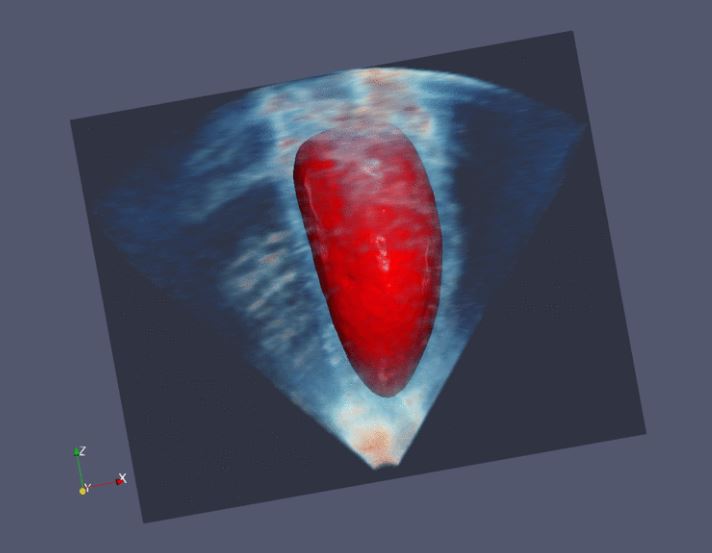 One of the most eye-catching demo during NVIDIA CEO Jensen Huang’s keynote address at GTC 2018 is Project Clara.
NVIDIA DGX-2: Insanely powerful

NVIDIA CEO Jensen Huang (above) dubbed it the “world’s biggest GPU”. And he certainly wasn’t kidding as the NVIDIA DGX-2 is a massive 350-pounder that delivers an amazing two petaflops of computational power.
GTC hits new highs

The GPU Technology Conference (GTC) has hit new highs with a record of more than 8,000 participants, and filling the entire San Jose McEnery Convention Center.
Emtech Asia: AI, quantum computing and more

Marina Bay Sands Expo and Convention Centre was a hive of activities of a different sort as more than 700 technologists from 21 countries converged for EmTech Asia on January 30 and 31.
SAP to acquire Callidus
 SAP has agreed to acquire Callidus Software for US$2.4 billion.
More analysis than data scientists
 For the past few years, data scientists are highly sought after to analyse data that can help organisations better understand their business, customers and trends. But, it looks like artificial intelligence-based solutions may be taking over that role in the near future.
NVIDIA Tesla V100 gains widespread acceptance
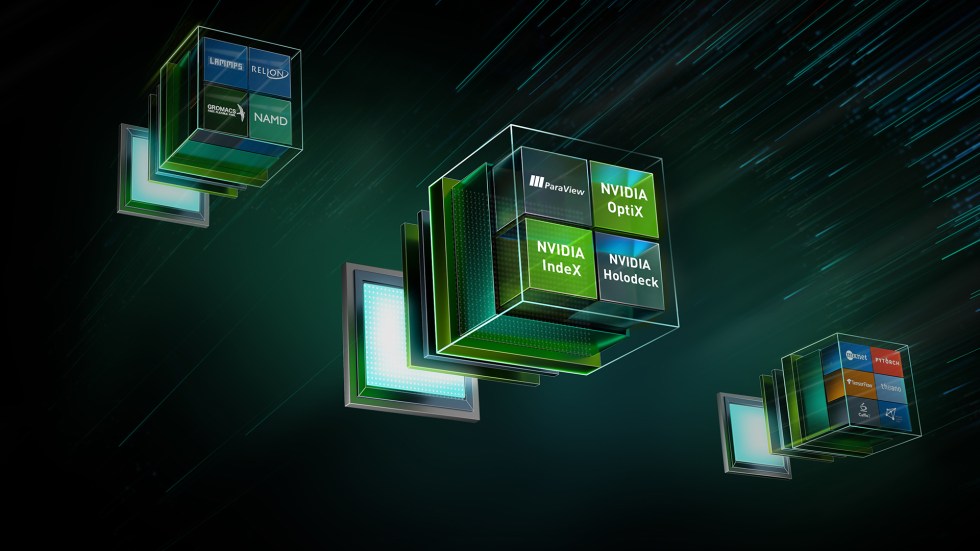
NVIDIA’s Volta architecture is leaving quite an impression. According to a NVIDIA press release issued at SC17, the Volta-based NVIDIA Tesla V100 GPU is available through every major computer maker and chosen by every major cloud to deliver artificial intelligence (AI) and high performance computing.
Singapore’s AI agenda gets double boost!
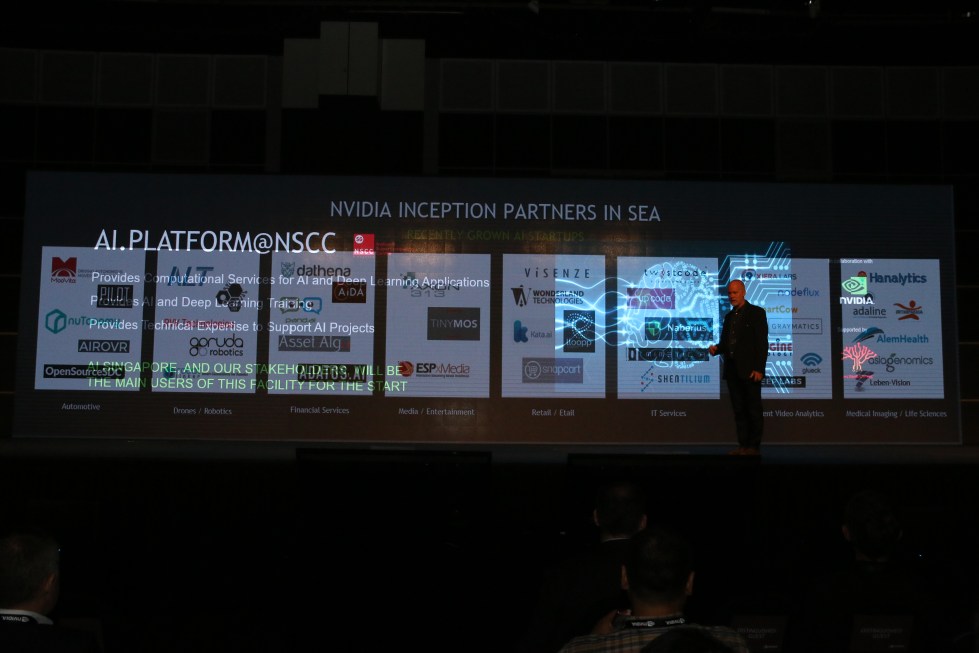
Singapore’s aim to be an artificial intelligence (AI) hub has been boosted with two initiatives — the setting up of a shared AI platform for researchers and the awarding of scholarships to develop AI talents.
At the NVIDIA AI Conference in Singapore yesterday, NVIDIA and Singapore’s National Supercomputing Centre (NSCC) agreed to establish a platform to bolster AI capabilities among its academic, research and industry stakeholders and in support of AI Singapore (AISG), a national programme set up in May to drive AI adoption, research and innovation in Singapore.
Called AI.Platform@NSCC, it will provide AI training, technical expertise and computing services to AISG, which brings together all Singapore-based research and tertiary institutions, including the National University of Singapore (NUS), Nanyang Technological University (NTU), Singapore University of Design and Technology (SUTD), Singapore Management University (SMU), as well as research institutions in the Agency for Science, Technology and Research (A*STAR).
Tantalising line-up of speakers at NVIDIA AI Conference
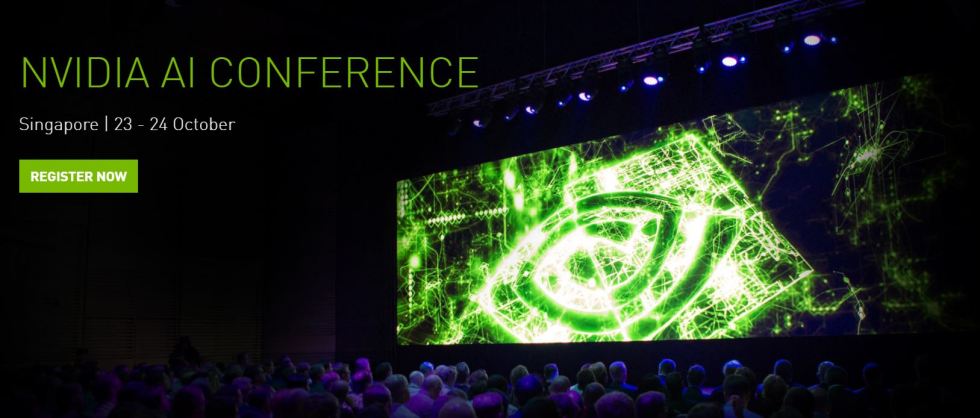 More than 1,000 participants attending the NVIDIA AI Conference in Singapore next week are in for a treat as the organisers are bringing in a tantalising line-up of speakers.
The two keynote speakers are Dr David B Kirk, NVIDIA Fellow and inventor of more than 60 patents and patent applications relating to graphics design; and Dr Wanli Min, AI scientist of Alibaba Cloud, who will touch on A Revolutionary Road to Data Intelligence.
Besides these two, there are special guest-of-honour Chng Kai Fong, Managing Director of Singapore’s Economic Development Board, and a panel discussion on AI for the Future of Singapore Economy.
Changing role of CIO
The role of the CIO is changing, according to a Gartner survey of 3,160 CIO respondents in 98 countries.
The findings revealed that the CIO role is transitioning from delivery executive to business executive, from controlling cost and engineering processes, to driving revenue and exploiting data.
Ninety-five percent of CIOs expect their jobs to change or be remixed due to digitalisation. While world-class IT delivery management is a given, it will take up less and less of the CIO’s time.
China’s tech giants bet on NVIDIA Volta
 China’s top technology companies are betting big on the NVIDIA Volta platform.
Alibaba Cloud, Baidu, and Tencent are incorporating NVIDIA Tesla V100 GPU accelerators into their data centres and cloud-service infrastructures to accelerate AI for a broad range of enterprise and consumer applications.
At the heart of the new Volta-based systems is the NVIDIA V100 data centre GPU. Built with 21 billion transistors, it provides a 5x improvement over the preceding NVIDIA Pascal architecture P100 GPU accelerators, while delivering the equivalent performance of 100 CPUs for deep learning. This performance surpasses by 4x the improvements that Moore’s law would have predicted over the same period of time.
Inspur, Lenovo and Huawei are using the NVIDIA HGX reference architecture to offer Volta-based accelerated systems for hyperscale data centres. Using HGX as a starter “recipe,” original equipment manufacturer and original design manufacturer partners can work with NVIDIA to more quickly design and bring to market a wide range of qualified GPU-accelerated AI systems for hyperscale data centres to meet the industry’s growing demand for AI cloud computing.
More NVIDIA GPU offerings on Google Cloud Platform
 Google has expanded its NVIDIA GPU offerings on the Google Cloud Platform. These include:
- Performance boost with the public launch of NVIDIA P100 GPUs in beta
- NVIDIA Tesla K80 GPUs available on Google Compute Engine
- Introduction of sustained use discounts on both the Tesla K80 and P100 GPUs
According to a Google Cloud Platform blog, cloud GPUs can accelerate workloads including machine learning training and inference, geophysical data processing, simulation, seismic analysis, molecular modeling, genomics and many more high performance compute use cases.
NVIDIA to hold first AI-focused conference in Singapore in October
 With artificial intelligence (AI) being a hot topic this year, NVIDIA is organising its first AI-focused regional conference in Singapore on October 23 and 24.
The event will be held in two parts with the first day focusing on Deep Learning Institute (DLI) workshop where participants will received hands-on training on deep learningl and the second day filled with keynote addresses, panel discussion and three tracks. It is targeted at data scientists and senior decision makers in the field of AI in both public and private sectors.
“Singapore is aiming to be the world’s first smart nation and AI is playing a critical role. NVIDIA is well positioned to help drive the government’s Smart Nation initiative with the development of solutions based on AI. Our GPUs are making headlines across the world by enabling many breakthroughs in various industries using deep learning,” said Raymond Teh, Vice President of APAC sales and marketing at NVIDIA.
ICML: Gathering of the brightest in AI
 “I’m amazed at the quality of the papers presented. The project teams’ line of thinking and breakthrough concepts are refreshing,” exclaimed a leading artificial intelligence (AI) scientist at the International Conference on Machine Learning (ICML) in Sydney.
International Convention Centre Sydney was a massive hive of activities as 3,000 of the world’s top researchers, developers and students in AI gathered for ICML. The participants moved rapidly from one workshop to another and took great interest in the exhibition booths of top deep learning proponents such as NVIDIA, Google and Facebook.
With so many bright young talents. the event proved to be a good fishing ground for vendors as they held recruitment interviews at their booths, as well as posted openings on the board.
AI to fuel next wave of cloud growth
 The cloud infrastructure services market is continuing to grow strongly, up 47 percent year on year in Q2 to reach US$14 billion, according to Canalys. Growth was driven by demand for primary cloud infrastructure services, such as on-demand computing and storage, across all customer segments and industries.
However, future growth is expected to be fueled by customers using the artificial intelligence (AI) platforms cloud service providers are building to develop new applications, processes, services, and user experiences.
Amazon Web Services (AWS) maintained its leadership position, growing 42 percent on an annual basis and accounting for more than 30 percent of total spend. But its growth rate was lower than those of its main rivals, Microsoft (up 97 percent growth) and Google (up 92 percent), but higher than fourth-placed IBM (up 23 percent). Overall, the top four cloud services providers represented 55 percent of the cloud infrastructure services market, which includes IaaS and PaaS.
AI takes centrestage at ICML in Sydney
 NVIDIA is bringing its wealth of artificial intelligence (AI) solutions and expertise to the International Conference on Machine Learning (ICML) in Sydney.
Held at Sydney International Convention Centre from August 6 to 11, the event is expected to attract up to 3,000 participants, primarily faculty, researchers and PhD students in machine learning, data science, data mining, AI, statistics, and related fields.
The NVIDIA booth (Level 2, The Gallery, Booth #4) will feature many firsts in Australia, such as demos on 4K style transfer, a deep neural network to extract a specific artistic style from a source painting, and then synthesises this information with the content of a separate video; self-driving auto using the Drive PX2 AI car computing platform; Deepstream SDK that simplifies development of high performance video analytics applications powered by deep learning; and NVIDIA Isaac, the AI-based software platform lets developers train virtual robots using detailed and highly realistic test scenarios.
Fujitsu announces new Xeon-based servers
 Fujitsu has introduced its fully refreshed range of Xeon-based dual- and quad-socket Primergy servers and octo-socket Primequest business critical server systems.
These new servers are powerful and flexible, enabling enterprises to build secure, agile, multi-cloud data centres.
Featuring the new Intel Xeon scalable processors, the Fujitsu Server Primergy and Primequest business model server systems are designed for exceptional workload-specific performance and hardware-enhanced security. Built for trusted data service delivery, the new models represent significant leaps in I/O, memory, storage and network technologies.
Taiwan: Home of GeForce!
 At the keynote of NVIDIA AI Forum, NVIDIA CEO and Founder Jensen Huang called “Taiwan is the home of NVIDIA’s GeForce system”.
Video gaming is a US$100 billion industry and “GeForce PC gaming is the number one platform, nearly 200 million GeForce installed base,” declared Huang.
He announced the new NVIDIA Max-Q platform which lets gaming notebook makers produce faster, slimmer and quieter machines.
Battle for the cloud
The battle for cloud dominance has intensified with key players all growing significantly in Q1. The worldwide cloud infrastructure services market grew 42 percent year on year to reach US$11.4 billion, according to Canalys.
Amazon’s AWS maintained its leadership, holding a stable global market share of 31 percent. It was followed by Microsoft, Google and IBM.
In terms of growth, Microsoft led with 93 percent while Google was up 74 percent, AWS 43 percent, and IBM 38 percent.

Voila, Volta!

NVIDIA has pulled yet another trick out of its always-filled hat of technology goodies with the launch of Volta, the world’s most powerful GPU computing architecture. At his keynote address at GTC in San Jose, NVIDIA CEO Jensen Huang dubbed it “the next level of computer projects”.
Volta is created to drive the next wave of advancement in artificial intelligence (AI) and high performance computing.
The first Volta-based processor is the NVIDIA Tesla V100 data centre GPU, which brings extraordinary speed and scalability for AI inferencing and training, as well as for accelerating HPC and graphics workloads.
Massive shift to hybrid infrastructure services underway
The growth of cloud and industrialised services and the decline of traditional data centre outsourcing (DCO) indicate a massive shift toward hybrid infrastructure services, according to Gartner.
In a report containing a series of predictions about IT infrastructure services, Gartner analysts said that by 2020, cloud, hosting and traditional infrastructure services will come in more or less at par in terms of spending.
“As the demand for agility and flexibility grows, organizations will shift toward more industrialised, less-tailored options. Organisations that adopt hybrid infrastructure will optimise costs and increase efficiency. However, it increases the complexity of selecting the right toolset to deliver end-to-end services in a multisourced environment,” said DD Mishra, Research Director of Gartner.
NVIDIA and Microsoft to accelerate AI cloud computing
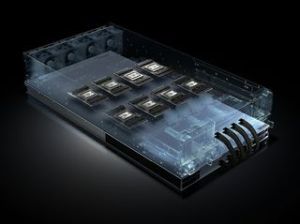 NVIDIA and Microsoft are working on a new hyperscale GPU accelerator that will provide hyperscale data centres with a fast, flexible path for artificial intelligence (AI).
The new HGX-1 hyperscale GPU accelerator is an open-source design released in conjunction with Microsoft’s Project Olympus.
HGX-1 does for cloud-based AI workloads what ATX — Advanced Technology eXtended — did for PC motherboards when it was introduced more than two decades ago. It establishes an industry standard that can be rapidly and efficiently embraced to help meet surging market demand.
A typo error causes 4-hour outage
It’s amazing how a typo error can wreak havoc to a massive network. On Tuesday, thousands of websites using Amazon’s AWS cloud computing service were disrupted with broken links and partial functionality. And the cause is […]
Fuji Xerox HK to accelerate IoT growth

Fuji Xerox (Hong Kong) aims to ride the Internet of Things (IoT) wave with the introduction of Smart Device 2.0, which comprises three key IoT components — cloud application, big data analytics and integrated business workflow.
The new-generation mobile document management smart device consisting of hardware, software and cloud applications is designed particularly for enterprises that handle and manage excessive documents, such as financial and banking, construction and legal industries.
Smart Device 2.0 also works for enterprises and small-to-medium businesses with staff who always work on their mobile devices, because it enables the same working environment regardless of where they are. This smart device is becoming a workplace necessity that streamline workflow; employees are no longer bound by geographical restrictions and can stay connected to their office all the time, helping enterprises save time and costs, and better use their resources.
Public cloud service in mature APAC region to hit US$10b in 2017
The public cloud services market in the mature Asia-Pacific (APAC) region — Australia, New Zealand, Singapore and South Korea — is forecast to grow 17.7 percent in 2017 to total US$10 billion, up from US$8.5 billion in 2016, according to Gartner.
By 2019, Gartner predicts that total public cloud services spending in these countries will rise to US$13.6 billion.
Public cloud services are shared, meterable, elastic and scalable multi-tenanted IT offerings delivered as a subscription-based service to external customers using internet technologies.

Fuji Xerox Hong Kong announces Smart Device 2.0
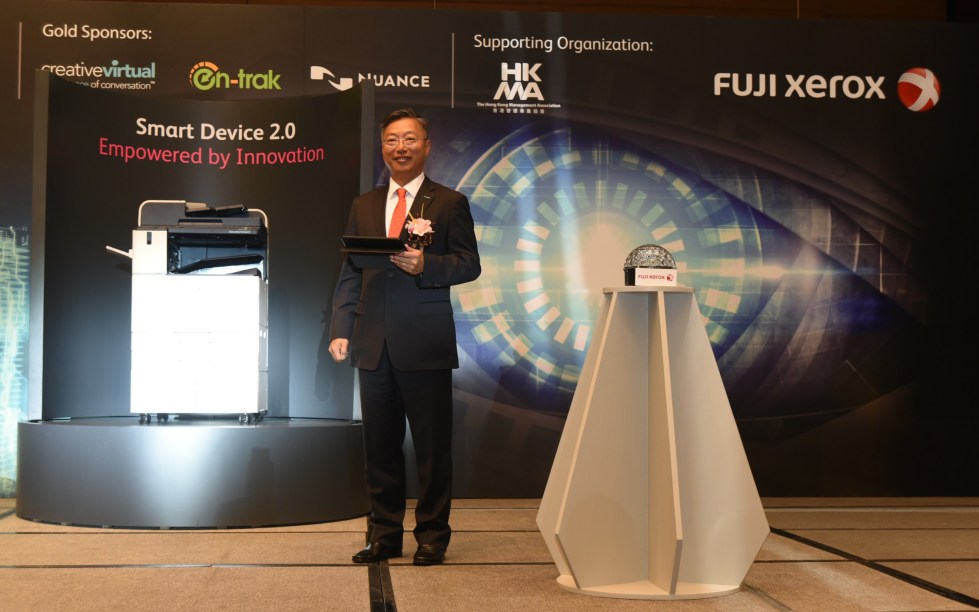
Fuji Xerox (Hong Kong) has launched Smart Device 2.0, a new document management smart device that lets businesses achieve smoother workflow as well as higher operational efficiency and productivity by 25 percent. It also helps companies address information technology challenges in a comprehensive manner.
Smart Work Gateway is a brand-new concept that swiftly interconnects cloud network, Smart Device 2.0 and user’s personal mobile device. Office employees can enjoy unprecedented convenience of connecting to their workplace anytime, anywhere. Work is no longer bounded by time or place.
“The all-new Smart Device 2.0, empowered by Smart Work Gateway, truly redefines the ‘smart workplace’ with user-centric and intuitive features, enabling enterprises to not only work smarter, but also build competitive edge and sustainable growth,” said Herbert Hui, Managing Director, Fuji Xerox (Hong Kong) (above).
As the next generation of Smart Device, the Smart Device 2.0 is analytics enabled, cloud enabled and business process enabled – all without the need for server support. Along with high scanning and printing speed, the redesigned multi-functional smart device features a brand-new Super EA-Eco Toner that delivers unrivaled print quality across large printing volumes, ensuring collateral produced will simultaneously achieve consistent quality, higher productivity and cost optimisation.
Worldwide services market to cross US$1 trillion mark by 2018
 Global IT services and business services revenues are expected to cross the US$1 trillion mark for the first time in 2018, according to IDC.
Worldwide services spending totals for 2016 are expected to stay within the US$900 billion range and by 2020 expected to near US$1.1 trillion.
With more than US$100 million worth of spending each this year, the largest services markets will be key horizontal business process outsourcing (BPO) and systems integration services, which will also generate the largest revenue pools over the 2016-2020 forecast period. Business Consulting Services is forecast to outpace both markets in terms of growth.
Alibaba Cloud rises 128% in Q3
Alibaba Cloud has outpaced cloud service provider leaders with growth of 128 percent to reach US$221 million in Q3. However, AWS increased its lead, accounting for 32.2 percent of total spend, followed by Microsoft Azure with 17.3 percent and Google Cloud with 7.6percent, according to Canalys. Both Microsoft (up 115.6 percent) and Google (up 79.6 percent) grew faster than Amazon.
Global cloud infrastructure services expenditure increased 53.1 percent year on year to reach US$10 billion for the first time in Q.

“Alibaba has established itself as the largest e-commerce business in China and is starting to dominate the provision of cloud infrastructure services in the country,” said Daniel Liu, Research Analyst of Canalys.
India public cloud services to hit US$1.26b in 2016
The public cloud services market in India is projected to grow 30.4 percent in 2016 to hit US$1.26 billion, according to Gartner.
The highest growth will come from cloud system infrastructure services (infrastructure as a service [IaaS]), which is projected to grow 32.5 percent in 2016, with platform as a service (PaaS) projected to grow 31.7 percent.
“We are witnessing a shift from legacy IT services to cloud-based services. Cloud services are growing due to organizations pursuing a digital business strategy,” said Sid Nag, Research Director of Gartner.
Alibaba joins Microsoft and AWS as leaders in China cloud market
 The public cloud market in China will more than double in the next five years, from US$1.8 billion this year to US$3.8 billion in 2020, according to Forrester.
Two-thirds of Chinese software decision-makers surveyed by Forrester are making increased use of public cloud platforms a top priority over the next 12 months.
Enterprise public cloud platform vendors in China are improving in terms of their service diversity, simple abstraction for operational efficiency, and operational autonomy for on-demand elasticity. Forrester has evaluated the strengths and weaknesses of 11 cloud vendors Alibaba, AWS, ChinaC, DaoCloud, JD.com, Microsoft, MoPaaS, QingCloud, Tencent, UCloud, and UnitedStack.
NetApp Data Fabric enables seamless data management in hybrid cloud
NetApp has announced new Data Fabric solutions and services that deliver the data management capabilities organisations need to accelerate success in the hybrid cloud era.
With the new offerings, organisations can seamlessly manage data across whatever IT resource they choose, speeding innovation and enabling better business decisions.
“Management of digital data is essential for organisations to innovate faster and capture new revenue opportunities in a fast changing technology landscape,” said Lee Caswell, Vice President, Product, Solutions and Services Marketing, NetApp.
NVIDIA GRID 2.0 available in Australia
Following its announcement at VMworld in August, NVIDIA GRID 2.0 is now available in Australia.
The performance, efficiency and flexibility improvements in the latest release of NVIDIA GRID mean enterprise businesses can now deliver even the most graphics-intensive applications to any connected device virtually.
With NVIDIA GRID 2.0, employees can work from almost anywhere without delays in downloading files, increasing their productivity. IT departments can equip workers with instant access to powerful applications, improving resource allocation. And data can be stored more securely in a central server, rather than on individual systems.
Cloud IT infrastructure market to grow 24% this year
Total spending on cloud IT infrastructure (server, storage, and Ethernet switch, excluding double counting between server and storage) will grow by 24.1 percent to reach US$32.6 billion in 2015, according to IDC.
This amount will account for a third of the overall end user spending on enterprise IT infrastructure, up from 27.9 percent in 2014. In comparison, spending on IT infrastructure deployed in traditional, non-cloud, environments will decline by 1.6 percent in 2015, although at US$66.8 billion will remain the largest segment of the market.
Spending on private cloud IT infrastructure in 2015 will grow by 15.8 percent year over year to US$12.1 billion, while spending on public cloud IT infrastructure will increase by 29.6 percent to US$20.5 billion.
Business intelligence and analytics top priorities for Asean CIOs
Business intelligence and analytics are the top priorities of CIOs in Southeast Asia (SEA), according to a Gartner survey.Next on their list are mobile, ERP and cloud.
Eighty-four percent of CIOs in SEA recognise the need to adapt their leadership style in the next three years to succeed in digital business, compared with the global average of 75 percent. To achieve this, 69 percent said that they want to decrease their controlling approach to focus on significantly increasing their visionary and coaching attributes.
The annual survey covered more than 2,810 CIOs worldwide, representing more than US$397 billion in CIO IT budgets in 84 countries. It included responses from 117 CIOs from Indonesia, Malaysia, Philippines, Singapore, Thailand, and Vietnam.
ZTE’s introduces software-based videoconferencing solution
ZTE has launched its new Unified Communication & Collaboration (UC&C) solution to help enterprises harness the power of mobility. It delivers cloud-based video conferencing and collaboration services for end users anywhere, anytime, supporting different devices and […]
NVIDIA joins VMware in APAC vForums
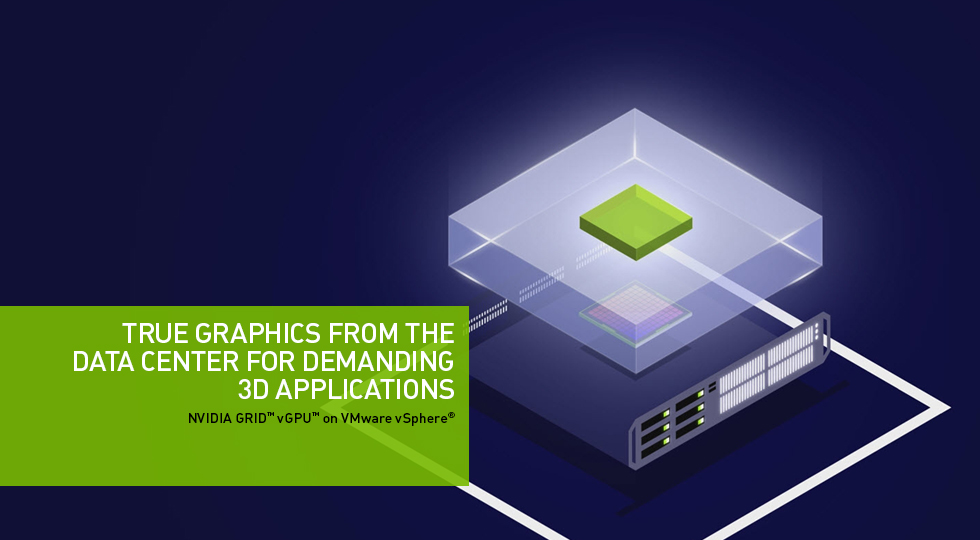 Imagine the power of shared GPUs? NVIDIA and VMware are showcasing how enterprises can leverage the power of shared GPU using VMware vSphere and NVIDIA GRID vGPU at vForums currently on in Singapore, Sydney and Tokyo.
NVIDIA GRID vGPU technology allows multiple virtual machines to share the power of a single GPU to deliver rich graphics experiences with professional 2D and 3D applications.
The partners are also pushing an early access programme that provides a technology preview of these technologies. Enterprises can try the GPU virtualisation and virtual application and desktop infrastructure, ahead of its general availability by signing up at www.nvidia.com/grid-vmware-vgpu. Those selected get to work directly with the engineering teams from both NVIDIA and VMware.
Australia nudges towards hosted and cloud-based UC solutions
 Australia’s on-premise unified communications (UC) market experienced a decline in revenues in 2013, according to Frost & Sullivan. This was mainly due to the improved understanding of the benefits of hosted and cloud-based UC solutions, which have now reached mainstream adoption.
Organisations are now able to deploy any UC application over a hosted model, and have a much improved understanding of the benefits of hosted and cloud-based UC solutions. In addition, the capital intensive nature of on-premise solutions limits the flexibility for organisations to adapt to the changing communication and collaboration environments. As a result, the on-premise UC market is approaching a phase where growth rates are flat or declining.
According to Anand Balasubramanian, Industry Analyst of ICT Practice, Australia & New Zealand at Frost & Sullivan, the decline in the Australian UC market revenues can be attributed to the changing business preferences for communication and collaboration solutions.
NetApp rolls out new solutions and services for hybrid cloud
NetApp has announced new software, services, and partnerships that simplify data management across clouds, including a new version of the NetApp clustered Data ONTAP operating system, Cloud ONTAP, OnCommand Cloud Manager, and NetApp Private Storage for Cloud. These […]
IBM turns to NVIDIA to power OpenPOWER-based systems
 Having exited the x86 server business, IBM has turned its focus to a new range of systems that leverages GPU acceleration delivered by NVIDIA.
Built on IBM’s POWER8 processor, the new IBM Power S824L servers are optimised for big data workloads. The new systems tightly integrate IBM and other OpenPOWER member technologies, including NVIDIA’s GPU accelerator technology for the first time, to unleash computing performance to help enable banks to better analyse risk, energy companies to more precisely locate oil reserves, and scientists to more quickly identify cures for diseases.
They provide clients the ability to run data-intensive tasks on the POWER8 processor while offloading other compute-intensive Big Data workloads to GPU accelerators which are capable of running millions of data computations in parallel and are designed to significantly speed up compute-intensive applications.

