
 Global IT spending is expected to grow to US$3.7 trillion in 2018, an increase of 4.5 percent from 2017, according to Gartner.
Global IT spending is expected to grow to US$3.7 trillion in 2018, an increase of 4.5 percent from 2017, according to Gartner.
 Apple has apologised for slowing down the performance of older iPhone models to prevent accidental shutdowns due to aging batteries.
 The names Benjamin Lazarus, Jeffrey Aberman, Stephen Margolis, Sandy Brodsky, and Victoria Childs are probably unfamiliar to most. But inthe days to come, they may become more popular.
Honda has signed a long-term agreement to develop autonomous cars with SenseTime, a China artificial intelligence (AI) company. The partnership will leverage Honda’s vehicle control system with SenseTime’s AI algorithms to jointly create an autonomous driving […]

Razer’s first smartphone will be available for pre-order in Singapore on November 23.

The launch of the iPhone 8 and drop of prices of older models have helped Apple turn in a sterling quarter in China, with shipment rising 40 percent to 11 million units this Q3.

Finally, a smartphone that’s made for gamers. Razer has launched in London the latest high-end smartphone with a focus on mobile gaming.
But what makes this phone different from others in the market? And how does it enhance the mobile gaming experience?
Guess it was only a matter of time as Samsung Pay has been extended to the Gear 3 and Gear Sport. This will let consumers use their smartwatches, on top of their smartphones, to make […]
 In 2016, Samsung had battery overheating issues with its Note 7. Recently, Apple is constantly pushing out iOS 11 fixes to improve battery life for the iPhone 8. And now, Google is working on a solution to address the screen burn-in issues of the Pixel 2.
What’s happening? Are smartphone makers in such a rush to launch new phones that they are cutting short quality tests? Admittedly, this is the probably the hottest segment of the consumer technology market and every player is trying its best to outdo each other.
According to IDC, the worldwide smartphone market will reach a total of 1.53 billion units shipped in 2017, up 4.2 percent from the 1.47 billion units shipped in 2016. That’s a lot of phones and perhaps the reason why makers are hurrying to snare a share.
 By Edward Lim
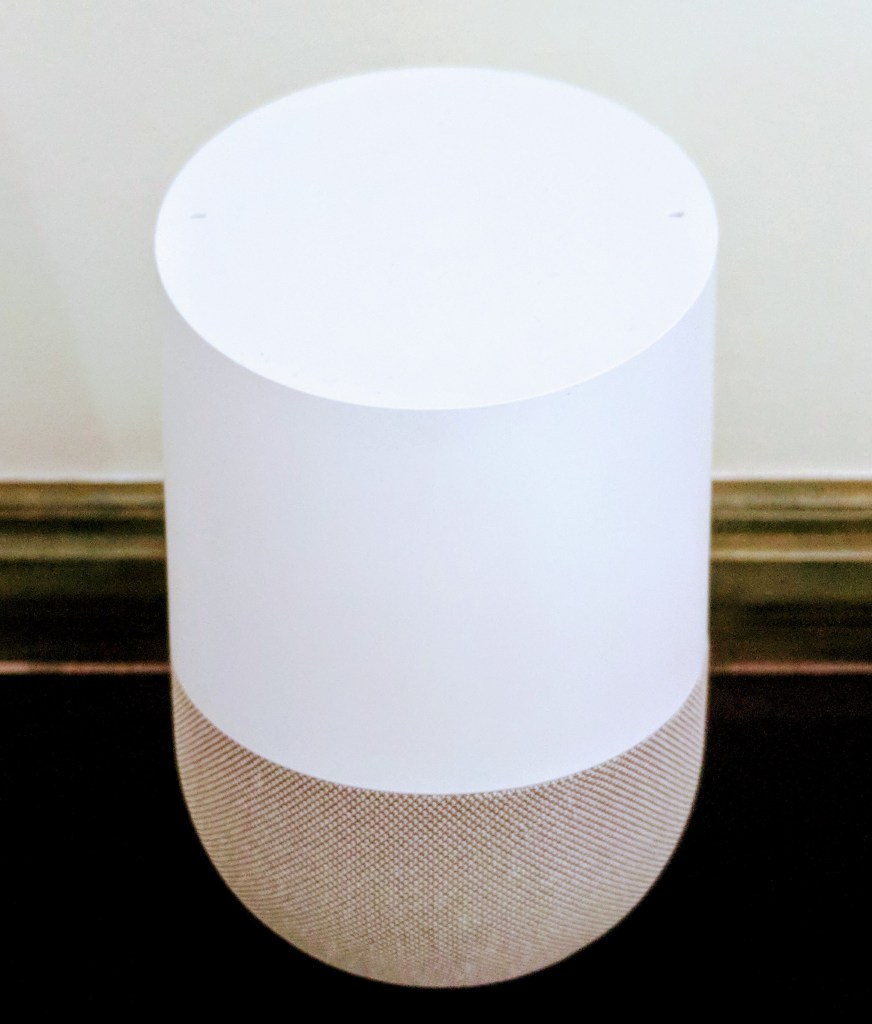
Perhaps it’s something like a forbidden fruit. The harder it it to get, the more we want it. Google tempted us with the Google Home smart speaker but it was not available in Singapore or anywhere in the region. It was only in July that the device was finally available in Australia.
Anyway, as with most gadget lovers, there’s always a way to get our hands on the desired device. In my case, I managed to snare one in Walmart in San Jose while attending a conference there in April. Actually, I bought two — one as a gift to a friend.
 No steering wheels, pedals or mirrors. Sounds like science fiction but the fully autonomous robotaxi is on its way with the launch of a new system that NVIDIA has codenamed Pegasus.
Pegasus extends the NVIDIA Drive PX AI computing platform to handle Level 5 driverless vehicles. NVIDIA DRIVE PX Pegasus delivers over 320 trillion operations per second — more than 10 times the performance of its predecessor, NVIDIA DRIVE PX 2, announced Jensen Huang, Founder and CEO of NVIDIA at his keynote address at GTC Europe in Munich.
Robotaxis powered by NVIDIA DRIVE PX Pegasus will have interiors that feel like a living room and arrive on demand to safely whisk passengers to their destinations, bringing mobility to everyone, including the elderly and disabled.
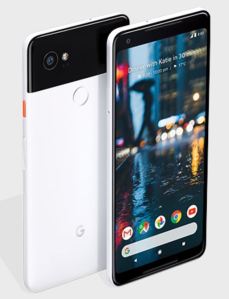 Hurray, Google has finally set up an online store for Singapore! Amid the flurry of announcements made yesterday, this is probably the most significant for those in Singapore. After all, what’s the point of reading and hearing about all the launches in recent years without being able to buy the products anywhere in the country.
The bad news, however, is that only three products were listed on the Google Wifi, Google Chromecast and the newly-launched Google Pixel 2 XL.
Google’s latest smartphone sports front-facing stereo speakers, and front and rear cameras capable of producing amazing shots using fused image stabilisation of optical and digital zoom. Though the headphone jack is gone, Google has introduced Pixel Buds that can translate up to 40 languages on the fly.
 Nokia’s announcement at Mobile World Congress in February that it was resurrecting the iconic Nokia 3310 was met with enthusiasm, which was quickly dampened when the phone was said to run on 2.5G.
However, Nokia has responded remarkably by upgrading the 3310 to 3G and making it available at “below S$100”.
“Our fans around the world have been asking for this iconic phone to support 3G. Fans asked, we listened, and today welcome the Nokia 3310 3G,” said Mr Juho Sarvikas, Chief Product Officer of HMD Global, maker of the Nokia phone.
Google is flexing its muscles in the hardware business with the acquisition of a team of hardware talents from HTC. The move marks another milestone in a decade-long relationship between the two companies. “These future […]
Even though the X in the newly announced iPhone X is supposed to be pronounced as “10”, it can be interpreted as eXpensive. At S$1,648 for the 64GB version and S$1,888 for the 256GB iteration, […]
 Consumer and enterprise PC purchases are driving growth in the Australia PC market, which includes desktop, notebook and workstation.
The consumer segment grew 8.6 percent year over year (YoY) in Q2, according to IDC.
“The retail channel was negatively impacted by Dick Smith’s exit last year. This year however, promotional events such as Modern PC program run by Harvey Norman spiked growth in the consumer space. AMD’s new Ryzen series launch and EOFY sales further fuelled growth in this segment,” said Sagar Raghavendra, Client Devices Analyst of IDC Australia.
Google Drive on the PC and Mac will cease to exist in its current form from March 2018. According to a blog post by Google, the app will no longer be supported starting on December […]
 New Android mobile phone launches spurred growth in Australia, leading to year-on-year growth of 18.4 percent to 2.16 million units, exceeding expectations in Q2, according to IDC.
Smartphones accounted for nearly all of the shipped phones — totalling 2.06 million.
Android returned to being the most popular smartphone OS in Australia. Recently, iOS had overtaken Android as the most popular smartphone OS in Q4 2016 as it held over 54 percent of the market compared to 47 percent for Android.
 After missing a beat with the Galaxy Note 7, which resulted in a massive recall and lots of bad press, Samsung has launched the Galaxy Note 8 with availability in Singapore from September 15.
Sporting a similar look to the Galaxy S8, the new smartphone’s key differentiator is the S Pen, which is designed to communicate in more personal ways. It has a finer tip, improved pressure sensitivity, and features such as Live Messaging that enable users to better express themselves.
The always on display allows users to stay on top of notifications without unlocking their phone. Screen off memo lets them take up to one hundred pages of notes as soon as they remove the S Pen. Users can also pin notes to the always on display and make edits directly.
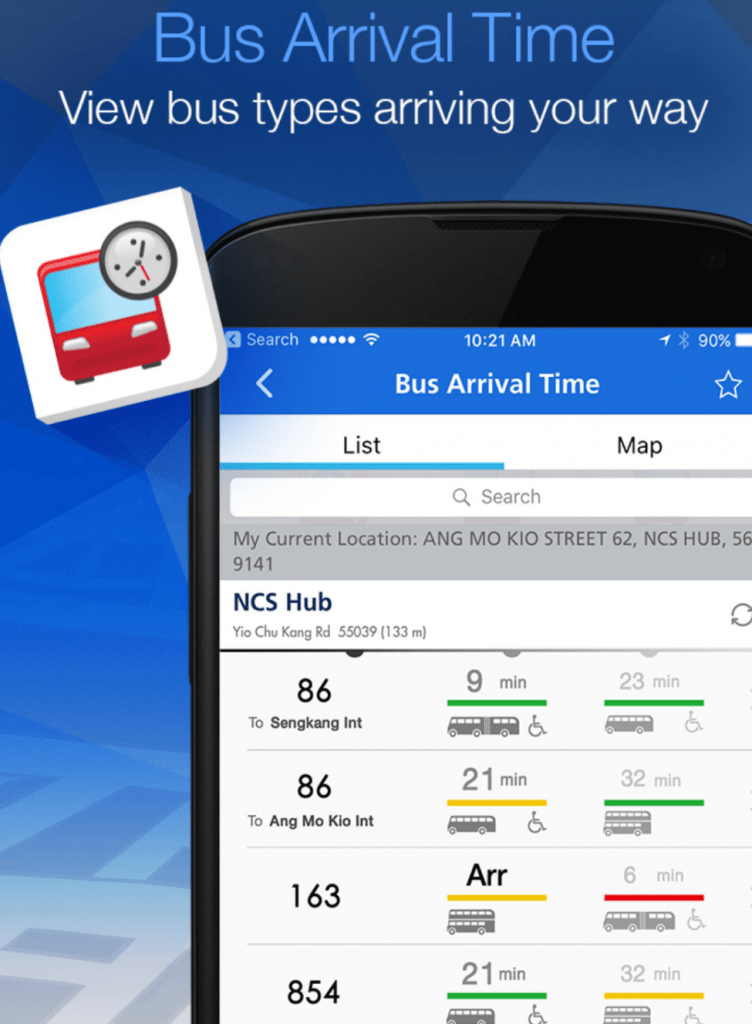
Bus commuters have always been dependent on fixed bus routes and timings. What if you can customise your own time and route? That’d be a bus commuter’s dream come true.
Singapore’s Land Transport Authority (LTA) is calling for a tender to seek proposals to trial on-demand, dynamically-routed public bus services.
According to the LTA press release, the trial will enable LTA to evaluate the feasibility of operating public bus services based on real-time commuter demand and along dynamic routes, instead of plying on the basis of pre-determined and fixed timetables and routes. Through a mobile application, commuters will be able to request pick-ups and drop-offs at any bus stop within a defined operating area.
By Edward Lim When the Google Pixel was first announced late last year, my antenna went up as my trusty Samsung Note Edge though working generally fine and still looking great was slowing down. I’ve […]
The online grocery market in Singapore has just gotten hotter with Amazon’s launch of its Prime Now service. It is the e-commerce giant’s first stop in the region. Prime Now offers tens of thousands of […]
This is the year of the 8s. The Samsung Galaxy Note 8 is expected to be revealed on August 23 in New York City, according to invitations sent to the media. Samsung will be hoping […]
Australian educational institutions are increasing information technology (IT) spending in response to dramatic changes in student expectations, according to IDC.
Spending by Australian educational institutions is expected to peak at US$1.6 billion by 2020, driven by software and services related investments. Education practices are shifting away from the classroom towards e-learning and virtual instructor-led training approaches as students are demanding anytime-anywhere remote access.
In its recently published Australian education sector report, IDC highlights the need to overhaul existing ICT management models in schools and universities so that a step-change improvement in delivery efficiency can be achieved.
By Edward Lim It’s official. The Samsung Galaxy Note Edge is my longest lasting phone. After 30 months, I’ve finally moved on to another smartphone — the Google Pixel (I’ll share more about this in […]
Imagine paying more than S$34,000 for a phone? Well, it’s hard to imagine that kind of price tag for mortals who already consider the Google Pixel, iPhone and Samsung S8 expensive. It’s not surprising then […]
As if we don’t already have enough of ads. Facebook has announced that it will start rolling out ads to Messenger. With 1.2 billion users, the social media giant does have immense appeal for advertisers. It […]
Global demand for devices — PCs, tablets and smartphones — are expected to dip slightly this year, with Gartner projecting shipment exceeding 2.3 billion units, a decline of 0.3 percent from 2016.
However, the market is forecast to return to growth in 2018 with a 1.6 percent increase in shipment.
“Overall, the shipment growth of the device market is steady for the first time in many years. PC shipments are slightly lower while phone shipments are slightly higher — leading to a slight downward revision in shipments from the previous forecast, “said Ranjit Atwal, Research Director of Gartner.
The embattled Samsung Galaxy Note 7 is making a return — as a limited edition Galaxy Note Fan Edition! According to a statement, Samsung plans to sell the refurbished device (which comes with new battery) from […]
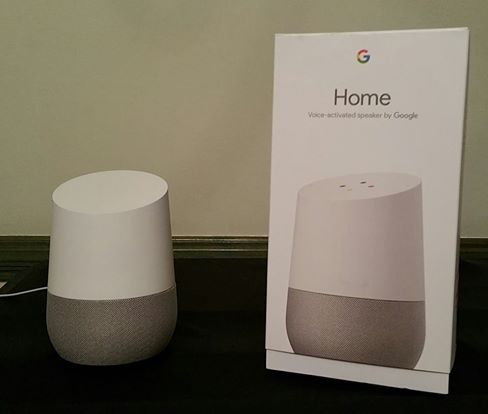 The keynote address at Google I/O yesterday showed that Google is much more than just a search company. It is becoming more artificial intelligence (AI). Google is specifically using deep learning to help in many areas of everyday life.
Here are some as shared on Google’s blog post:
Google Assistant can help answer your questions and find information—but it can also help you get all kinds of useful things done. Today we’re adding a few more:
- Schedule new calendar appointments and create reminders. Starting today on Google Home, you can schedule appointments and soon you’ll also be able to add reminders. Since it’s the same Google Assistant across devices, you’ll be able to get a reminder at home or on the go.
- Make your home smarter. We now have 70+ smart home partners supporting the Google Assistant across Google Home and Android phones, including August locks, TP-Link, Honeywell, Logitech, and LG.
China-based vendors strengthened their grip in the India smartphone market, snaring 51.4 percent share of the smartphone shipment in Q1, according to IDC. They grew 16.9 percent sequentially and an impressive 142.6 percent over the same period last year.
In contrast, share of homegrown vendors dropped to 13.5 percent in the Q1 from 40.5 percent in the same quarter last year.
Overall, 27 million smartphones were shipped in Q1, a 14.8 percent growth over the same period last year. Unlike last year, shipment grew sequentially in the first quarter of 2017 by 4.7 percent recovering from demonetisation impact in Q4.
 Huawei has taken top spot again in China’s smartphone market, edging past Oppo after two quarters of trailing in second place. According to Canalys, the Chinese smartphone giant, which launched the P10 and P10 Plus during MWC, shipped close to 21 million units to secure an 18 percent market share in Q1.
Despite strong annual growth of 55 percent, Oppo fell to second place with shipments of just under 20 million units. Third-placed Vivo had the lowest annual growth of the top three, capturing a 15 percent share with its shipment of 17 million units.
“China’s smartphone market continues to grow, with shipments increasing by over nine percent year on year this quarter. But there is a clear indication that the market is consolidating. The top three vendors are pulling away at the head of the market, accounting for more than 50 percent of shipments for the first time this quarter,” said Lucio Chen, Research Analyst of Canalys.
The US authorities are forbidding passengers of airlines from 13 countries to bring any electronic or electrical device larger than a mobile phone. This means that all notebook computers, tablets and cameras are not allowed […]
 IoT faces new computing challenges, notably with deployment and scaling, according to ABI Research. Its future will rely in part on using embedded Real-Time Operating Systems (RTOS), which support many IoT application features, such as small size, constrained processing resources, low power consumption, limited maintenance, and real-time computing.
ABI Research forecasts 21 billion IoT devices will ship with embedded RTOS by 2022.
“The tremendous expansion of the IoT revived the embedded RTOS market, with open source platforms springing up rapidly to jostle long-established proprietary players. While industrial demand for RTOS has a decade-long history, the development of new IoT applications in other segments, such as consumer, digital home, connected car, and smart cities, jolted demand for embedded RTOS,” said Michela Menting, Research Director of ABI Research.
One billion hours! That’s a lot of time to spend watching video online. And did we say that it’s one billion hours per day. And for just one site. Of course, it helps that that […]
With a slew of product introductions now on at Mobile World Congress in Barcelona, what’s amazing is that an old icon has grabbed loads of attention. Nokia has resurrected its 3310 phone, albeit in an […]

Everybody knows China is big but with nearly half a billion smartphones shipped last year, the market is massive — that’s one smartphone for every three person in the world’s most populous country.
According to Canalys estimates, China reached 476.5 million unit shipment, growing year on year at 11.4 percent, far exceeding the annual growth rate of 1.9 percent in 2015. China shipment reached 131.6 million units in Q4, which is the highest single quarter total in history, accounting for nearly a third of worldwide shipment.
Huawei took the top spot in the market with 76.2 million shipment, a small lead ahead of runner-up Oppo with 73.2 million units, followed by Vivo in third place at 63.2 million units.
 While Samsung remained at the top, China smartphone makers occupied four of the top five positions to snare the lion’s share in India in Q4, according to Canalys.
Their extremely price-competitive devices pushed out India makers, who have been hit hard by the Indian government’s decision to demonetise the INR500 and INR1,000 (US$7.30 and US$14.65) banknotes.
“Local brands’ target customers typically buy in cash and from independent retailers. With the short-term liquidity crunch caused by demonetisation, these retailers are suffering a slowdown in consumer spending. Local vendors are losing out as retailers look to shift their stock to fast-moving, current devices. In Q4 2015, Micromax, Intex and Lava took second, third and fifth place, accounting for almost 30 percent of the market. One year on and all three vendors have dropped out of the top five, with their collective share falling to around 11 percent,” said Rushabh Doshi, Analyst of Canalys.
It’s official! Samsung Electronics will be announcing the findings of its investigation report of the Galaxy Note 7 in a press conference in Seoul, South Korea, on January 23, 2017, 9am. UPDATE: The problem was […]
After months of investigation, it looks like the source of the Samsung Galaxy Note 7 problem has been found. It’s the battery, according to a Samsung insider. It seems that the result of the investigation is […]
While the economic looks to be getting better in some instances, worldwide shipment of PCs, tablets, ultramobiles and mobile phones are projected to remain flat in 2017.
According to Gartner, worldwide shipment for these devices are projected to total 2.3 billion in 2017, the same as 2016 estimates.
There were nearly seven billion phones, tablets and PCs in use in the world by the end of 2016. However, Gartner does not expect any growth in shipments of traditional devices until 2018, when a small increase in ultramobiles and mobile phone shipments is expected.
It’s the final farewell for the Samsung Galaxy Note 7. Samsung Singapore implemented on December 28 an OTA update that completely restricted the smartphone from charging past zero percent. That’s tantamount to rendering the device […]
 Advances in various technologies will drive users to interact with their smartphones in more intuitive ways, said Gartner. It expect that, by 2019, 20 percent of all user interactions with the smartphone will take place via virtual personal assistants (VPAs).
“The role of interactions will intensify through the growing popularity of VPAs among smartphone users and conversations made with smart machines,” said Annette Zimmermann, Research Director of Gartner.
Gartner’s annual mobile apps survey conducted in Q4 among 3,021 consumers across three countries (US, UK and China) found that 42 percent of respondents in the US and 32 percent in the UK used VPAs on their smartphones in the last three months. More than 37 percent of respondents (average across US and UK) used a VPA at least one or more times a day.
Many of us may know Xiaomi as a leading China handphone maker with its unique business model of selling in batches online. In an interesting revelation to Reuters, Xiaomi Global Vice President declared that the […]
Last year, WhatsApp added voice to its messaging application. This year, it’s taking it one step further with video calls. WhatsApp video calling is on the way for more than one billion users on Android, […]
 Three Chinese smartphone vendors — Huawei, Oppo and vivo — helped drive the global smartphone market in Q3. Together their shipment grew 60 percent while the overall global market just moved up six percent that quarter, according to Canalys.
The standout performer was Oppo, which had a stellar quarter, taking hold of the Chinese market from under the noses of its rivals. Its smart phone shipments grew around 40 percent sequentially and 140 percent year on year. Tough competition in China has affected Huawei’s global position, with it now looking increasingly unlikely that it will reach its annual shipment target of 140 million units.
Samsung continued to lead the market, but its issues with the Note 7 are starting to affect its business. It shipped just over 76 million units (excluding all Note 7s), down nine percent on the same quarter a year ago. In second place, Apple’s iPhone shipments also suffered an annual decline, falling five percent to just over 45 million units.
A noticeable absentee in Apple’s announcement last night was the MacBook Air. The thin ultraportable that awed the world when it made its debut in 2008 was not shown as the new line-up was revealed. […]

Move aside Huawei and Xiaomi because Oppo is now the leader in China’s smartphone market. And the number goes to vivo, another Chinese maker.
According to IDC, the China smartphone market grew 5.8 percent year-on-year and 3.6% quarter-on-quarter in Q3 with Oppo and vivo overtaking Huawei for the first time.
Oppo and vivo rose because the Chinese market has evolved beyond operator and online driven channels over to an offline structure that dovetails with Oppo and vivo’s strengths.
With an increasing number of airlines banning the Samsung Galaxy Note 7 completely from their flights, Samsung has set up service counters at several airports for Note 7 customers to return and exchange their phones. These […]

The Galaxy Note 7 page on Samsung Singapore’s website says it all. It’s a dark day for Samsung.
Just two months after the Korean giant announced its newest Galaxy Note, the smartphone has gone into history, in possibly the shortest lived model. The company has discontinued production of the smartphone.
The Galaxy Note 7 had the features to take on the Apple iPhone 7 but somehow things didn’t work out properly. Exploding phones while charging led to recalls and even bans from airlines. Even newly-exchanged phones were reported to be facing the same problems.
Worldwide combined shipments for devices (PCs, tablets, ultramobiles and mobile phones) are expected to drop three percent in 2016, according to Gartner.
This will mark the second consecutive year of decline as the global devices market fell by 0.75 percent in 2015. And the immediate future remains bleak for this market.
“The global devices market is not on pace to return to single-digit growth soon,” said Ranjit Atwal, Research Director of Gartner.
UPDATE: It’s official. Samsung is recalling the Galaxy Note 7. Samsung’s Galaxy Note 7 smartphone has launched with a bang (literally). According to reports, some of these devices overheated and exploded while being charging — leading […]
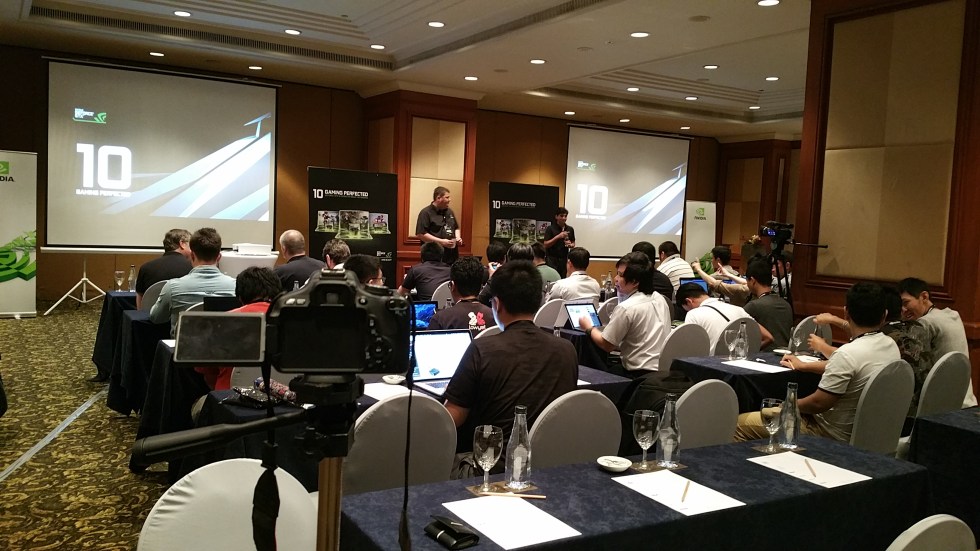
Hot on the heels of its recently-launched GeForce 10-series, NVIDIA has brought that same Pascal generation of GeForce power and performance to notebooks.
At an APAC Editors’ Day held in Bangkok, NVIDIA shared the capabilities that these notebook GPUs bring as well as gave the editors an opportunity to try out the virtual reality features on HTC Vive headsets.
The new GeForce GTX 1080, 1070 and 1060 GPUs for notebooks, providing gamers with a quantum leap forward in performance and power efficiency on the world’s fastest-growing gaming platform.
The stars are aligned. Samsung’s stars, that is. The Korean mobile phone giant has launched the Galaxy Note 7, bringing the phablet numerically in line with the Galaxy S series. And just like the […]
 Huawei continues to retain resilience in a crowded and competitive global economic environment, aiming to become the top global smartphone vendor in five years’ time, according to ABI Research.
Its successive year-on-year rises in smartphone shipments particularly impressive, as Huawei managed to achieve its high ranking without effectively breaking out of its home market. To become a global electronics brand, the company will need to gain a strong foothold in the US and western European markets, but runs the risk of falling victim to the same plights as its larger competitors.
“Ranking by volume as third largest global smartphone vendor, Huawei is attempting to expand its reach by creating its own chipsets and mobile operating system based on Android. It may succeed with chipsets, but many other competitors tried similar OS development tactics in the past to no avail. It will be tough for Huawei to achieve this goal, even with improved global brand strength and volume gains,” said David McQueen, Research Director of ABI Research.
Worldwide semiconductor capital spending is expected to slide 0.7 percent in 2016, to US$64.3 billion, according to Gartner. This is up from the estimated 2 percent decline in Gartner’s previous quarterly forecast.
“Economic instability, inventory excess, weak demand for PC’s, tablets, and mobile products in the past three years has caused slow growth for the semiconductor industry. This slowdown in electronic product demand has driven semiconductor device manufacturers to be conservative in increasing production,” said David Christensen, Senior Research Analyst of Gartner.
“Looking ahead, it appears the second half of 2016 may see improved demand. However, following Brexit, semiconductor inventory levels may rise in the third and fourth quarters, which could lead to reduced production volumes,” he added.
 Pokemon Go is taking the world by storm with its use of augmented reality (AR). The craze has received widespread publicity across the world as hordes of people go around in search of Pokemon using their mobile devices.
AR is also set to leave footprint in the enterprise market. ABI Research forecasts that AR in enterprise will explode over the next five years, as the technology will add functionality to existing workforces that was not previously possible, with remote assistance to be the primary use case.
Combined with increased safety and efficiency, this will drive investors and project managers to explore AR with smart glasses applications in the healthcare, industry, and government market segments forecast to hit 27 million shipments by 2021.
Worldwide IT spending is forecast to be flat in 2016, totaling US$3.41 trillion, according to Gartner, Inc. This is up from last quarter’s forecast of negative 0.5 percent growth. The change in the forecast is mainly due to currency fluctuations.
“The current Gartner Worldwide IT Spending Forecast assumes that the UK would not exit the European Union. With the UK’s exit, there will likely be an erosion in business confidence and price increases which will impact UK, Western Europe and worldwide IT spending,” said John-David Lovelock, Research Vice President of Gartner.
While the UK has embarked on a process to change, that change is yet to be defined. The “leave” vote will quickly affect IT spending in the UK and in Europe while other changes will take longer. Staff may be the largest immediate issue. The long-term uncertainty in work status will make the UK less attractive to new foreign workers. Retaining current non-UK staff and having less access to qualified new hires from abroad will impair UK IT Departments.
 A global initiative to define a common, open and universal Rich Communications Services (RCS) profile has gained momentum with backing by 57 global operators and manufacturers.
They include operators AIS, Axiata Group, Beeline, Bell Mobility, China Mobile, China Telecom, China Unicom, Claro Brazil, Claro Colombia, Indosat Ooredoo, M1, Megafon, MTS, Optus, Personal Argentina, Personal Paraguay, Reliance Jio, Rogers Communications, Singtel, StarHub, Telcel Mexico, Tele2, Telefónica, Telkomsel, Telus, and T-Mobile US.
These operators are joined by handset manufacturers Alcatel, ASUS, General Mobile, HTC, Intex Technologies, Lava International Ltd., LG Electronics, Lenovo/Motorola, Samsung Electronics, and ZTE, as well as mobile OS providers Google and Microsoft.
The Philippines smartphone market jumped 20 percent in Q1, according to IDC. With a projected annual growth of 25 percent this year, this makes the country the fastest growing smartphone market in Southeast Asia (SEA).
“While many of the more mature smartphone markets of the world already displayed signs of saturation, the Philippines smartphone market continues to enjoy robust growth owing to a relatively low smartphone penetration rate (30 percent in 2015), active local brand presence, and healthy consumer spending,” said Jerome Dominguez, Market Analyst for Mobile Devices of IDC Philippines.
Local vendors continue to dominate the Philippines smartphone market as they flood it with the most affordable smartphone options.
 Entelechy Asia