Category: Mobile

Facebook detaches Messenger

Facebook DislikeMessaging on Facebook will become a little more inconvenient as Messenger will become a separate app from Facebook app. This means that messaging will no longer be possible with the Facebook app.

Here’s what Facebook just sent:

We wanted to let you know that messages are moving out of the Facebook app to our Messenger app, a free app that’s faster and more reliable for everyday messaging. Messenger also includes new ways to send photos and videos, voice calls, stickers, group conversations and more.

Chinese smartphone vendors outpace market

IDCApple and Samsung, beware! Chinese smartphone vendors are hot on your heels. According to IDC, a wide range of Chinese OEMs more than outpaced the market in Q2, with Huawei nearly doubling its shipment from a year ago, followed by Lenovo.

Huawei’s growth is spurred by 4G LTE pick up, particularly in China, as all three national carriers subsidised 4G handsets to encourage consumers to upgrade from 3G. Outside of China, large volumes of its lower-cost Y series fueled growth across most regions. The company continues to focus on broadening its global reach and the Q2 results show that the momentum is undoubtedly there.

Lenovo had a record quarter in China despite tremendous pressure from local brands. During the quarter, Lenovo saw increased success from the A788T and the 3G A388T. While its Motorola acquisition is undergoing approval, Lenovo continued to gain traction in international markets. Though less than five percent of Lenovo’s shipments were registered outside of China in Q2 2013, this share nearly tripled this Q2, with emerging markets, particularly BRIC countries, picking up the largest volumes.

Mobile data to overtake voice in Malaysia in 2017

IDCMobile data is expected to bring in more revenue than mobile voice in Malaysia in 2017, according to IDC.
Despite the penetration rate of Malaysian mobile users exceeding 140 percent and high prepaid-postpaid ratio, mobile operators have still been able to maintain their revenue growth. Total revenue has grown by 35 percent in the last three years, and IDC expects the revenue to continue to grow to RM27.6 billion in 2018 at a compound annual growth rate (CAGR) of 2.6 percent.
“Mobile data revenue will continue to grow strongly at CAGR of 8.5 percent and become the main driver of the total mobile revenue in the next five years,” said Alfie Amir, Research Manager of Telecommunications at IDC Malaysia.

Curvaceous HTC One E8 designed for selfies

HTC One E8With a 5MP front-facing wide-angle camera and auto self-timer, the newly-introduced HTC One E8 is designed for selfies. On the other side is a 13MP rear-facing camera.

The stylish HTC One (E8) with its elegant dual curve design also comes with new materials, Motion Launch and HTC BoomSound. A five-inch device features a full HD, borderless display for a cleaner viewing experience.

“The HTC One (M8) had set a new smartphone standard and now we’re taking it in another exciting direction. Combining style and substance, the HTC One (E8) represents the incredible experience people expect from a HTC One device, with a look and feel that’s unlike anything else out there today. If you’re looking for the best flagship smartphone experience and want to stand out from the crowd, this is the phone for you,” said  Jack Yang, President of HTC South Asia.

ZTE mobile phones get Google Now Launcher

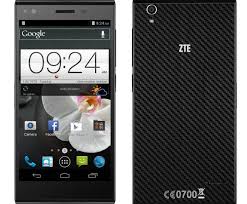
ZTE Blade Vec 4GZTE has pre-loaded Google Now Launcher on its smartphones to offer improved user experience and better value to users. It plans to pre-load Google Now Launcher on all Android 4.4 and above smartphones that have Google Mobile Services and Google Play enabled. 

ZTE has worked closely with Google to pre-load Google Now Launcher onto several ZTE devices, including the Blade Vec 4G smartphone, which runs on Android 4.4 and sports the Snapdragon 400 processor with integrated multi-mode 3G/4G LTE designed to deliver a better user experience.

The ZTE Blade Vec 4G and one other ZTE premium device will be officially presented at a ZTE press conference to be held in Hong Kong on July 24.

PC market on slow road to recovery

GartnerWorldwide combined shipment of devices (PCs, tablets, ultramobiles and mobile phones) are expected to reach 2.4 billion units in 2014, a 4.2 percent increase from 2013, according to Gartner.

After declining 9.5 percent in 2013, the global PC market (desktop, notebook and premium ultramobile) is on pace to contract only 2.9 percent in 2014.

“2014 will be marked by a relative revival of the global PC market. This year, we anticipate nearly 60 million professional PC replacements in mature markets,” said Ranjit Atwal, Research Director of Gartner.

Tablets to bridge smartphone-notebook gap

frost and sullivanSmartphones (71 percent) and notebooks (74 percent) are widely issued by enterprises. However, according to a Frost & Sullivan  survey, only 47 percent of enterprises issue tablets to their employees. The research firm expects these devices to bridge this gap over the next three years as many of the more data-intensive mobile applications migrate over to tablets.

By 2016, the use of smartphones is expected to decrease from 66 percent to 58 percent, while tablets are expected to increase from 49 percent to 56 percent. Interestingly, while almost 60 percent of enterprises allow personal devices to be connected to the corporate network, only four out of 10 IT decision makers report that their company has a formal bring your own device (BYOD) policy in place.

“Approximately 58 percent of large enterprises have a formal BYOD policy, while only 20 percent of small businesses have a standardised policy. The most common method of enforcing BYOD policies is through network technology solutions at 67 percent, followed by mobile device management at 61 percent,” said Karolina Olszewskan, Research Analyst of Frost & Sullivan.

Samsung keeps lead in tablet space

abi researchSamsung has retained its pole position in ABI Research’s tablet vendor Competitive Assessment. In the analysis of 23 leading tablet vendors, ABI Research ranked companies on several criteria for product implementation and vendor innovation. The Korean giant prevailed in the innovation category and finished second in the implementation strategy.

Close behind Samsung in second place is Apple. Clearly dominating in shipment volume, Apple has been a strong contender in the tablet ecosystem. Apple places number one in implementation strategy but comes in close second for innovation. The two leading tablet makers have managed to stay ahead of other tablet OEM vendors.

In third place is Lenovo, which has done a great job of expanding its tablet portfolio by marketing to a large audience range and providing unique user interfaces.

Simply amazing! 4K and G-SYNC make gaming a dream come true

NVIDIA Gamer's Day crowdIt’s Dragon Boat Festival, a public holiday in Taiwan but instead of choosing to run off for the holidays, hundreds of young gamers made a beeline to ATT where NVIDIA held the NVIDIA Gamer’s Day as a run up to Computex, which starts tomorrow.

From the moment the event kicked off at noon, there was no holding back the enthusiasm as the crowd checked out the latest and greatest in gaming technologies such as 4K monitors, G-SYNC, GameStream, ShadowPlay, SHIELD, GeForce GTX 700 series GPUs, and GeForce GTX 800M series-enabled notebooks. They took photos, touched, played with, and experienced the gaming devices first hand. Watch Dogs, AC4 Black Flag and Daylight were among the games on offer.

A team of five amateur gamers blew aside all the competition by winning six consecutive games to take home a whopping US$10,000.

Technology keeps New Zealanders indoor

IDCBeautiful scenery, spectacular views and natural landscape make New Zealand a wonderful place to delight in outdoor activities. It’s no wonder then that New Zealanders are known to spend lots of time enjoying  outdoor activities.

However, technology seems to be changing the way New Zealanders live. According to IDC, New Zealand consumers are choosing to go out less often for shopping and leisure activities, as they prefer to do these activities in the comfort of their own home, thanks to advances in technology.

The new data reveals that 47 percent of respondents would prefer to do personal shopping online, rather than in a physical store.

PC shipment up 5% but tablet growth slows in Q1

Worldwide client PC shipment rose five percent year on year to hit 123.7 million units in Q1 , according to Canalys. Growth in tablet shipments slowed to 21 percent, yet at 50.8 million units they continue to outship notebooks. Tablets accounted for 41 percent of the market while notebooks had 38 percent.

Notebooks and desktops in China declined 13 percent and six percent respectively compared with the previous year.

In the tablet market, there was strong growth in the Middle East (100 percent) and Greater China (74 percent). The US market was adversely affected by a drop in Apple iPad shipment, which fell 40 percent. This was offset somewhat by 20 percent growth in China, Apple’s second largest market. Worldwide, iPad shipments in Q1 fell 16 percent year on year to 16.4 million and accounted for 80 percent of Apple’s total PC shipments. Despite this, Apple continued to lead the global PC market. Its share fell both sequentially and year on year from 20 to 17 percent, due chiefly to the increasingly competitive tablet market.

Global tablet shipment misses target

IDCWorldwide tablet plus 2-in-1 shipments slipped to 50.4 million units in Q1, according to preliminary data from IDC. The total represents a sequential decline of 35.7 percent from the high-volume holiday quarter and just 3.9 percent growth over the same period a year ago. The slowdown was felt across operating systems and screen sizes and likely points to an even more challenging year ahead for the category.

“The rise of large-screen phones and consumers who are holding on to their existing tablets for ever longer periods of time were both contributing factors to a weaker-than-anticipated quarter for tablets and 2-in-1s,” said Tom Mainelli, IDC Program Vice President, Devices and Displays. “In addition, commercial growth has not been robust enough to offset the slowing of consumer shipments.”

Apple maintained its lead in the worldwide tablet plus 2-in-1 market, shipping 16.4 million units. That’s down from 26.0 million units in the previous quarter and well below its total of 19.5 million units in Q1 of 2013. Despite the contraction, the company saw its share of the market slip only modestly to 32.5 percent, down from the previous quarter’s share of 33.2 percent.

GSMA completes mobile energy efficiency optimisation project in Pakistan

GSMAGSMA has completed its second Mobile Energy Efficiency (MEE) Optimisation project in Pakistan, working in conjunction with mobile operator Warid Telecom and systems integrator Cascadiant.

The project trialled innovative energy-saving technology in Warid’s network and demonstrated significant energy savings of between 30 and 60 percent. When the solutions are rolled out across Warid’s network in Pakistan, the annual savings are expected to be more than US$6 million and 19,700 tonnes of carbon dioxide emissions.

GSMA also announced that Eltek, Enertika, PowerOasis and Purcell Systems have joined the GSMA’s MEE programme as technology partners. The companies are working with the GSMA to deliver MEE Optimisation projects for mobile network operators (MNOs) who wish to reduce their networks’ energy consumption and cost, as well as carbon emissions.

“It is fantastic that this MEE Optimisation project in Pakistan has already successfully demonstrated significant cost savings and emissions reductions, and is clearly showing the benefits of the service to our members,” said Tom Phillips, Chief Regulatory Officer of GSMA. “The GSMA is also delighted to welcome these four companies as MEE Optimisation technology partners to deliver real cost savings and environmental benefits for operators.”

More power and better performance with new NVIDIA GeForce 800M

The Razor Blade packs the GeForce GTX 870M.

NVIDIA has launched its GeForce 800M line-up of notebook GPUs that deliver up to 60 percent performance improvement over the previous generation.

The new mobile GPUs sport a multitude of new features designed just for gamers, first of which is NVIDIA Battery Boost, which delivers up to double the gaming battery life.

Instead of pushing every notebook component to its max, Battery Boost targets a user defined frame rate, such as 30 FPS. The driver level governor takes over and operates all system components, including CPU, GPU, and memory at peak efficiency, while maintaining a smooth, playable experience.

China vendors to account for half of global handset sales next year

abi researchThe Red Wave is spreading from China to the rest of the mobile world. Huawei, ZTE and Lenovo may not be the leading names that come to mind when it comes to handset vendors today but their influence is spreading. As it Xiaomi, which is taking East Asia by storm with sellouts every time it puts its phones for sale online.

ABI Research has reported that Chinese handset vendors will account for more than half of mobile handsets in 2015. Chinese vendors already accounted for 38 percent of mobile handset shipments in 2013 and the ongoing shift in growth to low cost handsets, especially smartphones, will increase their market share.

Many oChinese OEMs have focused almost exclusively on the huge Chinese market, with little activity beyond its borders, but this is set to change. Huawei (6th in worldwide market share for 2013) and ZTE (5th) have already made an impact on the world stage, but other Chinese handset OEMs like Lenovo — the Motorola acquisition is a clear statement of intent — and Xiaomi are set to join them.

HTC unveils HTC Desire 310 in Taiwan

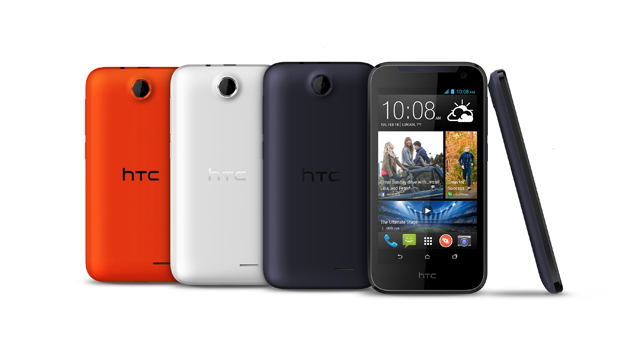
HTC Desire 310HTC has unveiled the HTC Desire 310, which packs a powerful quad-core processor and some of the features of the HTC One series but is more affordable.

Boasting a 1.3GHz quad-core processor, the smartphone can deliver fast, responsive web browsing, silky-smooth graphics when watching videos or playing games and the ability to switch between multiple apps.

“The latest addition to our renowned HTC Desire range combines super-fast processing and premium features at a lower price, offering users the best possible experience in this category,” said Peter Chou, CEO of HTC.

Global tablet growth to slow this year

IDCThe much sought after tablet — the darling of the technology industry in recent years — is expected to grow just 19.4 percent this year. That’s a massive slow down from last year’s growth of 51.6 percent. According to the IDC Worldwide Quarterly Tablet Tracker, the reduction is due to slowing consumer purchases as hardware iterations slow and the installed base — particularly in mature markets — continues to grow.

Over the course of the past two years, average selling prices (ASPs) have declined rapidly in the tablet market, but this too appears to be slowing. In 2012, ASPs declined 18.3 percent from the previous year, and in 2013, prices dropped another 14.6 percent.

Price erosion has started to slowly bottom out, with ASPs forecast to drop a modest 3.6 percent in 2014. IDC believes ASP declines will slow for several reasons; chief among them are the growth of higher-priced commercial shipments and a consumer movement away from ultra-low cost products.

MWC reports record visitors

MWCMore than 85,000 visitors from 201 countries attended Mobile World Congress (MWC), which ended yesterday. This is a record for the mobile industry event, which saw many new product launches and announcements.

In addition to the more than 80,000 attendees at MWC at Fira Gran Via, more than 5,000 people participated in a range of partner programmes at Fira Montjuïc.

“By any measure, the 2014 Mobile World Congress was a stunning success and we thank our attendees, exhibitors, sponsors and partners for their continued support,” said John Hoffman, CEO of GSMA. “Beyond the number of attendees and participating companies, the continued expansion of the event to address key adjacent industry sectors demonstrates just how pervasive mobile is in our everyday lives and how integrated it is becoming in everything that we do. It’s gratifying to be part of such a dynamic, exciting industry.”

HTC unveils mid-range Desire 816 smartphone

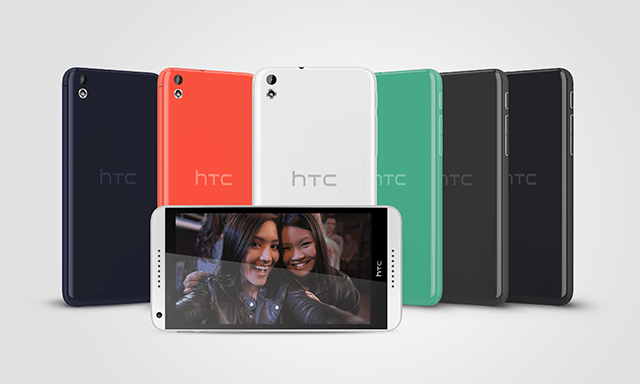
HTC Desire 816HTC has unveiled the first model in its 2014 mid-range portfolio — the HTC Desire 816, which packs an advanced feature set that makes it one of the better value smartphones.

The first edition of the new-look HTC Desire family comes fully loaded with HTC’s iconic dual-frontal speakers and HTC BoomSound, while HTC BlinkFeed keeps users up-to-date with the latest news and social updates on the 5.5-inch screen. A 13MP rear-facing camera complete with HTC Zoe and automatic highlight videos, as well as a 5MP front-facing camera, make it ideal for capturing both selfie and landscapes.

The new smartphone is powered by a quad-core, 1.6 GHz processor and offers 4G LTE connectivity.

Tablets account for half of PC shipment in Q4

CanalysTablet shipment grew 65.2 percent year-on-year to reach 76.3 million units in Q4, according to Canalys. This represents nearly half (48.3 percent) of the global PC market, which increased 17.9 percent during that period. Excluding tablets, shipment declined 6.9 percent year-on-year with falls in all regions. 

Apple remained the PC market leader in Q4, shipping 30.9 million units to take a 19.5 percent share of the market. It shipped 26.0 million iPads, which accounted for 84.3 percent of its total shipment in Q4. Apple’s share of the overall tablet market increased sequentially from 27.3 percent to 34.1 percent, with the launch of the iPad Air and iPad mini with Retina display providing a much needed boost. The original iPad mini also fell in price, down to US$299 in the US, making it cheaper than ever to buy an iPad. But competition is mounting and Android tablets are falling in price, which will put pressure on Apple’s market share in 2014.

Lenovo secured an 11.8 percent share in Q4, narrowly holding onto second place. Lenovo’s PC shipments increased 25.5 percent year-on-year, driven by growth outside of its core Chinese market, where its shipment declined. Lenovo’s 11.7 percent decline in notebook shipments in China was offset by impressive growth in other regions, notably EMEA, where shipments grew 30.4 percent. Shipments in Latin America also grew strongly, following the acquisition of CCE in the first quarter of 2012.Lenovo was early to embrace Android as a tablet OS, while the likes of HP and Dell waited for Windows 8 and prioritized margin over volume. Lenovo’s strategy has paid off, not only in its home market but worldwide.

Ultra-portables grow 100% in 2013

abi researchUltra-portables are becoming increasingly popular, growing 100 percent from 2012 to 2013, according to ABI Research. This translates to 12.3 percent (22.5 million) of notebook PC shipment in 2013 (182.7 million).

“Across 24 countries tracked in November 2013, we found average ultra-portable PC selling prices ranging from US$940 to US$1,540 with the majority of models offered above US$1,200 in each country,” said Jeff Orr, Senior Practice Director of ABI Research. “The ASPs suggest ultra-portables including the convertible and detachable 2-in-1 configurations remained at the high-end of the notebook PC category exiting 2013.”

Beyond Apple’s MacBook Air running MacOS, the bulk of ultra-portable PCs are powered by the Windows 8 operating system, which suffered fits and starts during 2013 due to usability issues and poor first impressions by early adopter audiences. A revision, Windows 8.1, was released in the second half of the year to address these concerns, though popular opinion suggests many considering a refresh to their existing systems are willing to wait for the hiccups to be worked out before making a financial commitment.

Samsung is top global semiconductor buyer

GartnerSamsung Electronics is the world’s top semiconductor buyer, and together with second placed Apple, increased their combined semiconductor demand by 17 percent in 2013, according to Gartner.

The two companies consumed US$53.7 billion of semiconductors in 2013, an increase of $7.7 billion from 2012.

“Samsung Electronics and Apple have topped the semiconductor consumption table for three years running, with their share of the design total available market (TAM) rising from 12 per cent in 2011, to 17 per cent in 2013,” said Masatsune Yamaji, Principal Research Analyst of Gartner. “This increase clearly shows how fast the presence of these two companies has expanded over the last three years and why their decisions have technology and pricing implications for the whole semiconductor industry.”

Huawei teams up with the Gunners

HuaweiHuawei has taken a shot at the English Premier League by becoming the official smartphone partner of league leaders Arsenal.

Huawei and Arsenal announced the global deal, which lasts until the end of season 2015/16 at the Arsenal Training Centre in Colney, Hertfordshire, with members of the first team including, Aaron Ramsey, Lukas Podolski and Mesut Özil along with manager Arsène Wenger.

“We are delighted to be partnering with Huawei at such an exciting time in the development of its brand globally, and in particular in the UK and Europe,” said Tom Fox, Chief Commercial Officer of Arsenal.

Facebook’s Mark Zuckerberg to speak at MWC

GSMAMark Zuckerberg, Founder and CEO of Facebook is among the line-up of new speakers in the keynote programme at the upcoming 2014 GSMA Mobile World Congress (MWC).

He will be headlining in the first of the week’s Mobile World Live keynote sessions on Monday, February 24 at 18:00-18:45. In this session, he and renowned technology journalist and writer David Kirkpatrick will explore the importance of extending the benefits of ubiquitous Internet access to the unconnected world. In addition to the live audience in the Conference Village in Fira Gran Via, the Mobile World Live keynotes will be streamed live across the venue and to hundreds of thousands of viewers globally via the Mobile World Live portal.

“Mobile World Congress 2014 is set to be our biggest, most ambitious and most diverse event yet, offering new experiences for attendees across the growing mobile ecosystem,” said Michael O’Hara, Chief Marketing Officer of GSMA. “Over four days, attendees will have the opportunity to see just how broadly mobile is impacting our everyday lives, how we work, live and play. We’re looking forward to seeing the mobile world gather in Barcelona.”

Companies need to catch up with mobile customers

ForresterCompanies worldwide are quickly realising that mobile has not only changed digital operations, but that it will fundamentally change entire businesses in decades to come, according to Forrester Research.

2014 will be an incremental year on this journey, as companies increase investments to transform their businesses and race to keep up with the growing mobile mind shift, with an installed base of more than two billion smartphones globally. In the report, Forrester Analysts Thomas Husson and Julie Ask outline key mobile trends anticipated for 2014, including::

  • Big data, big data, big data. Mobile is transformative but only if consumers are engaged in their exact moment of need with the right services, content, or information. Insights gleaned from data over time will be essential to know how to best serve customers in that moment.
  • Mobile advertising will start to mature. New mobile-centric ad formats will emerge, with more effective mobile video inventory and more mobile ad network inventory shifting to the exchanges.

Audi adds NVIDIA Tegra-based visual computing power to its cars

Audi dashboardThree new in-vehicle systems powered by the NVIDIA Tegra Visual Computing Module (VCM) will soon begin shipping in Audi’s vehicles.

These innovative solutions, disclosed at the German automaker’s press conference at the 2014 International Consumer Electronics Show, include:

  • a connected infotainment system with twice the performance of its predecessor;
  • the world’s first automotive-grade tablet that is fully integrated into the car’s infotainment system; and
  • a high-resolution digital cockpit with unprecedented, vivid 3D graphical displays.

Worldwide PC, tablet, ultramobile, and mobile phone shipment to grow 7.6% this year

GartnerGlobal shipment of devices (PCs, tablets, ultramobiles, and mobile phones) are projected to reach 2.5 billion units in 2014, a 7.6 percent increase from 2013, according to Gartner.

Among the operating system (OS) market, Android is on pace to surpass one billion users across all devices in 2014. By 2017, more than 75 percent of Android’s volumes will come from emerging markets.

“The device market continues to evolve, with buyers deciding which combination of devices is required to meet their wants and needs. Mobile phones are a must have and will continue to grow but at a slower pace, with opportunities moving away from the top-end premium devices to mid-end basic products,” said Ranjit Atwal, Research Director at Gartner. “Meanwhile users continue to move away from the traditional PC (notebooks and desk-based) as it becomes more of a shared content creation tool, while the greater flexibility of tablets, hybrids and lighter notebooks address users’ increasingly different demands.”

NVIDIA unveils revolutionary Tegra K1 super chip for mobile platform

NVIDIA Tegra K1NVIDIA unveiled at CES the Tegra K1 mobile processor, a 192-core super chip featuring the same NVIDIA Kepler architecture that powers the NVIDIA GeForce GTX 780 Ti. For the first time, next-generation PC gaming will now be available on mobile platforms.
The Tegra K1 processor sets new mobile standards by supporting the latest PC-class gaming technologies, enabling it to run sophisticated gaming engines like Epic Games’ Unreal Engine 4. It delivers advanced computation capabilities to speed the development of applications for computer vision and speech recognition. And its extraordinary efficiency delivers higher performance than any other mobile GPU at the same power level.


“Over the past two decades, NVIDIA invented the GPU and has developed more graphics technologies than any other company,” said Jen-Hsun Huang, co-founder and CEO, NVIDIA. “With Tegra K1, we’re bringing that heritage to mobile. It bridges the gap for developers, who can now build next-gen games and apps that will run on any device.”

nubia nabs 2.5m orders for Z5S and Z5s mini smartphones

Nubia Z5SZTE’s boutique smartphone brand nubia has received 2.5 million orders for the Z5S and Z5S mini on JD.com as consumers in China.

The response to Z5S, priced at RMB1,999, and Z5S mini, priced at RMB1,499, surpassed a sales record previously set by Xiaomi. The two new smartphones were designed using consumer feedback garnered by nubia and JD.com in a C2B (consumer to business) approach to deliver a customer-defined user experience. Z5S and Z5S mini take nubia’s strengths in smartphone photography to a new level, becoming the first phones in China to offer the optical image stabiliser feature.

The new NEOVISION 3.0 system on Z5S and Z5S mini bring the feature of independent white-balance to smartphone users in China for the first time, after nubia pioneered independent focus and independent light-metering. The advanced imaging technology offered on Z5S and Z5S mini have earned the new handsets the moniker of “Single-Lens Reflex (SLR) Smartphones.” In addition, nubia’s industry-leading photography technology is now available for beta downloads (nubia Camera) by users of other handset manufacturers.

1O1O and one2free launch first VoLTE network in Hong Kong

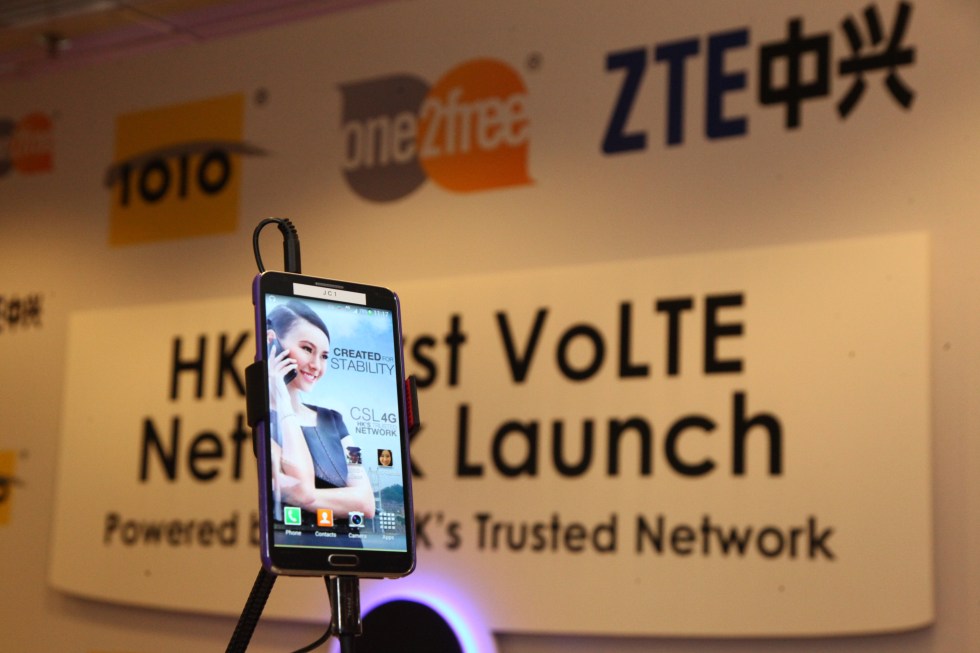
1010 and one2free VOLTE-1O1O and one2free have turned on the first VoLTE (Voice over LTE) network in Hong Kong powered by Hong Kong’s Trusted Network. The full commercial launch is expected to take place in the first half of 2014, in line with projected device maturity in the market.

CSL’s VoLTE offers clearer voice, instant connection, and better quality video calls enabled by ZTE’s IMS (IP Multimedia Subsystem) solution. Customers will experience a clearer voice and richer multimedia experience, with a distinct improvement in video call quality with VoLTE.

VoLTE also allows 1O1O and one2free to achieve better spectral efficiencies and will increase network capacity and subsequently enhancing the 4G LTE experience.

SEA smartphone sales up 61% in first three quarters

gfk_logoSoutheast Asia consumers bought 41.5 million smartphones, spending US$10.8 billion in the first three quarters of this year, according to GfK Asia.

Indonesia led the way with sale of 14.8 million smartphones worth more than USS3.33 billion. Thailand and Malaysia were next with 7.2 million and 6.4 million units sold respectively. However, in terms of smartphone sales revenue, the ranking of these two countries are switched with Malaysia garnering US$2.25 billion while Thailand raked in US$1.96 billion in January to September.

“The increasing affordability of smartphones, particularly in the developing markets is helping many consumers in these countries make the switch from their basic feature phones to own their very first smartphone,” said Gerard Tan, Account Director for Digital Technology of GfK Asia. “It is worth highlighting the significant milestone of September being the month whereby sales penetration reached the halfway mark; where one in every two mobile handsets purchased in the region is now a smartphone.”

Lower-priced models drive explosive smartphone growth in India

IDCIndia’s smartphone market grew an astounding 229 percent year-on-year in Q3. According to IDC’s APEJ Quarterly Mobile Phone Tracker, vendors shipped a total of 12.8 million smartphones in Q3 compared to 3.8 million units in the same period of 2012. Q3 also saw an increase of 28 percent over Q2.

The 5.0- to 6.99-inch screen size smartphones continued to show sustained growth, contributing 23 percent of the overall market in terms of volume.

The overall mobile phone market (feature phones and smartphones) had a 12 percent growth year-on-year and a seven percent growth quarter on quarter with the share of feature phones sliding further to make 81 percent of the total market in Q3 despite the feature phone market growing at three percent growth over the previous quarter.

Yippee, no more spam calls!

No need to hang up the phone anymore to avoid unwanted calls.

In the technological era, one of the most irritating things about being easily reachable is being easily reachable — by people you don’t want to talk to.

What compounds it is if you are travelling overseas, maybe halfway around the world, and you get a call in the middle of the night. Thinking it must be something important, you pick it up and get a pitch on credit line, loan, property, or investment. It’s a real head banger!

The Do-Not-Call (DNC) registry could not have come any sooner in Singapore. From today, those who want to stop getting unwanted calls can list their numbers on the national DNC registry. The registry will block calls, SMSes and fax messages from January 2 next year.

Huawei turbocharges LTE speed and revenue

XL Axiata representatives demonstrating Turbo Button. Inset: The Turbo Button mobile app.

Huawei has demonstrated a Turbo Button solution for dramatically boosting delivered LTE speeds with a simple push of a button on a mobile app.

Turbo Button allows mobile subscribers to easily accelerate their data speeds on demand from 1 Mb/s up to 70 Mb/s over a set period of time with just one touch on a downloadable app. The service is especially useful for improving the experience of high-speed web surfing, online gaming, large file uploads and downloads, and HD video streaming among other bandwidth intensive services.

The demo was conducted by Indonesian mobile operator XL Axiata at the recent 2013 Asia-Pacific Economic Cooperation (APEC) forum in Indonesia and made exclusive use of Huawei’s Networker solution for LTE. XL

Smartphone shipment up 40% while average price drops 12%

IDCWorldwide smartphone shipments are expected to surpass one billion units in 2013, representing 39.3 percent growth over 2012, according to a recently published mobile phone forecast from IDC Worldwide Quarterly Mobile Phone Tracker.

Despite a number of mature markets nearing smartphone saturation, the demand for low-cost computing in emerging markets continues to drive the smartphone market forward. By 2017, total smartphone shipments are expected to approach 1.7 billion units, resulting in a compound annual growth rate (CAGR) of 18.4 percent from 2013 to 2017.

While shipment has gone up, the average selling price (ASP) has seen a steady decline. Android has enabled a number of new manufacturers to enter the smartphone market supported by a variety of turnkey processing solutions. Many of these handset vendors have focused on low-cost devices as a way to build brand awareness.

Half billion LTE connections in Asia in 2017

GSMAThe uptake of 4G-LTE is expected to grow to pass one billion by 2017, according to a new study by GSMA Intelligence. This translates to one in eight of the more than eight billion total mobile connections forecast by that point, up from 176 million LTE connections at the end of 2013. And around half of these are expected to be in Asia.

Nearly 500 LTE networks are forecast to be in service across 128 countries, roughly double the number of live LTE networks today.

“Since the launch of the first commercial 4G-LTE networks in late 2009 we are seeing deployments accelerate across the globe,” said Hyunmi Yang, Chief Strategy Officer of GSMA. “Our new report highlights a number of factors that are driving LTE growth: the timely allocation of suitable spectrum to mobile operators; the availability of affordable LTE devices; and the implementation of innovative tariffs that encourage adoption of high-speed data services. Mobile operators in both developed and developing markets are seeing LTE services contributing to a significant increase in ARPU.”

Tablets to account for half of PC market in 2014

 Source: Canalys

Tablets will almost out ship all other PC form factors combined, forming almost 50 percent of the total client PC market (desktops, notebooks, and tablets) in  2014, according to Canalys.

The worldwide client PC market grew 18 percent in Q3, despite desktop and notebook shipments continuing to decline. Tablet PC shipments accounted for 40 percent of PC shipments in Q3, less than half a million units behind global notebook shipments.

Tablet domination is set to continue, with Canalys forecasting 285 million units to ship in 2014, growing to 396 million units in 2017. Apple and Samsung are expected keep ahead of their competitors in the medium term, but there could be challenges for both vendors as competition in the tablet market continues to heat up.

Power limiting progress in mobile devices

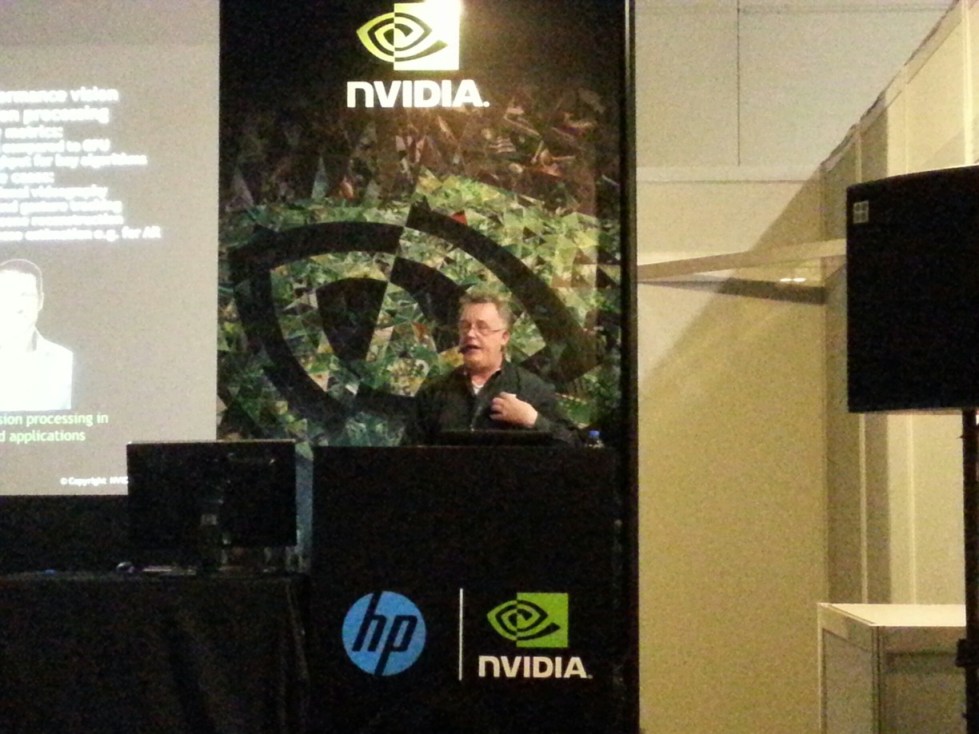
Neil TrevettPower is a big limitation in mobile devices despite improvements in battery power, according to Neil Trevett, Vice President Mobile Content of NVIDIA.

“Power is the new performance limiter. Developers need to use acceleration to preserve battery life and high performance,” he said at NVIDIA Tech Talk at SIGGRAPH Asia in Hong Kong.

On the other hand, advanced mobile GPUs and new sensors are combining to make vision processing the next wave of mobile visual processing. NVIDIA is building a stack of advanced silicon, APIs and libraries to enable advanced mobile vision applications.

GSMA and ITU to drive mobile broadband in APAC

GSMAGSMA is collaborating with the International Telecommunication Union (ITU) in a new programme to encourage the development of mobile broadband in the Asia-Pacific region.

The new “m-Powering for Mobile Broadband” campaign will facilitate the exchange of experiences and sharing of best practices in specific policy areas with the goal of encouraging investment in mobile broadband infrastructure, instilling consumer confidence in mobile applications and supporting the long-term growth of the sector.

“Mobile is a transformative technology that has had a significant economic and social impact not only in Asia, but on a global basis,” said Irene Ng, Head of GSMA Asia. “Mobile provides access to healthcare where there are no doctors, access to education where there are no teachers and access to financial services where there are no banks. GSMA is pleased to be working hand in hand with ITU to accelerate the widespread adoption of mobile broadband in Asia and the Pacific, and in turn, to enable new opportunities for economic growth, technological innovation and social development.”

Your smartphone will be smarter than you by 2017

GartnerIn four years’ time, your smartphone may be smarter than you. It will be able to predict your next move, next purchase or interpret actions based on what it knows, according to Gartner. This insight will be performed based on an individual’s data gathered using cognizant computing — the next step in personal cloud computing.

“Mobile phones have turned into smartphones thanks to two things: technology and apps,” Carolina Milanesi, Research Vice President of Gartner. “Technology has added features such as cameras, locations and sensors, while apps have connected those to an array of functions that, for the most part, add and improve our day to day life from a social, knowledge, entertainment and productivity point of view.” 

What smartphones can do through apps has improved and broadened thanks to the personal cloud. “We assume that apps will acquire knowledge over time and get better with improved predictions of what users need and want, with data collection and response happening in real-time,” she added.

Samsung drives road safety campaign in Singapore

Pledge your attentionDrive without mobile distractions — that’s the message from Samsung’s “The Road Comes First” campaign targeted at Singapore road users to promote the responsible use of mobile phones on the road.

Endorsed by the Traffic Police and Singapore Road Safety Council, the campaign aims to address the increasing problem of illegal mobile phone use among drivers. The number of summons increased 46 percent, from 1,169 between January to June in 2012 to 1,705 over the same period in 2013.

A Samsung-commissioned survey found that a large majority of 83 percent of the Singapore drivers surveyed admitted to using their mobile phones, without a hands-free kit, while at the wheel in the last 12 months. They were most likely to be using GPS or map applications, checking their mobile phone screens, and texting.

Large screen smartphones gaining popularity

CanalysThe numbers are clear. Big is getting more popular. Large screen smart phones (five-inch and above) accounted for 22 percent of the quarter billion smartphones shipped in Q3. This is the highest number ever and translates to a staggering 56 million units.

Samsung is the dominant player in the large screen segment. Breaking this down further, 66 percent of the 56 million smart phones had a five-inch display, 31 percent had screens between five and six inches while just three percent had six-inch or larger screens.

According to Canalys, the smartphone market grew 44 percent year-on-year in Q3. The top two vendors, Samsung and Apple, maintained their positions, with market shares of 34 percent and 15 percent respectively. Huawei, Lenovo and LG completed the top five.

Apple to dominate smartphone-integrated vehicle infotainment market

abi researchApple’s “iOS in the Car” will lead the market for in-vehicle infotainment (IVI) systems equipped with smartphone integration technologies, according to ABI Research.

It predicts that the market will grow substantially during the next five years to reach 35.1 million units globally by 2018. Of these, 49.8 percent will be equipped with Apple’s “iOS in the Car”, 43.6 percent with MirrorLink and 28.2 percent with other technologies.

Developments in the smartphone world are revolutionising consumers’ in-car expectations. Besides Internet connectivity itself, the ability to select apps whenever they choose is probably one of the IVI features that consumers value the most.

Global video game market to reach US$93b

GartnerThe worldwide video game marketplace, which includes video game console hardware and software, online, mobile and PC games, will reach US$93 billion in 2013, up from $79 billion in 2012, according to Gartner.

Driven by strong mobile gaming and video game console and software sales, the market is forecast to hit US$111 billion by 2015.

Mobile games are the fastest-growing segment of the market, with revenue set to nearly double between 2013 and 2015 from US$13.2 billion to US$22 billion.

Touch-enabled notebooks top wish list

IDCTouch is in. Beyond touch screen phones, users in Asia-Pacific want touch-enabled notebooks.

According to an IDC Asia-Pacific end user survey, 82 percent of respondents prefer a touch-enabled notebook for their next purchase.

The annual survey that studies end user behaviour and usage on client devices. The usage explosion of smartphones and tablets, where touch screen is a prominent feature, is a key driver of taking these screens to the personal computer. The study also finds that the majority of PC users today, even in emerging markets, own a smartphone, especially for 26-35 year olds at 87 percent. 

Mobile device platforms move towards more integration

abi researchSeveral trends are affecting the market for mobile device semiconductors. Two have been the shift towards multi-core application processors and the addition of x86 and MIPS to what used to be purely an ARM play. Two newer trends are the addition of heterogeneous processing functionality and 64-bit processors for mobile devices, according to ABI Research.

The trend towards more integrated platforms is the most crucial because the revenue of standalone components is folding into integrated platforms and the revenue for mobile device semiconductors lie with the higher cost components – mostly the application processor.

While the shift from standalone components to integrated platforms is drastic over the next five years in terms of shipments, this shift is even more radical in terms of revenue. From 2013 to 2018, the share of integrated platforms compared to all application processors in terms of shipments will jump from 46 percent to 79 percent while the revenue shares of the same will be higher. Smartphone application processor (integrated and standalone) revenue as a percentage of total mobile device semiconductor revenue for the major components will increase from 71 percent in 2013 to 89 percent in 2018.

Lower-priced products to drive devices growth in 2013

GartnerLower-priced devices are driving the growth of worldwide combined shipments of PCs, tablets and mobile phones in 2013, according to Gartner. The global devices market is expected to hit 2.32 billion units, a 4.5 percent increase from 2012.

Worldwide shipments of traditional PCs (desk-based and notebook) are forecast to total 303 million units in 2013, an 11.2 percent decline from 2012, and the PC market, including ultramobiles, is forecast to drop 8.4 percent. Mobile phone shipments are projected to grow 3.7 percent, with volume of more than 1.8 billion units.

Tablet shipments are expected to grow 42.7 percent this year, with shipments reaching 184 million units. Premium tablets are faced with continued price decline in the 7-inch form factor as a larger number of consumers prefer smaller form factors when it comes to content consumption.

ANZ WLAN market boosted by increase in devices

IDCThe wireless local area network (WLAN) hardware market in ANZ continued to grow for the third consecutive quarter, according to IDC.

While enterprises remained the largest users of wireless infrastructure, the consumer space gained share from enterprise over the year. This means that more consumer wireless routers were sold, thanks to an increased number of devices in households during the period.

Service Provider (SP) WLAN deployments differed between Australia and New Zealand. New Zealand SPs embraced 3G/LTE offload via WLAN infrastructure while Australia SPs preferred to rely on available spectrum to support mobile connectivity. Overall, SP contribution to the WLAN market remained minuscule in the region despite having the strongest growth. Table 1 shows growth for the three main segments quarter-on-quarter (QoQ) and year-on-year (YoY):

Huawei launches evaluation platform for mobile app developers

HuaweiHuawei has announced MBB Insider Online, a cloud-based mobile platform for evaluating mobile broadband (MBB) app network friendliness.

Developed by mLAB, Huawei’s wireless network innovation lab, MBB Insider Online allows app developers and other third-party MBB ecosystem companies to take unique advantage of evaluation tools that accurately determine the impact their services will have in terms of consumption of traffic, signaling, device power and delivered user experience when installed on a smart device connected to a live mobile network.

These developers can then better fully utilise network resources to considerably enhance their delivered service experience. MBB Insider Online also provides app optimisation recommendations to improve delivered user experience and optimise utilisation of network resources.

Mobile money deployment on the rise

GSMAThe adoption of mobile money is increasing with 208 live deployments for unbanked services in 83 countries, compared to 178 in 74 countries as of January, asccording to GSMA’s 2013 Mobile Money Adoption Survey. Another 117 deployments are planned over the coming months.

The report underscores the critical role of mobile and mobile network operators (MNOs) in driving the adoption of convenient and affordable financial services among unbanked and under-banked individuals around the world.

“The impressive and encouraging results of the study demonstrate that mobile money services are increasingly reaching scale and are becoming even more essential in providing convenient and affordable financial services to the underserved,” said Chris Locke, Managing Director, GSMA Mobile for Development.