HTC has unveiled the HTC Desire 310, which packs a powerful quad-core processor and some of the features of the HTC One series but is more affordable.
Boasting a 1.3GHz quad-core processor, the smartphone can deliver fast, responsive web browsing, silky-smooth graphics when watching videos or playing games and the ability to switch between multiple apps.
“The latest addition to our renowned HTC Desire range combines super-fast processing and premium features at a lower price, offering users the best possible experience in this category,” said Peter Chou, CEO of HTC.
The much sought after tablet — the darling of the technology industry in recent years — is expected to grow just 19.4 percent this year. That’s a massive slow down from last year’s growth of 51.6 percent. According to the IDC Worldwide Quarterly Tablet Tracker, the reduction is due to slowing consumer purchases as hardware iterations slow and the installed base — particularly in mature markets — continues to grow.
Over the course of the past two years, average selling prices (ASPs) have declined rapidly in the tablet market, but this too appears to be slowing. In 2012, ASPs declined 18.3 percent from the previous year, and in 2013, prices dropped another 14.6 percent.
Price erosion has started to slowly bottom out, with ASPs forecast to drop a modest 3.6 percent in 2014. IDC believes ASP declines will slow for several reasons; chief among them are the growth of higher-priced commercial shipments and a consumer movement away from ultra-low cost products.
More than 85,000 visitors from 201 countries attended Mobile World Congress (MWC), which ended yesterday. This is a record for the mobile industry event, which saw many new product launches and announcements.
In addition to the more than 80,000 attendees at MWC at Fira Gran Via, more than 5,000 people participated in a range of partner programmes at Fira Montjuïc.
“By any measure, the 2014 Mobile World Congress was a stunning success and we thank our attendees, exhibitors, sponsors and partners for their continued support,” said John Hoffman, CEO of GSMA. “Beyond the number of attendees and participating companies, the continued expansion of the event to address key adjacent industry sectors demonstrates just how pervasive mobile is in our everyday lives and how integrated it is becoming in everything that we do. It’s gratifying to be part of such a dynamic, exciting industry.”
Looks like interest in the Xiaomi Redmi smartphone is very high. Just six days after its debut sold out in Singapore, another batch of the smartphones was wiped out in just six minutes. While irate […]
GSMA and Facebook have announced a joint initiative to connect billions of men and women globally who currently have no access to Internet-based communications services. The initiative will focus on reducing the total cost of ownership (TCO) of mobile, given that mobile will be the enabling technology for the vast majority of people in developing markets.
The activities undertaken by GSMA and Facebook will entail working with governments in developing markets to address key factors that have an impact on affordability and availability. The partnership will focus on creating a sustainable environment to incentivise mobile infrastructure investment and usage, as well as eliminating or reducing existing mobile-specific taxation or refraining from imposing new such tax regimes.
Together, GSMA and Facebook will address a range of other issues that will improve affordability and help to connect the world’s population to the Internet, such as maximising the availability of harmonised spectrum to drive mobile broadband adoption; evaluating the establishment of local Internet Exchange Points; fostering the development of local Internet content; and examining the effectiveness of Universal Service Funds.
HTC has unveiled the first model in its 2014 mid-range portfolio — the HTC Desire 816, which packs an advanced feature set that makes it one of the better value smartphones.
The first edition of the new-look HTC Desire family comes fully loaded with HTC’s iconic dual-frontal speakers and HTC BoomSound, while HTC BlinkFeed keeps users up-to-date with the latest news and social updates on the 5.5-inch screen. A 13MP rear-facing camera complete with HTC Zoe and automatic highlight videos, as well as a 5MP front-facing camera, make it ideal for capturing both selfie and landscapes.
The new smartphone is powered by a quad-core, 1.6 GHz processor and offers 4G LTE connectivity.
NVIDIA has boosted its Tegra Note 7 with the i500 LTE modem – and its 4G LTE cellular connection. The seven-inch tablet is available with LTE and HSPA+ mobile connectivity and can operate on popular carriers across […]
Xiaomi has done it again! In its initial foray into Singapore, all its Redmi phones were sold out online in eight minutes — after it went on sale at noon today. At S$169, and without […]
As mobile data services are undergoing tremendous growth, mobile networks demand multi-frequency and multi-system fusion. This leads to many challenges including high network deployment costs, insufficient site resources, too many antenna sites, and high operation […]
Shared spectrum can complement but in no way replace the need for exclusive-access spectrum in the provision of mobile broadband, according to a Deloitte report. Entitled “The Impacts of Licensed Shared Use of Spectrum”, the […]
Huawei has taken a shot at the English Premier League by becoming the official smartphone partner of league leaders Arsenal.
Huawei and Arsenal announced the global deal, which lasts until the end of season 2015/16 at the Arsenal Training Centre in Colney, Hertfordshire, with members of the first team including, Aaron Ramsey, Lukas Podolski and Mesut Özil along with manager Arsène Wenger.
“We are delighted to be partnering with Huawei at such an exciting time in the development of its brand globally, and in particular in the UK and Europe,” said Tom Fox, Chief Commercial Officer of Arsenal.
Global mobile Internet service revenue grew an estimated 23.4 percent to US$300 billion last year, according to ABI Research. Wireless broadband subscription grew 28.8 percent and the smartphone share of total subscriptions advanced by 6.6 […]
IMS Core Network deployments are edging up as operators put the necessary infrastructure and capacity in place for planned 2014 VoLTE launches, according to ABI Research.
Spending for the core network products (HSS, CSC, Media Controllers and Gateways, MSF, IBCF, SBC and P-CSCF) integral to a functioning IMS network will reach US$4 billion by 2017. “We see increasing IMS Core Network revenues through 2017, after which IMS revenues will flatten and reflect capacity expansion,” said Joe Hoffman, Research Director of ABI Research.
IMS spending for mobile 4G markets follows the LTE deployments, as operators seek to get their network coverage in place, stabilised, and compatible mobiles for VoLTE become available. The leading LTE market, North America, will peak 2015 to 2016, while the largest market, Asia-Pacific shows continued growth into the foreseeable future.
ZTE is cooperating with KDDI to offer a smart multimedia infotainment system to its subscribers, bringing a high-quality and enriching user experience to consumers in Japan. The sleek and stylish PHOTO-U TV system, equipped with a […]
Telecom New Zealand has launched a new 4G LTE network that can provide speeds of up to 150 Mb/s to mobile subscribers in parts of Auckland, Wellington and Christchurch.
The telco has made access to the 4G network free for all of its current subscribers who have 4G-capable devices. It recognises that the network’s faster data will quickly become the “new normal” for New Zealanders who have embraced smart devices.
According to Tim Miles, CEO of Telecom’s enterprise business arm Gen-i, 4G would help to feed growing demand for new applications which leverage the high speeds, while the seamless integration of the 4G network with 3G, fibre and Wi-Fi into a single platform for mobility would deliver a superior overall experience for customers.
ZTE’s boutique smartphone brand nubia has received 2.5 million orders for the Z5S and Z5S mini on JD.com as consumers in China.
The response to Z5S, priced at RMB1,999, and Z5S mini, priced at RMB1,499, surpassed a sales record previously set by Xiaomi. The two new smartphones were designed using consumer feedback garnered by nubia and JD.com in a C2B (consumer to business) approach to deliver a customer-defined user experience. Z5S and Z5S mini take nubia’s strengths in smartphone photography to a new level, becoming the first phones in China to offer the optical image stabiliser feature.
The new NEOVISION 3.0 system on Z5S and Z5S mini bring the feature of independent white-balance to smartphone users in China for the first time, after nubia pioneered independent focus and independent light-metering. The advanced imaging technology offered on Z5S and Z5S mini have earned the new handsets the moniker of “Single-Lens Reflex (SLR) Smartphones.” In addition, nubia’s industry-leading photography technology is now available for beta downloads (nubia Camera) by users of other handset manufacturers.
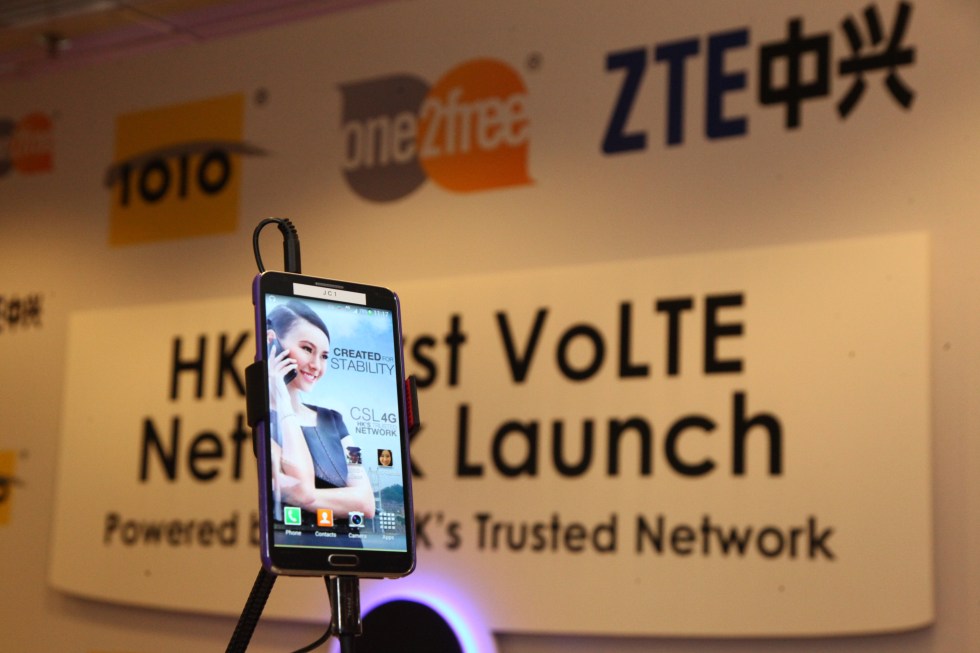
1O1O and one2free have turned on the first VoLTE (Voice over LTE) network in Hong Kong powered by Hong Kong’s Trusted Network. The full commercial launch is expected to take place in the first half of 2014, in line with projected device maturity in the market.
CSL’s VoLTE offers clearer voice, instant connection, and better quality video calls enabled by ZTE’s IMS (IP Multimedia Subsystem) solution. Customers will experience a clearer voice and richer multimedia experience, with a distinct improvement in video call quality with VoLTE.
VoLTE also allows 1O1O and one2free to achieve better spectral efficiencies and will increase network capacity and subsequently enhancing the 4G LTE experience.
Southeast Asia consumers bought 41.5 million smartphones, spending US$10.8 billion in the first three quarters of this year, according to GfK Asia.
Indonesia led the way with sale of14.8 million smartphones worth more than USS3.33 billion. Thailand and Malaysia were next with 7.2 million and 6.4 million units sold respectively. However, in terms of smartphone sales revenue, the ranking of these two countries are switched with Malaysia garnering US$2.25 billion while Thailand raked in US$1.96 billion in January to September.
“The increasing affordability of smartphones, particularly in the developing markets is helping many consumers in these countries make the switch from their basic feature phones to own their very first smartphone,” said Gerard Tan, Account Director for Digital Technology of GfK Asia. “It is worth highlighting the significant milestone of September being the month whereby sales penetration reached the halfway mark; where one in every two mobile handsets purchased in the region is now a smartphone.”
India’s smartphone market grew an astounding 229 percent year-on-year in Q3. According to IDC’s APEJ Quarterly Mobile Phone Tracker, vendors shipped a total of 12.8 million smartphones in Q3 compared to 3.8 million units in the same period of 2012. Q3 also saw an increase of 28 percent over Q2.
The 5.0- to 6.99-inch screen size smartphones continued to show sustained growth, contributing 23 percent of the overall market in terms of volume.
The overall mobile phone market (feature phones and smartphones) had a 12 percent growth year-on-year and a seven percent growth quarter on quarter with the share of feature phones sliding further to make 81 percent of the total market in Q3 despite the feature phone market growing at three percent growth over the previous quarter.
No need to hang up the phone anymore to avoid unwanted calls.
In the technological era, one of the most irritating things about being easily reachable is being easily reachable — by people you don’t want to talk to.
What compounds it is if you are travelling overseas, maybe halfway around the world, and you get a call in the middle of the night. Thinking it must be something important, you pick it up and get a pitch on credit line, loan, property, or investment. It’s a real head banger!
The Do-Not-Call (DNC) registry could not have come any sooner in Singapore. From today, those who want to stop getting unwanted calls can list their numbers on the national DNC registry. The registry will block calls, SMSes and fax messages from January 2 next year.
XL Axiata representatives demonstrating Turbo Button. Inset: The Turbo Button mobile app.
Huawei has demonstrated a Turbo Button solution for dramatically boosting delivered LTE speeds with a simple push of a button on a mobile app.
Turbo Button allows mobile subscribers to easily accelerate their data speeds on demand from 1 Mb/s up to 70 Mb/s over a set period of time with just one touch on a downloadable app. The service is especially useful for improving the experience of high-speed web surfing, online gaming, large file uploads and downloads, and HD video streaming among other bandwidth intensive services.
The demo was conducted by Indonesian mobile operator XL Axiata at the recent 2013 Asia-Pacific Economic Cooperation (APEC) forum in Indonesia and made exclusive use of Huawei’s Networker solution for LTE. XL
Worldwide smartphone shipments are expected to surpass one billion units in 2013, representing 39.3 percent growth over 2012, according to a recently published mobile phone forecast from IDCWorldwide Quarterly Mobile Phone Tracker.
Despite a number of mature markets nearing smartphone saturation, the demand for low-cost computing in emerging markets continues to drive the smartphone market forward. By 2017, total smartphone shipments are expected to approach 1.7 billion units, resulting in a compound annual growth rate (CAGR) of 18.4 percent from 2013 to 2017.
While shipment has gone up, the average selling price (ASP) has seen a steady decline. Android has enabled a number of new manufacturers to enter the smartphone market supported by a variety of turnkey processing solutions. Many of these handset vendors have focused on low-cost devices as a way to build brand awareness.
The uptake of 4G-LTE is expected to grow to pass one billion by 2017, according to a new study by GSMA Intelligence. This translates to one in eight of the more than eight billion total mobile connections forecast by that point, up from 176 million LTE connections at the end of 2013. And around half of these are expected to be in Asia.
Nearly 500 LTE networks are forecast to be in service across 128 countries, roughly double the number of live LTE networks today.
“Since the launch of the first commercial 4G-LTE networks in late 2009 we are seeing deployments accelerate across the globe,” said Hyunmi Yang, Chief Strategy Officer of GSMA. “Our new report highlights a number of factors that are driving LTE growth: the timely allocation of suitable spectrum to mobile operators; the availability of affordable LTE devices; and the implementation of innovative tariffs that encourage adoption of high-speed data services. Mobile operators in both developed and developing markets are seeing LTE services contributing to a significant increase in ARPU.”
ZTE has announced a strategic commitment to provide enhanced converged operations capabilities as a member of the Next Generation Mobile Network (NGMN). ZTE is collaborating with both its customers as well as NGMN, an alliance led by 22 of the largest international mobile network operators, via its Next Generation Converged Operations Requirements (NGCOR) project in order to meet and exceed current industry needs.
ZTE’s goal in the partnership is to help eliminate technical barriers caused by vendor incompatibilities, reduce network complexity, and minimize operations and maintenance costs. Based on years of system analysis, ZTE has planned a set of unified OSS platforms with unified interface standards to support converged network management. Once the platform is established, ZTE estimates the unified and centralized database will decrease the number of interfaces by 80 percent.
“ZTE is proud to be working with the NGMN and our key customers to advance these converged operations solutions,” said Sun Zhenge, Vice President of ZTE. “ZTE’s commitment is aimed at improving efficiency and quality of converged solutions, while also decreasing the time and cost involved.”
GSMA is collaborating with the International Telecommunication Union (ITU) in a new programme to encourage the development of mobile broadband in the Asia-Pacific region.
The new “m-Powering for Mobile Broadband” campaign will facilitate the exchange of experiences and sharing of best practices in specific policy areas with the goal of encouraging investment in mobile broadband infrastructure, instilling consumer confidence in mobile applications and supporting the long-term growth of the sector.
“Mobile is a transformative technology that has had a significant economic and social impact not only in Asia, but on a global basis,” said Irene Ng, Head of GSMA Asia. “Mobile provides access to healthcare where there are no doctors, access to education where there are no teachers and access to financial services where there are no banks. GSMA is pleased to be working hand in hand with ITU to accelerate the widespread adoption of mobile broadband in Asia and the Pacific, and in turn, to enable new opportunities for economic growth, technological innovation and social development.”
In four years’ time, your smartphone may be smarter than you. It will be able to predict your next move, next purchase or interpret actions based on what it knows, according to Gartner. This insight will be performed based on an individual’s data gathered using cognizant computing — the next step in personal cloud computing.
“Mobile phones have turned into smartphones thanks to two things: technology and apps,” Carolina Milanesi, Research Vice President of Gartner. “Technology has added features such as cameras, locations and sensors, while apps have connected those to an array of functions that, for the most part, add and improve our day to day life from a social, knowledge, entertainment and productivity point of view.”
What smartphones can do through apps has improved and broadened thanks to the personal cloud. “We assume that apps will acquire knowledge over time and get better with improved predictions of what users need and want, with data collection and response happening in real-time,” she added.
Customer experience management (CEM) has emerged as the top driver of telco IT investments in 2014, according to Ovum’s ICT Enterprise Insights. Telco IT spend is expected to reach US$60.7b by 2017, with investments geared towards telecoms infrastructure (cloud platforms, server virtualisation and BSS/OSS systems to support LTE implementations) and online channels to support customers’ increasingly digital lifestyles.
In the largest survey of senior IT executives ever conducted, Ovum reveals a long-term shift in spending towards customer-oriented systems and on improving customer satisfaction within the telecoms industry.
Survey respondents identified multi-channel integration and service personalisation as top areas of focus in the next 18 months, with 67 percent and 61 percent planning to increase spending in these two areas, respectively. Elsewhere, business intelligence and advanced analytics (predictive or big data analytics) will be key for operators — more than 80 percent of respondents will deploy these at the network level in an attempt to offer an enhanced connected experience with predictable, consistent, and relevant services at each point of interaction in the customer lifecycle.
Drive without mobile distractions — that’s the message from Samsung’s “The Road Comes First” campaign targeted at Singapore road users to promote the responsible use of mobile phones on the road.
Endorsed by the Traffic Police and Singapore Road Safety Council, the campaign aims to address the increasing problem of illegal mobile phone use among drivers. The number of summons increased 46 percent, from 1,169 between January to June in 2012 to 1,705 over the same period in 2013.
A Samsung-commissioned survey found that a large majority of 83 percent of the Singapore drivers surveyed admitted to using their mobile phones, without a hands-free kit, while at the wheel in the last 12 months. They were most likely to be using GPS or map applications, checking their mobile phone screens, and texting.
The numbers are clear. Big is getting more popular. Large screen smart phones (five-inch and above) accounted for 22 percent of the quarter billion smartphones shipped in Q3. This is the highest number ever and translates to a staggering 56 million units.
Samsung is the dominant player in the large screen segment. Breaking this down further, 66 percent of the 56 million smart phones had a five-inch display, 31 percent had screens between five and six inches while just three percent had six-inch or larger screens.
According to Canalys, the smartphone market grew 44 percent year-on-year in Q3. The top two vendors, Samsung and Apple, maintained their positions, with market shares of 34 percent and 15 percent respectively. Huawei, Lenovo and LG completed the top five.
Tata Sky, one of India’s leading direct-to-home service provider, has become the first in Asia to deploy Cisco’s Videoscape Video Everywhere solution, to enable multi-screen experiences beyond the set-top box. Rolled out first on iOS and […]
Jon Fredrik Baksaas, President and CEO of Telenor Group, has been elected as the new GSMA Chairman for the remainder of the current board term through December 2014. Baksaas will oversee the strategic direction of […]
The HTC One has gotten a bigger brother — the 5.9-inch HTC One max. Just like the recently launched Apple iPhone 5S, the new smartphone has a fingerprint scan feature. Located on the back of the device, the fingerprint scanner allows users to lock or unlock the screen and quickly launch up to three favourite applications by assigning an individual finger to each.
With a larger and full HD1080p display, users can better enjoy photos, videos and movies. Driving the smartphone is the quad-core Qualcomm Snapdragon 600 processor featuring a quad-core 1.7 GHz CPU.
The 16GB or 32GB onboard memory can be expanded with the microSD card slot, and with up to 65GB of Google Drive storage free for two years offered to HTC One max owners.
China smartphone makers looking to take their domestic success globally need to carefully consider their expansion strategies, according to Frost & Sullivan.
While the China market has been driven by demand for cheap devices that offer a unique range of services such a virtual goods, messaging apps, and photo sharing, the more mature Western markets are very different, with carrier relationships, strong brand equity, and innovative features crucial to success.
Along with Huawei and ZTE, three interesting China companies have ambitions to take their smartphone businesses international: Lenovo, Yulong Coolpad and Xiaomi. The first and most successful China smartphone company is Lenovo, which has the largest smartphone market share of China companies, second only to Korean giant Samsung in China. Lenovo is also one of the most diversified China electronics companies, with a broad portfolio. The company has already achieved success on the global stage with its PC business, now the world’s largest after overtaking HP in 2012.
3D printing, personal cloud, the Internet of Everything — these buzzwords today are expected to be among the top 10 strategic technology trends next year, according to Gartner.
Gartner defines a strategic technology as one with the potential for significant impact on the enterprise in the next three years. Factors that denote significant impact include a high potential for disruption to IT or the business, the need for a major dollar investment, or the risk of being late to adopt.
A strategic technology may be an existing technology that has matured and/or become suitable for a wider range of uses. It may also be an emerging technology that offers an opportunity for strategic business advantage for early adopters or with potential for significant market disruption in the next five years. These technologies impact the organisation’s long-term plans, programs and initiatives.
The ANZ mobile phone market has dropped by five percent quarter-over-quarter and over 20 percent year-over-year, according to IDC.
More than 2.6 million devices were shipped in Q2, a contraction that is mainly attributed to the declining feature phone segment in which shipments fell by over 45 percent compared to last year. What was shocking was the slight decline in smartphones shipments during the period.
Despite the quarter witnessing some notable product launches such as Samsung’s flagship Galaxy S4, smartphones shipments saw a marginal fall compared to the previous quarter.
ZTE has introduced two new 4G mobile routers with data download speeds of 110 Megabits per second for users in Japan. The ZTE Pocket WiFi SoftBank 203Z and Pocket WiFi (GL09P) 4G routers, which are […]
After the first Samsung Galaxy Note 3 reached the hands of eager fans, one glaringky unwanted feature was spotted — the smartphone has region locked its SIM card.
This brought about a flurry of media reports on why Samsung would do such a thing and how this was a backward move, similar to the region locking of DVDs. Concerned users began lamenting that if this was the case, then they cannot swap in a local SIM card when they are travelling to another region.
But, UK Mobile Review has managed to ease nerves by testing this feature of the Galaxy Note 3. After first using a UK SIM card with the handset, the online media was able to use a UAE SIM card later. Seems that the trick is to use a SIM card from the region from which the smartphone is first purchased to activate the phone and then it can be used with SIM cards issued anywhere else.
Myanmar’s devices market is on target to take centre stage as the country hurtles towards becoming an ICT-driven nation, according to IDC.
Following the award of telecommunications licenses to Telenor and Ooredoo, SIM cards and service provision has dipped considerably towards levels even low-wage earners are able to afford. IDC expects this to drive a considerable uptake in demand for both mobile phones and tablets.
“The Myanmar government has set highly ambitious targets for mobile subscriber penetration over the next two years. At this point, they are on the right track, but there is still much work left to be done,” said Daniel Pang, ASEAN Research Manager for Client Devices at IDC Asia/Pacific.
GSMA is collaborating with the Philippines government agencies and all mobile network operators across the K-12 spectrum to provide up to one million Filipino out-of-school youths (OSYs) with additional opportunities to access education, including technical vocational (tech-voc) education, via mobile media.
The ground-breaking cooperation on mEducation involves government partners including the Philippines Department of Education (DepEd) and the Technical Education and Skills Development Authority (TESDA), and mobile operators Digitel Mobile Philippines Inc. (DMPI), Globe Telecom and Smart Communications.
The operators are co-operating to complement the efforts of multiple government agencies by extending knowledge to OSYs, especially those in underserved areas and geographically isolated communities, with the support and reach of mobile technology. The National Statistics Office of the Philippines reports that in 2011, there were at least 6.24 million out-of-school youths in the country.
China’s mobile phone shipments reached 110 million in Q2, with smartphones accounting for 86 million units, according to IDC. “The smartphone market has maintained a two-digit quarter-on-quarter growth rate in Q2 due to two reasons. First, […]
Blackberry has agreed to be sold to Fairfax Financial Holdings for US$4.7 billion.
Fairfax, which already owns around 10 percent of BlackBerry, will pay US$9 per share for Blackberry, and take the company private. However, the deal is not done yet as Fairfax can walk away any time under the terms of the agreement.
“Unless Fairfax plans to radically change or accelerate BlackBerry’s strategy, it’s unlikely to be able to turn the company around. And that means we’re likely seeing the beginning of the end for one of the most iconic brands in mobile technology,” said Jan Dawson, Chief Telecoms Analyst of Ovum.
Apple and Samsung are slugging it out for attention in Singapore and across Asia. Yesterday, Apple fans in Singapore queued to be among the first to lay their hands on the Apple iPhone 5s and […]
To most people around the world, Coolpad, Lenovo and Xiaomi don’t quite ring a bell when it comes to smartphones. But, in China, these three Chinese smartphone OEMs outsold Apple in Q2, according to ABI Research.
Only Samsung managed to hold its own but snaring a 17 percent market share. Lenovo was next with 13 percent, Coolpad with 10 percent and Xiaomi edged out Apple with 6.5 percent.
“Even though these OEMs are only selling into the Chinese market, the size of the market has allowed them to achieve shipment volumes that place these OEMs in the top 12 globally. It is not hard to imagine these OEMs as global competitors within the next two years,” said Michael Morgan, Senior Analyst of ABI Research.
The much awaited Samsung Galaxy Note 3 will be available in Hong Kong on September 25. Coming in black and white, the suggested retail price of the 3G and 4G LTE versions are HK$5,998 andHK$6,198 respectively.
The phablet packs innovative features where users can enjoy captivating viewing experience on the 5.7-inch full HD Super AMOLDED screen that offers a stunning and divine viewing experience with a clear canvas for content creation. It also comes with an enhanced S Pen and multitasking features.
“Some people may often feel that the latest gadgets out there offer a contradicting feeling to our users because while you’re very engaged with your product, you tend to neglect the things around you. With the latest Galaxy Note 3, you will be able to enjoy a delightful mobile experience that brings passion to life,” said Yiyin Zhou, Director of Telecom Business, Samsung Electronics Hong Kong Limited.
ZTE has unveiled the world’s first flexible reconfigurable terabit router to enable customers to build the highest-performance broadband networks.
The terabit router supports the deployment of multiple line cards with processing capability of 10 gigabits per second to 1T, and modules that offer scalable throughput of 200G to 18T. To enable convenient installation in a wide variety of environments, the flexible interfaces and loose-coupled component design of the router allow customers to configure networks that are customised for their needs, promoting adaptability, consistency and continuity.
The superior performance of the terabit router is built on two proprietary ZTE technology solutions, cloud routing and intelligent system resource scheduling. Cloud routing builds system control plane based on distributed modular technology to ensure efficient network resource utilisation, offering network scalability and support for simultaneous deployment of multiple transmission protocols. Intelligent system resource scheduling enables physical and logic system resource sharing and flexible scheduling to ensure automatic matching of system load and resource allocation, driving superior power-consumption performance of 0.8W/Gbps.
Tablets and smartphone shipment will continue to drive growth in 2013, according to IDC, which expects tablet shipment to surpass total PC shipment (desktop plus portable PCs) in Q4. The worldwide smart connected device market, comprising PCs, tablets, and smartphones, is forecast to grow 27.8 percent year over year in 2013, slightly lower than the 30.3 percent growth in 2012.
PCs shipment is still expected to be greater than tablet shipment for the full year, but IDC forecasts tablet shipments will surpass total PC shipments on an annual basis by the end of 2015. Smartphones will continue to ship in high volumes, surpassing 1.4 billion units in 2015 and accounting for 69 percent of all smart connected device shipments worldwide.
In terms of shipment value, the worldwide smart connected device market will again exhibit double-digit year-over-year growth of 10.6 percent in 2013, but this growth will gradually slow to just 3.1 percent in 2017. The tapering revenue forecast reflects the increasing impact of low-cost smartphones and the white box tablet market.
ZTE’s Grand Memo LTE is poised to become the first 4G device available for sale in China, after it became the first to be awarded a TD-LTE handset permit by the Ministry of Industry and […]
One billion smartphones are expected to be shipped this year, helping the global mobile phone market to rebound from just 1.2 percent growth in 2012 to 7.3, percent in 2013, according to IDCWorldwide Quarterly Mobile Phone Tracker.
The overall mobile phone market is growing faster than previously forecast thanks to a stronger-than-expected first half of the year driven by strong gains in emerging markets and the sub-US$200 smartphone segment. IDC previously projected 5.8 percent growth for the year. Vendors are now forecast to ship more than 1.8 billion mobile phones this year, growing to over 2.3 billion mobile phones in 2017.
Worldwide smartphone shipment is forecast to grow 40.0 percent year over year to more than one billion units this year. High smartphone growth is the result of a variety of factors, including steep device subsidies from carriers, especially in mature economic markets, as well as a growing array of sub-US$200 smartphones. Total smartphone shipment is forecast to reach 1.7 billion units in 2017.
China mobile device maker Xiaomi has announced the Xiaomi Mi3, the world’s first to be based on the NVIDIA Tegra 4 mobile processor.
Delivering superb gaming and lightning-fast web browsing, the flagship phone represents the first collaboration between NVIDIA and Xiaomi. The Mi3 will launch on China Mobile, the world’s largest carrier, in October.
Based on the Tegra 4 – the world’s fastest mobile processor — the phone combines premium specs and features with all-day battery life. In addition to Tegra 4, it includes a 5-inch 1080p full HD display with 441ppi, 2GB RAM and up to 64GB of storage. The Tegra 4 processor offers record levels of performance and battery life with its 72-core NVIDIA GeForce GPU, quad-core ARM Cortex-A15 and fifth battery-saver CPU core, also based on Cortex-A15.
Android’s smartphone mobile app revenues are projected to reach almost US$6.8 billion by the end of 2013, nearly doubling its revenues from the previous year, according to ABI Research.
The Android platform has some way to go before catching iOS’s smartphone revenues but the smartphone app market will be Android’s most fruitful hunting ground compared to other devices.
ABI Research estimates that Android smartphone app revenues will increase from 59.1 percent to 65.9 percent when compared to iOS smartphone app revenues over the next 12 months.
Mobile users in Malaysia and Indonesia are concerned with mobile privacy, according to a new research by GSMA and local mobile operators.
The study of more than 1,500 Malaysian and Indonesian mobile users shows that increased transparency and choice in how their personal data is collected and shared could boost take-up of mobile apps in Indonesia. The mobile apps market globally is worth US$29 billion and growing at 36 per cent per annum. The research was presented at a Data Protection and Privacy Conference hosted by the GSMA, Celcom Axiata and DiGi in Kuala Lumpur.
“It is clear that mobile users are concerned about their privacy and are more likely to interact with apps and receive targeted promotions if they feel it is respected,” said Tom Phillips, Chief Government and Regulatory Affairs Officer of GSMA.
Homegrown brands are gaining more market share in the Asia-Pacific (excluding Japan) (APEJ) smartphone market. While Samsung continues to lead the smartphone pack, Apple fell out of the top five in the region for the first time. Chinese players — Lenovo, Coolpad, Huawei and ZTE — all outshipped Apple in the Q2, according to the IDC Asia/Pacific Quarterly Mobile Phone Tracker.
Aside from the top-tier international brands or Chinese brands that also ship globally such as Huawei and ZTE, there is also a rising segment of homegrown brands, which as a group have been steadily rising in shipments and prominence. This group of players comprised 38 percent of Q2 volume, up from 20 percent in the same quarter of 2012, and 7 percent in Q2 2011.
“There is clearly a market maturity story at play here, where the trends could not be more different between mature markets and emerging markets,” said Melissa Chau, Senior Research Manager with IDC AP’s Client Devices team. “Seasonally, second quarter usually shows an uptick in mature markets, but this round shipments dropped by 12 percent quarter-on-quarter, while emerging markets increased by 13 percent.
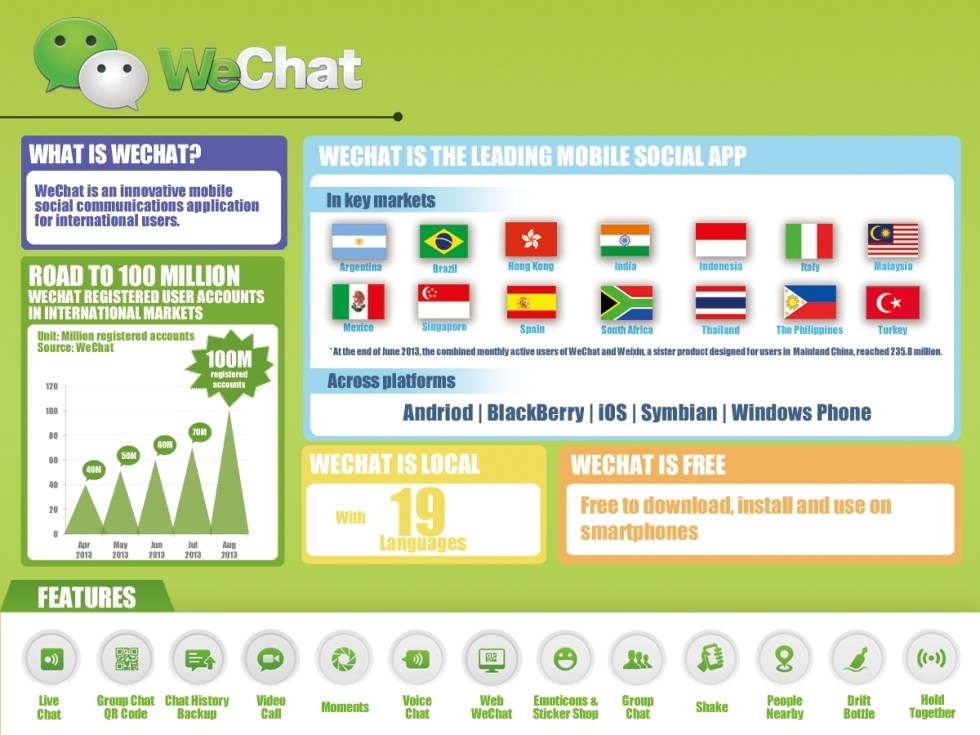
WeChat has surpassed the 100 million registered user account milestone. That’s remarkable considering the strong competition it is up against.
In the last three months, it doubled its registered user account base reaching the 100 million milestone shortly after an independent survey found that the platform was the fifth most used smartphone app worldwide.
Since its international debut, WeChat has been well received in Asia, quickly becoming the most popular mobile social app in Hong Kong, India, Indonesia, and Malaysia across multiple smartphone OS platforms, where the user base has recently gained tremendous growth.
Shipment of smartphones costing under US$200 are expected to grow from 238 million in 2013 to 758 million by 2018, driven by the low penetration of smartphones and large subscriber bases found in BRIC countries, according […]
Samsung and Apple grew smartphone shipment by 55 percent and 20 percent respectively to maintain first and second place in Q2, according to Canalys.
However, both lost market share to Chinese vendors as the top 5 China vendors (Lenovo, Yulong, Huawei, ZTE, and Xiaomi) now account for 20 percent of the market, up from less than 15 percent a year ago.
Altogether, some 238.1 million units were shipped in Q2, an impressive 50 percent year-on-year gain.
Samsung has a device for every price point, giving it leadership in all, bar one category — the high end where it faces Apple.
According to ABI Research’s Device Portal sales channel analysis, the balance of power remains with Samsung/Android and Apple and looks set to remain so in the foreseeable future.
“This leaves little room for the other vendors to compete, especially the other Android vendors and those using uncompetitive operating system ecosystems. Despite some carrier’s efforts to create a more balanced smartphone device vendor industry with their use of subsidy, ultimately they are obliged to fulfill consumer demand and at the moment that means Samsung/Android and Apple,” said Nick Spencer, Senior Practice Director of ABI Research.
ZTE has grabbed five percent of the global smartphone market, catapulting it into fourth worldwide, according to Strategy Analytics. The 11.5 million smartphones shipped in Q2 represented a 79 percent year-on-year increase. The China smartphone maker will […]
Demand for mobile phones continue to grow. In Q2, the worldwide mobile phone market grew six percent year over year, according to the IDCWorldwide Quarterly Mobile Phone Tracker.
Vendors shipped a total of 432.1 million mobile phones in Q2 compared to 407.7 million units in the corresponding quarter of 2012. The Q2 total was also slightly higher than the 428.8 million units shipped in Q1.
The growth in the mobile phone market was partly driven by vendors from outside the Top 5 who experienced torrid shipment growth that outpaced the overall market. Several vendors, including Alcatel and Huawei, had high double- and triple-digit growth rates in Q2 for their Android-based offerings shipped to high-growth countries such as China and India. These vendors from outside the Top 5 accounted for 44.8 percent of the overall shipment volume, up from 42.2 percent in the same quarter one year ago.
Accelerometers, vision-based gesture recognition, gyroscopes, and NFC are predicted to be the feature set big winners in smartphones in 2013, according to ABI Research.
“Gesture recognition is soon going to become a key differentiator in high-end flagship smartphones. Samsung’s latest Galaxy S4 has already incorporated the technology within its handset and has received significant plaudits for its new innovative user experience. Today’s consumers are becoming much savvier with their smartphones and they’re looking for new interesting ways to communicate with each other and their devices,” said Joshua Flood, Senior Analyst of ABI Research.
In 2013, almost 12 percent of smartphones shipped will have vision-based gesture recognition capabilities. It is unsure if Apple will include the technology in its next generation iPhone but the company is expected to include a full array of MEMS sensors and NFC.
In an effort to make an impact in the smartphone market, Nokia seems to be banging the camera feature. Boasting a second generation 41 megapixel sensor, the new Nokia Lumia 1020 reinvents zoom, delivering more details than the eye can see so people can take photos first and frame later.
With Nokia’s innovative PureView technology and a new application called Nokia Pro Camera, it claims to be able to produce some of the sharpest images possible by any digital camera. Nokia Pro Camera makes it easy to capture, edit and share photos and videos.
The Nokia Lumia 1020’s 41 megapixel sensor features ZEISS optics with six physical lenses, plus optical image stabilisation. It also captures blur free videos with stereo sound even at the loudest concerts thanks to Nokia Rich Recording, which handles sound pressure levels six times louder than conventional smartphone microphones.

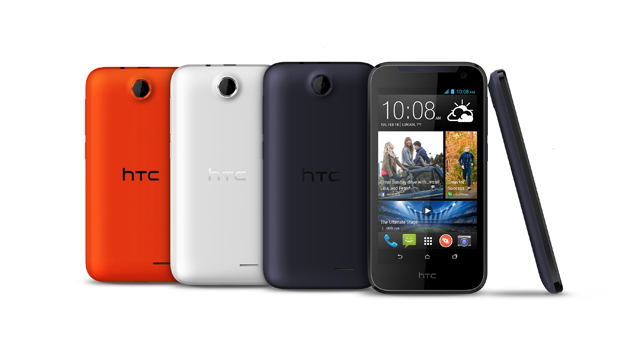 HTC has unveiled the HTC Desire 310, which packs a powerful quad-core processor and some of the features of the HTC One series but is more affordable.
 The much sought after tablet — the darling of the technology industry in recent years — is expected to grow just 19.4 percent this year. That’s a massive slow down from last year’s growth of 51.6 percent. According to the IDC
  More than 85,000 visitors from 201 countries attended Mobile World Congress (MWC), which ended yesterday. This is a record for the mobile industry event, which saw many new product launches and announcements.
 GSMA and Facebook have announced a joint initiative to connect billions of men and women globally who currently have no access to Internet-based communications services. The initiative will focus on reducing the total cost of ownership (TCO) of mobile, given that mobile will be the enabling technology for the vast majority of people in developing markets.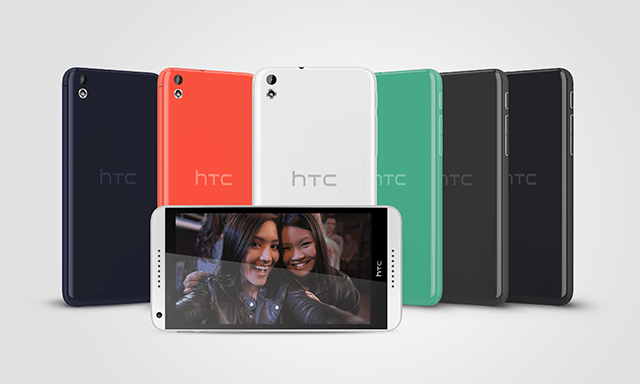
 Huawei has taken a shot at the English Premier League by becoming the official smartphone partner of league leaders Arsenal.
 IMS Core Network deployments are edging up as operators put the necessary infrastructure and capacity in place for planned 2014 VoLTE launches, according to ABI Research.
 Telecom New Zealand has launched a new 4G LTE network that can provide speeds of up to 150 Mb/s to mobile subscribers in parts of Auckland, Wellington and Christchurch.
 Southeast Asia consumers bought 41.5 million smartphones, spending US$10.8 billion in the first three quarters of this year, according to GfK Asia.

 ZTE has announced a strategic commitment to provide enhanced converged operations capabilities as a member of the Next Generation Mobile Network (NGMN). ZTE is collaborating with both its customers as well as NGMN, an alliance led by 22 of the largest international mobile network operators, via its Next Generation Converged Operations Requirements (NGCOR) project in order to meet and exceed current industry needs.
 In four years’ time, your smartphone may be smarter than you. It will be able to predict your next move, next purchase or interpret actions based on what it knows, according to Gartner. This insight will be performed based on an individual’s data gathered using cognizant computing — the next step in personal cloud computing.
 Customer experience management (CEM) has emerged as the top driver of telco IT investments in 2014, according to Ovum’s ICT Enterprise Insights. Telco IT spend is expected to reach US$60.7b by 2017, with investments geared towards telecoms infrastructure (cloud platforms, server virtualisation and BSS/OSS systems to support LTE implementations) and online channels to support customers’ increasingly digital lifestyles.
 The numbers are clear. Big is getting more popular. Large screen smart phones (five-inch and above) accounted for 22 percent of the quarter billion smartphones shipped in Q3. This is the highest number ever and translates to a staggering 56 million units.
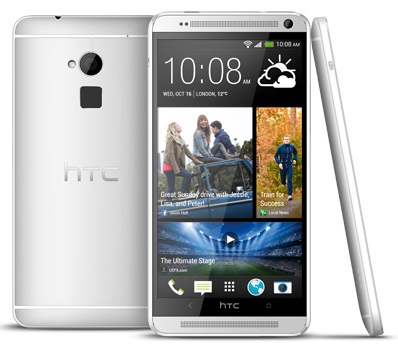 The HTC One has gotten a bigger brother — the 5.9-inch HTC One max. Just like the recently launched Apple iPhone 5S, the new smartphone has a fingerprint scan feature. Located on the back of the device, the fingerprint scanner allows users to lock or unlock the screen and quickly launch up to three favourite applications by assigning an individual finger to each.
 3D printing, personal cloud, the Internet of Everything — these buzzwords today are expected to be among the top 10 strategic technology trends next year, according to Gartner.
 After the first Samsung Galaxy Note 3 reached the hands of eager fans, one glaringky unwanted feature was spotted — the smartphone has region locked its SIM card.
 Blackberry has agreed to be sold to Fairfax Financial Holdings for US$4.7 billion.
 One billion smartphones are expected to be shipped this year, helping the global mobile phone market to rebound from just 1.2 percent growth in 2012 to 7.3, percent in 2013, according to IDC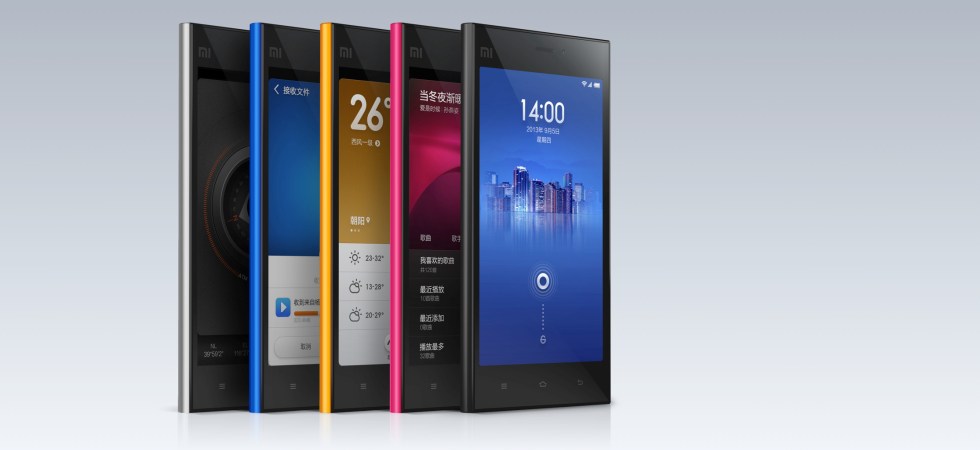
 Android’s smartphone mobile app revenues are projected to reach almost US$6.8 billion by the end of 2013, nearly doubling its revenues from the previous year, according to ABI Research.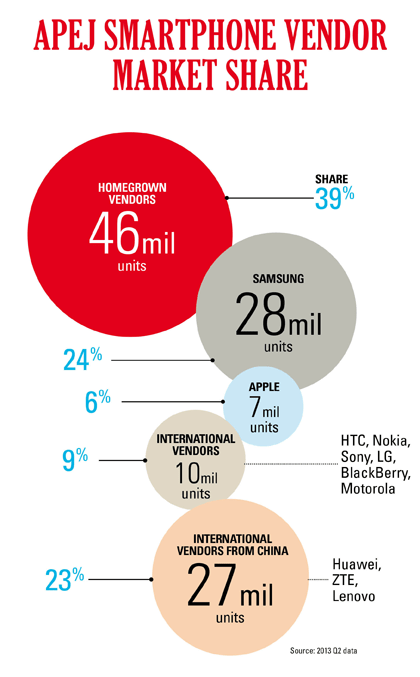
 Samsung and Apple grew smartphone shipment by 55 percent and 20 percent respectively to maintain first and second place in Q2, according to Canalys.
 In an effort to make an impact in the smartphone market, Nokia seems to be banging the camera feature. Boasting a second generation 41 megapixel sensor, the new Nokia Lumia 1020 reinvents zoom, delivering more details than the eye can see so people can take photos first and frame later.
