
 Twenty-two days. It took relatively unknown smartphone maker OnePlus just that amount of time to sell one million units of OnePlus 6, its latest smartphone.
Category: Telecommunications
App to teach children responsible mobile device usage
 Help is at hand for parents who need help in teaching their young children the dos and don’ts of using smartphones and other mobile devices. They can now turn to Tittle for Parents, an app that lets parents protect their children on mobile devices and teach about safe and appropriate use.
US$1b fine reprieve for ZTE
 US$1 billion is a hefty sum to pay for a fine but for ZTE, it means getting its business back on track.
Huawei and Xiaomi lead smartphone growth in Q1

China smartphone makers Huawei and Xiaomi grew strongest as the market recovered in Q1, according to Gartner.
Foxconn Industrial Internet targets US$4.3b China IPO
 China’s biggest initial public offering (IPO) since 2015 will come to pass if Foxconn Industrial Internet hits its target of 27.1 billion yuan on May 24.
India smartphone market posts strongest Q1 shipment
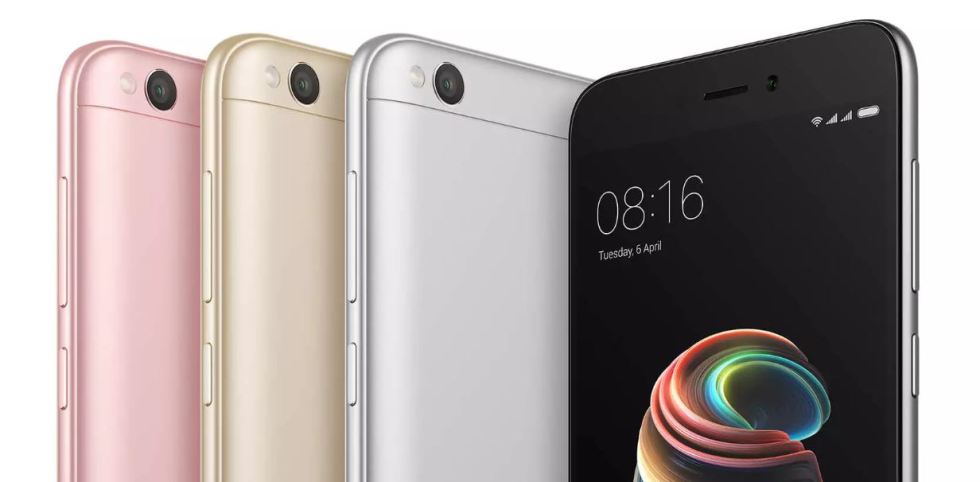
The India smartphone market shipped 30 million units in Q1, the strongest Q1 performance ever and an 11-percent growth year on year, according to IDC.
ZTE gets reprieve from US President
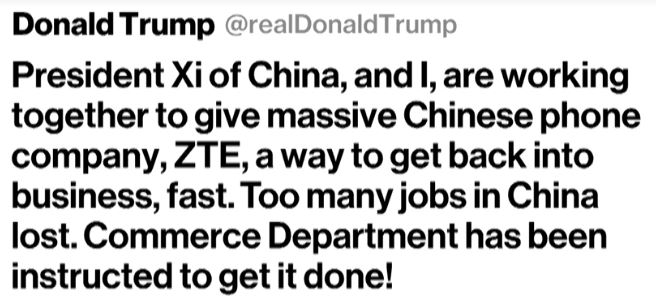 ZTE looks like it’s getting a chance to resurrect its business, thanks to help from the highest office in the United States. Last week, the China telecom giant announced that it had to cease business activities because of US sanctions on critical components.
ZTE ceases activities
ZTE has hit a massive roadblock that has resulted in the cessation of its business operations. China’s number 2 telecom equipment maker was hit by the US’s seven-year blockade to vital components needed for its devices.
Xiaomi to list in HK
 Xiaomi, one of China’s biggest smartphone makers, has picked Hong Kong for its public listing.
Xiaomi bucks trend as China smartphone market dips in Q1
 In a quarter when the China smartphone market experienced it biggest ever decline, Xiaomi bucked the trend and grew 37 percent to 12 million units, according to Canalys.
Xiaomi tops India smartphone market in Q1

Building on a momentum of 155 percent annual shipment growth in India last year, Xiaomi started Q1 at the top with a whopping nine million plus units to snag 31 percent market share, according to Canalys.
Doogee unleashes 4 innovative smartphones
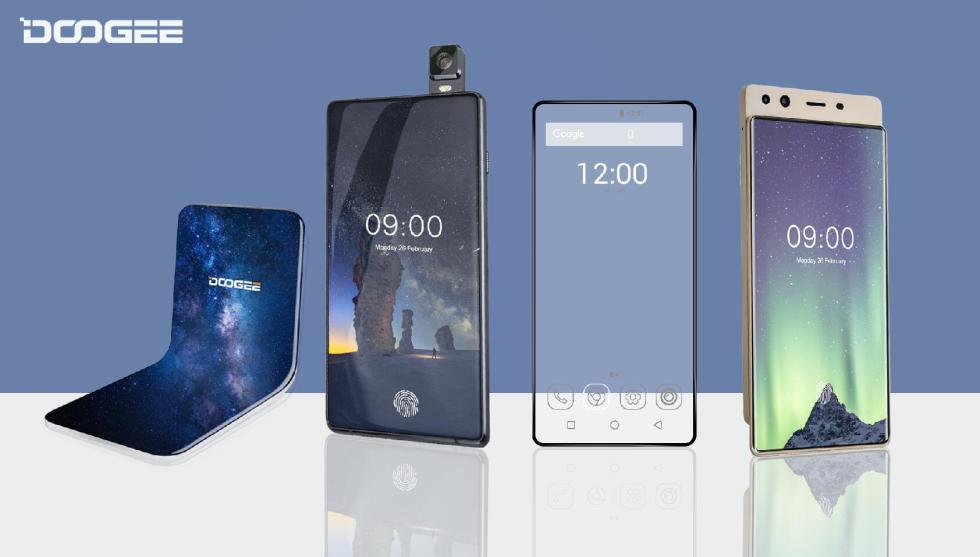 Shenzhen-based Doogee is not one for the humdrum. While most other smartphones sport mostly similar technologies, this maker has decided to go for the different feel with four new phones — the transparent Doogee TT, flip camera Mix 3, slide phone Mix 4, and flexible screen phone.
StarHub bumps 4G speed to 1Gbps
 Singapore telco StarHub has upped its 4G speed to 1Gbps — giving users faster access at various parts of the island.
The taxi that looks for you
 Where’s a taxi when you need one? That’s the bane of passengers from around the world, except possibly in Taipei where taxis somehow seem to be just where you need them.
Broadcom’s takeover bid of Qualcomm takes broadside hit
 Singapore-based Broadcom has been dealt a major blow in its takeover bid of Qualcomm. US president Donald Trump has issued an order against the US$117 billion deal.
Bangladesh smartphone market continues growth trajectory
 Bangladesh mobile operators began offering 4G services last month, albeit in limited areas, after gaining the necessary licences.
Something old, something new
 The telecommunications industry, specifically mobile communications, is converging in Barcelona this week. Even before Mobile World Congress (MWC) kicks off today, two companies have fired the first salvo with something old, something new.
India is fastest growing smartphone market in 2017
India has become the fastest growing smartphone market in the world with total shipment growing 14 percent to 124 million units in 2017, according to IDC.
Emtech Asia: AI, quantum computing and more

Marina Bay Sands Expo and Convention Centre was a hive of activities of a different sort as more than 700 technologists from 21 countries converged for EmTech Asia on January 30 and 31.
Apple iPhone X is holiday bestseller despite axe rumours
 Amid rumours that Apple was going to axe the iPhone X came encouraging sales numbers by Canalys.
Apple apologises
 Apple has apologised for slowing down the performance of older iPhone models to prevent accidental shutdowns due to aging batteries.
Apple caught slowing down
 The names Benjamin Lazarus, Jeffrey Aberman, Stephen Margolis, Sandy Brodsky, and Victoria Childs are probably unfamiliar to most. But inthe days to come, they may become more popular.
Forced migration

By Edward Lim
The telecommunications market, except for mobile, is facing a slowdown in growth. According to IDC, the Pay TV services market, which consists of cable, satellite, Internet protocol (IP), and digital terrestrial TV services, will remain flat over from 2017 to 2021.
Pre-order Razer smartphone on November 23

Razer’s first smartphone will be available for pre-order in Singapore on November 23.
Sweet quarter for Apple in China

The launch of the iPhone 8 and drop of prices of older models have helped Apple turn in a sterling quarter in China, with shipment rising 40 percent to 11 million units this Q3.
Enter the gaming smartphone

Finally, a smartphone that’s made for gamers. Razer has launched in London the latest high-end smartphone with a focus on mobile gaming.
But what makes this phone different from others in the market? And how does it enhance the mobile gaming experience?
7-minute grace

Ever sent a WhatsApp message only to wish that you could delete it later? Or have you ever sent a message to a wrong chat? Well, it looks like you’re not alone because WhatsApp has introduced a delete function that lets users delete messages within seven minutes of sending.
This seven-minute grace could be a face- or even life-saver for those moments when we hit sent too quickly.
Delete only works if both the sender and recipient are using the latest version of WhatsApp for Android, iPhone or Windows Phone.
Samsung Pay extended to smartwatches
Guess it was only a matter of time as Samsung Pay has been extended to the Gear 3 and Gear Sport. This will let consumers use their smartwatches, on top of their smartphones, to make […]
Smartphone makers in a rush?
 In 2016, Samsung had battery overheating issues with its Note 7. Recently, Apple is constantly pushing out iOS 11 fixes to improve battery life for the iPhone 8. And now, Google is working on a solution to address the screen burn-in issues of the Pixel 2.
What’s happening? Are smartphone makers in such a rush to launch new phones that they are cutting short quality tests? Admittedly, this is the probably the hottest segment of the consumer technology market and every player is trying its best to outdo each other.
According to IDC, the worldwide smartphone market will reach a total of 1.53 billion units shipped in 2017, up 4.2 percent from the 1.47 billion units shipped in 2016. That’s a lot of phones and perhaps the reason why makers are hurrying to snare a share.
E-commerce to account for a quarter of retail sales by 2025
 Greater internet and mobile device accessibility are driving e-commerce growth in Southeast Asia.
According to ABI Research, Smart Retail has gone through revolutionary changes in the past 10 years and will exponentially continue to do so going forward. Brick and mortar stores are no longer the only option for consumers across the globe to make their everyday purchases, due to significant advancements in technology, both in-store and online.
Key players include Senion, who implements some of the world’s largest Indoor Positioning System (IPS) solutions to enhance in-store experiences, and AisleLabs who provides shopper traffic behavior analytics to help retailers optimise store layouts. Leading POS software vendors, Shopkeep and Square are allowing retailers to sell across multi-channels from a single platform. These and other key vendors are paving paths to making the offline and online worlds seamless experiences.
Google sets up online Singapore store
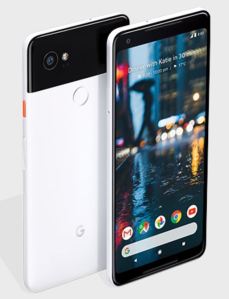 Hurray, Google has finally set up an online store for Singapore! Amid the flurry of announcements made yesterday, this is probably the most significant for those in Singapore. After all, what’s the point of reading and hearing about all the launches in recent years without being able to buy the products anywhere in the country.
The bad news, however, is that only three products were listed on the Google Wifi, Google Chromecast and the newly-launched Google Pixel 2 XL.
Google’s latest smartphone sports front-facing stereo speakers, and front and rear cameras capable of producing amazing shots using fused image stabilisation of optical and digital zoom. Though the headphone jack is gone, Google has introduced Pixel Buds that can translate up to 40 languages on the fly.
Nokia 3310 makes comeback at under S$100
 Nokia’s announcement at Mobile World Congress in February that it was resurrecting the iconic Nokia 3310 was met with enthusiasm, which was quickly dampened when the phone was said to run on 2.5G.
However, Nokia has responded remarkably by upgrading the 3310 to 3G and making it available at “below S$100”.
“Our fans around the world have been asking for this iconic phone to support 3G. Fans asked, we listened, and today welcome the Nokia 3310 3G,” said Mr Juho Sarvikas, Chief Product Officer of HMD Global, maker of the Nokia phone.
New Apple iPhone is real X — for eXpensive!
Even though the X in the newly announced iPhone X is supposed to be pronounced as “10”, it can be interpreted as eXpensive. At S$1,648 for the 64GB version and S$1,888 for the 256GB iteration, […]
New Android devices boost Australia smartphone market in Q2
 New Android mobile phone launches spurred growth in Australia, leading to year-on-year growth of 18.4 percent to 2.16 million units, exceeding expectations in Q2, according to IDC.
Smartphones accounted for nearly all of the shipped phones — totalling 2.06 million.
Android returned to being the most popular smartphone OS in Australia. Recently, iOS had overtaken Android as the most popular smartphone OS in Q4 2016 as it held over 54 percent of the market compared to 47 percent for Android.
Samsung Galaxy Note 8 available in Singapore from Sep 15
 After missing a beat with the Galaxy Note 7, which resulted in a massive recall and lots of bad press, Samsung has launched the Galaxy Note 8 with availability in Singapore from September 15.
Sporting a similar look to the Galaxy S8, the new smartphone’s key differentiator is the S Pen, which is designed to communicate in more personal ways. It has a finer tip, improved pressure sensitivity, and features such as Live Messaging that enable users to better express themselves.
The always on display allows users to stay on top of notifications without unlocking their phone. Screen off memo lets them take up to one hundred pages of notes as soon as they remove the S Pen. Users can also pin notes to the always on display and make edits directly.
5 reasons why I like the Google Pixel
By Edward Lim When the Google Pixel was first announced late last year, my antenna went up as my trusty Samsung Note Edge though working generally fine and still looking great was slowing down. I’ve […]
Video services analytics to double in 5 years
The market for analytics within Pay TV services will grow by 105 percent in the next five years, from US$1.8 billion this year to US$3.7 billion in 2022, according to ABI Research.
Comcast, Netflix, Sky, Telstra, and other successful video companies differentiate themselves from their peers by their strong use of analytics to optimise and improve operational metrics. Pay TV companies are starting to transform products to support an analytical focus, moving in the direction of artificial intelligence and machine learning to enable self-optimisation.
Video companies sell today’s products in a host of point-solutions, including content and metadata engagement, customer management, network optimisation, and consumption measurement. Larger network-oriented business support systems and business intelligence vendors also play a significant role within these markets.
Return of Note 7
The embattled Samsung Galaxy Note 7 is making a return — as a limited edition Galaxy Note Fan Edition! According to a statement, Samsung plans to sell the refurbished device (which comes with new battery) from […]
Singapore to focus on 4 technology areas
 Singapore will be focusing on four technology areas to build the foundation for its digital transformation. These are artificial intelligence (AI) and data science, cybersecurity, immersive media, and Internet of Things and future communications infrastructure.
At the opening of Infocomm Media Business Exchange at Marina Bay Sands Singapore Convention Centre, Minister for Communications and Information Dr Yaacob Ibrahim noted that “they are exciting fields with bright prospects in their own right, and they have great potential to transform other industries and enhance people’s lives”.
Artificial Intelligence and Data Science
The nation has established AI.SG, a national programme with funding of up to S$150 million to boost Singapore’s AI capabilities.
China vendors corner India smartphone market
China-based vendors strengthened their grip in the India smartphone market, snaring 51.4 percent share of the smartphone shipment in Q1, according to IDC. They grew 16.9 percent sequentially and an impressive 142.6 percent over the same period last year.
In contrast, share of homegrown vendors dropped to 13.5 percent in the Q1 from 40.5 percent in the same quarter last year.
Overall, 27 million smartphones were shipped in Q1, a 14.8 percent growth over the same period last year. Unlike last year, shipment grew sequentially in the first quarter of 2017 by 4.7 percent recovering from demonetisation impact in Q4.
Enhancing public safety
Motorola Solutions has unveiled highly advanced technology solutions to enhance the capabilities of nation-wide public safety networks at Critical Communications World 2017 in Hong Kong. These include mission-critical radio technologies, specialised software, mission critical broadband, command […]
Huawei smartphone strides ahead in China
 Huawei has taken top spot again in China’s smartphone market, edging past Oppo after two quarters of trailing in second place. According to Canalys, the Chinese smartphone giant, which launched the P10 and P10 Plus during MWC, shipped close to 21 million units to secure an 18 percent market share in Q1.
Despite strong annual growth of 55 percent, Oppo fell to second place with shipments of just under 20 million units. Third-placed Vivo had the lowest annual growth of the top three, capturing a 15 percent share with its shipment of 17 million units.
“China’s smartphone market continues to grow, with shipments increasing by over nine percent year on year this quarter. But there is a clear indication that the market is consolidating. The top three vendors are pulling away at the head of the market, accounting for more than 50 percent of shipments for the first time this quarter,” said Lucio Chen, Research Analyst of Canalys.
Singtel identified as APAC leader in 2016-17
Singtel is one of four telcos identified as leaders in Asia Pacific (APAC) in 2016-17 by IDC in its report entitled IDC Telecom MarketScape for Next-Generation Service Providers 2016-17.
The report, which evaluates the leading regional and global telecommunications service providers (SPs) in APAC, also listed AT&T, BT and Orange alongside Singtel was “Leaders” of the next-generation telecom service providers in the region along with plenty of challengers in the market.
These service providers demonstrated a strong regional network presence, comprehensive suite of enterprise cloud and managed ICT service offerings, diverse portfolio of services in areas such as Internet of Things (IoT) and collaboration in the region, as well as a large base of mid and large-sized enterprises, multinational corporations (MNCs), and government clients across Asia Pacific.
Hello, hello, it’s the Nokia 3310 again!
With a slew of product introductions now on at Mobile World Congress in Barcelona, what’s amazing is that an old icon has grabbed loads of attention. Nokia has resurrected its 3310 phone, albeit in an […]
China smartphone market hits record high
Everybody knows China is big but with nearly half a billion smartphones shipped last year, the market is massive — that’s one smartphone for every three person in the world’s most populous country.
According to Canalys estimates, China reached 476.5 million unit shipment, growing year on year at 11.4 percent, far exceeding the annual growth rate of 1.9 percent in 2015. China shipment reached 131.6 million units in Q4, which is the highest single quarter total in history, accounting for nearly a third of worldwide shipment.
Huawei took the top spot in the market with 76.2 million shipment, a small lead ahead of runner-up Oppo with 73.2 million units, followed by Vivo in third place at 63.2 million units.
China phone makers dominate India market in Q4
 While Samsung remained at the top, China smartphone makers occupied four of the top five positions to snare the lion’s share in India in Q4, according to Canalys.
Their extremely price-competitive devices pushed out India makers, who have been hit hard by the Indian government’s decision to demonetise the INR500 and INR1,000 (US$7.30 and US$14.65) banknotes.
“Local brands’ target customers typically buy in cash and from independent retailers. With the short-term liquidity crunch caused by demonetisation, these retailers are suffering a slowdown in consumer spending. Local vendors are losing out as retailers look to shift their stock to fast-moving, current devices. In Q4 2015, Micromax, Intex and Lava took second, third and fifth place, accounting for almost 30 percent of the market. One year on and all three vendors have dropped out of the top five, with their collective share falling to around 11 percent,” said Rushabh Doshi, Analyst of Canalys.
Samsung Galaxy Note 7 verdict out on January 23
It’s official! Samsung Electronics will be announcing the findings of its investigation report of the Galaxy Note 7 in a press conference in Seoul, South Korea, on January 23, 2017, 9am. UPDATE: The problem was […]
1 in 5 user interaction with smartphone will be via VPAs in 2019
 Advances in various technologies will drive users to interact with their smartphones in more intuitive ways, said Gartner. It expect that, by 2019, 20 percent of all user interactions with the smartphone will take place via virtual personal assistants (VPAs).
“The role of interactions will intensify through the growing popularity of VPAs among smartphone users and conversations made with smart machines,” said Annette Zimmermann, Research Director of Gartner.
Gartner’s annual mobile apps survey conducted in Q4 among 3,021 consumers across three countries (US, UK and China) found that 42 percent of respondents in the US and 32 percent in the UK used VPAs on their smartphones in the last three months. More than 37 percent of respondents (average across US and UK) used a VPA at least one or more times a day.
Xiaomi: No money from smartphones
Many of us may know Xiaomi as a leading China handphone maker with its unique business model of selling in batches online. In an interesting revelation to Reuters, Xiaomi Global Vice President declared that the […]
WhatsApp video call on the way
Last year, WhatsApp added voice to its messaging application. This year, it’s taking it one step further with video calls. WhatsApp video calling is on the way for more than one billion users on Android, […]
Smartphone shipment up 6% in Q3
 Three Chinese smartphone vendors — Huawei, Oppo and vivo — helped drive the global smartphone market in Q3. Together their shipment grew 60 percent while the overall global market just moved up six percent that quarter, according to Canalys.
The standout performer was Oppo, which had a stellar quarter, taking hold of the Chinese market from under the noses of its rivals. Its smart phone shipments grew around 40 percent sequentially and 140 percent year on year. Tough competition in China has affected Huawei’s global position, with it now looking increasingly unlikely that it will reach its annual shipment target of 140 million units.
Samsung continued to lead the market, but its issues with the Note 7 are starting to affect its business. It shipped just over 76 million units (excluding all Note 7s), down nine percent on the same quarter a year ago. In second place, Apple’s iPhone shipments also suffered an annual decline, falling five percent to just over 45 million units.
Oppo tops China’s smartphone market

Move aside Huawei and Xiaomi because Oppo is now the leader in China’s smartphone market. And the number goes to vivo, another Chinese maker.
According to IDC, the China smartphone market grew 5.8 percent year-on-year and 3.6% quarter-on-quarter in Q3 with Oppo and vivo overtaking Huawei for the first time.
Oppo and vivo rose because the Chinese market has evolved beyond operator and online driven channels over to an offline structure that dovetails with Oppo and vivo’s strengths.
Samsung sets up airport customer service counter for return/exchange of Galaxy Note 7
With an increasing number of airlines banning the Samsung Galaxy Note 7 completely from their flights, Samsung has set up service counters at several airports for Note 7 customers to return and exchange their phones. These […]
ZTE releases Pre5G massive MIMO solution
ZTE has released its latest Pre5G massive multiple-input multiple-output (MIMO) 2.0 solution at the 2016 China International Information and Communication Exhibition held in Beijing.
This new version is aimed at the high-end marketplace to help operators in the existing developed market meet the dual challenge of surging traffic demand, combined with limits on spectrum resource. With this new-generation product, single-station spectrum efficiency can be greatly improved and existing 4G user terminals can also benefit from the ultra-speed broadband experience without the need to change their mobile phones.
This new-generation massive MIMO 2.0 product is smaller in size, with 16-stream spatial division multiplexing, multi-carrier aggregation, and support for smooth evolution. The product can be flexibly deployed with support for two deployment modes: distribution and integration, to meet different requirement scenarios.
Samsung skips a note to jump to 7
The stars are aligned. Samsung’s stars, that is. The Korean mobile phone giant has launched the Galaxy Note 7, bringing the phablet numerically in line with the Galaxy S series. And just like the […]
Huawei guns for top smartphone spot
 Huawei continues to retain resilience in a crowded and competitive global economic environment, aiming to become the top global smartphone vendor in five years’ time, according to ABI Research.
Its successive year-on-year rises in smartphone shipments particularly impressive, as Huawei managed to achieve its high ranking without effectively breaking out of its home market. To become a global electronics brand, the company will need to gain a strong foothold in the US and western European markets, but runs the risk of falling victim to the same plights as its larger competitors.
“Ranking by volume as third largest global smartphone vendor, Huawei is attempting to expand its reach by creating its own chipsets and mobile operating system based on Android. It may succeed with chipsets, but many other competitors tried similar OS development tactics in the past to no avail. It will be tough for Huawei to achieve this goal, even with improved global brand strength and volume gains,” said David McQueen, Research Director of ABI Research.
Worldwide IT spending to be flat in 2016
 Worldwide IT spending is forecast to be flat in 2016, totaling US$3.41 trillion, according to Gartner, Inc. This is up from last quarter’s forecast of negative 0.5 percent growth. The change in the forecast is mainly due to currency fluctuations.
“The current Gartner Worldwide IT Spending Forecast assumes that the UK would not exit the European Union. With the UK’s exit, there will likely be an erosion in business confidence and price increases which will impact UK, Western Europe and worldwide IT spending,” said John-David Lovelock, Research Vice President of Gartner.
While the UK has embarked on a process to change, that change is yet to be defined. The “leave” vote will quickly affect IT spending in the UK and in Europe while other changes will take longer. Staff may be the largest immediate issue. The long-term uncertainty in work status will make the UK less attractive to new foreign workers. Retaining current non-UK staff and having less access to qualified new hires from abroad will impair UK IT Departments.
Global adoption of universal profile for RCS gathers momentum
 A global initiative to define a common, open and universal Rich Communications Services (RCS) profile has gained momentum with backing by 57 global operators and manufacturers.
They include operators AIS, Axiata Group, Beeline, Bell Mobility, China Mobile, China Telecom, China Unicom, Claro Brazil, Claro Colombia, Indosat Ooredoo, M1, Megafon, MTS, Optus, Personal Argentina, Personal Paraguay, Reliance Jio, Rogers Communications, Singtel, StarHub, Telcel Mexico, Tele2, Telefónica, Telkomsel, Telus, and T-Mobile US.
These operators are joined by handset manufacturers Alcatel, ASUS, General Mobile, HTC, Intex Technologies, Lava International Ltd., LG Electronics, Lenovo/Motorola, Samsung Electronics, and ZTE, as well as mobile OS providers Google and Microsoft.
Philippines is fastest growing smartphone market in SEA
The Philippines smartphone market jumped 20 percent in Q1, according to IDC. With a projected annual growth of 25 percent this year, this makes the country the fastest growing smartphone market in Southeast Asia (SEA).
“While many of the more mature smartphone markets of the world already displayed signs of saturation, the Philippines smartphone market continues to enjoy robust growth owing to a relatively low smartphone penetration rate (30 percent in 2015), active local brand presence, and healthy consumer spending,” said Jerome Dominguez, Market Analyst for Mobile Devices of IDC Philippines.
Local vendors continue to dominate the Philippines smartphone market as they flood it with the most affordable smartphone options.
NTT Com Asia names new C-team
Hong Kong-based NTT Com Asia, the East Asia headquarters of NTT Communications, has named Hideaki Ozaki as President and CEO, Theodoric Chan as Chief Commercial Officer and Taylor Man as Chief Technology Officer. The three […]

