
A sale offering products at up to 80 percent off will certainly catch the eye. But, it could also bring a tear or two to the generations that have frequented Challenger Technologies’ megastore at Funan DigitaLife […]
Category: Telecommunications
China Telecom Beijing Research Institute and ZTE to collaborate on R&D
 China Telecom Beijing Research Institute and ZTE have inked a strategic agreement to develop cutting edge technologies including SDN/NFV, 4G+/5G and IoT related.
They will work closely and share resources to develop better network technologies that will support China Telecom’s network construction and service reconstruction. The collaboration will also benefit the industry by bringing more advanced, cutting-edge technologies and innovations to market.
“As we enter the artificial intelligence era, operators are expected to provide a full range of network solutions. Through this partnership, we will be able to significantly advance SDN/NFV, 4G+/5G, cloud computing and big data technologies in the coming years. I believe the new technologies will become a reality through pilot deployments”, said Zhang Chengliang, Vice President of China Telecom Beijing Research Institute.
ZTE announces ultra HD 4K hybrid set-top box
 ZTE has announced its new ultra high definition (UHD) hybrid set-top box B820C-A10, which combines cable and OTT services and integrates with ZTE’s Smart Home 2.0 packages.
In compliance with the DVB-C standard, the B820C transfers DVB TS signals of UHD live content to users and can be deployed in the cable broadcast scenario. Equipped with the latest OTT technology, it supports interactive videos, downloads and installed applications of televisions. Integrated with the Smart Home 2.0 packages, it supports features such as video call and multi-screen sharing. B820C adopt the Android 5.1 system for compatibility with various Android applications.
The B820C’s 64-bit system architecture is built to handle complex algorithms with ease. With a dedicated design hardware decoder, it supports UHD stream decoding of up to 3840*2160, with frame a rate of 60P/s and 10bit colours. Users can enjoy enhanced UHD and a stunning viewing experience.
China smartphone sale hit record high in Q4
 Smartphone sale hit a record 117.3 million in China in Q4. This represents an eight percent growth compared to the same period last year.
The phenomenal increase was partly driven by China’s annual singles day online shopping festival in November and Huawei’s strong shipments in the quarter. China’s Q4 growth boosted the calendar year 2015 growth to three percent.
“Xiaomi, Huawei and Apple are the top smartphone players in 2015. This is a stark contrast to the top players in 2013, which was Samsung, Lenovo and Coolpad – with Samsung clearly dominating other players. With operators reducing smartphone subsidy and given the volatility of consumers’ brand preference in the market, the smartphone scene has changed significantly since then,” said Tay Xiaohan, Senior Market Analyst of IDC Asia/Pacific’s Client Devices team.
Samsung extends lead in India smartphone market
 Samsung has pulled further ahead of the competition with a quarter share of the India smartphone market in 2015, according to Canalys.
Micromax held on to second place, with annual shipment falling by more than 20%, primarily due to inventory build-up in its distribution network.
Lenovo and Motorola’s combined shipments were just short of three million units, up almost 60 percent up from the previous year, moving them past Intex to take third place in the market.
Worldwide IT spending to remain flat this year
 The global economy is hitting IT spending, with Gartner predicting just a 0.6 percent increase over 2015 spending of US$3.52 trillion.
2015 saw the largest US dollar drop in IT spending since Gartner began tracking IT spending. US$216b less was spent on IT in 2015 than in 2014 and 2014 spending levels won’t be surpassed until 2019.
“The rising US dollar is the villain behind 2015 results. US multinationals’ revenue faced currency headwinds in 2015. However, in 2016 those headwinds go away and they can expect an additional five percent growth,” said John-David Lovelock, Research Vice President of Gartner.
AIS migrates to ZTE’s USPP
AIS, Thailand’s largest mobile operator, has successfully migrated 38 million subscribers from HLRs (Home Location Registers) to ZTE’s USPP (Universal Subscriber Profile Platform) solution. USPP was fully vetted in a series of proof-of-concept tests conducted by […]
ZTE’s 3D-MIMO closer to commercial deployment
ZTE’s proprietary Pre5G technology is a step closer to commercial deployment after the successful testing of the 3D-MIMO (three-dimensional multiple input multiple output) solution on China Mobile’s commercial network.
The technology helped increase average data throughput by two to four times, with data rates at the cell edge going up as much as five to seven times, according to results from a test conducted on China Mobile’s commercial network in a metropolitan area of Guangzhou.
The pre-commercial test demonstrated the capability of ZTE’s 3D-MIMO solution to improve network throughput and coverage in an area with a high concentration of tall buildings.
Smartphones account for 1/3 of mobile phone sale in India in Q3
Smartphone sale is rising in India with 28.3 million shipped in Q3, according to IDC. That’s a 21.4 percent increase from 23.3 million units for the same period last year.
In Q3, 4G enabled devices have witnessed almost a three-fold increase in unit shipment over the previous quarter.
“The growth in the smartphone market was helped by rising demand for affordable 4G smartphones,” said Karthik J, Senior Market Analyst, Client Devices, IDC.
ZTE Blade S7 designed for selfies
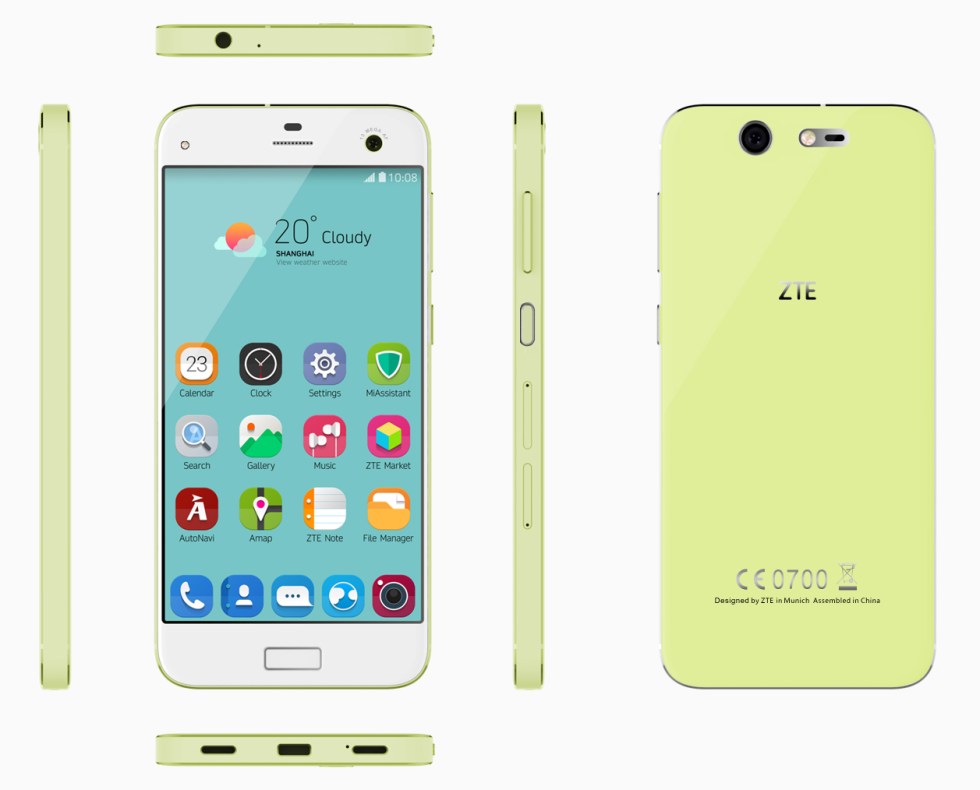 Looks like ZTE believes that Thais love to take selfies. The newly-launched ZTE Blade S7, which is designed for selfie lovers, will first be made available in Thailand before hitting the rest of the region.
The smartphone features a five-inch full HD LTPS screen with a 445 PPI Super Retina display for 178-degree full viewing angles. Housed in an aluminum alloy frame with thin bezels, Blade S7 offers a 72.1 percent screen-to-body ratio and is protected with 2.5D curved Gorilla Glass 3 on both the front and back.
Just 7.2mm thick and 67mm wide, it comes with a powerful 13-megapixel front-facing camera with a front flash and phase detection autofocus, as well as functions for panorama shots and 14 different beautification options. At the back is another 13-megapixel rear camera that supports professional and auto shooting modes, selective focus, and laser auto focus for fast and accurate shooting in low-light conditions.
ZTE opens 5G R&D centre in Japan
ZTE has opened a new research and development (R&D) center in Tokyo to focus on the development of 5G and other next-generation network technologies. The new R&D centre will support ZTE’s partnerships with operators and […]
Huawei surges to top spot in China smartphone market
Huawei has dethroned Xiaomi as China’s top smart phone vendor in Q3. This is Huawei’s first time at the summit of China’s smartphone, according to Canalys. The company powered its way to first place with 81 percent […]
Mobile phones improve emergency response in developing countries
 While many cannot imagine life without mobile phones, the technology can be a life-saver in disasters. Case in point are recent crises in Afghanistan, Indonesia, Iraq, Nepal, and the Philippines where mobile network coverage enabled those directly impacted to collaborate in order to help themselves and others more quickly and effectively than external aid agencies.
A new report Connected Citizens — Managing Crisis by Developing Telecoms noted that working with “Connected Citizens” enables aid agencies to work more efficiently by better targeting the areas of greatest need and more accurately identifying requirements.
The overall effect is to speed up response, improve aid delivery and reduce both the short and long term impact of disasters. Maintaining mobile network coverage enables connected citizens to become active partners in recovery and reconstruction, rather than passive recipients of aid.
GSMA disappointed by lack of progress in mobile broadband spectrum allocation in APAC
 Ahead of World Radiocommunication Conference 2015 (WRC-15), GSMA has expressed its disappointment at the Asia-Pacific Telecommunity’s Conference Preparatory Group (APG) decision to identify only 51MHz of additional spectrum for mobile broadband.
“This represents an increase of less than five per cent over the total amount of spectrum currently identified for the region. The International Telecommunication Union (ITU) estimates that governments need much more – double the amount of mobile spectrum available today – to meet the growing consumer demand for data,” said John Giusti, Deputy Chief Regulatory Officer of GSMA.
“With 4G rising and 5G on the horizon, and without more spectrum identified, this means that Asia Pacific cannot benefit from economies of scale and affordable connectivity and puts the future of its digital economy at risk,” he added.
Xiaomi nudges Apple off China smartphone perch
Xiaomi continued its phenomenal growth to regained its crown as the largest smart phone vendor in China with 15.9 percent market share in Q2, according to Canalys. One in three smartphones shipped were from Xiaomi or […]
Speed trial hits 1 Terabit per second
The dream of a digital generation are a step closer to reality following a successful trial by Proximus and Huawei. A joint test on a the Belgium telco’s network has resulted in speeds over an optical […]
Goodspeed 4G Mobile Hotspot MF900 accommodates 10 SIM cards
 ZTE and Uros have introduced the Goodspeed 4G mobile hotspot MF900 — which is manufactured under a technology licence from Uros — providing travellers with affordable international data roaming.
The device is the world’s first commercially available 4G hotspot that accommodates up to 10 SIM cards at once. It provides private connectivity for up to 14 Wi-Fi connections and one USB connection simultaneously.
The Goodspeed MF900 supports all mainstream global 4G frequencies (LTE FDD & LTE TDD), allowing end-users to connect to 4G networks whenever, wherever. Powering the device is a Qualcomm Gobi MDM9225 modem chipset, which offers downlink data rates of up to 150Mbps and uplink rates of up to 50Mbps.
Cambodia to roll out 4G network
ZTE and South East Asia Telecom (Seatel) are teaming up to build a national FDD-LTE network in Cambodia to deliver high-performance mobile broadband services to consumers and businesses across the country. ZTE will provide end-to-end 4G solutions and […]
2G in Singapore to end in 2017
Singapore’s three telcos will stop providing 2G services from April 2017. The spectrum will then be freed for advanced 4G services as the Infocomm Development Authority (IDA) of Singapore moves to make more efficient use of the limited resources. According […]
Samsung launches low temperature video wall
 Samsung has introduced what is claimed to be the world’s first low temperature video wall. Specifically calibrated for the broadcast industry, the UD55E-S has a specialised panel with a lower colour temperature range of 2800k-6500k that corresponds to broadcast camera standards, ensuring that the colours of news footage and graphics are displayed accurately at all viewing angles.
The high resolution UD55E-S raises the quality of video wall solutions in the broadcast industry, where there are specific needs due to lighting conditions within the enclosed studios. The video wall also comes with MagicInfo, Samsung’s flagship signage and content management solution, which allows users to design and manage a complex, interactive multimedia display system.
“To deliver a quality viewing experience for home viewers, broadcasters require equipment with higher standards that are tailored for their unique environment. The UD55E-S addresses this challenge as it is specially optimised for the broadcast industry. With this technology, our broadcast customers will reap time and cost savings with ease of maintenance and minimum tuning while end-viewers enjoy more true-to-life images and footage on their television screens. With our commitment to innovation,” said Yong Sung Jeon, President and CEO of Samsung Electronics Southeast Asia and Oceania.
China will outstrip the US in LTE subscriptions this year
 LTE is growing phenomenally in China. By the end of 2014, China gained almost 100 million LTE subscriptions in the first year of full LTE commercialisation, demonstrating an accelerating growth momentum, according to ABI Research.
Thanks to the first-mover advantages, China Mobile seized almost 90 percent share of the LTE market in China.
“Since the other two China mobile operators — China Unicom and China Telecom — were granted preferred FDD-LTE licenses in March 2015, it is expected that China will overtake the US to become the largest 4G market in the world, accumulating 500 million LTE subscriptions, or 36.5 percent of the domestic cellular subscriptions in 2015,” said Marina Lu, Research Analyst of ABI Research.
ZTE introduces new SDN-based OAM solution
ZTE has demonstrated a new OAM (operations, administration and management) solution based on SDN architecture at the Broadband & TV Connect Asia conference in Singapore.
The new Elastic SDN IPRAN OAM solution, powered by ZTE’s Elastic SDN technology, is claimed to enable operators to perform 90 percent of routine network OAM functions with one-touch control on mobile devices, generating at least 30 percent labour cost savings.
As operators accelerate deployments of 4G LTE networks to meet rising demand, it is becoming increasingly challenging to manage IP RAN mobile bearer networks. This problem is especially acute in Southeast Asia, where operators need to manage their IP RAN networks efficiently on outlying islands and mountainous terrain.
ZTE pitches Blade S6 Plus on eBay
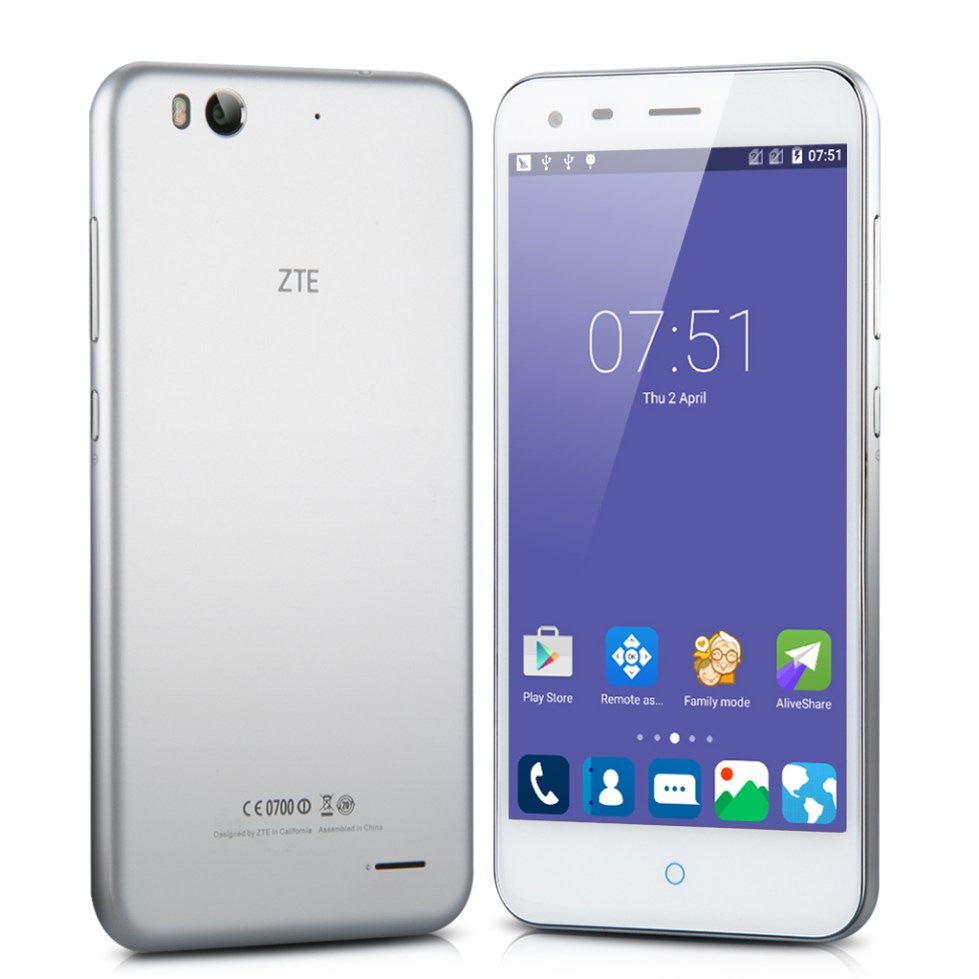 Another S6 has made its debut. It’s not Samsung’s but the ZTE Blade S6 Plus — and the company’s making it available globally on eBay for US$299.99.
The Blade S6 Plus was first showcased at Mobile World Congress 2015 in Barcelona, alongside the five-inch Blade S6, which was launched in January. Similar to the Blade S6, the Blade S6 Plus is powered by the Qualcomm Snapdragon 615 octa-core chipset and Adreno 405 image processor, and runs on Android 5.0 Lollipop with ZTE’s customisable MiFavor 3.0 user interface. It boasts a larger JDI Super Screen 5.5-inch HD display with In-Cell technology for better and more vibrant image quality, as well a higher-capacity 3000mAh battery.
Unique to the Blade S6 Plus is a function that allows the device to double as an infra-red remote control. Compatible with all major electronic and household appliance brands, the function allows Blade S6 Plus users to control televisions, set-top boxes, air conditioning units, DSLRs, and more. It is simple and easy to use, and saves users the hassle of switching between several different remote controls.
GSMA launches e-commerce platform for telecoms industry
GSMA has launched GSMA Marketplace, an e-commerce platform dedicated to the mobile industry.
GSMA Marketplace leverages the associations’s reputation as a trusted intermediary in the telecoms industry to bring together buyers and sellers to do business more easily with each other.
“Whether you are a buyer looking for greater innovation or better prices in your procurement of products or services, or a seller seeking to win new business and enter new markets, GSMA Marketplace will let you browse, contact and connect with companies who can help you achieve your objectives,” said John Hoffman, CEO of GSMA.
ZTE rolls out next generation super HD 4K smart set-top box
ZTE has launched its super HD 4K smart set-top box (STB) product B860A, which uses the 64-byte system solution, Cortex-A9 architecture and four-core CPU.
Running on Android 4.4, the STB supports the latest H.265 video code standard. It uses advanced technology to improve the relationship between the code stream, code quality, time delay and algorithm complexity so that it is at the most optimised setting.
In comparison to the video compression efficiency of H.264, H.265 can save half of the bandwidth, effectively helping to accelerate development of 4K super HD service. The STB has 4K (4096×2160) super high resolution, providing a significant visual difference between the 4K resolution and the ordinary HD.
India smartphone market shrinks in Q4
Smartphone shipment in India observed its first drop in Q4, according to IDC. The decline was attributed to a high channel inventory at the beginning of the quarter among general trade which in turn was caused by the surge witnessed in online sales during festive season.
Q4 was seen as a correction phase when the Smart Phone market shrank by four percent while the feature phone market plummeted by about 14 percent over the previous quarter. The overall mobile phone market stood at 64.3 million units in Q4, which reflects a sequential drop of 11 percent over Q3 and an annual drop of five percent in 2014.
The feature phone to smartphone migration trend is clearly visible as smartphones formed a healthy 35 percent of the overall mobile business in Q4, an increase of 13 percent fom a year ago.
5.2 billion SIM cards shipped in 2014
Global SIM card shipment will reach 5.2 billion units in 2014, a 5.32 percent increase from 2013, according to ABI Research.
LTE, NFC, and M2M are gaining momentum and considered the trends for the next few years.
Large markets such as India, China, and Saudi Arabia are currently among the last countries to undergo ID registration regulations. Among them only India saw a massive decline in shipments during 2013 but data from 2014 show that the market has successfully stabilised and steady growth is expected from 2015 onwards.
China Telecom Sichuan launches commercial 4K ultra-HD iTV service
China Telecom Sichuan has launched the first commercial 4K ultra-HD iTV network service in China. It has teamed up with Huawei to release a 4K ultra-HD intelligent smart set top box, making China Telecom Sichuan the first telecommunications company in China to use 4K STBs for carrying video services.
By combining fibre broadband, 4K ultra-HD video capabilities, and a 4K ultra-HD network construction, the 4K ultra-HD iTV service aims to deliver better quality picture and smoother 4K video experience.
China Telecom Sichuan has adopted the H.265 video coding standard for a better user experience, and also deployed leading technologies to optimize the code stream, coding quality, delay, and algorithm complexity.
India leads growth in Asian smartphone market in Q3
The smartphone market continued to grow in Asia-Pacific excluding Japan in Q3, albeit at a modest six percent quarter on quarter, according to IDC.
During this period, India led with 23 million units shipped, and added around five million units to the market over Q2.
Emerging markets in the region also surged ahead with 23 million units shipped, accounting for 22 percent growth as tier-1 Chinese vendors extended their reach outside China.
Mobile data to account for more than half of global roaming revenues by 2019
 Mobile data roaming will generate about US$50 billion in revenue by 2019, contributing as much as 56 percent to global roaming revenues, according to Ovum.
The revenue contribution from Asia is increasing, particularly from Central and Southern Asia, which is expected to grow at a compound average growth rate (CAGR) of 12 percent over the forecast period, as one of the highest among all regions.
“The sheer size of the region contributes to the increase, as does the fact that mobile services will penetrate further into these markets over the forecast period, and the overall propensity to roam is set to improve gradually,” said Nishi Verma Nangia, Senior Analyst of Ovum.
More mobile broadband spectrum needed for APAC economic growth
 Rising demand for broadband will spur economies in the Asia-Pacific region (APAC).
According to a new GSMA report, increased broadband connections in APAC will generate US$1.2 trillion of GDP growth and create up to 35 million new jobs by 2020.
However, this opportunity can only be realised if governments act now to fully release existing harmonised mobile spectrum bands and allocate more spectrum for mobile to meet rising consumer demand and support the development of new mobile services in the longer term.
Data consumption driving teleco revenue in Malaysia
 Data and value-added services have driven mobile growth in Malaysia to reach 42.9 million subscribers and rake in revenues of US$7.45 billion in 2014.
According to Frost & Sullivan, the Malaysian mobile market is currently growing with a mobile penetration rate of 140.7 percent.
Non-voice ARPU is expected to grow by two percent to US$5.9 billion but it will not be able to compensate for the 2.4 percent decline in voice ARPU.
Samsung Galaxy Note Edge 4G+ available for pre-order in Singapore
 Good news to those in Singapore holding out for the Samsung Galaxy Note Edge 4G+, the stylish Note with at the curved edge. It is now available for pre-order for collection from November 22.
Consumers can visit the following telcos for more information:
- M1: www.m1.com.sg/galaxynoteedge
- SingTel: www.singtel.com/galaxynoteedge
- StarHub: www.starhub.com/galaxynoteedge
AIS picks Huawei for mobile broadband network
Thailand mobile operator AIS has deployed Huawei innovative Active Antenna Unit (AAU)-based Easy MacroTM solution across its network. Over the last few years, mobile broadband has developed rapidly in Thailand, predominantly driven by the high penetration […]
ZTE: Pre5G will become available much earlier than 5G
Pre5G will become available much earlier than 5G, according to ZTE at a high-level international meeting of experts and industry officials to discuss global development of 5G technology. In an address to the International Workshop on […]
Global smartphone shipment soars past 300m mark in Q3
Q3 is a stunning quarter for smartphones as global shipment broke the 300 million unit barrier for the first time. This represented year-on-year growth of 23 percent, according to Canalys.
While Samsung and Apple remain the market leaders, the tussle for the third spot is heating up with was Xiaomi (six percent) followed closely by Lenovo and Huawei at five percent each.
“The global market is becoming more competitive, with vendors beyond Samsung and Apple enjoying growing success. A year ago, in Q3 2013, Samsung and Apple together accounted for 48 percent of worldwide smart phone shipments. While still impressive, in Q3 2014 this had slipped to 38 percent. This trend is likely to continue. It is down to the strong value proposition and increasing quality of products offered across all price points by competing vendors, most notably Chinese companies. In fact, six of the top 10 global vendors in Q3 are based in China,” said Chris Jones, Vice President and Principal Analyst of Canalys.
GSMA to recognise young innovator and connected women
GSMA has introduced two special awards to commemorate the 20th anniversary of the Global Mobile Awards. The Young Mobile Innovator of the Year and Connected Women: Leadership in Industry awards will be presented at the Global Mobile Awards ceremony at GSMA Mobile World Congress in Barcelona on March 3, 2015.
The Young Mobile Innovator of the Year is designed to showcase young and exciting new talent from across the mobile ecosystem and is open to anyone between 18 and 25 years old, working in an organisation or independently, or currently pursuing further education. The Connected Women: Leadership in Industry award, will recognise leadership in the establishment of initiatives that have a positive impact in reducing the digital skills gap and attracting and retaining women and girls in mobile and telecommunications.
“These additional awards will put the spotlight on individuals and organisations that will be shaping the face of the mobile industry in the years to come,” said Michael O’Hara, Chief Marketing Officer of GSMA.
A star is born in Malaysia
ZTE has launched the ZTE STAR 1 smartphone in Malaysia, the first time the model has been introduced outside China. According to the company, Malaysia was chosen because of the nation’s strong economy and development in […]
GSMA announces connectivity guidelines to accelerate the Internet of Things
 GSMA has published guidelines for the Internet of Things (IoT) market that outline how devices and applications should communicate via mobile networks in the most intelligent and efficient way.
The report, IoT Device Connection Efficiency Guidelines, has received the backing of leading mobile operators including AT&T, China Mobile, China Telecom, China Unicom, Deutsche Telekom, Etisalat, KT Corporation, Orange, NTT DOCOMO, Tata Teleservices, Telefónica, Telenor Connexion, and VimpelCom as well as ecosystem partners including Sierra Wireless and Jasper and aims to support device and application developers as the IoT market develops.
The guidelines include a number of best practice areas such as data aggregation within devices, non-synchronous network access, application scalability and guidance on how to manage signaling traffic from de-activated or out-of-subscription SIMs.
Cellular offloading strategies drive wi-fi test equipment market
In its revised mobile service bundles, SingTel added free wi-fi access for its mobile users in selected locations in Singapore. This is said to be part of its strategy to alleviate data congestion on its 3G and 4G networks.
The trend is set to continue across the globe as telcos wrestle to cope with the increasing demand for mobile data. To enable wi-fi access, they need to purchase wi-fi test equipment, creating strong opportunities for Wi-Fi test equipment manufacturers globally.
According to Frost & Sullivan, the wi-fi test equipment market earned revenues of US$528.9 million in 2013. This is expected to more than double to reach US$1.09 billion in 2020.
Smartphones to grab lion’s share of mobile market by 2020
Smartphones will grow from one in three today to two out of every three mobile connections globally by 2020, according to GSMA Intelligence, the research arm of the GSMA.
It forecasts that the number of smartphone connections will grow three-fold over the next six years, reaching six billion by 2020. Basic phones, feature phones and data terminals such as tablets, dongles and routers will account for the remaining connections. The study excludes M2M from the connections totals.
“The smartphone has sparked a wave of global innovation that has brought new services to millions and efficiencies to businesses of every type. In the hands of consumers, these devices are improving living standards and changing lives, especially in developing markets, while contributing to growing economies by stimulating entrepreneurship.,” said Hyunmi Yang, Chief Strategy Officer of GSMA.
Samsung opens first Executive Briefing Center in HK
Samsung has opened its first ever Executive Briefing Center (EBC) in Hong Kong to serve as a one-stop shop with business-to-consumer and business-to-business products and solutions. Located at 1/F, 33 Des Voeux Road Central, it comprises […]
China Mobile deploys Huawei LTE TDD Easy Macro
In order to meet increasing demand for mobile broadband, China Mobile has deployed Huawei LTE TDD Easy Macro, which is claimed to improve download rate by 40 percent for outdoor users and 180 percent for indoor […]
ZTE teams up with Blue Jeans Network on videoconferencing services
ZTE is collaborating with Blue Jeans Network on video conferencing services, under which ZTE customers will be able to experience Blue Jeans Network’s cloud-based video conferencing services (VCS) and connect easily to one another via their ZTE VCS products, creating a uniform user experience that fosters collaboration.
Starting in August, ZTE VCS room system with Blue Jeans video conferencing services will be available in Singapore, Australia, the US, and Europe.
Blue Jeans Network extends high-quality video communications beyond the traditional boundaries of virtual conference rooms by allowing individuals, employees, partners and family and friends, to connect and interact with each other seamlessly and effectively. Its technology is used by customers such as Facebook, Foursquare, Match.com, and Stanford University.
Global smartphone shipment soars past 300m units in Q2
Demand for smartphones are on the rise with more 301.3 million units shipped worldwide in Q2, up 25.3 percent from the 240.5 million units shipped in the corresponding quarter last year, according to IDC.
The dominant smartphone operating systems (OS), Android and iOS, saw their combined market share swell to 96.4 percent for the quarter, leaving little space for competitors.
Android was the primary driver with its vendor partners shipping a total of 255.3 million Android-based smartphones in Q2, up 33.3 percent year over year. Meanwhile, iOS saw its market share decline despite posting 12.7 percent year-over-year shipment growth. While Android and iOS both realised gains from a year ago, the rest of the market recorded losses.
China Mobile deploys world’s first LTE TDD 8T8R AAU
China Mobile has successfully deployed the world’s first LTE TDD 8T8R Active Antenna Unit (AAU) in Hebei, China. It was also the first to install Huawei’s LTE TDD AAU with 10,000 Huawei 4T4R AAU units in 2013. Once 8T8R […]
Chinese smartphone vendors outpace market
Apple and Samsung, beware! Chinese smartphone vendors are hot on your heels. According to IDC, a wide range of Chinese OEMs more than outpaced the market in Q2, with Huawei nearly doubling its shipment from a year ago, followed by Lenovo.
Huawei’s growth is spurred by 4G LTE pick up, particularly in China, as all three national carriers subsidised 4G handsets to encourage consumers to upgrade from 3G. Outside of China, large volumes of its lower-cost Y series fueled growth across most regions. The company continues to focus on broadening its global reach and the Q2 results show that the momentum is undoubtedly there.
Lenovo had a record quarter in China despite tremendous pressure from local brands. During the quarter, Lenovo saw increased success from the A788T and the 3G A388T. While its Motorola acquisition is undergoing approval, Lenovo continued to gain traction in international markets. Though less than five percent of Lenovo’s shipments were registered outside of China in Q2 2013, this share nearly tripled this Q2, with emerging markets, particularly BRIC countries, picking up the largest volumes.
Mobile data to overtake voice in Malaysia in 2017
Mobile data is expected to bring in more revenue than mobile voice in Malaysia in 2017, according to IDC.Despite the penetration rate of Malaysian mobile users exceeding 140 percent and high prepaid-postpaid ratio, mobile operators have still been able to maintain their revenue growth. Total revenue has grown by 35 percent in the last three years, and IDC expects the revenue to continue to grow to RM27.6 billion in 2018 at a compound annual growth rate (CAGR) of 2.6 percent.
“Mobile data revenue will continue to grow strongly at CAGR of 8.5 percent and become the main driver of the total mobile revenue in the next five years,” said Alfie Amir, Research Manager of Telecommunications at IDC Malaysia.
Curvaceous HTC One E8 designed for selfies
 With a 5MP front-facing wide-angle camera and auto self-timer, the newly-introduced HTC One E8 is designed for selfies. On the other side is a 13MP rear-facing camera.
The stylish HTC One (E8) with its elegant dual curve design also comes with new materials, Motion Launch and HTC BoomSound. A five-inch device features a full HD, borderless display for a cleaner viewing experience.
“The HTC One (M8) had set a new smartphone standard and now we’re taking it in another exciting direction. Combining style and substance, the HTC One (E8) represents the incredible experience people expect from a HTC One device, with a look and feel that’s unlike anything else out there today. If you’re looking for the best flagship smartphone experience and want to stand out from the crowd, this is the phone for you,” said Jack Yang, President of HTC South Asia.
ZTE moots pre-5G concept
With a highly-connected world where fast Internet access is vital, ZTE has pushed the envelope a little further with its pre-5G concept shared at LTE World Summit 2014 in Nice, France.
It has announced that under certain conditions, some 5G technologies can provide a 5G-like user experience on 4G terminals without changing the air interface standards.
“With next-generation 5G technologies being deployed in 2020, there were industry concerns over what technologies will be used in the next six years. To address this, ZTE proposes to apply some of the 5G technology on top of 4G to meet users’ requirements,” said Dr Xiang Jiying, CTO of wireless products at ZTE.
Huawei secures railway LTE project
 Huawei has won the bid for the Shenhua Group Corporation’s Shuo Huang Railway (SHR) LTE project.
One of the largest coal supplying and trading companies, Shenhua has developed and implemented the world’s first LTE network for heavy-haul railways. SHR, with an operating route length of 594km, is a critical railway section for China’s West-to-East Coal Transfer project.
Shenhua hopes to expand the railway’s capacity to transfer 350 million tons of coal and needed to maintain efficient and safe operations of 20,000-ton capacity heavy-haul trains. A wireless broadband system was required to communicate between the master-slave locomotives located at both ends of trains, which could be up to 2.5km apart. The railway’s 800MHz and 400kHz communications system would not be able to support the expansion with its limited coverage distance and low reliability.
Huawei successfully tests 10Gbps wi-fi
 Just as consumers are enthusing about 1Gbps fibre broadband, Huawei has upped the ante in wi-fi speed with the successful testing of 10Gbps wi-fi in laboratory trials at its Shenzhen campus.
This is a significant milestone, as it is marks the dawn of a new era in big data applications using ultra-fast wi-fi technology to boost data rates to 10Gbps.
The 10Gbps prototype achieved a record transmission data rate of 10.53Gbps on 5GHz frequency bands. The success of this prototype development, and the tenfold increase in spectrum efficiency that made it possible, paves the way for the validation of technologies needed to support the creation of next generation wi-fi.
HTC One mini 2 available in June
The HTC One mini 2, the latest member of the HTC One family, isn’t exactly a mini with its 4.5-inch display, which is 0.2-inch bigger than its previous version. Screen size aside, the smartphone does offer […]
Motorola Solutions delivers cloud-ready wifi services
 Enterprises have more options for deployment cost effective wireless local area networks (WLAN). Motorola Solutions’ new VX 9000 is a scalable WLAN cloud solution backed by the functionality of Motorola’s robust NX hardware controller.
The VX 9000 software-based virtualised controller supports up to 25,000 access points in a single instance and can scale to support multiple instances.
Motorola’s new NX 7500 multi-service platform is designed for mid-size enterprises and campus environments and offers comprehensive management of more than 2,000 access points. Powered by WiNG 5, the NX 7500 ensures optimal RF performance, speed and throughput by enabling every transmission to follow the fastest and most efficient route to its destination.
Technology keeps New Zealanders indoor
Beautiful scenery, spectacular views and natural landscape make New Zealand a wonderful place to delight in outdoor activities. It’s no wonder then that New Zealanders are known to spend lots of time enjoying outdoor activities.
However, technology seems to be changing the way New Zealanders live. According to IDC, New Zealand consumers are choosing to go out less often for shopping and leisure activities, as they prefer to do these activities in the comfort of their own home, thanks to advances in technology.
The new data reveals that 47 percent of respondents would prefer to do personal shopping online, rather than in a physical store.
Android is dominant smartphone OS in high-growth markets in Q1
Android once again dominated Q1 shipment for smartphone advanced operating systems with 80 percent market share (including AOSP) of just under 300 million smartphones shipped, according to ABI Research. “Interestingly, basic mobile phones lost five […]
Huawei maintains dominance in mobile broadband modem market
Even as mobile broadband modems and hotspot router shipments fell 21 percent year-on-year to nearly 73 million units, Huawei continued to lead the market with nearly 61 percent share. Together with fellow China company ZTE, the pair shipped more than 85 percent of all mobile broadband modems, according to ABI Research.
The overall drop in the market could be attributed to the declining PC market. USB modem sticks and embedded modem modules led the two-year slide while mobile hotspot routers increased 32 percent.
As the computing marketing continues to evolve with more performance and choices than ever before, mobile broadband modems were not impervious to the transition.
Viettel Group to trial ZSmart 8 intelligent charging solution
ZTEsoft’s ZSmart 8 iCS (intelligent charging solution) will be used in a trial project by Viettel Group to develop innovative data service plans for users in Vietnam. The project is part of a joint effort […]
GSMA completes mobile energy efficiency optimisation project in Pakistan
GSMA has completed its second Mobile Energy Efficiency (MEE) Optimisation project in Pakistan, working in conjunction with mobile operator Warid Telecom and systems integrator Cascadiant.
The project trialled innovative energy-saving technology in Warid’s network and demonstrated significant energy savings of between 30 and 60 percent. When the solutions are rolled out across Warid’s network in Pakistan, the annual savings are expected to be more than US$6 million and 19,700 tonnes of carbon dioxide emissions.
GSMA also announced that Eltek, Enertika, PowerOasis and Purcell Systems have joined the GSMA’s MEE programme as technology partners. The companies are working with the GSMA to deliver MEE Optimisation projects for mobile network operators (MNOs) who wish to reduce their networks’ energy consumption and cost, as well as carbon emissions.
“It is fantastic that this MEE Optimisation project in Pakistan has already successfully demonstrated significant cost savings and emissions reductions, and is clearly showing the benefits of the service to our members,” said Tom Phillips, Chief Regulatory Officer of GSMA. “The GSMA is also delighted to welcome these four companies as MEE Optimisation technology partners to deliver real cost savings and environmental benefits for operators.”
China vendors to account for half of global handset sales next year
The Red Wave is spreading from China to the rest of the mobile world. Huawei, ZTE and Lenovo may not be the leading names that come to mind when it comes to handset vendors today but their influence is spreading. As it Xiaomi, which is taking East Asia by storm with sellouts every time it puts its phones for sale online.
ABI Research has reported that Chinese handset vendors will account for more than half of mobile handsets in 2015. Chinese vendors already accounted for 38 percent of mobile handset shipments in 2013 and the ongoing shift in growth to low cost handsets, especially smartphones, will increase their market share.
Many oChinese OEMs have focused almost exclusively on the huge Chinese market, with little activity beyond its borders, but this is set to change. Huawei (6th in worldwide market share for 2013) and ZTE (5th) have already made an impact on the world stage, but other Chinese handset OEMs like Lenovo — the Motorola acquisition is a clear statement of intent — and Xiaomi are set to join them.

