
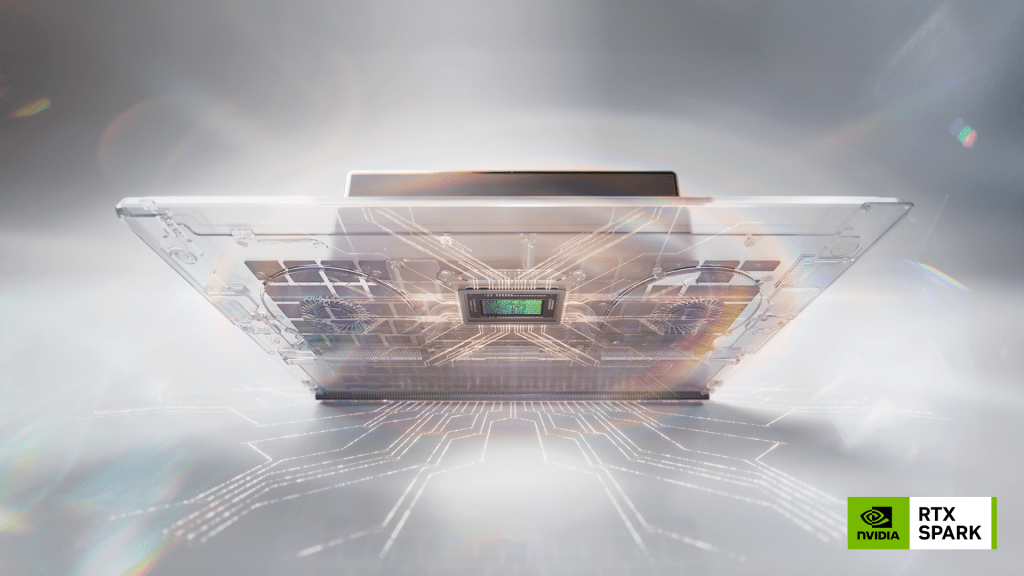
NVIDIA has raised the bar for AI PCs with the launch of the RTX Spark. The new Arm-based superchip heralds a new class of Windows PC for personal AI agents, with the first laptops and compact desktops due in the next quarter from Asus, Dell, HP, Lenovo, Microsoft Surface, and MSI, with Acer and Gigabyte set to follow.
Fusing both a CPU and a high-end GPU into a single package, purpose-built for AI PCs, the one-petaflop AI superchip is stached with up to 128GB of unified memory to bring secure, local agentic AI to Windows PCs.
“RTX Spark brings everything NVIDIA has built — CUDA, RTX, our AI platform — into a single superchip. Local agents. Frontier models. Creative workflows. RTX games. All on a laptop. This is the new PC. The personal AI computer,” said Jensen Huang, Founder and CEO of NVIDIA.
With the new superchip, the PC shifts from a tool used manually to a teammate that can run tasks locally, privately and with less dependence on the cloud. It is also meant to support creators and gamers, not just AI developers, by combining the CUDA, RTX and TensorRT software stack with new Windows agent features.
Adobe is also reworking Photoshop and Premiere for the platform, while other software and game partners including Blackmagic Design, Blender, CapCut, ComfyUI, Otoy, Krafton, NetEase, Remedy Entertainment, Riot Games, and Xbox are adopting or optimising for RTX Spark-related workflows.
Industry watchers say pricing is likely to start around $2,000 to $2,500 or more, with the top-end 128GB configurations potentially climbing well above that, especially once the laptop chassis, display and battery are factored in.
A specific retail price has not been announced, but it looks to command premium pricing. Based on comparable high-memory Windows laptops and the DGX Spark desktop’s roughly US$4,700 price, a realistic starting range for RTX Spark laptops is around US$2,000 to US$2,500, with flagship models costing more. This places RTX Spark in direct competition with high-end creator laptops and MacBook Pro-tier pricing.

