
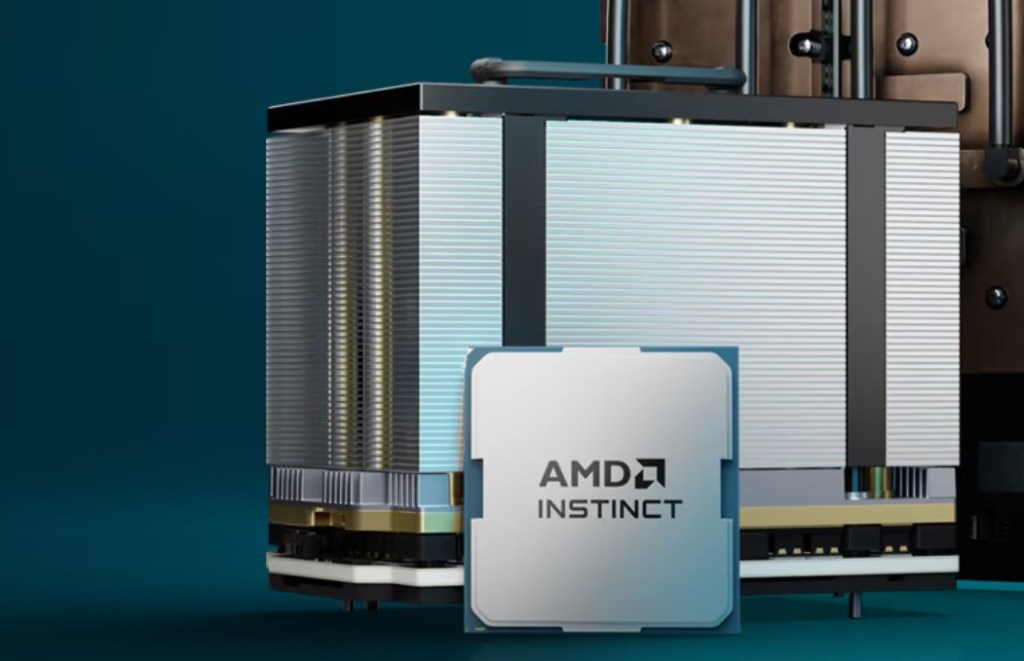
Microsoft has committed to deploying AMD’s next-generation Helios AI platform, including Instinct MI455X GPUs and EPYC Venice processors, across Azure’s global infrastructure.
The expanded agreement covers GPUs, CPUs, networking, and software, and is designed to power frontier model inference for Microsoft’s AI workloads as well as Azure customers.
“Today, we are expanding that partnership across the full stack of AMD AI solutions on Azure. Microsoft’s new deployment is an important milestone as we extend next-generation AI infrastructure together and deliver state-of-the-art computing solutions to Azure customers,” said Lisa Su, Chair and CEO of AMD.
Microsoft will ramp Helios at scale on Azure in one of the largest enterprise deployments of its AI accelerators to date.
“By expanding our partnership to include AMD Helios with the newest MI455X GPUs, Venice CPUs and Pensando networking, we are bringing even more choice and performance to Azure for frontier AI inference and the most demanding workloads,” said Scott Guthrie, Executive Vice President of Cloud + AI at Microsoft.
The deal includes AMD’s Helios rackscale platform, which combines Instinct MI455X GPUs, sixth-generation EPYC Venice CPUs built on TSMC’s 2nm process, Pensando networking and the ROCm software stack for large-scale AI training and inference.
Microsoft will add three new VM series to Azure to support the deployment: Azure HDv2 for AI agents and data pipelines with up to about 500 EPYC CPU cores, 4TB of RAM and 32TB of local NVMe storage; Azure HXv2 for semiconductor design workloads with 176 cores running above 5GHz; and ND MI455X v7 for AI inference, search and agent workloads.
The move intensifies competition with NVIDIA in the hyperscaler AI infrastructure market and signals growing confidence in AMD’s end‑to‑end stack for large-scale AI workloads. For enterprise and C-level audiences, it underscores a multi-vendor AI silicon strategy among hyperscalers, a shift to rackscale AI infrastructure, and a focus on inference at scale as AI moves from training to production.

