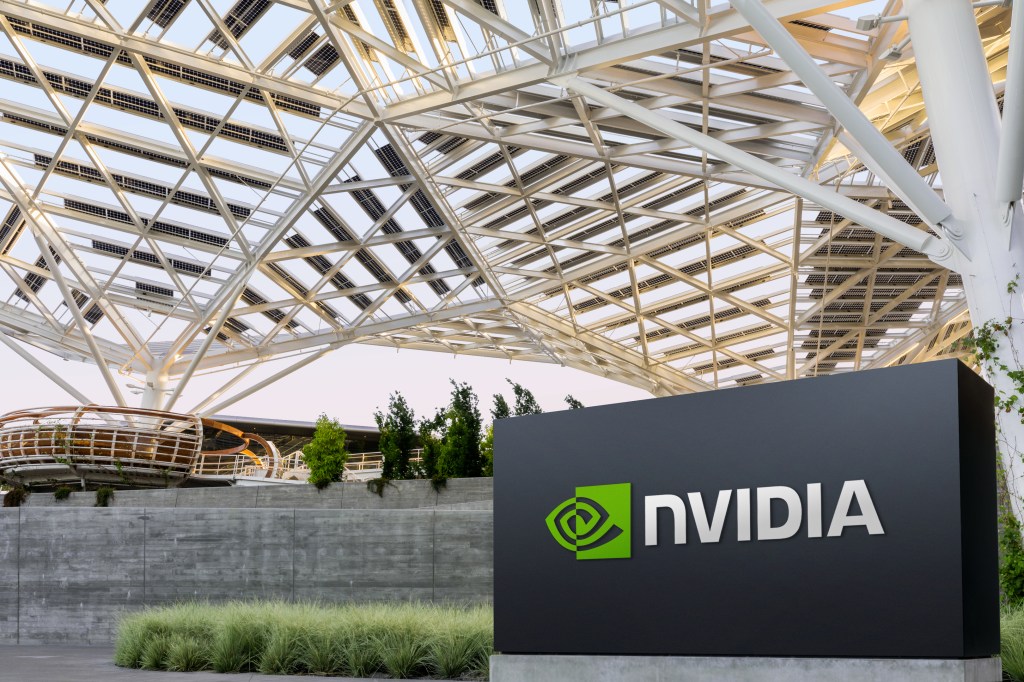
NVIDIA and Palantir Technologies are collaborating to help enterprises use sovereign AI to manage complex supply chains, starting with NVIDIA’s own operations.
The AI system combines Palantir’s Foundry and Artificial Intelligence Platform with NVIDIA’s Nemotron open models. It uses Palantir’s Ontology to map relationships across suppliers, components, manufacturing operations, and customer deliveries.
Enteprises will have a clearer view of their supply chains, identify constraints earlier, and recommend actions while keeping control of their data and AI models.
“NVIDIA has arguably the most valuable, intricate and complex supply chain in the world. Our sovereign stack, powered by Nemotron models and Ontology, is delivering capabilities that exceed the frontier while providing alpha protection qualities unavailable otherwise,” said Alex Karp, Co-founder and Chief Executive of Palantir Technologies.
NVIDIA’s supply chain covers millions of parts, thousands of suppliers and manufacturing partners across the globe. Each NVIDIA Vera Rubin rack contains about 1.3 million parts, including computing, memory, networking, power, cooling, and mechanical components.
The AI system will initially support materials allocation decisions to help teams assess which parts should be directed to specific production needs. Teams can also compare alternatives and measure how those decisions affect overall production.
“Supply chains are the operating system of the physical economy, and AI factories are among the most complex systems ever built,” said Jensen Huang, Founder and Chief Executive of NVIDIA. “From wafers and components to manufacturing, systems and customer delivery, hundreds of companies and trillions of dollars of global economic activity come together to deliver AI infrastructure.”
Huang said the companies were turning that network of activity into “sovereign intelligence” by combining NVIDIA’s Nemotron models with Palantir’s Ontology with the goal of helping enterprises manage the process “from wafer to token”.
Models trained on proprietary data
Palantir customers will be able to post-train NVIDIA’s Nemotron models using their own operational data through Foundry and AIP. This would allow enterprises to adapt the models to their suppliers, production processes, constraints, and decision-making rules.
NVIDIA’s cuOpt software will support optimisation and scenario planning. Teams can use it to model supply shortages, assess trade-offs and estimate the impact of allocation decisions.
The system can recommend actions, explain the trade-offs behind them and flag emerging risks. Human supply chain specialists will retain control over final decisions.
Each recommendation, action and production result can improve the system over time. Integrated with NVIDIA’s NeMo AutoModel and NeMo Reinforcement Learning libraries, Palantir Autopilot will support a feedback loop for updating the specialised AI models.
On-premise and cloud options
The collaboration aims to help industries with complex and sensitive supply chains, including manufacturing, energy, healthcare, automotive and aerospace.
The deployment for NVIDIA’s supply chain will run on NVIDIA reference architectures and the jointly developed Palantir Sovereign AI Operating System Reference Architecture, which is supported by Dell Technologies and Cisco.
Enterprises will be able to deploy the system through Cisco and Dell for on-premise deployments, and Rackspace and Nebius for colocation and cloud environments.

