Iray VCA to transform product design

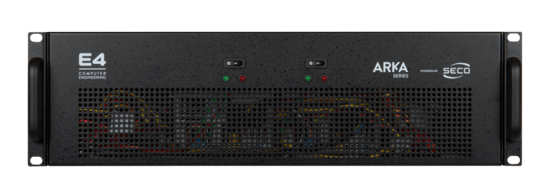
Honda Iray VCANVIDIA has introduced Iray Visual Computing Appliance (VCA), a GPU rendering appliance that dramatically accelerates ray tracing, enabling professional designers to interact with computer models of such high visual fidelity that it can largely replace the lengthy, costly process of building physical prototypes.

Honda Research and Development is an initial user of NVIDIA Iray VCA, with a prototype cluster made up of 25 nodes to refine styling designs on future cars.
Iray VCA combines hardware and software to greatly accelerate the work of NVIDIA Iray — a photorealistic renderer integrated into leading design tools like Dassault Systèmes’ CATIA and Autodesk’s 3ds Max. Because the appliance is scalable, multiple units can be linked, speeding up by hundreds of times or more the simulation of light bouncing off surfaces in the real world.

As a result, automobiles and other complex designs can be viewed seamlessly at high visual fidelity from all angles. This enables the viewer to move around a model while it’s still in the digital domain, as if it were a 3D physical prototype.

“Iray VCA lets designers do what they’ve always wanted to — interact with their ideas as if they were already real,” said Jeff Brown, Vice President and General Manager of Professional Visualisation and Design at NVIDIA. “It removes the time-consuming step of building prototypes or rendering out movies, enabling designs to be explored, tweaked and confirmed in real time. Months, even years — and enormous cost — can be saved in bringing products to market.”

NVIDIA launches NVLink, world’s first high-speed GPU interconnect

NVLink graphicIn the opening keynote for GTC 2014 in San Jose, NVIDIA CEO Jen-Hsun Huang made a host of announcements, the first of which is  NVIDIA NVLink, a high-speed interconnect that enables GPUs and CPUs to share data five to 12 times faster than they can today. This will eliminate a longstanding bottleneck and help pave the way for a new generation of exascale supercomputers that are 50-100 times faster than today’s most powerful systems.

NVIDIA will add NVLink technology into its Pascal GPU architecture – expected to be introduced in 2016 – following this year’s new NVIDIA Maxwell compute architecture. The new interconnect was co-developed with IBM, which is incorporating it in future versions of its POWER CPUs.

“NVLink technology unlocks the GPU’s full potential by dramatically improving data movement between the CPU and GPU, minimising the time that the GPU has to wait for data to be processed,” said Brian Kelleher, Senior Vice President of GPU Engineering at NVIDIA.

“NVLink enables fast data exchange between CPU and GPU, thereby improving data throughput through the computing system and overcoming a key bottleneck for accelerated computing today,” said Bradley McCredie, vice president and IBM Fellow at IBM. “NVLink makes it easier for developers to modify high-performance and data analytics applications to take advantage of accelerated CPU-GPU systems. We think this technology represents another significant contribution to our OpenPOWER ecosystem.”

GSMA completes mobile energy efficiency optimisation project in Pakistan

GSMAGSMA has completed its second Mobile Energy Efficiency (MEE) Optimisation project in Pakistan, working in conjunction with mobile operator Warid Telecom and systems integrator Cascadiant.
The project trialled innovative energy-saving technology in Warid’s network and demonstrated significant energy savings of between 30 and 60 percent. When the solutions are rolled out across Warid’s network in Pakistan, the annual savings are expected to be more than US$6 million and 19,700 tonnes of carbon dioxide emissions.

GSMA also announced that Eltek, Enertika, PowerOasis and Purcell Systems have joined the GSMA’s MEE programme as technology partners. The companies are working with the GSMA to deliver MEE Optimisation projects for mobile network operators (MNOs) who wish to reduce their networks’ energy consumption and cost, as well as carbon emissions.

“It is fantastic that this MEE Optimisation project in Pakistan has already successfully demonstrated significant cost savings and emissions reductions, and is clearly showing the benefits of the service to our members,” said Tom Phillips, Chief Regulatory Officer of GSMA. “The GSMA is also delighted to welcome these four companies as MEE Optimisation technology partners to deliver real cost savings and environmental benefits for operators.”

ZTE9 releases NVIDIA Tegra 4-powered Funbox home entertainment console

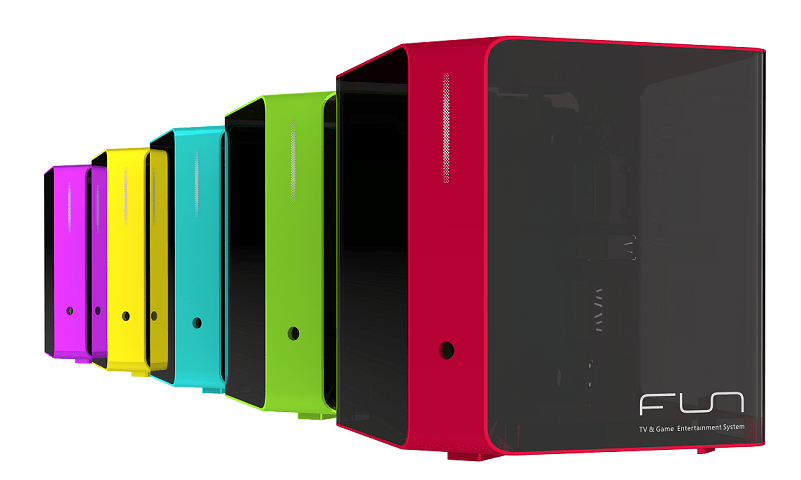
FunboxZTE9 has released FunBox, which is claimed to be the world’s fastest home entertainment console. The console is expected to give consumers and families a unique high-performance all-in-one gaming, video-chatting and online video experience.

FunBox is the fruit of the engineering capabilities of ZTE and the video game development expertise of The9. ZTE9 is a joint venture between ZTE, one of the world’s leading manufacturers of mobile devices, and The9, one of China’s foremost video game companies. Online sales for FunBox will start on JD.com next month, and consumers can choose between 12 different colors.

The console is powered by NVIDIA’s Tegra 4 processor, based on the new A15 architecture, and the superior graphics performance is delivered by a 72-core GeForce graphics processor with 2GB DDR3L memory and 8GB of Flash memory. 

Attached rate of factory installed car navigation units to rise to 38% in 2019

abi researchOnce a luxury item, embedded in-car navigation systems are now increasingly becoming less expensive and are offered in mass-market cars. At the same time, more and more car navigation units are becoming connected and multi-functional as they converge with other technologies in the car.

The attachment of embedded in-dash factory installed navigation units is expected to increase from 22 percent at the end of 2013 to 38 percent by 2019, according to ABI Reseach. This represents a compounded annual growth rate of 13.6 percent.

“However, this growth will be eclipsed by the number of smartphone-based navigation devices used in the car, particularly off-board devices, where navigation is performed in the cloud as opposed to on the device,” said Gareth Owen, Principal Analyst of ABI Research, which forecasts that shipment of handset-based navigation services will reach 1.68 billion globally by 2019.

More power and better performance with new NVIDIA GeForce 800M

The Razor Blade packs the GeForce GTX 870M.

NVIDIA has launched its GeForce 800M line-up of notebook GPUs that deliver up to 60 percent performance improvement over the previous generation.

The new mobile GPUs sport a multitude of new features designed just for gamers, first of which is NVIDIA Battery Boost, which delivers up to double the gaming battery life.

Instead of pushing every notebook component to its max, Battery Boost targets a user defined frame rate, such as 30 FPS. The driver level governor takes over and operates all system components, including CPU, GPU, and memory at peak efficiency, while maintaining a smooth, playable experience.

China vendors to account for half of global handset sales next year

abi researchThe Red Wave is spreading from China to the rest of the mobile world. Huawei, ZTE and Lenovo may not be the leading names that come to mind when it comes to handset vendors today but their influence is spreading. As it Xiaomi, which is taking East Asia by storm with sellouts every time it puts its phones for sale online.

ABI Research has reported that Chinese handset vendors will account for more than half of mobile handsets in 2015. Chinese vendors already accounted for 38 percent of mobile handset shipments in 2013 and the ongoing shift in growth to low cost handsets, especially smartphones, will increase their market share.

Many oChinese OEMs have focused almost exclusively on the huge Chinese market, with little activity beyond its borders, but this is set to change. Huawei (6th in worldwide market share for 2013) and ZTE (5th) have already made an impact on the world stage, but other Chinese handset OEMs like Lenovo — the Motorola acquisition is a clear statement of intent — and Xiaomi are set to join them.

HTC unveils HTC Desire 310 in Taiwan

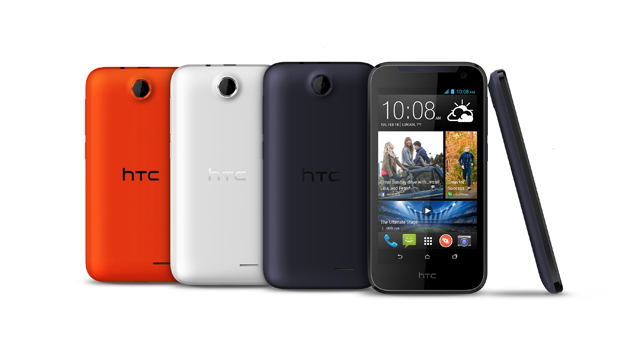
HTC Desire 310HTC has unveiled the HTC Desire 310, which packs a powerful quad-core processor and some of the features of the HTC One series but is more affordable.

Boasting a 1.3GHz quad-core processor, the smartphone can deliver fast, responsive web browsing, silky-smooth graphics when watching videos or playing games and the ability to switch between multiple apps.

“The latest addition to our renowned HTC Desire range combines super-fast processing and premium features at a lower price, offering users the best possible experience in this category,” said Peter Chou, CEO of HTC.

Global tablet growth to slow this year

IDCThe much sought after tablet — the darling of the technology industry in recent years — is expected to grow just 19.4 percent this year. That’s a massive slow down from last year’s growth of 51.6 percent. According to the IDC Worldwide Quarterly Tablet Tracker, the reduction is due to slowing consumer purchases as hardware iterations slow and the installed base — particularly in mature markets — continues to grow.

Over the course of the past two years, average selling prices (ASPs) have declined rapidly in the tablet market, but this too appears to be slowing. In 2012, ASPs declined 18.3 percent from the previous year, and in 2013, prices dropped another 14.6 percent.

Price erosion has started to slowly bottom out, with ASPs forecast to drop a modest 3.6 percent in 2014. IDC believes ASP declines will slow for several reasons; chief among them are the growth of higher-priced commercial shipments and a consumer movement away from ultra-low cost products.

NetApp announces unified scale-out storage systems and virtualisation software

NetAppNetApp has introduced a new line of enterprise storage systems and enhanced software designed to accelerate the broadest range of virtualised applications.

The new NetApp FAS8000 series unifies SAN, NAS and storage virtualisation into a single hybrid array. It is NetApp’s first FAS platform designed specifically for scale-out storage environments built on clustered Data ONTAP.

The new FlexArray virtualisation software enables existing storage to be managed by Data ONTAP for a greater return on investment and makes legacy storage cloud-ready. The software enables the FAS8000 to virtualise and manage third-party arrays and delivers a nine-month payback guarantee.

Hong Kong is top data centre location in APAC

IDCHong Kong is the top location in Asia Pacific when it comes to suitability for setting up new and outsourced data centres, according to IDC’s Asia/Pacific (excluding Japan) Data Center Index study.

Singapore and Taiwan are the next favourites based on factors such as energy costs and bandwidth availability.

“Choosing a strategically correct location has become increasingly important for organisations to serve their customers across countries. Hence, the scrutinizing process has to be done very thoroughly and carefully,” said Simon Piff, Associate Vice President of Infrastructure Research at IDC Asia Pacific.

MWC reports record visitors

MWCMore than 85,000 visitors from 201 countries attended Mobile World Congress (MWC), which ended yesterday. This is a record for the mobile industry event, which saw many new product launches and announcements.
In addition to the more than 80,000 attendees at MWC at Fira Gran Via, more than 5,000 people participated in a range of partner programmes at Fira Montjuïc.

“By any measure, the 2014 Mobile World Congress was a stunning success and we thank our attendees, exhibitors, sponsors and partners for their continued support,” said John Hoffman, CEO of GSMA. “Beyond the number of attendees and participating companies, the continued expansion of the event to address key adjacent industry sectors demonstrates just how pervasive mobile is in our everyday lives and how integrated it is becoming in everything that we do. It’s gratifying to be part of such a dynamic, exciting industry.”

ZTE launches 4K p60 Ultra HD set top box

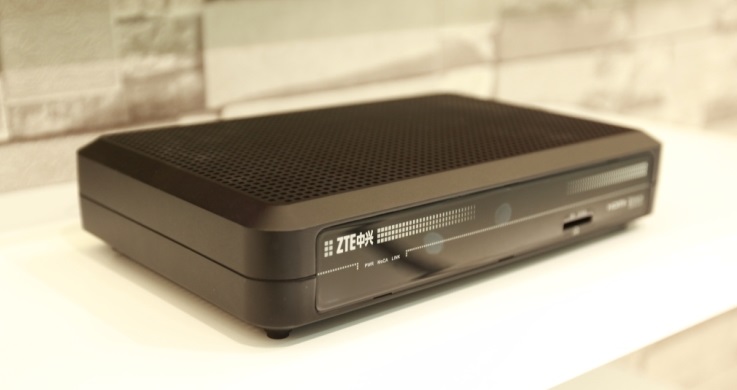
ZTE HD STBZTE has launched its 4K p60 Ultra HD set top box (STB), the ZXV10 B803, at Mobile World Congress 2014 in Barcelona.

Based on the Broadcom BCM 7252 chip, the device supports 4Kx2KP60 decoding capability, which can decode Ultra HD video with the maximum resolution of 3840×2160. In comparison to traditional HD Internet STBs, the 4K UHD STB can display more vivid and precise images to significantly enhance the user experience.

4K video technology (also named as 2160p) is a new type of resolution standard. Its UHDTV specification can deliver a resolution of 3840×2160 pixels, and the maximum Full Aperture 4K specification reaches 4096×3112. In comparison to the current mainstream 1080p resolution of 1920×1080, 4K can provide over four times the image definition quality. In the future, 4K HD TV sets will be very popular, and the 4K HD and HEVC decoding technologies will help raise the HD market tide.

GSMA and Facebook to connect the unconnected

GSMAGSMA and Facebook have announced a joint initiative to connect billions of men and women globally who currently have no access to Internet-based communications services. The initiative will focus on reducing the total cost of ownership (TCO) of mobile, given that mobile will be the enabling technology for the vast majority of people in developing markets.

The activities undertaken by GSMA and Facebook will entail working with governments in developing markets to address key factors that have an impact on affordability and availability. The partnership will focus on creating a sustainable environment to incentivise mobile infrastructure investment and usage, as well as eliminating or reducing existing mobile-specific taxation or refraining from imposing new such tax regimes.

Together, GSMA and Facebook will address a range of other issues that will improve affordability and help to connect the world’s population to the Internet, such as maximising the availability of harmonised spectrum to drive mobile broadband adoption; evaluating the establishment of local Internet Exchange Points; fostering the development of local Internet content; and examining the effectiveness of Universal Service Funds.

HTC unveils mid-range Desire 816 smartphone

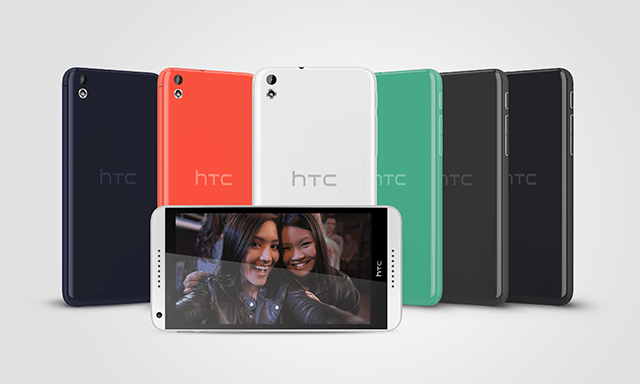
HTC Desire 816HTC has unveiled the first model in its 2014 mid-range portfolio — the HTC Desire 816, which packs an advanced feature set that makes it one of the better value smartphones.

The first edition of the new-look HTC Desire family comes fully loaded with HTC’s iconic dual-frontal speakers and HTC BoomSound, while HTC BlinkFeed keeps users up-to-date with the latest news and social updates on the 5.5-inch screen. A 13MP rear-facing camera complete with HTC Zoe and automatic highlight videos, as well as a 5MP front-facing camera, make it ideal for capturing both selfie and landscapes.

The new smartphone is powered by a quad-core, 1.6 GHz processor and offers 4G LTE connectivity.

Qualcomm CEO receives 2014 GSMA Chairman’s Award

Formal headshot of Dr. Paul E. Jacobs, CEO & Chairman of the Board.Dr Paul E Jacobs, Chairman and CEO of Qualcomm, has been named the recipient of the 2014 GSMA Chairman’s Award. Established in 1995, the award recognises outstanding personal contribution to the growth and development of mobile communications around the world.

“This award recognises Paul’s long-term contribution, as well as that of Qualcomm, in delivering sustained innovation, ecosystem investment and a commitment to the convergence of technology standards for next-generation interoperability. The mobile industry has been a major beneficiary of his commitment to innovation and leadership, as have the billions of men and women around the world whose lives have been changed by mobile,” said Jon Fredrik, Chairman of GSMA.

Founded in 1985, Qualcomm has become one of the telecommunications industry’s greatest start-up success stories, pioneering some of the most significant innovations and technical developments and through its unique business model, heavily investing in R&D and broadly licensing its intellectual property to more than 250 companies across the industry.

NVIDIA unleashes first Maxwell-based GPU

geforce gtx 750 tiNVIDIA has introduced the GeForce GTX 750 Ti and GTX 750, the first GPUs based on the new Maxwell graphics architecture.

A GeForce GTX 750 Ti running at 1080p resolution doubles the performance and uses half the power of the GTX 550 Ti, which was built with the Fermi architecture, and is one of the most used NVIDIA GPUs, according to the Steam Hardware Survey.

“We know that to advance performance, we must advance performance per watt, because every system we design for has a power limit — from supercomputers to PCs to smartphones,” said Scott Herkelman, General Manager of the GeForce business unit at NVIDIA. “That’s why we architected Maxwell to be the most efficient GPU architecture ever built.”

Samsung rolls out slimmer Tab

Galaxy Tab 3 LiteFancy a slimmer Samsung Galaxy Tab? Samsung has rolled out the Galaxy Tab 3 Lite (7.0”) WiFi, which  sports a slim, lightweight design with a more compact bezel that makes it comfortable to carry around in one hand. The device’s large 3,600mAh battery maximises portability so that users can enjoy up to eight hours of video playback without the need for an adapter.

Its enhanced features and services gives users a variety of ways to capture, view, listen, create, and share content with others without compromising value.

The Galaxy Tab 3 Lite (7.0”) WiFi’s 7-inch display comes with optimal resolution designed to bring users a better viewing experience. The menu bar is situated on the device’s bezel, rather than on the screen, in order to maximise the wide screen experience.

Tablets account for half of PC shipment in Q4

CanalysTablet shipment grew 65.2 percent year-on-year to reach 76.3 million units in Q4, according to Canalys. This represents nearly half (48.3 percent) of the global PC market, which increased 17.9 percent during that period. Excluding tablets, shipment declined 6.9 percent year-on-year with falls in all regions. 

Apple remained the PC market leader in Q4, shipping 30.9 million units to take a 19.5 percent share of the market. It shipped 26.0 million iPads, which accounted for 84.3 percent of its total shipment in Q4. Apple’s share of the overall tablet market increased sequentially from 27.3 percent to 34.1 percent, with the launch of the iPad Air and iPad mini with Retina display providing a much needed boost. The original iPad mini also fell in price, down to US$299 in the US, making it cheaper than ever to buy an iPad. But competition is mounting and Android tablets are falling in price, which will put pressure on Apple’s market share in 2014.

Lenovo secured an 11.8 percent share in Q4, narrowly holding onto second place. Lenovo’s PC shipments increased 25.5 percent year-on-year, driven by growth outside of its core Chinese market, where its shipment declined. Lenovo’s 11.7 percent decline in notebook shipments in China was offset by impressive growth in other regions, notably EMEA, where shipments grew 30.4 percent. Shipments in Latin America also grew strongly, following the acquisition of CCE in the first quarter of 2012.Lenovo was early to embrace Android as a tablet OS, while the likes of HP and Dell waited for Windows 8 and prioritized margin over volume. Lenovo’s strategy has paid off, not only in its home market but worldwide.

Ultra-portables grow 100% in 2013

abi researchUltra-portables are becoming increasingly popular, growing 100 percent from 2012 to 2013, according to ABI Research. This translates to 12.3 percent (22.5 million) of notebook PC shipment in 2013 (182.7 million).

“Across 24 countries tracked in November 2013, we found average ultra-portable PC selling prices ranging from US$940 to US$1,540 with the majority of models offered above US$1,200 in each country,” said Jeff Orr, Senior Practice Director of ABI Research. “The ASPs suggest ultra-portables including the convertible and detachable 2-in-1 configurations remained at the high-end of the notebook PC category exiting 2013.”

Beyond Apple’s MacBook Air running MacOS, the bulk of ultra-portable PCs are powered by the Windows 8 operating system, which suffered fits and starts during 2013 due to usability issues and poor first impressions by early adopter audiences. A revision, Windows 8.1, was released in the second half of the year to address these concerns, though popular opinion suggests many considering a refresh to their existing systems are willing to wait for the hiccups to be worked out before making a financial commitment.

Samsung is top global semiconductor buyer

GartnerSamsung Electronics is the world’s top semiconductor buyer, and together with second placed Apple, increased their combined semiconductor demand by 17 percent in 2013, according to Gartner.

The two companies consumed US$53.7 billion of semiconductors in 2013, an increase of $7.7 billion from 2012.

“Samsung Electronics and Apple have topped the semiconductor consumption table for three years running, with their share of the design total available market (TAM) rising from 12 per cent in 2011, to 17 per cent in 2013,” said Masatsune Yamaji, Principal Research Analyst of Gartner. “This increase clearly shows how fast the presence of these two companies has expanded over the last three years and why their decisions have technology and pricing implications for the whole semiconductor industry.”

APAC PC market shrank 10% in 2013

IDCThe Asia/Pacific (excluding Japan) PC market declined 10 percent in 2013 to reach 108 million units, according to preliminary results from IDC.

The economic sluggishness in big emerging markets in the region adversely affected buying sentiments, with education sector projects being a lone bright spot in the commercial space, without which the region could have dropped even further. On the consumer side, smartphone and tablet distractions spread throughout the region this year, further contributing to the sharp decline in the PC market.

In Q4, the market came in two percent below IDC’s initial forecasts with a nine percent year-on-year decline. While most of the region was generally in line with forecasts, Thailand stood out as an exception, as the market there was plagued by the ongoing political turmoil. Shipment volumes this quarter will likely be the lowest in Thailand in the last four years.

Huawei teams up with the Gunners

HuaweiHuawei has taken a shot at the English Premier League by becoming the official smartphone partner of league leaders Arsenal.

Huawei and Arsenal announced the global deal, which lasts until the end of season 2015/16 at the Arsenal Training Centre in Colney, Hertfordshire, with members of the first team including, Aaron Ramsey, Lukas Podolski and Mesut Özil along with manager Arsène Wenger.

“We are delighted to be partnering with Huawei at such an exciting time in the development of its brand globally, and in particular in the UK and Europe,” said Tom Fox, Chief Commercial Officer of Arsenal.

Facebook’s Mark Zuckerberg to speak at MWC

GSMAMark Zuckerberg, Founder and CEO of Facebook is among the line-up of new speakers in the keynote programme at the upcoming 2014 GSMA Mobile World Congress (MWC).

He will be headlining in the first of the week’s Mobile World Live keynote sessions on Monday, February 24 at 18:00-18:45. In this session, he and renowned technology journalist and writer David Kirkpatrick will explore the importance of extending the benefits of ubiquitous Internet access to the unconnected world. In addition to the live audience in the Conference Village in Fira Gran Via, the Mobile World Live keynotes will be streamed live across the venue and to hundreds of thousands of viewers globally via the Mobile World Live portal.

“Mobile World Congress 2014 is set to be our biggest, most ambitious and most diverse event yet, offering new experiences for attendees across the growing mobile ecosystem,” said Michael O’Hara, Chief Marketing Officer of GSMA. “Over four days, attendees will have the opportunity to see just how broadly mobile is impacting our everyday lives, how we work, live and play. We’re looking forward to seeing the mobile world gather in Barcelona.”

Companies need to catch up with mobile customers

ForresterCompanies worldwide are quickly realising that mobile has not only changed digital operations, but that it will fundamentally change entire businesses in decades to come, according to Forrester Research.

2014 will be an incremental year on this journey, as companies increase investments to transform their businesses and race to keep up with the growing mobile mind shift, with an installed base of more than two billion smartphones globally. In the report, Forrester Analysts Thomas Husson and Julie Ask outline key mobile trends anticipated for 2014, including::

  • Big data, big data, big data. Mobile is transformative but only if consumers are engaged in their exact moment of need with the right services, content, or information. Insights gleaned from data over time will be essential to know how to best serve customers in that moment.
  • Mobile advertising will start to mature. New mobile-centric ad formats will emerge, with more effective mobile video inventory and more mobile ad network inventory shifting to the exchanges.

Audi adds NVIDIA Tegra-based visual computing power to its cars

Audi dashboardThree new in-vehicle systems powered by the NVIDIA Tegra Visual Computing Module (VCM) will soon begin shipping in Audi’s vehicles.

These innovative solutions, disclosed at the German automaker’s press conference at the 2014 International Consumer Electronics Show, include:

  • a connected infotainment system with twice the performance of its predecessor;
  • the world’s first automotive-grade tablet that is fully integrated into the car’s infotainment system; and
  • a high-resolution digital cockpit with unprecedented, vivid 3D graphical displays.

Worldwide PC, tablet, ultramobile, and mobile phone shipment to grow 7.6% this year

GartnerGlobal shipment of devices (PCs, tablets, ultramobiles, and mobile phones) are projected to reach 2.5 billion units in 2014, a 7.6 percent increase from 2013, according to Gartner.

Among the operating system (OS) market, Android is on pace to surpass one billion users across all devices in 2014. By 2017, more than 75 percent of Android’s volumes will come from emerging markets.

“The device market continues to evolve, with buyers deciding which combination of devices is required to meet their wants and needs. Mobile phones are a must have and will continue to grow but at a slower pace, with opportunities moving away from the top-end premium devices to mid-end basic products,” said Ranjit Atwal, Research Director at Gartner. “Meanwhile users continue to move away from the traditional PC (notebooks and desk-based) as it becomes more of a shared content creation tool, while the greater flexibility of tablets, hybrids and lighter notebooks address users’ increasingly different demands.”

New alliance formed to bring Android to automobile

A coalition of auto and technology companies have formed a new industry alliance to bring the Android platform to a device that’s always been mobile: the car.

Audi, GM, Google, Honda, Hyundai, and NVIDIA have joined together to form the Open Automotive Alliance (OAA), a global alliance of technology and auto industry leaders committed to bringing the Android platform to cars starting in 2014. OAA is dedicated to a common platform that will drive innovation, and make technology in the car safer and more intuitive for everyone.

OAA is aimed at accelerating auto innovation with an approach that offers openness, customization and scale, key tenets that have already made Android a familiar part of millions of people’s lives. This open development model and common platform will allow automakers to more easily bring cutting-edge technology to their drivers, and create new opportunities for developers to deliver powerful experiences for drivers and passengers in a safe and scalable way.

NVIDIA unveils revolutionary Tegra K1 super chip for mobile platform

NVIDIA Tegra K1NVIDIA unveiled at CES the Tegra K1 mobile processor, a 192-core super chip featuring the same NVIDIA Kepler architecture that powers the NVIDIA GeForce GTX 780 Ti. For the first time, next-generation PC gaming will now be available on mobile platforms.

The Tegra K1 processor sets new mobile standards by supporting the latest PC-class gaming technologies, enabling it to run sophisticated gaming engines like Epic Games’ Unreal Engine 4. It delivers advanced computation capabilities to speed the development of applications for computer vision and speech recognition. And its extraordinary efficiency delivers higher performance than any other mobile GPU at the same power level.


“Over the past two decades, NVIDIA invented the GPU and has developed more graphics technologies than any other company,” said Jen-Hsun Huang, co-founder and CEO, NVIDIA. “With Tegra K1, we’re bringing that heritage to mobile. It bridges the gap for developers, who can now build next-gen games and apps that will run on any device.”

IMS deployments to reach US$4b by 2017

abi researchIMS Core Network deployments are edging up as operators put the necessary infrastructure and capacity in place for planned 2014 VoLTE launches, according to ABI Research.

Spending for the core network products (HSS, CSC, Media Controllers and Gateways, MSF, IBCF, SBC and P-CSCF) integral to a functioning IMS network will reach US$4 billion by 2017. “We see increasing IMS Core Network revenues through 2017, after which IMS revenues will flatten and reflect capacity expansion,” said Joe Hoffman, Research Director of ABI Research.

IMS spending for mobile 4G markets follows the LTE deployments, as operators seek to get their network coverage in place, stabilised, and compatible mobiles for VoLTE become available. The leading LTE market, North America, will peak 2015 to 2016, while the largest market, Asia-Pacific shows continued growth into the foreseeable future.

Gartner: 26b Internet of Things units by 2020

GartnerThe Internet of Things (IoT), which excludes PCs, tablets and smartphones, will grow to 26 billion units installed in 2020, representing an almost 30-fold increase from 0.9 billion in 2009, according to Gartner.

Gartner said that IoT product and service suppliers will generate incremental revenue exceeding US$300 billion, mostly in services, in 2020. It will result in US$1.9 trillion in global economic value-add through sales into diverse end markets.  The verticals that are leading its adoption are manufacturing (15 percent), healthcare (15 percent) and insurance (11 percent).

IoT is the network of physical objects that contain embedded technology to communicate and sense or interact with their internal states or the external environment.

Telecom New Zealand launches ultra mobile 4G LTE network

Telecom NZTelecom New Zealand has launched a new 4G LTE network that can provide speeds of up to 150 Mb/s to mobile subscribers in parts of Auckland, Wellington and Christchurch.

The telco has made access to the 4G network free for all of its current subscribers who have 4G-capable devices. It recognises that the network’s faster data will quickly become the “new normal” for New Zealanders who have embraced smart devices.

According to Tim Miles, CEO of Telecom’s enterprise business arm Gen-i, 4G would help to feed growing demand for new applications which leverage the high speeds, while the seamless integration of the 4G network with 3G, fibre and Wi-Fi into a single platform for mobility would deliver a superior overall experience for customers.

nubia nabs 2.5m orders for Z5S and Z5s mini smartphones

Nubia Z5SZTE’s boutique smartphone brand nubia has received 2.5 million orders for the Z5S and Z5S mini on JD.com as consumers in China.

The response to Z5S, priced at RMB1,999, and Z5S mini, priced at RMB1,499, surpassed a sales record previously set by Xiaomi. The two new smartphones were designed using consumer feedback garnered by nubia and JD.com in a C2B (consumer to business) approach to deliver a customer-defined user experience. Z5S and Z5S mini take nubia’s strengths in smartphone photography to a new level, becoming the first phones in China to offer the optical image stabiliser feature.

The new NEOVISION 3.0 system on Z5S and Z5S mini bring the feature of independent white-balance to smartphone users in China for the first time, after nubia pioneered independent focus and independent light-metering. The advanced imaging technology offered on Z5S and Z5S mini have earned the new handsets the moniker of “Single-Lens Reflex (SLR) Smartphones.” In addition, nubia’s industry-leading photography technology is now available for beta downloads (nubia Camera) by users of other handset manufacturers.

1O1O and one2free launch first VoLTE network in Hong Kong

1010 and one2free VOLTE-1O1O and one2free have turned on the first VoLTE (Voice over LTE) network in Hong Kong powered by Hong Kong’s Trusted Network. The full commercial launch is expected to take place in the first half of 2014, in line with projected device maturity in the market.

CSL’s VoLTE offers clearer voice, instant connection, and better quality video calls enabled by ZTE’s IMS (IP Multimedia Subsystem) solution. Customers will experience a clearer voice and richer multimedia experience, with a distinct improvement in video call quality with VoLTE.

VoLTE also allows 1O1O and one2free to achieve better spectral efficiencies and will increase network capacity and subsequently enhancing the 4G LTE experience.

ViewSonic VX52 series entertainment displays deliver ultimate gaming experience

ViewSonic 52ViewSonic has launched the VX52 series of entertainment displays, which includes the 24-inch (23.6-inch viewable) VX2452mh and 22-inch (21.5-inch viewable) VX2252mh.

The new displays feature Full HD resolution and ClearMotiv II technology that delivers 2ms ultra-fast response times for blur-free, detailed images. Paired with an ultra-high 50M:1 MEGA Dynamic Contrast Ratio and dual built-in 2W stereo speakers, the VX52 series’ sharp, crisp color performance and immersive sound make it perfect for extreme gaming and multimedia entertainment.

The series also features ViewSonic’s proprietary Game Mode technology, which enhances visibility and detail by brightening the dark scenes of video games for the ultimate gaming experience.

Worldwide server market revenue down 3.7% in Q3

IDCThe server market continued to decline for the third consecutive quarter. According to IDC’s Worldwide Quarterly Server Tracker, factory revenue in the worldwide server market decreased 3.7 percent year over year to $12.1 billion in Q3.

Server market demand remained soft ahead of a forthcoming refresh cycle, which is expected to emerge in early 2014. After increasing modestly in Q2, server unit shipments were flat year over year in Q3 with 2.3 million units shipped worldwide.

On a year-over-year basis, volume systems experienced 3.5 percent revenue growth. At the same time, demand for midrange and high-end systems experienced year-over-year revenue declines of 17.8 percent and 22.5 percent respectively in Q3. The midrange and high-end segments were impacted by difficult year-over-year compares and continued weakness in Unix demand while volume demand was helped by solid x86 server demand.

SEA smartphone sales up 61% in first three quarters

gfk_logoSoutheast Asia consumers bought 41.5 million smartphones, spending US$10.8 billion in the first three quarters of this year, according to GfK Asia.

Indonesia led the way with sale of 14.8 million smartphones worth more than USS3.33 billion. Thailand and Malaysia were next with 7.2 million and 6.4 million units sold respectively. However, in terms of smartphone sales revenue, the ranking of these two countries are switched with Malaysia garnering US$2.25 billion while Thailand raked in US$1.96 billion in January to September.

“The increasing affordability of smartphones, particularly in the developing markets is helping many consumers in these countries make the switch from their basic feature phones to own their very first smartphone,” said Gerard Tan, Account Director for Digital Technology of GfK Asia. “It is worth highlighting the significant milestone of September being the month whereby sales penetration reached the halfway mark; where one in every two mobile handsets purchased in the region is now a smartphone.”

Red Bull builds global B2B portal with hybris

Red BullRed Bull has implemented a new global B2B order management portal based on the hybris B2B Commerce solution. Known as the SOET 2.0 Solution, the portal provides a highly flexible solution for quick and easy order entry for global retailers and distributors placing orders with the beverage brand across multiple channels.

Launched in March, the global roll-out was completed in June  and 79 countries are now using Red Bull’s order management portal utilizing hybris’ B2B Commerce solution.

Founded by Dietrich Mateschitz in the mid-1980s and inspired by functional drinks from the Far East, Red Bull is currently available in more than 165 countries.

Lower-priced models drive explosive smartphone growth in India

IDCIndia’s smartphone market grew an astounding 229 percent year-on-year in Q3. According to IDC’s APEJ Quarterly Mobile Phone Tracker, vendors shipped a total of 12.8 million smartphones in Q3 compared to 3.8 million units in the same period of 2012. Q3 also saw an increase of 28 percent over Q2.

The 5.0- to 6.99-inch screen size smartphones continued to show sustained growth, contributing 23 percent of the overall market in terms of volume.

The overall mobile phone market (feature phones and smartphones) had a 12 percent growth year-on-year and a seven percent growth quarter on quarter with the share of feature phones sliding further to make 81 percent of the total market in Q3 despite the feature phone market growing at three percent growth over the previous quarter.

Yippee, no more spam calls!

No need to hang up the phone anymore to avoid unwanted calls.

In the technological era, one of the most irritating things about being easily reachable is being easily reachable — by people you don’t want to talk to.

What compounds it is if you are travelling overseas, maybe halfway around the world, and you get a call in the middle of the night. Thinking it must be something important, you pick it up and get a pitch on credit line, loan, property, or investment. It’s a real head banger!

The Do-Not-Call (DNC) registry could not have come any sooner in Singapore. From today, those who want to stop getting unwanted calls can list their numbers on the national DNC registry. The registry will block calls, SMSes and fax messages from January 2 next year.

Huawei turbocharges LTE speed and revenue

XL Axiata representatives demonstrating Turbo Button. Inset: The Turbo Button mobile app.

Huawei has demonstrated a Turbo Button solution for dramatically boosting delivered LTE speeds with a simple push of a button on a mobile app.

Turbo Button allows mobile subscribers to easily accelerate their data speeds on demand from 1 Mb/s up to 70 Mb/s over a set period of time with just one touch on a downloadable app. The service is especially useful for improving the experience of high-speed web surfing, online gaming, large file uploads and downloads, and HD video streaming among other bandwidth intensive services.

The demo was conducted by Indonesian mobile operator XL Axiata at the recent 2013 Asia-Pacific Economic Cooperation (APEC) forum in Indonesia and made exclusive use of Huawei’s Networker solution for LTE. XL

Taxi booking app targets Hong Kong expats and tourists

TaxiwiseHong Kong startup Taxiwise Company Limited has introduced a taxi booking mobile app for expats and tourists in Hong Kong.

Called Taxiwise, the app provides passengers with an easy way to book taxi service in English or Chinese language.  For drivers, they get more quality orders without language issues, as the app automatically translates orders from English to Chinese.  Venues can book and manage multiple taxis for their clients with an easy-to-use dashboard.

The idea came about when founder Jean Marc Ly had an unpleasant experience while trying to hail a taxi. He was rejected  nine times as taxi drivers were either busy or did not understand English well. It inspired him and his two co-founders to develop a taxi booking mobile app with built-in translation, advanced booking and order matching functions.

Smartphone shipment up 40% while average price drops 12%

IDCWorldwide smartphone shipments are expected to surpass one billion units in 2013, representing 39.3 percent growth over 2012, according to a recently published mobile phone forecast from IDC Worldwide Quarterly Mobile Phone Tracker.

Despite a number of mature markets nearing smartphone saturation, the demand for low-cost computing in emerging markets continues to drive the smartphone market forward. By 2017, total smartphone shipments are expected to approach 1.7 billion units, resulting in a compound annual growth rate (CAGR) of 18.4 percent from 2013 to 2017.

While shipment has gone up, the average selling price (ASP) has seen a steady decline. Android has enabled a number of new manufacturers to enter the smartphone market supported by a variety of turnkey processing solutions. Many of these handset vendors have focused on low-cost devices as a way to build brand awareness.

Half billion LTE connections in Asia in 2017

GSMAThe uptake of 4G-LTE is expected to grow to pass one billion by 2017, according to a new study by GSMA Intelligence. This translates to one in eight of the more than eight billion total mobile connections forecast by that point, up from 176 million LTE connections at the end of 2013. And around half of these are expected to be in Asia.

Nearly 500 LTE networks are forecast to be in service across 128 countries, roughly double the number of live LTE networks today.

“Since the launch of the first commercial 4G-LTE networks in late 2009 we are seeing deployments accelerate across the globe,” said Hyunmi Yang, Chief Strategy Officer of GSMA. “Our new report highlights a number of factors that are driving LTE growth: the timely allocation of suitable spectrum to mobile operators; the availability of affordable LTE devices; and the implementation of innovative tariffs that encourage adoption of high-speed data services. Mobile operators in both developed and developing markets are seeing LTE services contributing to a significant increase in ARPU.”

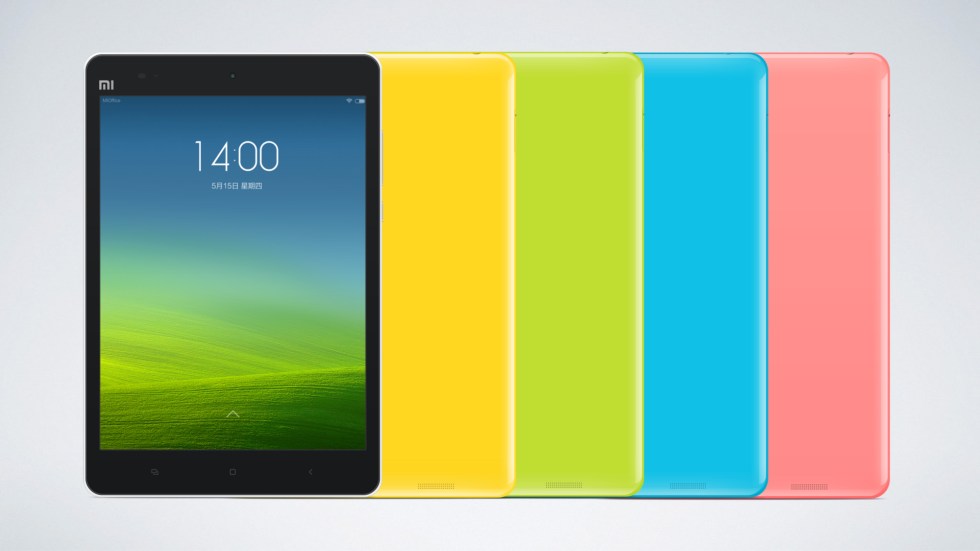
Tablets to account for half of PC market in 2014

 Source: Canalys

Tablets will almost out ship all other PC form factors combined, forming almost 50 percent of the total client PC market (desktops, notebooks, and tablets) in  2014, according to Canalys.

The worldwide client PC market grew 18 percent in Q3, despite desktop and notebook shipments continuing to decline. Tablet PC shipments accounted for 40 percent of PC shipments in Q3, less than half a million units behind global notebook shipments.

Tablet domination is set to continue, with Canalys forecasting 285 million units to ship in 2014, growing to 396 million units in 2017. Apple and Samsung are expected keep ahead of their competitors in the medium term, but there could be challenges for both vendors as competition in the tablet market continues to heat up.

ZTE partners NGMN on converged network management services

ZTEZTE has announced a strategic commitment to provide enhanced converged operations capabilities as a member of the Next Generation Mobile Network (NGMN). ZTE is collaborating with both its customers as well as NGMN, an alliance led by 22 of the largest international mobile network operators, via its Next Generation Converged Operations Requirements (NGCOR) project in order to meet and exceed current industry needs.

ZTE’s goal in the partnership is to help eliminate technical barriers caused by vendor incompatibilities, reduce network complexity, and minimize operations and maintenance costs.  Based on years of system analysis, ZTE has planned a set of unified OSS platforms with unified interface standards to support converged network management. Once the platform is established, ZTE estimates the unified and centralized database will decrease the number of interfaces by 80 percent.

“ZTE is proud to be working with the NGMN and our key customers to advance these converged operations solutions,” said Sun Zhenge, Vice President of ZTE. “ZTE’s commitment is aimed at improving efficiency and quality of converged solutions, while also decreasing the time and cost involved.”

hybris announces B2C Commerce Accelerator for China

hybris SAPhybris has announced the coming availability of hybris B2C Commerce Accelerator for China. As businesses move from a single channel, such as print catalogues, to multiple channels — including online, mobile, print and call centers, complexity increases.

Founded on hybris Commerce Accelerator, hybris B2C Commerce Accelerator for China has been specially configured and equipped with functionalities specifically to address Chinese e-commerce needs.

Adapted expressly for the Chinese market, it comes with pre-configured page templates that are designed to suit the highly characteristic ‘click’ culture and specific shopping atmosphere enjoyed by Chinese consumers, providing big product images, larger merchandising bars and a very visual user experience.

Power limiting progress in mobile devices

Neil TrevettPower is a big limitation in mobile devices despite improvements in battery power, according to Neil Trevett, Vice President Mobile Content of NVIDIA.

“Power is the new performance limiter. Developers need to use acceleration to preserve battery life and high performance,” he said at NVIDIA Tech Talk at SIGGRAPH Asia in Hong Kong.

On the other hand, advanced mobile GPUs and new sensors are combining to make vision processing the next wave of mobile visual processing. NVIDIA is building a stack of advanced silicon, APIs and libraries to enable advanced mobile vision applications.