Tag: Canalys

Samsung and Xiaomi neck-to-neck in India in Q2

The Redmi 5A was Xiaomi's bestselling phone in India in Q2.
The Redmi 5A was Xiaomi’s bestselling phone in India in Q2.

Xiaomi and Samsung shipped 9.9 million smartphones each to India in Q2. Together they account for 60 percent of the total shipment that quarter, according to Canalys.

100m smart speakers by end of 2018

The Amazon Echo Dot and its siblings account for more than half of installed smart speakers.

Smart speakers are picking up steam with the installed base expected to hit 100 million by the end of this year, according to Canalys. That’s 2.5 times the size of end 2017.

Google moves to top of smart speaker market in Q1

Google has ousted Amazon from the perch of the global smart speaker market. According to Canalys, Google shipped 3.2 million units with its Google Home and Google Home mini series , surpassing the 2.5 million units of the Amazon Echo series for the first time in Q1.

Xiaomi tops India smartphone market in Q1

Xiaomi shipped 3.5 million Redmi Note 5A smartphones in Q1.

Building on a momentum of 155 percent annual shipment growth in India last year, Xiaomi started Q1 at the top with a whopping nine million plus units to snag 31 percent market share, according to Canalys.

Apple Watch outsells Swiss watches

How the watch industry has changed! As a show of its strength and popularity, Apple Watch has taken the crown, not just among smartwatches, but outselling the entire Swiss watch industry in Q4. Now, that’s quite an accomplishment!

Sweet quarter for Apple in China

iPhone 8
The iPhone 8 helped spur Apple’s growth in Q3.

The launch of the iPhone 8 and drop of prices of older models have helped Apple turn in a sterling quarter in China, with shipment rising 40 percent to 11 million units this Q3.

AI to fuel next wave of cloud growth

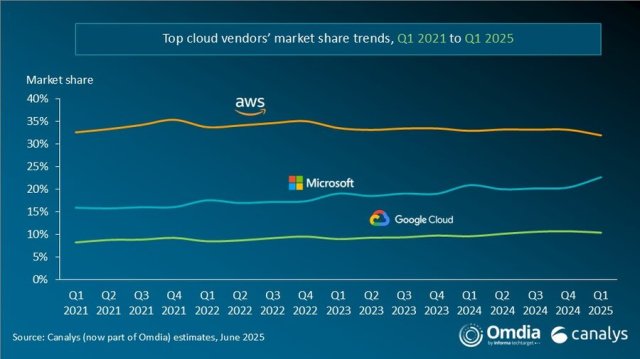
The cloud infrastructure services market is continuing to grow strongly, up 47 percent year on year in Q2 to reach US$14 billion, according to Canalys. Growth was driven by demand for primary cloud infrastructure services, such as on-demand computing and storage, across all customer segments and industries.

However, future growth is expected to be fueled by customers using the artificial intelligence (AI) platforms cloud service providers are building to develop new applications, processes, services, and user experiences.

Amazon Web Services (AWS) maintained its leadership position, growing 42 percent on an annual basis and accounting for more than 30 percent of total spend. But its growth rate was lower than those of its main rivals, Microsoft (up 97 percent growth) and Google (up 92 percent), but higher than fourth-placed IBM (up 23 percent). Overall, the top four cloud services providers represented 55 percent of the cloud infrastructure services market, which includes IaaS and PaaS.

Singapore and Shanghai among top autonomous vehicle cities

Shanghai and Singapore are among the world’s top four cities that are ready for autonomous vehicles, according to Canalys.

San Francisco is out in front while London is also among the top four. These rise to the top of a group of cities that, due to their size and populations, have some of the most complex transport networks in the world. The top four have a high need for autonomous vehicles to revolutionise their transport systems, combined with the ability to make it happen.

“Naturally, San Francisco leads the way and is the city best able to implement autonomous vehicles. The Bay Area is renowned as the world’s AV testing capital,” said Chris Jones, Chief Analyst of Canalys.

Battle for the cloud

The battle for cloud dominance has intensified with key players all growing significantly in Q1. The worldwide cloud infrastructure services market grew 42 percent year on year to reach US$11.4 billion, according to Canalys.

Amazon’s AWS maintained its leadership, holding a stable global market share of 31 percent. It was followed by Microsoft, Google and IBM.

In terms of growth, Microsoft led with 93 percent while Google was up 74 percent, AWS 43 percent, and IBM 38 percent.

Huawei smartphone strides ahead in China

Huawei has taken top spot again in China’s smartphone market, edging past Oppo after two quarters of trailing in second place. According to Canalys, the Chinese smartphone giant, which launched the P10 and P10 Plus during MWC, shipped close to 21 million units to secure an 18 percent market share in Q1.

Despite strong annual growth of 55 percent, Oppo fell to second place with shipments of just under 20 million units. Third-placed Vivo had the lowest annual growth of the top three, capturing a 15 percent share with its shipment of 17 million units.

“China’s smartphone market continues to grow, with shipments increasing by over nine percent year on year this quarter. But there is a clear indication that the market is consolidating. The top three vendors are pulling away at the head of the market, accounting for more than 50 percent of shipments for the first time this quarter,” said Lucio Chen, Research Analyst of Canalys.

HTC leads in China VR market

HTC has captured the top spot in the virtual reality (VR) headset market in China with 18 percent market share, according to Canalys. It shipped more than 50,000 of its Vive headsets in China.
Local vendor DeePoon came a close second, taking a 17 percent share with two headsets to compete with HTC. In 2016, almost 70 percent of DeePoon’s shipment were of its M2 smart VR headset.
Overall, around 300,000 VR headsets were shipped in 2016, making it the world’s second largest market with a share of around 15 percent.

Alibaba Cloud rises 128% in Q3

Alibaba Cloud has outpaced cloud service provider leaders with growth of 128 percent to reach US$221 million in Q3. However, AWS increased its lead, accounting for 32.2 percent of total spend, followed by Microsoft Azure with 17.3 percent and Google Cloud with 7.6percent, according to Canalys. Both Microsoft (up 115.6 percent) and Google (up 79.6 percent) grew faster than Amazon.

Global cloud infrastructure services expenditure increased 53.1 percent year on year to reach US$10 billion for the first time in Q.

“Alibaba has established itself as the largest e-commerce business in China and is starting to dominate the provision of cloud infrastructure services in the country,” said Daniel Liu, Research Analyst of Canalys.

Smartphone shipment up 6% in Q3

CanalysThree Chinese smartphone vendors — Huawei, Oppo and vivo — helped drive the global smartphone market in Q3. Together their shipment grew 60 percent while the overall global market just moved up six percent that quarter, according to Canalys.

The standout performer was Oppo, which had a stellar quarter, taking hold of the Chinese market from under the noses of its rivals. Its smart phone shipments grew around 40 percent sequentially and 140 percent year on year. Tough competition in China has affected Huawei’s global position, with it now looking increasingly unlikely that it will reach its annual shipment target of 140 million units.

Samsung continued to lead the market, but its issues with the Note 7 are starting to affect its business. It shipped just over 76 million units (excluding all Note 7s), down nine percent on the same quarter a year ago. In second place, Apple’s iPhone shipments also suffered an annual decline, falling five percent  to just over 45 million units.

Smartphone market in historic drop

It’s almost unthinkable but the smartphone market has dipped for the first time in its history.

According to Canalys, worldwide smartphone shipment fell from 324 million units in Q1 2015 to 321 million units in Q1 2016. The top two vendors both posted shipment declines, with Apple the worse hit.

Excluding Apple and Samsung, smartphone shipment grew five percent despite some of the big named international vendors outside the top five also faring badly. LG, Lenovo and TCL-Alcatel posted significant declines, while Sony plummeted by around 57 percent.

Apple conquers smart watch market

Apple Watch threeApple is top of the league in the smart watch market in 2015, accounting for over 12 million units and two-thirds of all shipment, according to Canalys.

Samsung returned to second place in Q4, as the improved design of the Gear S2 saw a much better consumer reception than previous wearable efforts by the company. Pebble came third and Huawei fourth, establishing itself as the leading Android Wear vendor.

Basic bands exceeded 37 million shipments for the year. Fitbit set a quarterly shipment record as it comfortably led the category. Xiaomi held second place, shipping 12 million Mi Bands during 2015.

Samsung extends lead in India smartphone market

CanalysSamsung has pulled further ahead of the competition with a quarter share of the India smartphone market in 2015, according to Canalys.

Micromax held on to second place, with annual shipment falling by more than 20%, primarily due to inventory build-up in its distribution network.

Lenovo and Motorola’s combined shipments were just short of three million units, up almost 60 percent up from the previous year, moving them past Intex to take third place in the market.

Oil gloom, data centre bloom

Oversupply of oil in the global economy is set to accelerate data centre investment, according to Canalys, which forecasted that the large data centre segment will grow eight percent in 2016 as enterprises and service providers become more ambitious with the size of their facilities.

Oil prices have declined more than 70 percent since mid-2014, and will remain low as production ramps up across the US and Middle East. Data centres, with their monolithic energy consumption, will benefit from cheaper electricity as wholesale gas prices decline. Investment will focus on larger facilities, as energy becomes less of a constraint on operating costs.

Cheaper oil will accelerate a market that is already growing. Pre-eminent cloud service providers have already reacted to data sovereignty concerns by investing in the expansion of their global cloud footprint. This will continue and industry standard servers, network security and virtualisation technologies will become key growth categories. Incumbent data centre infrastructure vendors will pivot their focus towards high-end large and hyperscale facilities, but will face stiff competition from cheaper ODM alternatives.

7m Apple Watches sold in six months

Apple WatchesApple’s magic formula for success has continued with the Apple Watch. The highly-sought after smart watch dominated the market with nearly seven million units sold since launch, according to Canalys.

And this figure in just two quarters exceeds all other vendors’ combined shipments over the previous five quarters. That’s simply amazing!

In Q3, Apple was the only smart watch vendor to ship more than 300,000 units. The quarter also saw the release of the Pebble Time Steel, which helped the company ship more than 200,000 total smart watches, while Samsung’s Gear shipment declined ahead of the Q4 release of the Gear S2. Vendors will continue to battle for position behind Apple in Q4 as a raft of new devices from a diverse set of companies hits the market. For example, both Fossil and Tag Heuer will be launching their first smart watches before the end of the year.

Apple Watch makes its mark in Q2

Apple Watch rangeIt’s confirmed. Price does not matter when it comes to Apple products, or at least to Apple fans.

In its launch quarter, Apple Watch took the lion’s share of the wearable market with 4.2 million units shipped, according to Canalys. It breezed past Fitbit, Xiaomi and all the smart watch vendors, despite its significantly higher pricing.

However, early sales were hindered by two factors — Apple missing the end of year holiday season and supply constraints.

Global PC shipment down 7% in Q1

CanalysApple held on to its top spot despite a 16 percent drop in PC shipment in Q1. It shipped 17.2 million units, taking a 15 percent market share while Lenovo and HP came in second and third place respectively. Samsung was next with 9.5 million units shipped with Dell just behind with 9.4 million units.

Overall, the global PC market, including tablets, declined seven percent, according to Canalys.

“The growth drivers that previously helped the market through 2014 will have little effect this year. Vendors are struggling with exchange rate fluctuations which is making financial planning more difficult and forcing price increases. These challenges, combined with a softening of demand as Windows 10 draws nearer along with Microsoft’s free upgrade plans, means PC market declines will be greater in the second quarter than they were in the first,” said Tim Coulling, Senior Analyst of Canalys.

3D printing market to hit $20.2b in 2019

CanalysThe global 3D printer market will reach US$5.2 billion this year, up from US$3.3 billion in 2014, growing 56 percent, according to Calanys.

This is expected to grow further to US$20.2 billion by 2019, representing an expected compound annual growth rate (CAGR) of 44 percent from 2014 to 2019.

“As we expected, the 3D printing market has grown substantially over the past few years. We have seen improving print speeds, a wider range of materials and new forms of additive manufacturing methods. There has also been a substantial increase in the number of vendors entering this space, with many coming from Asia, challenging the previous dominance of 3D printing hotspots such as Germany and the US. Long-existing vendors such as Stratasys and 3D Systems are well placed to take advantage of this growth but may find their dominant positions challenged by newer rivals,” said Joe Kempton, Research Analyst of Canalys.

Tablet shipment down 12% globally in Q4

CanalysThe stats are in – tablet shipment dropped 12 percent to 67 million units in Q4, according to Canalys. The desktop market fell back into a decline in Q4 as Windows XP upgrades waned. The notebook market held firm with another quarter of just one percent growth.

Total PC shipments (desktops, notebooks and tablets) fell six percent in Q4 to reach 148 million units, resulting in full-year 2014 shipments of 528 million units, up three percent on 2013.

Apple regained the top spot in the PC market on the strength of holiday sales, with just under 27 million units shipped. Lenovo’s shipments grew six percent year on year to almost 20 million units as it increased its market share to 13.3 percent. Samsung dropped out of the top three to make way for HP, with growth of 17 percent driving shipments over 17 million units, its best quarter since Q3 2011.

Dropping oil price a US$1 trillion boost for GDP and IT spending in H1 2015

CanalysWhat has proven a massive hit for the oil and gas industry may turn out to be a silver lining for the IT industry and GDP as a whole in the first half of this year.

According to Canalys, business and consumer IT spending will be boosted by the current oil shock, as prices remain below US$50 per barrel. It believes the reduction in prices will provide a short-term economic stimulus equivalent to a large tax cut, boosting corporate profits and consumer disposable incomes, which will filter into IT spending.

“Price falls translate into a transfer of wealth from producers to importers. Oil producers received approximately US$340 billion less in the second half of 2014 compared with the first half of the year, based on average monthly production and prices. The difference will be even more significant if prices remain at US$50 per barrel and production continues at the same level for the next six months. If this scenario happens, producers will receive almost US$1 trillion dollars less compared with the first half of 2014,” said Matthew Ball, Principal Analyst of Canalys.

Wearable band shipment up 37% in Q3

Moto 360Wearable bands are all the rage with many new models announced and expected to be available in the coming months.

In Q3, nearly five million wearable bands were shipped — an increase of 37 percent quarter on quarter, according to Canalys.

Motorola Mobility’s Moto 360 is the most successful among Android Wear devices, accounting for over 15 percent of the smart band market. Despite being supply-constrained, its appealing design helped it to easily outship other Android Wear products.

Global smartphone shipment soars past 300m mark in Q3

Q3 is a stunninCanalysg quarter for smartphones as global shipment broke the 300 million unit barrier for the first time. This represented year-on-year growth of 23 percent, according to Canalys.

While Samsung and Apple remain the market leaders, the tussle for the third spot is heating up with was Xiaomi (six percent) followed closely by Lenovo and Huawei at five percent each.

“The global market is becoming more competitive, with vendors beyond Samsung and Apple enjoying growing success. A year ago, in Q3 2013, Samsung and Apple together accounted for 48 percent of worldwide smart phone shipments. While still impressive, in Q3 2014 this had slipped to 38 percent. This trend is likely to continue. It is down to the strong value proposition and increasing quality of products offered across all price points by competing vendors, most notably Chinese companies. In fact, six of the top 10 global vendors in Q3 are based in China,” said Chris Jones, Vice President and Principal Analyst of Canalys.

Apple Watch to spur worldwide wearable growth of 129% next year

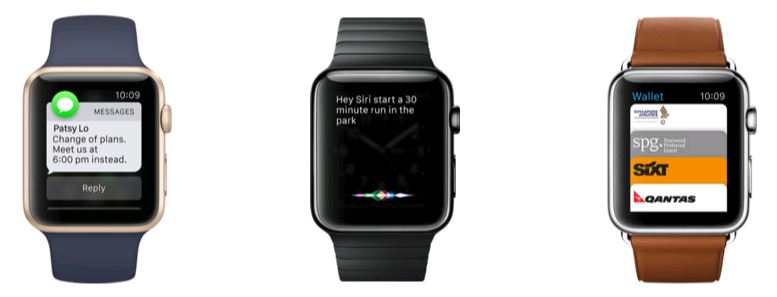
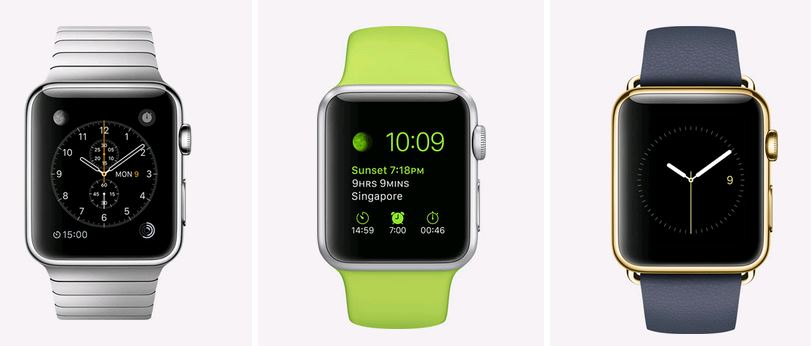
Watch lineupJust a day after Tim Cook announced the much-awaited Apple Watch to a thrilled gathering of journalists, Canalys is predicting that the device will be the biggest driver behind wearable band shipment in 2015.

The global wearable market is expected to grow 129 percent year on year to reach 43.2 million units in 2015, of which 28.2 million will be smart bands and 15.0 million will be basic bands, according Canalys.

Canalys defines smart bands as those capable of running third-party applications, and basic bands, as those which are not.

Tablet growth stagnates, notebook decline eases

CanalysWorldwide PC shipment hit 123.9 million units in Q2, representing year-on-year growth of 14 percent, according to Canalys. With no sequential growth, the positive effect that tablets have had on overall PC shipments is beginning to wear off.

Tablet shipment in Asia Pacific (including China) came in 8 percent below Q1 numbers, mainly due to a fall in shipment by Apple and Samsung.

Apple continued to lead the market with a 14 percent market share, though a 10 percent increase in Mac shipments could not make up for a decline in iPad sales, resulting in the company’s overall shipments declining by 5 percent.

More consumers buying 3D printers

Canalys3D printing has been all the rage this past year. And that’s now backed up by figures that show that this technology is gaining traction. According to Canalys, 26,800 3D printers were shipped worldwide in Q1.

What’s interesting is that while most were purchased by enterprises, 46 percent were bought by consumers, up from 43 percent last year.

“While enterprise engagement will continue to grow, it looks to be the consumer space that will drive shipments in the near future. We are already seeing significant numbers of early technology adopters and hobbyists investing in relatively cheap 3D printers. As prices continue to fall, the technology improves and use cases are tested, this trend is set to continue,” said Tim Shepherd, Senior Analyst of Canalys.

PC shipment up 5% but tablet growth slows in Q1

Worldwide client PC shipment rose five percent year on year to hit 123.7 million units in Q1 , according to Canalys. Growth in tablet shipments slowed to 21 percent, yet at 50.8 million units they continue to outship notebooks. Tablets accounted for 41 percent of the market while notebooks had 38 percent.

Notebooks and desktops in China declined 13 percent and six percent respectively compared with the previous year.

In the tablet market, there was strong growth in the Middle East (100 percent) and Greater China (74 percent). The US market was adversely affected by a drop in Apple iPad shipment, which fell 40 percent. This was offset somewhat by 20 percent growth in China, Apple’s second largest market. Worldwide, iPad shipments in Q1 fell 16 percent year on year to 16.4 million and accounted for 80 percent of Apple’s total PC shipments. Despite this, Apple continued to lead the global PC market. Its share fell both sequentially and year on year from 20 to 17 percent, due chiefly to the increasingly competitive tablet market.

Tablets account for half of PC shipment in Q4

CanalysTablet shipment grew 65.2 percent year-on-year to reach 76.3 million units in Q4, according to Canalys. This represents nearly half (48.3 percent) of the global PC market, which increased 17.9 percent during that period. Excluding tablets, shipment declined 6.9 percent year-on-year with falls in all regions. 

Apple remained the PC market leader in Q4, shipping 30.9 million units to take a 19.5 percent share of the market. It shipped 26.0 million iPads, which accounted for 84.3 percent of its total shipment in Q4. Apple’s share of the overall tablet market increased sequentially from 27.3 percent to 34.1 percent, with the launch of the iPad Air and iPad mini with Retina display providing a much needed boost. The original iPad mini also fell in price, down to US$299 in the US, making it cheaper than ever to buy an iPad. But competition is mounting and Android tablets are falling in price, which will put pressure on Apple’s market share in 2014.

Lenovo secured an 11.8 percent share in Q4, narrowly holding onto second place. Lenovo’s PC shipments increased 25.5 percent year-on-year, driven by growth outside of its core Chinese market, where its shipment declined. Lenovo’s 11.7 percent decline in notebook shipments in China was offset by impressive growth in other regions, notably EMEA, where shipments grew 30.4 percent. Shipments in Latin America also grew strongly, following the acquisition of CCE in the first quarter of 2012.Lenovo was early to embrace Android as a tablet OS, while the likes of HP and Dell waited for Windows 8 and prioritized margin over volume. Lenovo’s strategy has paid off, not only in its home market but worldwide.


Tablets to account for half of PC market in 2014

 Source: Canalys

Tablets will almost out ship all other PC form factors combined, forming almost 50 percent of the total client PC market (desktops, notebooks, and tablets) in  2014, according to Canalys.

The worldwide client PC market grew 18 percent in Q3, despite desktop and notebook shipments continuing to decline. Tablet PC shipments accounted for 40 percent of PC shipments in Q3, less than half a million units behind global notebook shipments.

Tablet domination is set to continue, with Canalys forecasting 285 million units to ship in 2014, growing to 396 million units in 2017. Apple and Samsung are expected keep ahead of their competitors in the medium term, but there could be challenges for both vendors as competition in the tablet market continues to heat up.

Large screen smartphones gaining popularity

CanalysThe numbers are clear. Big is getting more popular. Large screen smart phones (five-inch and above) accounted for 22 percent of the quarter billion smartphones shipped in Q3. This is the highest number ever and translates to a staggering 56 million units.

Samsung is the dominant player in the large screen segment. Breaking this down further, 66 percent of the 56 million smart phones had a five-inch display, 31 percent had screens between five and six inches while just three percent had six-inch or larger screens.

According to Canalys, the smartphone market grew 44 percent year-on-year in Q3. The top two vendors, Samsung and Apple, maintained their positions, with market shares of 34 percent and 15 percent respectively. Huawei, Lenovo and LG completed the top five.

Wearables the new way to track and engage customers

CanalysGoogle Glass and Samsung Gear are two of the most talked about developments in wearable devices. And many more are set to follow in their footsteps.

Canalys believes that consumerisation of IT is paving the way for even bigger transitions that will rock the IT industry. Smaller app-enabled devices (‘appcessories’) enable customers and employees to do more on the move. Adoption of wearables, such as wristbands, eyewear and sensors in clothing, will lead to a new era in which location, movement, fitness, health and potentially visual focus and interest points are tracked. The data generated by these devices creates possibilities for brands to understand, segment, target and service customers. Through functional apps, buyers and sellers are also finding new ways to interact.

‘Apps have emerged as the accelerator of current industry transitions. In place of large code bases and years of development, we now have the possibility of turning out multi-platform apps in weeks, or even days,’ said Tim Shepherd, Senior Analyst of Canalys. ‘By focusing on user experience, app developers have revolutionized how new functionality is brought to market and how behavior and activity are measured. Enterprise customers have started to exploit this capability across several disciplines, including product design, marketing, customer services and operations, and buying points are changing as a result.’

Tablets fail to lift flat PC market in Q2

Tablet shipment’s growth 42.9 percent iwas not enough to lift a sluggish PC market in Q2. Desktop and notebook shipments fell 7.4 percent and 13.9 percent respectively, according to Canalys, which believes that tablets will outsell notebooks by Q4.

PC shipment in the Asia Pacific region declined 0.5 percent year-on-year to just over 40 million units. The region was badly affected by slow shipment in China, which accounted for almost 45 percent of the region’s shipment and declined by about six percent.

Demand for smartphones and tablets is increasing around the world. Faced by an industry in transition, channel partners are exercising caution when planning and placing orders.

China’s top five vendors grab 20% of the world’s smartphone market

CanalysSamsung and Apple grew smartphone shipment by 55 percent and 20 percent respectively to maintain first and second place in Q2, according to Canalys.

However, both lost market share to Chinese vendors as the top 5 China vendors (Lenovo, Yulong, Huawei, ZTE, and Xiaomi) now account for 20 percent of the  market, up from less than 15 percent a year ago.

Altogether, some 238.1 million units were shipped in Q2, an impressive 50 percent year-on-year gain.

Android-based tablets outship iPads in Q2

Three in 10 PC shipped in Q2 were tablets. According to Canalys, more than 34 million tablets were shipped in Q2, a 43 percent year-on-year increase. Even more impressive is the fact that tablets now account for 31 percent of worldwide PC shipments.

The charge is led by Android-based tablets as Apple’s tablet shipments declined 14 percent in Q2 and saw its market share shaved to 43 percent. The chasing pack of Samsung, Amazon, Lenovo, and Acer each grew annually by over 200 percent, driven by increasing demand for small-screen tablets.

Canalys estimates that 68 percent of tablets shipped in Q2 had a screen size smaller than nine inches. “Consumers have been evaluating tablets and the results are now in,” said Tim Coulling, Senior Analyst at Canalys . “With touchscreens contributing to a high proportion of the build cost of a tablet, small-screen products can be priced very aggressively.”

Smart watches poised to take off in 2014

CanalysFancy a new accessory? How about a smart watch? It looks like smart watches are going to be the next “must have” item. According to Canalys, the worldwide smart watch market will exceed five million units in 2014.

Canalys estimates that over 330,000 smart watches were shipped in 2012, led by Sony and Motorola. Kickstarter-backed Pebble Technology has joined Sony as a market leader in 2013. More than half a million units will be shipped this year. Smart watches are then set to explode by the end of 2014, growing tenfold as a new generation of devices from Apple, Google, Microsoft, Samsung, and others are launched.

Unlike earlier products, these smart watches will provide more sophisticated software and more elegant hardware. Glanceable information, integration across sensors and hooks into web services will be key features. These companion devices will not replace smart phones, but rather complement them as ‘appcessories’.