NVIDIA, Microsoft and Anthropic have forged a strategic partnership that commits tens of billions of dollars in investments and cloud compute capacity to accelerate AI innovation and adoption. Anthropic will scale its rapidly growing AI […]
Singapore has become the home to the world’s first Global Impact AI Lab (IAL), launched by Univers in collaboration with AMD, Microsoft and National University of Singapore (NUS). Supported by Infocomm Media Development Authority (IMDA), […]
Singapore’s fast-growing AI startup ecosystem has received a major boost, thanks to a new collaboration among Microsoft, Enterprise Singapore and NUS Enterprise Announced by Singapore’s Deputy Prime Minister and Minister of Trade and Industry Gan […]
Keeper Security has launched a native integration with Microsoft Sentinel to bolster defences against the growing threat of identity abuse and privileged access misuse in enterprise environments. The integration streams real-time event data from Keeper’s […]
Microsoft solutions provider Avanade will acquire Singapore-based Total eBiz Solutions (TeBS) in an expansion drive in Southeast Asia. The acquisition will bolster Avanade’s offerings in AI, cloud, engineering, digital workplace, and automation for mid-market businesses […]
Maybank has turned to Microsoft to accelerate its digital transformation and drive AI-powered innovation. Valued at RM1 billion over five years, the collaboration is set to enhance customer experience and operational agility while fostering a […]
Education Services Australia (ESA) and Microsoft have partnered to launch an online training programme to equip Australian teachers with the skills and confidence to use generative artificial intelligence (GenAI) safely and effectively in classrooms. The […]
SAS has announced major enhancements to its flagship SAS Viya platform at the SAS Innovate 2025 conference in Orlando. These improvements aim to accelerate productivity, bolster trust and democratise advanced analytics for enterprises of all […]
Microsoft has expanded its AI Pinnacle Program in Singapore with public and private sector collaborations for AI adoption at scale in Singapore. By partnering with key stakeholders from both sectors, Microsoft aims to create a […]
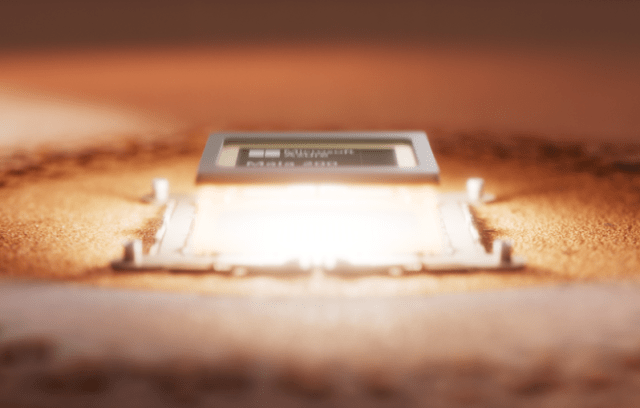
Microsoft has introduced the Majorana 1 quantum chip that is expected to bring quantum computers capable of solving complex industrial-scale problems within years rather than decades. Powered by a new Topological Core architecture, the processor […]
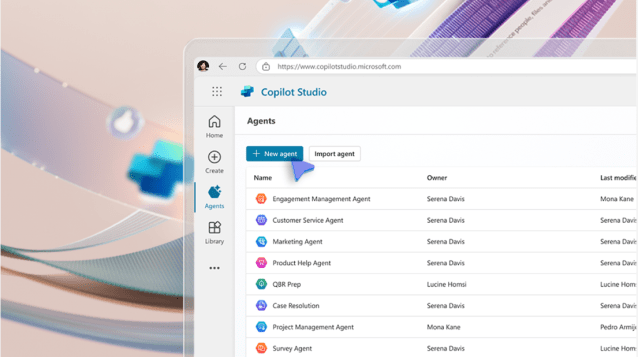
Microsoft has introduced autonomous agents designed to transform how businesses operate and scale their teams, ushering in an era of AI-first business processes that offers efficiency and productivity gains across various industries. Autonomous agents are […]
All the AI craze is spurring the growth of AI PCs. According to Gartner, global shipments of AI PCs are expected to hit 114 million units in 2025. That’s an increase of 165.5 percent from […]
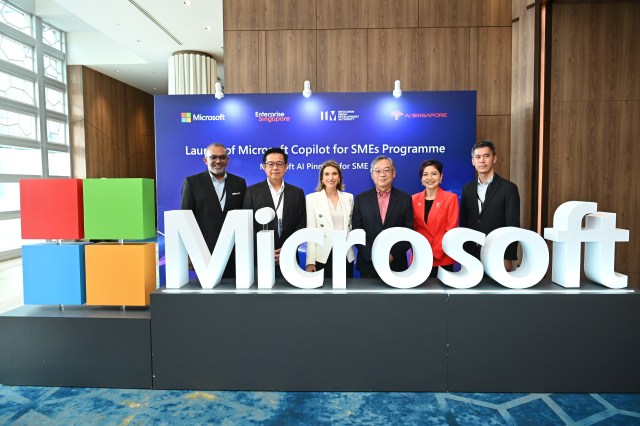
Microsoft has announced a slew of new initiatives aimed at enabling small and medium-sized enterprises (SMEs) in Singapore to harness the transformative power of artificial intelligence (AI). At the heart is the second wave of […]
Two and a half million people by 2025. That’s the commitment that Microsoft has made to equip Asean with AI skills. To be implemented in partnership with governments, non-profit and corporate organisations, and communities across […]
Microsoft has introduced new sklling initiatives with SkillsFuture Singapore (SSG) and NTUC LearningHub to advance AI capabilities for businesses and employees through new skilling initiatives. The collaboration with SSG will benefit 2,000 SMEs over three […]
NCS is teaming up with Microsoft to supercharge the adoption of artificial intelligence (AI) and cloud solutions in the Asia-Pacific region. This partnership aims to establish a dedicated Microsoft growth engine, fueling innovation and empowering […]
Integrated Health Information Systems (IHiS) and Microsoft have signed a Memorandum of Understanding (MoU) to deepen collaboration in generative AI and cloud innovation. They are developing Secure GPT for Healthcare Professionals powered by Azure OpenAI […]
Rubrik is collaborating with Microsoft to integrate Rubrik Security Cloud with Microsoft Sentinel and Azure OpenAI Service to accelerate cyber recovery through the use of generative AI and natural language processing (NLP). This integration will […]
Singtel is bringing computing to the edge for enterprises. It is rolling out the Azure public multi-access edge compute (MEC) available for all enterprises. This unlocks opportunities to experience the advantages of edge computing and […]
Students love it. Teachers, maybe, depending on whether they are a user or a marker. ChatGPT has been the talk of the town since its introduction in November. The AI chatbot has transformed the way […]
NVIDIA and Microsoft have teamed up to build one of the most powerful AI supercomputers in the world, powered by Microsoft Azure’s advanced supercomputing infrastructure combined with NVIDIA GPUs, networking and full stack of AI […]
Microsoft plans to acquire Activision Blizzard to its gaming portfolio, a move that should power growth in its gaming business and entry into the metaverse. When the US$68.7 billion deal is completed end of fiscal […]
Informatica has launched its Intelligent Data Management Cloud (IDMC) platform on Microsoft Azure to expand its footprint in the Asia-Pacific region. The move follows Informatica and Azure’s collaboration which grew 109 percent year-on-year in 2020. […]
Bill and Melinda Gates have pulled the plug on their 27-year marriage. In a tweet, they that they could no longer grow together as a couple. But, the couple will continue their philathrophic together at […]
It seems like Microsoft’s rumoured acquisition of Discord is over. Just a month ago, rumours emerged that the software giant was in talks to buy the game messaging platform for US$12 billion. According to reports, […]
Microsoft will establish its first data centre region in Malaysia as part of the “Bersama Malaysia” (Together with Malaysia) initiative to advance the country’s digital transformation across the private and public sectors. With this move, […]
Microsoft is reportedly in talks with Discord over a US$10 billion acquisition. According to sources, the messaging platform has been on the lookout for either a deal or even to go public. It seems that […]
NVIDIA’s US$40 billion acquisition of Arm has gotten Google, Microsoft and Qualcomm all worked up. According to reports, the three tech companies have made their concerns known to regulators in China, the European Union, the […]
Hitachi has gathered a team of leading technology players for its new Lumada Alliance Program to collaborate on digital solutions that deliver economic growth as well as social, environmental, and quality of life innovations. Named […]

Johnson Controls has opened its S$50 million OpenBlue Innovation Center to create a future-ready built environment for Singapore and the region.

Move aside, Microsoft and Walmart. It seems that ByteDance has decided to partner with Oracle to solve its TikTok challenge in the US.

China has just thrown a spanner into the TikTok sale of its US operation. By announcing an additional 23 new categories to its regulations on technology export, the China government has gained an advantage in the deal.

The Apple-Epic Games plot continues to thicken. In the latest development, Apple has cancelled the game developer’s account from App Store.

First, it was Microsoft. Now, Walmart has decided to join the Redmond-based software company is buying TikTok.

Software giant Microsoft has stepped into the ring and taken the side of Epic Games in its fight against Apple. This makes for a more intense legal tussle between Microsoft and Epic at one corner and Apple (and possibly Google) at the other.

Microsoft to set up data centre in NZ. (Photo by Dan Whitfield from Pexels)Microsoft will be expanding its global data centre footprint by establishing its first data centre region in New Zealand. With the new addition, it will have 60 regions around the world with Microsoft Azure available in more than140 countries.

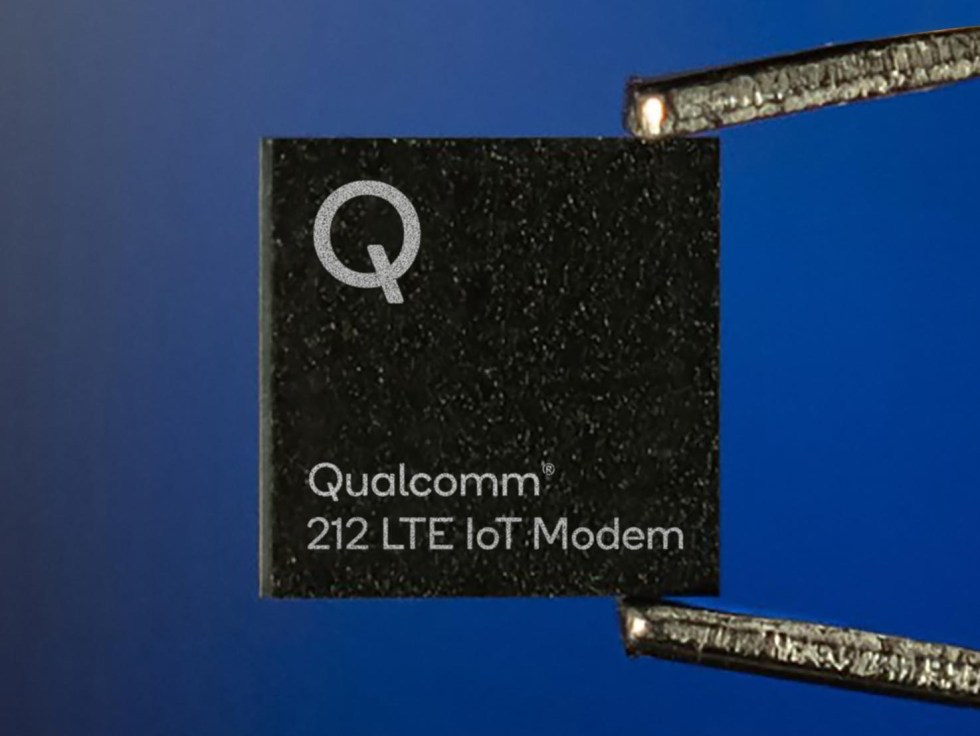
Source: QualcommQualcomm Technologies, has announced the Qualcomm 212 LTE IoT Modem that requires under one micro-amp (1uA) of sleep current for extremely low average power consumption.
Another major tech event has fallen victim to the coronavirus pandemic. Even before registration has begun, Microsoft has axed the Inspire 2020 partner conference in Las Vegas from July 19 to 23.
Microsoft has announced the closure of all its stores across the global with immediate effect due to COVID-19 health concern.
With the COVID-19 pandemic, many businesses are letting staff work remotely as part of the social distancing efforts. Collaboration platforms have become increasingly popular with many turning to the likes of Webex and Zoom. Finland-based Glue Collaboration has taken this a step further with the introduction of the next generation of its VR-first collaboration platform.
Netscape used to be the king of browsers in the 1990s until Microsoft came along and bundled Internet Explorer from Windows 95. This swayed many PC users to the Microsoft browser and marked the demise of Netscape.
Today marks the end of Windows 7. Microsoft is stopping support and updates for this highly-popular operating system.
NVIDIA has announced the NVIDIA EGX Edge Supercomputing Platform which lets organisations deliver next-generation AI, IoT and 5G-based services at scale and with low latency. Along with annoucing this at his keynote address at the opening of Mobile World Congress in Los Angeles, NVIDIA Founder and CEO Jen-Hsun Huang declared that we have entered a new era, where billions of always-on IoT sensors will be connected by 5G and processed by AI.
Microsoft has acquired AdoptOpenJDK project contributor jClarity to drive increased performance for Java workloads on Azure.

The global GPU as a Service (GPUaaS) market is expected to jump tenfold from around US$700 million in 2018 to US$7 billion by 2025, according to Global Market Insights. The Asia-Pacific (APAC) region is expected to lead this charge with a compounded annual growth rate of more than 40 percent between 2019 and 2025.

Unsurprisingly, a Gartner report is predicting that three quarters of all databases will reside in the cloud by 2022. Only five percent of migration will remain on premises.
NVIDIA, Oculus, Valve, AMD, and Microsoft have come together to introduce VirtualLink, an open standard that simplifies next-generation virtual reality (VR) headset connectivity to PCs and other devices. Instead of a range of cords and connectors, the new standard adopts the single, high-bandwidth USB Type-C connector.
It happened to Microsoft in 2013 and it looks like history is repeating itself, albeit with Google being the one under the spotlight. The European Union (EU) is expected to decide on a record fine for forcing Android smartphone makers to pre-install its search and web browsing tools and use them by default unless they want to lose access to the Play Store.
Microsoft has acquired Semantic Machines, which has developed a new approach to building conversational artificial intelligence (AI).
The cloud infrastructure services market is continuing to grow strongly, up 47 percent year on year in Q2 to reach US$14 billion, according to Canalys. Growth was driven by demand for primary cloud infrastructure services, such as on-demand computing and storage, across all customer segments and industries.
However, future growth is expected to be fueled by customers using the artificial intelligence (AI) platforms cloud service providers are building to develop new applications, processes, services, and user experiences.
Amazon Web Services (AWS) maintained its leadership position, growing 42 percent on an annual basis and accounting for more than 30 percent of total spend. But its growth rate was lower than those of its main rivals, Microsoft (up 97 percent growth) and Google (up 92 percent), but higher than fourth-placed IBM (up 23 percent). Overall, the top four cloud services providers represented 55 percent of the cloud infrastructure services market, which includes IaaS and PaaS.

As a sign of its coming of age, the GPU Technology Conference (GTC) held annually in San Jose, California since 2009, is no longer a niche event but one that is drawing the who’s who […]
The year’s looking bad for tablets as worldwide demand is expected to slide 8.1-percent to just 211.3 million units, according to IDC.
The new forecast follows three consecutive quarters of declining worldwide tablet shipments in 2015. Despite the challenges facing the overall market, IDC expects detachable tablets will continue to represent a growing portion of total shipments.
“We’re witnessing a real market transition as end users shift their demand towards detachables and more broadly towards a productivity-based value proposition. The proliferation of detachable offerings from hardware vendors continues to help drive this switch. We’re starting to see the impact of competition within this space as the major platform vendors – Apple, Google and Microsoft – now have physical product offerings. With attractive price points, including the introduction of sub-US$100 detachables, and platform innovation being driven by competition, IDC is confident that the detachables segment will nearly double in size in the next year, recording more than 75 percent growth compared to 2015,” said Jean Philippe Bouchard , Research Director, Tablets, IDC.
The public cloud market in China will more than double in the next five years, from US$1.8 billion this year to US$3.8 billion in 2020, according to Forrester.

Two-thirds of Chinese software decision-makers surveyed by Forrester are making increased use of public cloud platforms a top priority over the next 12 months.
Enterprise public cloud platform vendors in China are improving in terms of their service diversity, simple abstraction for operational efficiency, and operational autonomy for on-demand elasticity. Forrester has evaluated the strengths and weaknesses of 11 cloud vendors Alibaba, AWS, ChinaC, DaoCloud, JD.com, Microsoft, MoPaaS, QingCloud, Tencent, UCloud, and UnitedStack.
Software revenue in India rose 8.3 percent to hit US$4 billion in 2014, according to Gartner.
“The enterprise software marketplace is dynamic and ever-changing. Its growth and structure are being shaped by the factors and forces of decentralised purchasing, consumerisation and mobility, influence of emerging markets, cloud-based implementations, and new consumption models. Improvement in global economic conditions has somewhat relaxed the strain on the Indian economy, thereby boosting corporate sentiments. Along with a new stable government at the center, this has helped in alleviating concerns about economic growth — to a certain extent — with early signs of spending in growth initiatives beginning to emerge,” said Bhavish Sood, Research Director of Gartner.
Several leading trends include:
Apple held on to its top spot despite a 16 percent drop in PC shipment in Q1. It shipped 17.2 million units, taking a 15 percent market share while Lenovo and HP came in second and third place respectively. Samsung was next with 9.5 million units shipped with Dell just behind with 9.4 million units.
Overall, the global PC market, including tablets, declined seven percent, according to Canalys.
“The growth drivers that previously helped the market through 2014 will have little effect this year. Vendors are struggling with exchange rate fluctuations which is making financial planning more difficult and forcing price increases. These challenges, combined with a softening of demand as Windows 10 draws nearer along with Microsoft’s free upgrade plans, means PC market declines will be greater in the second quarter than they were in the first,” said Tim Coulling, Senior Analyst of Canalys.
Smartphone shipment in India observed its first drop in Q4, according to IDC. The decline was attributed to a high channel inventory at the beginning of the quarter among general trade which in turn was caused by the surge witnessed in online sales during festive season.
Q4 was seen as a correction phase when the Smart Phone market shrank by four percent while the feature phone market plummeted by about 14 percent over the previous quarter. The overall mobile phone market stood at 64.3 million units in Q4, which reflects a sequential drop of 11 percent over Q3 and an annual drop of five percent in 2014.
The feature phone to smartphone migration trend is clearly visible as smartphones formed a healthy 35 percent of the overall mobile business in Q4, an increase of 13 percent fom a year ago.
The stats are in – tablet shipment dropped 12 percent to 67 million units in Q4, according to Canalys. The desktop market fell back into a decline in Q4 as Windows XP upgrades waned. The notebook market held firm with another quarter of just one percent growth.
Total PC shipments (desktops, notebooks and tablets) fell six percent in Q4 to reach 148 million units, resulting in full-year 2014 shipments of 528 million units, up three percent on 2013.
Apple regained the top spot in the PC market on the strength of holiday sales, with just under 27 million units shipped. Lenovo’s shipments grew six percent year on year to almost 20 million units as it increased its market share to 13.3 percent. Samsung dropped out of the top three to make way for HP, with growth of 17 percent driving shipments over 17 million units, its best quarter since Q3 2011.
Skipping a generation seems to be the norm these days. A couple of weeks ago, NVIDIA introduced its GeForce GTX 900 series, bypassing the 800 series. Yesterday, Microsoft made a similar move by skipping a highly anticipated Windows 9 to introduce Windows 10.
In a technical preview, Microsoft highlighted advancements in the new operating system that are designed for business, including an updated user experience and enhanced security and management capabilities.
“Windows 10 represents the first step of a whole new generation of Windows, unlocking new experiences to give customers new ways to work, play and connect. This will be our most comprehensive operating system and the best release Microsoft has ever done for our business customers, and we look forward to working together with our broader Windows community to bring Windows 10 to life in the months ahead,” said Terry Myerson, Executive Vice President of the Operating Systems group at Microsoft.
NVIDIA has done the double by snaring the Computex Best Choice Award for its NVIDIA GRID technology and the Golden Award for the NVIDIA Tegra K1 mobile processor.
This is the sixth year running that NVIDIA has picked up the award, marking the longest winning streak of any international Computex exhibitor. More than 475 technology products from nearly 200 vendors competed for this year’s recognition.
Tegra K1 is a 192-core super chip, built on the NVIDIA Kepler architecture — the world’s most advanced and energy-efficient GPU. Tegra K1’s 192 fully programmable CUDA cores deliver the most advanced mobile graphics and performance, and its compute capabilities open up many new applications and experiences in fields such as computer vision, advanced imaging, speech recognition and video editing.
Though made in China, gaming consoles were banned in the country from 2000. That has since changed with the lifting of the ban last year, which allows gaming console makers in a free trade zone […]