
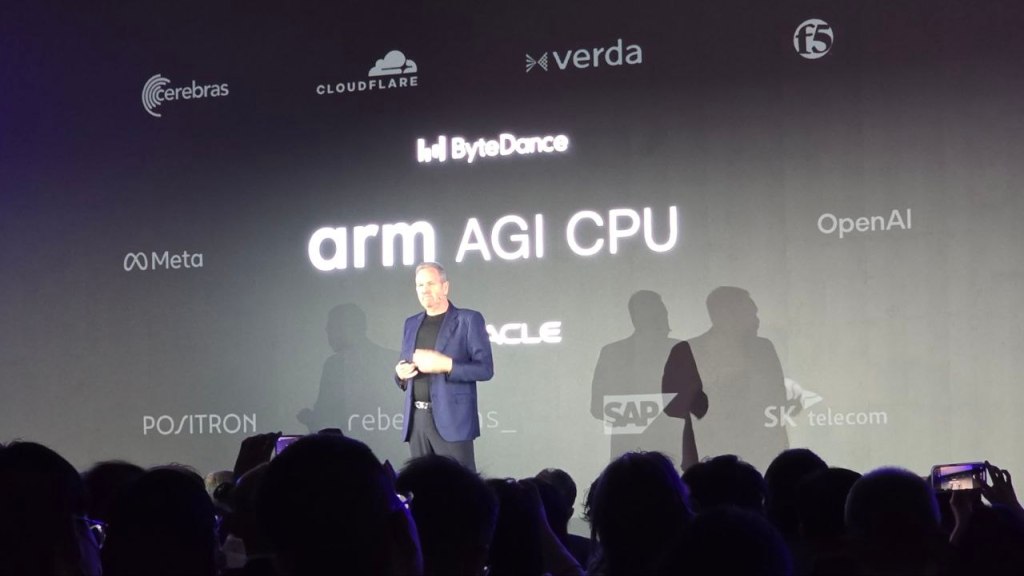
The next decade of AI will hinge on rethinking how compute is designed, powered and deployed, according to Arm CEO Rene Haas.
AI workloads are exploding faster than traditional architectures can sustain. “We are entering a world where compute demand is growing at a rate we’ve never seen before. If we don’t change how we build systems, the power requirements alone will be unsustainable,” he said.
In his Computex 2026 keynote, Haas shared why Arm intends to sit at the centre of that shift from training models on expensive GPUs to actively running continuous, always-on AI inference.
He pointed out that the industry’s bottleneck is no longer raw performance but performance per watt, a metric he said will define winners in AI infrastructure. “The future of AI will be determined by efficiency. Not just how fast you can go, but how fast you can go within a realistic power envelope.”
Hyperscalers’ rising energy bills and data centre constraints are evidence that the current trajectory is untenable. “We cannot keep scaling compute the way we have for the last 20 years. The math simply doesn’t work,” Haas said.
Arm’s AGI‑class CPU push
Arm’s newest high‑core‑count CPU platform, designed for large‑scale AI inference and training, is its response to that pressure. It’s a “fundamental redesign” of server‑class compute.
“This is not a mobile chip scaled up. It’s a ground‑up architecture built for AI from day one,” said Haas.
Major cloud providers are already adopting the platform.
He said that AI workloads are rapidly moving beyond data centres into edge devices, industrial systems, and consumer electronics. “AI is not a cloud‑only story. It’s going to be in cars, in factories, in robots, in devices you carry every day.”
Arm’s ecosystem, which spans mobile, automotive, IoT, and servers gives it a unique vantage point. According to Haas, Arm is the “only architecture that touches every part of the AI pipeline.”
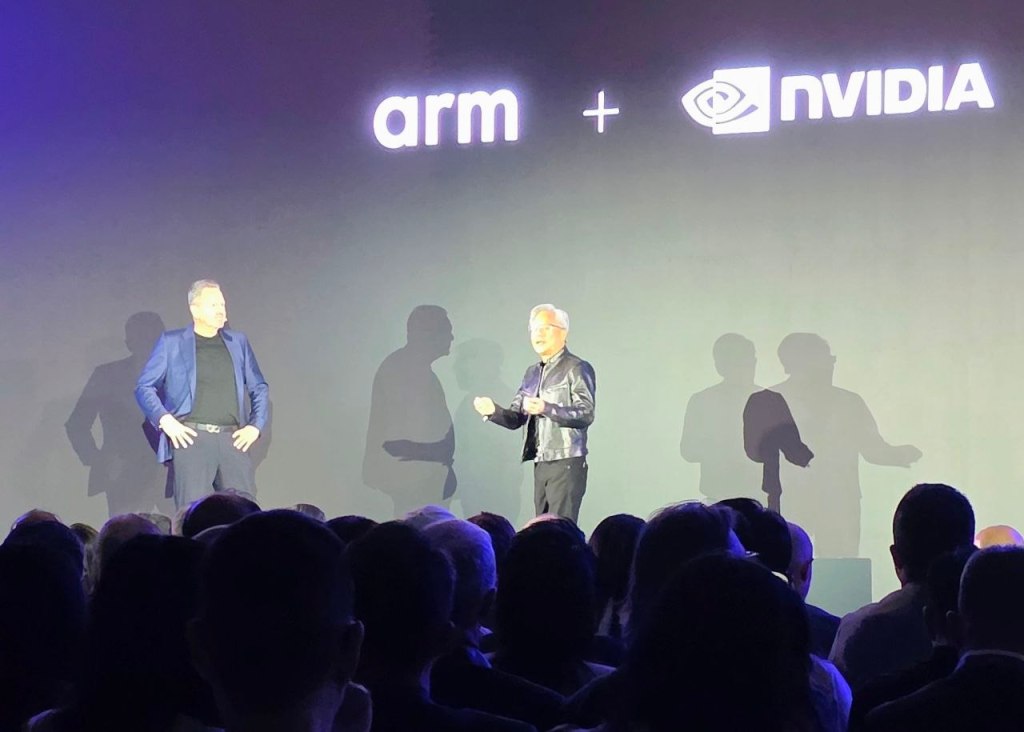
In a light-hearted moment, Arm played a video of an AI‑generated video of Haas navigating Taipei’s streets and night market — a humorous nod to the technology’s creative potential and a spoof of NVIDIA Founder and CEO Jensen Huang, who joined him for a segment on stage.
“If AI can make me look this adventurous, imagine what it can do for the rest of the world,” he joked.

